



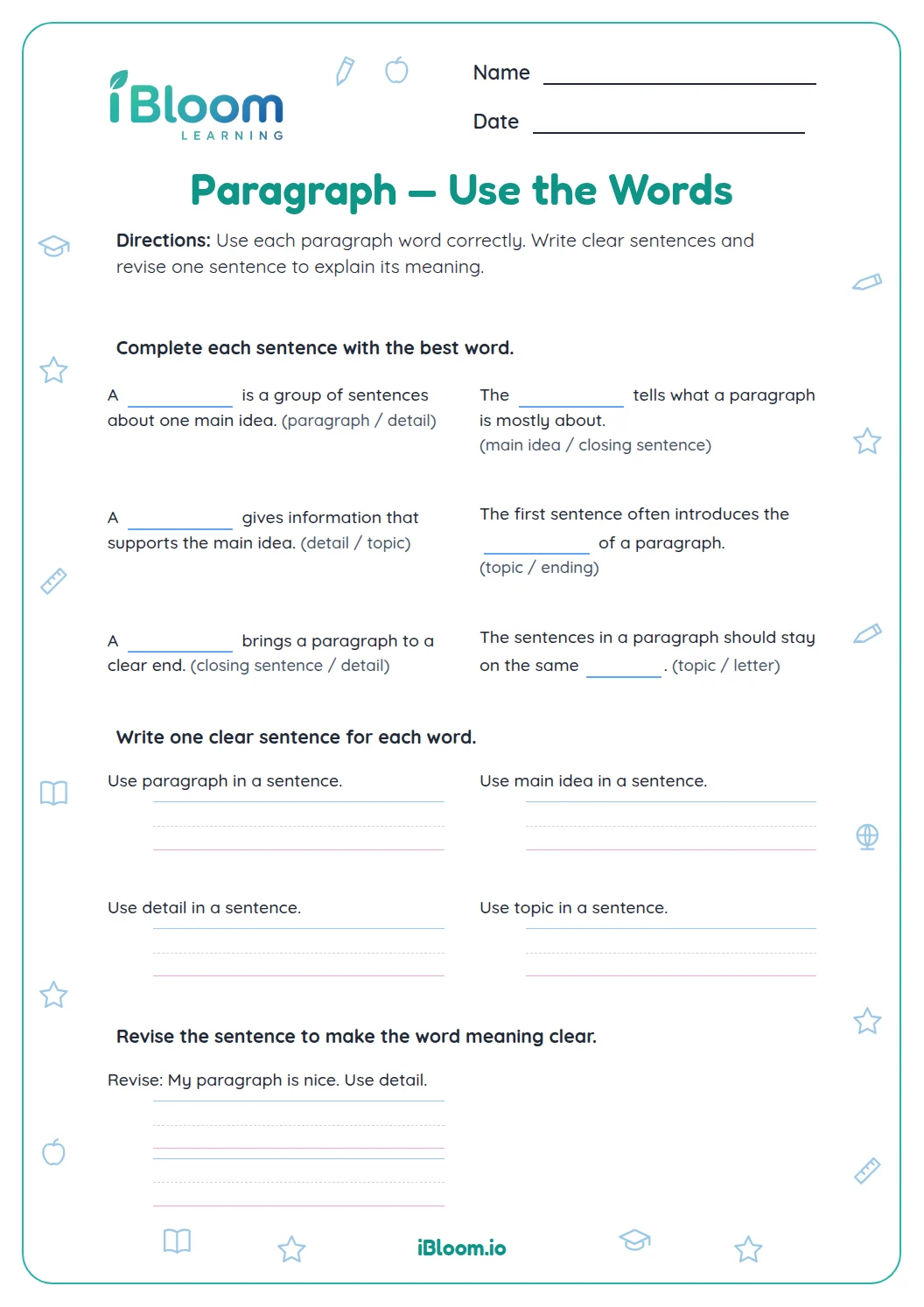
About this worksheet
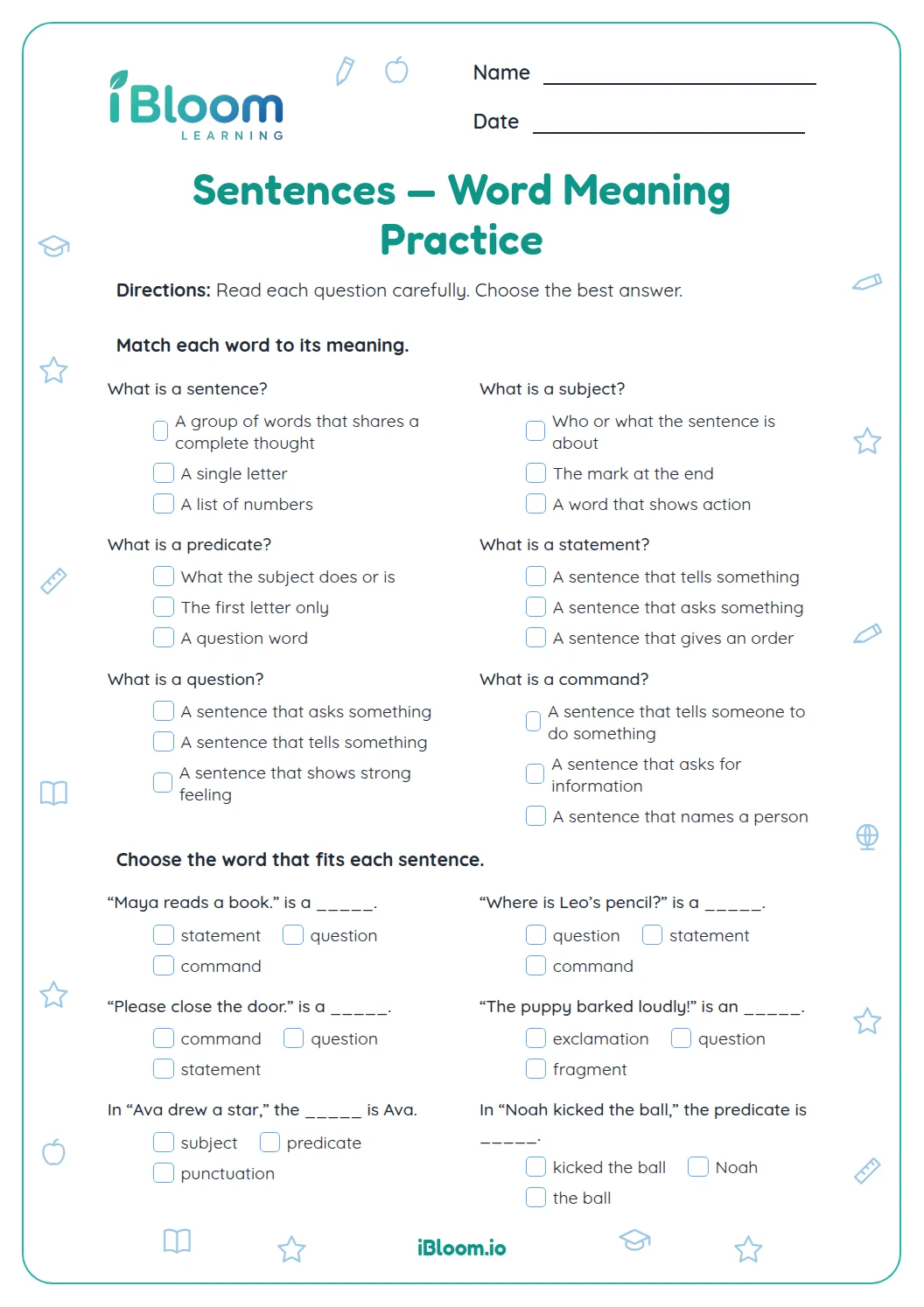
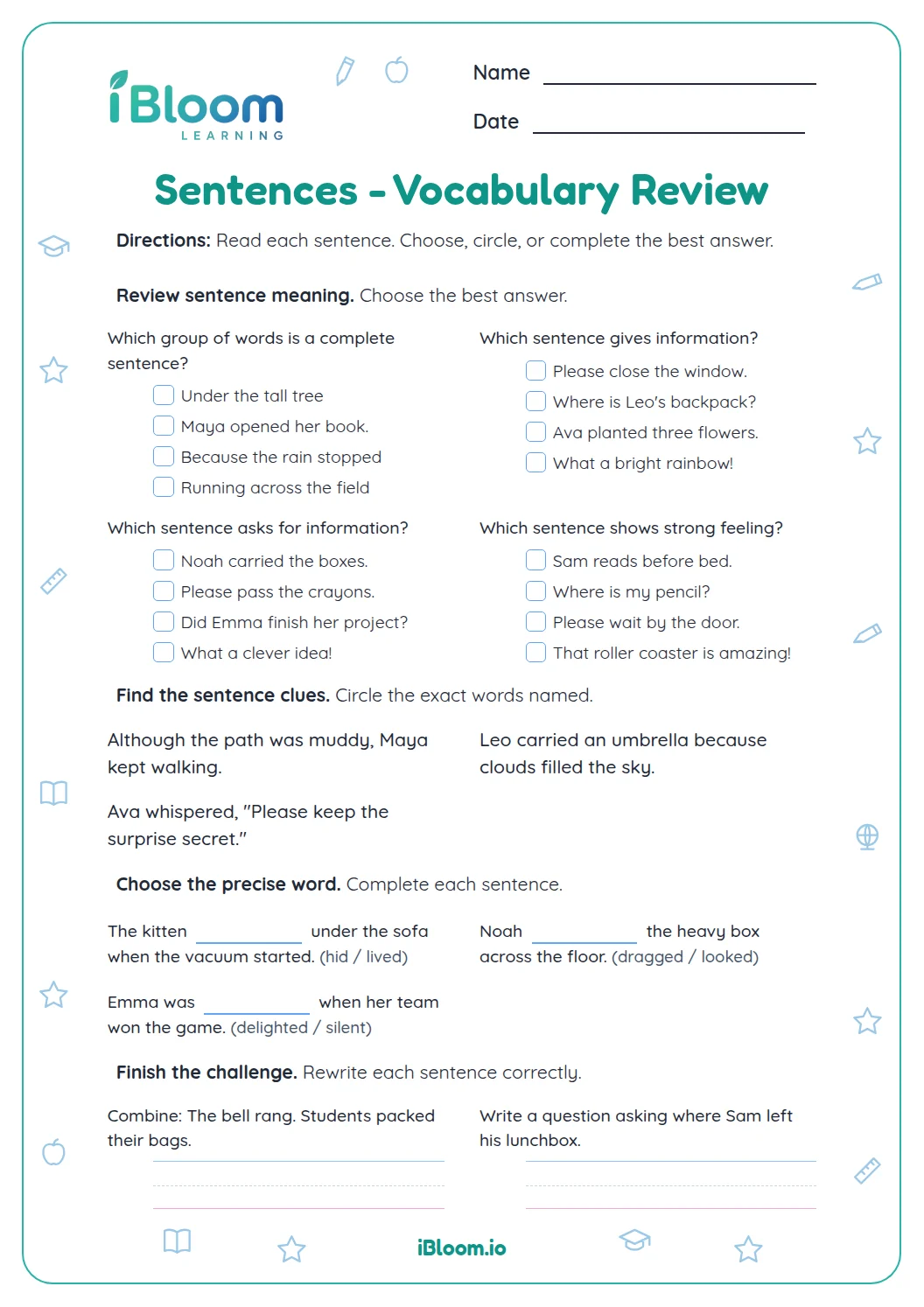
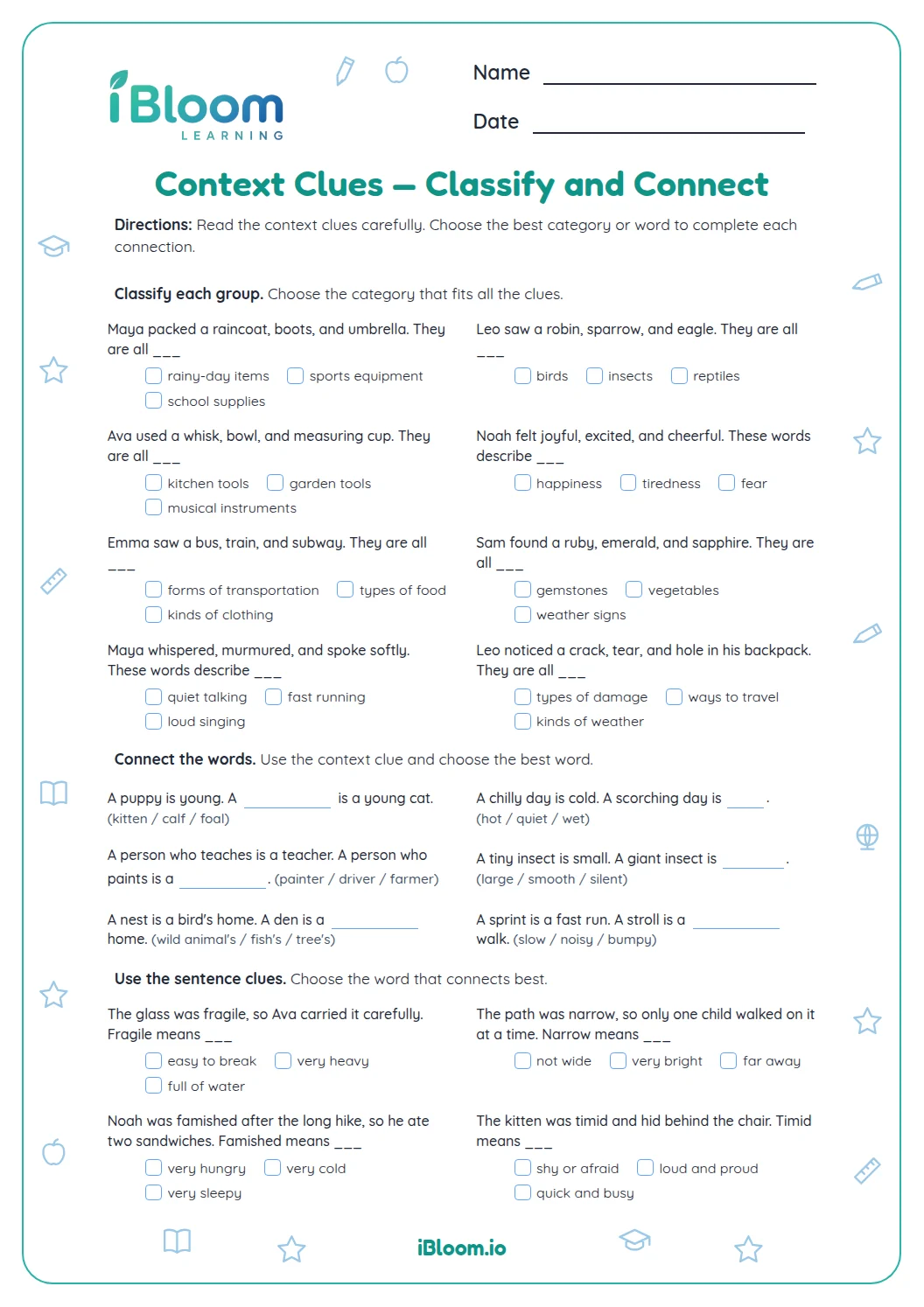
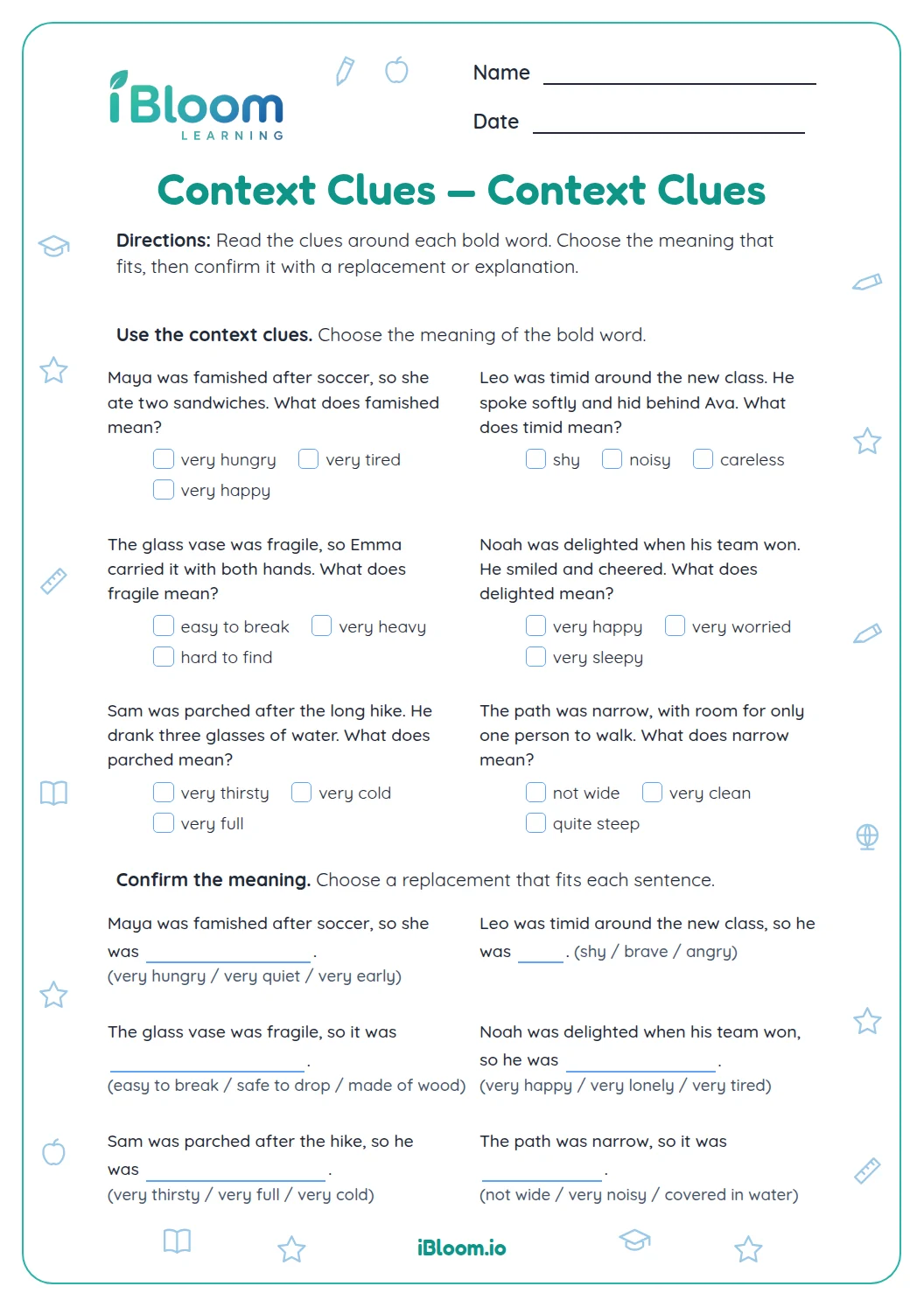
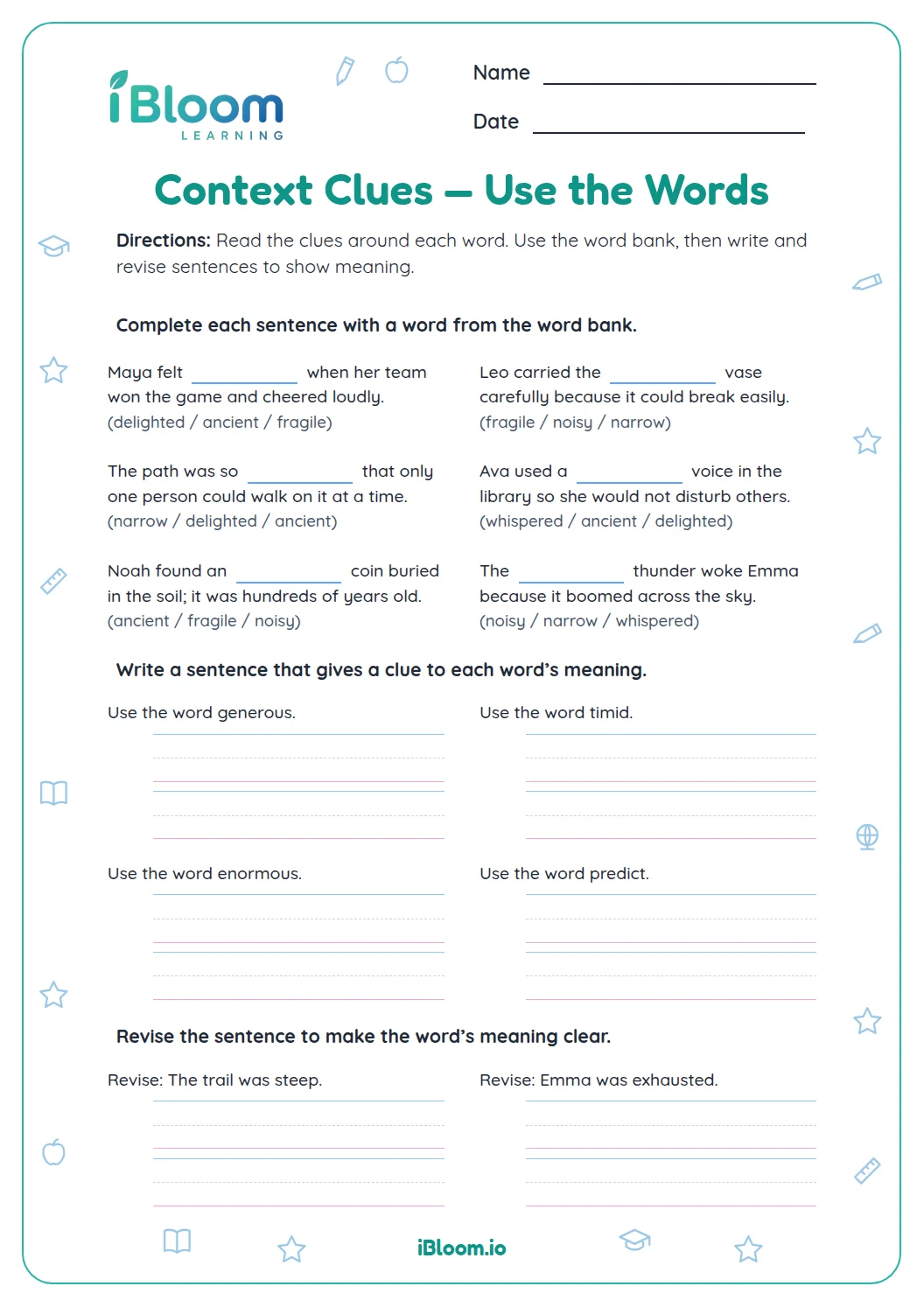
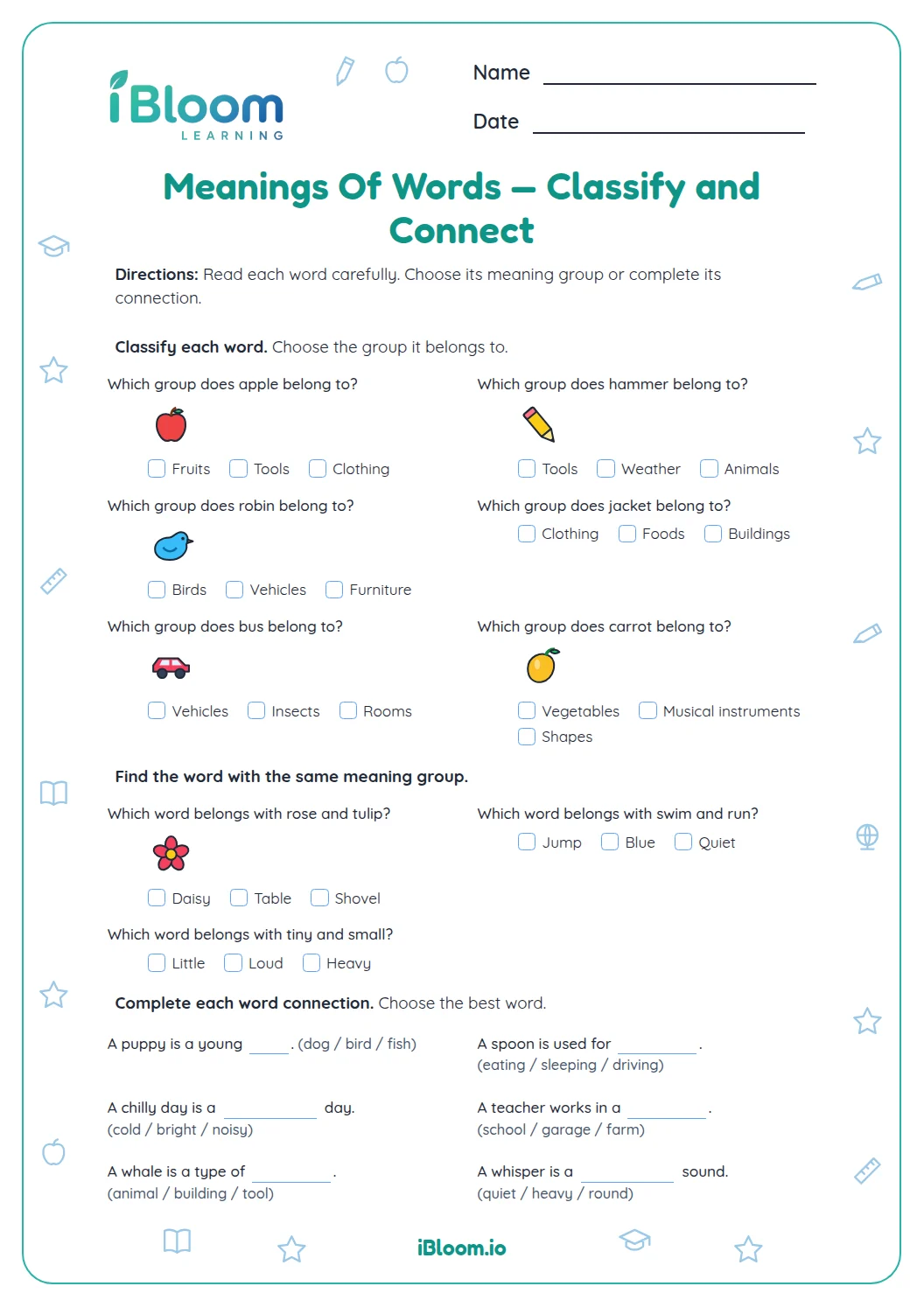
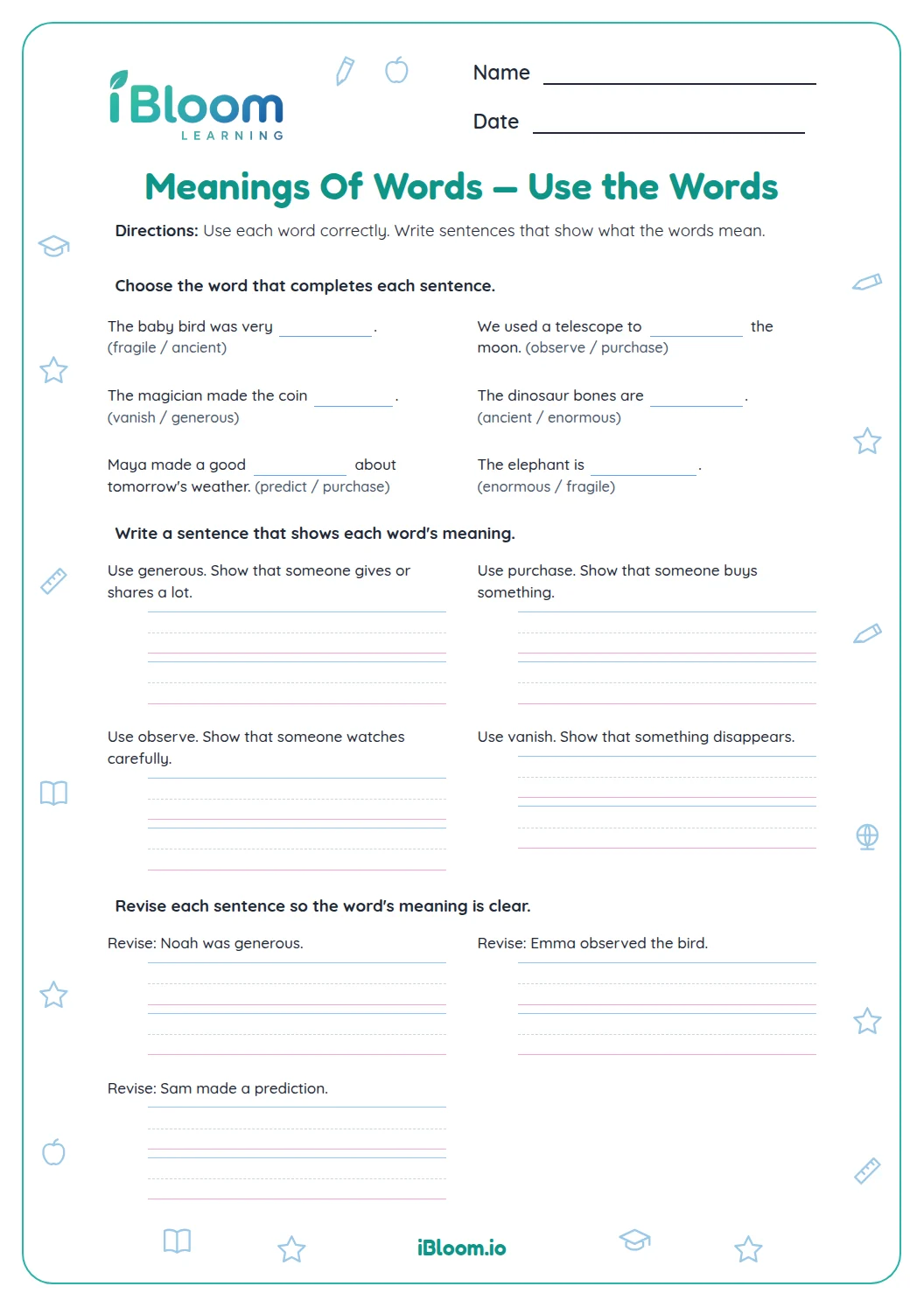
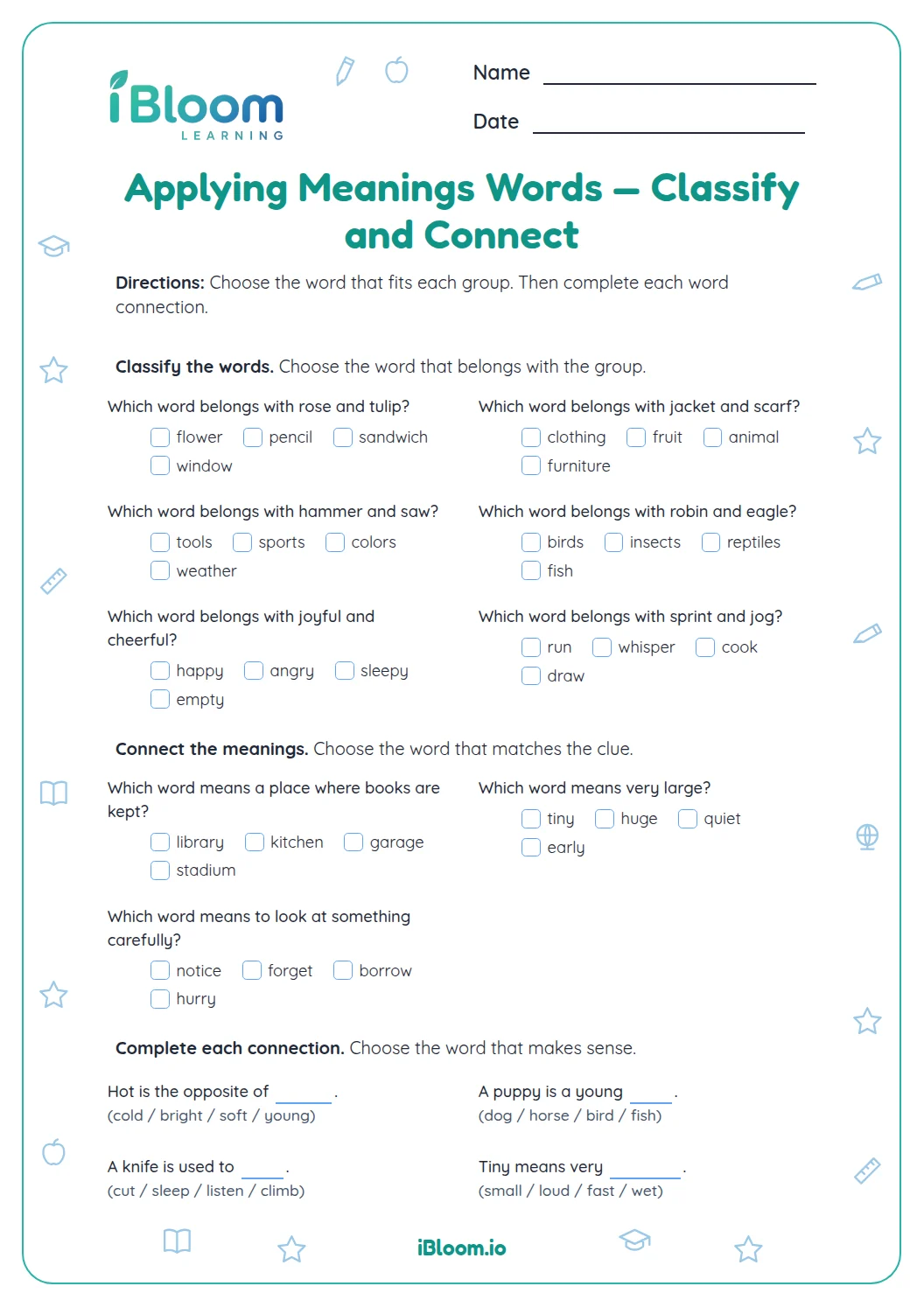
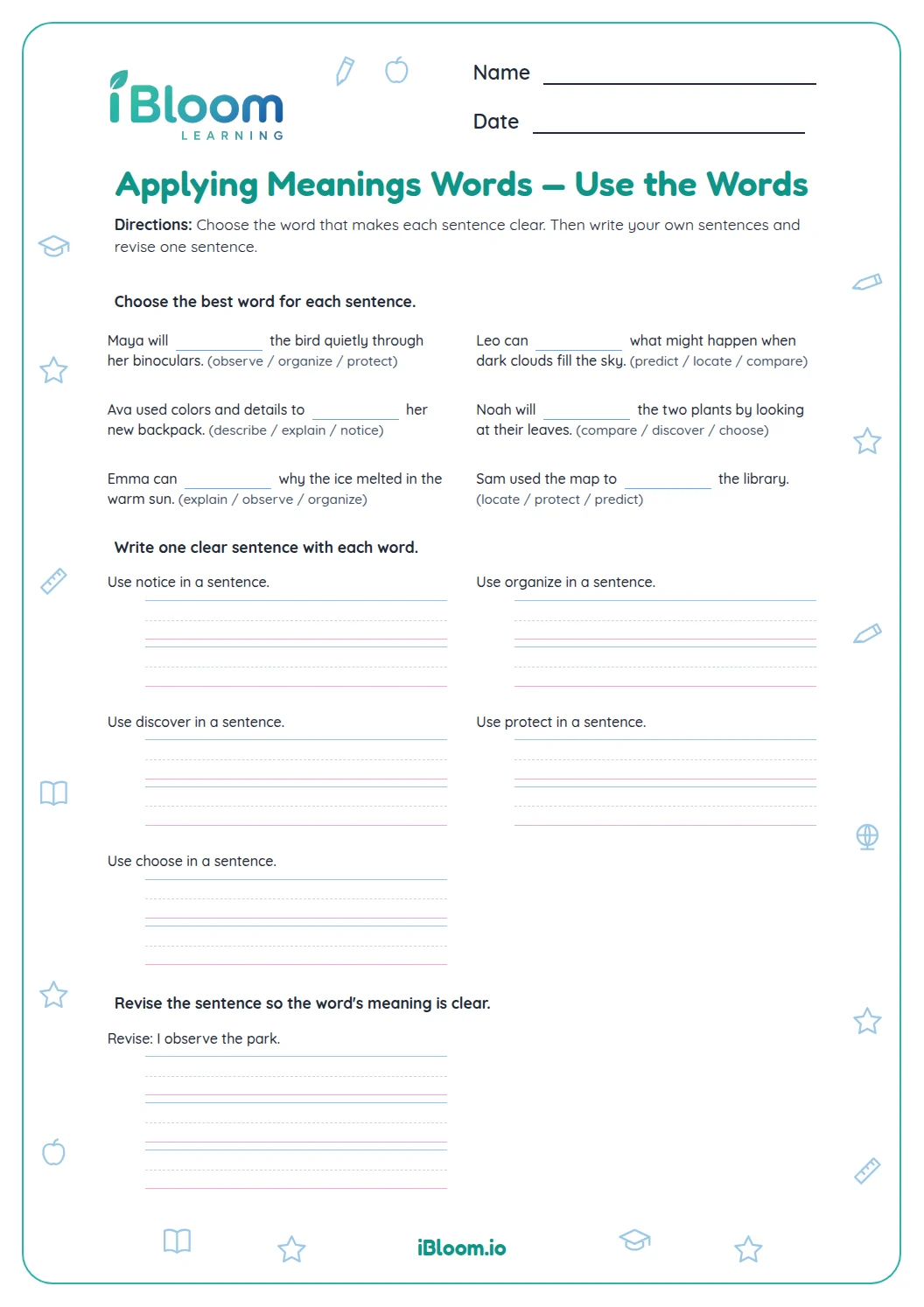
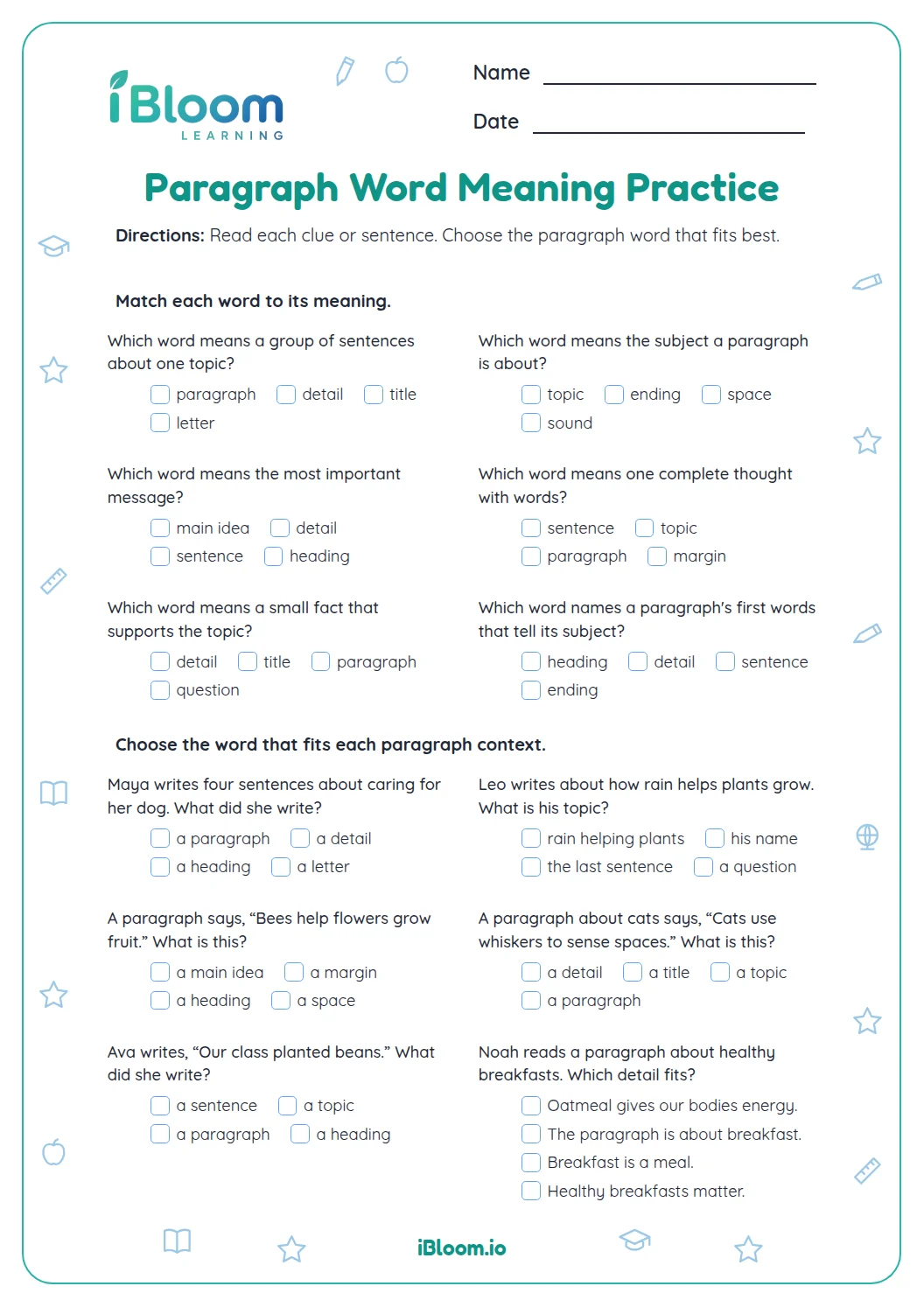
This free Grade 3 printable moves from using a shared word bank to complete sentence clues to using target words in original sentences. Part A gives eight words for eight blanks, and Part B gives six words to use in writing. The separate answer key shows the Part A answers and sample Part B sentences.
How can a word fit a sentence?
Read the entire sentence before choosing. The nearby details help show what kind of word belongs. In “The glass ornament was ___, so Eli carried it with both hands,” fragile fits because glass can break and careful handling protects it. Compare the choices, then reread the whole sentence with your selection.
How can you write a sentence that shows a word’s meaning?
Try each choice in the blank and check that the meaning and grammar both make sense. For “fragile,” the sentence about carrying a glass ornament carefully gives a clue: fragile means easily broken.
- 1The glass ornament was ___, so Eli carried it with both hands.
- 2The clue is that it needs careful handling.
- 3Fragile means easily broken.
- 4Answer: fragile
What makes a strong original sentence?
A clear sentence gives enough information to show the target word’s meaning. For curious, a question or investigation can reveal curiosity: “The curious child asked how the robot worked.” Students can use their own ideas as long as the word is used accurately.
What will students practice on the pages?
Part A uses a shared bank of eight words to complete eight sentence clues. Part B asks students to write one original sentence for each target word. The key gives the selected words and sample sentences.
How to use this worksheet
- 1Read each sentence all the way through before choosing.
- 2For Part A, look for details that hint at the needed meaning.
- 3For Part A, reread the completed sentence to check its meaning. For Part B, say the target word and sentence aloud to check the meaning and grammar.
- 4For Part B, think of a situation that shows the word’s meaning.
- 5Write a complete sentence with a capital letter and end mark.
- 6Compare answers with the key; accept other original sentences when they use the word correctly.
Common mistakes and quick fixes
The mistake
Choosing a word because it is familiar, even when it does not fit the clues.
The fix
Reread the whole sentence and name the detail that supports your choice.
The mistake
Picking a sentence where the target word appears but does not make sense.
The fix
Explain what the word means in that sentence; revise if the meaning is unclear.
The mistake
Writing a sentence that includes the target word without showing its meaning.
The fix
Add a person, action, or detail that makes the word’s meaning clear.
What to practice next
Make more practice
Further reading
Questions parents and teachers ask
What does “use the words” mean on this worksheet?
Students complete sentences with vocabulary words that make sense in context, then write original sentences. Eight sentence completions come first, then six prompts ask students to use a target word in a sentence. The answer key gives the completed words and sample writing responses.
How should a student choose a word for a sentence?
Read the full sentence and use its details as clues. For example, carrying a glass ornament with both hands suggests that it is fragile. The child can try each option in the blank and ask whether the full thought makes sense.
What counts as a correct original sentence?
A correct response is a complete sentence that uses the target word accurately and makes its meaning clear. For curious, a sentence about asking questions or wanting to learn more can work. The answer key models one possibility, but students may write different correct sentences.
Can an adult read the questions aloud?
Yes. An adult can read a prompt and its answer choices aloud while the student decides which word fits. For the writing prompts, the student should generate and write the sentence; talking through an idea first can help the student get started.
How many questions and pages are included?
The worksheet has 14 questions across two practice pages, followed by the answer key; the answer key mirrors the practice pages. There are eight sentence completions and six original-sentence prompts. Plan for about 20 minutes, depending on how much time students spend composing their own examples.
What vocabulary skills does this practice build?
Students choose grade-appropriate words that fit sentence meaning and use target words accurately in their own sentences. Those two steps connect understanding a word to expressing an idea clearly. The answer key includes correct choices and sample sentences for review.