

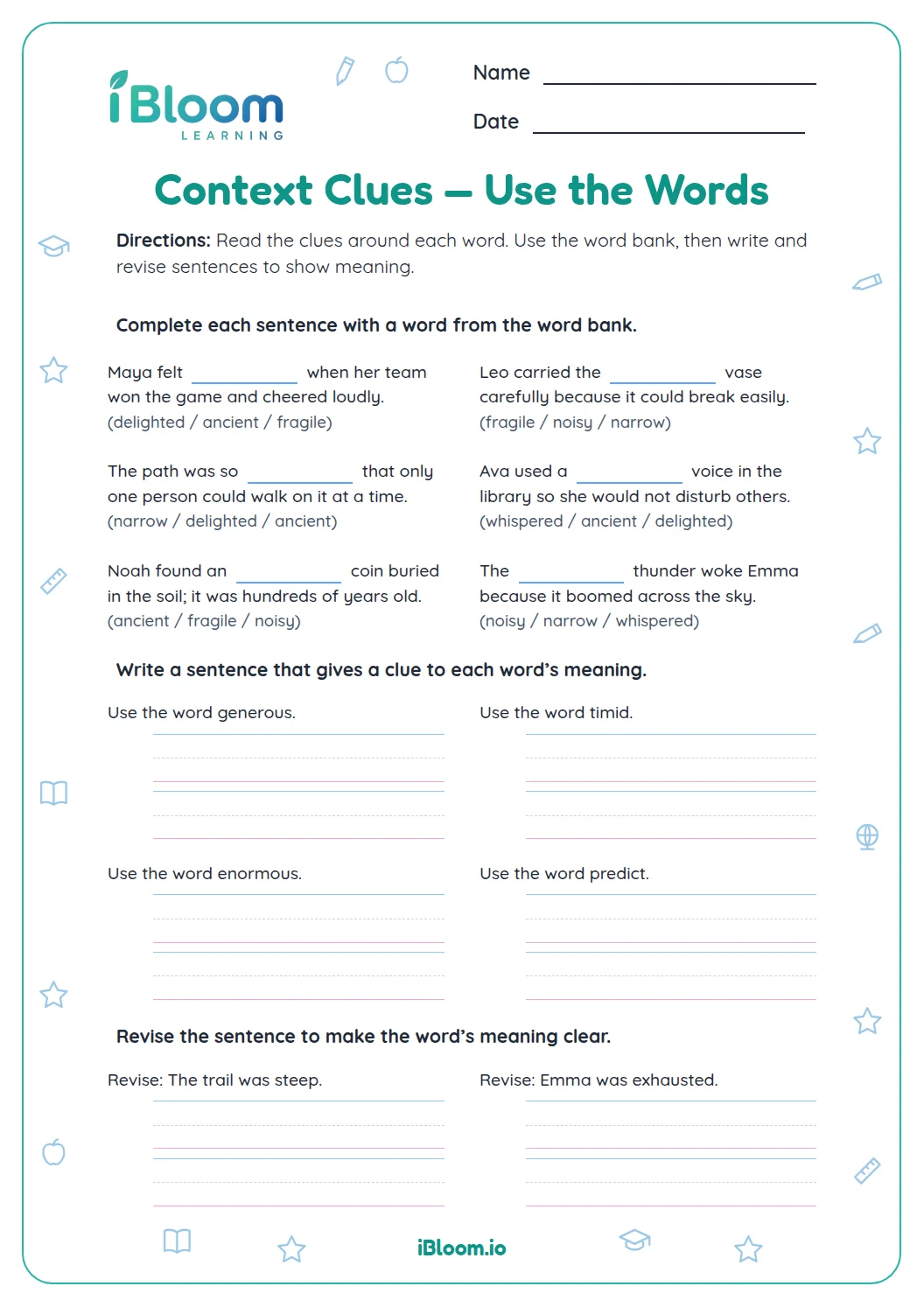
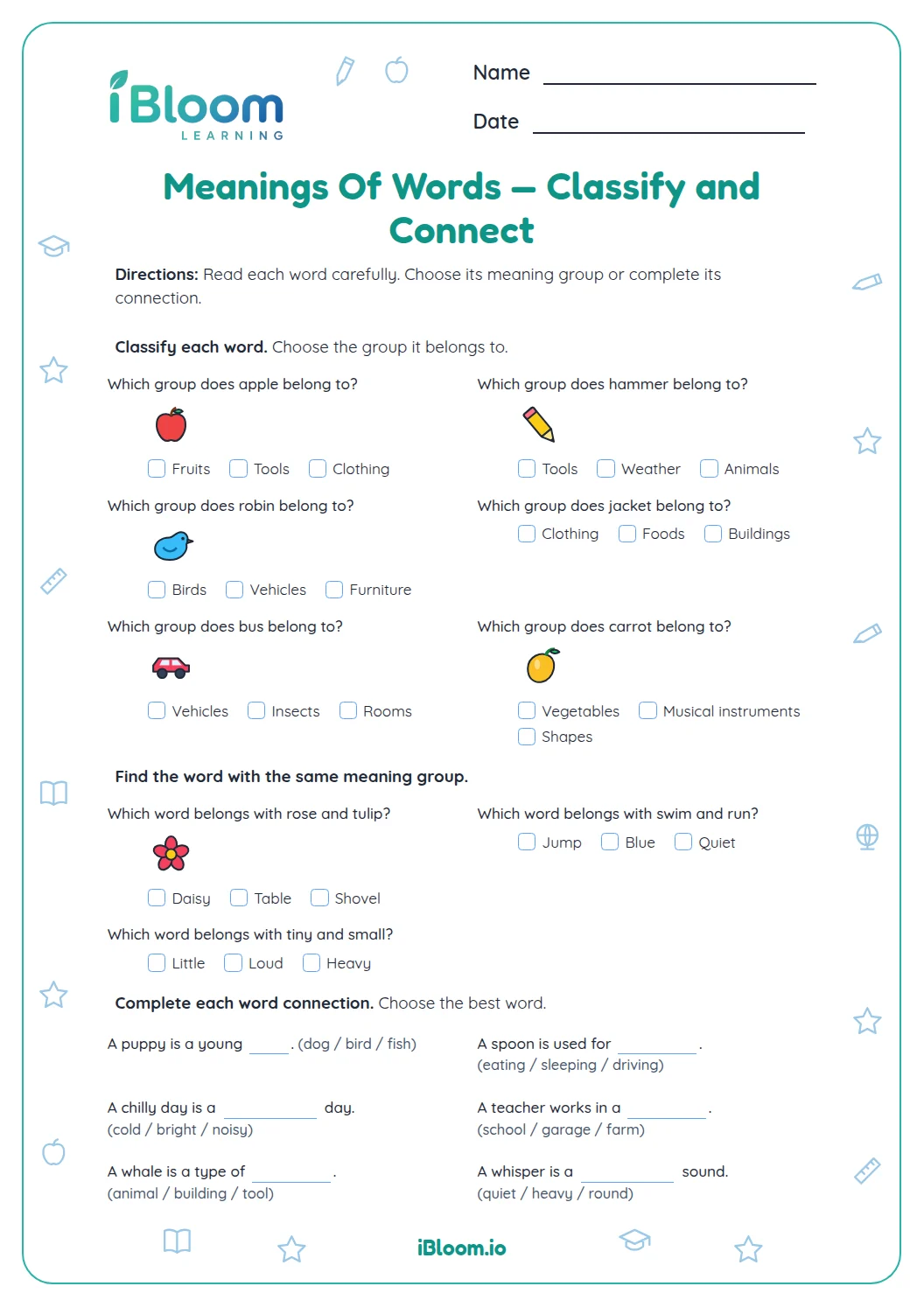
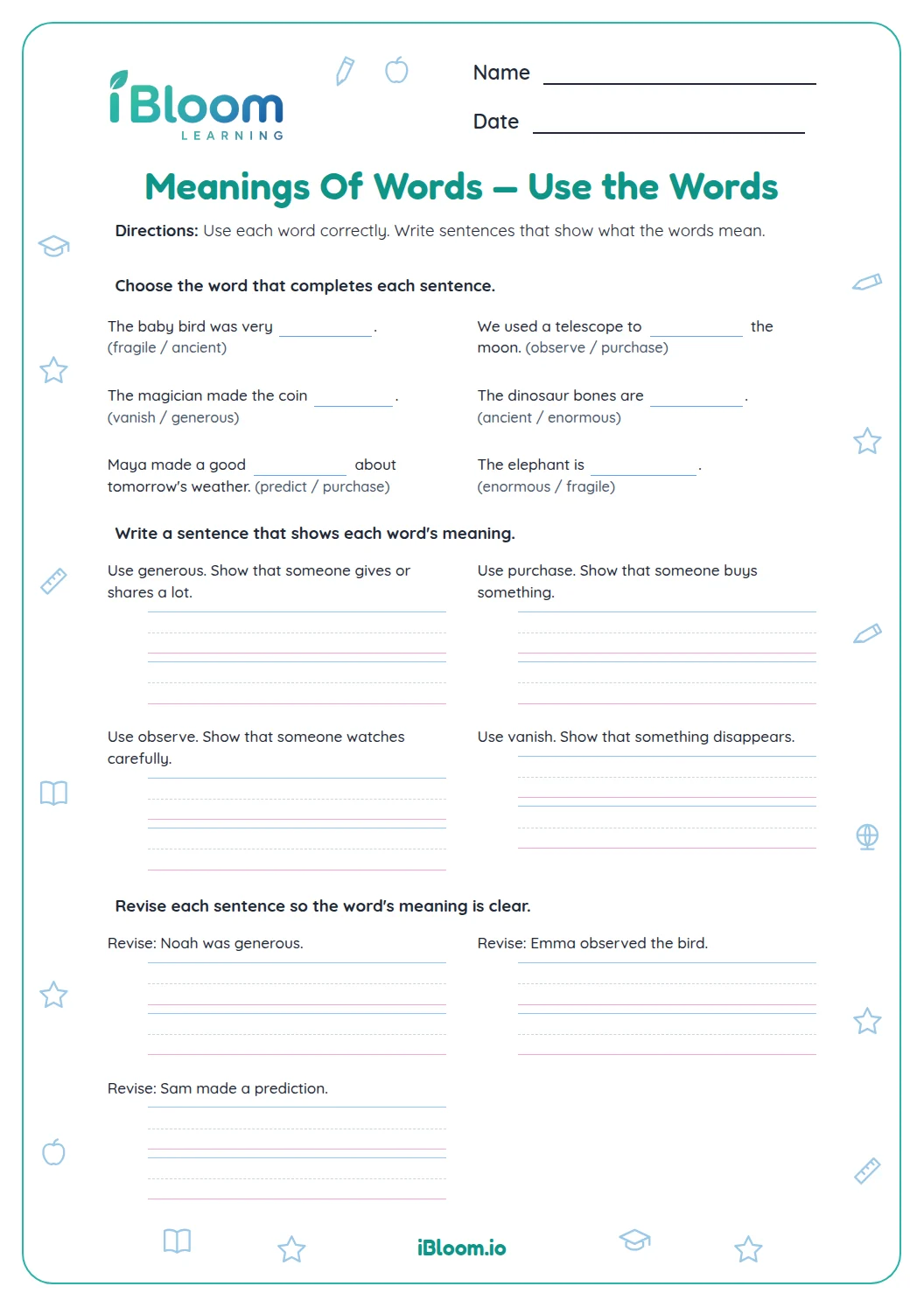

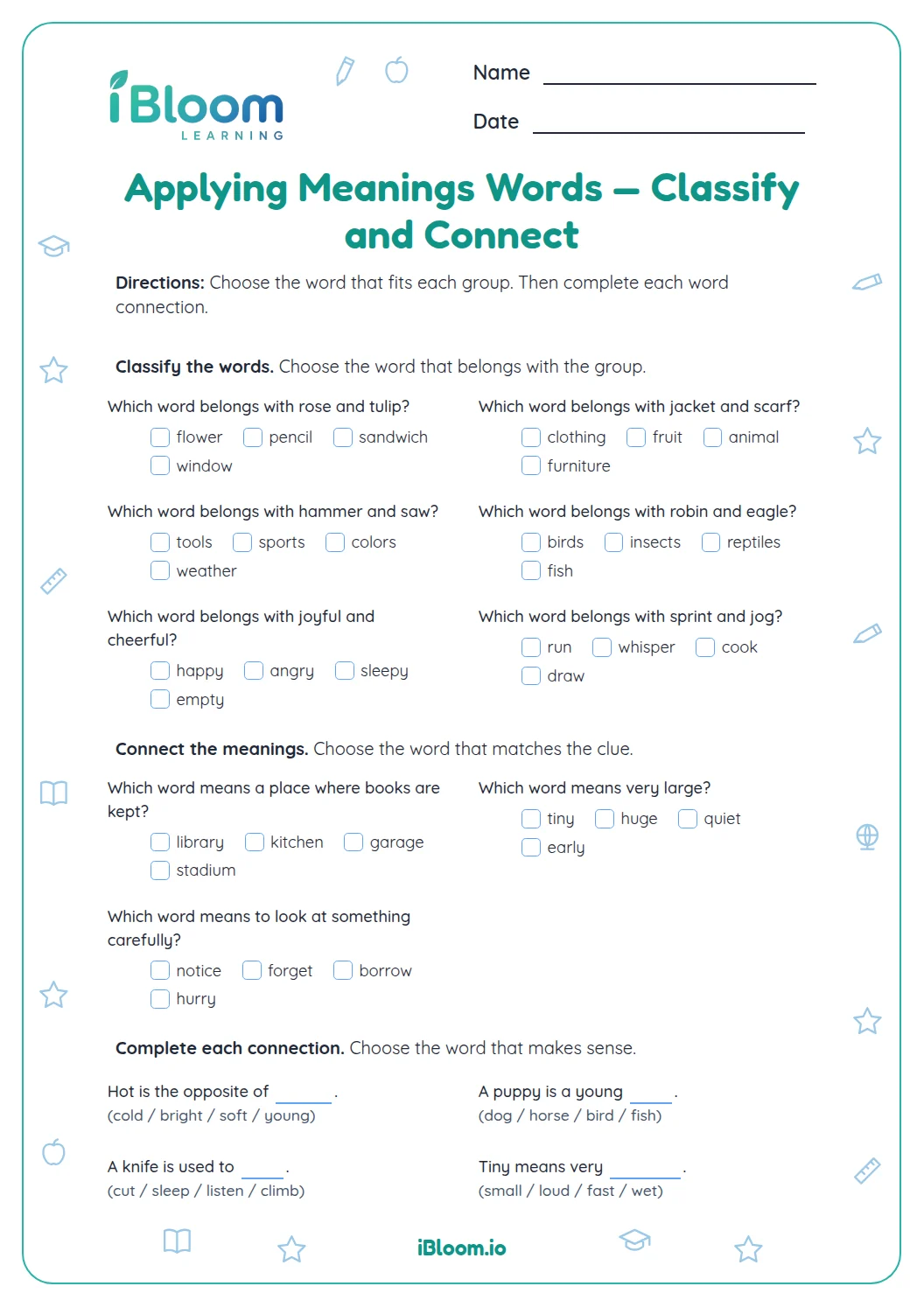

About this worksheet
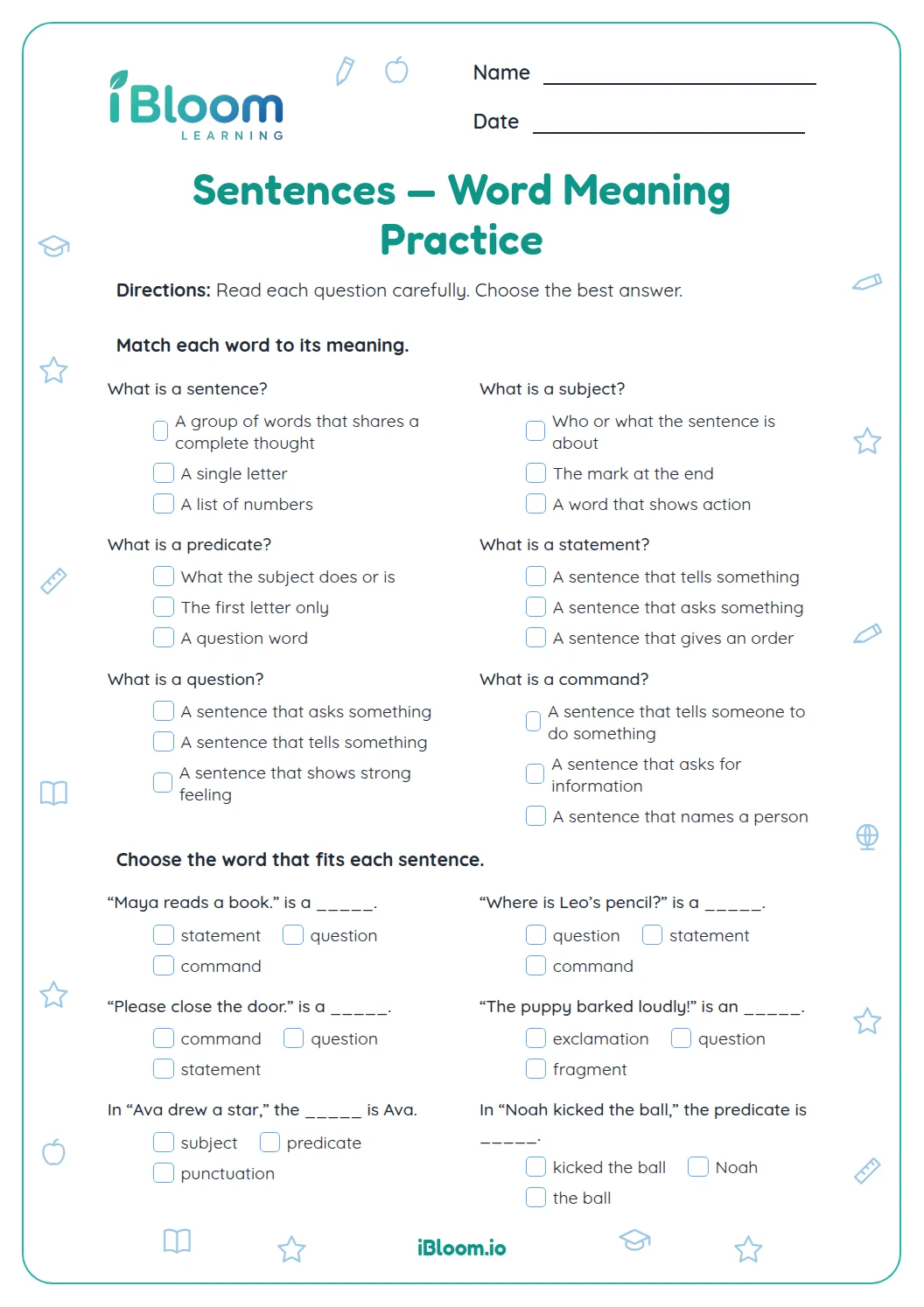
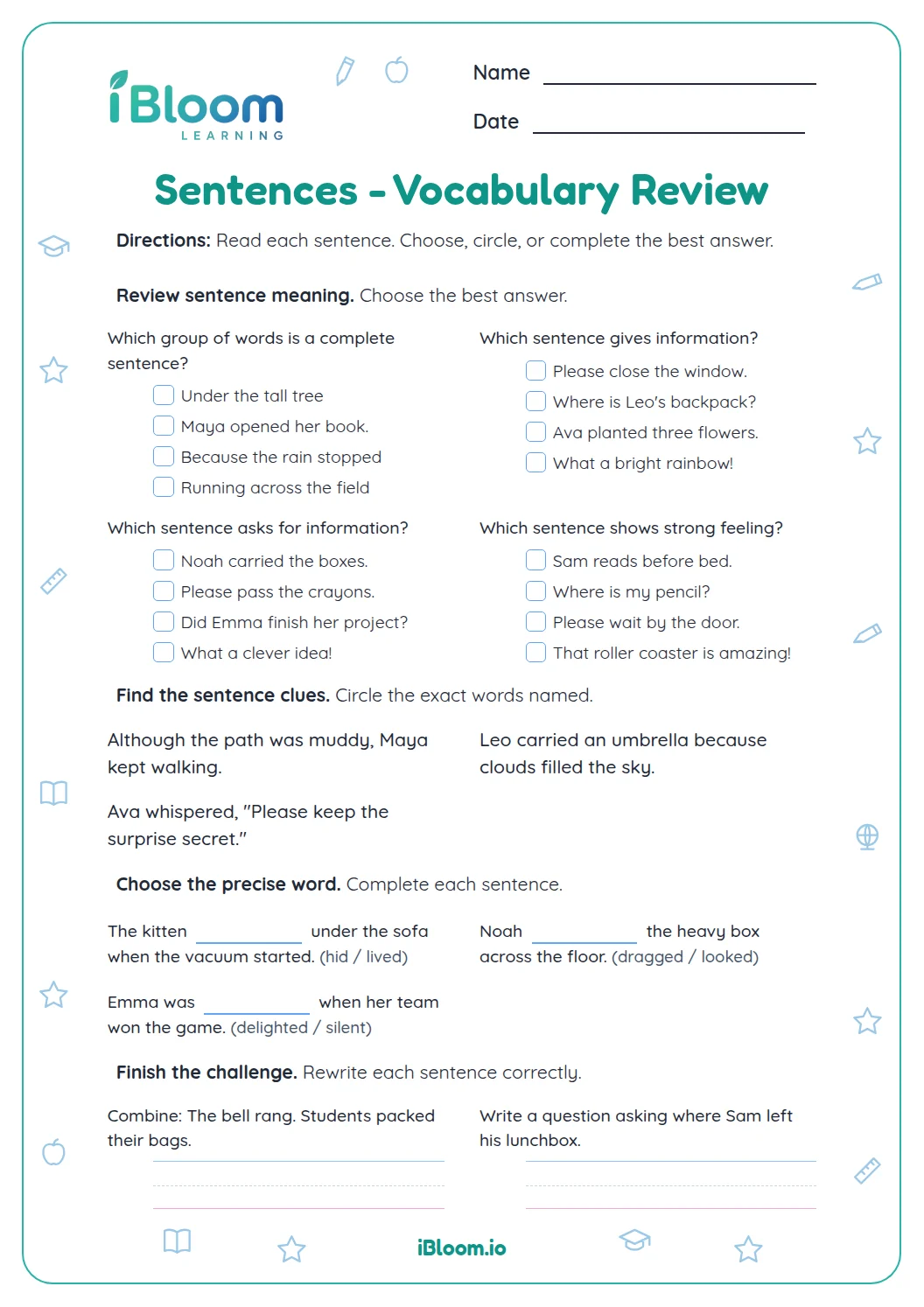
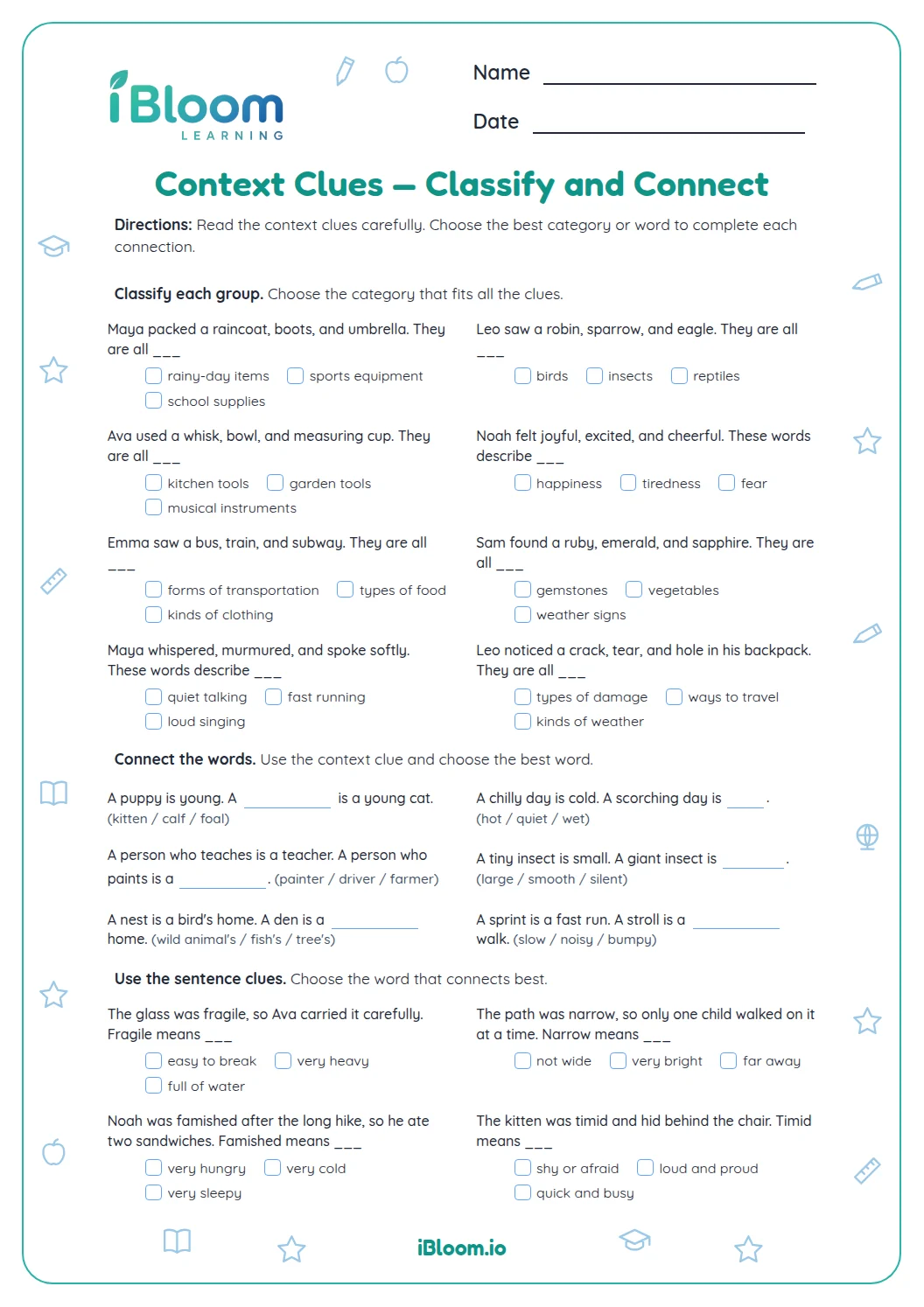
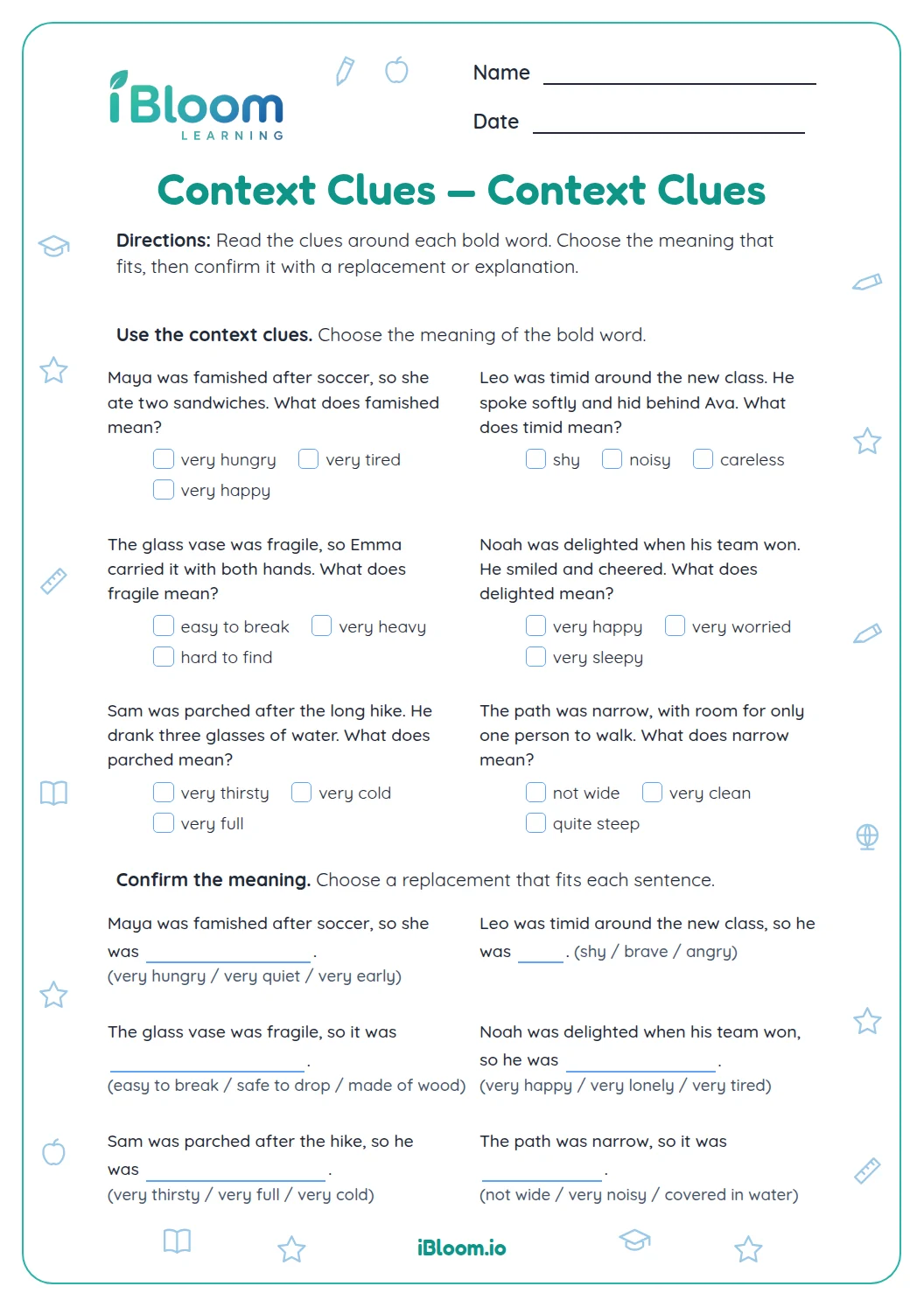
This free Grade 3 worksheet helps readers use sentence-level context to figure out word meanings, practicing Common Core L.3.4a. Across 16 questions in two parts, children read a sentence and choose the meaning that fits details such as a slippery trail or water dripping from a coat. The questions include direct descriptions and clues from actions or results; a separate answer key supports review.
Aligned to L.3.4.a
What is a context clue?
A context clue is a word or detail near an unfamiliar word that helps explain it. A sentence may define the word directly, describe what happens, or show a result. Readers combine those details with what they already know.
On this worksheet, each question has one sentence and three possible meanings. The clue belongs to the sentence, so children should read beyond the target word.
How can a reader use the clue?
Read the full sentence, find the detail that narrows the meaning, and test each choice in the sentence. In question 1, the slippery trail and slow, careful steps support carefully as the meaning of cautiously.
- 1The trail was slippery, so we walked cautiously, taking slow, careful steps.
- 2Clue: “slow, careful steps”
- 3Try each choice in the sentence.
- 4Answer: carefully
What kinds of clues appear here?
The first set uses descriptions such as water dripping from a coat or a lamp that barely lights a room. The later set uses actions and results, such as eating at once after a long hike or smiling when a lost dog comes home.
There are 16 multiple-choice items across two parts. The target words include timid, sturdy, famished, fragile, scatter, narrow, and relieved.
How to use this worksheet
- 1Read the complete sentence once.
- 2Find the detail that hints at the bold idea word.
- 3Try each meaning choice in the sentence.
- 4Choose the meaning that makes sense with the clue.
- 5Review the answer key and name the clue you used.
Common mistakes and quick fixes
The mistake
Choosing a familiar meaning without reading the sentence.
The fix
Pause at the target word and reread the rest of its sentence.
The mistake
Using only one nearby word when the full sentence gives a stronger clue.
The fix
Read the beginning and ending of the sentence before choosing.
The mistake
Picking a choice that fits the topic but not the exact clue.
The fix
Replace the target word with the choice and check that the details still make sense.
Common Core alignment
This page connects the worksheet practice to a grade-level Common Core skill.
Use sentence context to work out a word’s meaning.
On this sheet: All items ask children to select a word meaning supported by its sentence.
Show the official wordingHide the official wording
Use sentence-level context as a clue to the meaning of a word or phrase.
What to practice next
Make more practice
Further reading
Questions parents and teachers ask
How do context clues help with an unfamiliar word?
Context clues are nearby words and details that help a reader figure out a word’s meaning. On this sheet, each sentence gives a useful hint, such as slow, careful steps for cautiously or water dripping from a coat for drenched. Read the whole sentence before choosing.
Should a child use a dictionary for this page?
Try the sentence clues first. The purpose is to notice what the other words tell you, then check a dictionary later if the meaning remains unclear. The answer key lets an adult review each choice and discuss the clue that supports it.
What does Part A practice?
Part A asks the reader to use a sentence detail to choose a meaning. For example, the trail is slippery and the walkers take slow, careful steps, which points to carefully as the meaning of cautiously. The key explains each answer.
How many questions are included?
There are 16 multiple-choice questions across three worksheet pages. The first group uses direct description clues, and the second group emphasizes actions, results, and other context. A separate answer key accompanies the worksheet.
Can I read the sentences aloud?
Yes. An adult can read a sentence and its choices aloud while the child listens for the clue. Ask what detail helped before looking at the key; this keeps the focus on using context rather than guessing from the choices.