





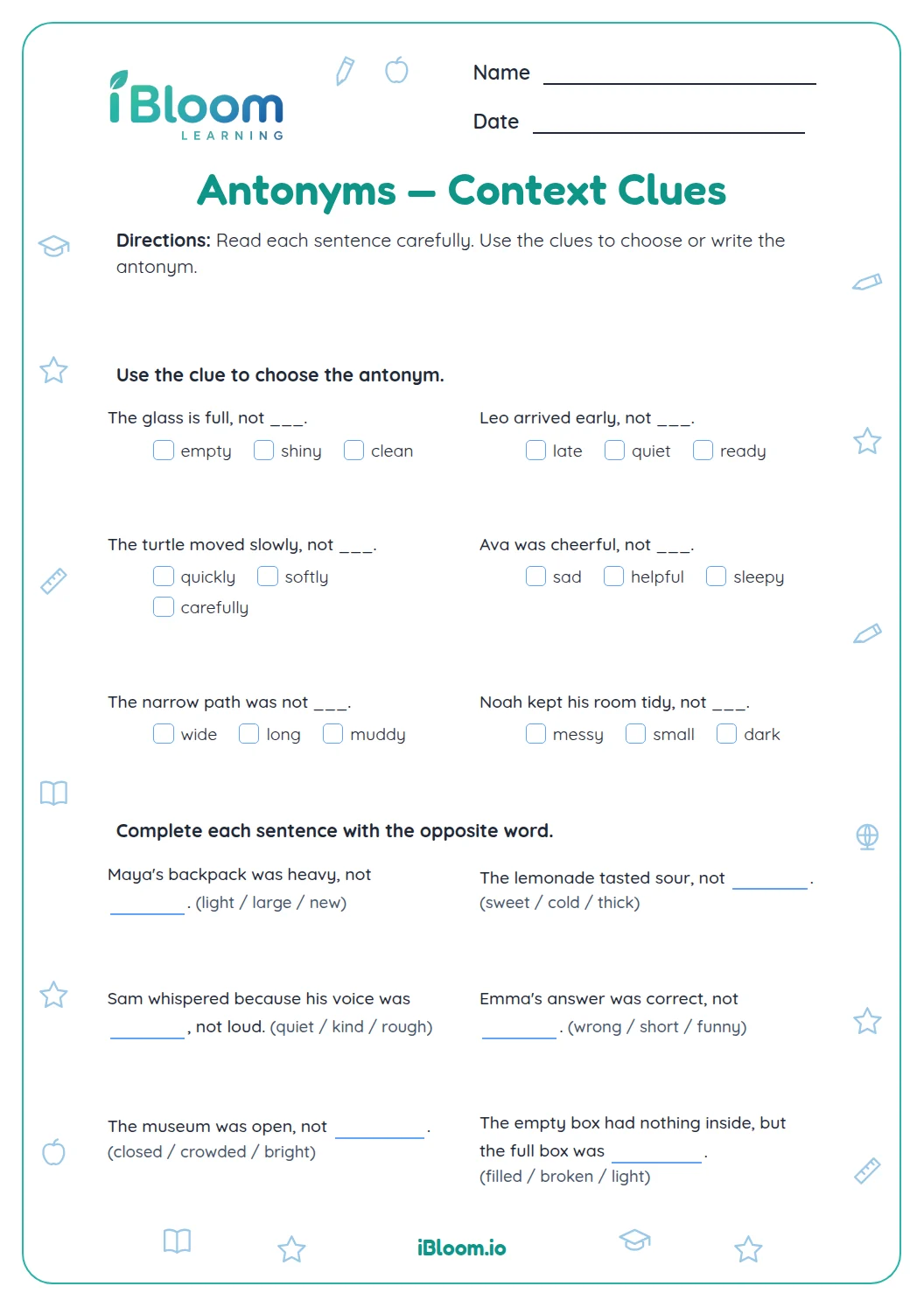
About this worksheet
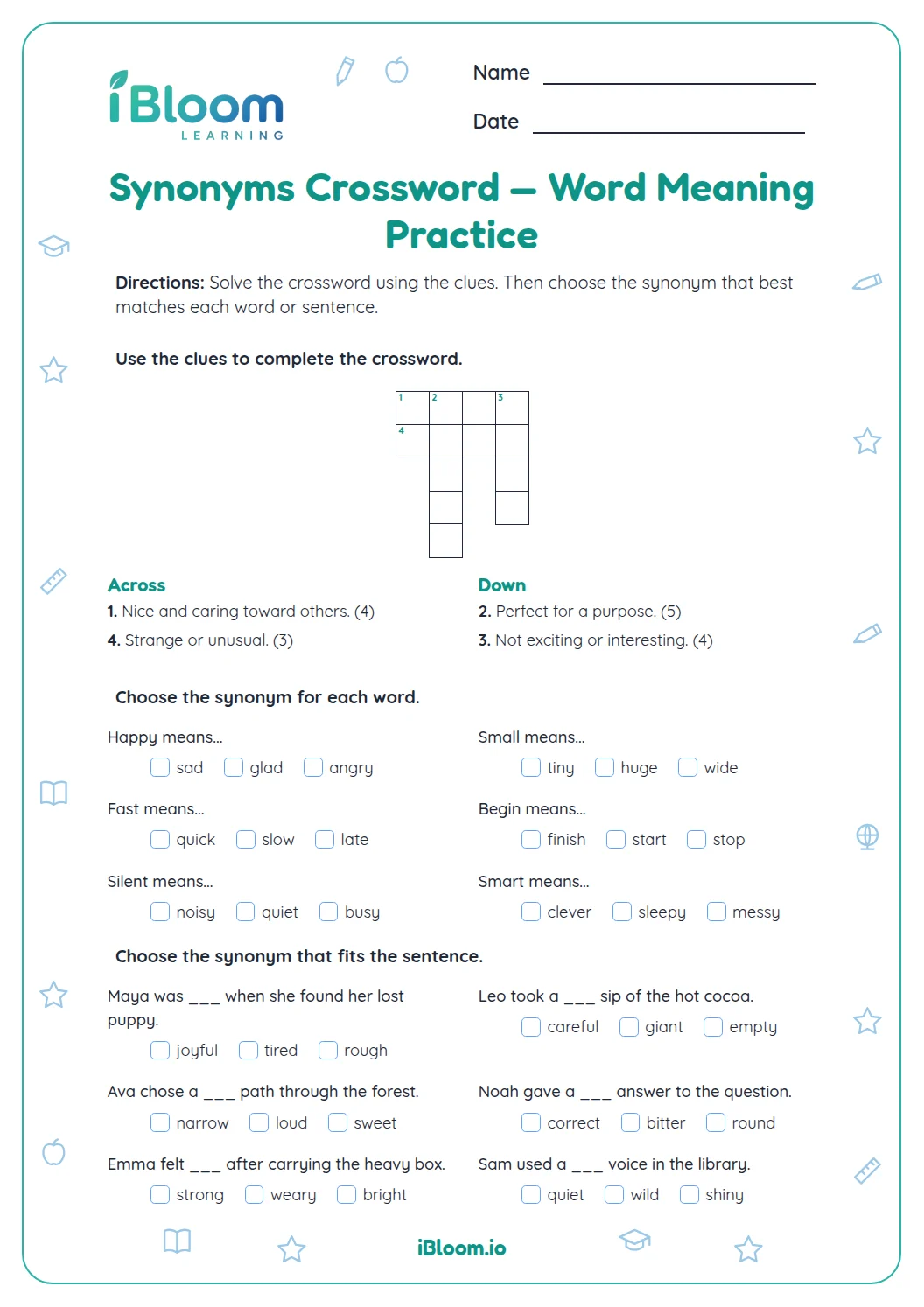
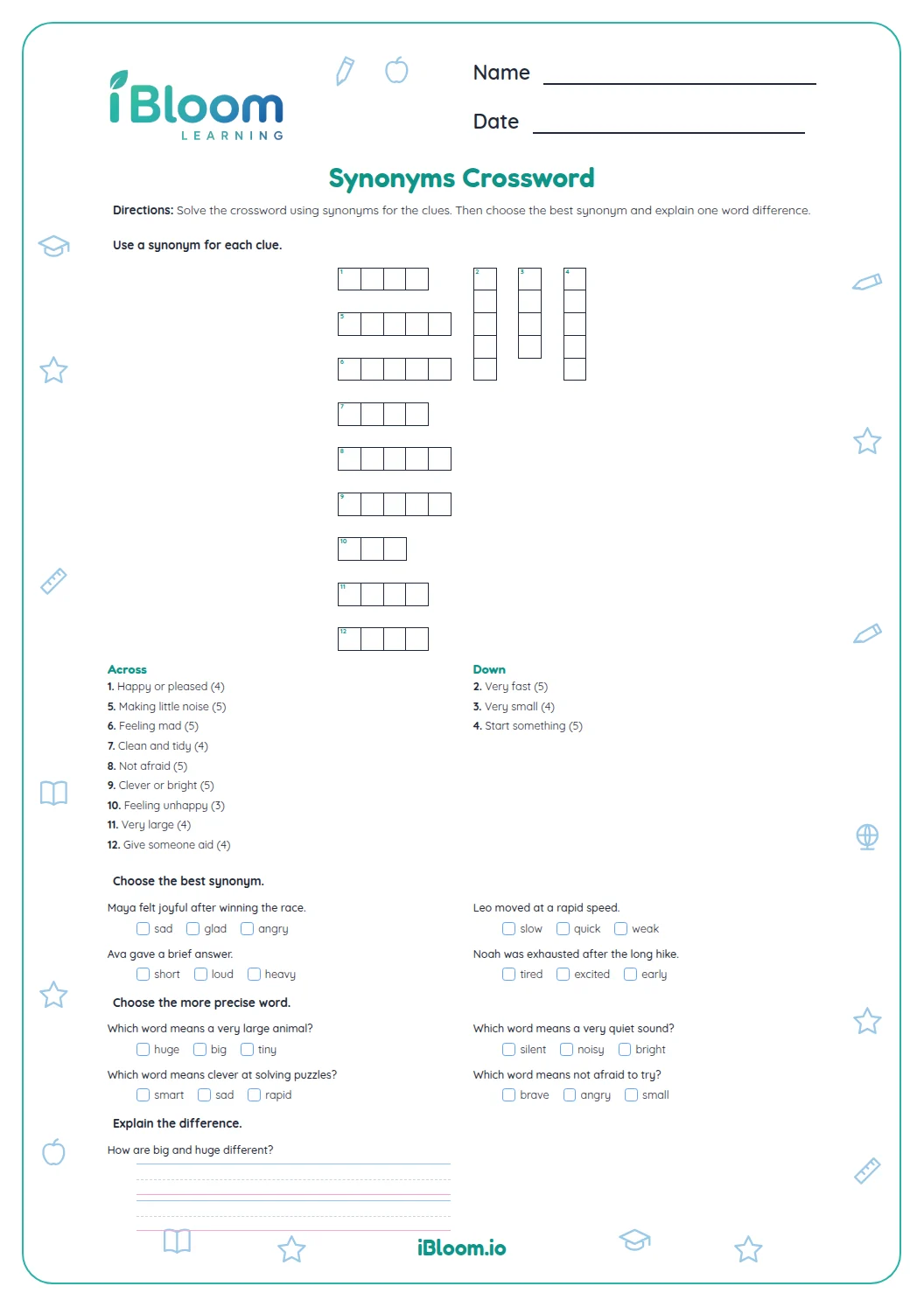
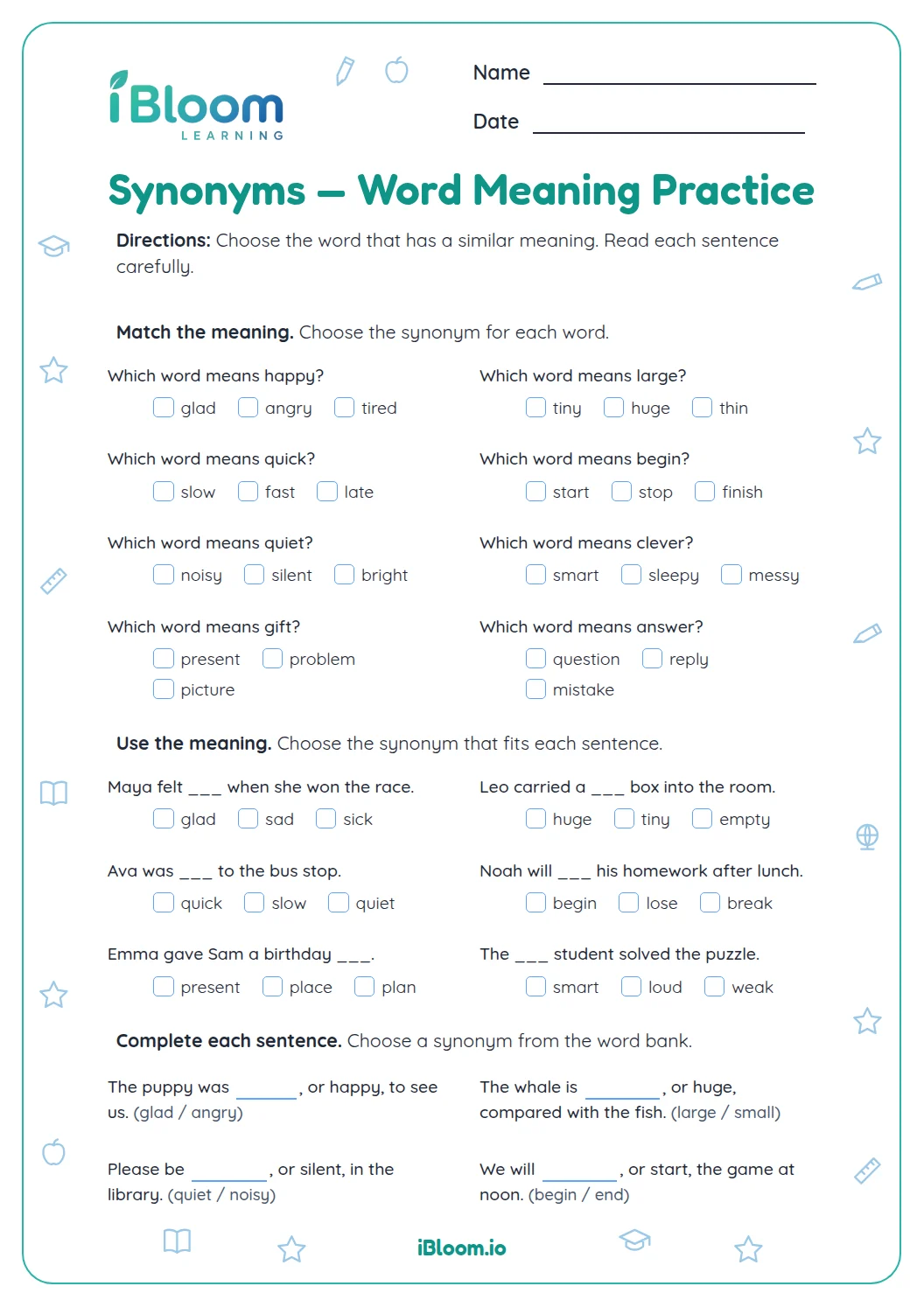
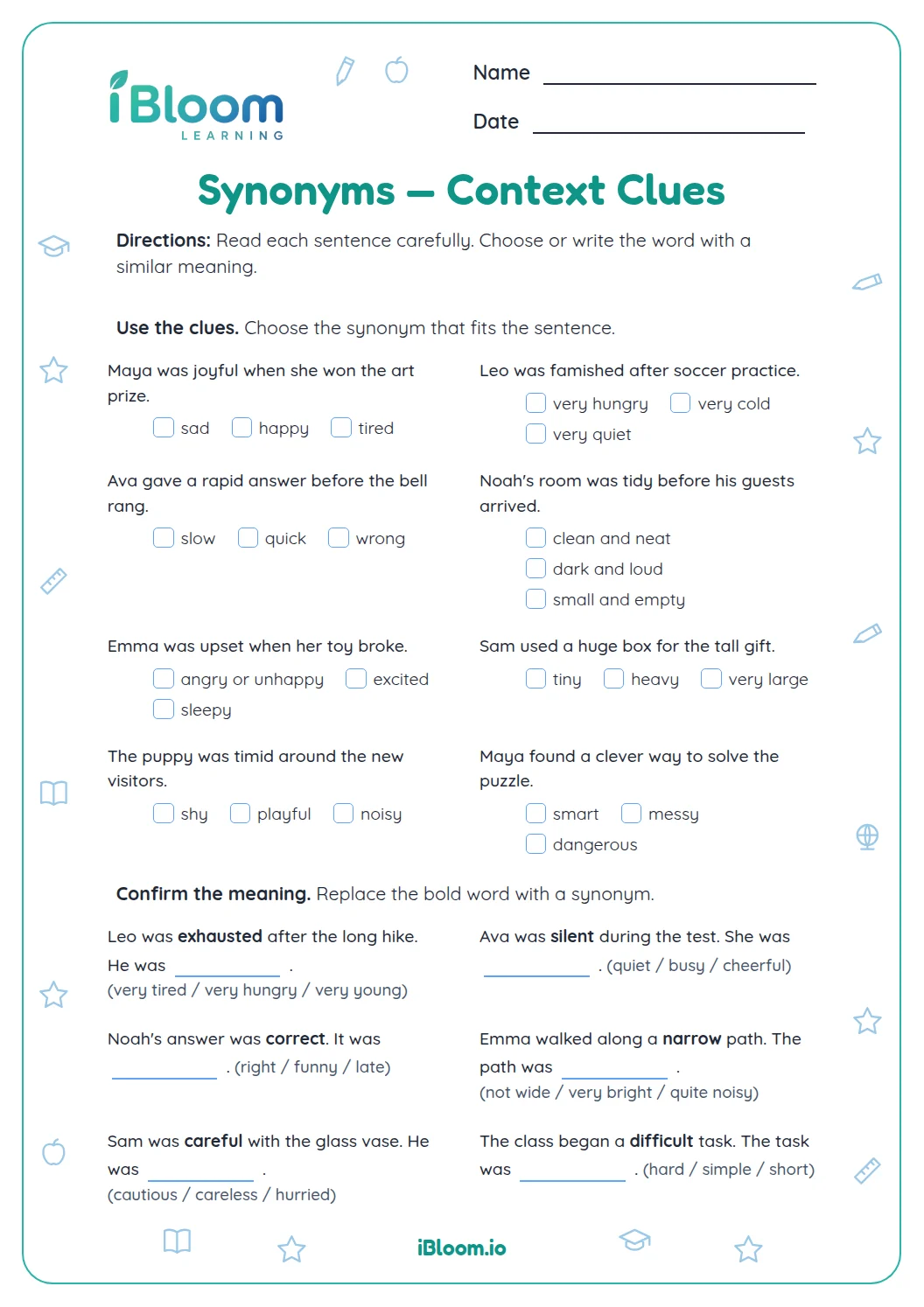
This Grade 3 vocabulary printable combines a seven-word synonym crossword with two open synonym prompts and seven context sentences. The crossword clues ask for close-meaning words, while the sentences help children use surrounding information to choose a fitting synonym. A separate answer key lists the crossword entries, choice answers, and sample responses. The word-relationship practice connects to CCSS L.3.5.
Aligned to L.3.5
What makes two words synonyms?
Synonyms have similar meanings, though they do not always fit in exactly the same sentence. “Glad” and “joyful” are close in meaning; “tiny” and “small” are another pair. Look for the shared idea before choosing a replacement.
Question 10 says the puppy was eager to play and ready to run outside. “Ready” fits the sentence because it describes the puppy’s willingness to go.
- 1The puppy was eager to play; it was ___ to run outside.
- 2The context points to ready.
How do sentence clues help you choose?
Read the whole sentence, then use a detail or contrast to narrow the meaning. In “The path was narrow, so we walked on the ___ trail,” narrow suggests thin rather than wide. The surrounding words help confirm the synonym.
What is different about the crossword clues?
Each crossword clue asks for one word with a close meaning. Crossing letters help check spelling, but children should still use the clue rather than guessing from a letter alone. For example, tacit means unspoken in the clue about an agreement.
How to use this worksheet
- 1Read the clue or sentence all the way through.
- 2Name the meaning you need in your own words.
- 3For a context sentence, notice details that point toward the meaning.
- 4Try the synonym in the sentence to see if it still makes sense.
- 5Use crossing letters to check spelling in the crossword.
Mistakes to watch for
The mistake
Choosing a related word that is not a synonym
The fix
Ask whether both words could describe the same idea in this sentence.
The mistake
Ignoring a contrast clue such as “not cold”
The fix
Use the contrast to rule out words with the opposite meaning.
The mistake
Assuming synonyms can replace each other in every sentence
The fix
Check that the new word sounds natural in the specific sentence.
Common Core alignment
This page gives children focused practice with the skills named in these standards.
Use relationships between words, including synonyms, to clarify meaning.
On this sheet: Use relationships between words, including synonyms, to clarify meaning.
Show the official wordingHide the official wording
Demonstrate understanding of figurative language, word relationships and nuances in word meanings.
What to practice next
Make more practice
Further reading
Questions parents and teachers ask
What is a synonym?
A synonym is a word with a meaning that is the same or close to another word. Glad and joyful are synonyms, as are tiny and small. This worksheet asks children to find close meanings from clues and sentences. Try the selected word in the original sentence to check whether it fits.
How does the crossword help with synonyms?
Each crossword clue asks for a synonym, and crossing letters help children check the spelling. The clue still matters: a word should fit the meaning as well as the available letters. Crossing letters can confirm spelling, while the clue confirms meaning.
How should my child use context clues?
Read the complete sentence and notice details that explain or contrast the word. In the sentence about the narrow path, the clue helps children choose “thin” instead of “wide.” Ask the child to point to the word narrow and explain how it narrows the choices.
Can synonyms always replace each other?
No. Two words can have similar meanings but sound different in a particular sentence. Try the possible synonym in the sentence and check whether the meaning stays sensible. A close synonym should keep the sentence’s central idea without making the wording sound unnatural.
What does the answer key include?
The answer key lists the seven crossword words and context choices, plus sample synonyms for the two written prompts. Other reasonable words with a similar meaning can be accepted for those open responses. Say both words aloud and compare their meanings in the sentence.
Which vocabulary skill does the worksheet practice?
It practices word relationships, especially synonyms, and uses sentence context to support meaning. Children work with clue definitions, crossword entries, and sentences that provide hints. Use the sentence before and after a clue when the first hint is not enough.