



About this worksheet
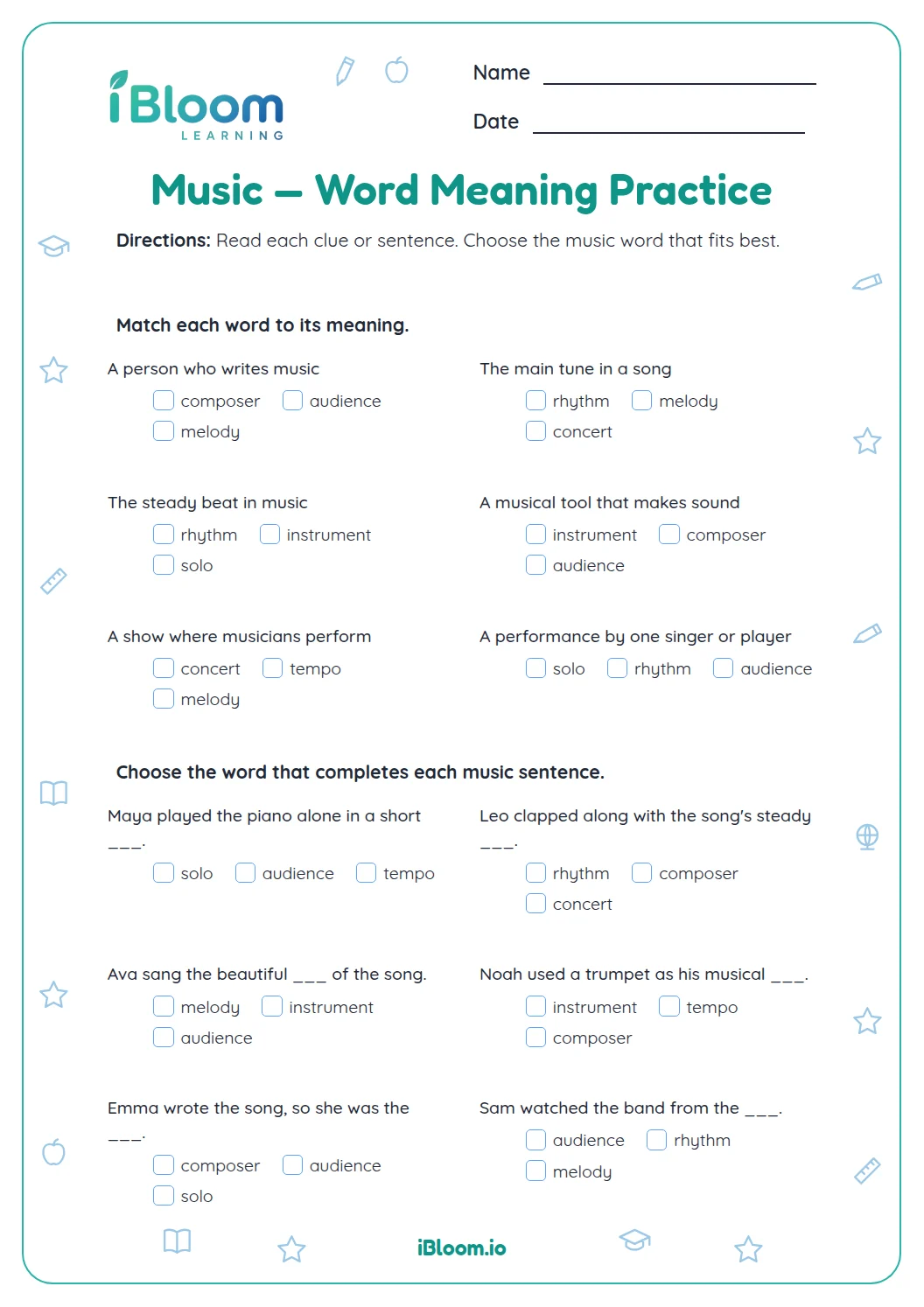
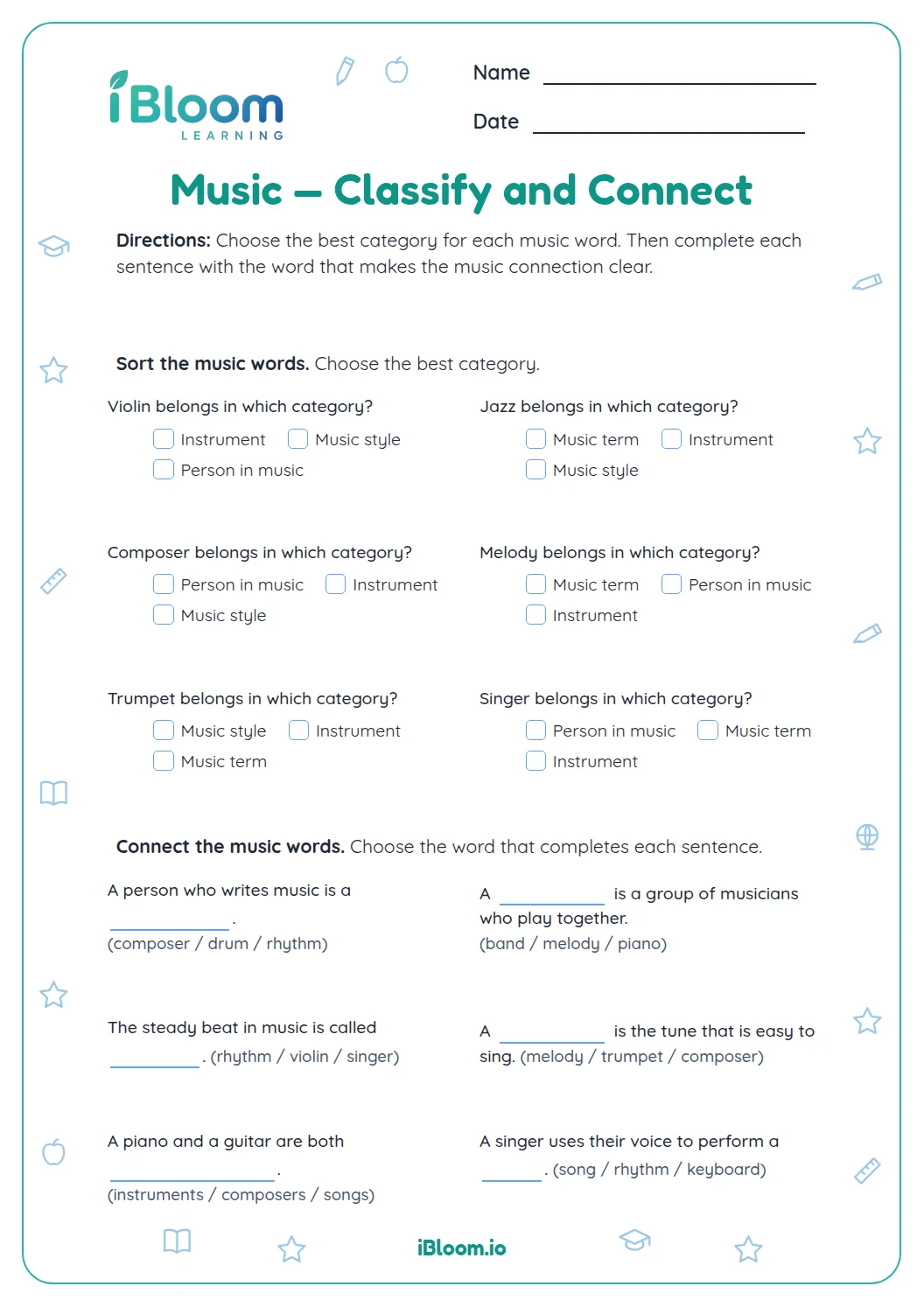
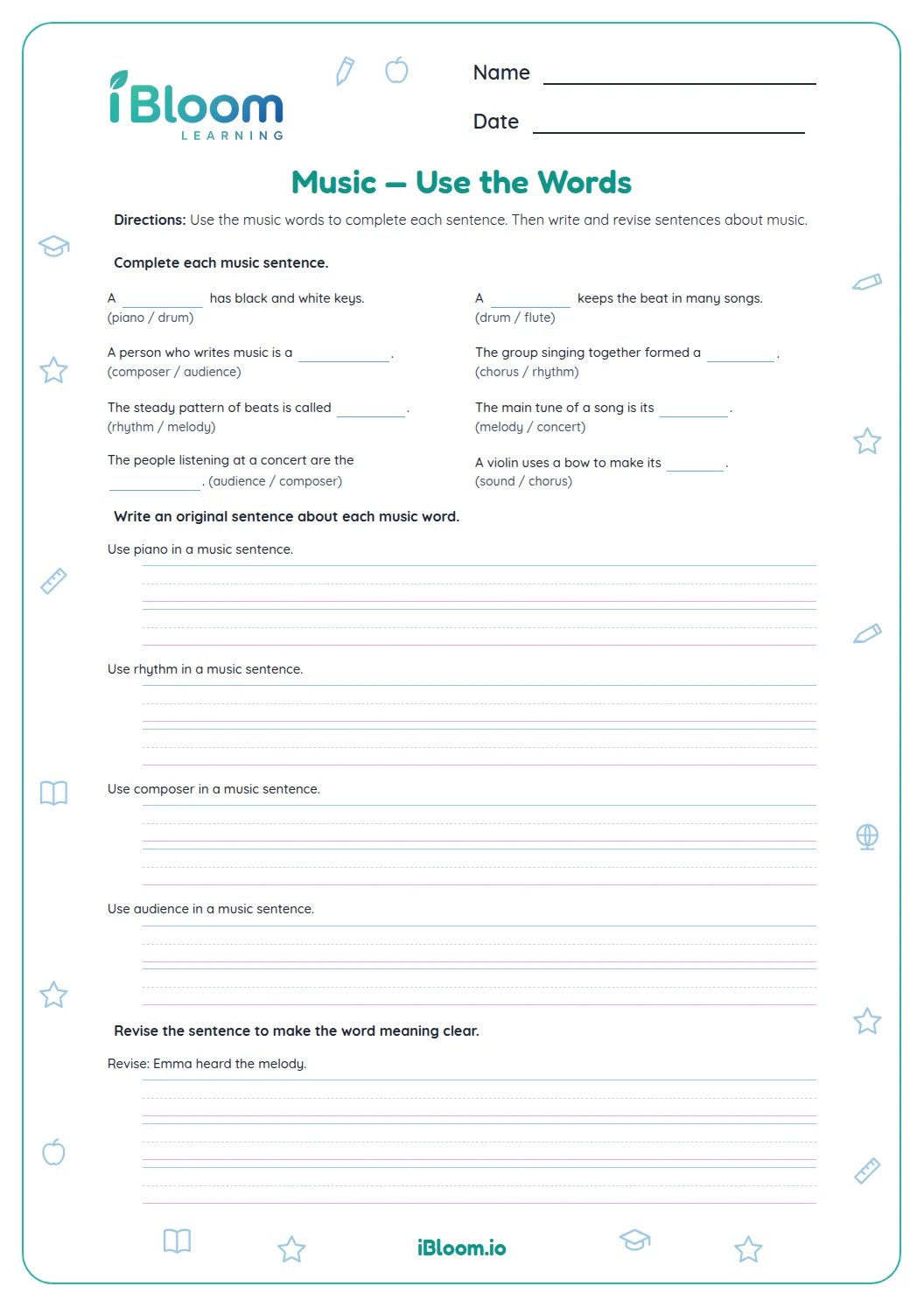
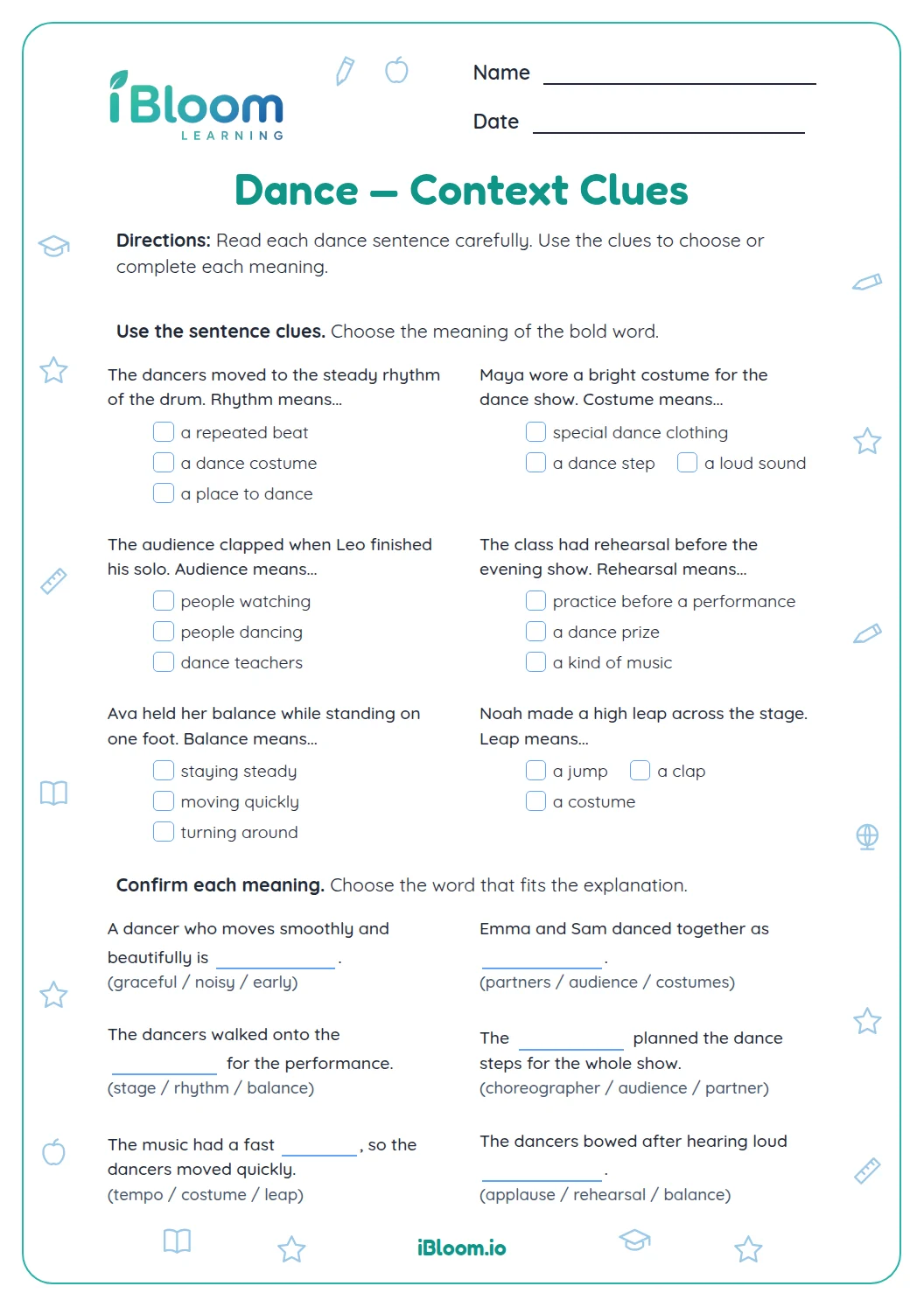
This Grade 3 music vocabulary worksheet combines a word search with meaning clues and short written responses. Learners find ten words, use sentence context to choose a fitting term, complete definitions, and explain relationships among music words. The activities practice CCSS L.3.4 by using context and word relationships to clarify vocabulary. The key lists the search words and sample responses for open-ended questions.
Aligned to L.3.4
Which music words will learners find?
The grid includes piano, guitar, melody, rhythm, drums, chorus, tune, vocal, song, and band. Finding each word gives learners a quick way to revisit the spelling before using the words in context.
- 1The repeated beat in music is its ___.
- 2A melody is the tune; rhythm is the beat pattern.
- 3Answer: rhythm
How do clues point to the right word?
Part B gives a sentence clue for each music term. Look for a phrase that describes what the word means: “repeated beat” points to rhythm, while “group of musicians” points to band.
How can learners connect the words?
Parts C and D ask learners to complete meanings and describe relationships. A rhythm is a beat pattern; a melody is a tune of notes. A learner may make different connections in writing, as long as the example uses the word correctly.
How to use this worksheet
- 1Find the words in the grid from left to right.
- 2Read each sentence and underline its clue phrase.
- 3Use the clue to choose or write the matching music term.
- 4For comparisons, explain what each word means.
- 5Check the search list and sample answers in the key.
Common mistakes and quick fixes
The mistake
Mixing up rhythm and melody.
The fix
Remember rhythm is the beat pattern; melody is the tune.
The mistake
Choosing a word because it is music-related but not precise.
The fix
Check that it matches the clue in the sentence.
The mistake
Writing a connection without showing what the words mean.
The fix
Include a short example of how the terms work together.
Common Core alignment
Use sentence clues and word relationships to clarify vocabulary.
On this sheet: Learners use sentence clues and connections among music words to show understanding.
Show the official wordingHide the official wording
Determine or clarify the meaning of unknown and multiple-meaning word and phrases based on grade 3 reading and content, choosing flexibly from a range of strategies.
What to practice next
Make more practice
Further reading
Questions parents and teachers ask
What does this music vocabulary worksheet practice?
It gives Grade 3 learners varied practice with finding and using words such as melody, rhythm, chorus, and band. Each part builds on the idea introduced earlier, and the prompts use familiar contexts. The answer key follows the printable pages so an adult can review each response and discuss any answer that needs another look.
How many questions are on the worksheet?
There are 16 questions arranged in several parts, moving from recognition to application. The printable includes a separate answer key with answers and sample responses. A learner can complete one part at a time and check work after finishing the section.
How should I help if a learner gets stuck?
Ask the learner to reread the whole prompt and name the clue that matters. Then compare the answer with the key and talk through the step that led to it. For a missed item, try a similar example aloud before returning to the worksheet.
Can I use this in class or at home?
Yes. Print the worksheet pages and keep the answer key for checking. Learners can work independently or read the directions and questions with a teacher or family member. The short sections also make it easy to pause and review a strategy before moving on.
What is the best way to check answers?
Use the key after the learner completes a part. For written responses, look for the idea named in the sample answer; wording can vary when the meaning is clear. Ask the learner to point to the clue or step that supports the answer.