


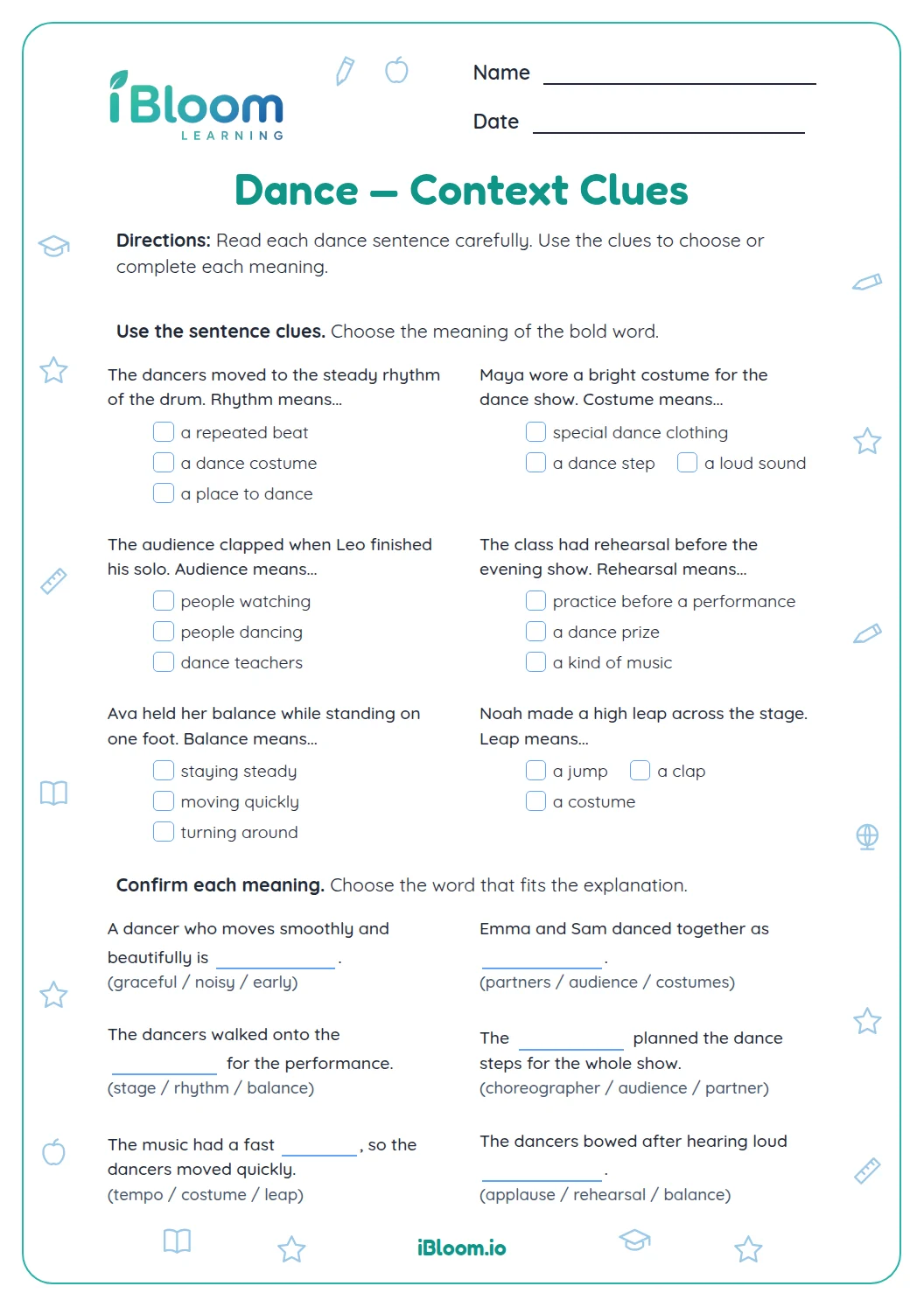

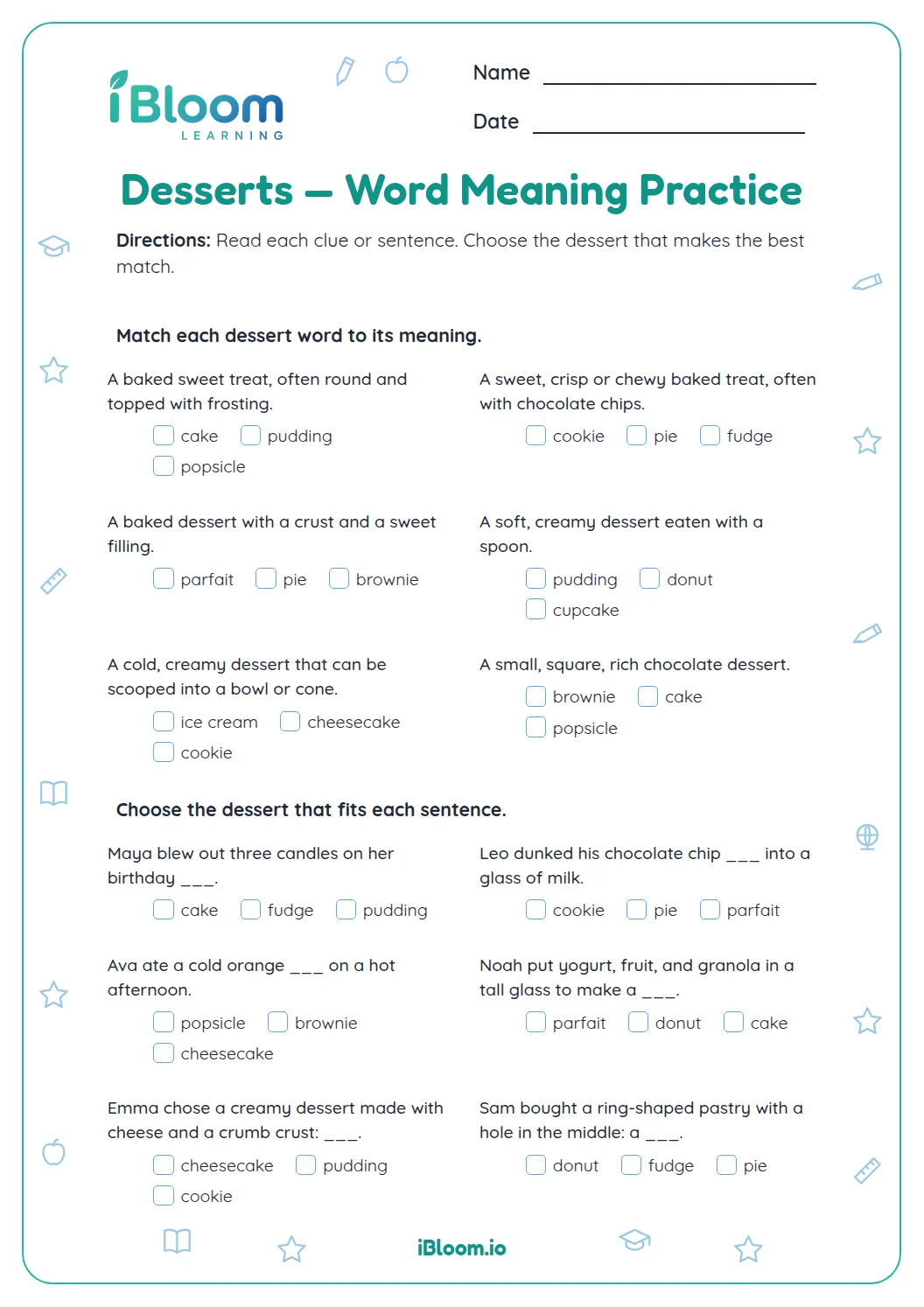


About this worksheet
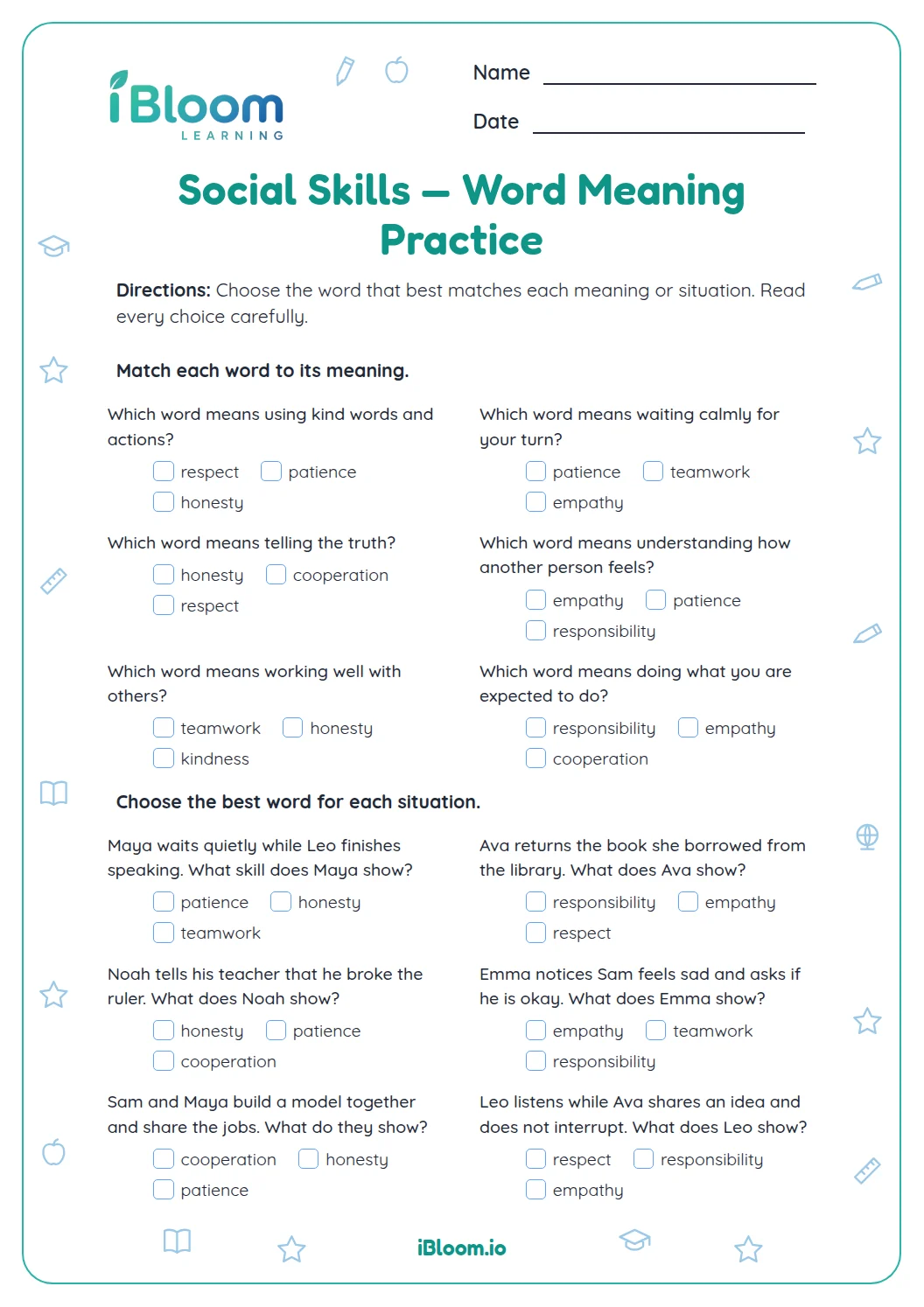
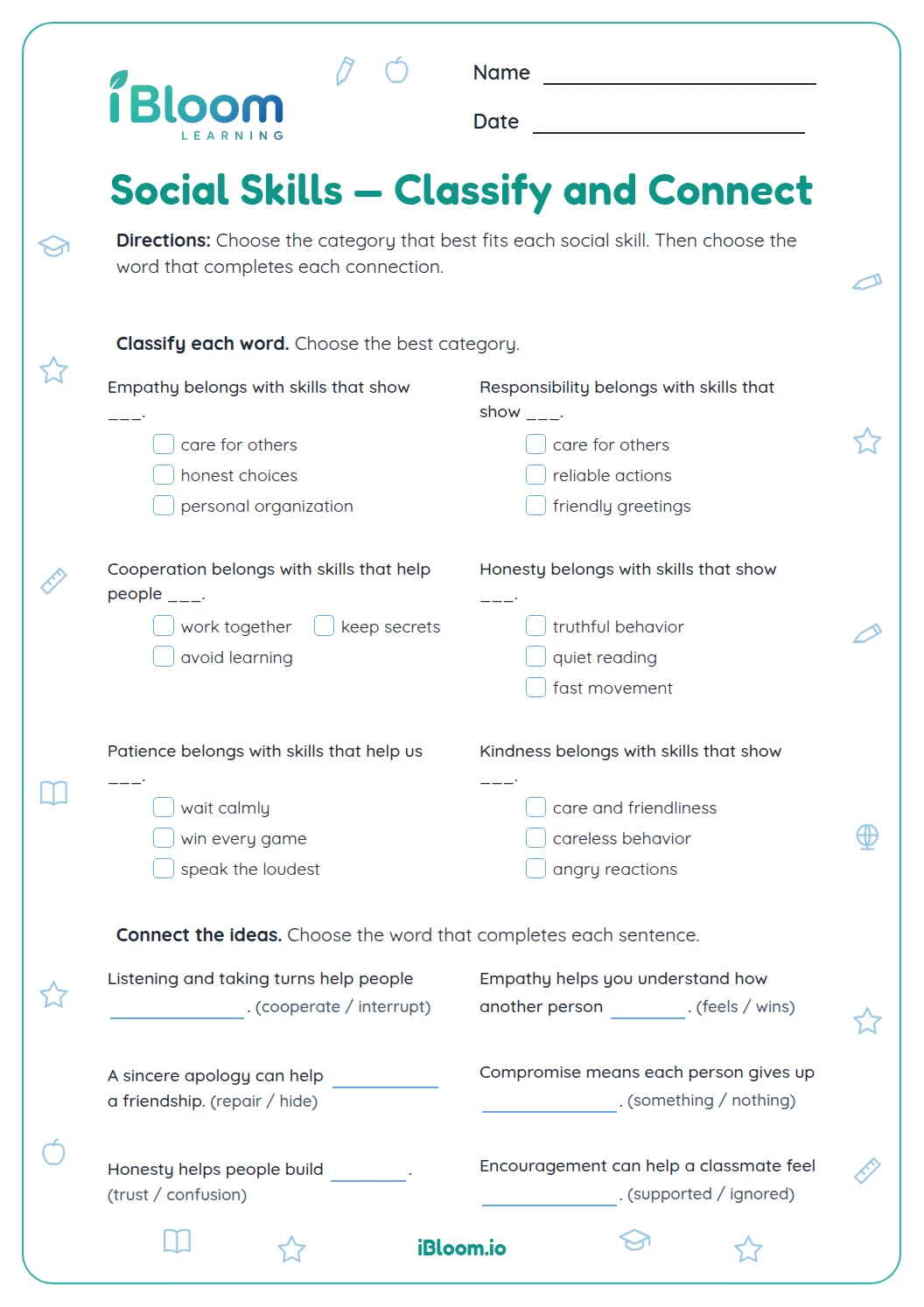
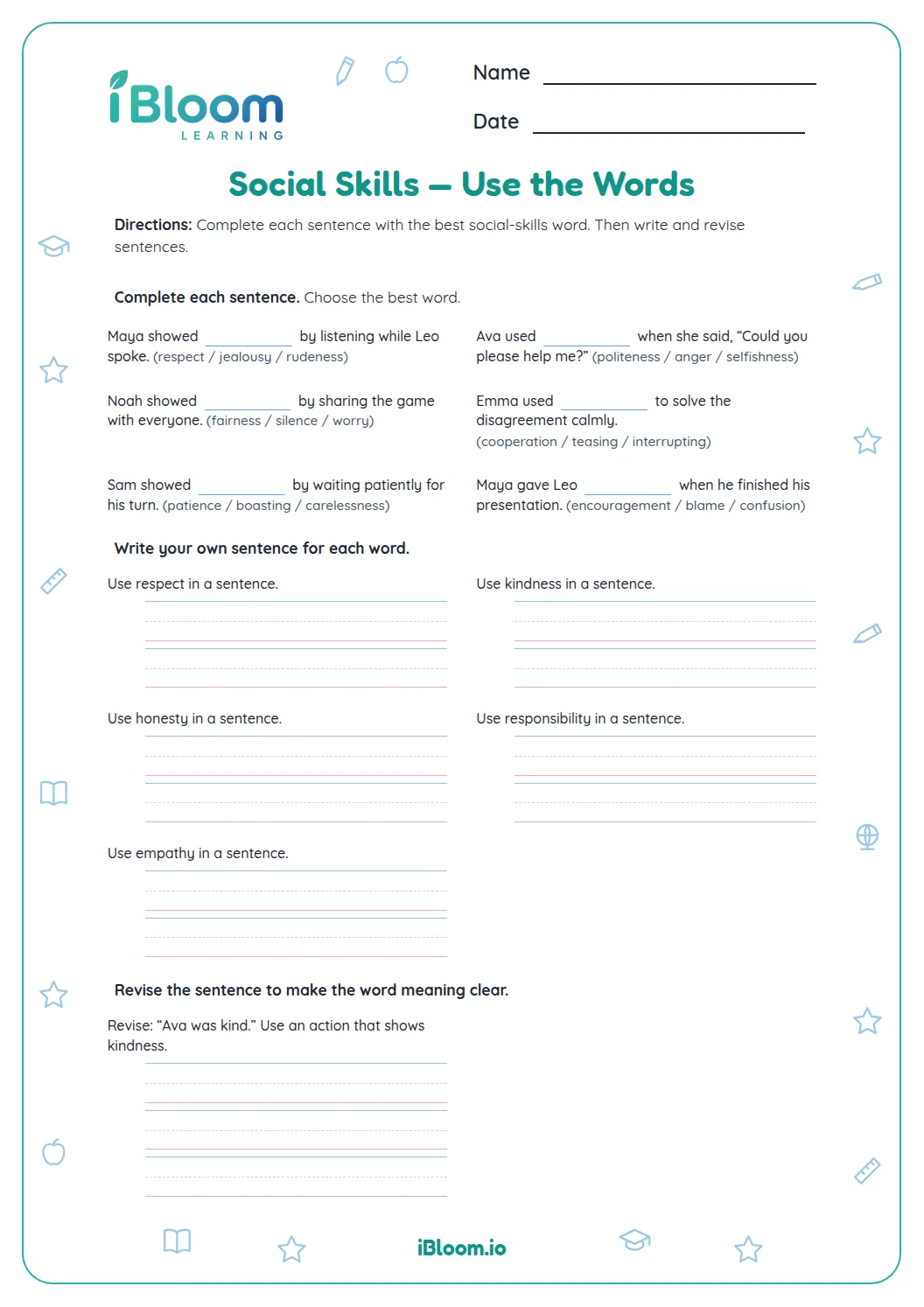
This free printable Grade 3 vocabulary worksheet gives learners 14 questions on social-skills words. It starts with a word search, then asks learners to match meanings and actions to words such as kind, honest, patient, and teamwork. A separate answer key is included.
How can a word search support vocabulary?
The grid hides eight social-skills words: kind, help, listen, share, honest, patient, teamwork, and caring. Finding them introduces the vocabulary used again in the meaning and situation questions.
Question 7 describes Maya picking up a classmate’s crayons. That action is helping, so help is the best matching word.
- 1Maya helps pick up crayons.
- 2The action is giving someone a hand.
- 3Matching word: help
How do context clues help choose a social skill word?
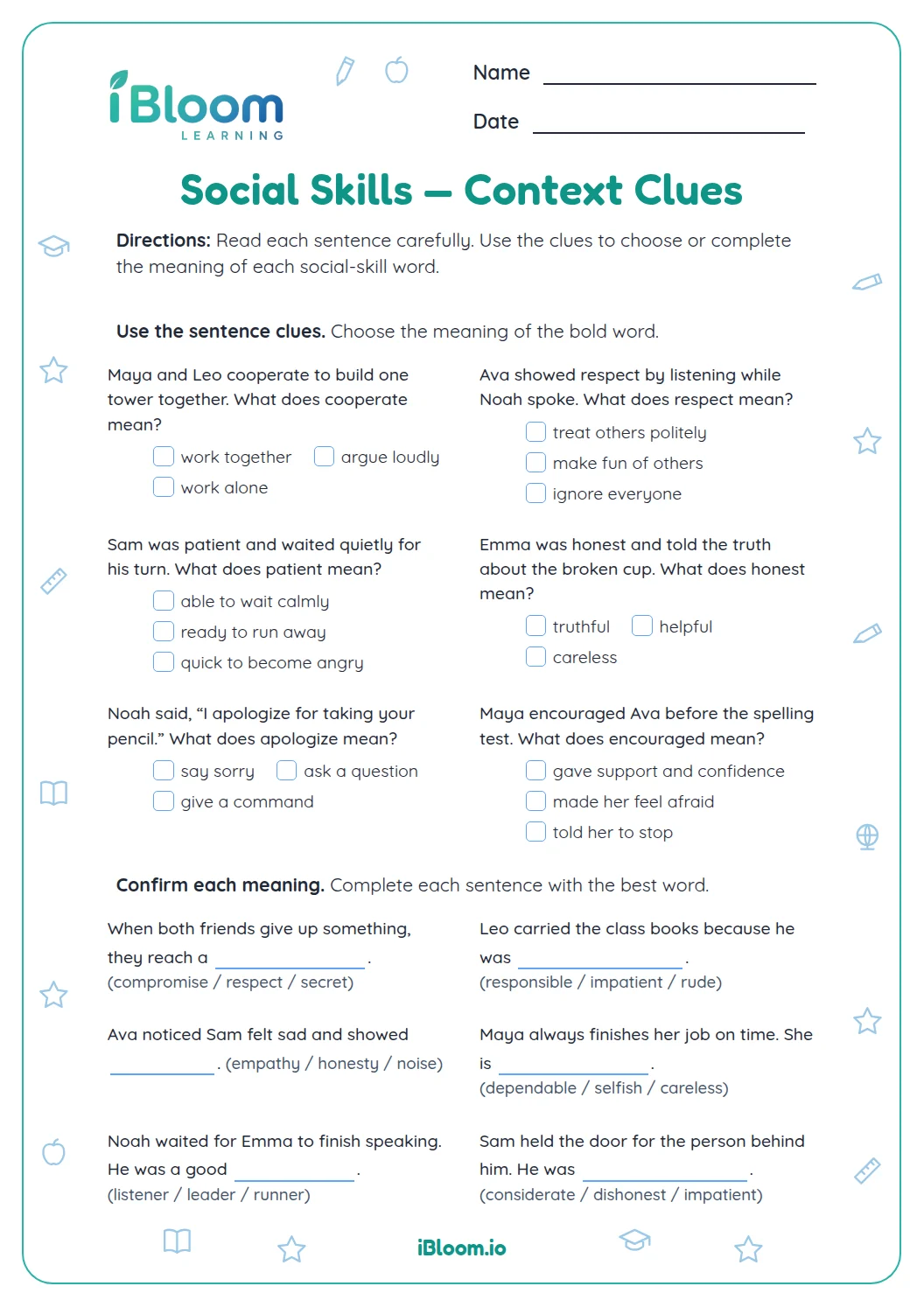
The situation questions connect a specific action to a word. For example, waiting for a turn points to patience, while telling what happened truthfully points to honesty.
What is included in the review?
The 14-item activity has one word search and 13 short responses about meaning, social situations, and sentence use. The separate answer key contains the target words and question answers.
How can I use this worksheet?
- 1Search for each word and mark it once.
- 2Read the whole clue before choosing a meaning.
- 3Look for the action that best matches the word.
- 4Read the completed sentence aloud to see if it makes sense.
Common mistakes and quick fixes
The mistake
Using kind for a clue about noticing another person’s feelings.
The fix
Read the whole clue, say what the person does, and match it to the word’s meaning.
The mistake
Choosing a word from one detail without checking the whole situation.
The fix
Read the whole clue, say what the person does, and match it to the word’s meaning.
The mistake
Copying a found word with a letter missing.
The fix
Read the whole clue, say what the person does, and match it to the word’s meaning.
What to practice next
Make more practice
Questions parents and teachers ask
Which words are hidden in the search?
The grid contains kind, help, listen, share, honest, patient, teamwork, and caring. Find each word in a straight line across or down. The remaining questions reuse these terms in definitions, situations, and sentence clues. Invite the learner to explain which clue makes the answer fit.
What is the difference between honest and kind?
Honest means truthful, while kind means considerate or friendly toward someone. In this worksheet, telling the teacher about a paint spill fits honest; including someone in a game fits kind. Read the action carefully. Invite the learner to explain which clue makes the answer fit.
How can I help a child solve the situation questions?
Ask the child to describe the action in their own words first. Then compare it with the vocabulary: listening means paying attention, helping means giving a hand, and patience means waiting calmly. The key provides a concise check.
How many words are in the puzzle?
There are eight target words: kind, help, listen, share, honest, patient, teamwork, and caring. The word search is followed by 13 short meaning, context, and sentence questions that check how learners understand and use them. Invite the learner to explain which clue makes the answer fit.
What is included in the answer key?
The separate answer key spans three pages and lists the eight hidden words and the answer to every meaning, context, and sentence question. For discussion, ask the learner to point to the clue that supports each response. Invite the learner to explain which clue makes the answer fit.
Can this page start a class discussion?
Yes. After completing an item, invite learners to name a respectful example of the skill, such as sharing a marker or listening while a classmate speaks. Keep examples focused on observable actions they can describe. Invite the learner to explain which clue makes the answer fit.