



About this worksheet
This Grade 4 review moves beyond spotting compounds: students identify parts, demonstrate meaning in sentences, and use context when word parts are misleading.
Aligned to L.4.4.a
How does this sheet build compound-word understanding?
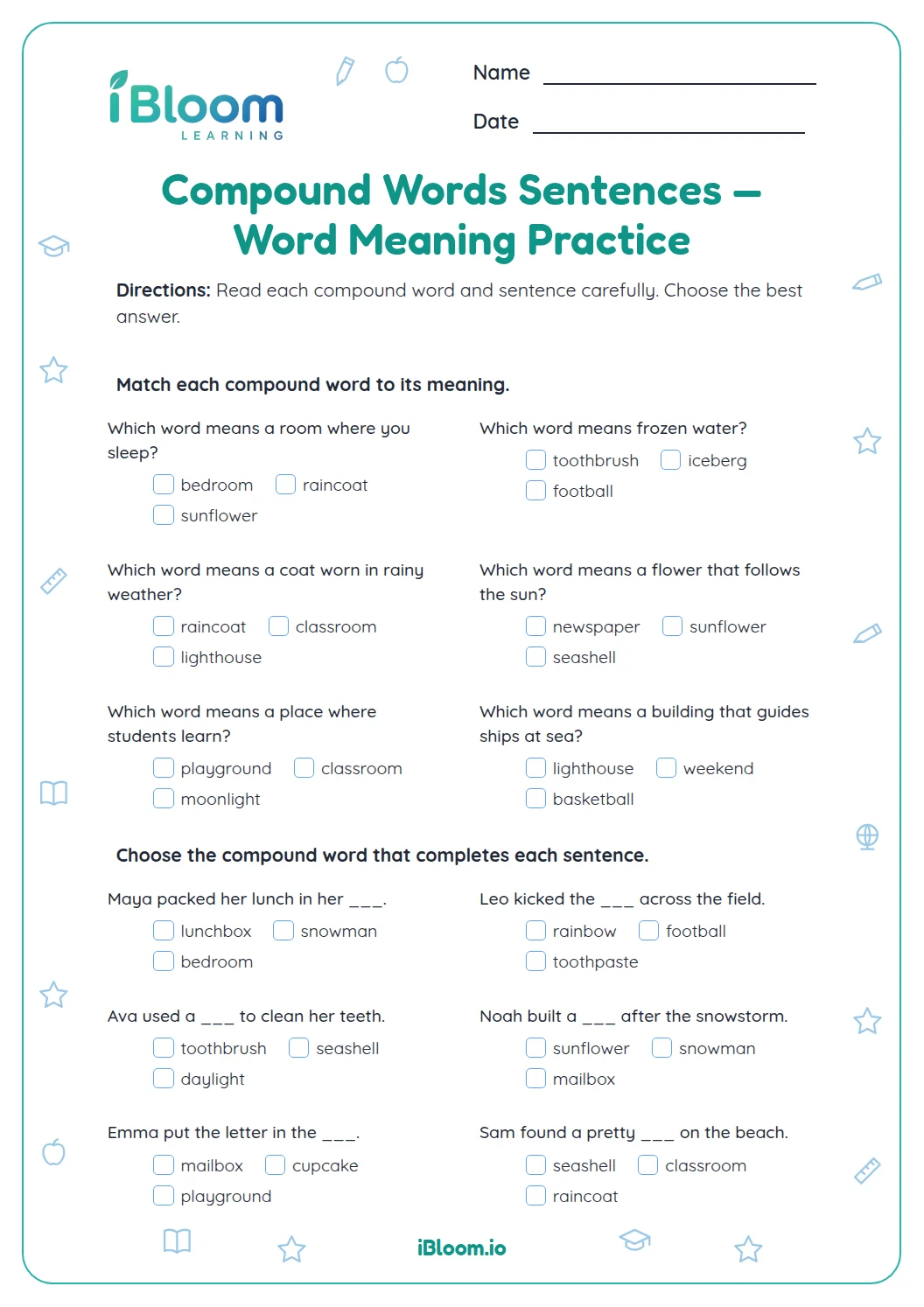
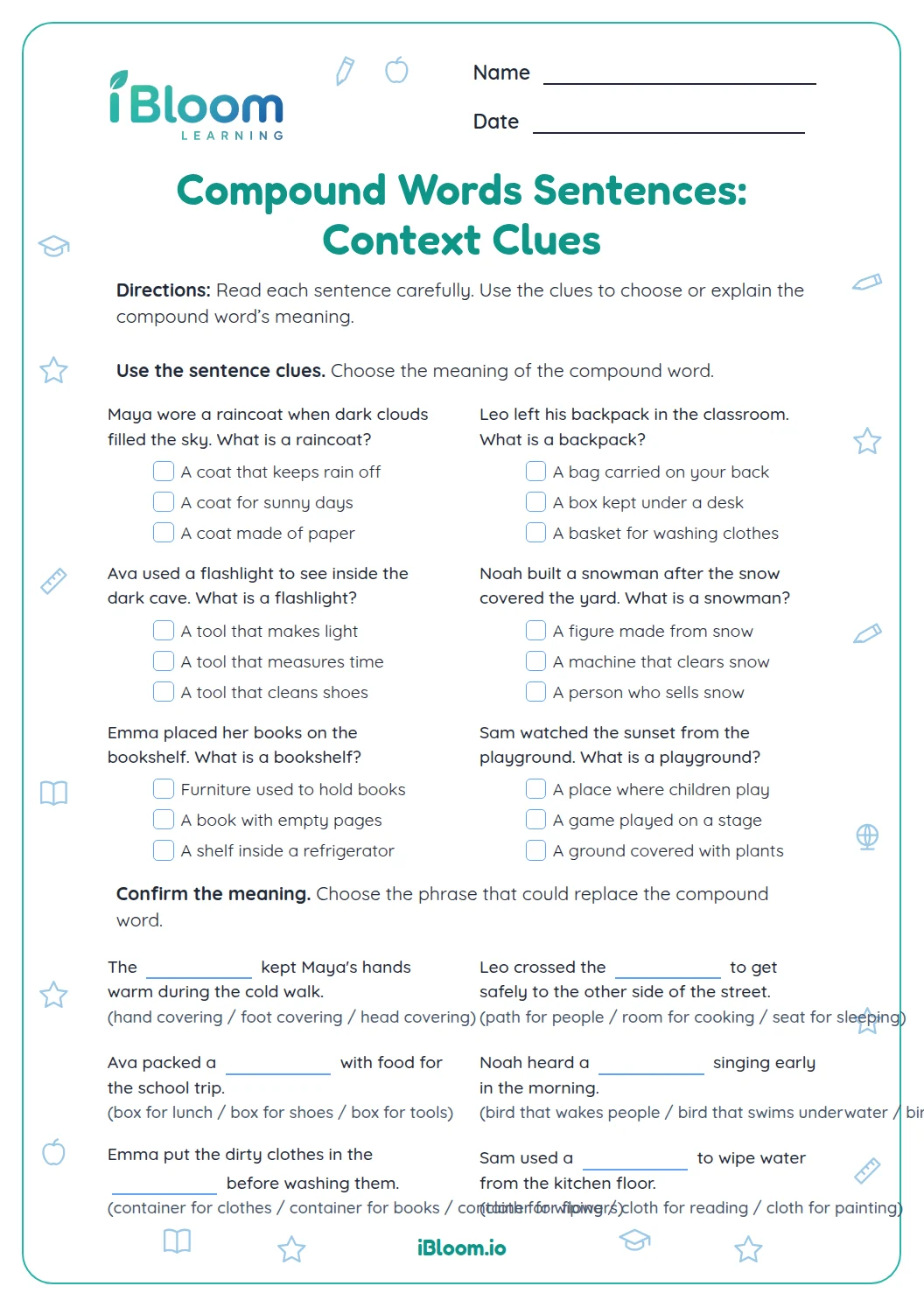
This review asks students to identify compound words, break them into smaller words and use each word in a meaningful sentence. The last group uses sentence context to test whether the word parts and the whole meaning both make sense.
Some compounds have meanings that are easy to infer, such as birdhouse. Others, such as butterfly, show why students should not rely on word parts alone.
- 1Raincoat combines rain + coat.
- 2Both parts help explain the item’s use: a coat worn in rainy weather.
- Part A: identify and break apart compounds
- Part B: use compound words in sentences
- Part C: reason from context and word meaning
How do word parts and context work together?
A compound word joins two words, such as rain and coat in raincoat. The parts often give a helpful clue, but context confirms the meaning. A clear sentence shows how the whole word is used.
Can a compound mean more than its parts?
The parts of many compounds give a useful clue, but they do not always define the whole word literally. Use the sentence around a word to confirm the meaning, especially for words such as butterfly.
How to use this worksheet
- 1Read the short direction at the start of each part.
- 2Solve each item and keep units or operation signs with the values.
- 3For reasoning questions, use the evidence named in the prompt.
- 4Check calculations against the separate answer key.
Common mistakes and quick fixes
The mistake
Assuming every compound word means exactly the sum of its parts.
The fix
Use context too. Butterfly is formed from two smaller words, but its meaning is not a butter plus a fly.
The mistake
Calling sunny a compound because it is related to sun.
The fix
A compound is formed from two words; sunny adds a suffix to sun.
The mistake
Assuming that a compound’s meaning always equals the literal meanings of its parts.
The fix
Use context to check the whole word; butterfly names an insect, not butter that flies.
Curriculum alignment
This worksheet gives students practice with the cited Common Core skill.
Use context as a clue to the meaning of a word or phrase.
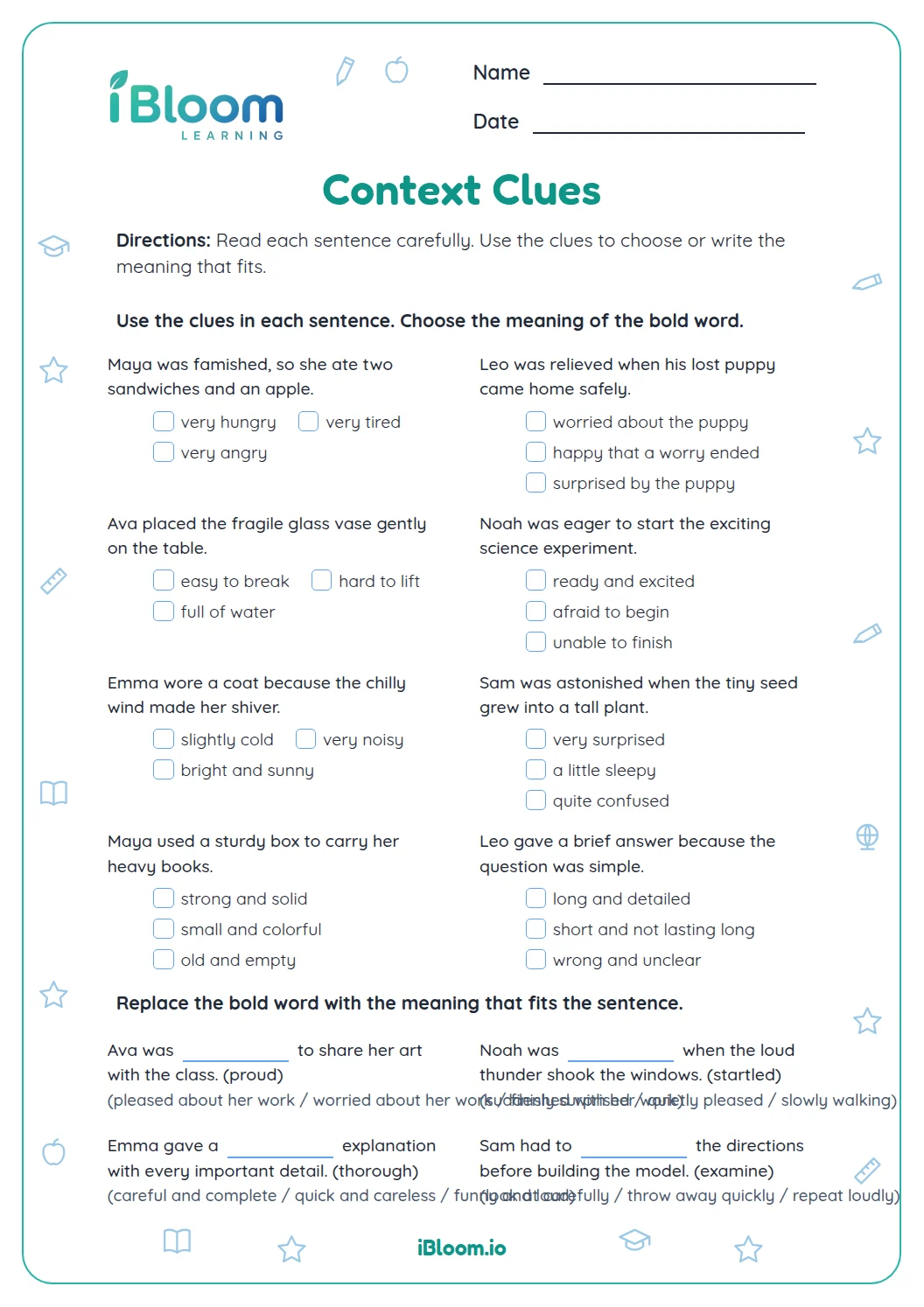
On this sheet: Parts A and C use sentence clues to identify and explain compound word meanings.
Show the official wordingHide the official wording
Use context (e.g., definitions, examples, or restatements in text) as a clue to the meaning of a word or phrase.
What to practice next
Make more practice
Further reading
Questions parents and teachers ask
Does every compound word mean exactly what its smaller words suggest?
No. The word parts often give a useful clue, but the whole meaning may be different. Butterfly is formed from two smaller words, yet it does not mean butter plus a fly. Students should use the sentence around a compound to confirm how the complete word is being used.
How can students show that they understand a compound word?
They can name the two smaller words and use the complete word in a sentence that makes its meaning clear. For example, “I put on my raincoat before the storm” shows that a raincoat is clothing worn for rainy weather.
What is the difference between a compound and a word with a suffix?
A compound joins two words, such as sun and shine. A suffix is a word part added to a base word; sunny is sun plus the suffix y, not a compound of two complete words. Looking for two word parts helps distinguish the patterns.
Why does this worksheet use sentences as clues?
A sentence shows how a word works in context and gives details that can confirm its meaning. Students use those details alongside the word parts, instead of guessing from spelling alone. This is especially helpful when a compound’s whole meaning is not literal.
How can a student check an answer on this sheet?
Read the full sentence and ask whether the chosen meaning fits both the compound and its context. Word parts help, but they do not always tell the whole story. The answer key gives the target response for each item and sample sentences for open responses.