


About this worksheet
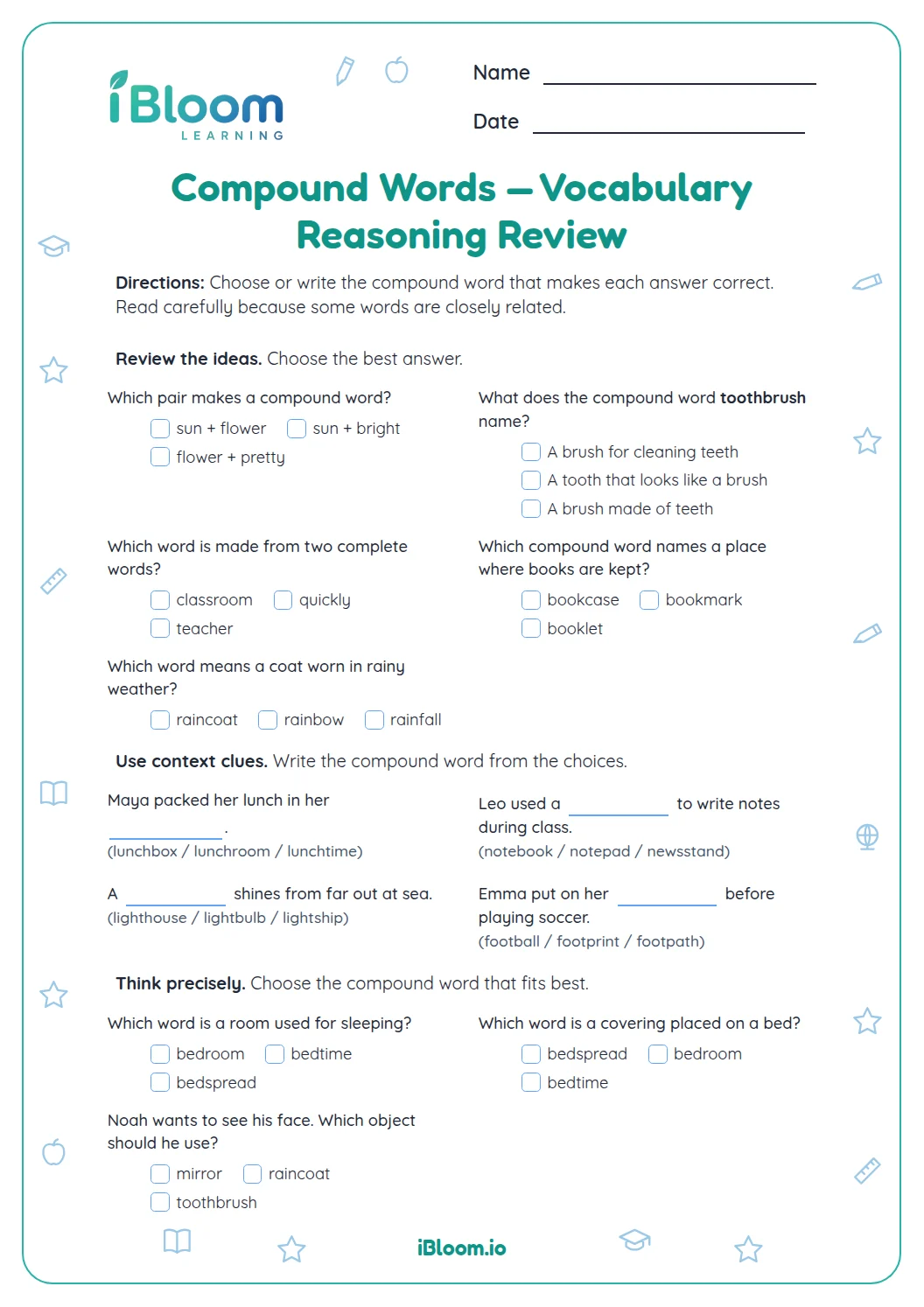
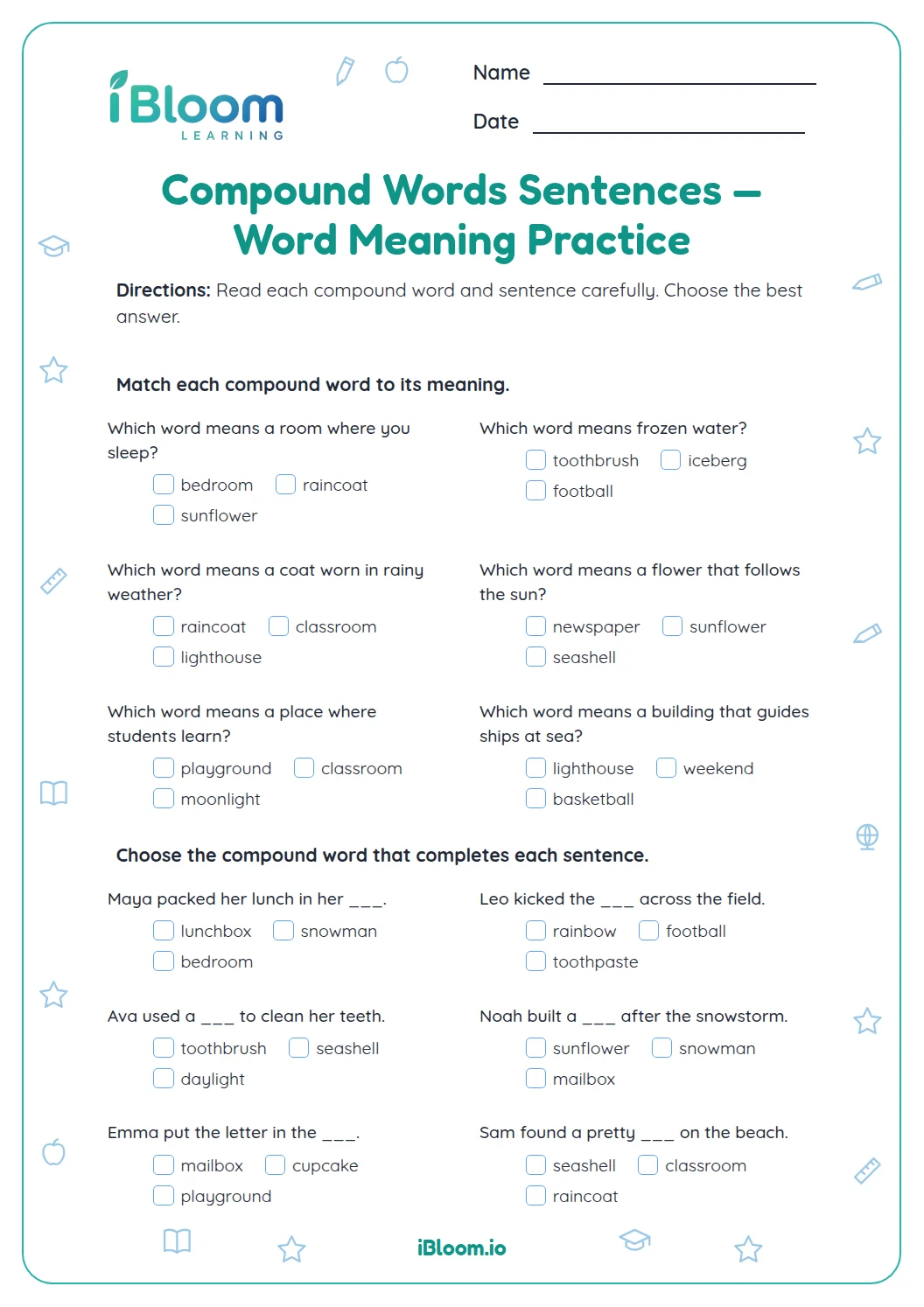
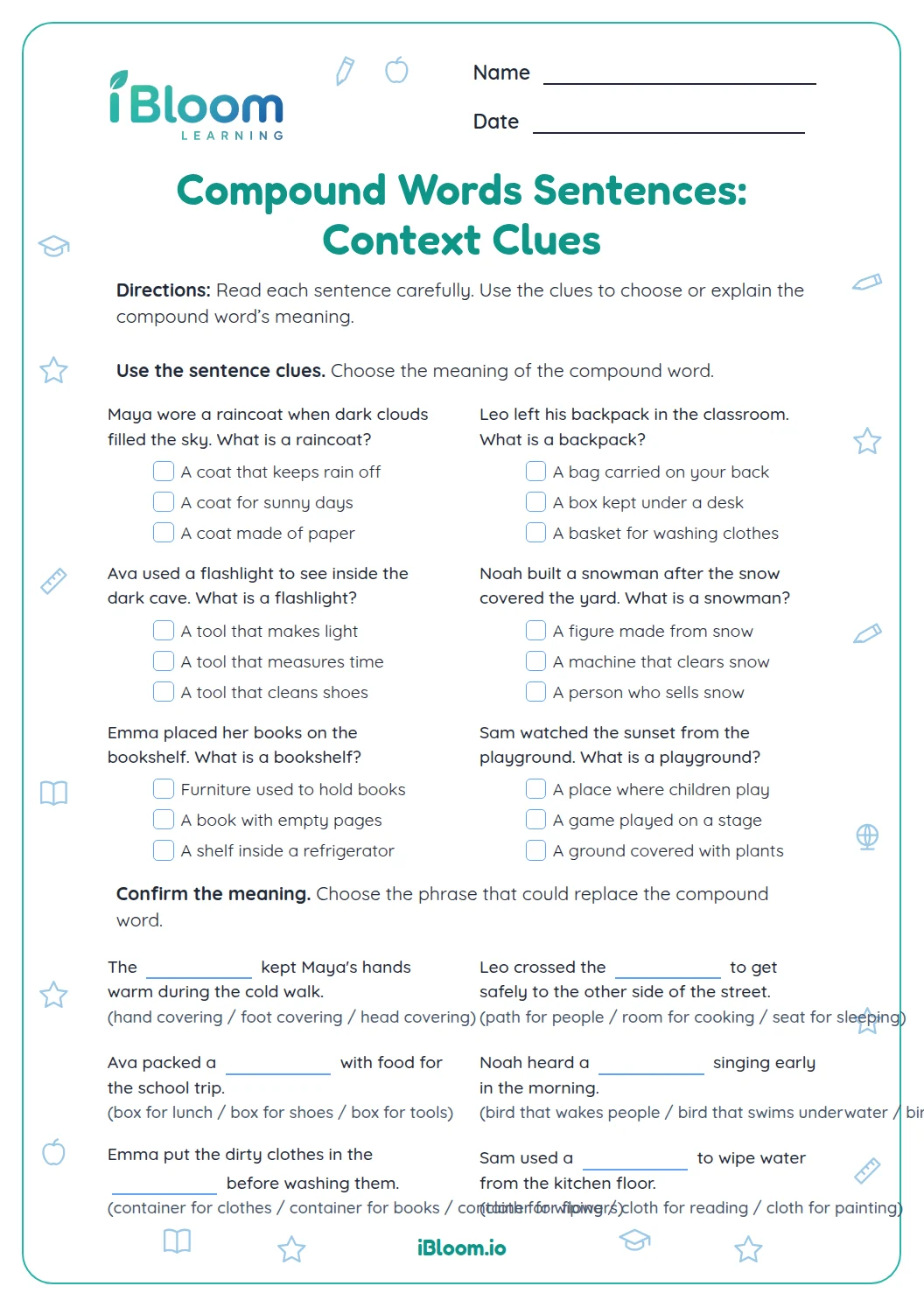
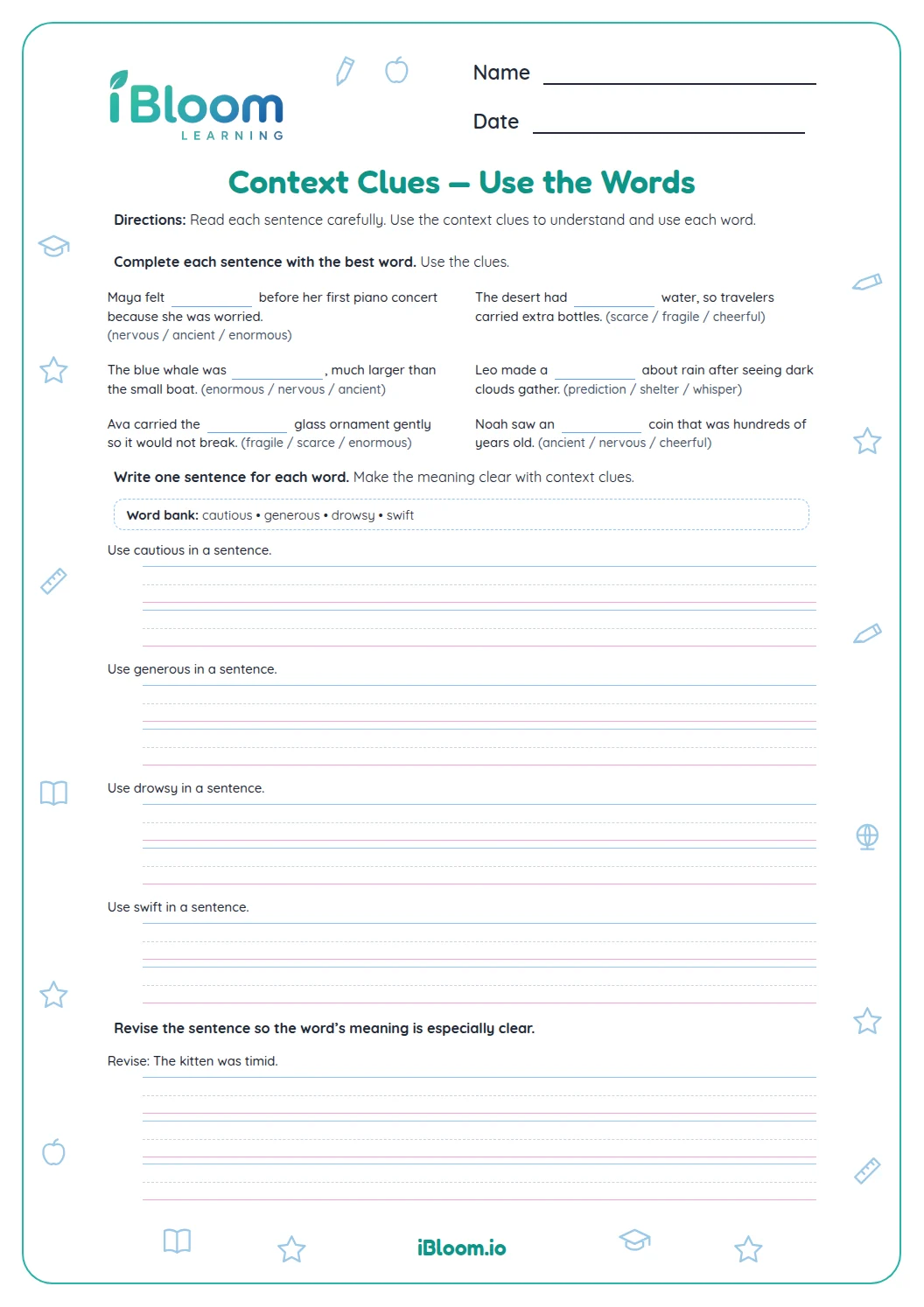
This Grade 4 printable practices compound words in three steps: students use sentence clues to choose meanings, complete new sentences with compound words, and identify word parts. There are 16 questions across the worksheet. The context-clue work supports CCSS ELA/L.4.4, and a separate answer key provides each response.
Aligned to L.4.4
Use the whole sentence
A compound word joins two smaller words. Context clues around it can help explain what the whole word means. Then look at the word parts and ask how they combine.
- 1A lighthouse is a tower that helps guide ships.
Read the sentence before and after the compound word.
- 1Use the clues to choose a meaning that fits.
- 2Check whether the smaller words help explain the whole word.
Check these common slips
The mistake
Guessing from only one word part instead of rereading the whole sentence.
The fix
The mistake
Choosing a meaning that fits the topic but not the sentence.
The fix
Common Core alignment
The sheet connects word meaning, sentence context, and compound-word structure.
Use context as a clue to word meaning.
On this sheet: Students use sentence details to infer the meanings of compound words.
Show the official wordingHide the official wording
Determine or clarify the meaning of unknown and multiple-meaning words and phrases based on grade 4 reading and content, choosing flexibly from a range of strategies.
What to practice next
Make more practice
Further reading
Questions parents and teachers ask
What is a compound word?
A compound word combines two smaller words to form one word, such as snowflake (snow + flake). The final four questions ask students to identify a missing part or name both parts of a compound word. The earlier questions focus on meaning in context.
Why does the worksheet use full sentences?
The sentence gives clues about how a compound word is used. In the backpack item, Maya packs lunch in it, which points to a bag carried on the back. Students choose the meaning that fits the whole sentence, rather than guessing from only one part. The worksheet and answer key each have three pages.
Do students need to write a definition for every word?
No definition writing is required. The first 12 questions are multiple choice: six ask for a compound word’s meaning and six ask for the word that completes a sentence. The last four ask students to supply one missing part or both parts. Both the worksheet and key have three pages.
What should students do when two choices seem possible?
Reread the complete sentence and look for details that support one meaning. A choice must make sense in that particular situation, not merely be related to the topic. The sentence context is the evidence for the answer. Checking the sentence is more reliable than selecting a word from topic association alone.