

About this worksheet
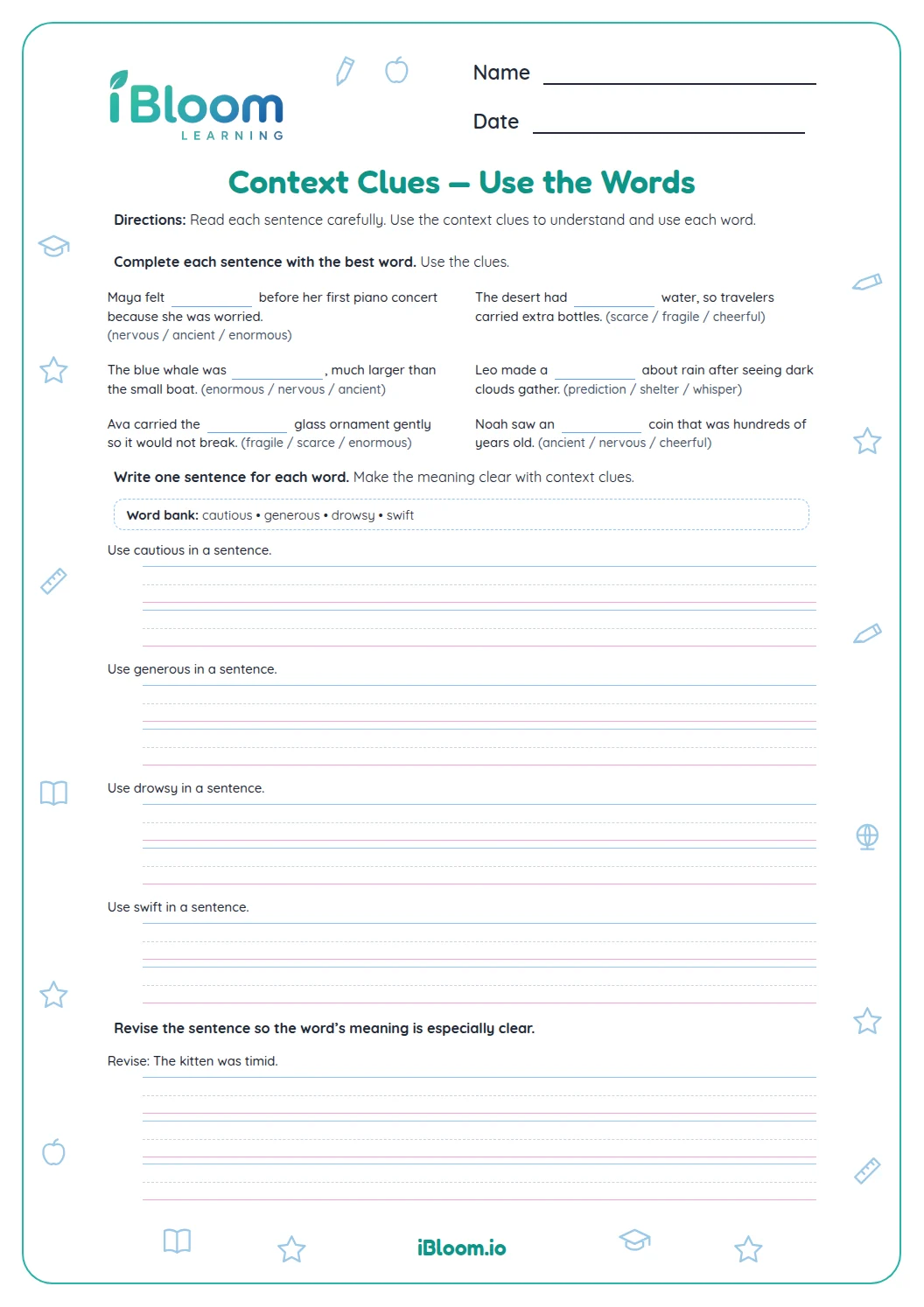
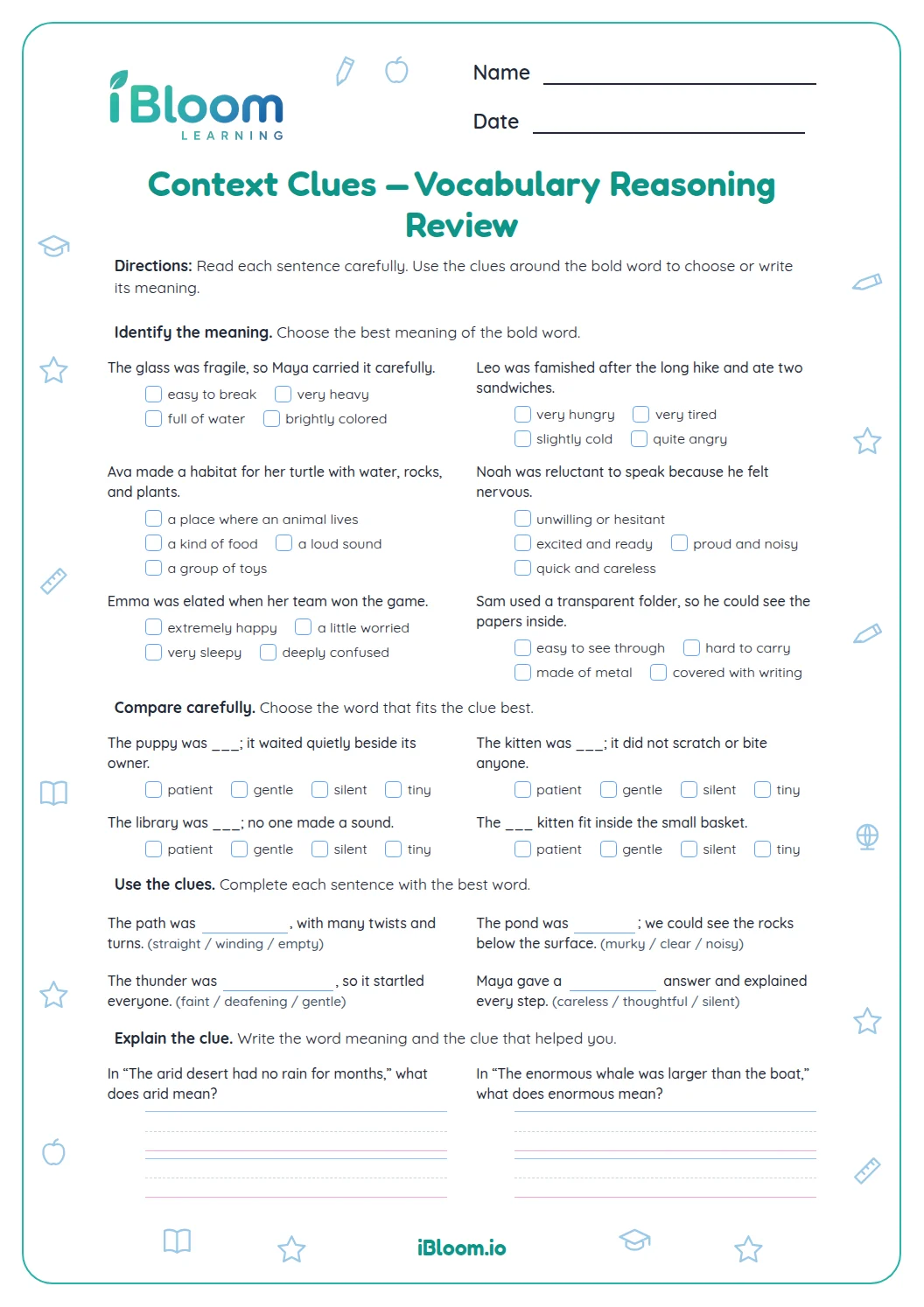
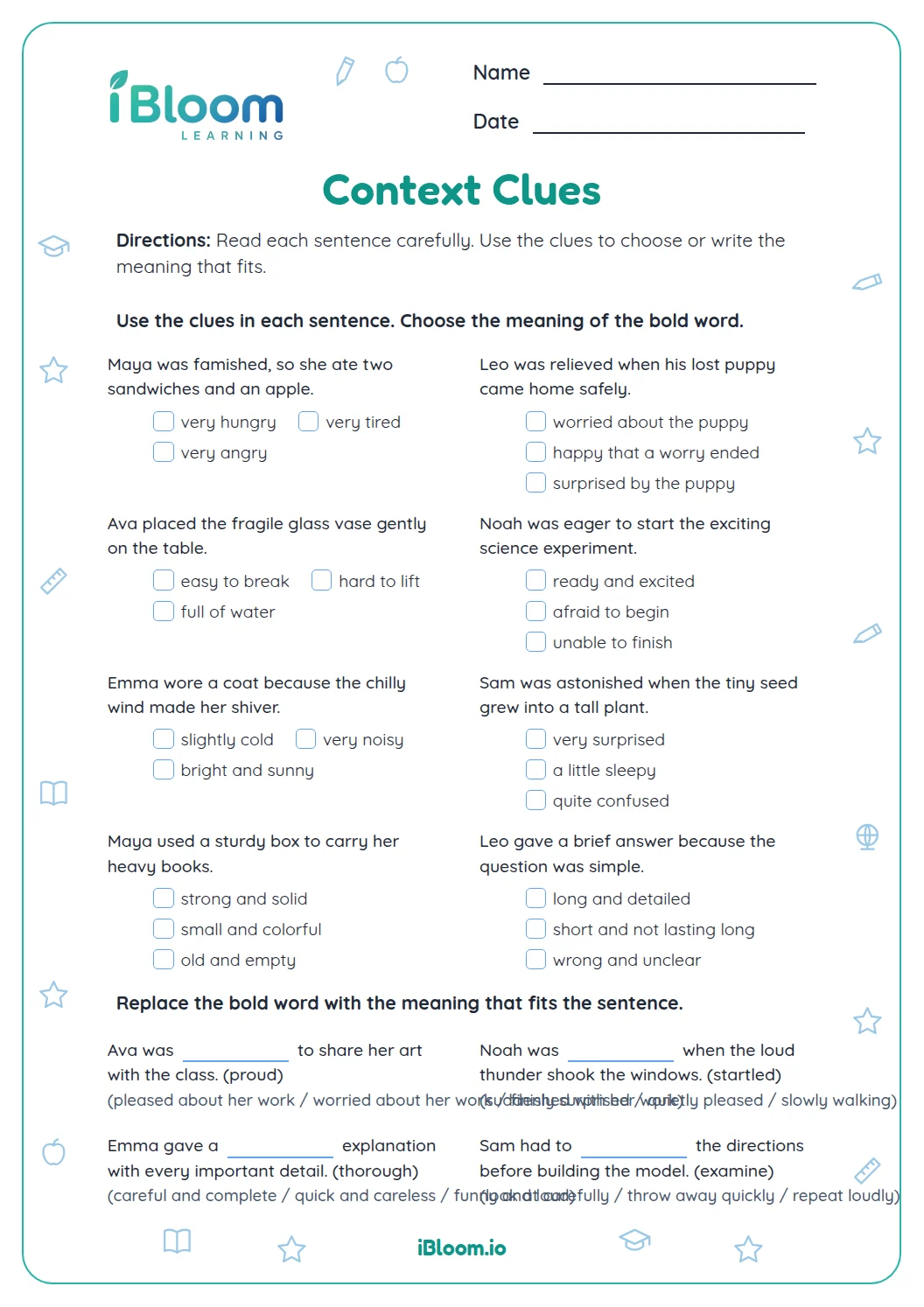
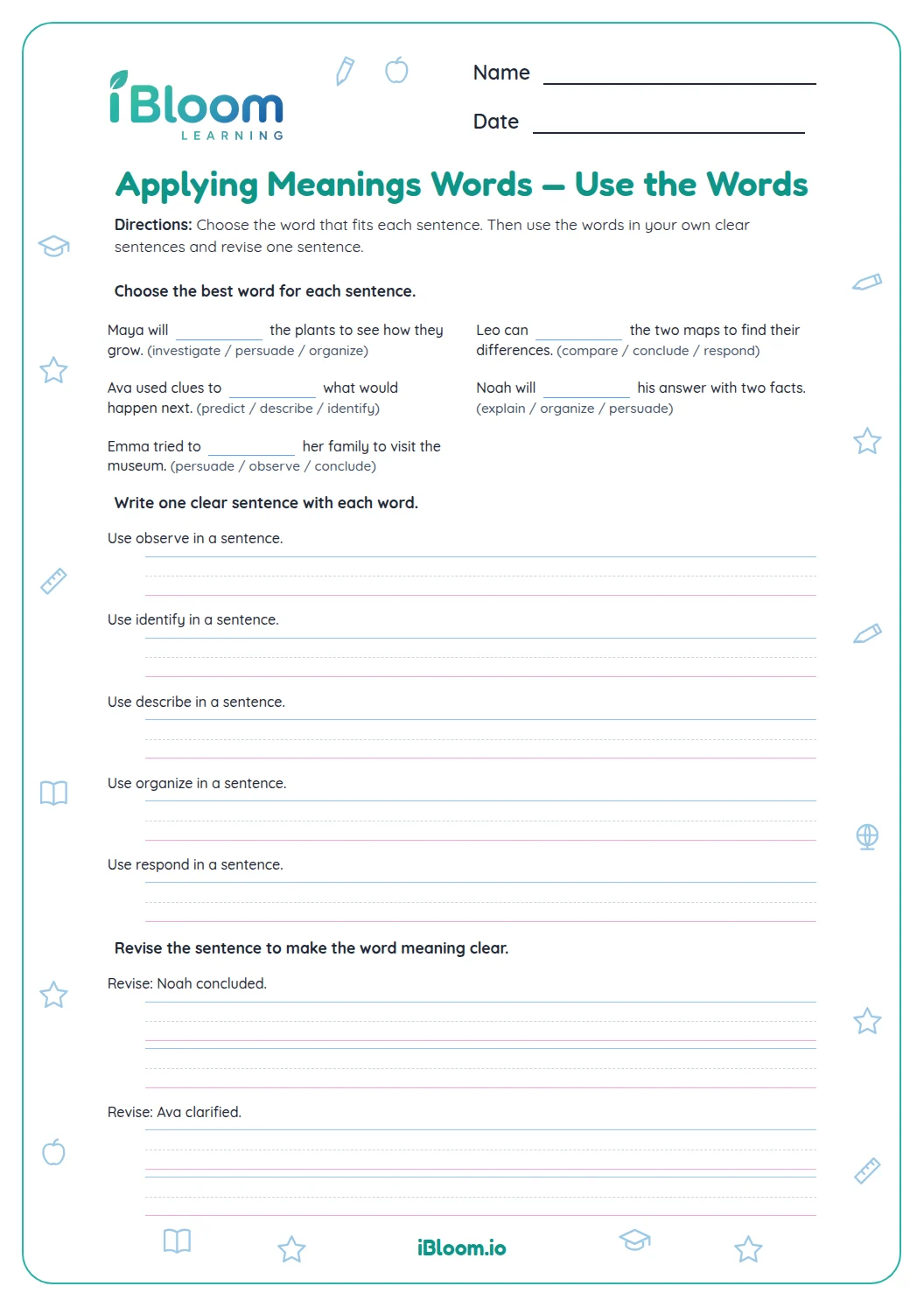
This Grade 4 context clues worksheet gives students 16 sentences with a target word in context. The clue may restate a meaning, give an example, show a contrast or describe a result. Students choose a meaning supported by the sentence and can use the answer key to review the clues.
Aligned to L.4.4.a
What kinds of clues appear on the worksheet?
The sentences include direct restatements, definitions, examples, contrasts and descriptions of a result. Students use the other words in the sentence to choose a meaning for the target word.
- Look for a synonym or restatement.
- Notice contrast words such as unlike.
- Connect an action or result to the target word.
How does a contrast clue help?
A contrast places different ideas side by side. Words such as unlike or but can signal that the nearby description gives an opposite quality.
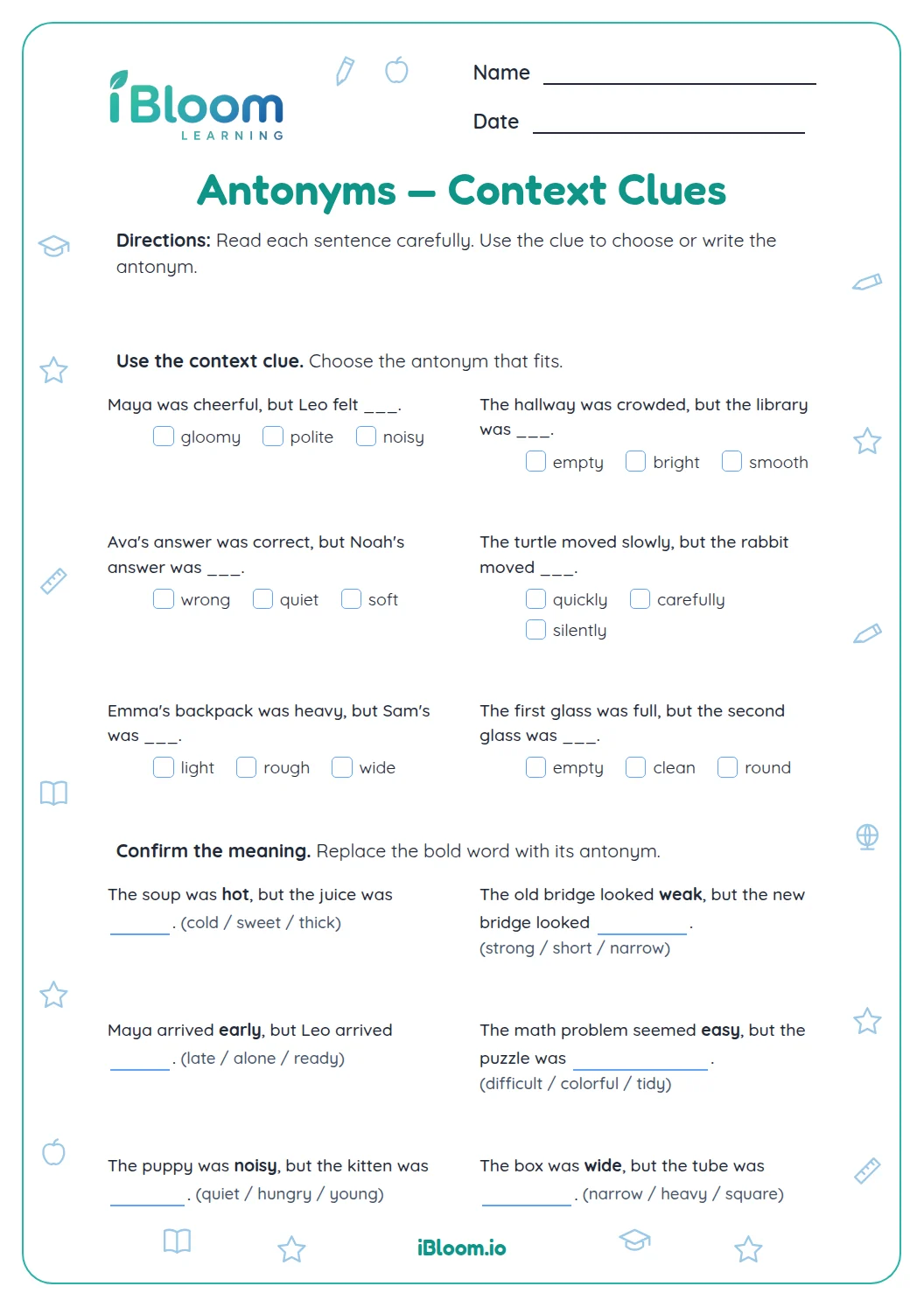
- 1“The trail was narrow, unlike the broad path beside the road.”
- 2Unlike signals a contrast with broad.
- 3Narrow means not wide.
What if a word has more than one possible meaning?
Use the meaning that fits the sentence as a whole. For devoured, the sentence says the puppy ate every bite quickly, so the food clue points to eating eagerly. Do not choose a meaning that only fits one isolated word.
How to use this worksheet
- 1Read the entire sentence once.
- 2Reread and underline a clue near the target word.
- 3Decide whether the clue defines, restates, exemplifies or contrasts.
- 4Try each choice in the sentence.
- 5Check the key and name the clue that supports the answer.
Common mistakes and quick fixes
The mistake
Choosing a familiar meaning that does not fit the sentence.
The fix
Test the choice by rereading the complete sentence.
The mistake
Skipping a contrast word such as unlike.
The fix
Look for signal words that show how two descriptions differ.
The mistake
Using only one nearby word as a clue.
The fix
Read the full sentence, including the result or example.
Common Core alignment
These standards describe the language and number skills practiced on this page.
Use nearby words and phrases to figure out an unfamiliar word.
On this sheet: Each sentence supplies a definition, example, contrast or restatement for the target word.
Show the official wordingHide the official wording
Use context (e.g., definitions, examples, or restatements in text) as a clue to the meaning of a word or phrase.
What to practice next
Make more practice
Further reading
Questions parents and teachers ask
What are context clues?
Context clues are words or details around an unfamiliar word that help a reader infer its meaning. They may define the word, give an example, restate it in simpler language or contrast it with another idea. This worksheet asks students to use those clues in complete sentences.
Should students use a dictionary first?
The worksheet is designed for students to infer a meaning from the sentence before checking the key. That helps them practice noticing definitions, examples and contrasts in context. A dictionary can be useful afterward to confirm a meaning or explore another use of the word.
How do students know which clue matters?
Students should read the whole sentence and ask which nearby detail explains the target word. Signal words such as unlike mark a contrast, while a phrase like “eating every bite quickly” restates devoured. The best answer fits both the clue and the full sentence.
Can a word have more than one meaning?
Yes, many words have multiple meanings. Readers choose the meaning that fits how the word is used in that sentence. For each question, the other details narrow the possibilities and support one answer that makes sense in context.
How many target words are included?
There are 14 target words, one in each multiple-choice question. The sentences use descriptive words such as arid, reluctant, transparent and fragile. The worksheet pages are followed by an answer key with the intended meaning for each item.