

About this worksheet
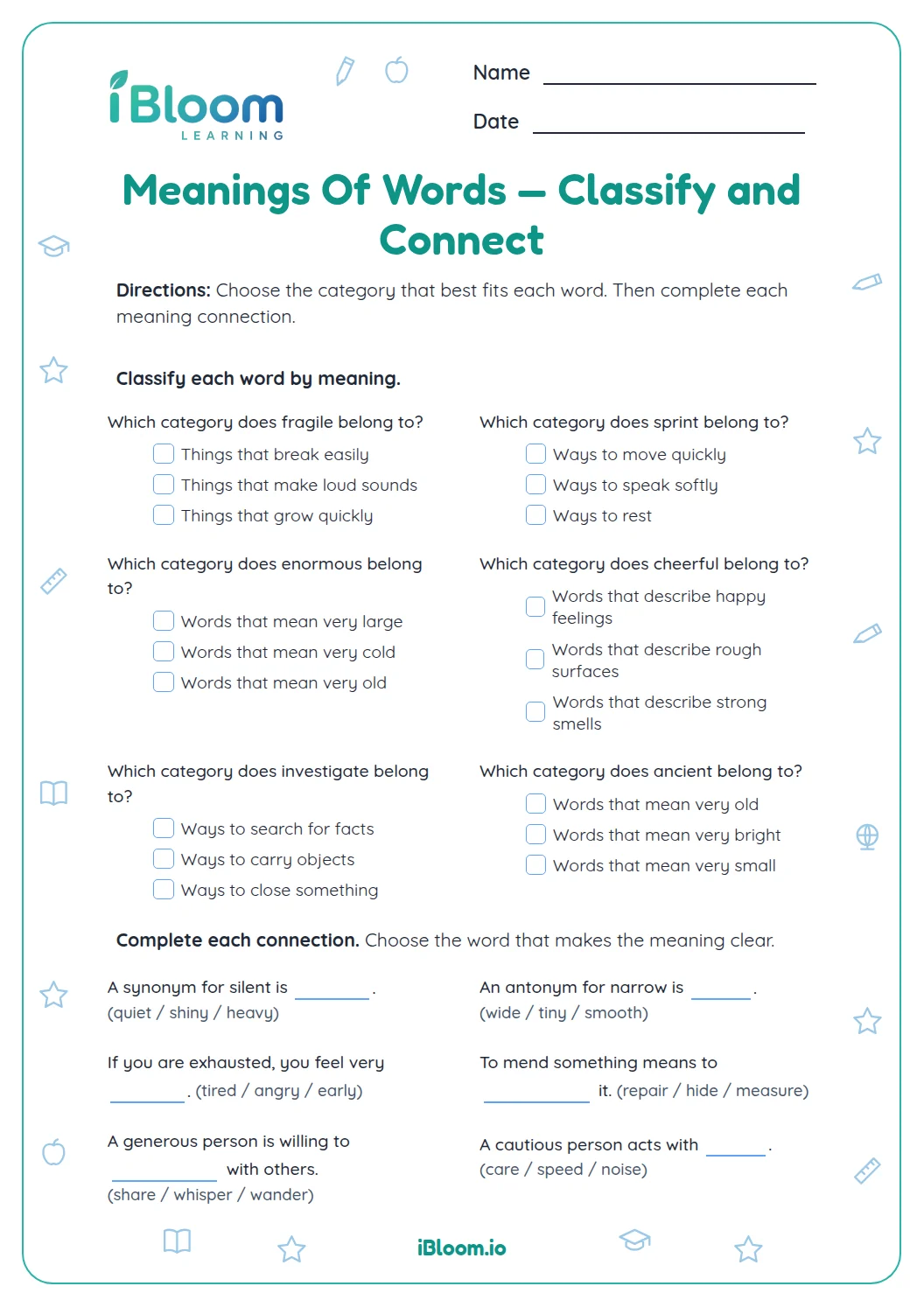
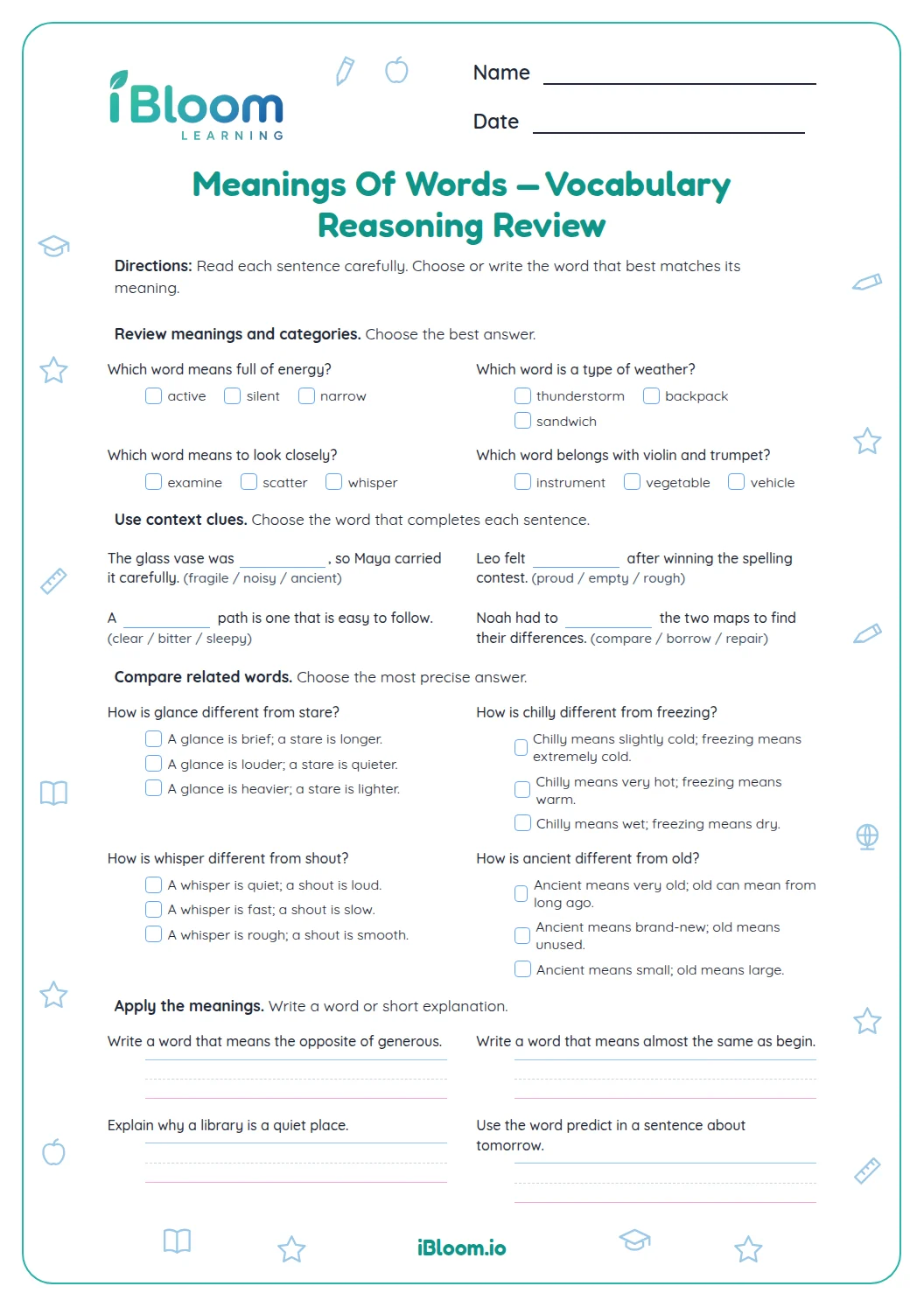
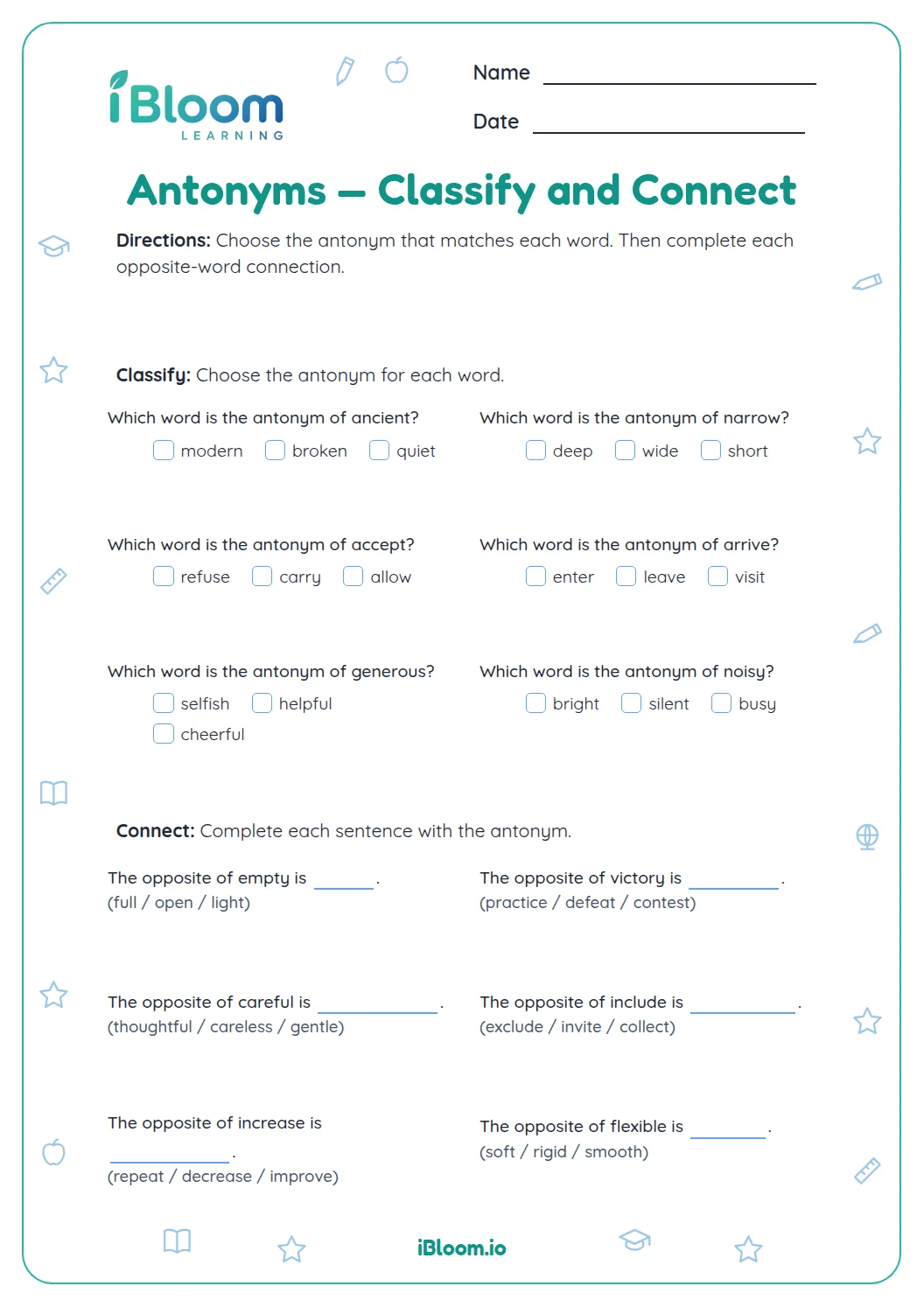
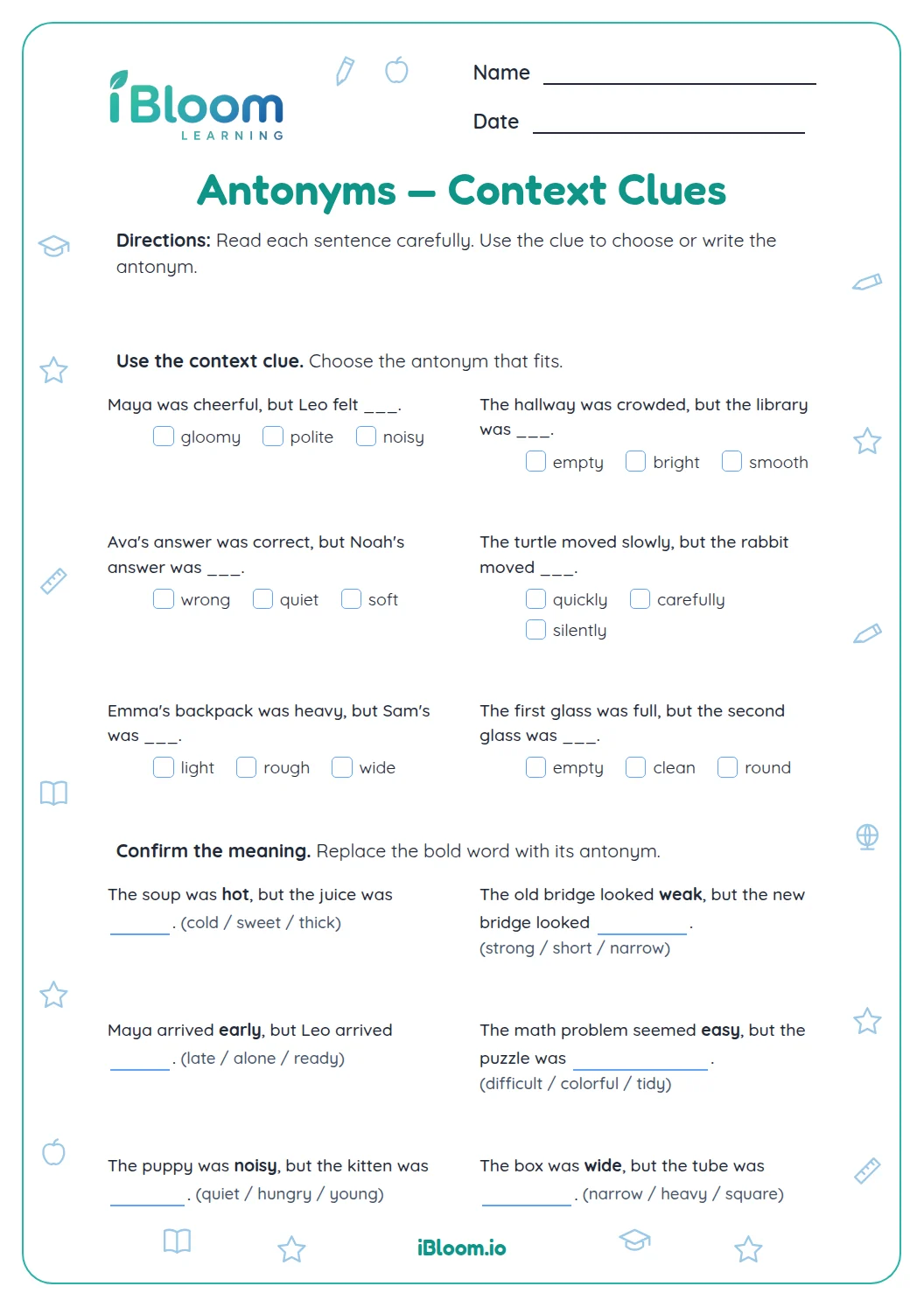
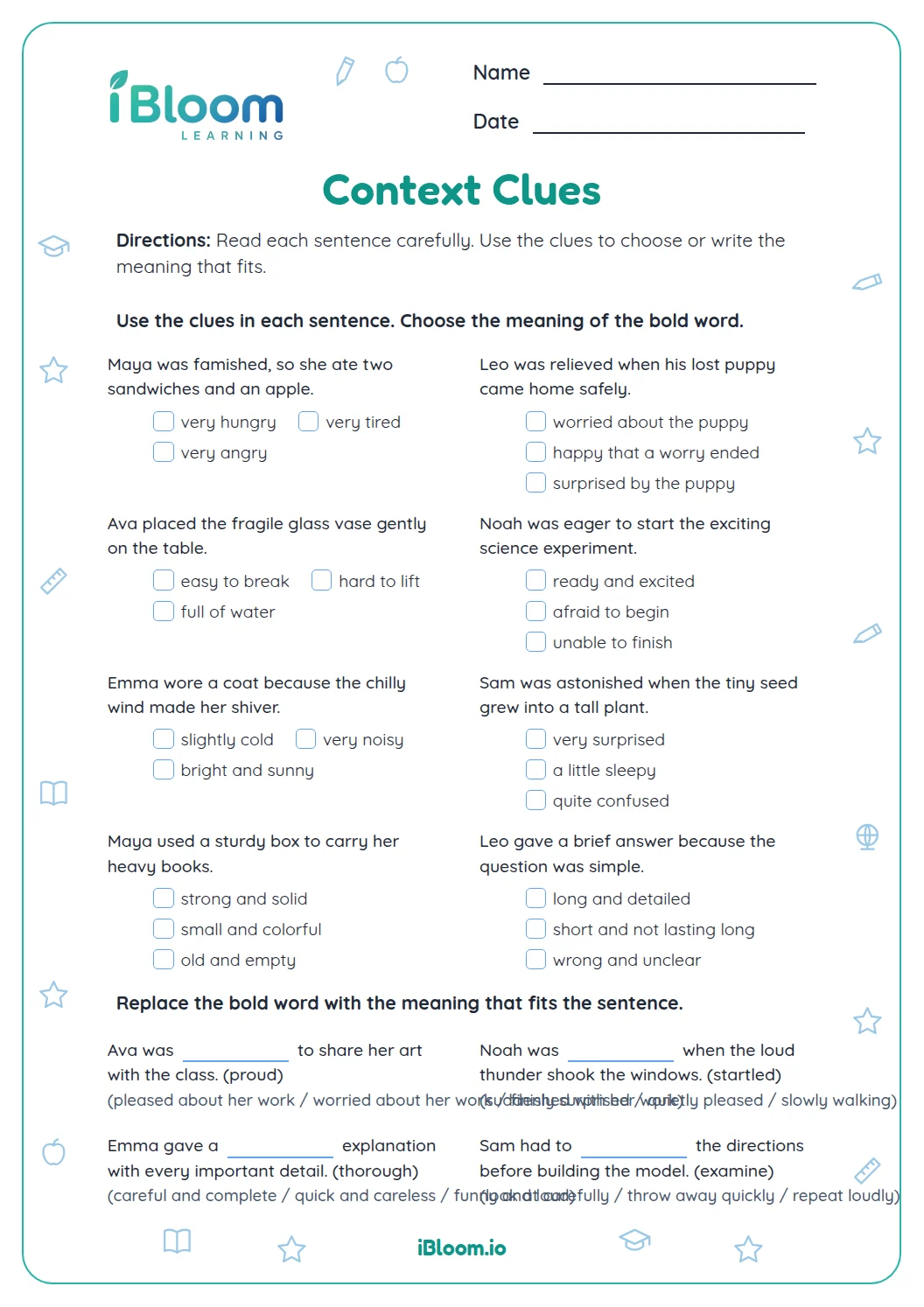
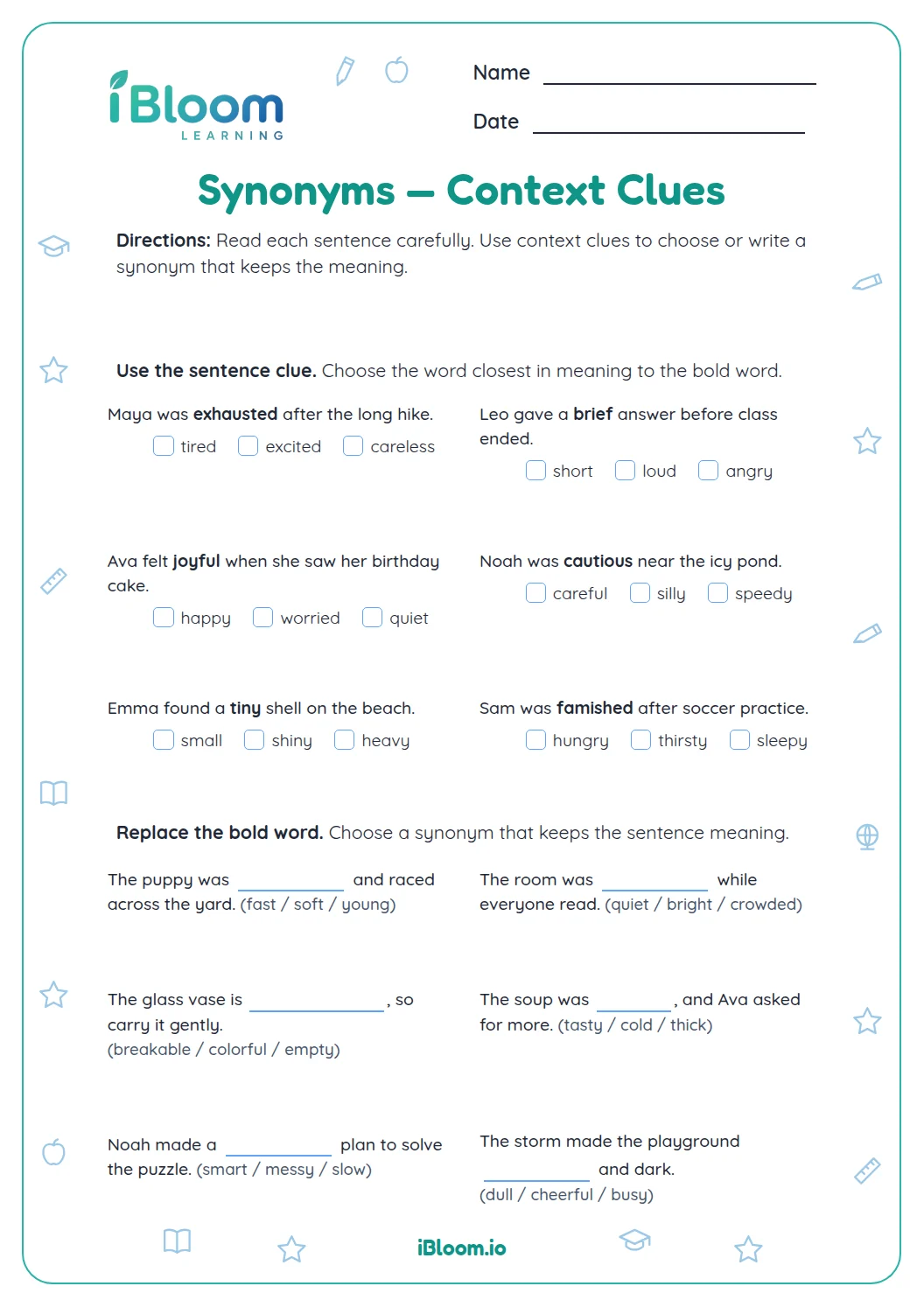
This Grade 4 context clues worksheet has 15 sentence-based questions. Students use a definition, contrast, cause, or example to determine word meanings, then identify which words provide the clue. The activities practice CCSS L.4.4.a, using context to determine a word or phrase meaning. The answer key gives each target meaning and clue type.
Aligned to L.4.4.a
Which context clues appear here?
The first questions use a definition, restatement, or example in the sentence. Later items include contrasts and causes that narrow down a word’s meaning.
How does a contrast clue help?
In “Unlike the noisy cafeteria, the library was tranquil,” the word unlike signals a contrast. The quiet library is the opposite of the noisy cafeteria, so tranquil means quiet.
How can students identify the useful clue?
Read the full sentence and notice signal words such as unlike, because, or or. Then choose the nearby phrase that actually explains or contrasts with the unfamiliar word.
A context-clue routine
- 1Read the whole sentence, including what comes before and after the target word.
- 2Look for a definition, example, contrast, or cause.
- 3Use the clue to predict a meaning in your own words.
- 4Compare that meaning with the answer choices.
- 5Check that the choice fits the full sentence.
Common context-clue slips
The mistake
Choosing a familiar meaning without checking the sentence.
The fix
Test the meaning against every part of the sentence.
The mistake
Missing a signal word such as unlike or because.
The fix
Look for words that show contrast or cause.
The mistake
Selecting a nearby detail that does not explain the target word.
The fix
Ask how the phrase gives evidence for that meaning.
Curriculum alignment
This practice builds the named skill through the worksheet activities.
Use context to determine word meanings.
On this sheet: Parts A–C use definitions, contrasts, causes, and examples as context clues.
Show the official wordingHide the official wording
Use context (e.g., definitions, examples, or restatements in text) as a clue to the meaning of a word or phrase.
What to practice next
Further reading
Questions parents and teachers ask
What clue types are included?
The sentences use definitions and restatements, examples, contrasts, and cause-and-effect clues. Students use surrounding text to choose what an unfamiliar word means and apply the clue to the full sentence. Reading the target word and clue together helps show whether the proposed meaning fits the whole sentence.
How many words do students study?
The worksheet has 15 questions, including target words such as arduous, habitat, tranquil, parched, transparent, and jubilant. Several questions ask students to identify the clue phrase or name its type. Reading the target word and clue together helps show whether the proposed meaning fits the whole sentence.
What is a contrast clue?
A contrast clue sets two ideas against each other, often with words such as unlike. In the sentence about the noisy cafeteria and tranquil library, the contrast suggests that tranquil means quiet. Reading the target word and clue together helps show whether the proposed meaning fits the whole sentence.
Do students need a dictionary?
No dictionary is needed for these items. Students can use the surrounding sentence to work out each target meaning, compare it with the answer choices, and check the response with the answer key afterward. Reading the target word and clue together helps show whether the proposed meaning fits the whole sentence.
How can I check a different explanation?
Ask whether the proposed meaning fits the target word in the complete sentence and whether nearby text supports it. The key gives the intended meaning, but a clear explanation should point to relevant context. Reading the target word and clue together helps show whether the proposed meaning fits the whole sentence.
Which standard does this page practice?
Students use context such as definitions, examples, and restatements to determine word or phrase meanings. This aligns with CCSS L.4.4.a, linked to the official standards site below for the complete wording. Reading the target word and clue together helps show whether the proposed meaning fits the whole sentence.