
About this worksheet
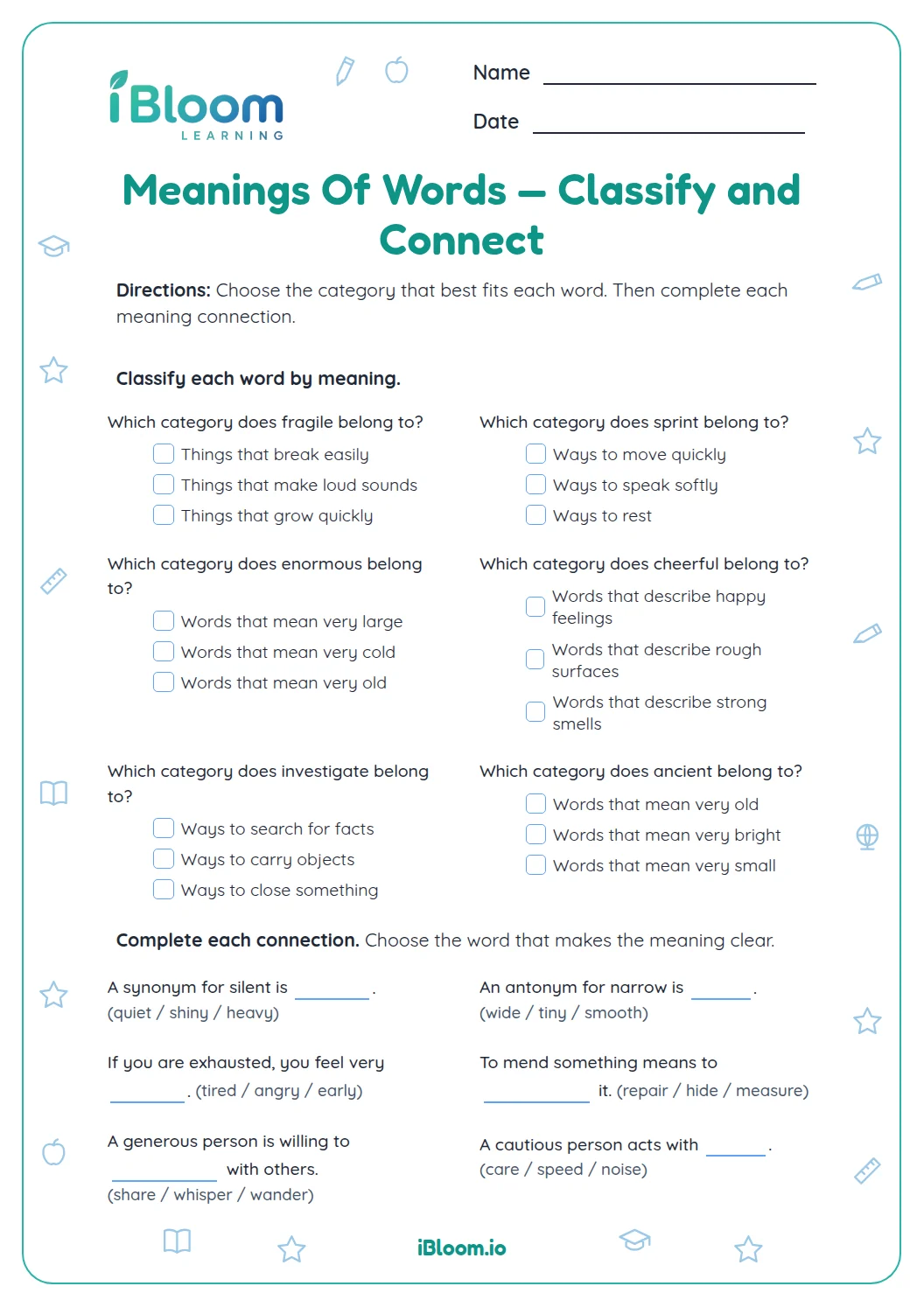
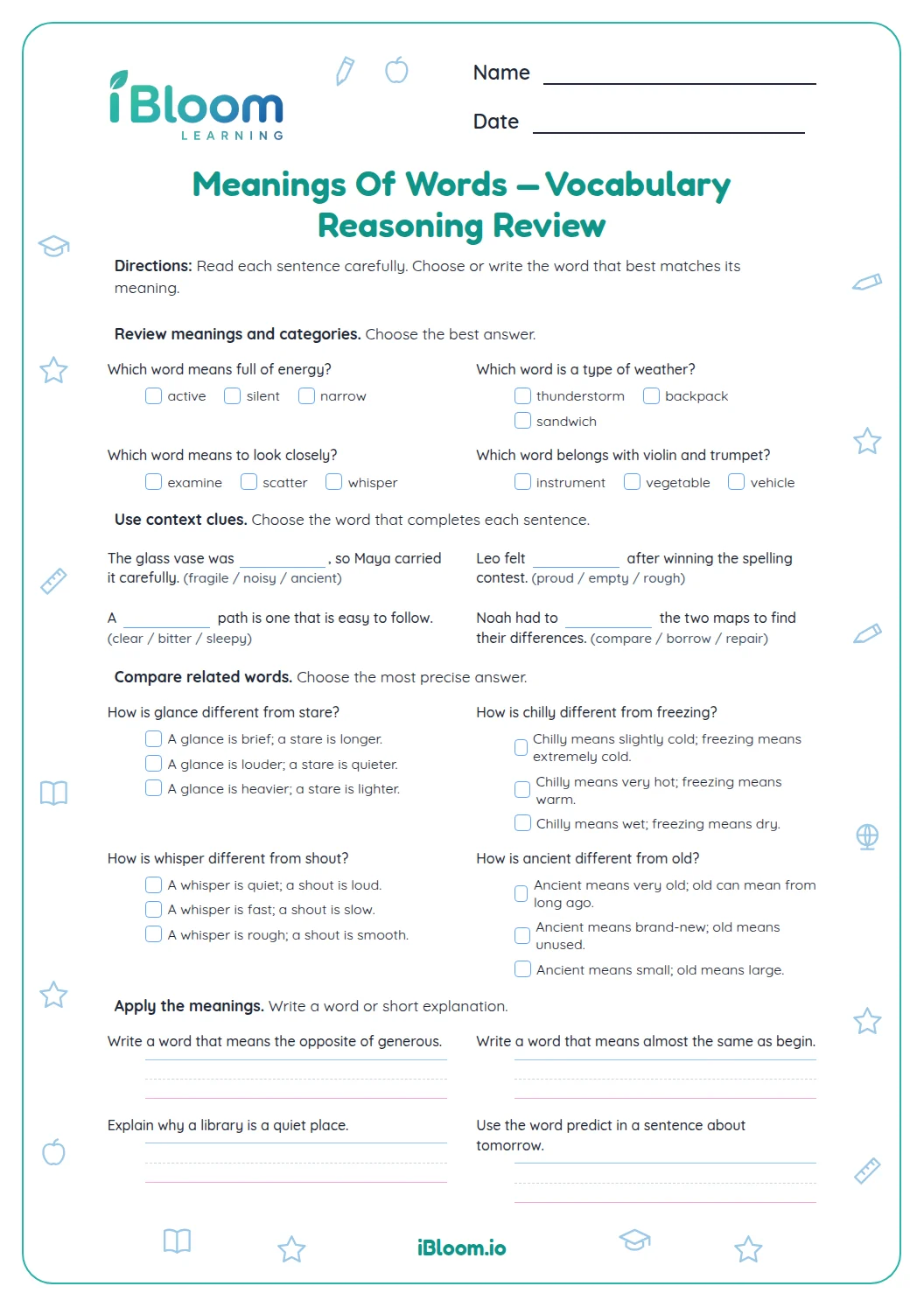
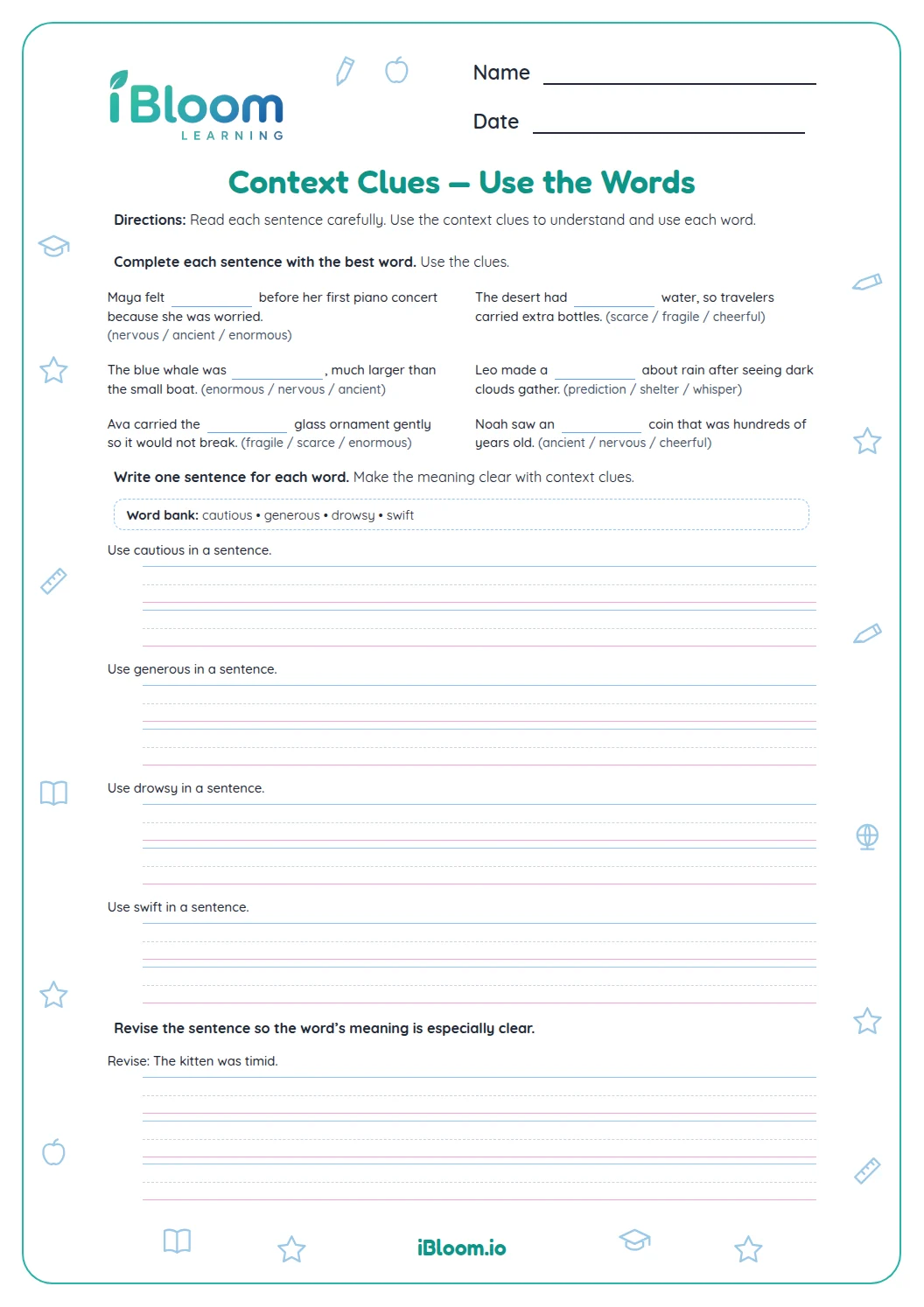
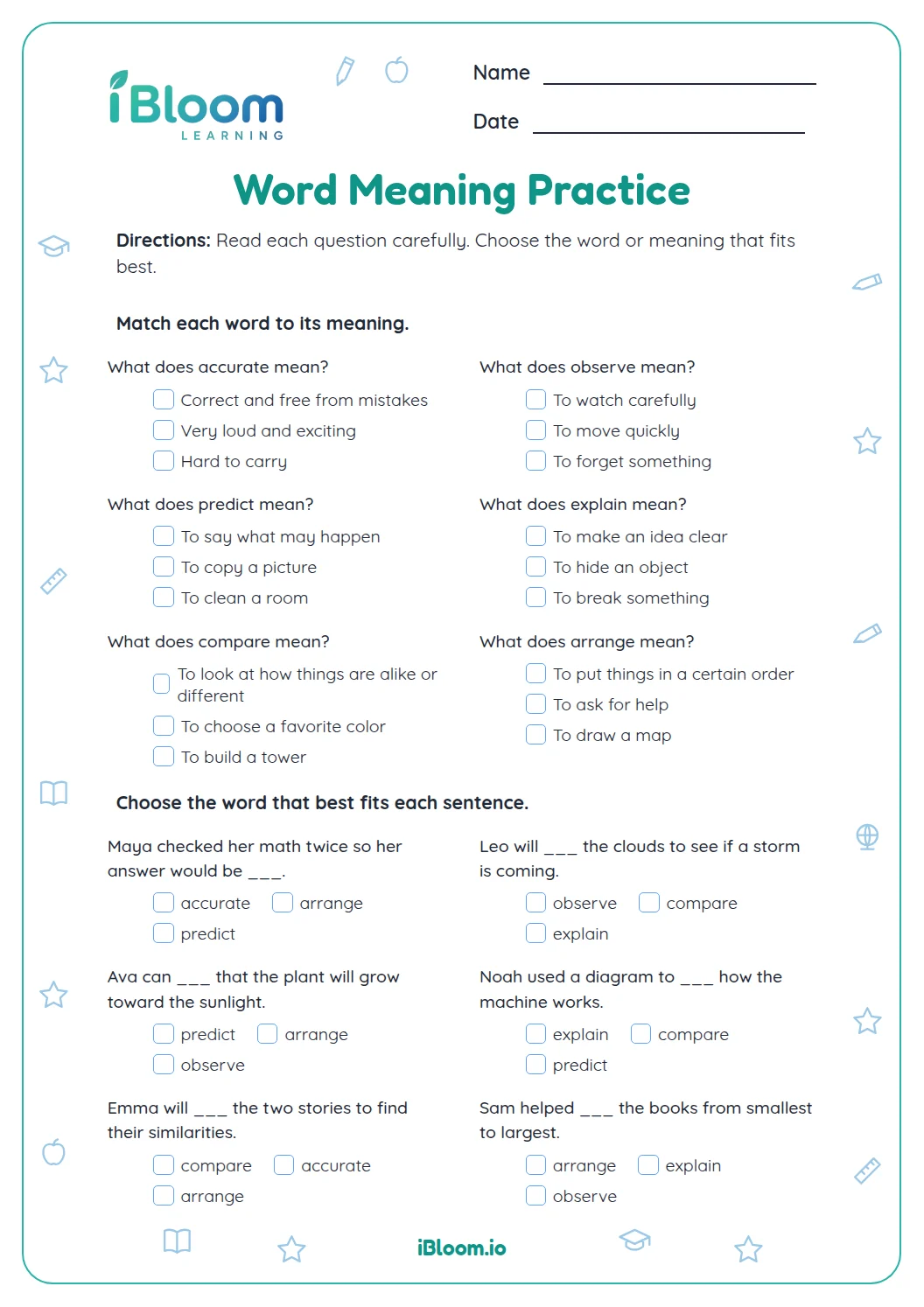
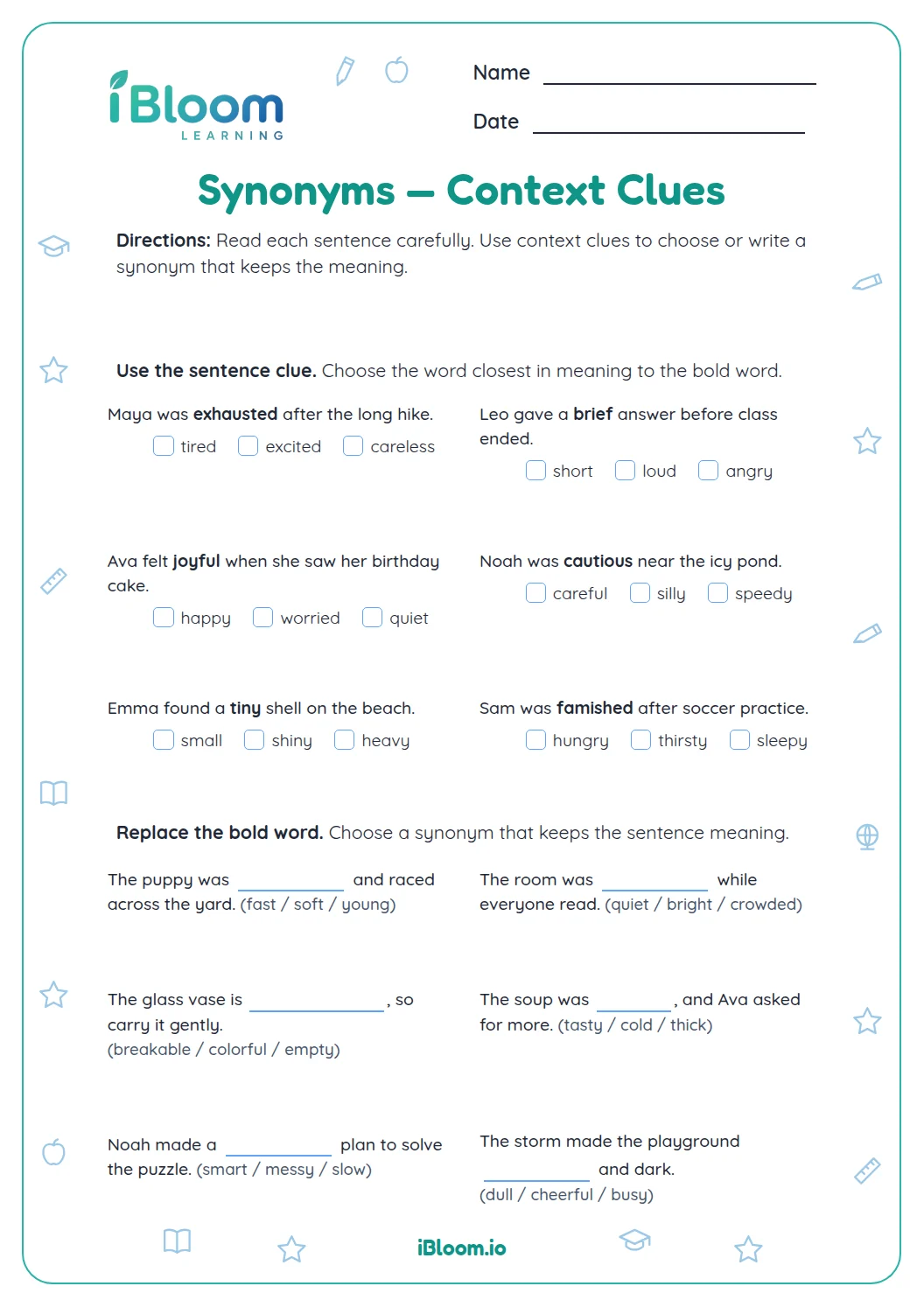
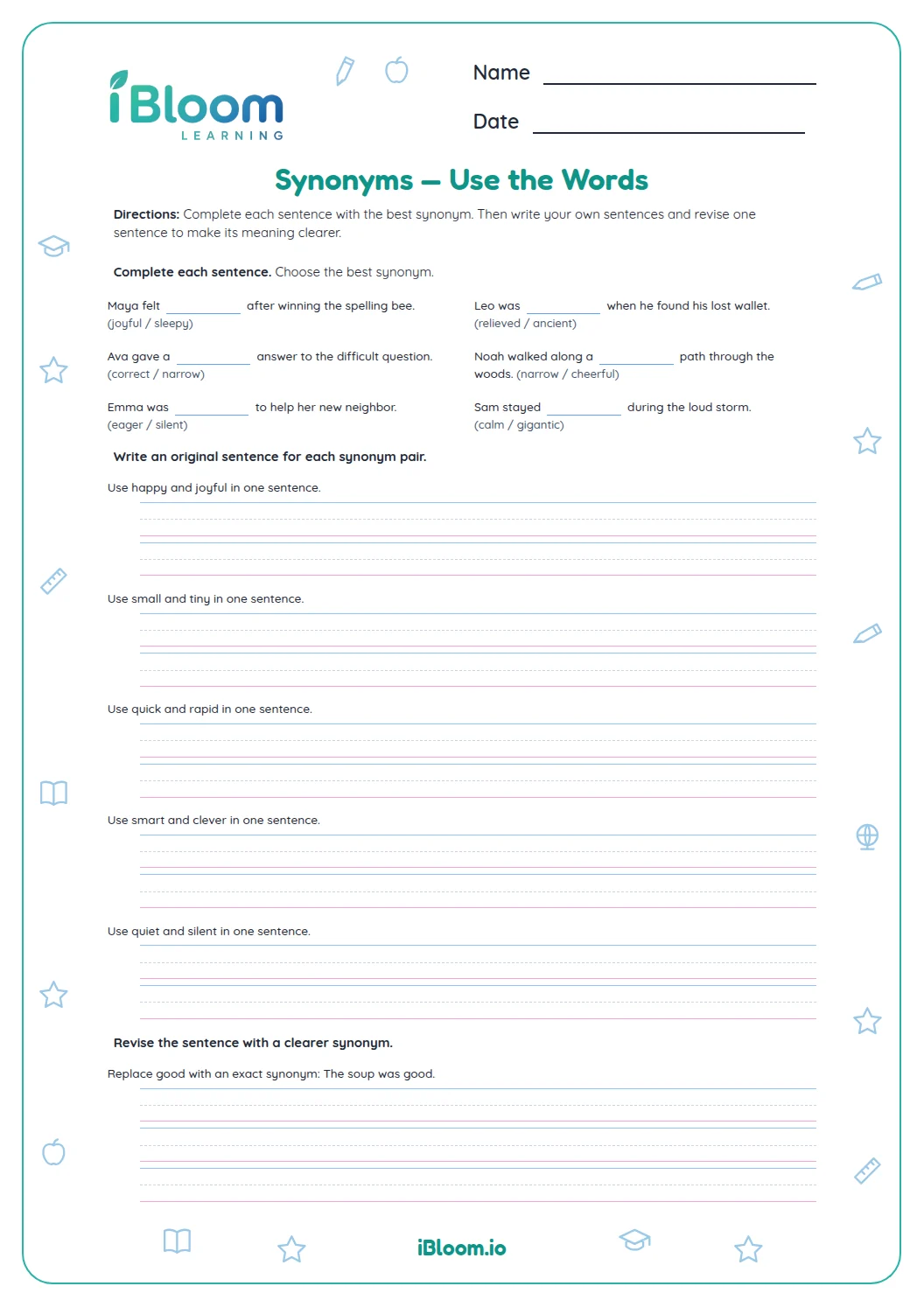
This Grade 4 worksheet gives learners two ways to work with vocabulary. In Part A, eight sentence clues point to words such as scarce, sturdy, and vanish. In Part B, children write a sentence that shows the meaning of each target word. This replaces a one-question sample with 16 focused practice items and an answer key. It aligns with CCSS L.4.4.a.
Aligned to L.4.4.a
What is on the Grade 4 word meaning page?
Part A has eight multiple choice questions. Each sentence supplies a clue to the meaning of the missing word. Part B names eight target words and asks children to write a sentence that shows what each word means.
The vocabulary includes precise words for conditions and actions: fragile, scarce, observe, sturdy, vanish, swift, and fortunate.
- Part A: infer a word from a sentence clue.
- Part B: use each target word in an original sentence.
- The key gives the Part A answers and sample sentences.
How do context clues point to a meaning?
Read the complete sentence and look for details that define, demonstrate, or restate the target idea. In “Only two seats were left,” the small number shows that seats were scarce. Then reread the sentence with that word to confirm it fits.
- 1Only two seats were left, so seats were ___.
- 2“Only two” means there were not many.
- 3The word scarce fits the clue.
How can a sentence show what a word means?
A sentence should give the reader a clue instead of just repeating the target word. “The sturdy box held my books” shows sturdy through the box’s ability to hold a load. Children may write different sentences; the answer key supplies samples, not the only acceptable wording.
How to use this worksheet
- 1Read the entire sentence before considering the options.
- 2Underline or say the detail that acts as a clue.
- 3Try a meaning in the sentence and check that it makes sense.
- 4For Part B, use the named word and add a detail that shows its meaning.
- 5Compare original sentences with the samples in the answer key.
Common mistakes and quick fixes
The mistake
Choosing a familiar word that ignores a sentence clue.
The fix
Point to the detail that signals the meaning, then reread the sentence with the choice.
The mistake
Using the target word without showing what it means.
The fix
Add an action, example, or description that helps a reader infer the word.
The mistake
Treating a sample sentence as the only correct response.
The fix
Check that the child used the target word correctly and that the sentence shows its meaning.
Common Core alignment
The worksheet connects context clues with meaningful word use.
Use sentence clues to work out a word’s meaning, then show its meaning in writing.
On this sheet: Part A uses sentence clues; Part B asks children to use the target word meaningfully.
Show the official wordingHide the official wording
Use context (e.g., definitions, examples, or restatements in text) as a clue to the meaning of a word or phrase.
What to practice next
Make more practice
Further reading
Questions parents and teachers ask
What does “use the words” mean on this worksheet?
Children first use sentence clues to identify a word, then write original sentences using eight target words. A strong sentence makes the word’s meaning clear through an example or detail. The answer key gives sample sentences, while other correct sentences are welcome.
Which vocabulary words appear?
The target words are fragile, cautious, scarce, observe, sturdy, swift, fortunate, and vanish. Part A uses each in a sentence clue, and Part B asks children to write a new sentence with each word. This lets them recognize meaning and practice expressing it.
How should I check the written sentences?
Check that the target word is used correctly and that the rest of the sentence helps show its meaning. The key gives one sample for each word, but children may create different sentences. If the meaning is unclear, ask for one added detail or example.
Does it have an answer key?
Yes. The separate key lists the correct choice for each context clue and a sample sentence for each target word. Since children write their own sentences, compare the idea and word use rather than requiring an exact match to the sample.
How long does it take?
Allow about 25 minutes for all 16 questions. The eight context items are brief; writing eight original sentences takes more time. Children can complete Part A first and return to Part B with a dictionary or classroom word wall if useful.