


About this worksheet
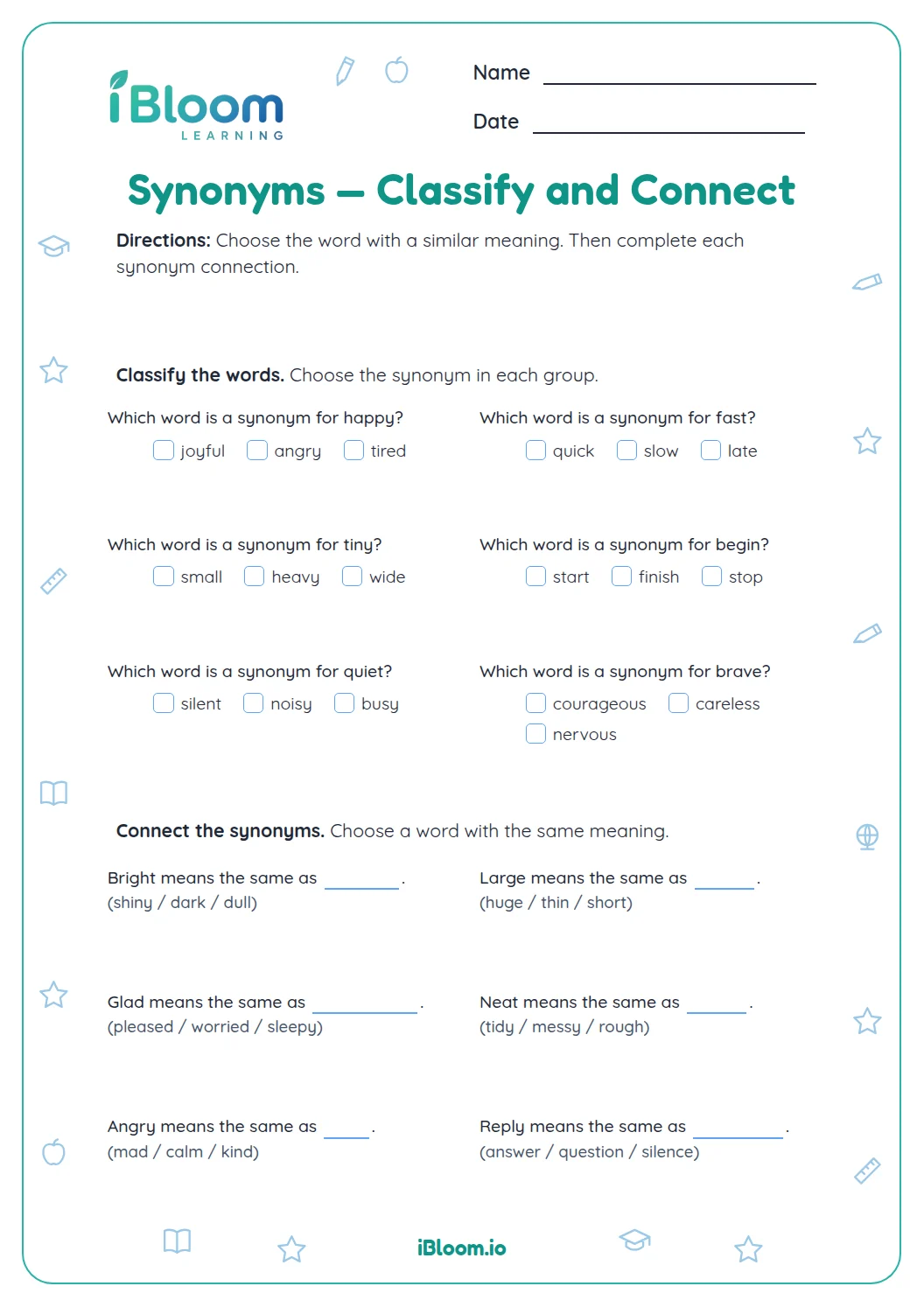
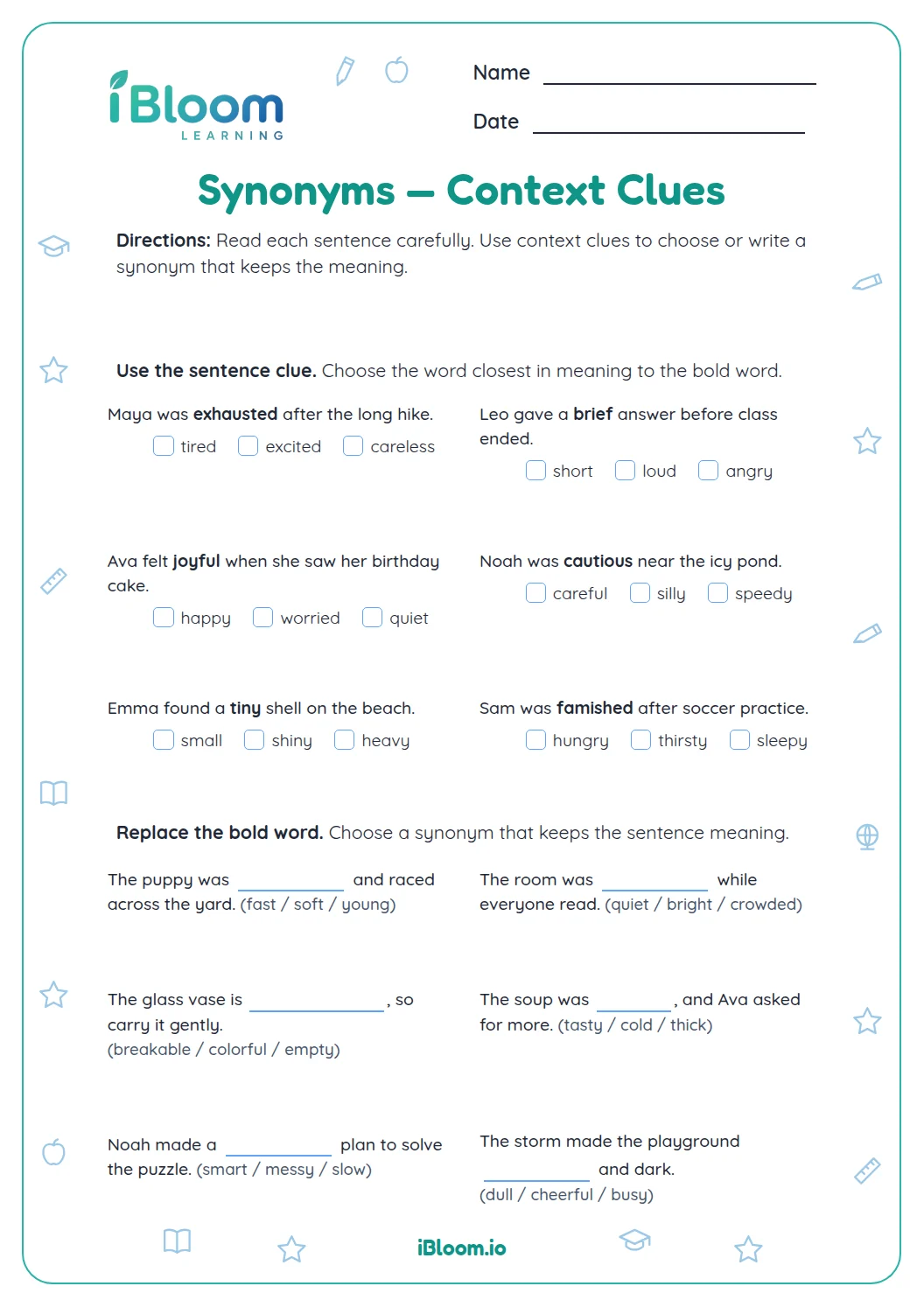
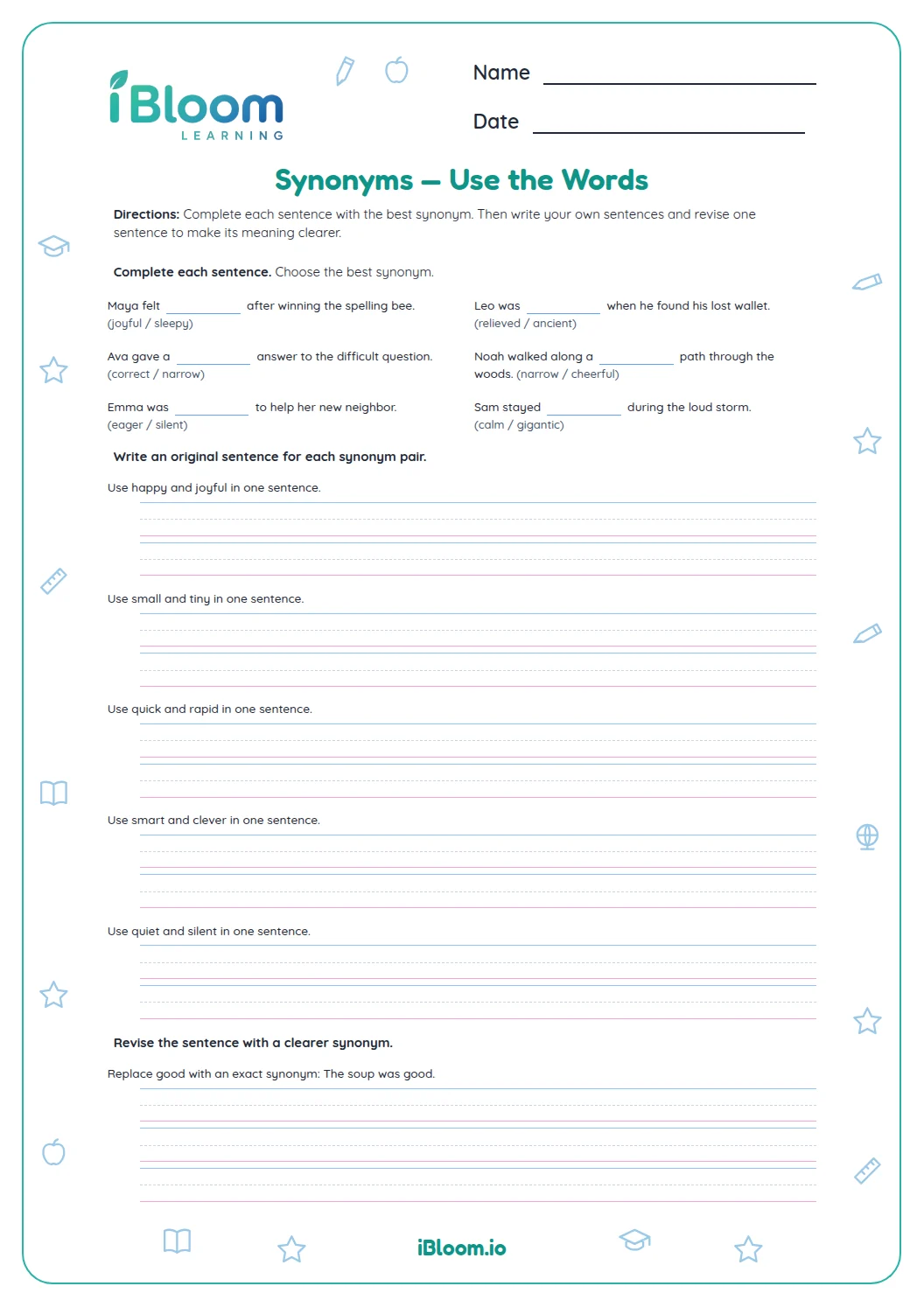
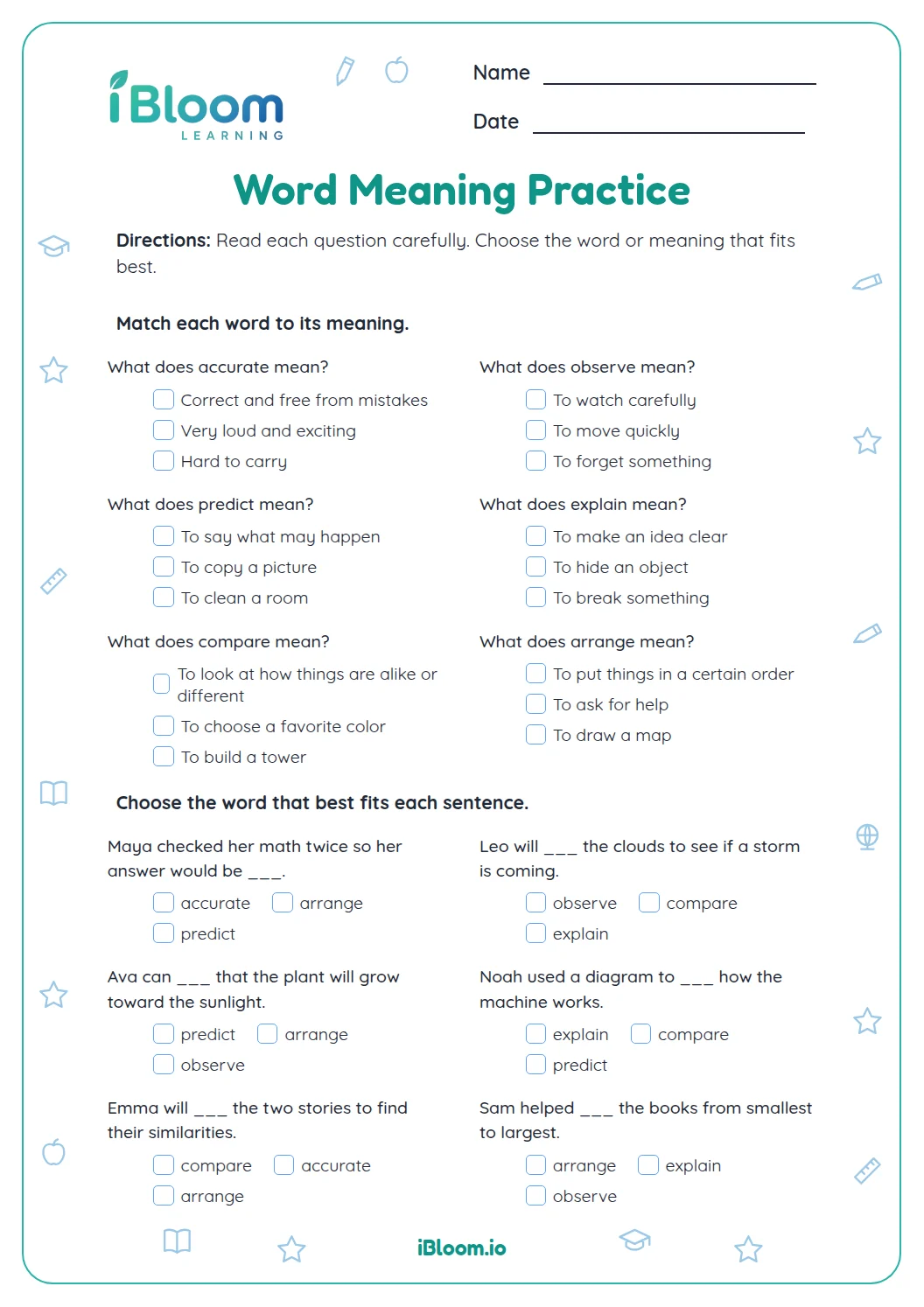
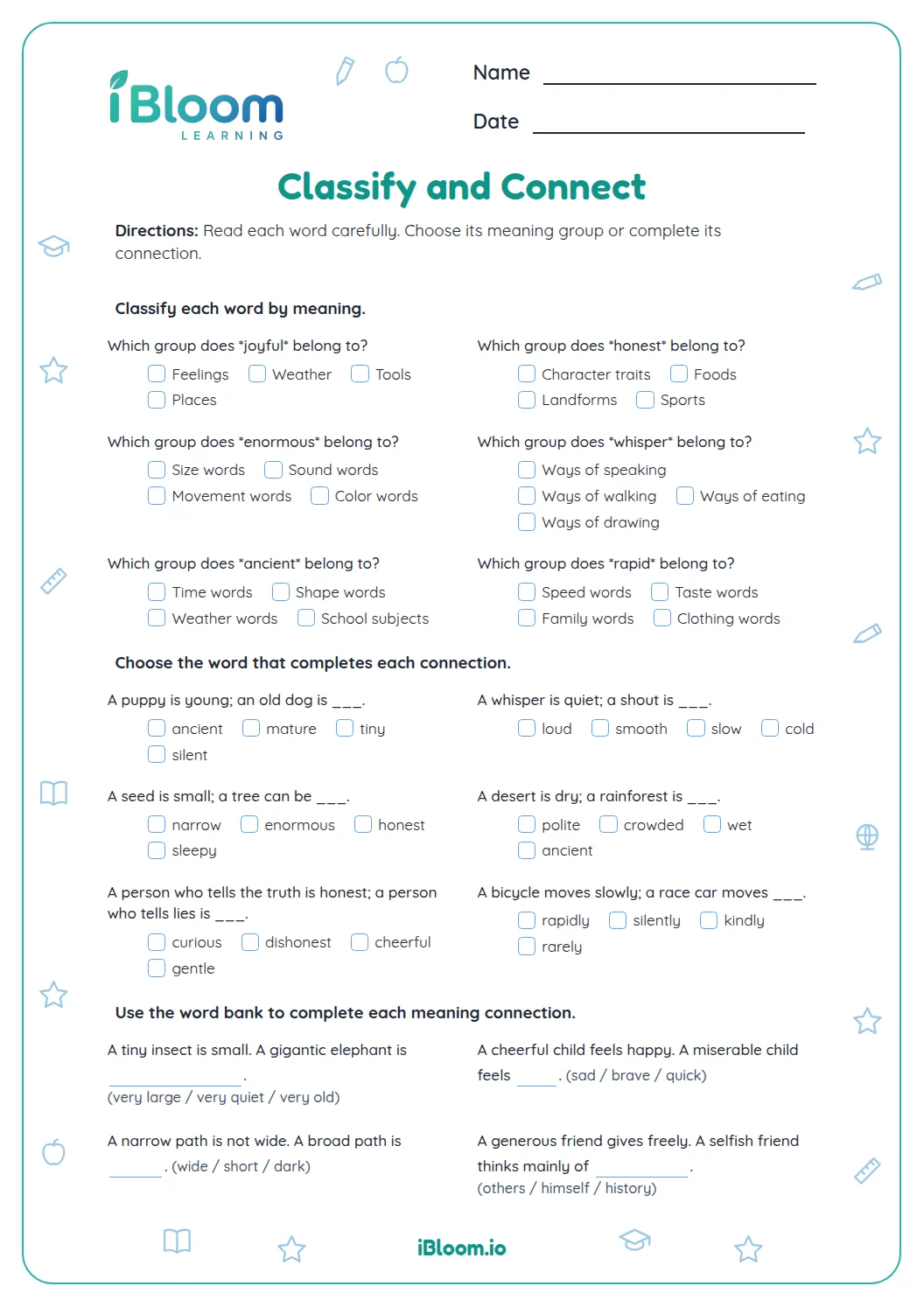
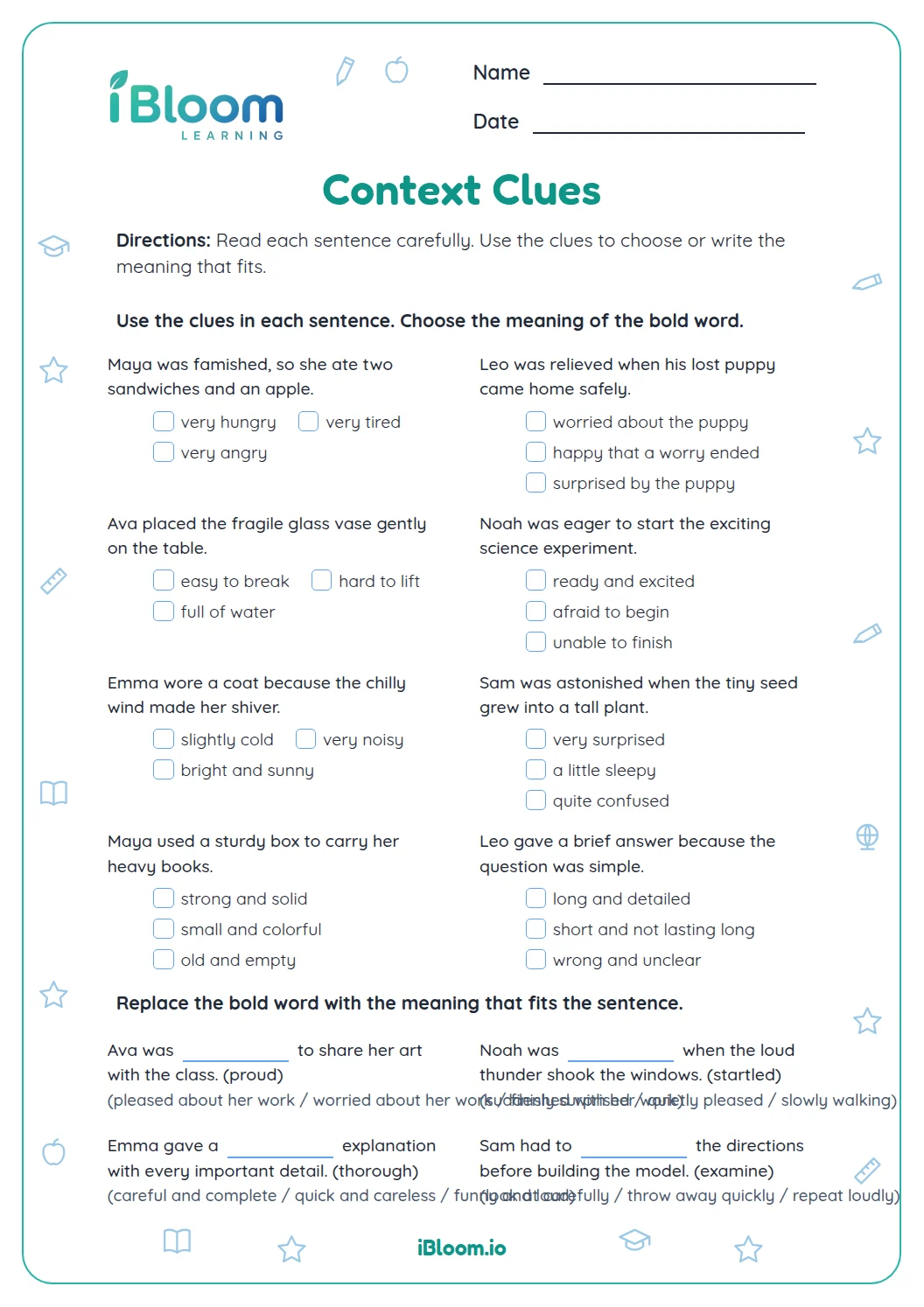
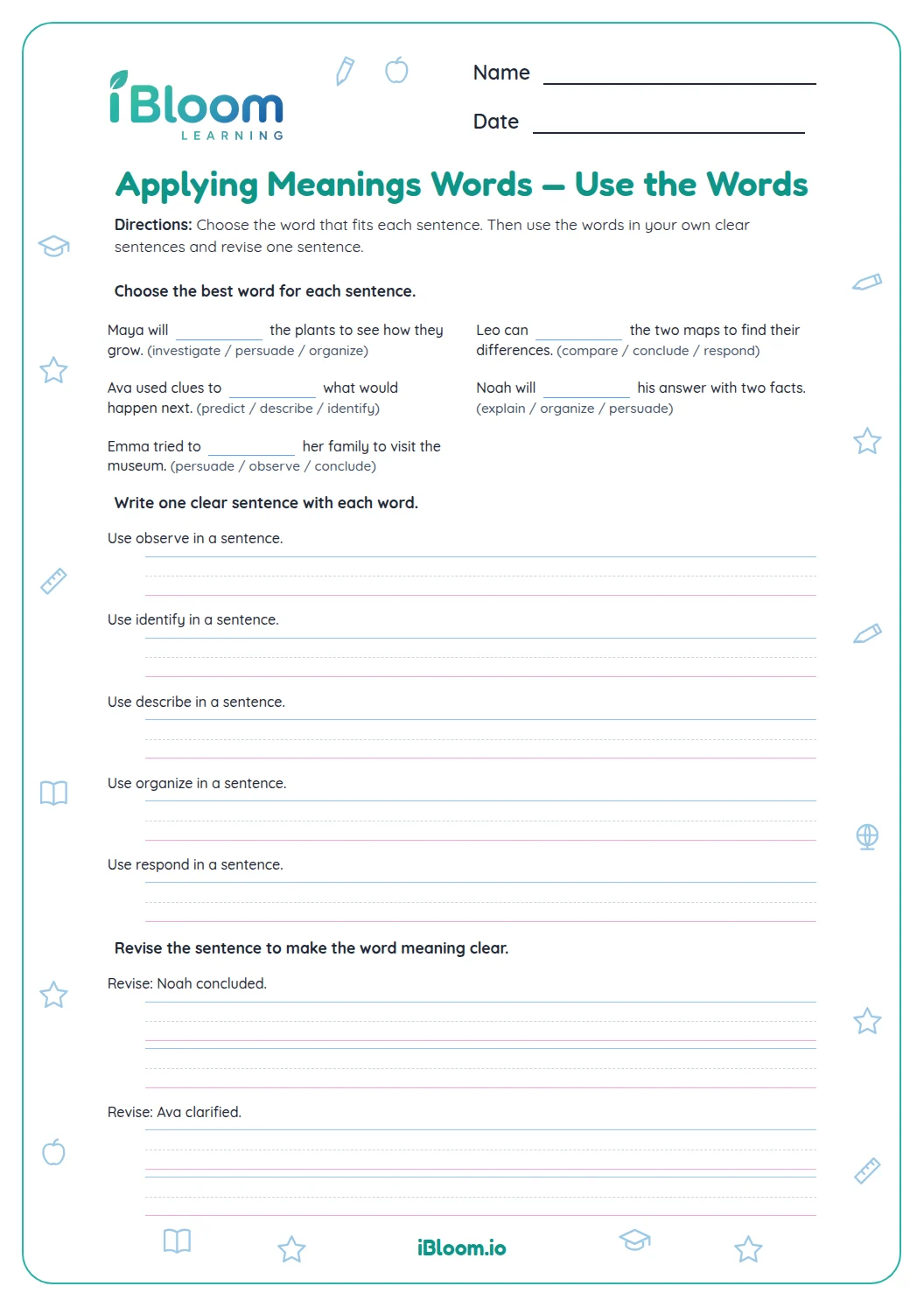
This Grade 4 vocabulary worksheet builds synonym understanding through three kinds of decisions. Children choose a close meaning for a word, use a sentence clue to select a fitting synonym, and replace a word in context while keeping the sentence’s main meaning. The 15 multiple-choice questions include words such as enormous, cautious, delighted, glance, and purchase. A separate answer key lists each correct choice.
Aligned to L.4.5c
What makes two words synonyms?
Synonyms are words with similar, but not always identical, meanings. Enormous and huge are close in meaning; cautious and careful are close as well. A synonym can differ in strength or tone, so the sentence helps decide whether it is a good replacement.
Grade 4 readers can test a possible synonym by substituting it into the sentence and checking whether the main idea stays the same.
How does context help you choose a synonym?
A sentence can narrow the choices. In “The room was silent during the test,” the setting points to quiet, not crowded or bright. Context is useful when several words seem related but only one fits the sentence.
- 1Take a glance at the clock.
- 2A glance is a quick look.
- 3Try “peek”: Take a peek at the clock.
- 4The meaning stays close.
- 5Answer: peek
What kinds of synonym practice are included?
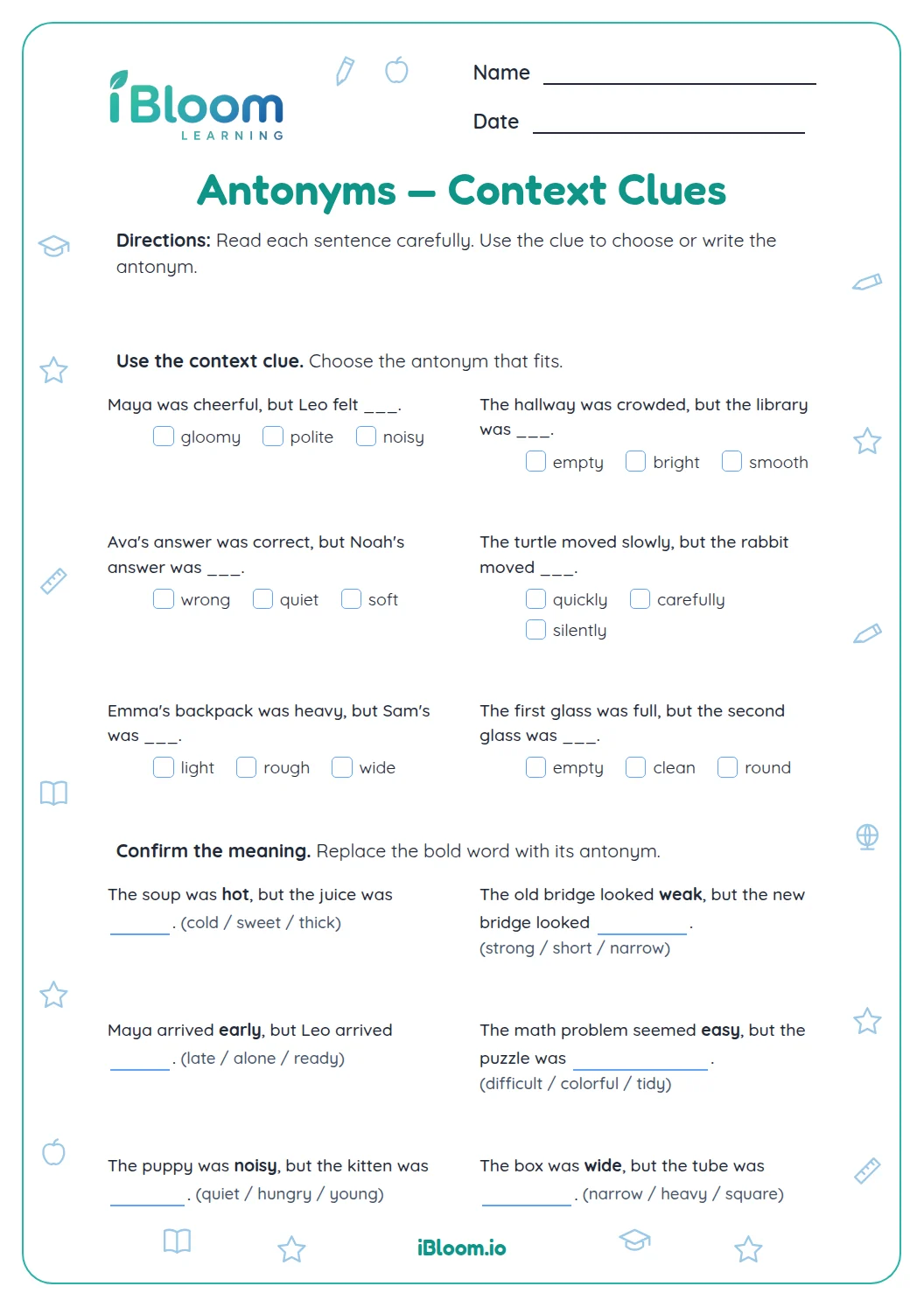
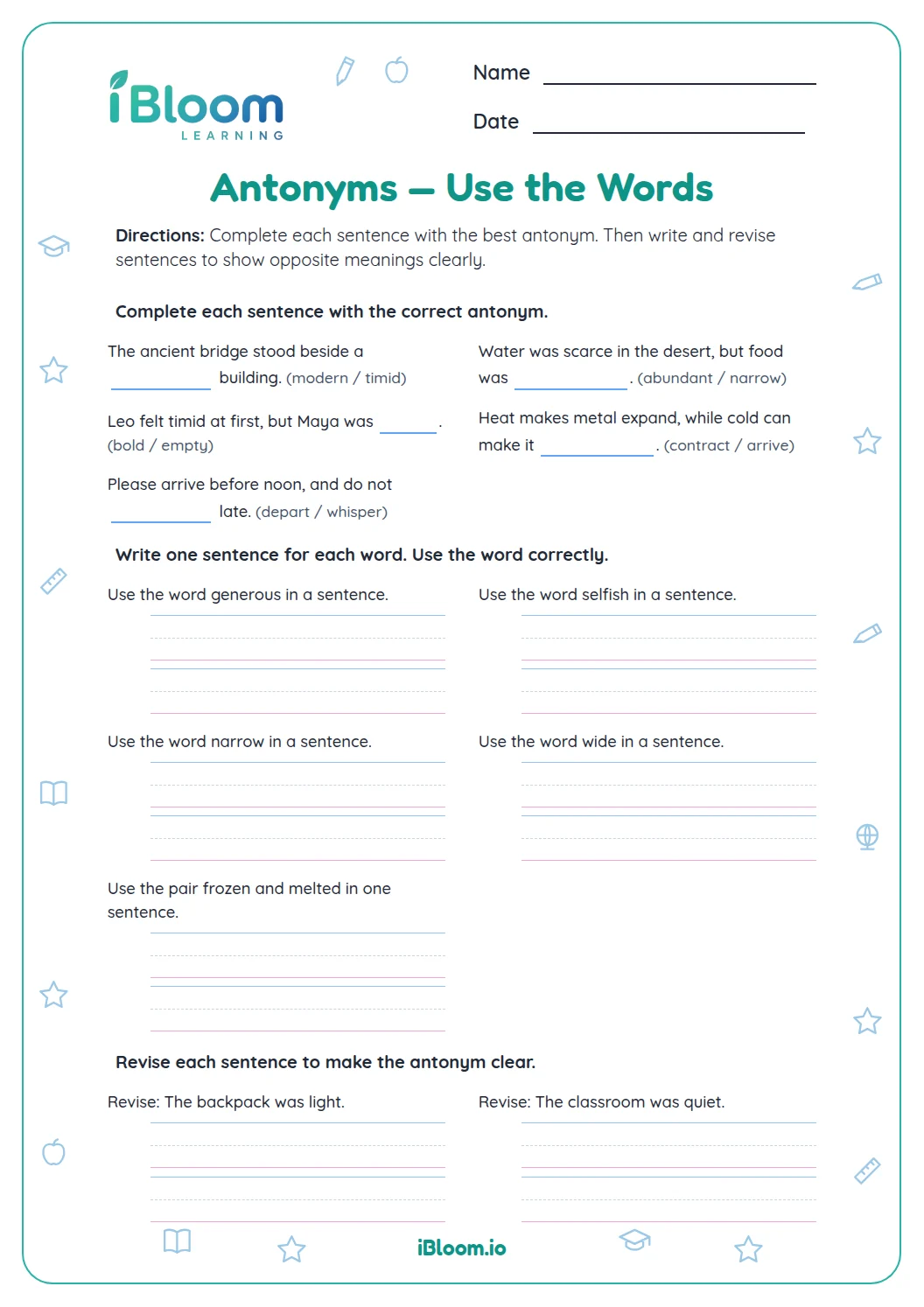
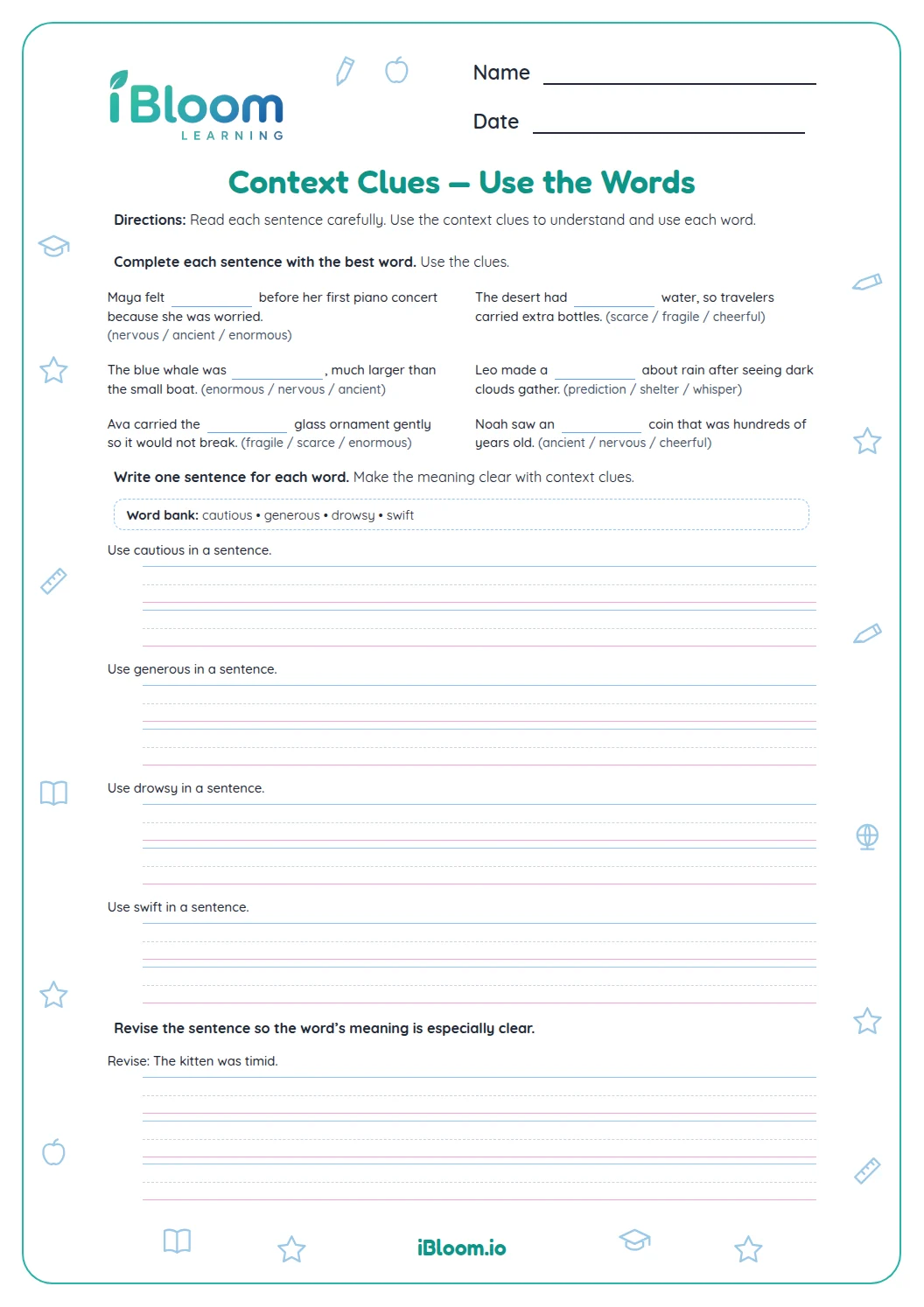
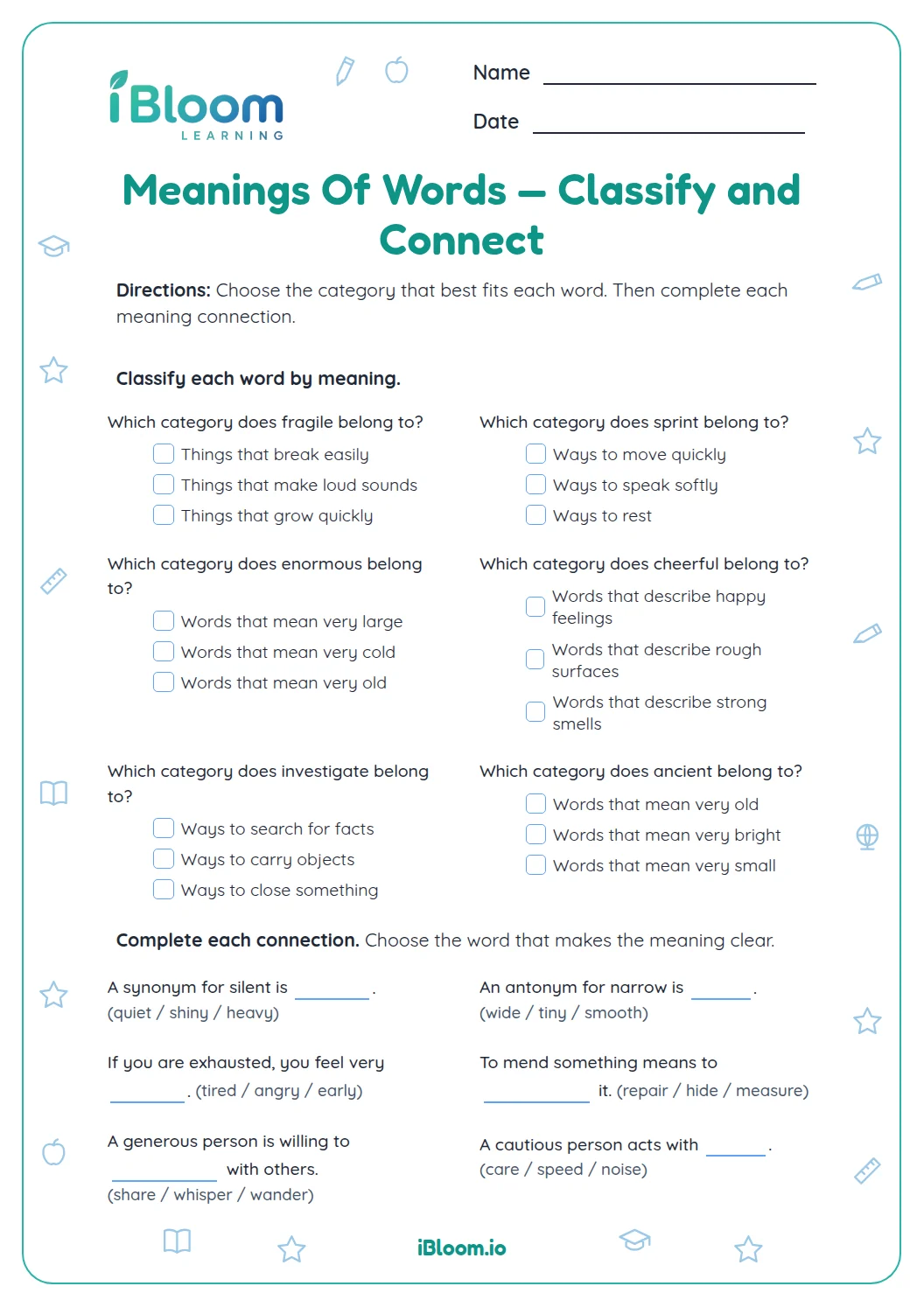
Part A asks for a close meaning without a sentence. Part B first uses sentence clues and then asks which word can replace a target while preserving the sentence’s meaning. The examples span actions, feelings, descriptions, and everyday school situations.
If two choices seem close, read the complete sentence with each one. The best answer should preserve the central meaning and sound natural in context.
How to use this worksheet at home or in class
- 1Read the target word and all answer choices.
- 2Recall a close meaning for the target before selecting.
- 3In a sentence, notice clues that narrow the meaning.
- 4Substitute the possible synonym into the full sentence.
- 5Choose the option that keeps the main idea and reads naturally.
Common mistakes and quick fixes
The mistake
Choosing an antonym instead of a synonym.
The fix
Ask whether the choice means something similar or the opposite.
The mistake
Picking a related word that changes the sentence meaning.
The fix
Substitute the choice and reread the whole sentence before deciding.
The mistake
Treating a strong synonym as identical in every situation.
The fix
Check the context and choose the closest natural replacement for that sentence.
Common Core alignment
The questions connect words with similar meanings and test those relationships in context.
Relate words with similar meanings and check synonyms in sentence context.
On this sheet: Both parts ask children to recognize or use a similar-meaning word, including in context.
Show the official wordingHide the official wording
Demonstrate understanding of words by relating them to their opposites (antonyms) and to words with similar but not identical meanings (synonyms).
What to practice next
Make more practice
Further reading
Questions parents and teachers ask
What is a synonym?
A synonym is a word with a similar, but not always identical, meaning to another word. Huge is a synonym for enormous, and careful is a synonym for cautious. The sentence can help you decide whether a synonym fits the way the word is used.
Can two synonyms have slightly different meanings?
Yes. Synonyms can be close without being interchangeable in every sentence. A word may be stronger, more formal, or better suited to a certain context. This worksheet asks children to read the full sentence and choose the option that keeps its main idea.
How does Part B use context?
Part B gives a short sentence with a clue to the target word’s meaning. For example, a silent room during a test is quiet. Children use the situation to choose the closest synonym instead of relying on a memorized pair alone.
How does the worksheet practice word replacement?
It means putting a synonym in the target word’s place and checking whether the sentence still communicates the same idea. “Purchase a ticket” can become “buy a ticket.” The worksheet’s second part includes five such replacement choices. Children can read the new sentence aloud and decide whether its central meaning stayed the same.
Is an answer key included?
Yes. The answer key is a separate page and gives the correct option for each of the 15 questions. If a child selects another related word, compare it in the full sentence to see whether it preserves the meaning as well as the keyed choice.