

About this worksheet
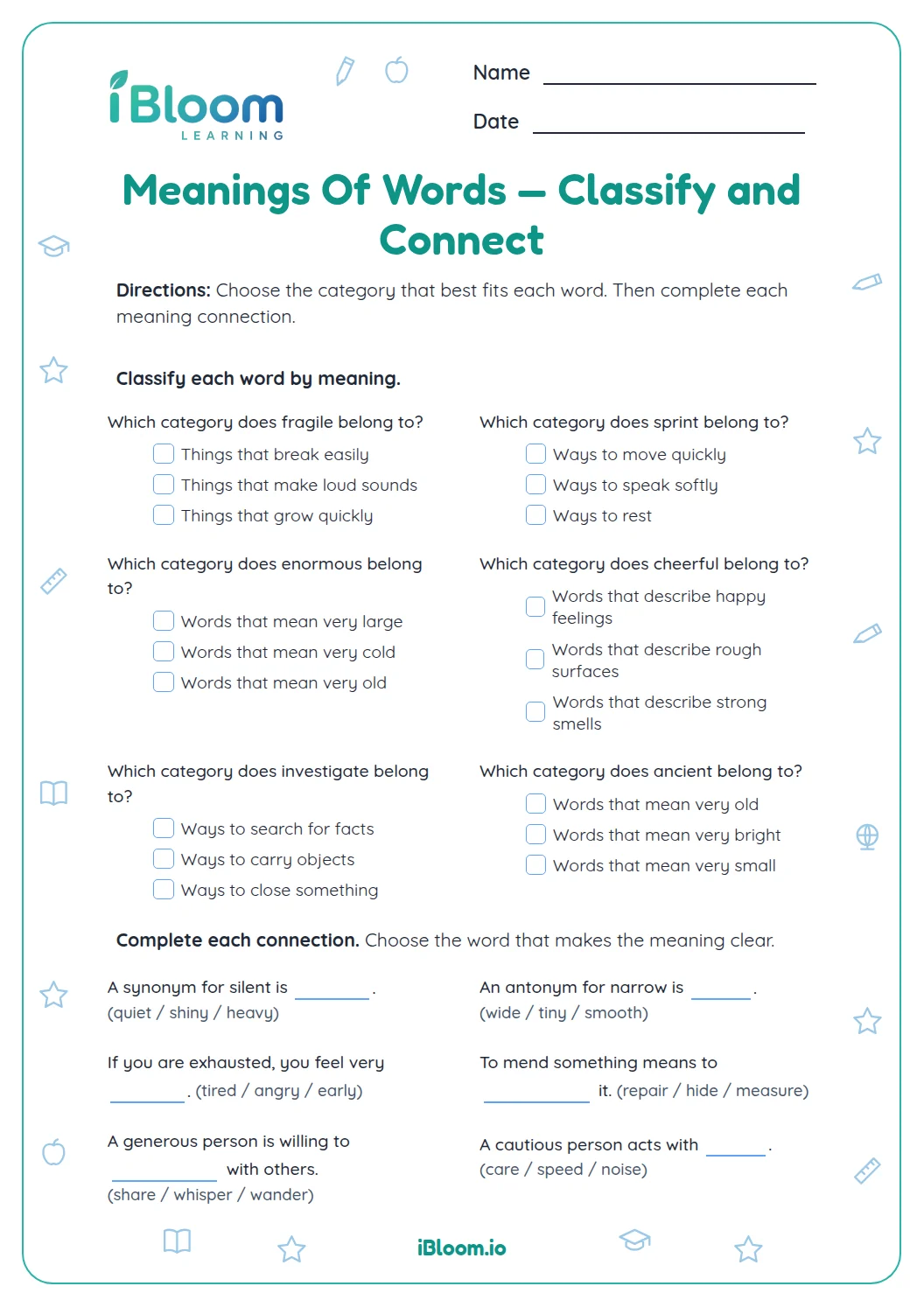
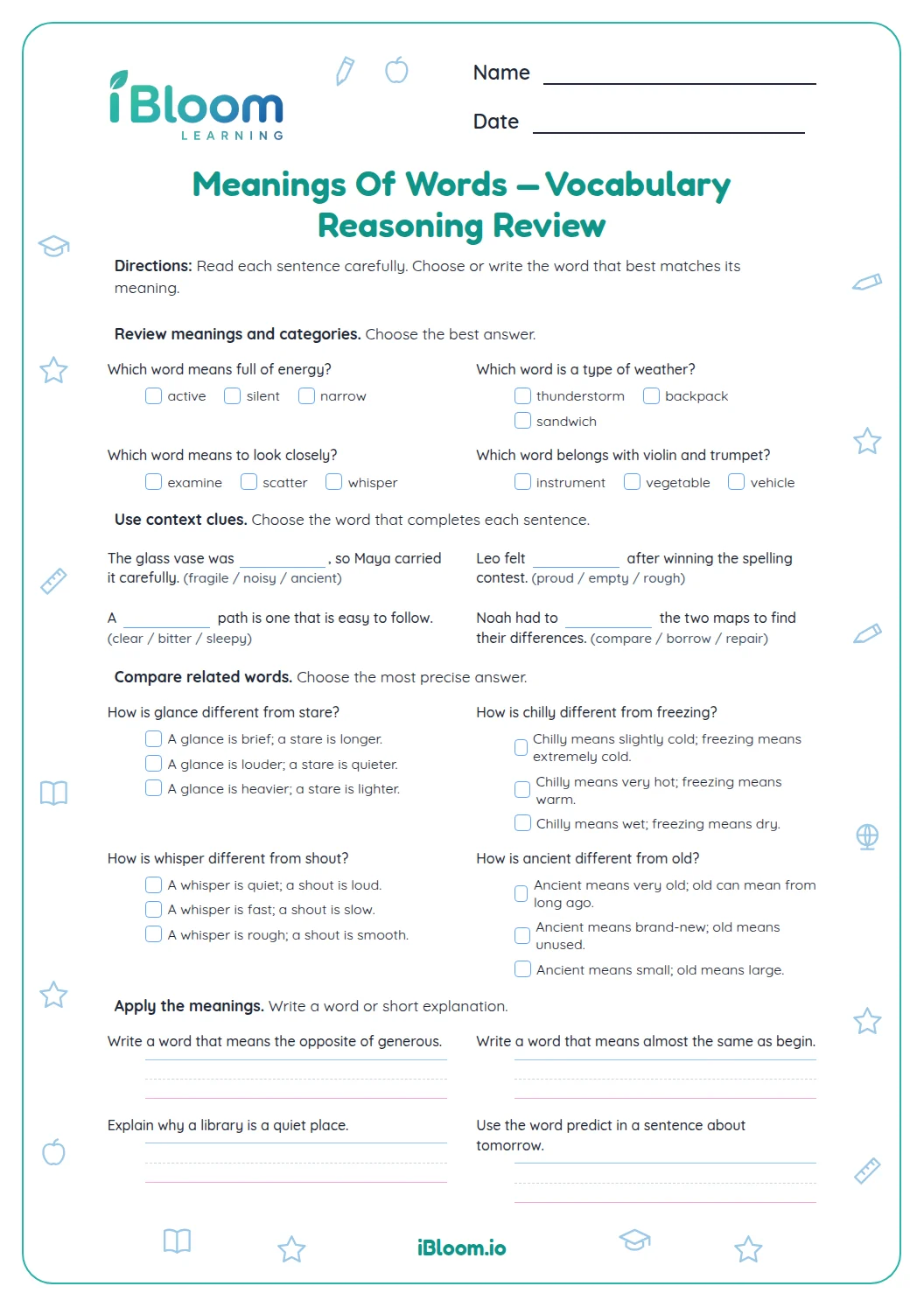
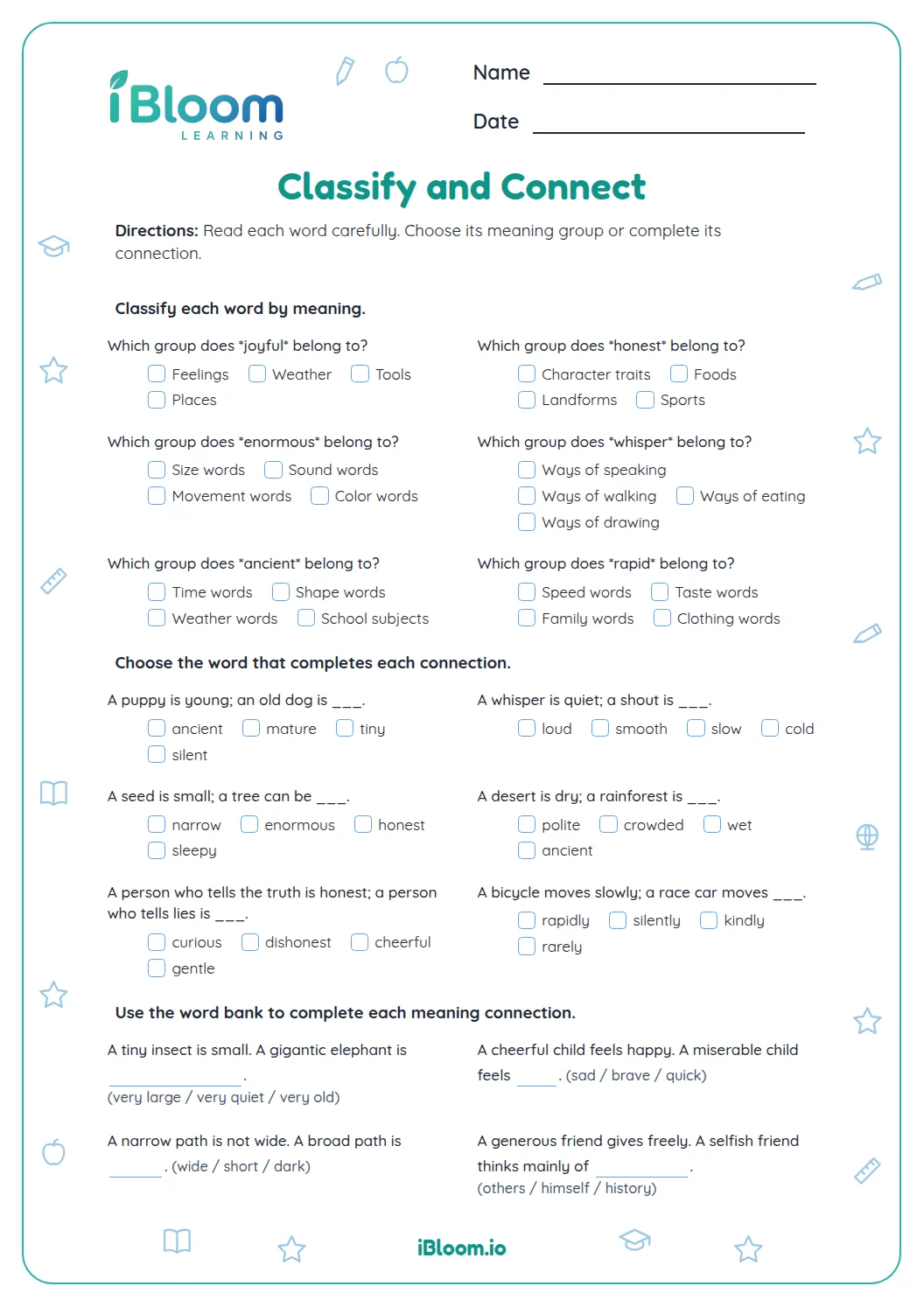
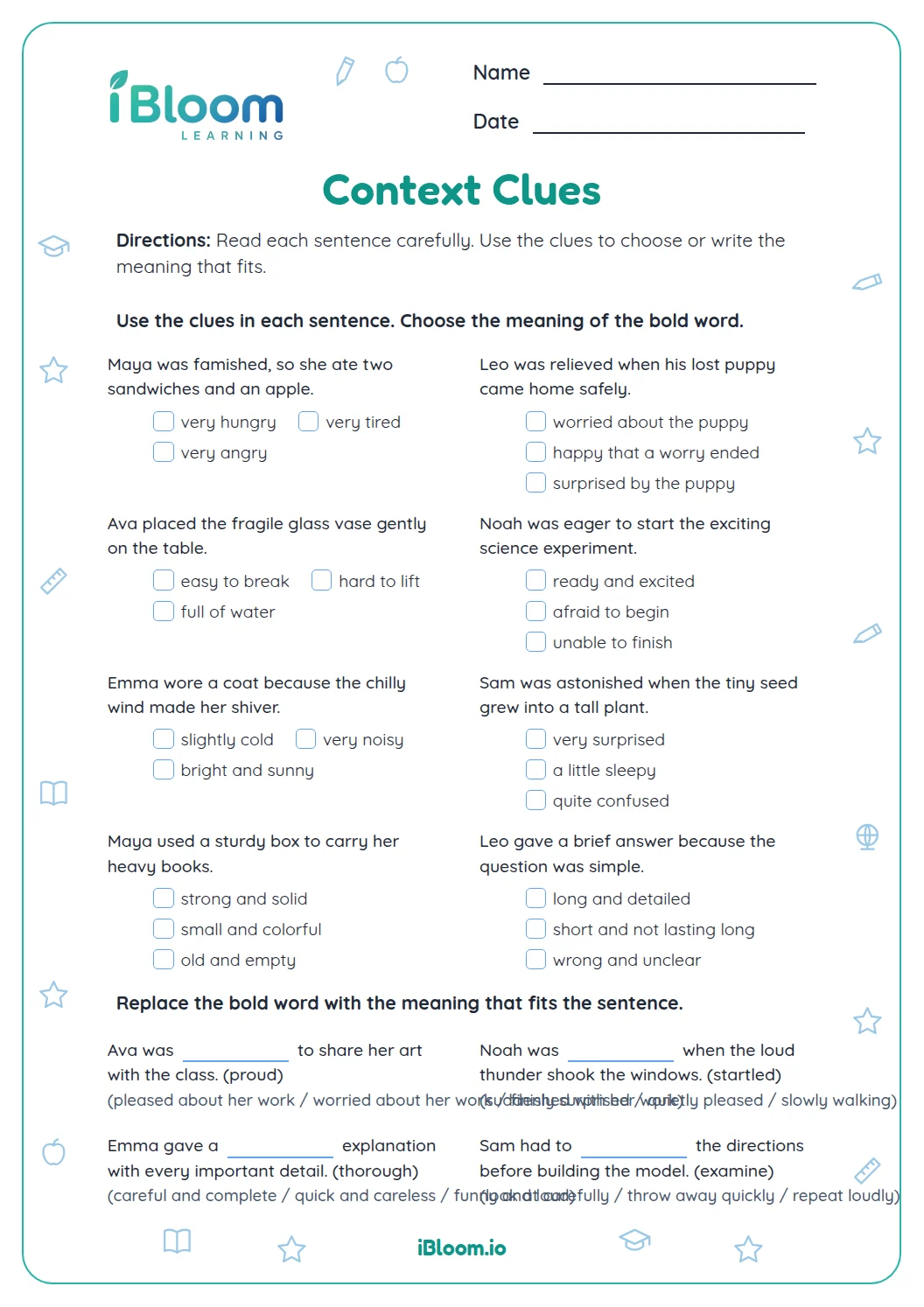
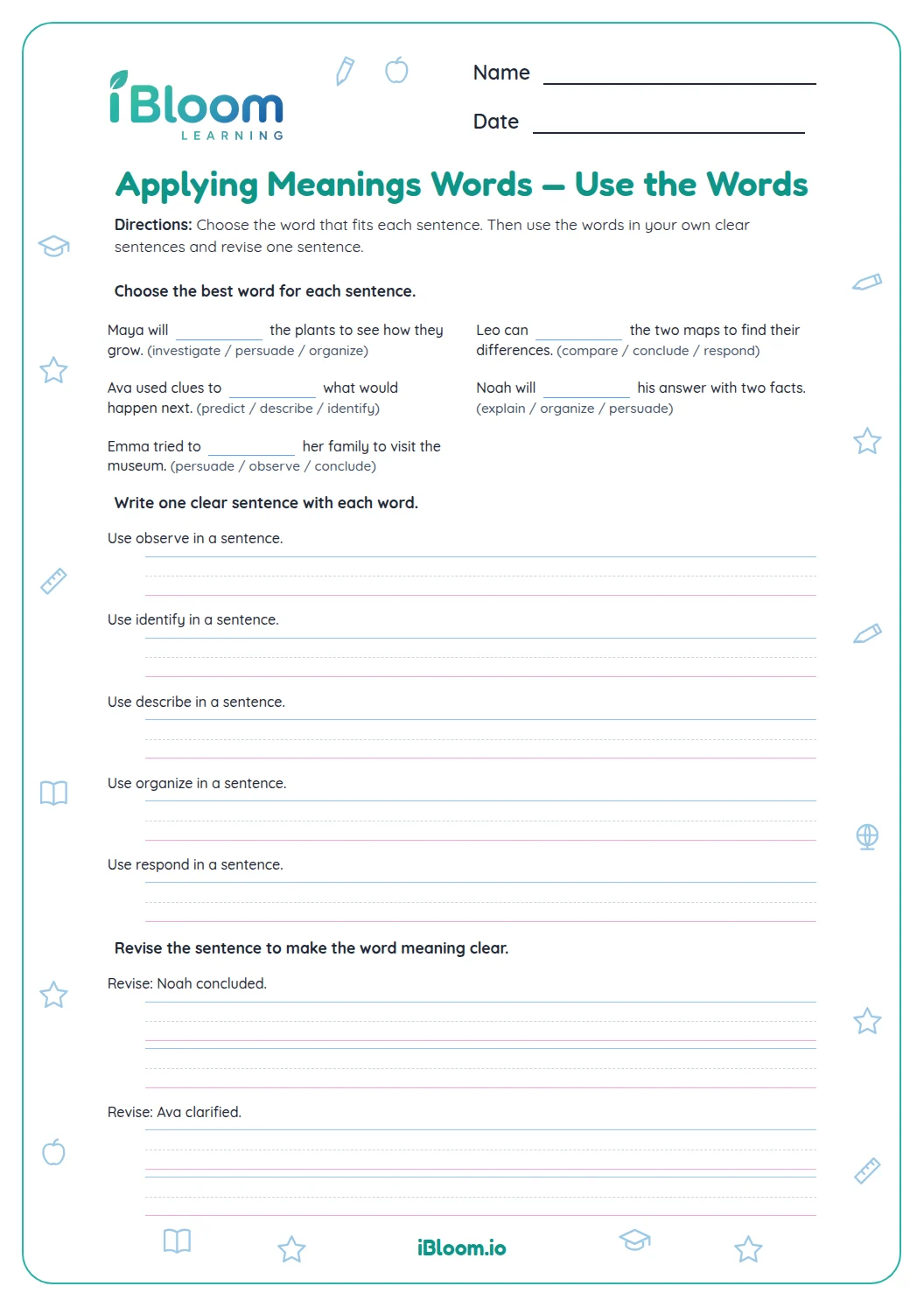
This free Grade 4 worksheet practices matching words to meanings, using each word in a sentence, and explaining a meaning from context. Seven multiple-choice items include direct definitions and a sentence clue for exhausted; five blanks apply words in context, and two short responses explain a meaning and supporting clue. The examples use everyday situations such as a journey, a repaired backpack, and a quiet voice. The page practices Common Core L.4.4a. The answer key supplies the choices, blanks, and sample explanations.
Aligned to L.4.4a
Which words do children match to definitions?
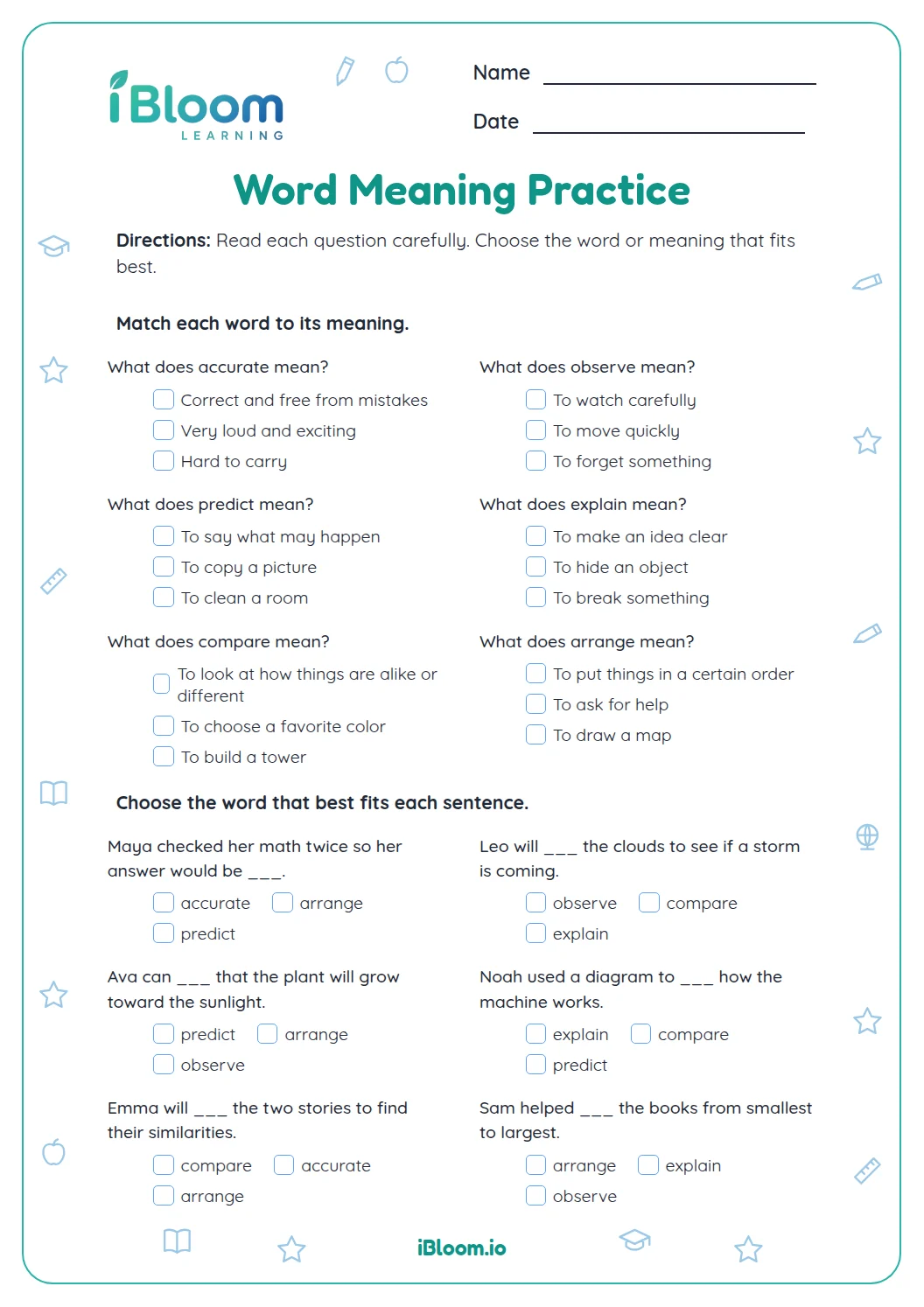
Part A matches six words to definitions, then uses a sentence clue to infer that exhausted means very tired.
Have children say the definition with their chosen word. This makes the connection explicit before they use the word in a sentence.
How does the word bank build on the definitions?
Part B reuses journey, observe, repair, whisper, and protect, each once. The trip, binoculars, torn backpack, sleeping baby, and helmet give different situations for these meanings.
Ask what detail supports each choice before marking a bank word as used. The completed sentence should make sense on its own.
- 1Ava used a needle and thread to ___ the tear in her backpack.
- 2Clue: a tear is damage; a needle and thread can fix it.
- 3Repair means fix something broken.
- 4Answer: repair
What belongs in the two written explanations?
Part C introduces collect and shelter through sentence clues. Children write both a meaning and the detail that supports it.
For collect, gathers stamps gives the meaning. For shelter, the hut keeping out the storm explains why it is a place of protection. Accept accurate explanations in the child’s own words.
How to use this worksheet
- 1Read each definition and choose the matching word in Part A.
- 2Say one chosen word and its meaning aloud.
- 3Use each Part B word once, pointing to the detail that supports the choice.
- 4For each Part C item, write a meaning and a supporting clue.
- 5Check the key and reread any sentence whose word choice needs revision.
Mistakes to check together
The mistake
Choosing borrow when the definition means watch carefully.
The fix
Borrow means take something to use and return. Observe means watch carefully.
The mistake
Choosing journey for the backpack blank because backpacks go on trips.
The fix
Read the action: Ava uses a needle and thread on a tear, so repair fits.
The mistake
Writing only “a hut” as the meaning of shelter.
The fix
Explain what makes the hut shelter: it provides protection from the storm.
Common Core alignment
Use sentence clues to choose fitting words and explain collect and shelter.
On this sheet: Parts B and C use actions, objects, and restated meanings as context clues.
Show the official wordingHide the official wording
Use context (e.g., definitions, examples, or restatements in text) as a clue to the meaning of a word or phrase.
What to practice next
Make more practice
Further reading
Questions parents and teachers ask
Which words does this worksheet practice?
Part A has six direct meaning choices and one sentence-clue question. In the added sentence, Ava has hiked for hours and needs rest, so exhausted means very tired. Children then use five word-bank words in sentences and explain two more meanings with clues.
Should we use a dictionary right away?
Try the printed definitions and sentence clues first. In Part A, compare each definition with the three word choices. In Parts B and C, look for a useful action or detail. If uncertainty remains after discussing the wording, a dictionary can confirm the meaning and help explain it.
Can a word-bank word be used more than once?
Use each of the five Part B words once. Journey, observe, repair, whisper, and protect each fit a different sentence. Ask your child to point to the detail that supports the choice, such as binoculars or a needle and thread, before marking that word as used.
How much should my child write in Part C?
A brief meaning and one supporting clue are enough for each answer. For collect, children can explain that it means gather things together and point to the stamps in an album. For shelter, they should connect protection with the hut keeping out the storm. Equivalent wording is acceptable.
Why do some words appear in two parts?
The repeated words let children apply the meanings they matched earlier. Knowing that repair means fix becomes useful when Ava sews a torn backpack. Ask your child to explain this connection for each repeated word, so the second task checks understanding of the situation as well as recall.