



About this worksheet
This Grade 4 vocabulary worksheet focuses on compound words in use. Students join familiar word parts, select a compound that makes sense in a sentence, and write their own sentences with target words. The three parts move from recognition to independent use across 14 questions. A separate answer key includes sample sentences, and the practice connects with Common Core L.4.4a.
Aligned to L.4.4a
How is a compound word built?
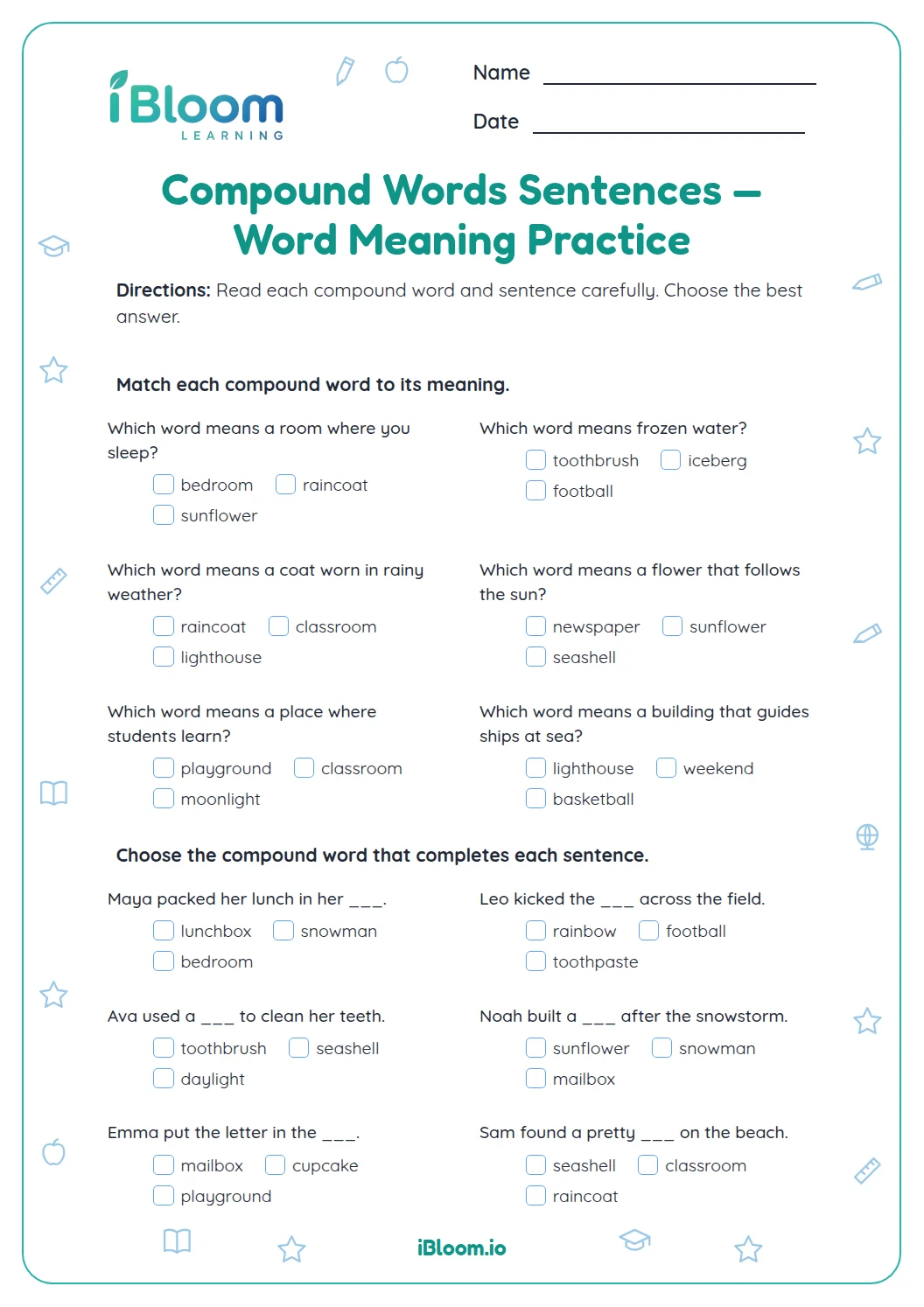
A compound word joins two smaller words to make a word with its own meaning. Sun and flower make sunflower; rain and coat make raincoat. The two parts offer a useful clue, but the whole word names one thing or idea.
Students can read each part, blend the word, and then see whether it makes sense in its sentence.
How does sentence context help choose a compound word?
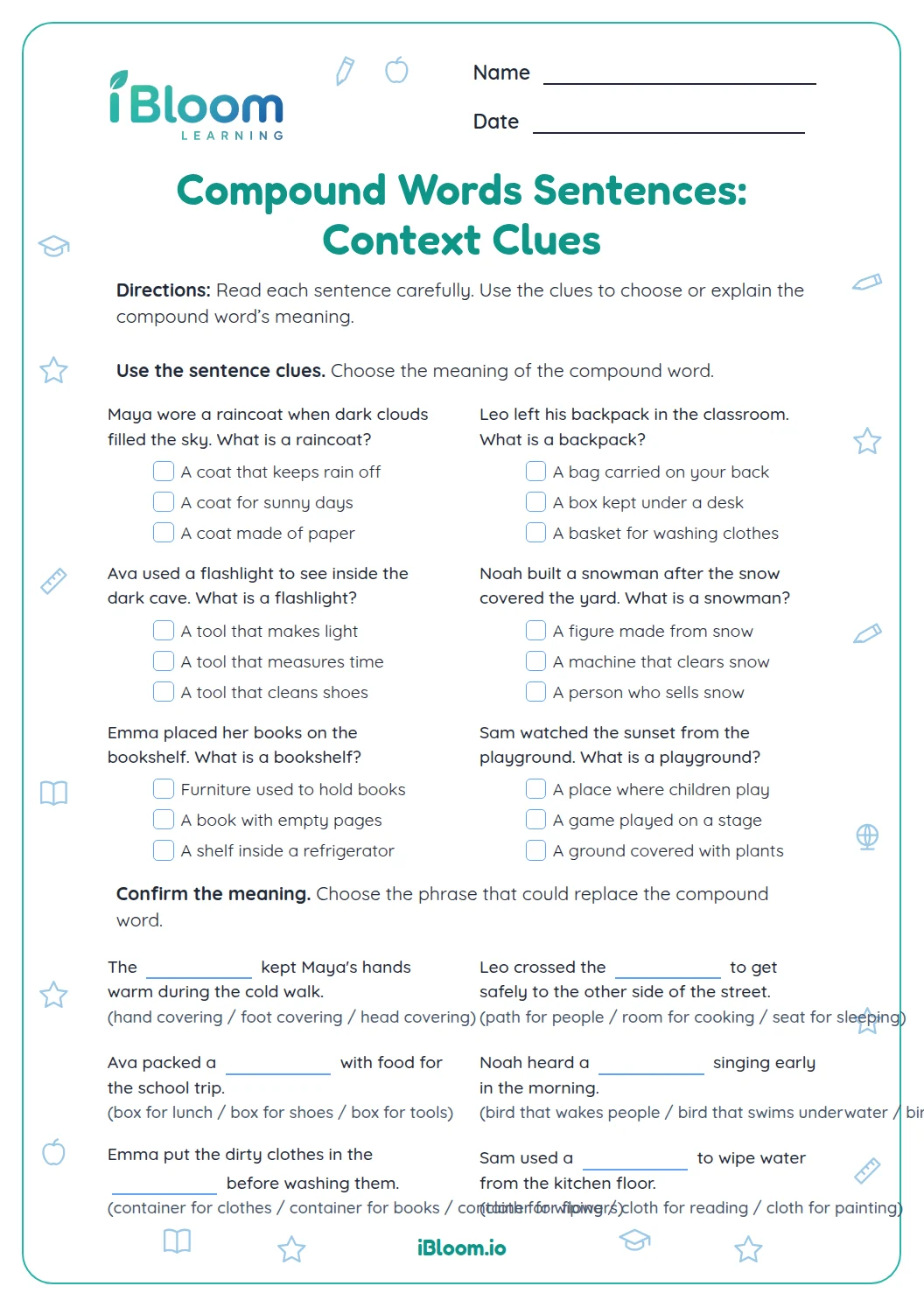
Read the whole sentence before choosing. Clues such as “put your lunch in” point to a container, while “after the rain” suggests something seen in the sky. The compound must fit both the sentence meaning and its grammar.
- 1Put your lunch in the ___.
- 2A lunchbox is a container for lunch.
- 3Answer: lunchbox.
What will students write on this sheet?
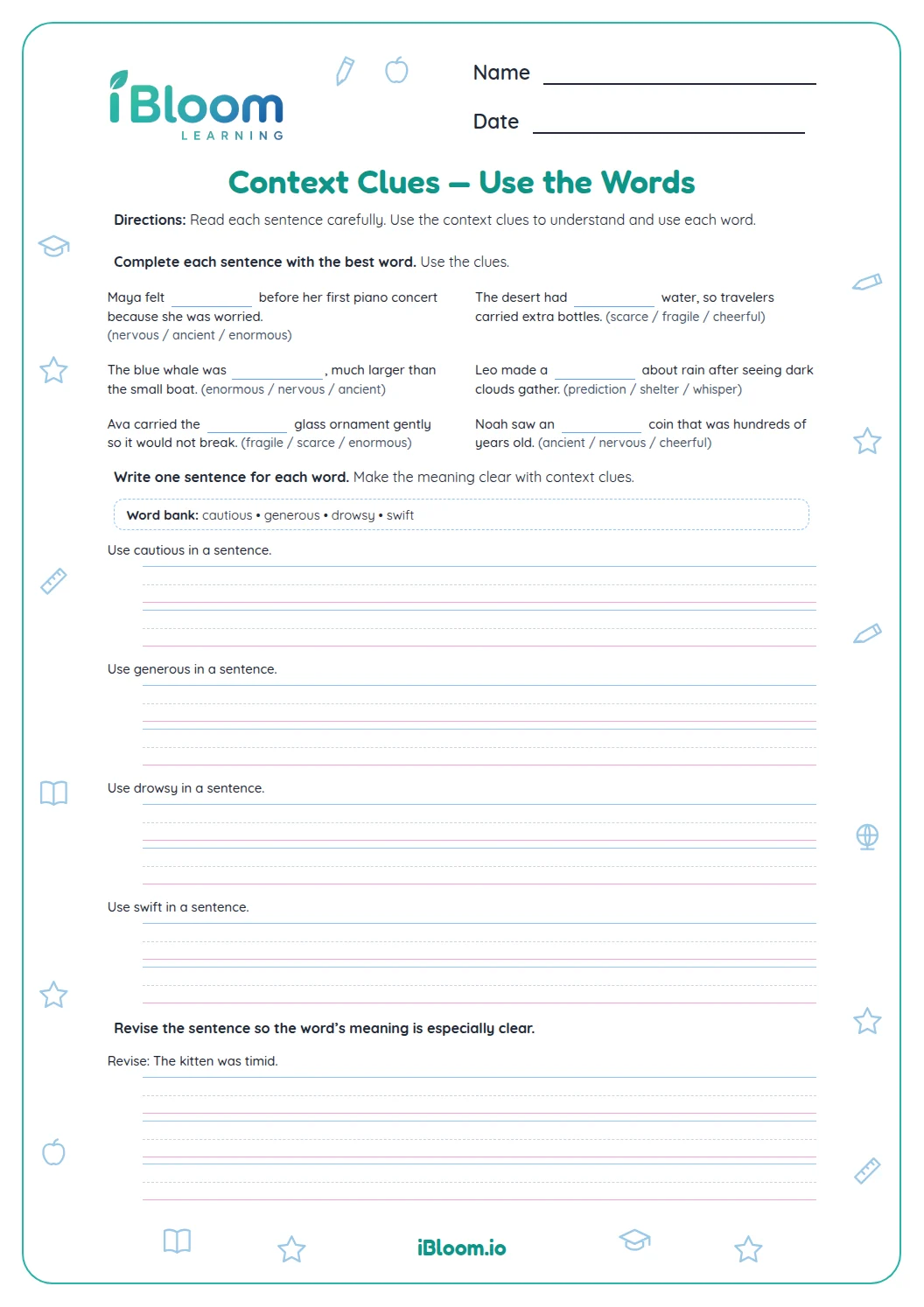
Part A combines word parts or recognizes a compound. Part B uses sentence context to select the right word. Part C asks for four original sentences using backpack, playground, sunlight, and seashell.
Sample answers in the key show one possible sentence; students may write other clear and accurate sentences.
How to use this worksheet
- 1Read both parts aloud and combine them.
- 2Check that the new word names an idea or thing.
- 3Read the full sentence before choosing a word.
- 4For Part C, include the target word in a complete sentence.
- 5Reread each sentence to make sure the word fits.
Mistakes to watch for
The mistake
Leaving a space between the two parts.
The fix
Write the compound as one word when it is conventionally closed.
The mistake
Choosing a word because it shares one clue.
The fix
Check the entire sentence for meaning.
The mistake
Writing a fragment instead of a sentence.
The fix
Include a subject and a verb, then add the target compound.
Curriculum alignment
This printable connects focused practice with a Common Core learning goal.
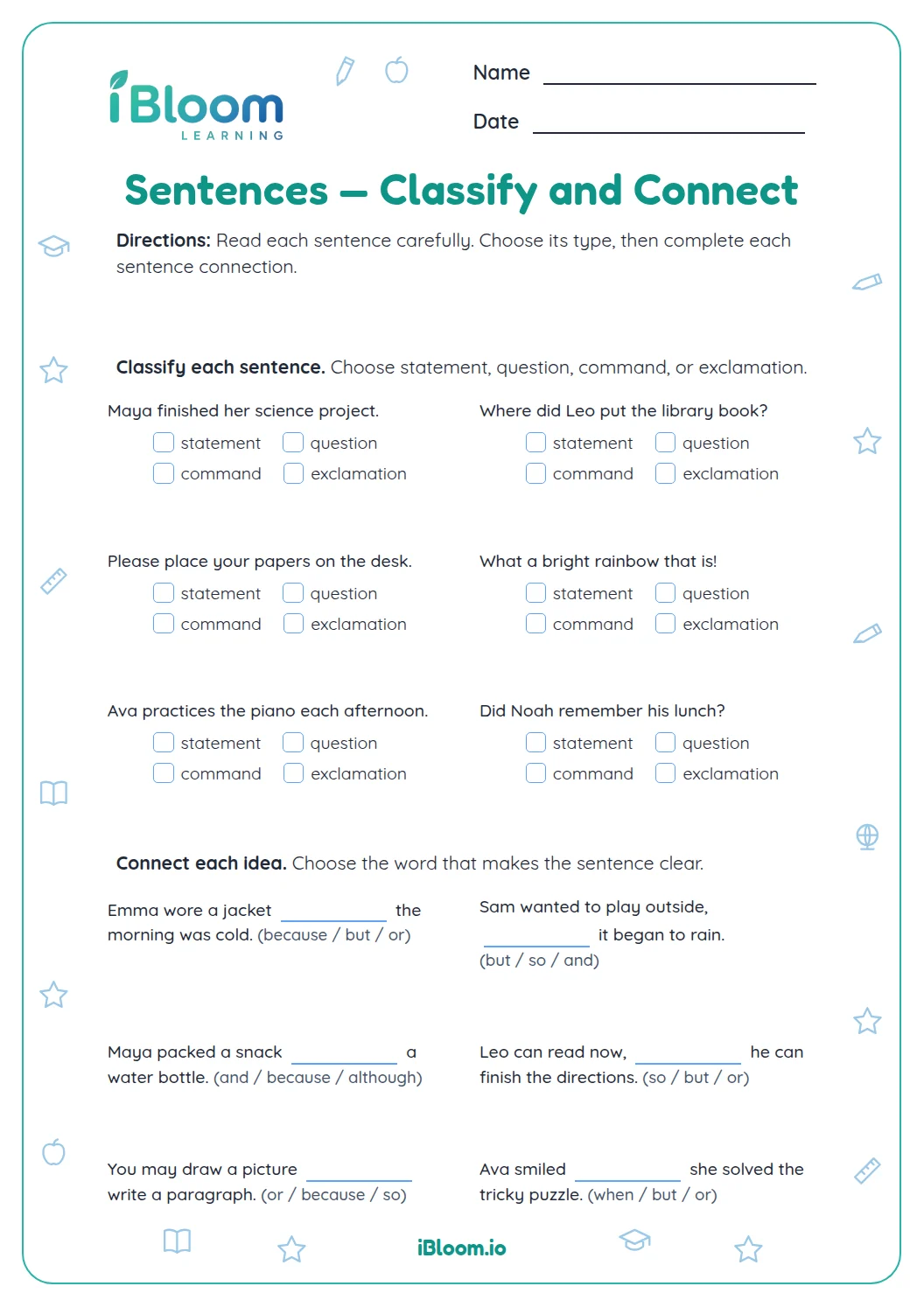
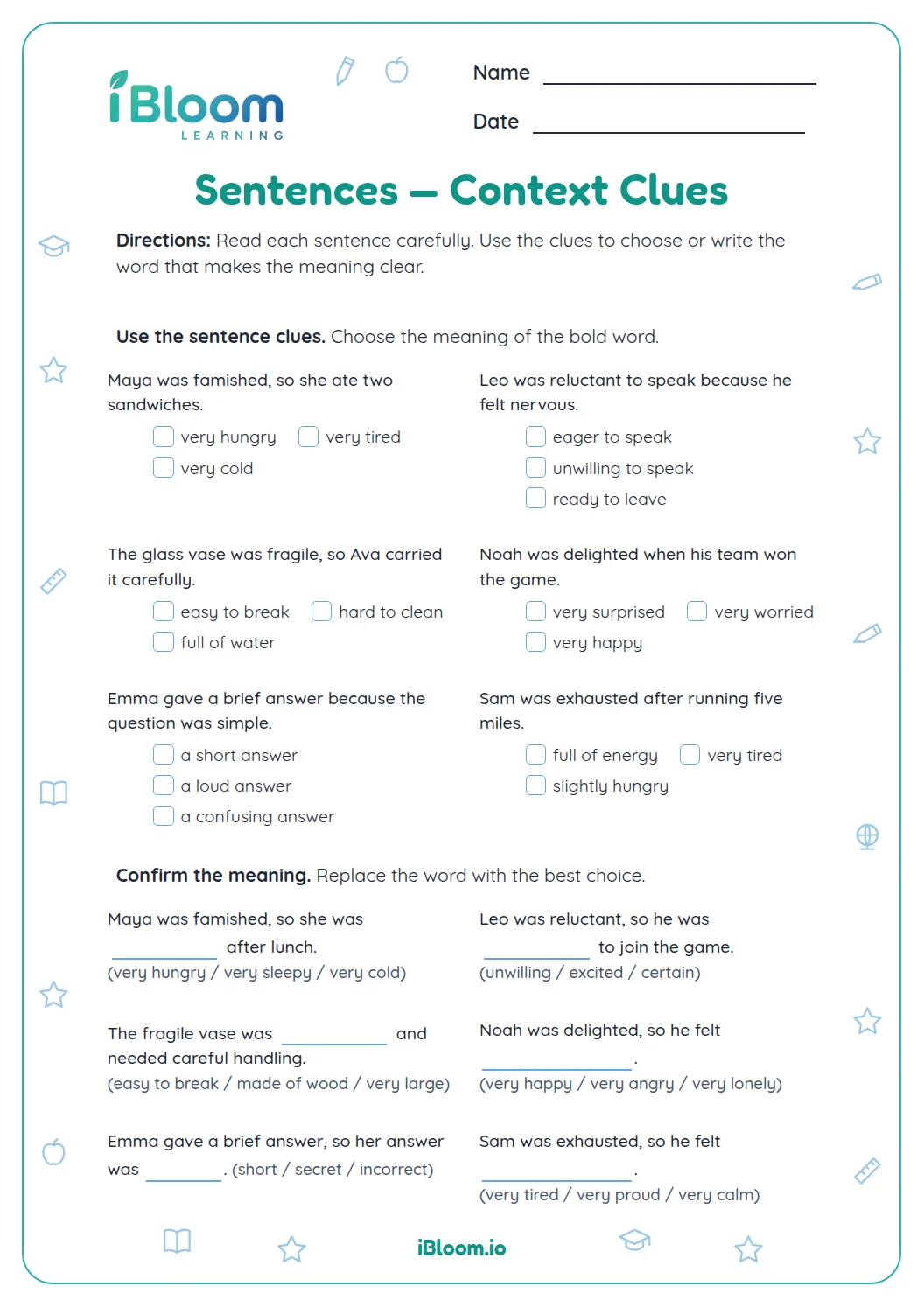
Use a sentence clue to choose a compound word that fits its meaning.
On this sheet:
Show the official wordingHide the official wording
Use context (e.g., definitions, examples, or restatements in text) as a clue to the meaning of a word or phrase.
What to practice next
Make more practice
Further reading
Questions parents and teachers ask
What is a compound word?
A compound word joins two smaller words to make a word with its own meaning, such as rain and coat forming raincoat. The first part of this worksheet asks students to build compounds, then the next questions use sentence meaning to choose a word that fits.
How does sentence context help with these questions?
Read the whole sentence and look for a clue about what belongs in the blank. “Put your lunch in the ___” points to a container, while “after the rain” points to something visible in the sky. Students use the clue to select the compound that makes sense.
What does the answer key show for sentence writing?
For questions 11–14, the key gives one sample sentence using backpack, playground, sunlight, or seashell. Students may write different sentences if each one is complete, clear, and uses the requested compound word correctly. The key accepts other clear, correct sentences as well.
How many questions and pages are included?
The printable has 14 questions across two worksheet pages, followed by a separate two-page answer key. Students build four compounds, make word choices in context, and write four original sentences using target words. The two-page key gives answers for the word-building and context items, plus sentence examples.
What should students check when they write a sentence?
Check that the sentence is a complete thought and that the compound word has the meaning intended. For example, a backpack carries supplies, while sunlight is light from the sun. The key’s samples model one way to use each assigned word.