

About this worksheet
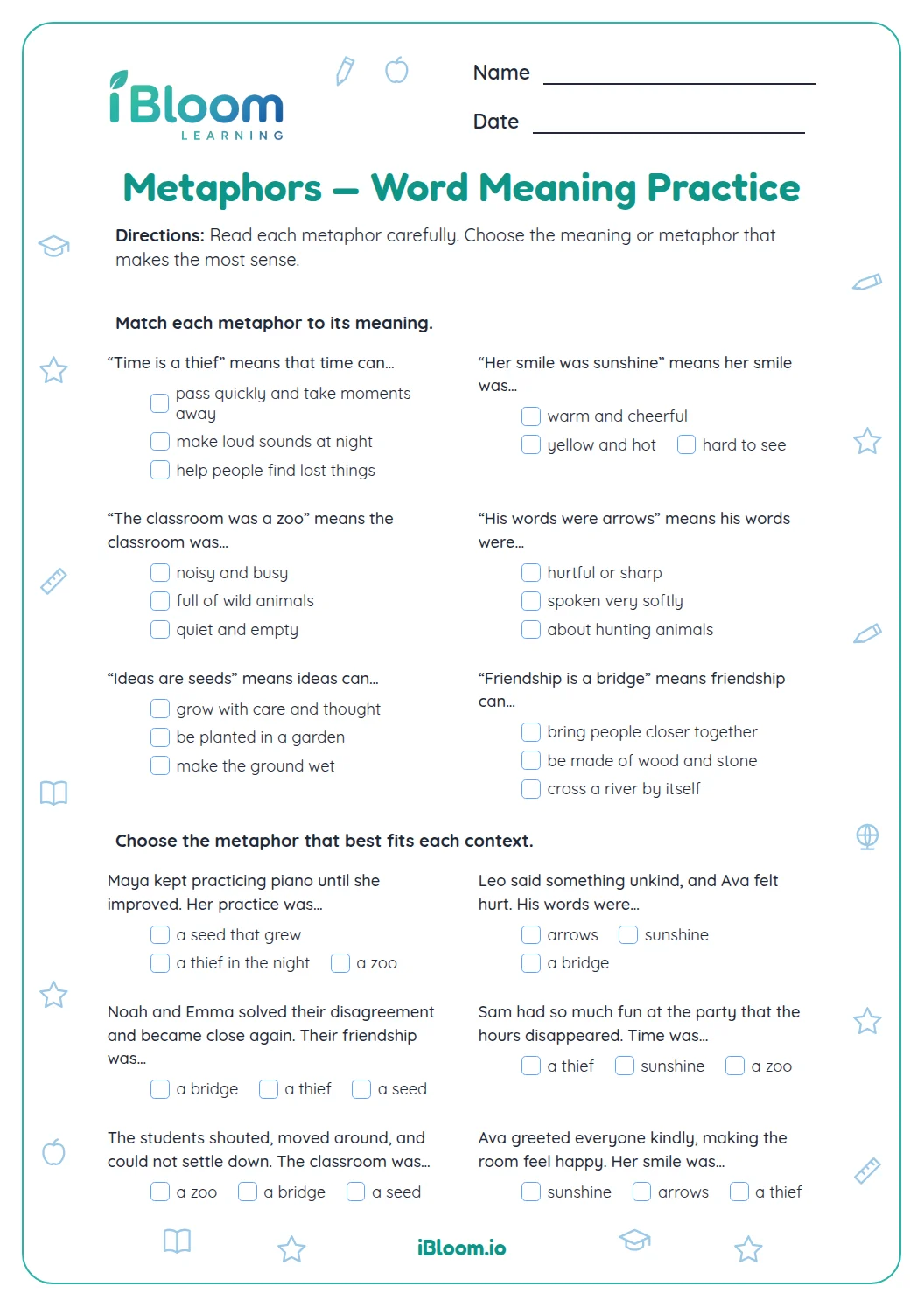
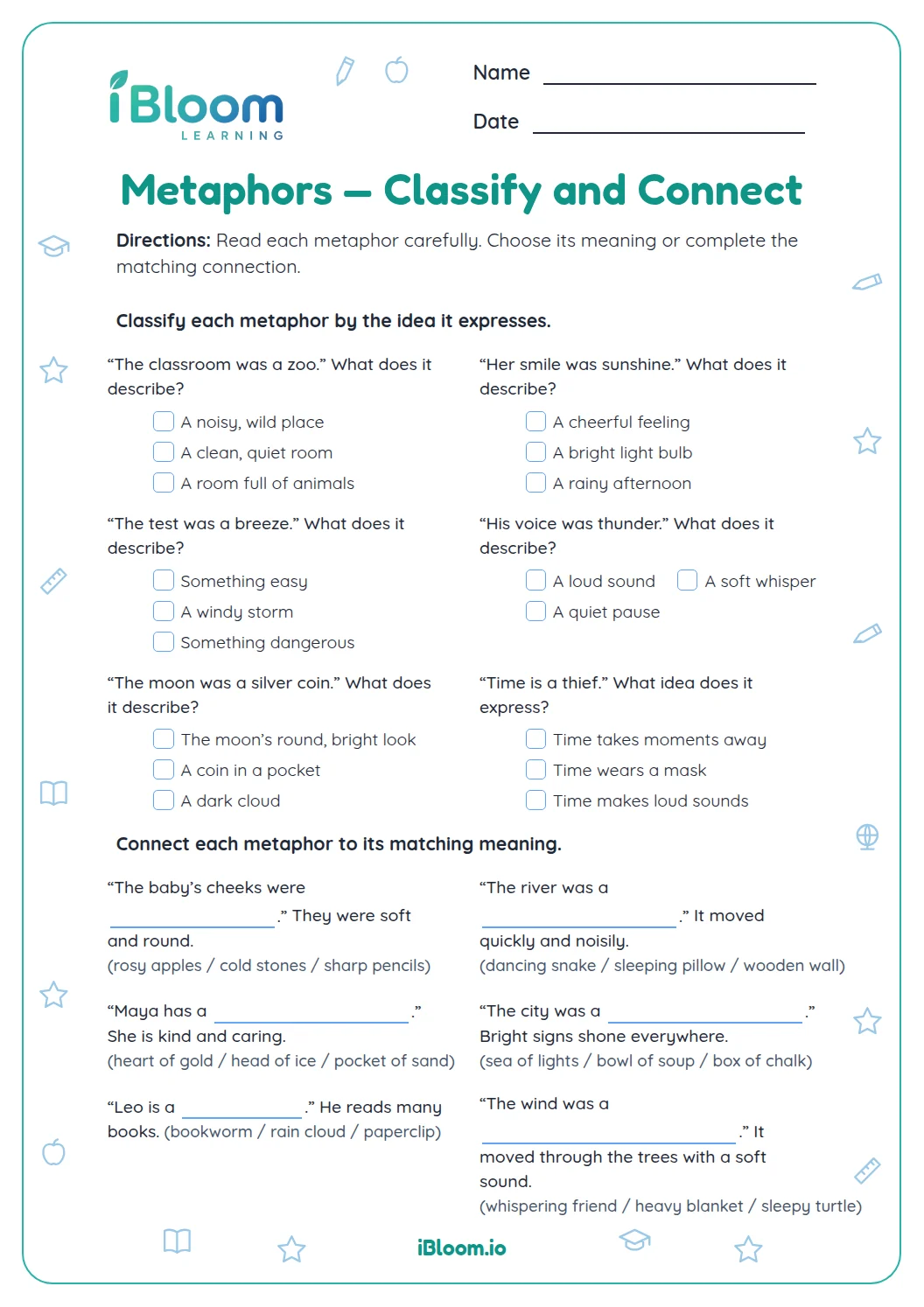
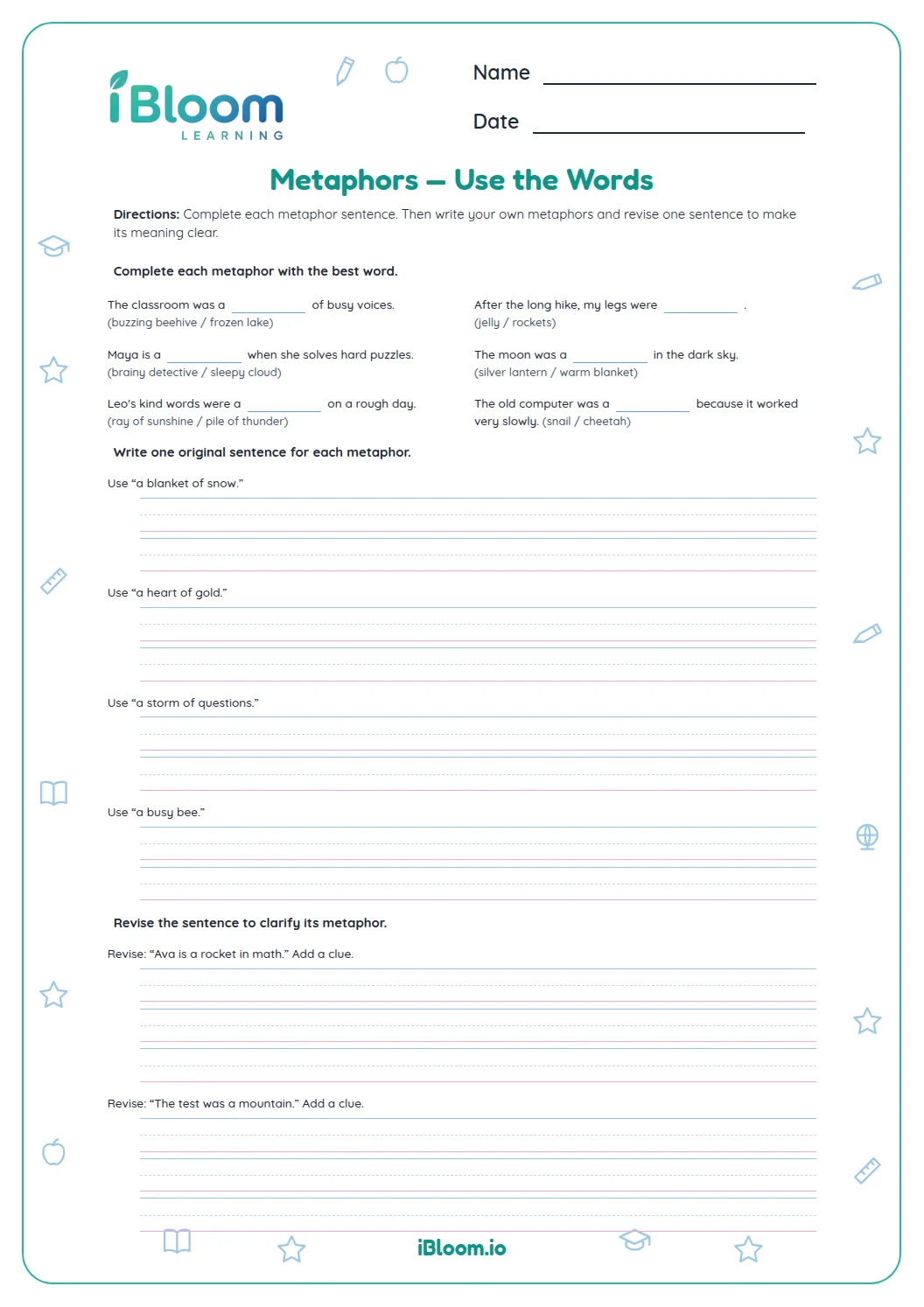
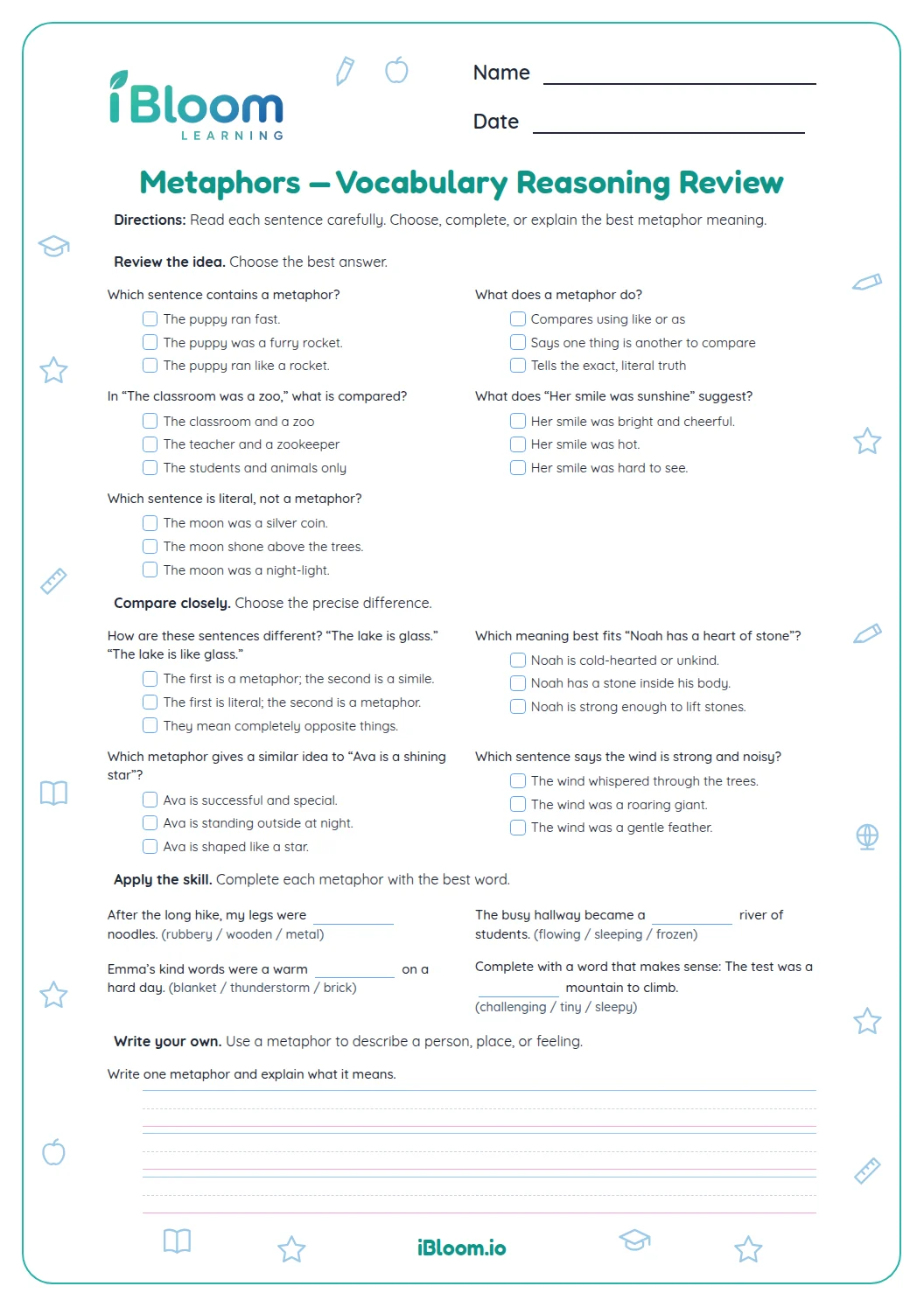
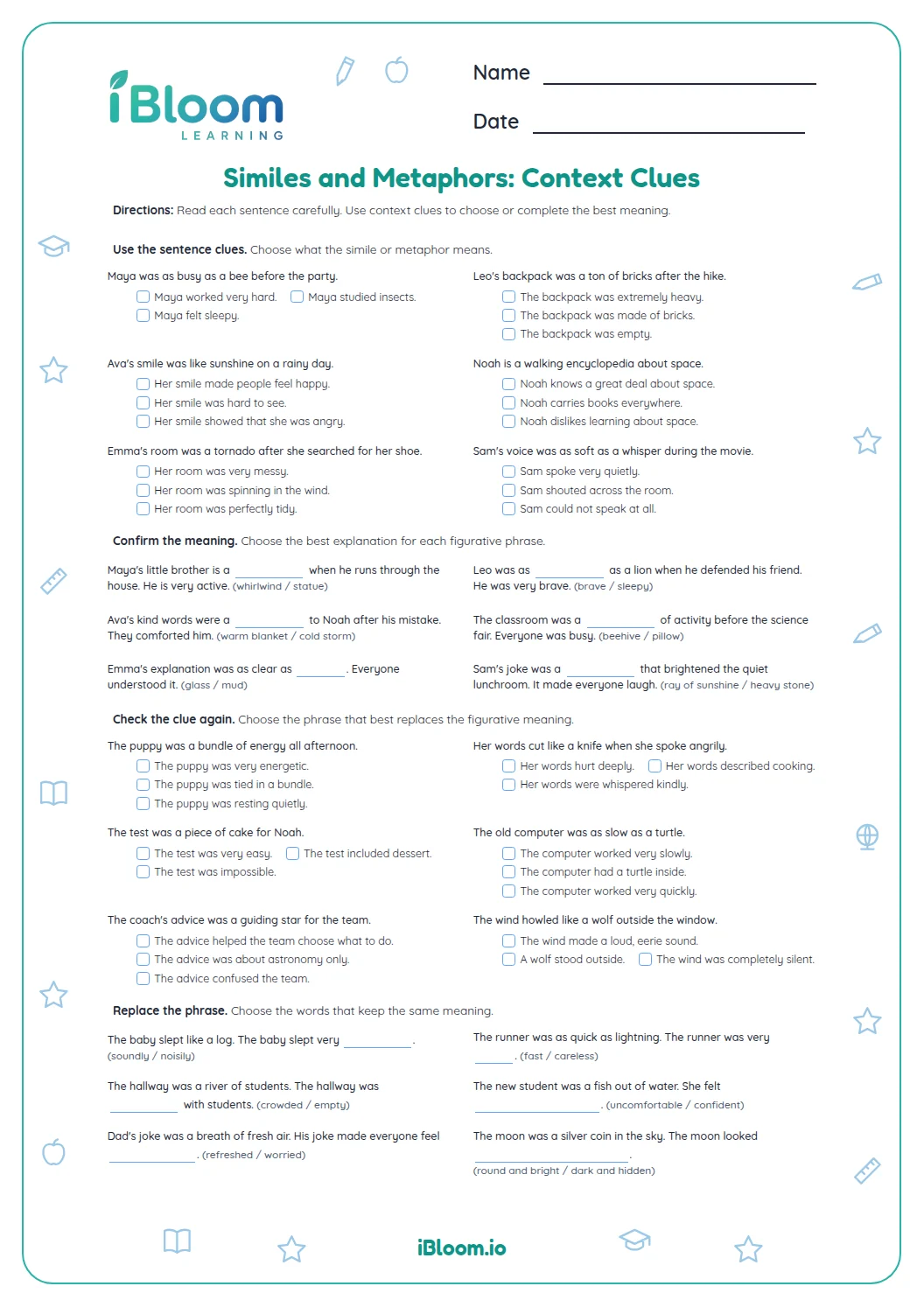
This Grade 4 vocabulary worksheet uses sentence clues to make metaphors understandable. In Part A, readers choose what seven comparisons suggest; in Part B, they replace seven metaphors with words that fit the sentence. The answer key gives concise meanings, so an adult can ask which detail supports each response.
How does a metaphor work in a sentence?
A metaphor describes one thing as another to point to a shared quality. In “The pond was a mirror, reflecting the pink sky,” the word reflecting signals that the water acts like a reflective surface. The clue keeps the comparison from being taken literally.
- 1The pond was a mirror, reflecting the pink sky.
- 2The clue “reflecting the pink sky” explains the comparison.
- 3Answer: a smooth surface that reflects
What will learners do in each part?
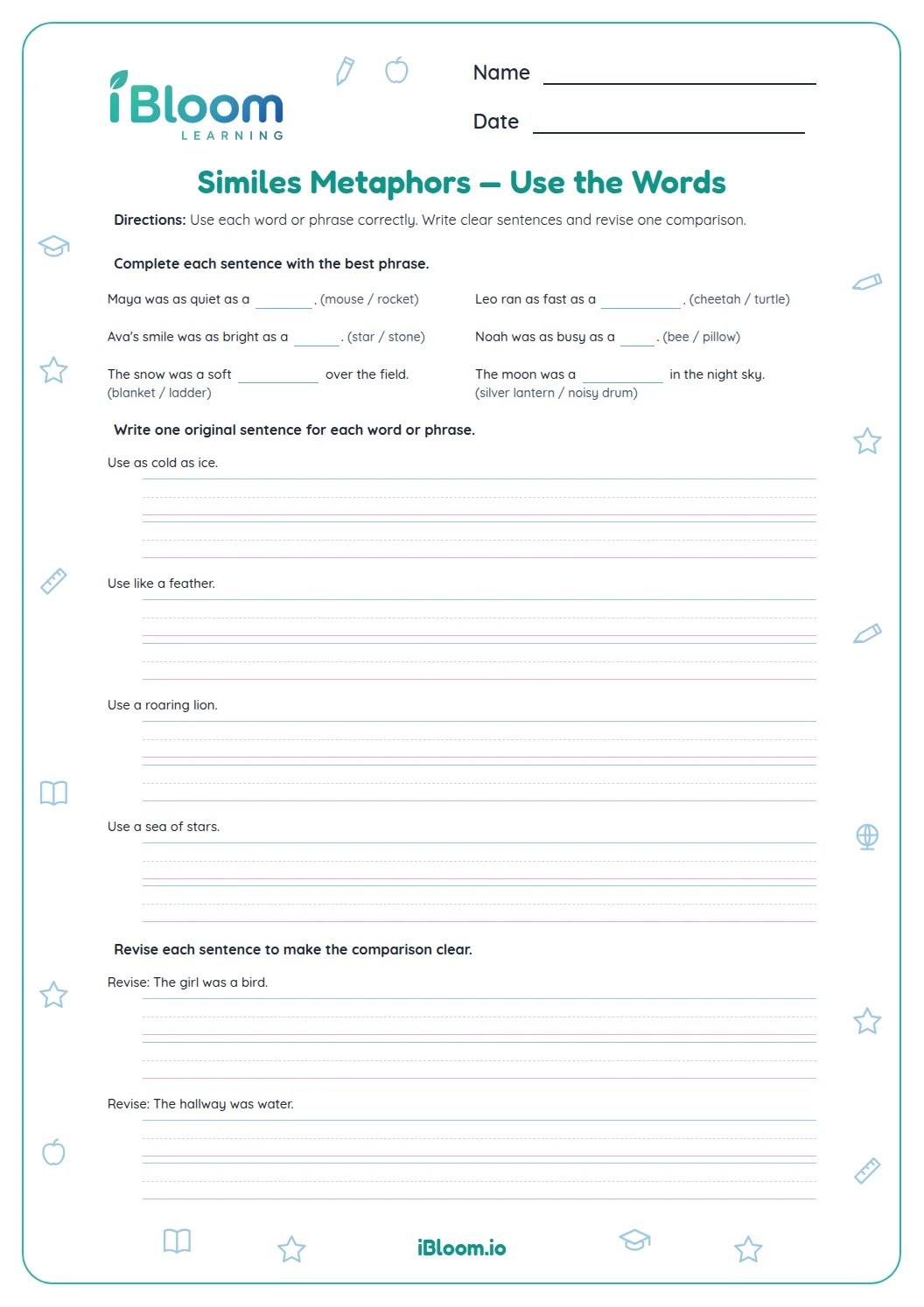
Part A offers seven meaning choices, including a library as a beehive and a voice as thunder. Part B asks learners to replace seven comparisons with a phrase that fits its sentence, such as “My backpack is a brick” becoming “very heavy.”
How can an adult help with a tricky comparison?
Ask the learner to read the complete sentence and point to the detail that supports the meaning. If the explanation does not fit, try it in place of the metaphor and reread the sentence aloud.
How to use this worksheet
- 1Read the whole sentence before choosing or writing.
- 2Underline a word or detail that hints at the comparison.
- 3For Part A, test both choices in the sentence.
- 4For Part B, replace the metaphor with a short phrase that preserves its meaning.
- 5Use the key to check the idea, then explain the clue in your own words.
Common mistakes and quick fixes
The mistake
Taking every comparison literally.
The fix
Use nearby details such as “reflecting” or “packed books” to infer the intended quality.
The mistake
Choosing a meaning that fits the metaphor but not its sentence.
The fix
Read the sentence again with the meaning substituted for the comparison.
The mistake
Repeating the metaphor instead of explaining it.
The fix
Name the quality the comparison suggests, such as heavy, loud, or busy.
What to practice next
Make more practice
Further reading
Questions parents and teachers ask
What is a metaphor?
A metaphor describes one thing as another to suggest a quality they share. “Dad’s voice was thunder” compares the voice with thunder because it is loud and booming. The sentence’s setting and details help a reader choose an intended meaning rather than treating the comparison as literal.
How many questions are on this worksheet?
There are 14 questions across two parts. Part A has seven multiple-choice items about metaphor meanings, and Part B has seven sentence completions that explain comparisons in context. The separate answer key provides a concise intended response for every item.
What does Part B ask learners to write?
Part B gives a metaphor in a sentence and a blank for a short explanation. For example, “My backpack is a brick after I packed books” becomes “very heavy.” Accept a clear phrase that preserves the intended meaning and fits the surrounding sentence.
How can learners find context clues?
Have learners look for details near the metaphor that describe an action, feeling, setting, or result. In the pond example, “reflecting the pink sky” signals what the water does. A useful check is to substitute the proposed meaning into the sentence.
Is an answer key included?
Yes. A separate key lists answers to all 14 questions. The seven selection questions have one intended choice, while the explanation blanks have short model answers; a different phrase is reasonable when it communicates the same meaning clearly.