

About this worksheet
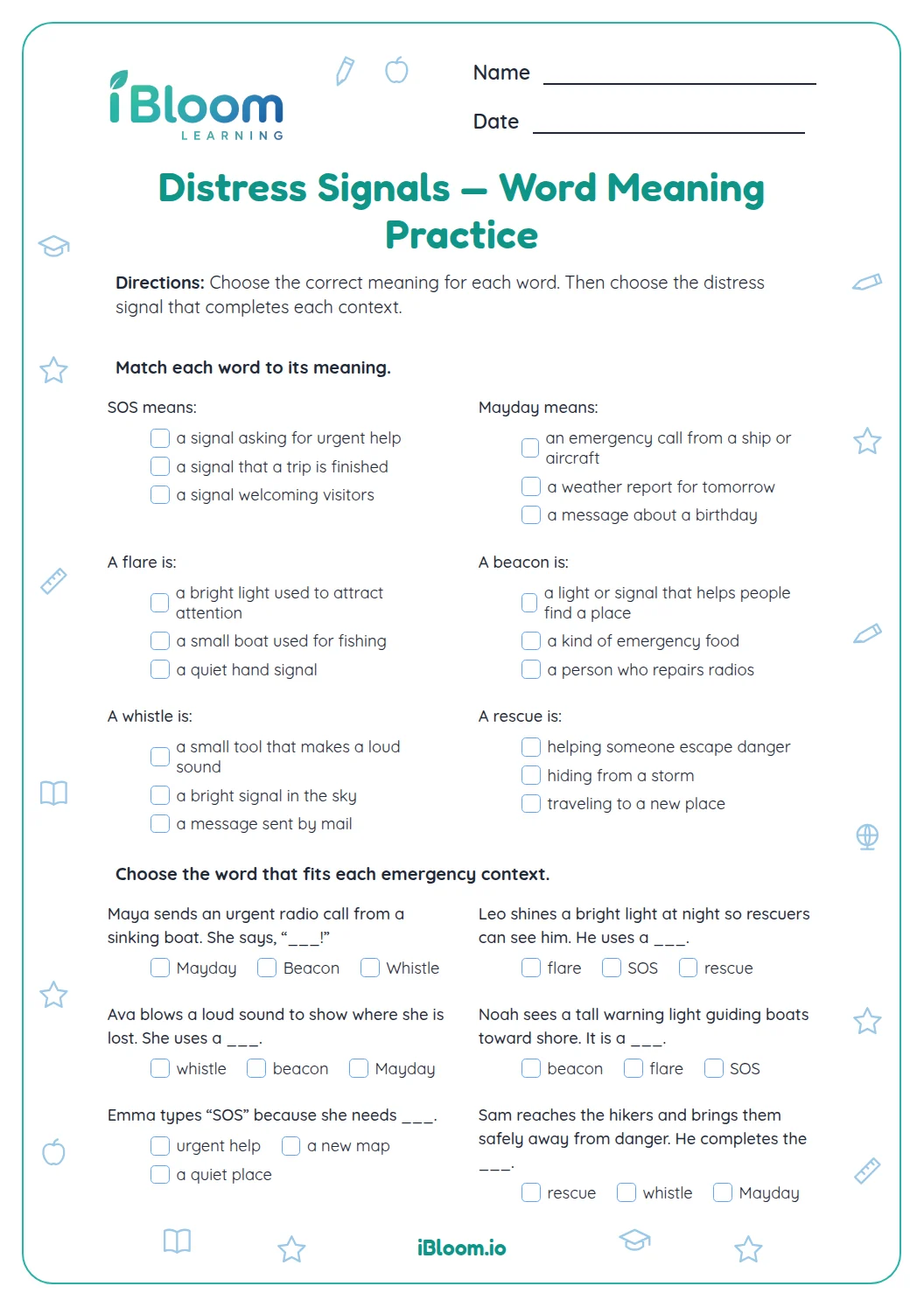
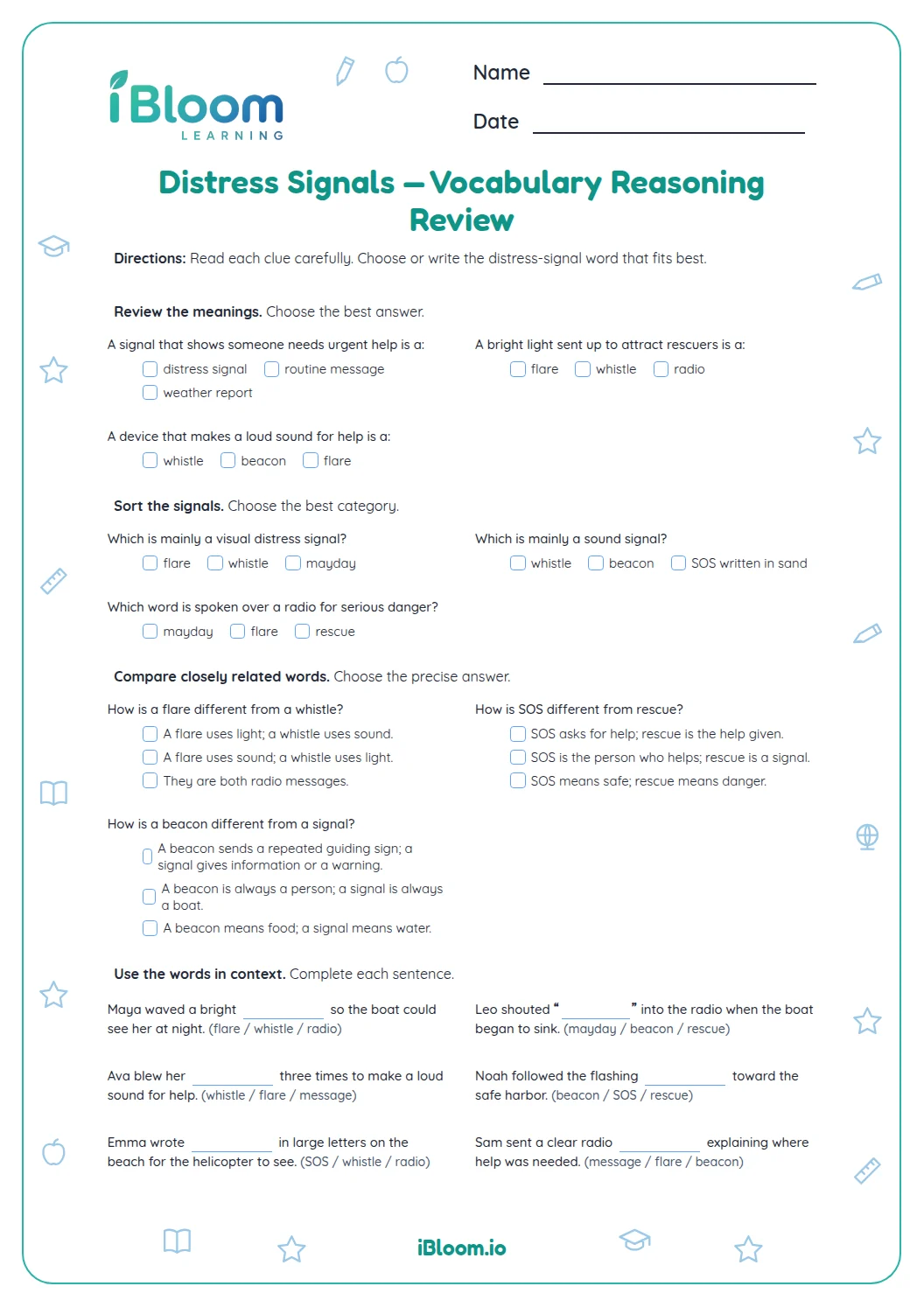
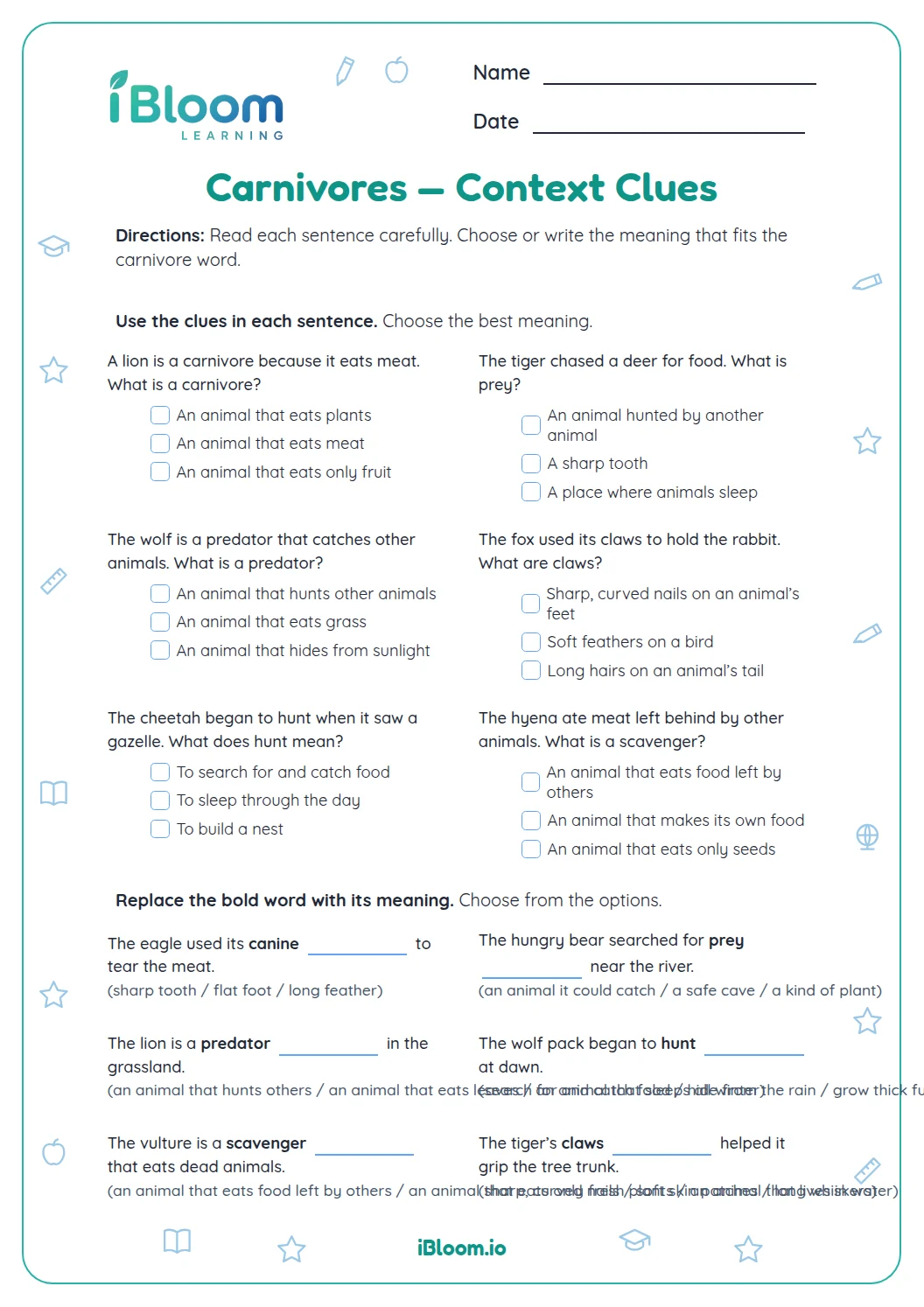
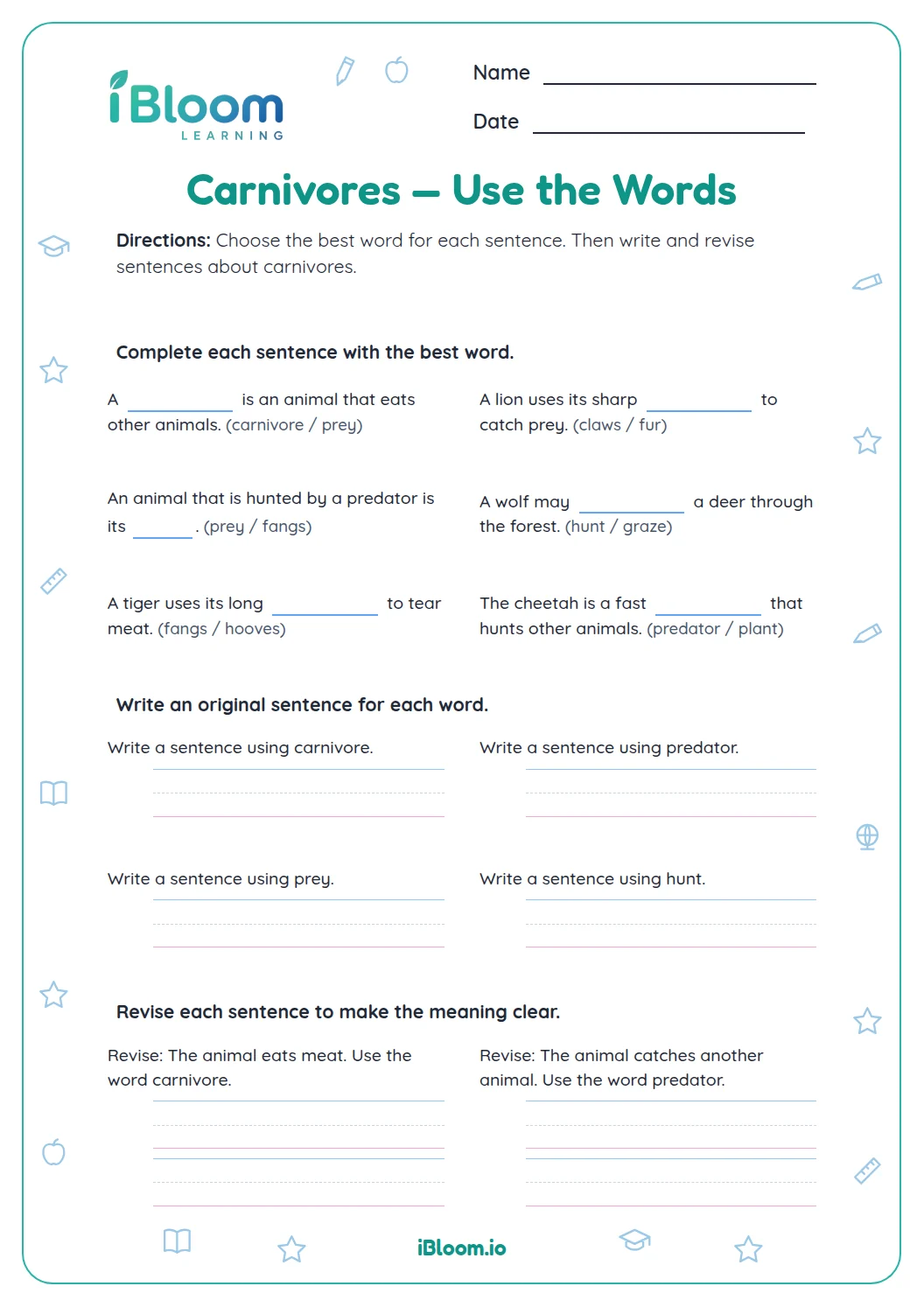
This free printable worksheet gives Grade 4 learners focused practice with distress signal vocabulary and context clues. The activities move from recognition to applying the skill in sentences and short responses. The answer key supports quick checking and discussion.
Aligned to L.4.4a
How does a sentence reveal a distress word?
Details about a boat, rescue, or warning point toward the word meaning.
How can a close synonym confirm meaning?
Swap in a similar word and see whether the sentence still makes sense.
- 1Details about a boat, rescue, or warning point toward the word meaning.
- 2Use the clue or relationship in the prompt.
- 3Check the result against the question.
How can you check an answer?
Read the whole prompt again. Use the answer key to check the word or computation, then fix any mismatch.
How to use this worksheet
- 1Read the directions for each part.
- 2Notice the clue or relationship in the prompt.
- 3Work through one item at a time.
- 4Check the answer key after finishing.
Common mistakes and quick fixes
The mistake
Choosing an answer before rereading the full prompt.
The fix
Reread the sentence or number relationship and look for the clue.
The mistake
Skipping a unit or an important word.
The fix
Include the requested unit and check that the response fits the sentence.
The mistake
Stopping after the first step in a two-step item.
The fix
Track each step and verify the final response.
Common Core alignment
Use context to determine the meaning of an unfamiliar word.
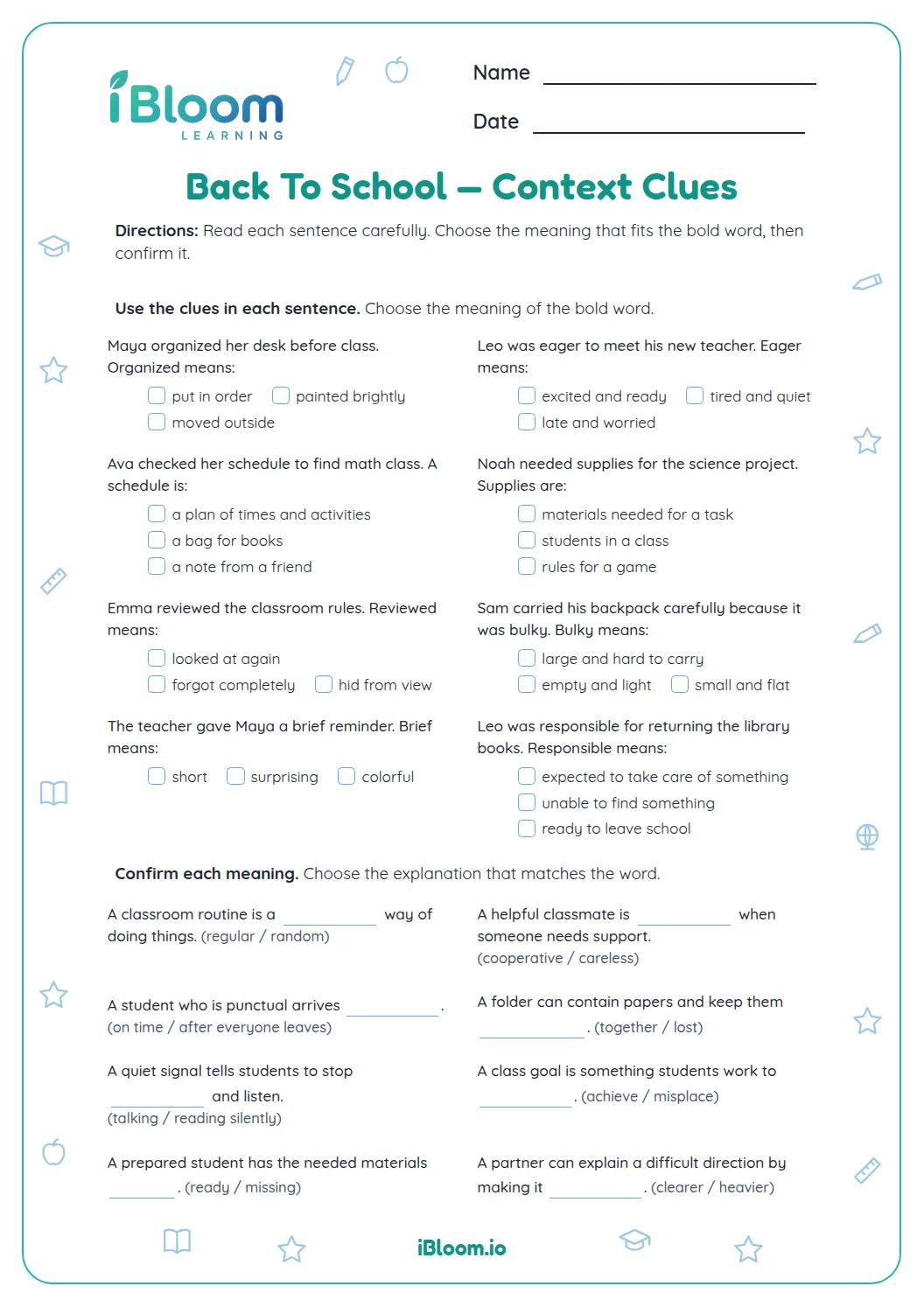
On this sheet: Questions use sentence details and restatements to interpret distress-signal vocabulary.
Show the official wordingHide the official wording
Use context (e.g., definitions, examples, or restatements in text) as a clue to the meaning of a word or phrase.
What to practice next
Make more practice
Further reading
Questions parents and teachers ask
How do context clues help with distress signals?
Words such as rescue, boat, alarm, and help add details that narrow the meaning of signal vocabulary. Learners use those details to choose an explanation or supply a close synonym. Ask the learner to explain the choice aloud and point to the detail, relationship, or computation that supports the response.
What vocabulary is practiced on the sheet?
The items include SOS, flare, stranded, danger, urgent, beacon, mayday, life jacket, signal, emergency, distress, and unsafe. A word search reviews signal terms and new sentence prompts reinforce contextual meanings. Ask the learner to explain the choice aloud and point to the detail, relationship, or computation that supports the response.
How should a student answer the synonym questions?
Reread the sentence and choose a word with a close meaning that still makes sense in that situation. For example, stuck can replace stranded when someone cannot leave a place. Ask the learner to explain the choice aloud and point to the detail, relationship, or computation that supports the response.
Does the printable include an answer key?
Yes. The key gives the selected meaning for each sentence, sample synonyms for the replacement items, and the words to find in the final activity. Ask the learner to explain the choice aloud and point to the detail, relationship, or computation that supports the response.
Which words can a student find in the word search?
The grid contains SOS, flare, beacon, mayday, rescue, and alarm. Each word appears across a row, so learners can scan left to right while checking off the printed list. The surrounding items use the same emergency and rescue vocabulary in context.