


About this worksheet
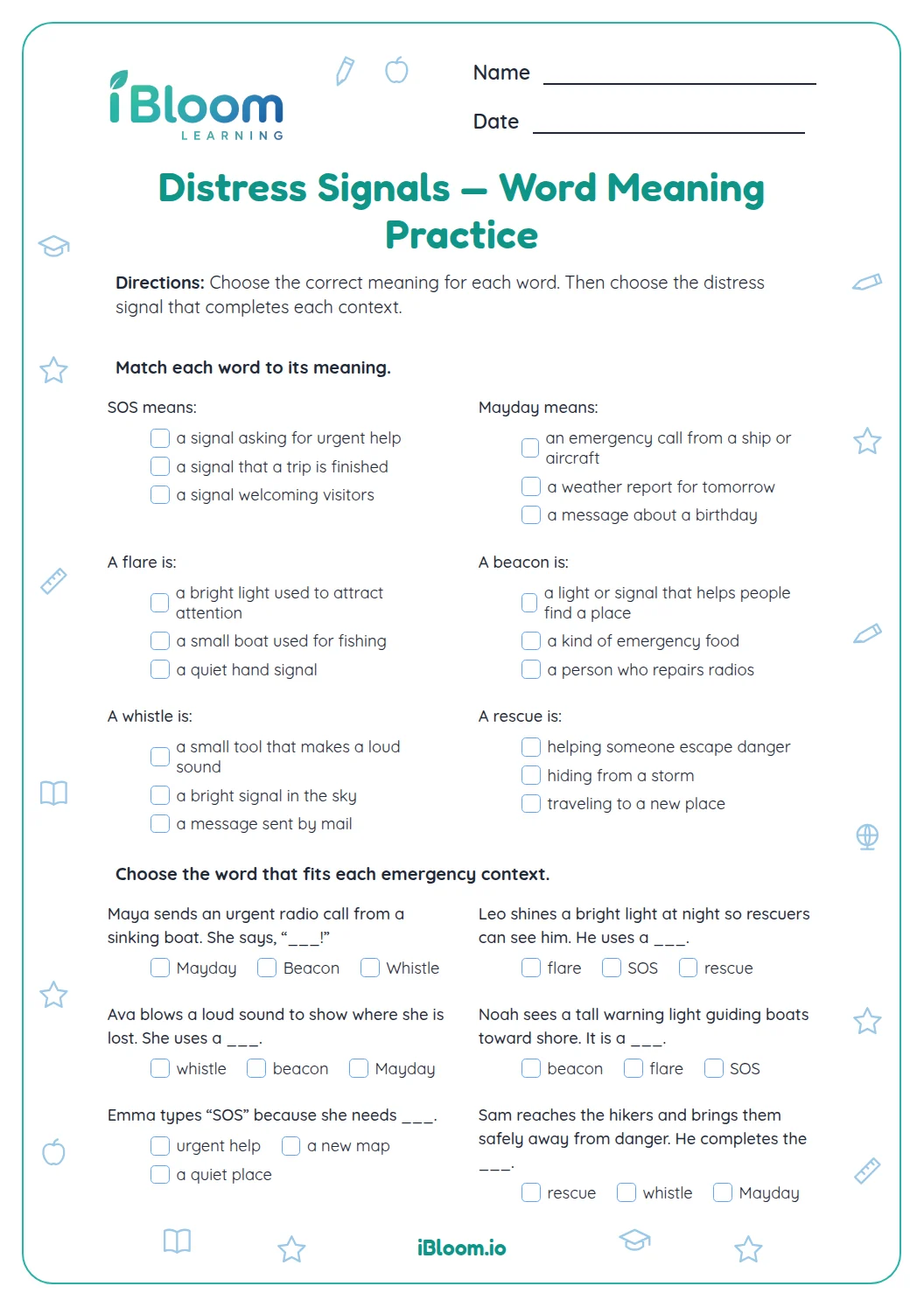
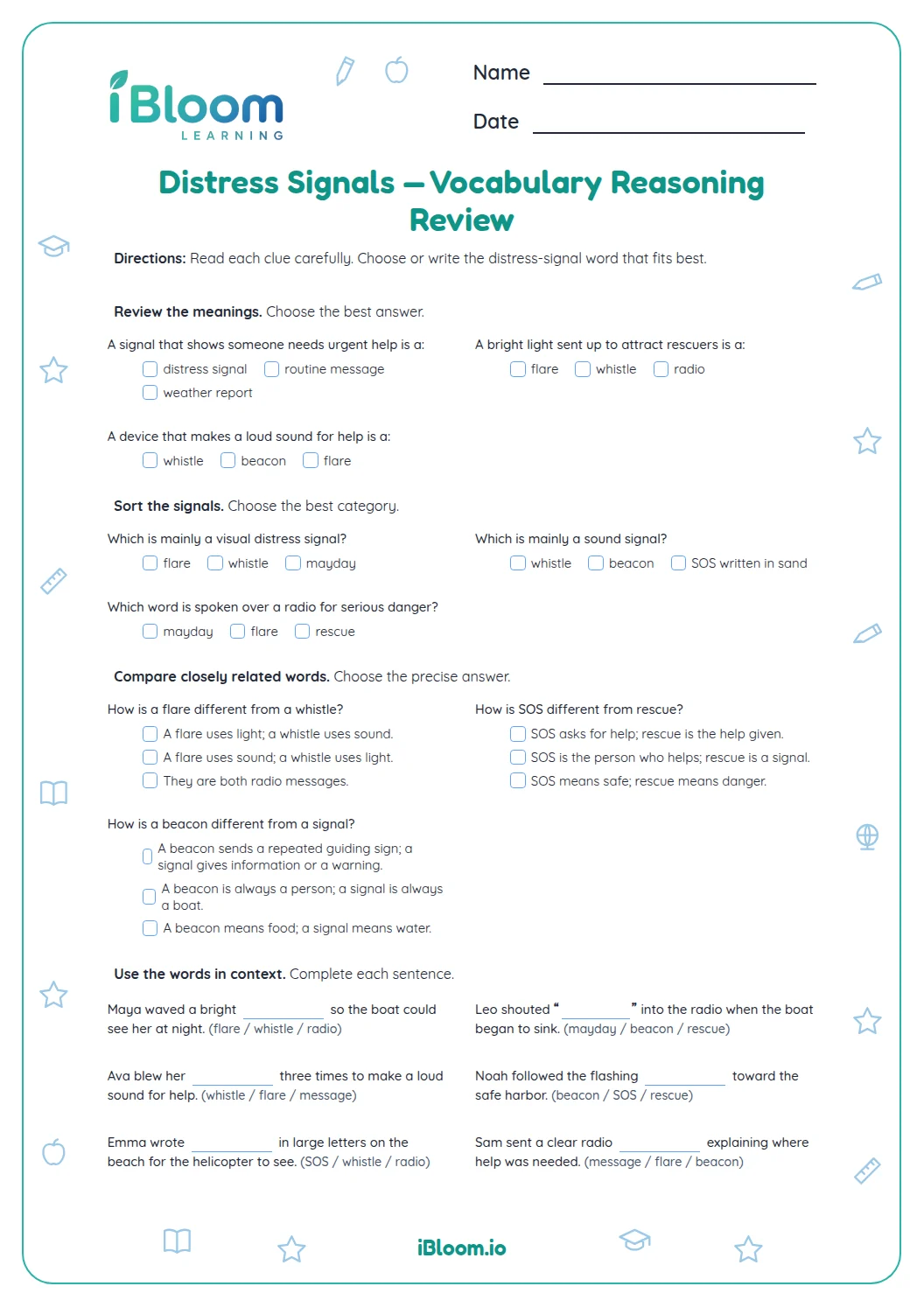
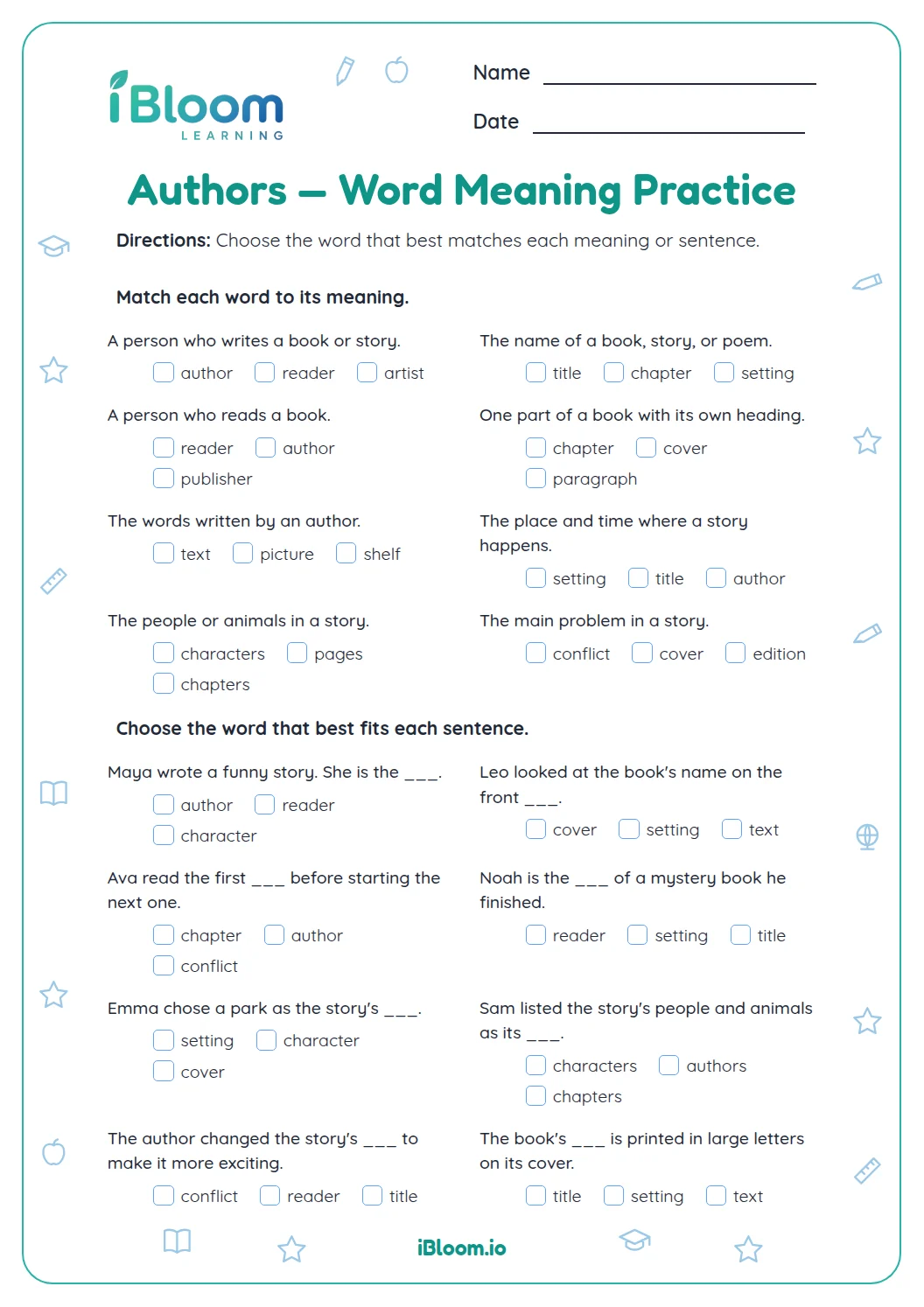
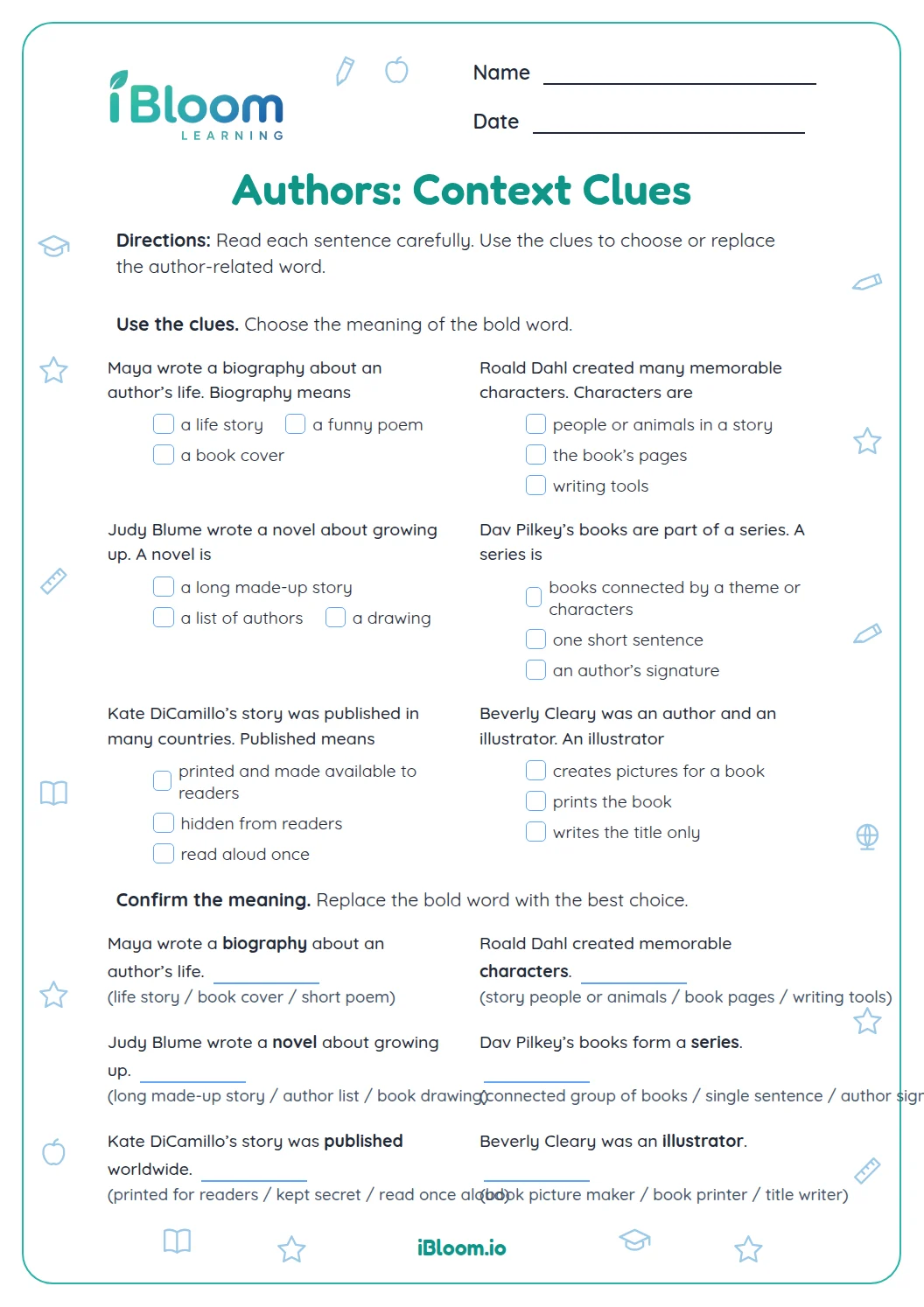
This printable Grade 4 worksheet gives students focused practice with distress-signal words and their meanings. Across three worksheet pages, 14 questions move from supported practice to independent use, followed by a separate answer key. The prompts keep the practice centered on the named skill and give families and teachers a clear way to review answers.
How does this sheet practice distress-signal words and their meanings?
The 14 questions use more than one format to revisit distress-signal words and their meanings. Read each part heading before starting so the response matches the task.
The answer key follows the worksheet and includes the target answers; written responses are labeled as samples when more than one sentence can work.
- 1A radio voice call for urgent help is ___.
- 2“Urgent help” points to the spoken call MAYDAY.
How can an adult support the practice?
Ask the student to point to the clue, model, or word that supports an answer. For a missed item, reread the exact prompt and try it again before looking at the key.
How can students use the answer key?
Check answers after finishing a part. For an open response, compare the work with the skill requested; the sample in the key is one acceptable example, not the only possible wording.
How to use this worksheet
- 1Read the part heading and its direction.
- 2Complete each prompt before checking the key.
- 3Point to the clue or model that supports each answer.
- 4For written practice, reread the response for the target skill.
- 5Use the answer key to check and correct the work.
Common mistakes and quick fixes
The mistake
Confusing a device with the message it carries.
The fix
Check whether the clue asks for a tool, a call, or a general warning.
The mistake
Choosing a word from the grid without checking its meaning.
The fix
Read the whole clue and match the word to its specific use.
The mistake
Skipping a letter while circling a grid word.
The fix
Trace each word in order and compare every letter with the word list.
What to practice next
Make more practice
Questions parents and teachers ask
Which distress-signal words appear?
The grid contains SOS, MAYDAY, FLARE, WHISTLE, BEACON, RESCUE, RADIO, SIGNAL, SIREN, HORN, FLAG, and ALARM. The next part uses eight of these terms in definitions and contextual sentences. The key lists the intended match for each clue.
What is the difference between SOS and mayday?
Both are calls for help, but this page distinguishes them with the clue: MAYDAY is a spoken radio distress call, while SOS is a short emergency signal commonly associated with Morse code. Read the full definition before choosing between the two.
How are the words placed in the search?
Each listed word appears horizontally from left to right in the grid. Circle the letters in sequence, then check that the spelling matches the word list. The search is followed by vocabulary clues, so students use the words as well as locate them.
What is a beacon on this worksheet?
A beacon is a fixed light that marks a location or helps guide boats. The definition distinguishes it from a flare, which is a bright light sent up to attract attention. Students can compare what each light does before selecting a word.
How many questions are on the printable?
There are 14 questions in two parts: one word-search activity and 13 definition or sentence completions. The worksheet takes three pages, and a separate answer key is provided. Students locate the terms, then use the vocabulary in short emergency contexts.