
About this worksheet
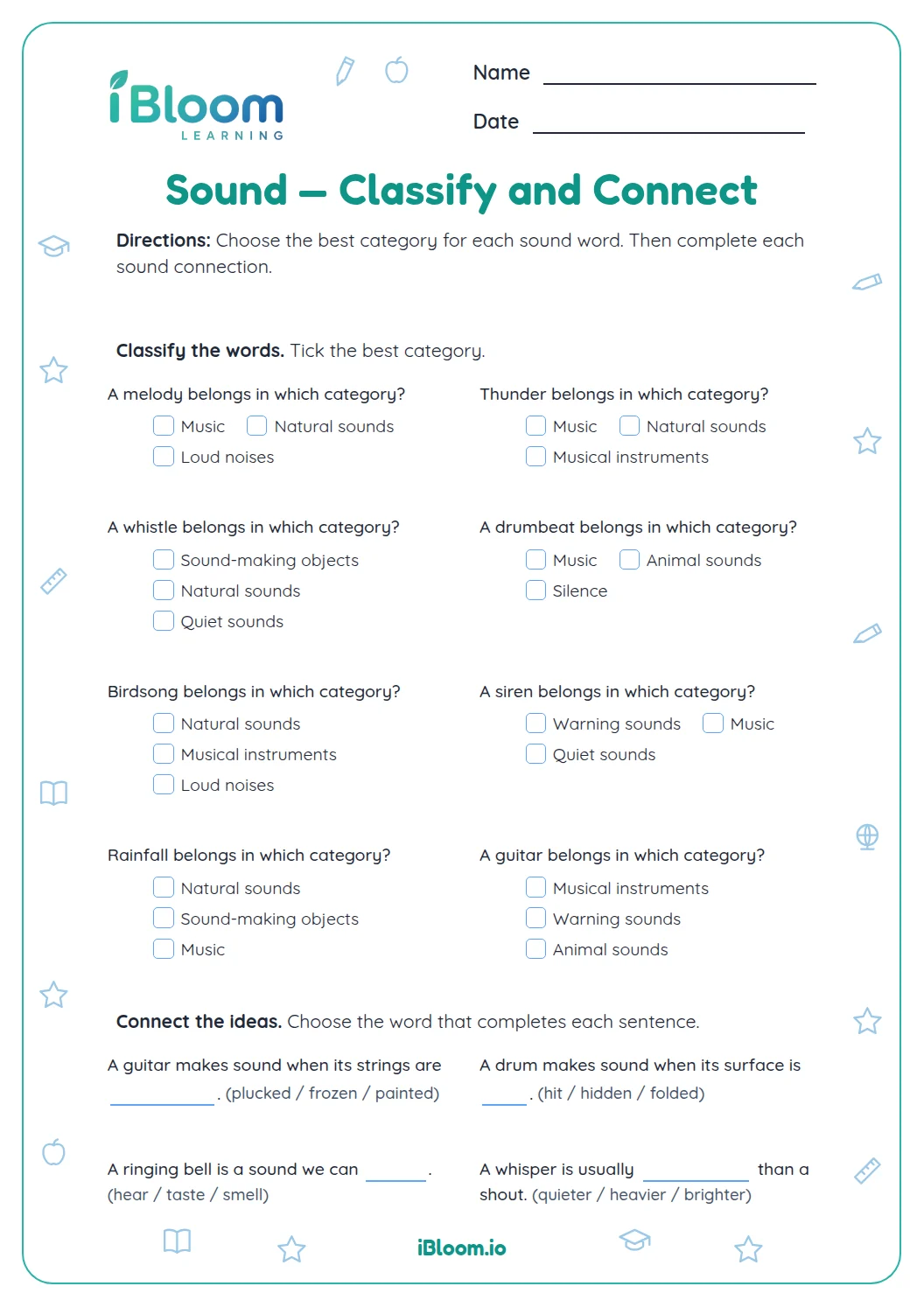
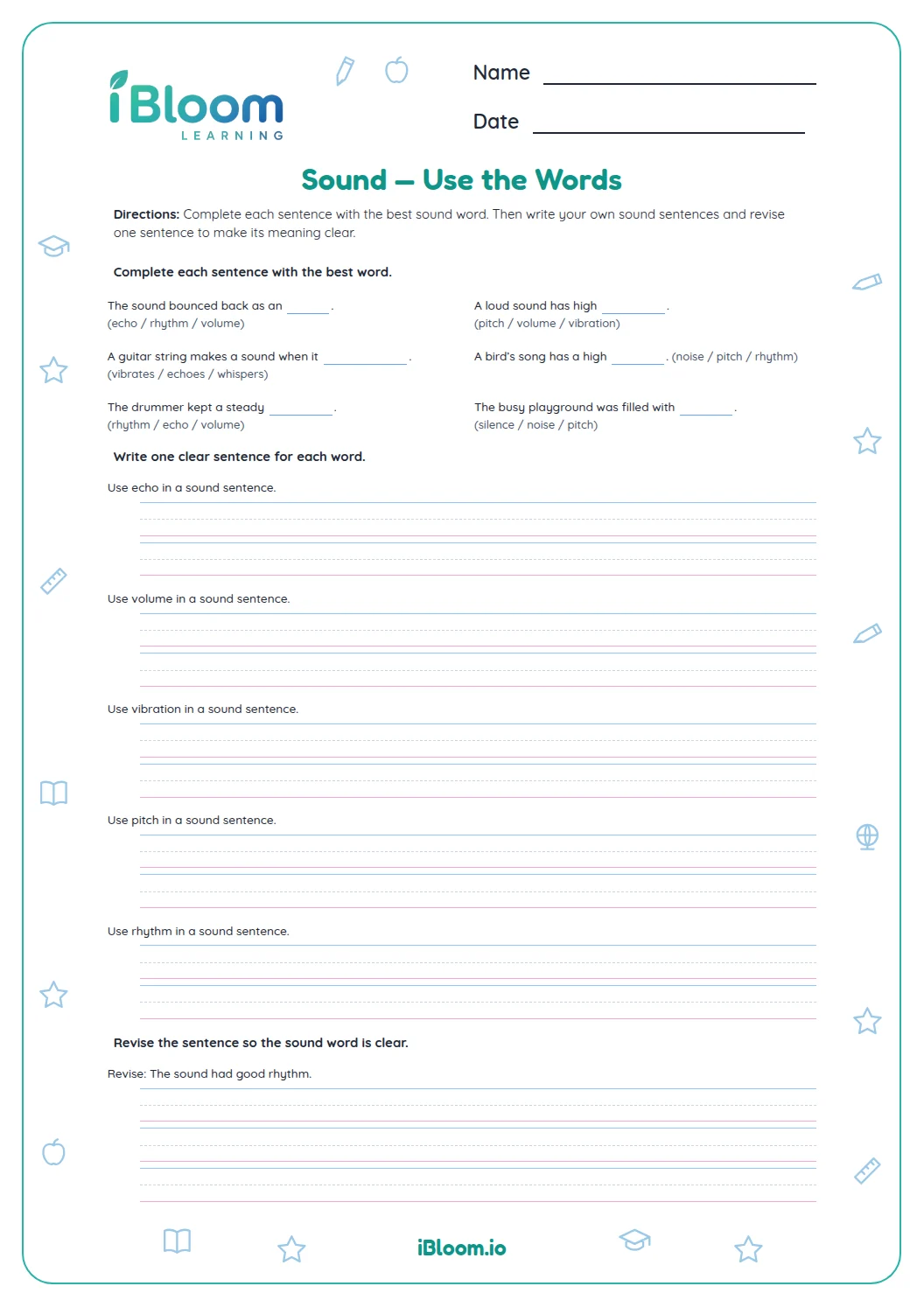
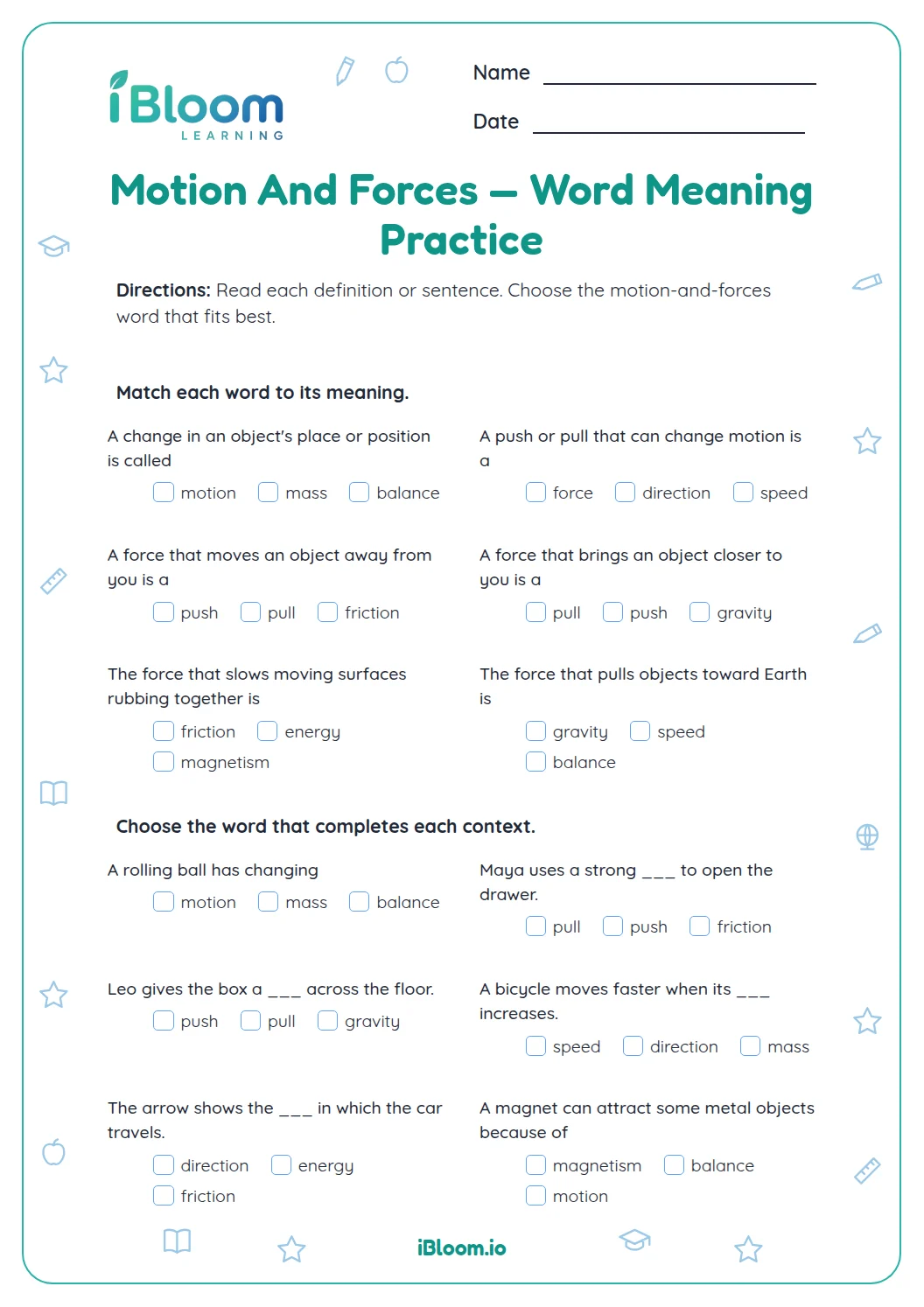
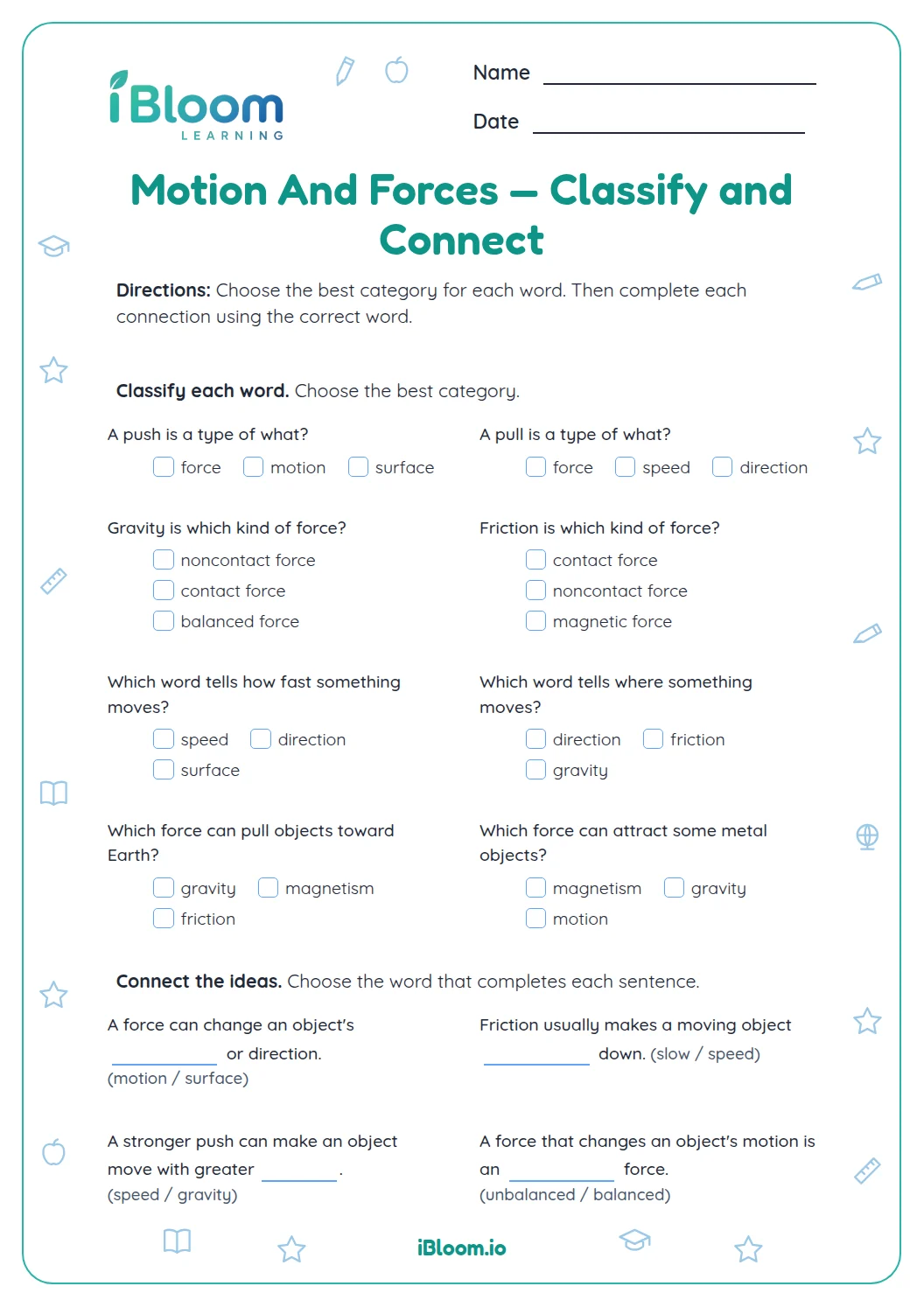
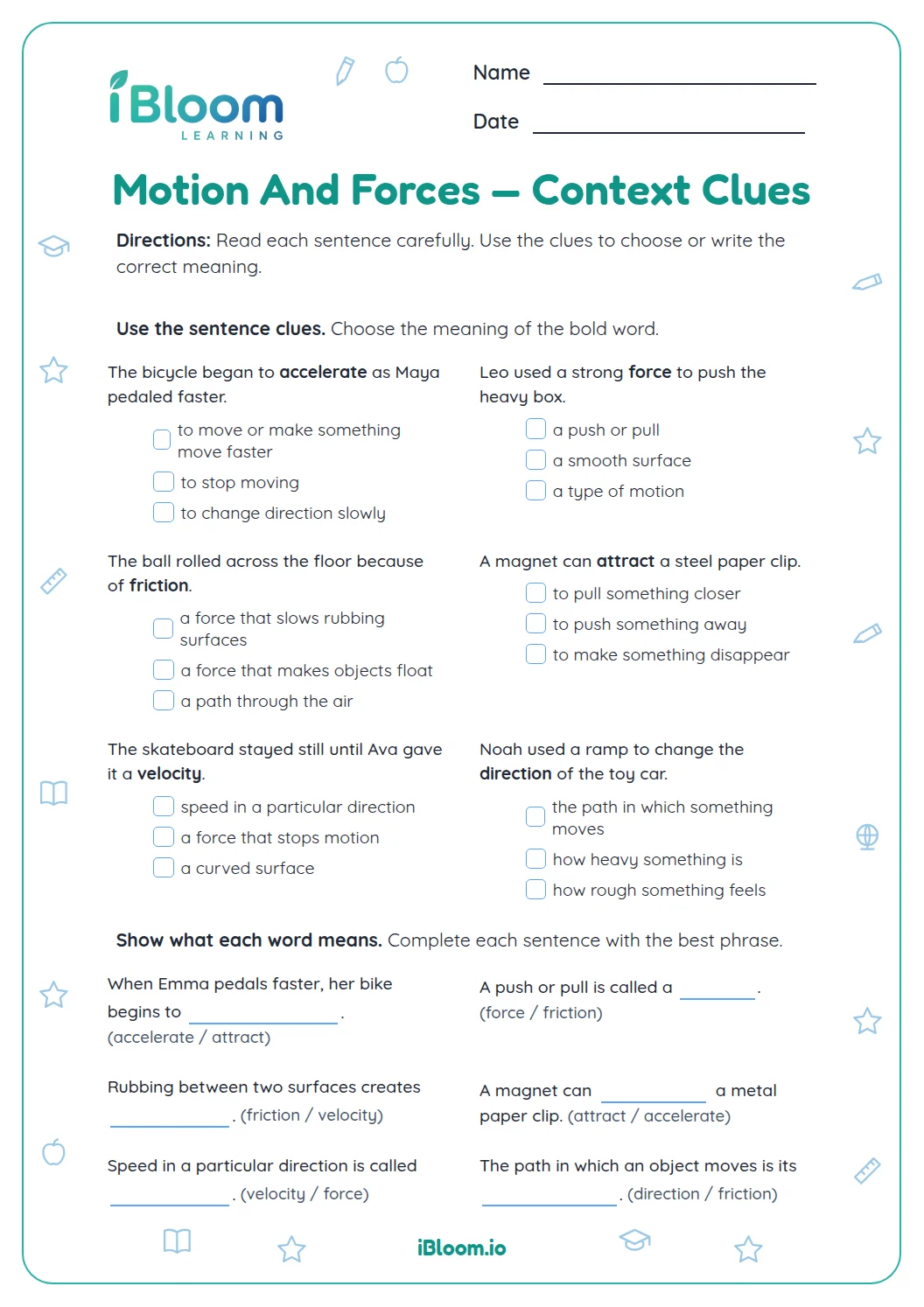
This Grade 4 printable uses sound vocabulary to practice context clues. In Part A, learners choose what a sound word means in a sentence; in Part B, they supply a sound word that completes a clue sentence. The 14 questions include seven multiple-choice items and seven fill-ins, followed by a separate answer key. It practices CCSS L.4.4a by asking children to use sentence context to infer word meaning.
Aligned to L.4.4a
How do sentence details explain a sound word?
A context clue is a nearby detail that helps a reader infer a word’s meaning. Sound words become easier to picture when the sentence names what made the sound or describes what it was like.
How can a reader solve one question?
Read the sentence first, then connect its details to the target word. Try a possible meaning in place of the word and check that the sentence still makes sense.
- 1Dry leaves CRACKLE under our boots.
- 2Clue: dry leaves under footsteps
- 3Small sharp snapping sounds fit the scene.
- 4Answer: make small sharp snapping sounds
What practice is on the two parts?
Part A has seven sentences with a sound word in capital letters and three possible meanings. Part B has seven fill-in sentences; each blank asks for a sound word that fits its clue. The answer key gives a response for every item.
How to use this worksheet
- 1Read each sentence all the way through.
- 2Notice what makes the sound and any words describing it.
- 3For a choice question, test each meaning in the sentence.
- 4For a blank, choose a sound word that fits the event.
- 5Check the key and name the clue that helped you decide.
Common mistakes and quick fixes
The mistake
Choosing a familiar meaning without checking the sentence.
The fix
Reread the sentence and point to the detail that supports the meaning.
The mistake
Mixing up a sharp ringing sound with a low steady sound.
The fix
Compare the described source and quality before answering.
The mistake
Writing a sound word that does not fit the event.
The fix
Read the completed sentence aloud and see whether it makes sense.
Common Core alignment
Use context clues to figure out sound words in sentences.
On this sheet: Children infer the meaning of sound words from sentence context.
Show the official wordingHide the official wording
Use context (e.g., definitions, examples, or restatements in text) as a clue to the meaning of a word or phrase.
What to practice next
Make more practice
Further reading
Questions parents and teachers ask
What does this sound-words worksheet practice?
It practices using sentence context to understand sound words. Children choose meanings for words such as clang and crackle, then supply words that complete sound-related sentences. The separate key gives the intended response to each of the 14 questions.
How many questions are on the printable?
There are 14 questions across two parts: seven multiple-choice items and seven fill-in sentences. The first part asks what a sound word means in context. The second asks children to use a sentence clue to supply a fitting sound word.
How should a child use context clues?
Read the sentence from beginning to end and look for details about the source or quality of a sound. For example, dry leaves under boots suggest a crackling sound. Try the meaning in the sentence and check whether the whole idea makes sense.
What is one example from the sheet?
In “The refrigerator makes a low HUM all night,” the words low and all night suggest a steady sound. The answer choices include a steady low sound, a sudden crash, and a bird call. The sentence supports the steady low sound.
Is an answer key included?
Yes. The answer key is included on separate pages and lists responses for both the meaning choices and the fill-in clues. For an open-ended blank, use the key’s word as the intended answer and discuss another response only if it fits the sentence clearly.