




About this worksheet
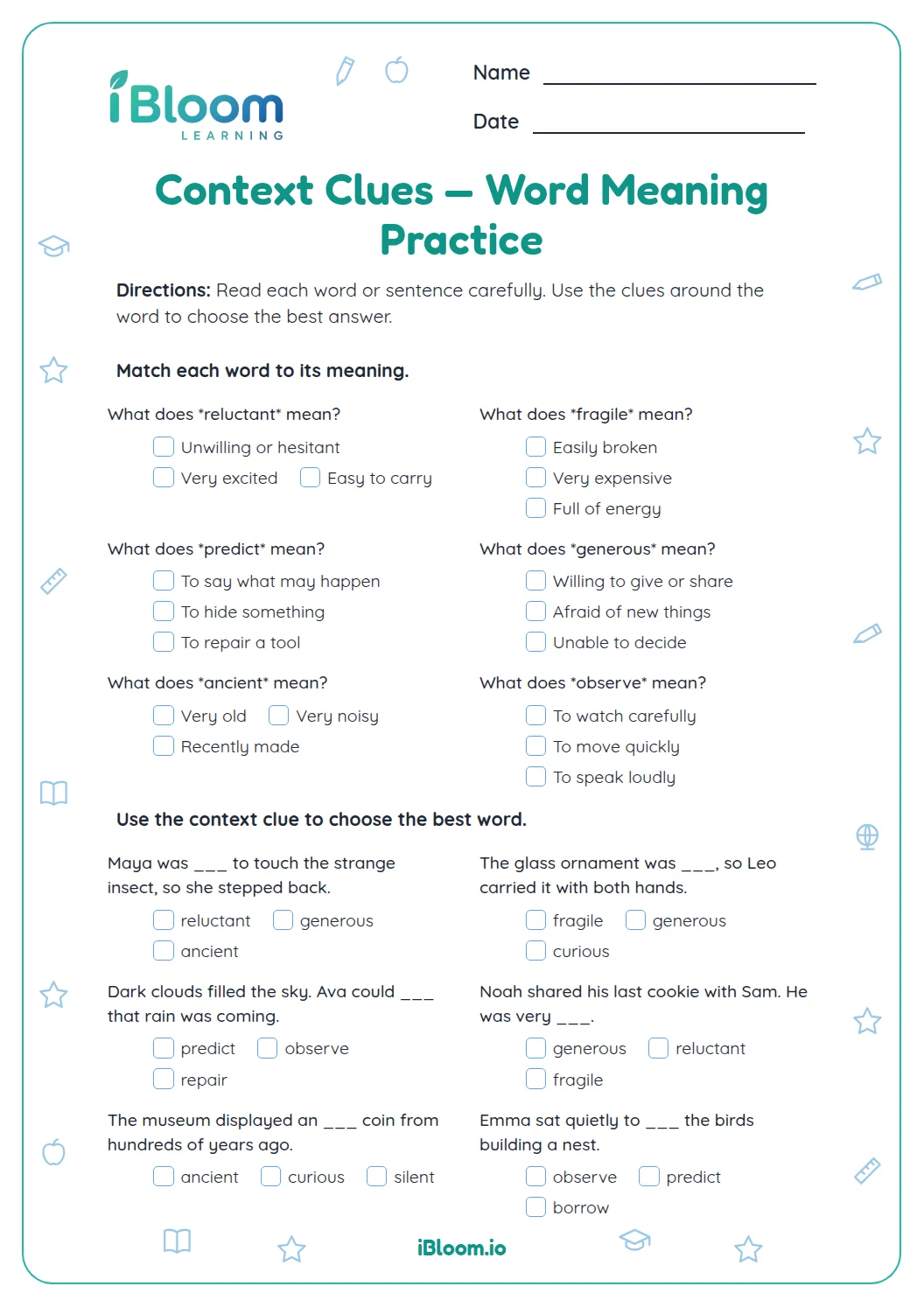
Knowing a word part helps readers work out unfamiliar words, but context matters too. This worksheet asks students to interpret familiar parts such as un-, pre-, -less, and -ment, then use complete words in sentences that make their meanings clear.
Aligned to L.5.4
Use the beginning of a word
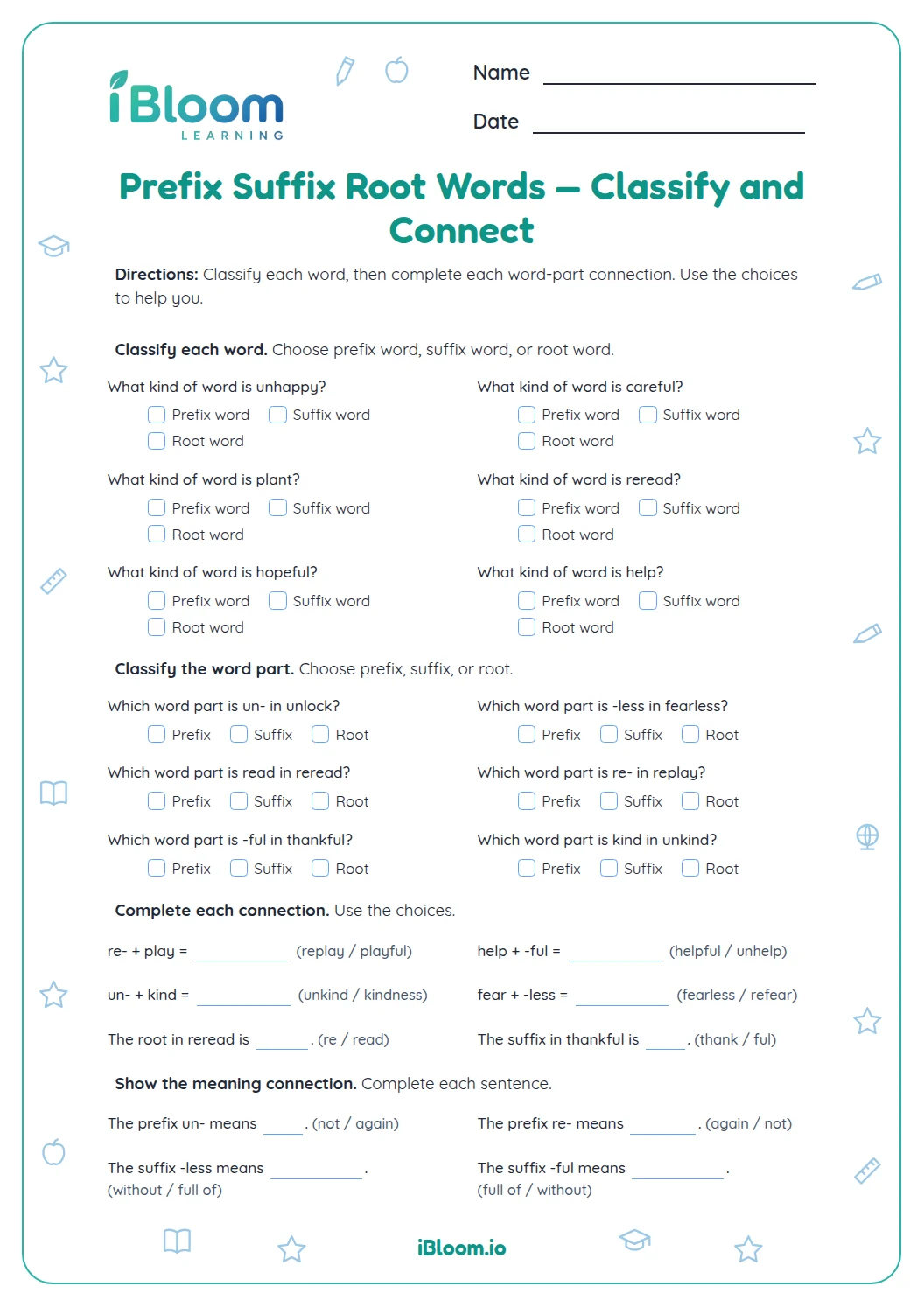
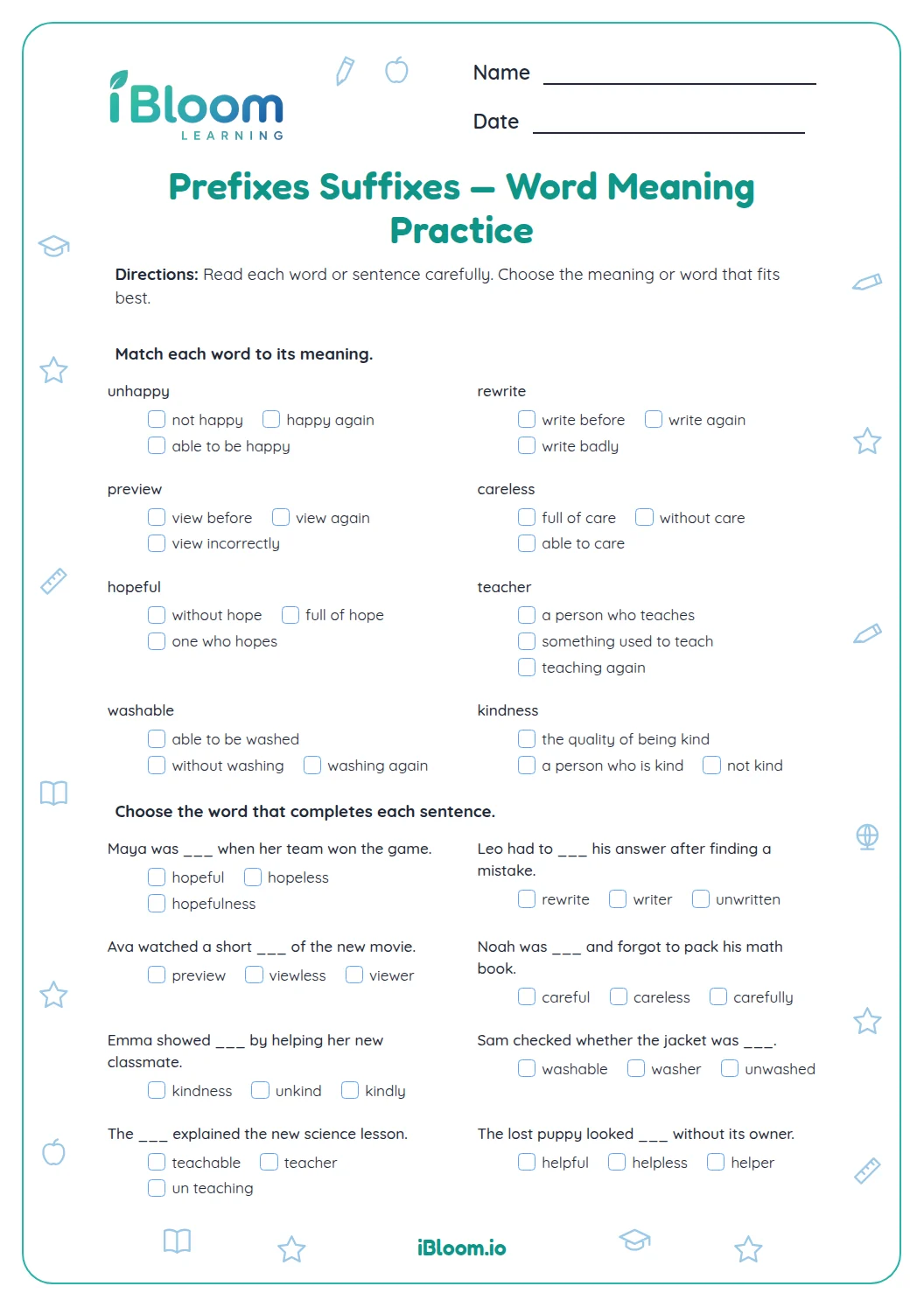
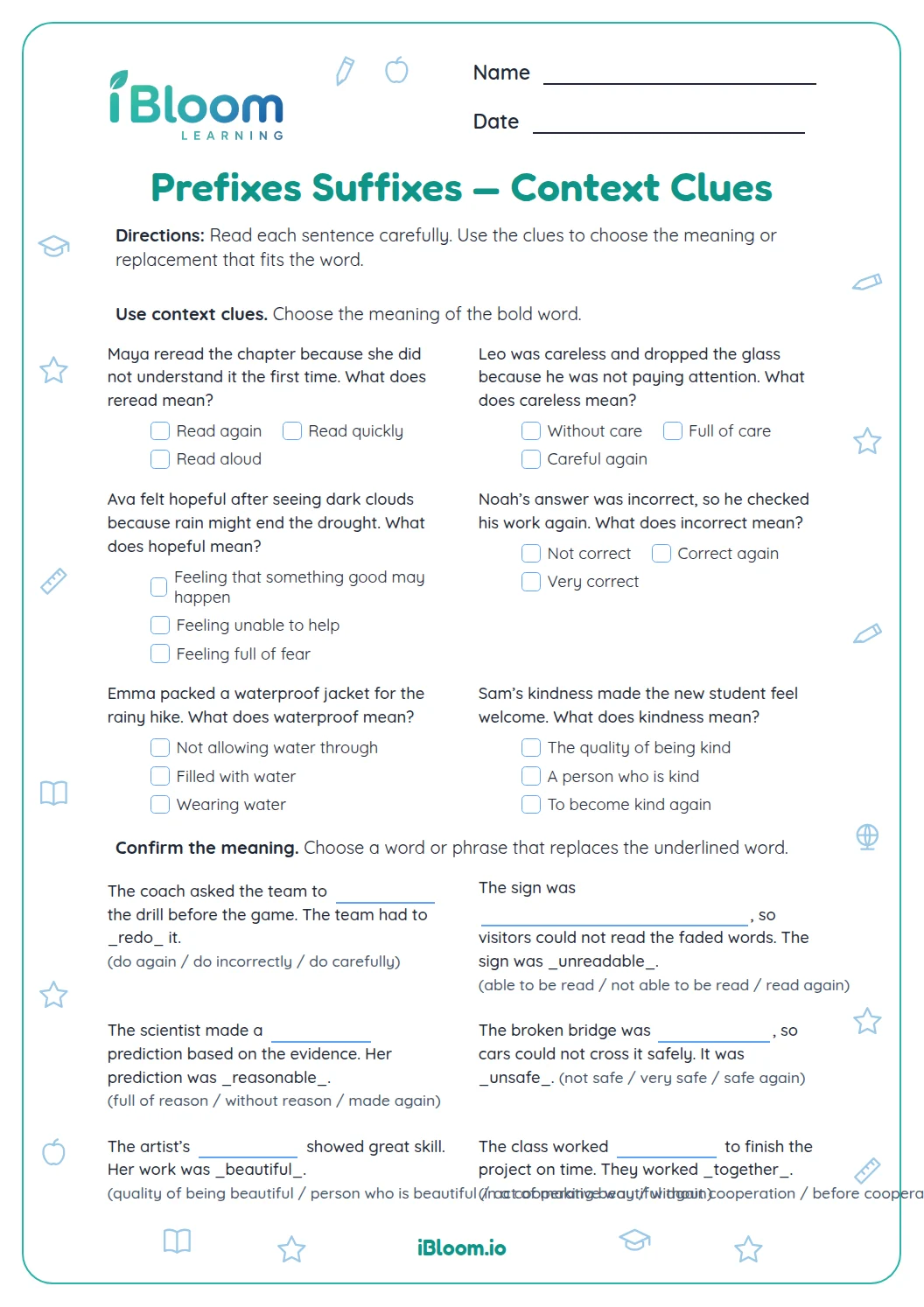
A prefix comes before a base word and changes its meaning. In unsafe, un- means “not,” so unsafe means “not safe.” In reread, re- means “again.”
Notice endings that change meaning
A suffix comes after a base word. The ending -less means “without,” as in fearless. Some suffixes also change a word’s job: teach becomes teacher, a person who teaches.
Find the meaning carried by a root
A root carries a central meaning. The root struct means “build,” and port means “carry.” Recognizing a root can give a useful clue, then the full sentence helps confirm how the word is being used.
What this practice asks
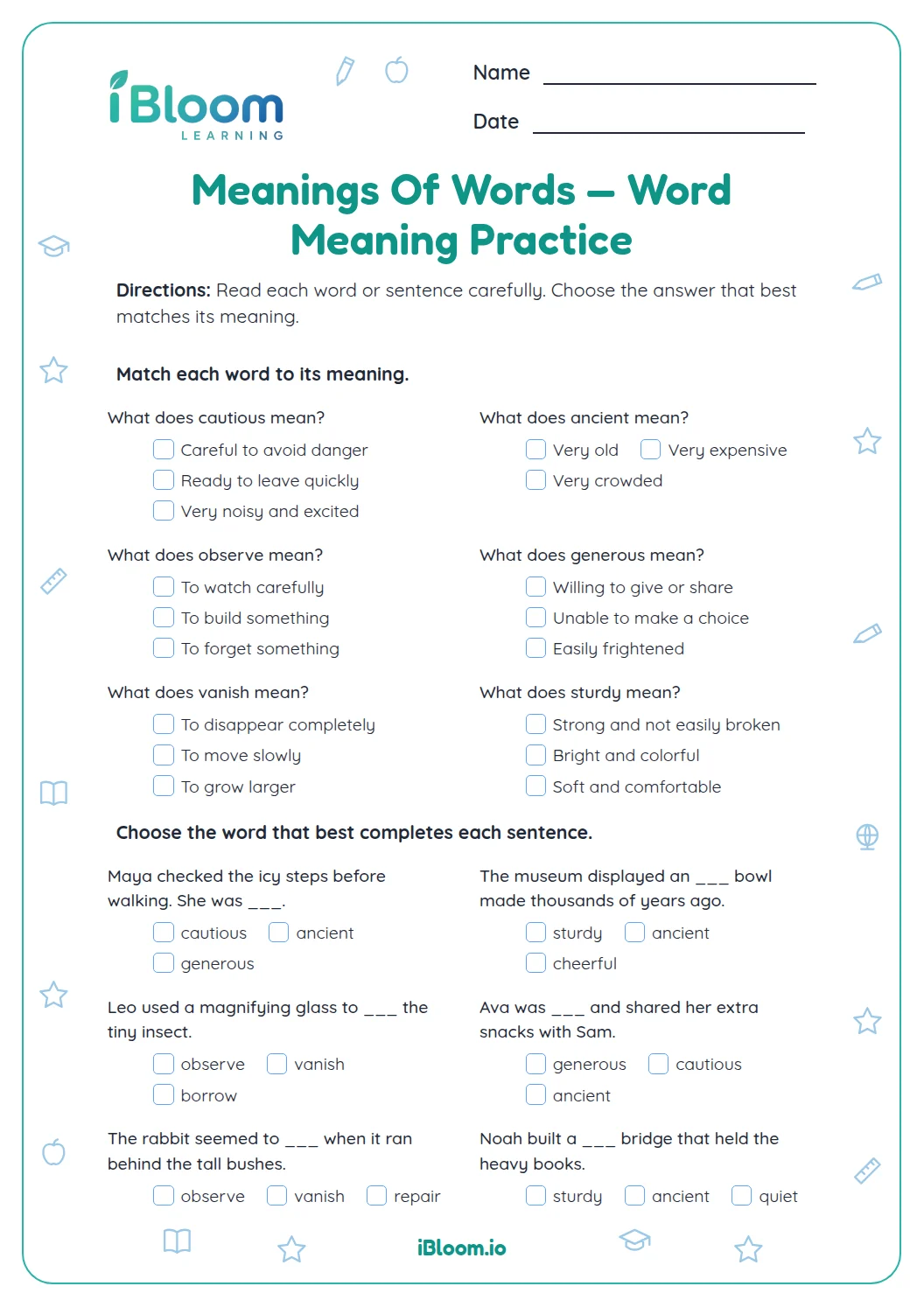
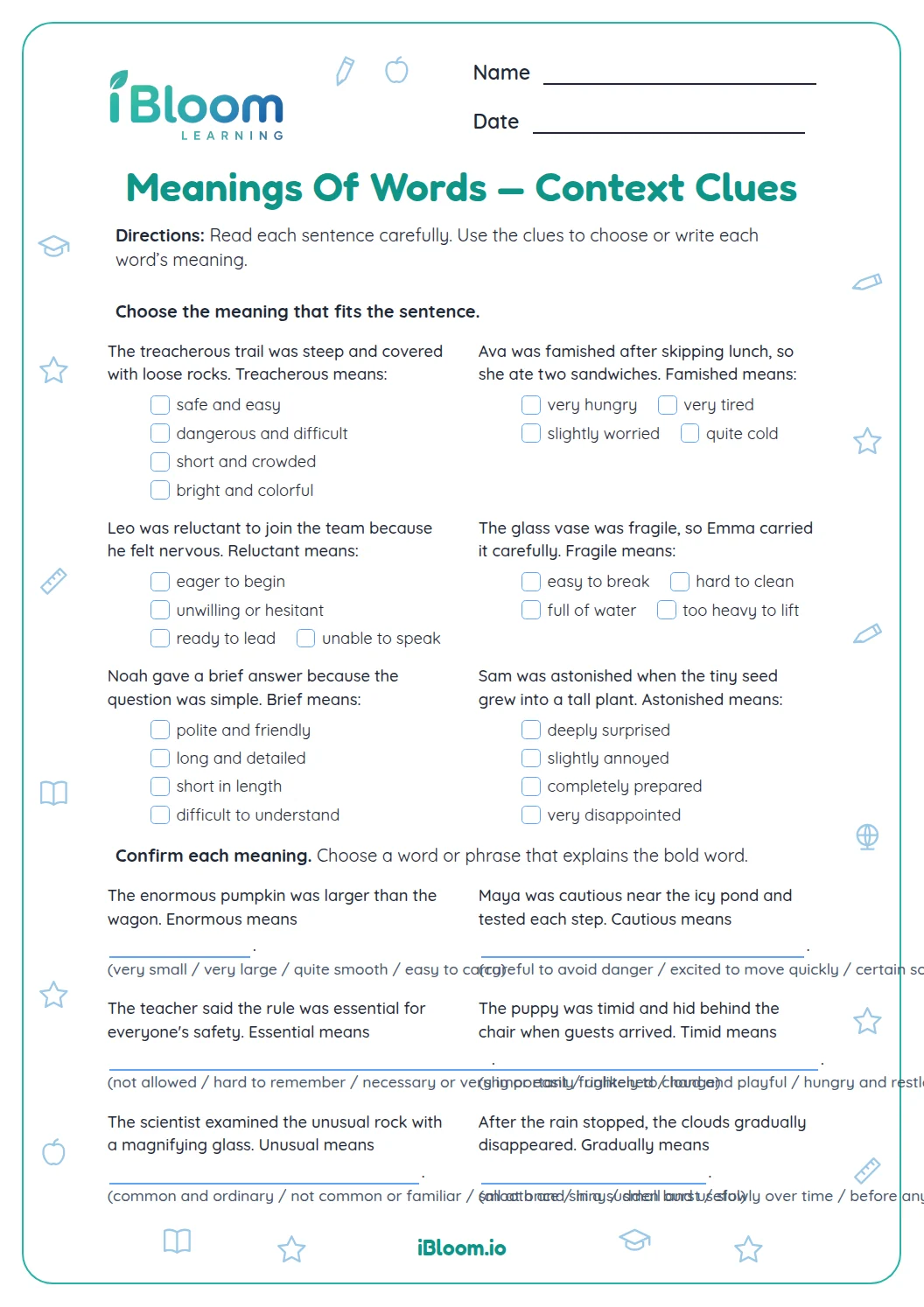
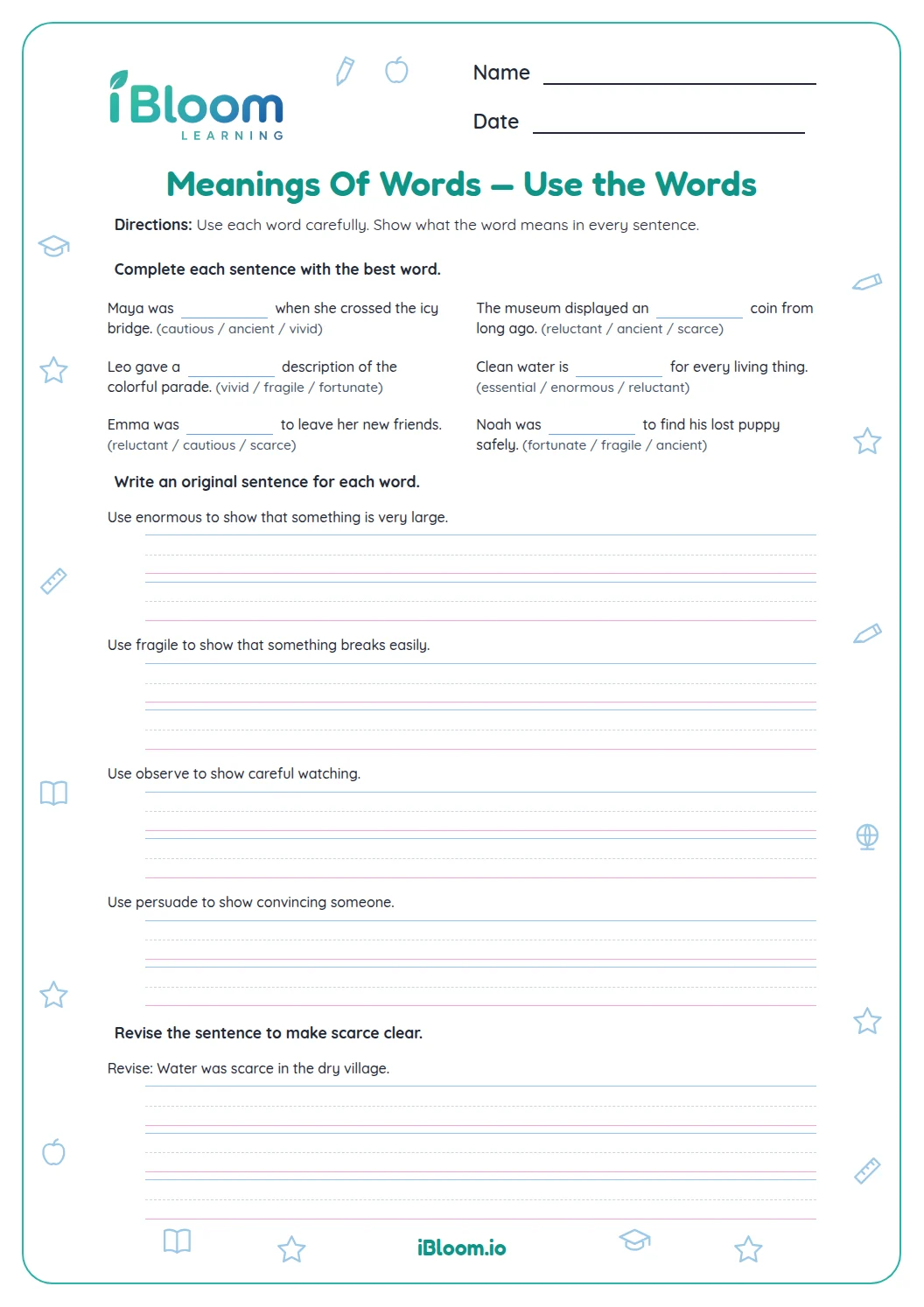
The 14 questions include six meaning choices, five word-building items, and three original sentence prompts. The key gives sample responses for open-ended items.
Try a word-part routine
- 1Find the prefix or suffix and name its meaning.
- 2Read the base word or root.
- 3Put the meanings together to make a possible definition.
- 4Read the whole sentence and adjust the definition to fit.
- 5For sentence questions, use enough context to show the word’s meaning.
Common word-part mix-ups
The mistake
Assuming every word that begins with the same letters has the same prefix.
The fix
Check whether the letters form a meaningful word part in that word and whether the meaning fits.
The mistake
Using only the root meaning and ignoring the rest of the word.
The fix
Combine the root with prefixes and suffixes, then check the whole word in context.
Common Core alignment
This page practices the grade-level skill named below.
Use flexible strategies to determine or clarify word meaning.
On this sheet: The page practices one strategy in this standard: using affixes and roots as clues to word meaning.
Show the official wordingHide the official wording
Determine or clarify the meaning of unknown and multiple-meaning words and phrases based on grade 5 reading and content, choosing flexibly from a range of strategies.
What to practice next
Make more practice
Further reading
Questions parents and teachers ask
What is the difference between a prefix and a suffix?
A prefix is added to the beginning of a base word, while a suffix is added at the end. The prefix re- changes read to reread, meaning read again. The suffix -less changes fear to fearless, meaning without fear. Word parts give readers helpful clues to a complete word’s meaning.
What does -less mean?
The suffix -less means “without.” Fearless means without fear, and careless means without care. To confirm a meaning, reread the sentence where the word appears. The surrounding words can show whether the target describes a person, action, object, or feeling.
How should I answer the sentence-writing questions?
Write an original sentence that gives clues to the target word’s meaning. For example, “I packed lunch in a reusable container” suggests that the container can be used again. The key has sample sentences, but another clear and correct sentence is acceptable.
What does a root contribute to a word?
A root carries a central meaning within a word. In transportation, port means “carry,” while the rest of the word builds the complete idea. Prefixes and suffixes can change meaning or word role, so combine all the parts and check the result in context.
How can a reader use a root as a clue?
A root carries a central meaning, such as struct for build or port for carry. Readers can combine that clue with prefixes, suffixes, and the sentence around the word. The parts suggest a meaning, and context helps confirm whether it fits.