




About this worksheet
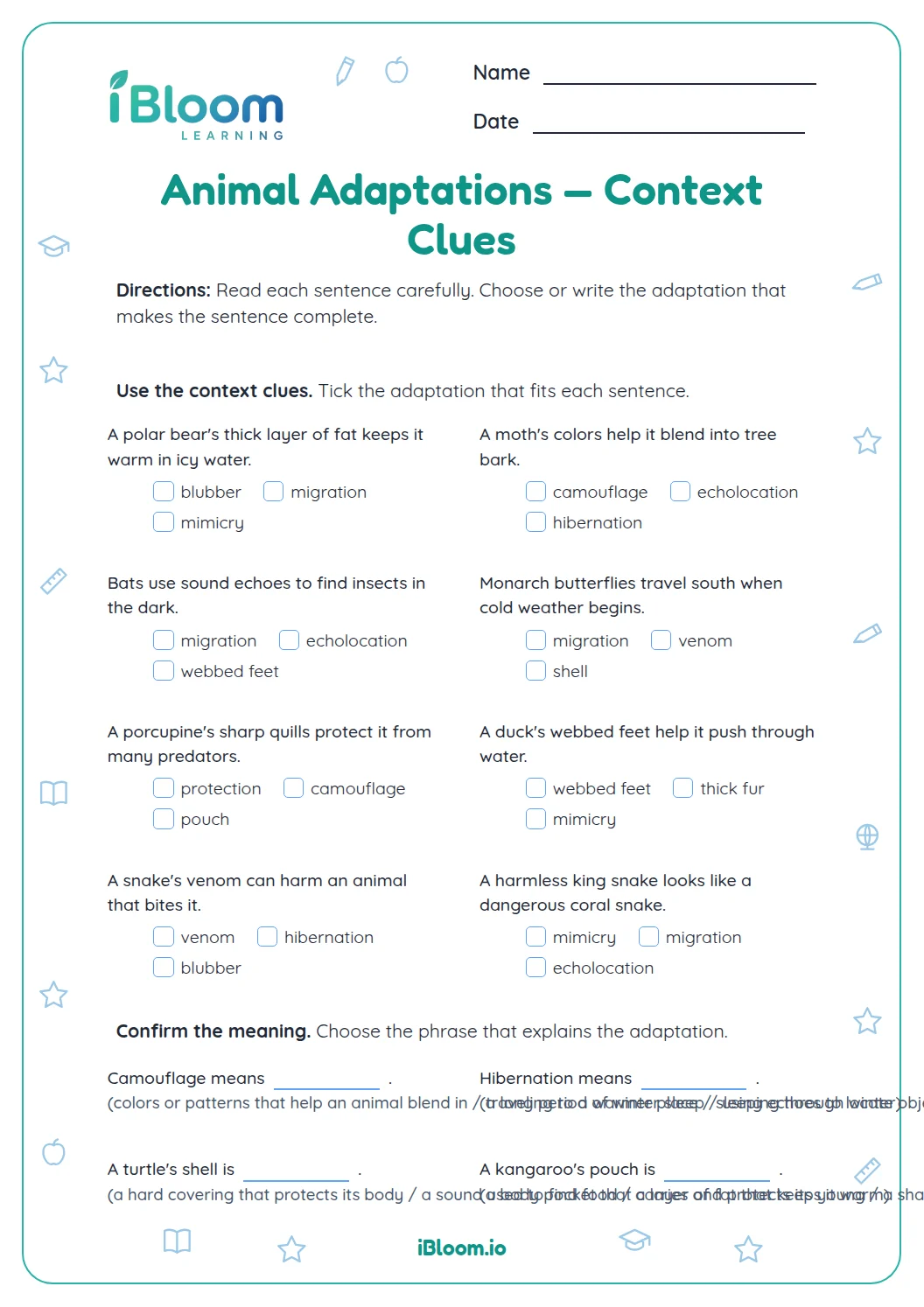
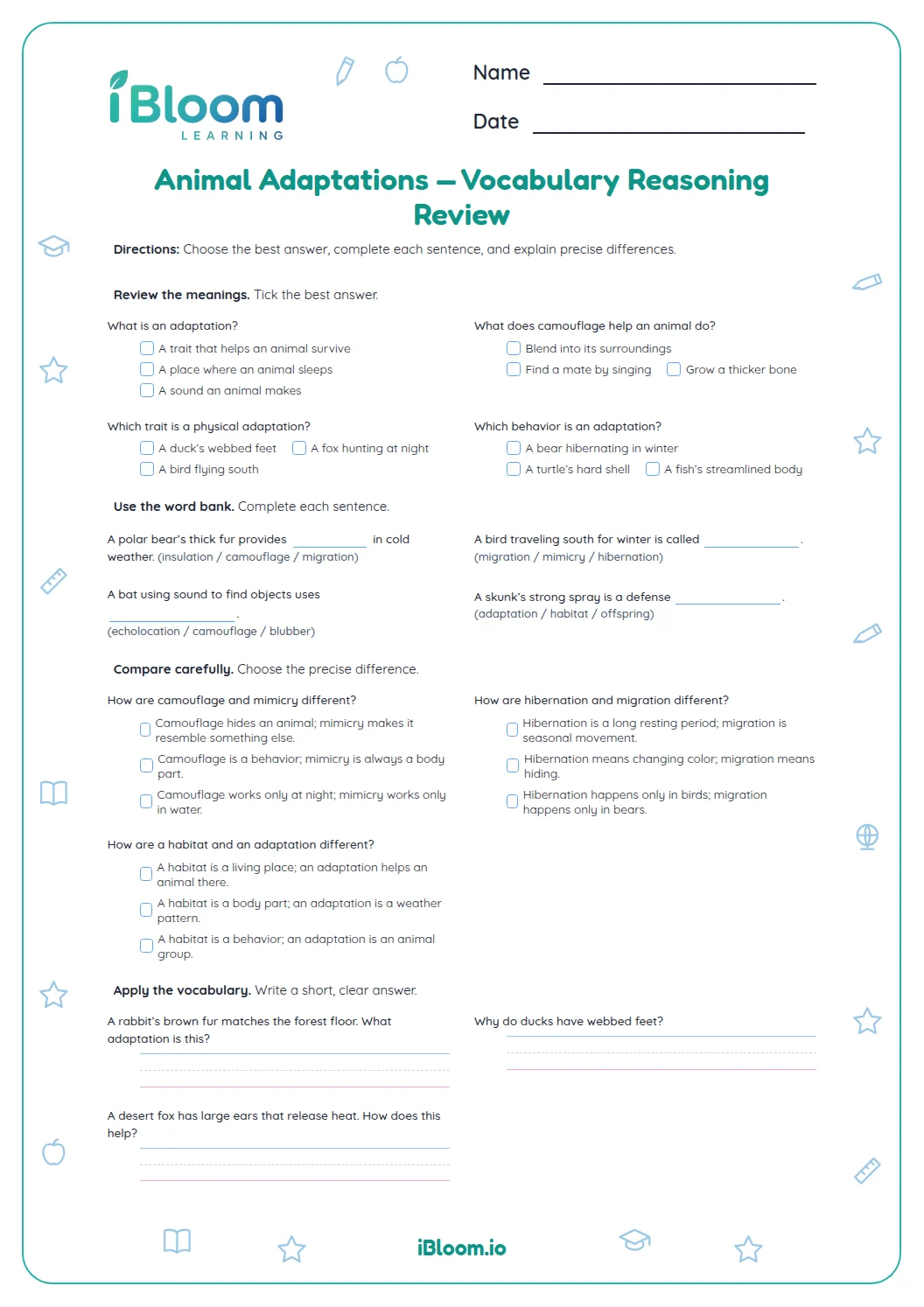
This free Grade 5 vocabulary worksheet connects animal-adaptation words with their meanings and functions. Part A sorts nine familiar terms into body parts, body coverings, and behaviors. Part B uses four short contexts to explain camouflage, insulation, grasps, and protective. Part C asks students to explain how webbed feet and camouflage help animals. The practice supports Common Core L.5.4a through descriptions and cause-and-effect clues. A separate answer key supplies all category labels and choices, plus sample wording for the two written explanations.
Aligned to L.5.4a
How do students sort the three kinds of adaptations?
Use P for body parts such as claws, a beak, or webbed feet. Use C for the outer coverings fur, feathers, and scales. Use B for behaviors: migration, hibernation, and nocturnal activity. Part A includes three examples of each category.
For this sort, give outer coverings their own category even though they are physical features of an animal. Before starting, review any unfamiliar terms: migration is seasonal travel, hibernation involves greatly reduced activity, and nocturnal activity takes place at night.
How do context clues explain an unfamiliar word?
Look for a description or result that explains the capitalized word. In question 10, looking like a twig explains camouflage. In question 11, slowing heat loss explains what insulation does.
The next two questions connect grasps with holding tightly and protective with shielding the body. Ask students to point to the clue before choosing a meaning.
- 1A stick insect’s camouflage makes it look like a twig.
- 2Clue: it looks like something in its surroundings.
- 3Camouflage means blending with the background.
- 4This can make the insect harder for a predator to spot.
What makes a strong written connection?
A strong response names the feature and explains how it helps. For question 14, saying that webbed feet are useful is too general. Explain that the skin between the toes helps the duck push against water as it swims.
Question 15 asks how looking like a twig helps a stick insect. Link its appearance to being harder for predators to notice. The key gives sample wording; accept equivalent explanations of the same connection.
How to use this worksheet
- 1Read the three category labels and compare a beak, fur, and migration.
- 2Complete Part A with P, C, or B, thinking about what each term names.
- 3In Part B, underline the clue that helps explain the capitalized word.
- 4Check that the chosen meaning agrees with the whole sentence.
- 5Write both Part C explanations, connecting the feature to how it helps the animal.
Mistakes to check and how to fix them
The mistake
Putting fur under body parts instead of body coverings.
The fix
This sort gives outer coverings their own category. Use C for fur, feathers, and scales.
The mistake
Calling migration a body part because birds use wings.
The fix
Classify the named term: migration describes seasonal travel, which is a behavior.
The mistake
Writing only “It helps the animal survive.”
The fix
Explain how: pushing against water or becoming harder for a predator to notice.
Common Core alignment
Use descriptions and cause-and-effect clues to understand animal-adaptation words.
On this sheet: Part B uses descriptions and cause-and-effect clues to explain camouflage, insulation, grasps, and protective.
Show the official wordingHide the official wording
Use context (e.g., cause/effect relationships and comparisons in text) as a clue to the meaning of a word or phrase.
What to practice next
Make more practice
Further reading
Questions parents and teachers ask
Which words does this worksheet classify?
Part A classifies claws, fur, migration, beak, hibernation, feathers, webbed feet, scales, and nocturnal activity. There are three body parts, three body coverings, and three behaviors. Review any unfamiliar terms before beginning, then ask students to explain how each word fits the category they have chosen.
Why are body coverings a separate category?
This sheet separates outer coverings from other body parts to make a more precise sort. Fur, feathers, and scales belong in the covering category. Claws, a beak, and webbed feet belong in the body-part category. Explain these labels before students begin, since all six are physical features.
Which words should we review before starting?
Review any unfamiliar Part A terms before students sort them. Migration means seasonal travel; hibernation involves greatly reduced activity; nocturnal activity takes place at night. Part B supplies context clues for its four words, so students can use the sentences to work out the meanings themselves.
How should I check the two written responses?
Check the connection between the named adaptation and its benefit, rather than requiring the exact words in the key. The duck response should explain how webbing helps push against water. The stick insect response should explain how blending with twigs can make it harder for predators to notice.
How can partners discuss their answers?
Have partners finish a part independently, then compare the clues behind their answers. One student can name a term while the other explains its category or meaning. For the final two questions, ask each student to write an individual explanation connecting the body feature with its benefit.