Free printable practice
Story Elements Practice Activities
Grade 5 word search worksheets that strengthen story elements vocabulary through focused practice with fiction terms and reading-language clues.
Free printable worksheet PDFs
Preview every available page, then download the free worksheet PDF for home, homeschool, tutoring, or classroom practice.
Preview the exact activity before downloading it.
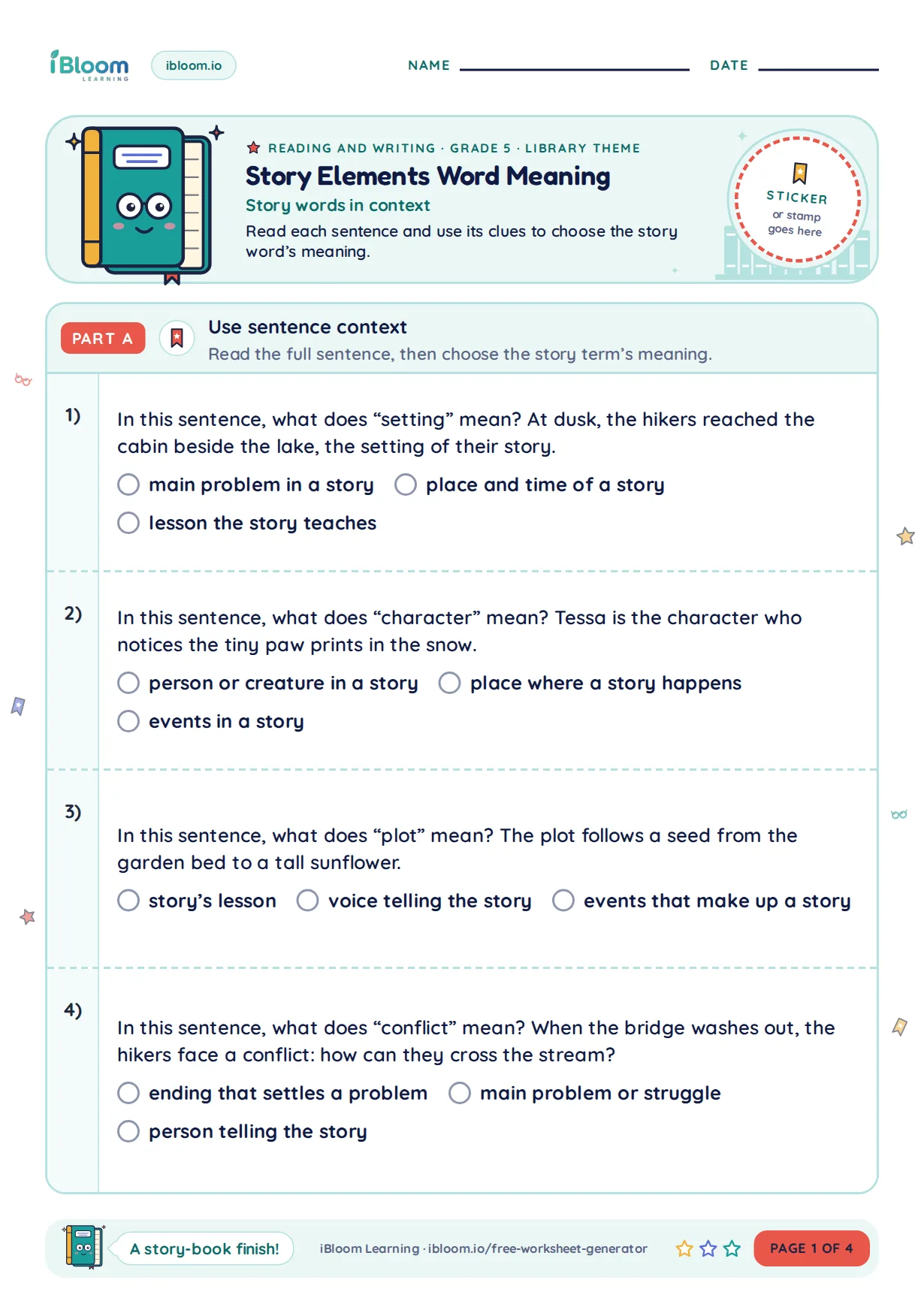 Story Elements — Word Meaning PracticeGrade 5 word search worksheets that strengthen story elements vocabulary through focused practice with fiction terms and reading-language clues. This word meaning practice worksheet provides a distinct, age-appropriate way to practise the same lesson.Grade 5Free PDF preview
 Story Elements — Classify and ConnectGrade 5 word search worksheets that strengthen story elements vocabulary through focused practice with fiction terms and reading-language clues. This classify and connect worksheet provides a distinct, age-appropriate way to practise the same lesson.Grade 5Free PDF preview
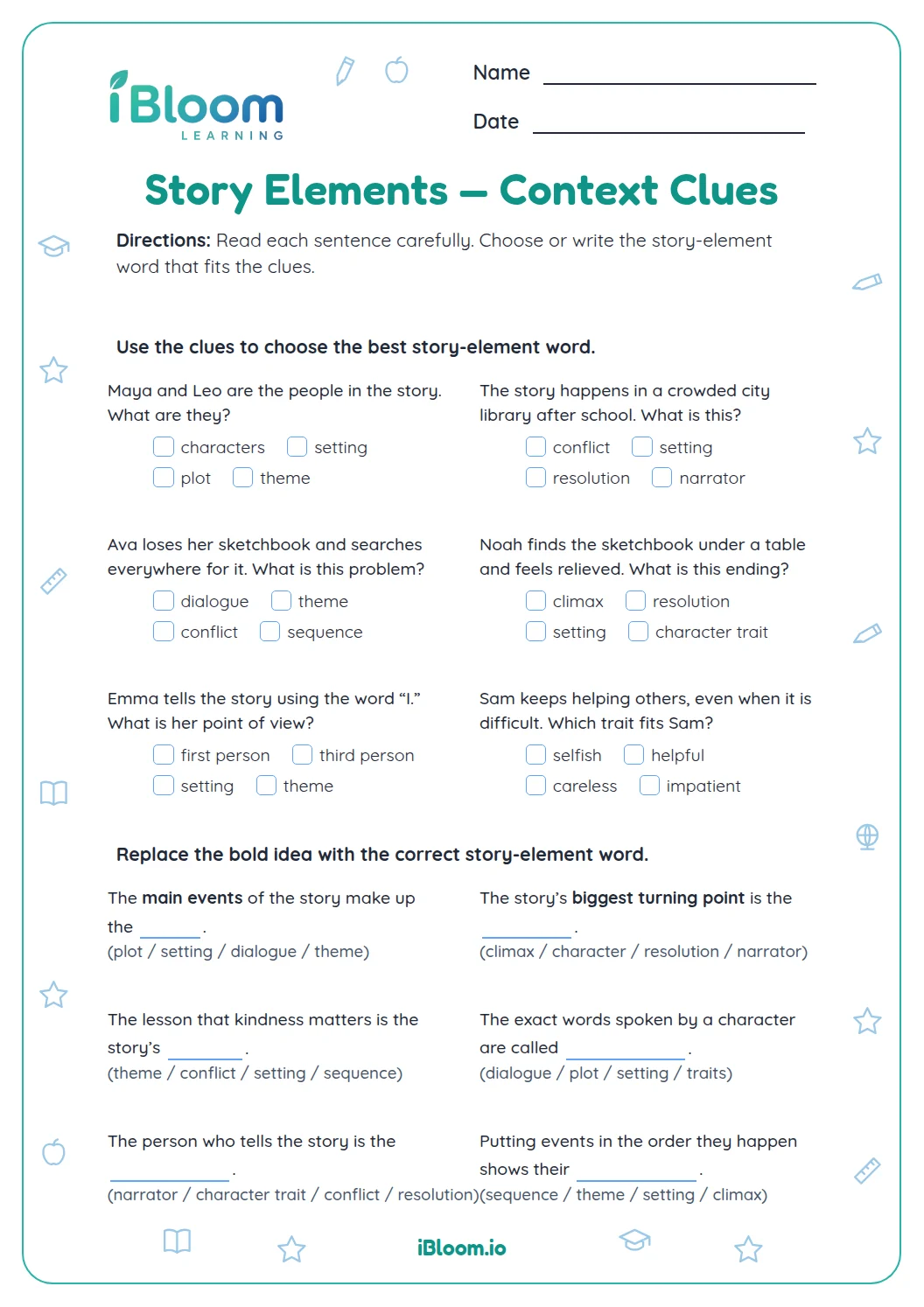 Story Elements — Context CluesGrade 5 word search worksheets that strengthen story elements vocabulary through focused practice with fiction terms and reading-language clues. This context clues worksheet provides a distinct, age-appropriate way to practise the same lesson.Grade 5Free PDF preview6 pages
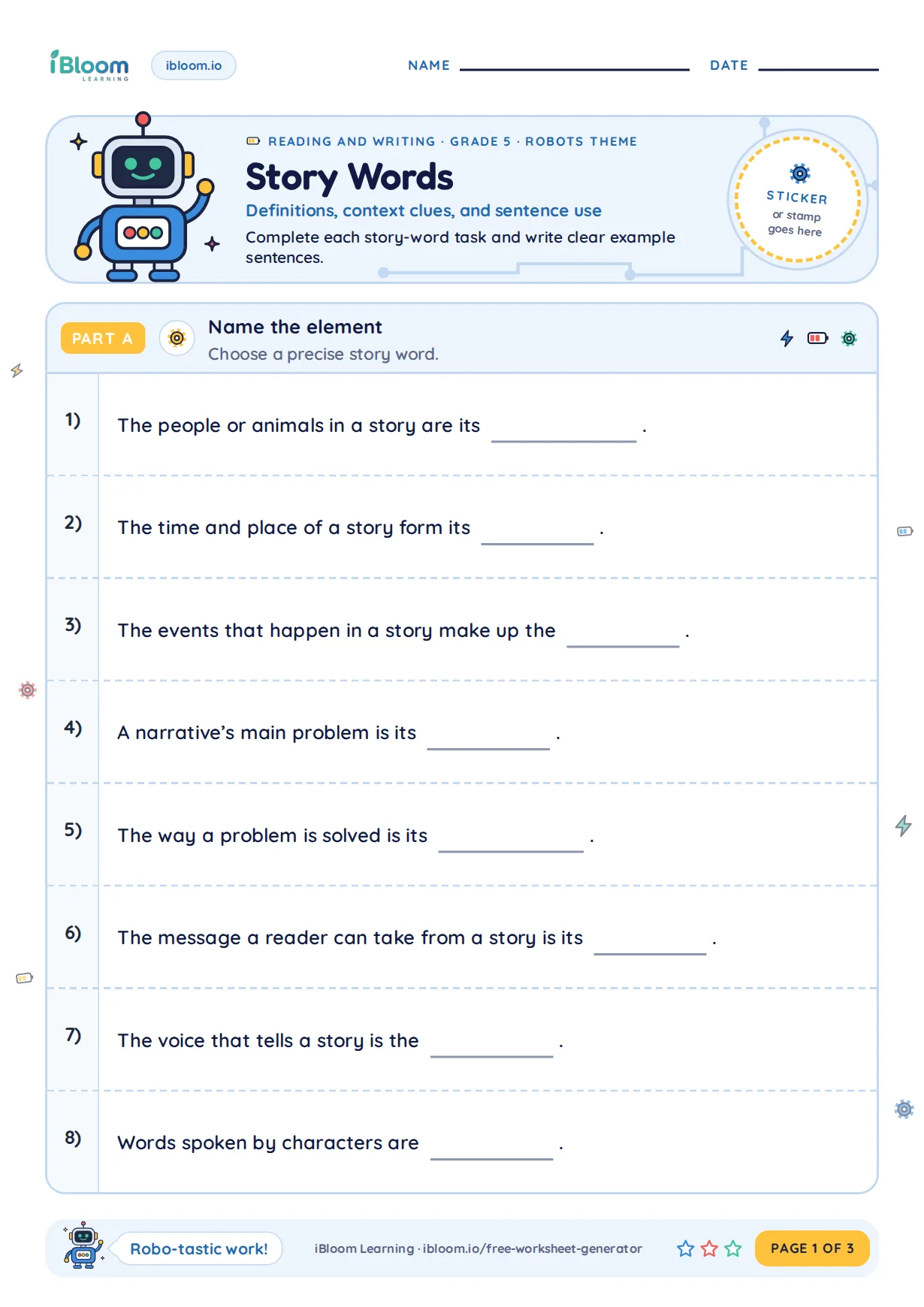 Story Elements — Use the WordsGrade 5 word search worksheets that strengthen story elements vocabulary through focused practice with fiction terms and reading-language clues. This use the words worksheet provides a distinct, age-appropriate way to practise the same lesson.Grade 5Free PDF preview4 pages
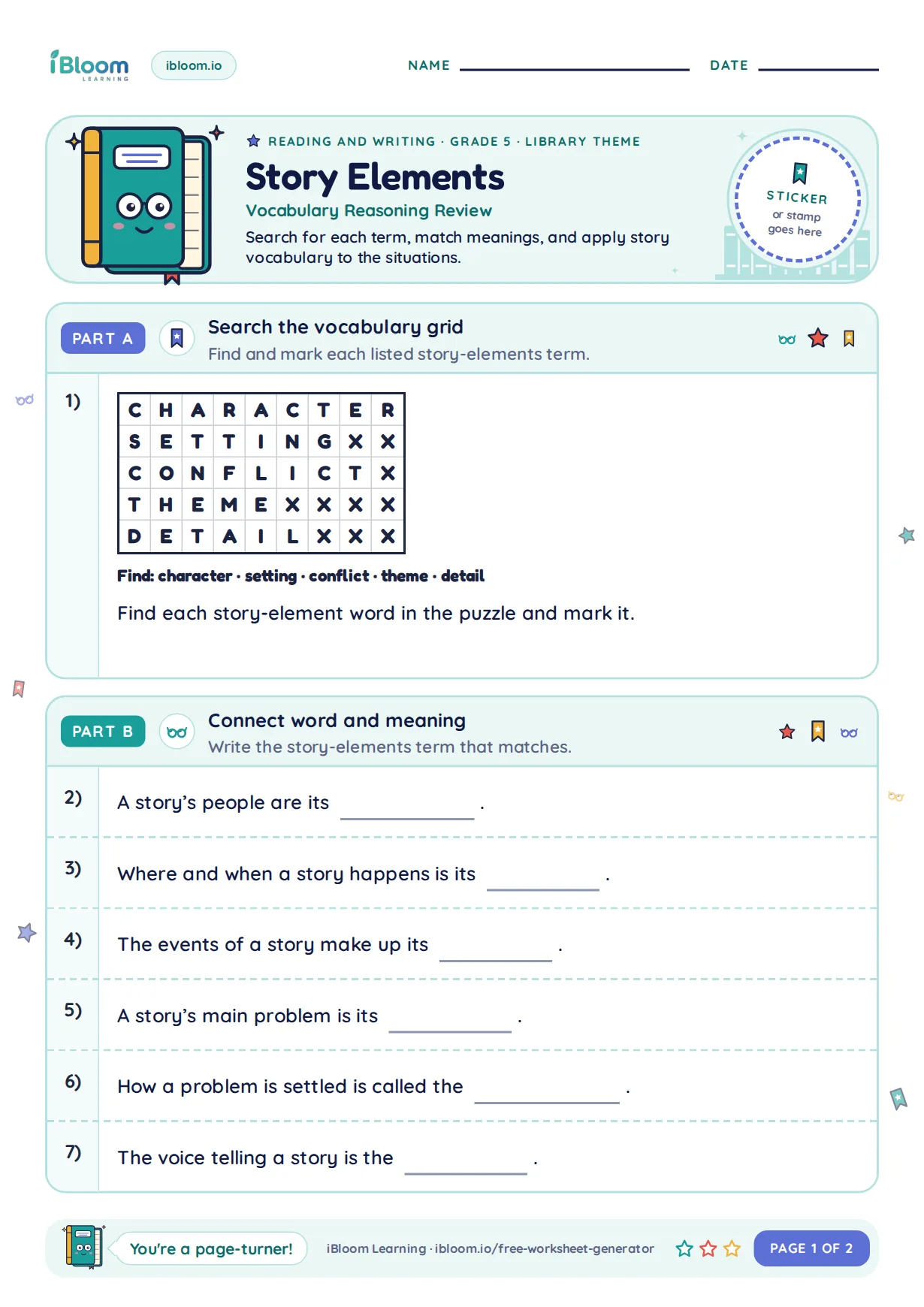 Story Elements — Vocabulary Reasoning ReviewGrade 5 word search worksheets that strengthen story elements vocabulary through focused practice with fiction terms and reading-language clues. This vocabulary reasoning review worksheet provides a distinct, age-appropriate way to practise the same lesson.Grade 5Free PDF preview
Practice that builds confidence
What students practise
These Grade 5 story elements word search activities help children recognize and remember the vocabulary readers use to discuss fiction. Students practise terms such as character, setting, plot, conflict, resolution, theme, narrator, dialogue, and point of view while connecting each word to how stories are built.
The printable worksheets include word search grids and story-focused vocabulary practice that can be used before, during, or after reading. They are useful for independent review, literacy centers, small-group warm-ups, homework, or quick reinforcement when students need more confidence using reading terms accurately.
In this vocabulary collection, students search for key story elements words and reinforce the spelling, shape, and meaning of each term. The focus is not only finding hidden words; it is learning the language needed to describe fiction clearly. A fifth grader should be able to explain who the characters are, where and when the setting happens, what conflict drives the plot, and how the resolution changes the story.

How the skill develops
Word searches give repeated exposure to important literary terms without turning review into a long definition list. Students first notice the word visually, then say it, spell it, and connect it to an example from a story. After finding “theme,” for example, a child can discuss the message of a familiar book. After finding “narrator,” the child can ask who is telling the story and what that speaker knows.
A simple parent routine
Choose one worksheet and ask your child to read the word bank aloud before searching. After every three or four words found, pause for a quick explanation: “What does conflict mean?” or “Name a story with a strong setting.” When the page is complete, pick two terms and have your child write a sentence about a book, movie, or short story using both words correctly.

Classroom uses
Teachers can use these pages as reading warm-ups, vocabulary review after a fiction unit, early-finisher tasks, or literacy center activities. They also work well before literature discussions because students revisit the exact words they will need to talk about plot events, character actions, dialogue, and theme. For small groups, students can find a word, define it together, then point to an example in the class text.

Common errors to watch for
Some students confuse plot with theme, or conflict with any exciting event. Others may use character only for a main person and forget that supporting characters matter too. Point of view and narrator can also be mixed up. Encourage children to pair each term with a question: “Who?” for character, “Where and when?” for setting, “What problem?” for conflict, and “What lesson or message?” for theme.
Free printable PDF download
Use this grade 5 story elements word search worksheet page to preview the activity, print it, or download it as a PDF for quick practice. It works well for homework, homeschool lessons, tutoring, morning work, revision, and classroom centers.
Answers and answer key support
After the child completes the worksheet independently, parents and teachers can use the answer support or answer key information to check the work, review mistakes, and choose the next practice step.
Why iBloom worksheets help
The worksheets keep practice focused on Grade 5 reading vocabulary while adding the puzzle format children enjoy. A helpful strategy is: find it, say it, explain it, apply it. This turns a word search into meaningful reading practice, helping students use story elements language with more confidence in discussions and written responses.
Helpful answers
Frequently asked questions
What story elements vocabulary is practised in these worksheets?
The worksheets focus on common fiction terms used in Grade 5 reading, such as character, setting, plot, conflict, resolution, theme, narrator, dialogue, and point of view.
Are these worksheets only word searches?
The collection is built around word search practice, but the words can also be used for oral definitions, reading discussions, sentence writing, and quick review of fiction terms.
How can I make a word search more meaningful for reading practice?
After your child finds each word, ask for a short definition or an example from a story. For instance, after finding “conflict,” your child can name the main problem in a book they know.
Can teachers use these during a fiction unit?
Yes. They work well as warm-ups, literacy center tasks, early-finisher activities, or vocabulary review before students discuss characters, plot events, setting, and theme in a class text.
What common mix-ups should Grade 5 students watch for?
Students often mix up plot and theme, narrator and point of view, or conflict and resolution. Encourage them to match each term with a guiding question, such as “What problem?” for conflict and “What message?” for theme.
Is this grade 5 story elements word search worksheet free?
Yes. You can preview it for free and use the printable worksheet for home or classroom practice.
Can I download this grade 5 story elements word search worksheet as a PDF?
Yes. Use the worksheet download option to save a printable PDF, or print the worksheet directly from the page.
Does this grade 5 story elements word search worksheet include answers or an answer key?
When the activity has fixed answers, iBloom includes answer support so parents and teachers can check the completed worksheet.