Pangram Worksheets for Kids
Pangram worksheets for kids can turn alphabet coverage into real spelling, vocabulary, and sentence work when adults use them as a short thinking routine.
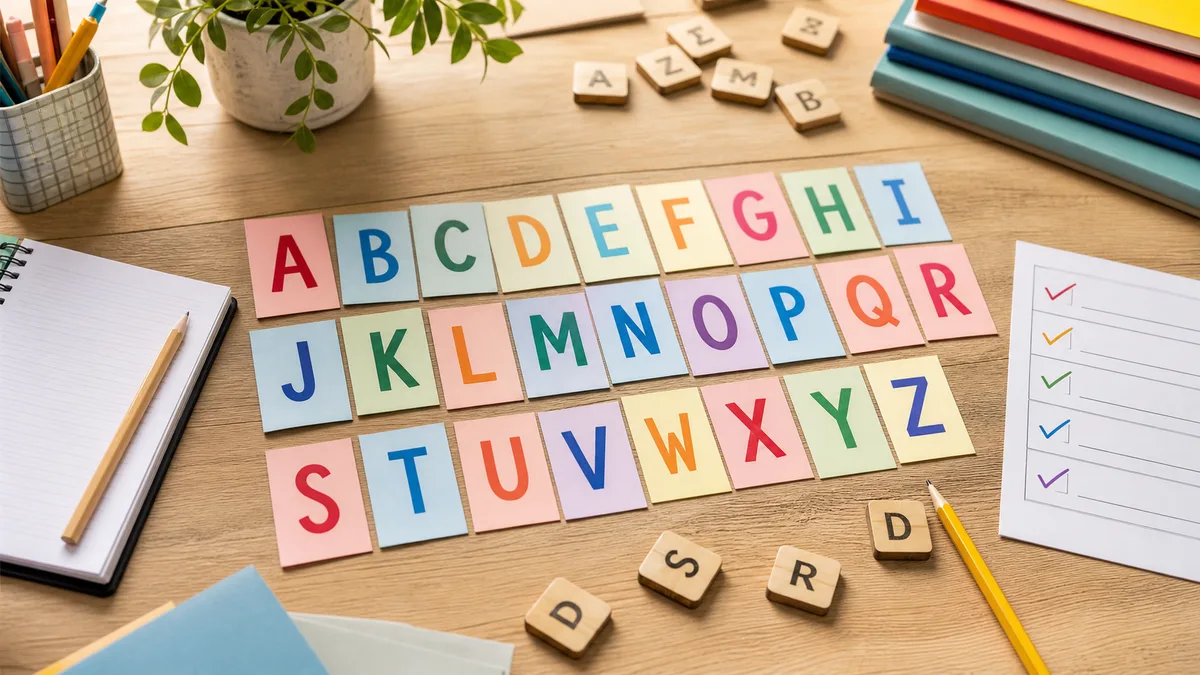
Pangram worksheets for kids can turn alphabet coverage into real spelling, vocabulary, and sentence work when adults use them as a short thinking routine. This guide is written for parents, teachers, tutors, homeschool families, and children who want word practice that feels purposeful instead of random. It connects pangram work to iBloom SpellBee, Spelling Bee Words by Grade Level, Pangram Practice for Spelling Bee, and direct vocabulary pages such as Use Context Clues to Determine Word Meaning and Determine Scientific Vocabulary Meaning.
Start With iBloom Practice
Use this guide with direct iBloom practice so children move from explanation into real spelling and vocabulary work.
Table of Contents
Worksheet And Lesson Previews
Context Clues Word Meaning Lesson Preview
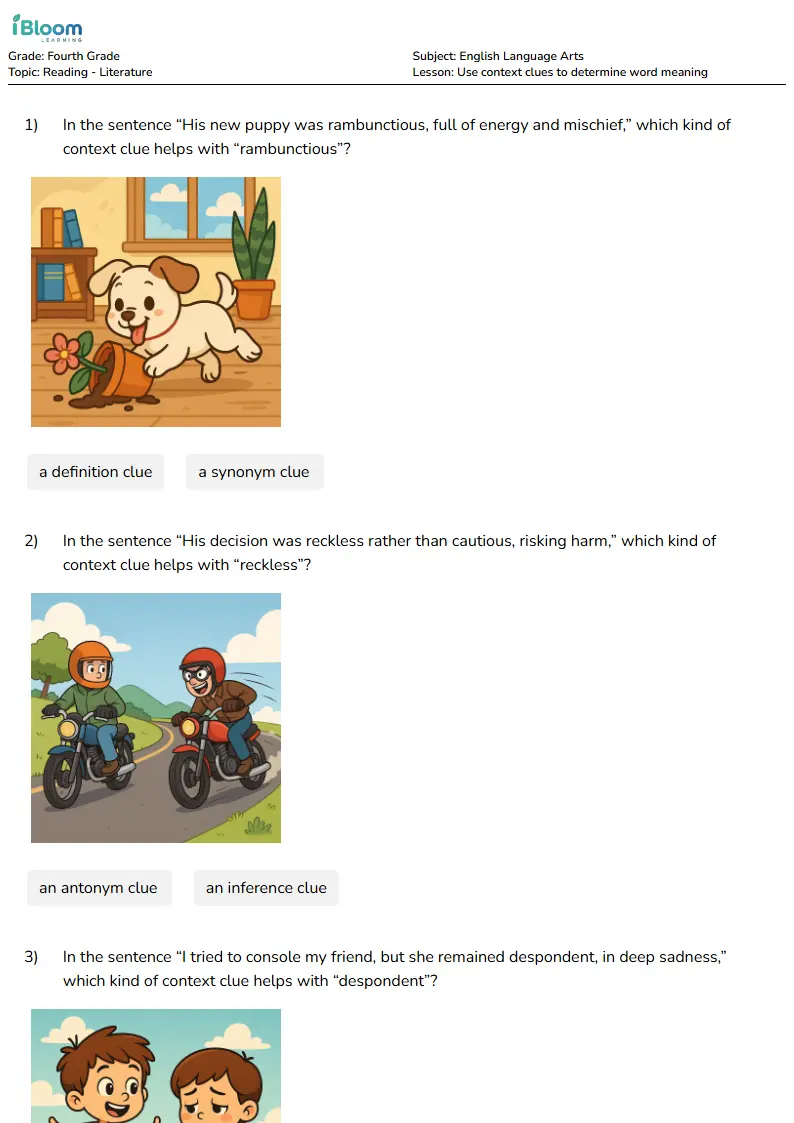
Use this preview to see the kind of practice children will open before you start the routine.
Scientific Vocabulary Meaning Worksheet Preview
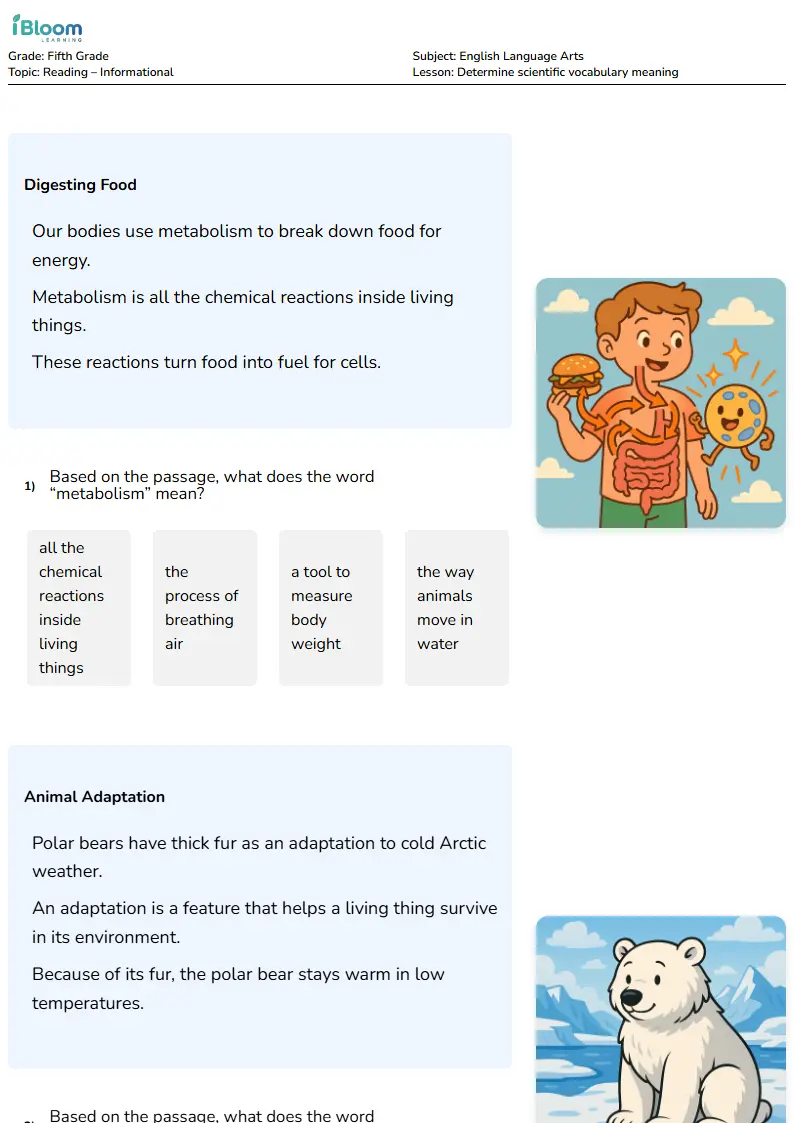
Use this preview to see the kind of practice children will open before you start the routine.
Using Clues to Find Meanings Lesson for Class 4 Preview
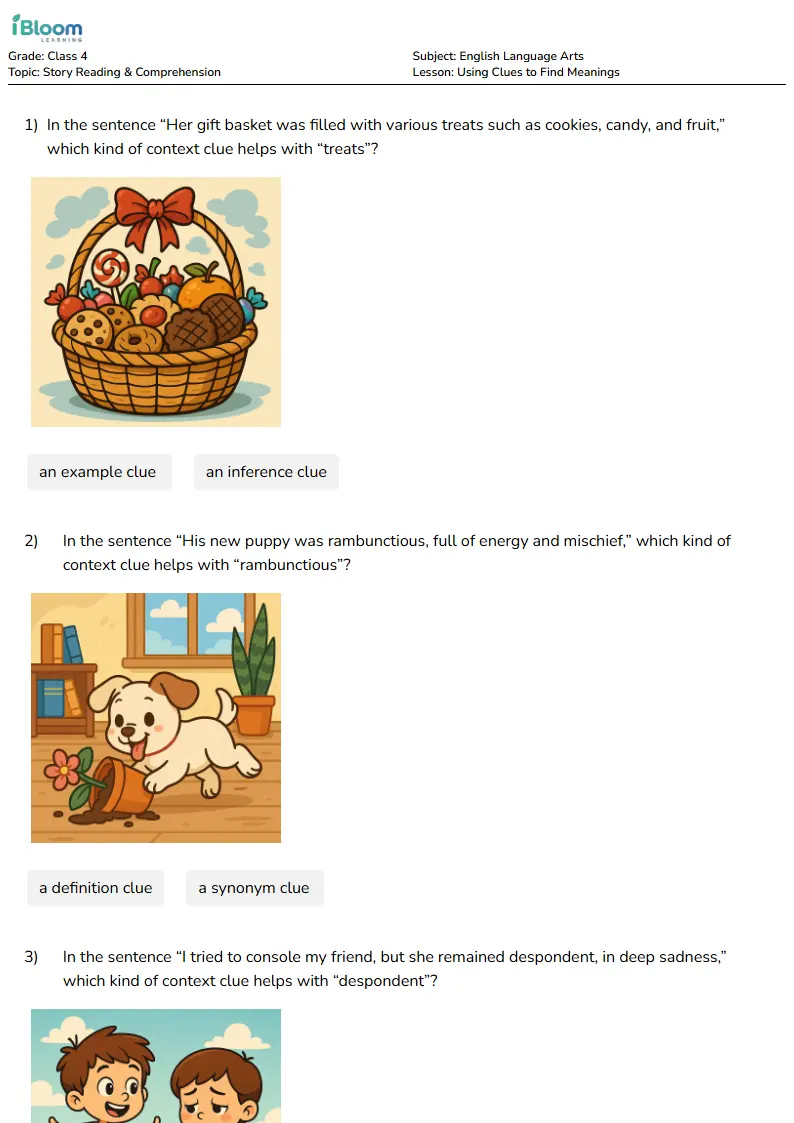
Use this preview to see the kind of practice children will open before you start the routine.
Key Takeaways
- Pangram work should build spelling, vocabulary, alphabet awareness, and flexible thinking, not only a race to use rare letters.
- Children learn more when they explain why a word works and how the letters or sounds connect.
- Short daily routines beat long, tiring word lists.
- Parents can use pangram work as a home spelling warm-up, while teachers can use it as a vocabulary center, word-study station, or extension task.
- Link pangram work to reading comprehension so children also practise meaning, context, prefixes, suffixes, and precise word choice.
Why Pangram Practice Helps
A pangram uses every letter of the alphabet at least once. For children, the value is not just the finished sentence. The value is the thinking process: looking across letters, trying word families, checking spelling, reading the sentence aloud, and revising when the sentence does not make sense. That makes worksheet routines useful for spelling bee preparation, vocabulary growth, handwriting practice, keyboard practice, and reading fluency.
Research-backed reading guidance supports explicit vocabulary instruction, careful reading, and strategy practice. The Reading Rockets comprehension overview explains that skilled readers monitor meaning, reread, connect ideas, and use context. The Reading Rockets comprehension practice module emphasizes direct vocabulary teaching, word-learning strategies, and evidence-based discussion. Pangram work fits when adults keep the focus on meaning and spelling accuracy, not guessing.
Children can begin with a simple alphabet checklist. They write or select words that include missing letters, then build a sentence that sounds natural. A child might start with common words, notice that q, x, z, or j is missing, and then add a stronger vocabulary word. This is where Pangram Examples for Students and Pangram Solver Strategies for Kids can help without replacing the child's own thinking.
How to Use This With Children
Start small. Ask the child to write five useful words before trying a full pangram sentence. The adult can ask, "Which letters are covered?" and "Which word makes the sentence clearer?" This keeps the task from becoming a puzzle that only fast spellers enjoy.
For younger children, use oral word play first. Say a word, clap syllables, name the first and last sound, then place it on an alphabet chart. For older elementary learners, connect the word to prefixes, suffixes, roots, synonyms, antonyms, and context clues. The Decode Words With Prefixes lesson and Word Endings Suffixes) worksheet are useful next steps when a child needs morphology practice.
Use the same routine across India, the United States, and the UAE: choose words, check spelling, explain meaning, and revise the sentence. A child in Delhi, Mumbai, Bengaluru, Chennai, Hyderabad, Pune, New York, Houston, Chicago, Dallas, Los Angeles, Dubai, Abu Dhabi, Sharjah, or Ajman can use the same four moves: build, read, check, explain.
Parent Routine
Parents do not need a long lesson. Ten minutes is enough:
- Choose one alphabet row or one missing-letter challenge.
- Ask the child to say each word and explain what it means.
- Use iBloom SpellBee or Spelling Bee Words by Grade Level for age-appropriate words.
- Ask for one complete sentence that sounds like something a real person would say.
- End by asking, "Which word are you proud of and why?"
If a child gets stuck, reduce the task. Instead of "make a pangram," ask for three words that use uncommon letters. Instead of correcting every spelling error, choose one pattern to fix. For example, work on silent e, vowel teams, suffix endings, or double consonants.
Teacher Routine
Teachers can turn this into a classroom station without adding a heavy worksheet packet. Put alphabet cards, blank word cards, and a short checklist on the table. Children work in pairs to build a word bank, then each pair reads one sentence aloud. The class can discuss whether the sentence makes sense and whether every word is spelled correctly.
For a literacy block, connect pangram word play to comprehension. Ask children to use one new word in a passage response, or to explain the word with context clues. The Use Context Clues to Determine Word Meaning lesson and Context Clues for Kids guide help bridge word play and reading comprehension.
In intervention groups, keep the focus narrower. One group may practise beginning sounds. Another may practise vowel patterns. A third may use Determine Scientific Vocabulary Meaning to connect spelling with academic vocabulary.
India, US, and UAE Notes
In India, pangram and spelling practice can support CBSE, ICSE, state-board, Class 1 through Class 5, and after-school English practice. Families in Delhi, Mumbai, Bengaluru, Chennai, Hyderabad, Pune, Kolkata, Ahmedabad, Jaipur, Kerala, Tamil Nadu, Karnataka, Maharashtra, Telangana, Gujarat, Rajasthan, and West Bengal can use the same routine with school spelling lists.
In the United States, teachers and parents can connect pangram work to elementary spelling, vocabulary centers, homeschool language arts, intervention blocks, and enrichment. It fits classrooms in California, Texas, Florida, New York, Illinois, Pennsylvania, Ohio, Georgia, North Carolina, Michigan, Los Angeles, Houston, Chicago, Dallas, Austin, Seattle, Boston, Denver, Atlanta, and Miami.
In the UAE, pangram practice can support British, American, IB, and Indian curriculum learners in Dubai, Abu Dhabi, Sharjah, Ajman, Al Ain, Ras Al Khaimah, Fujairah, and Umm Al Quwain. Multilingual families can let children explain a word in the home language first, then use the English spelling and sentence on the page.
Examples Children Can Try
- Build a five-word bank that uses at least fifteen different letters.
- Choose one tricky letter and find three useful words for it.
- Write a sentence that includes one spelling bee word and one context clue.
- Revise a silly sentence so it still uses rich letters but also makes sense.
- Sort words by sound pattern: short vowel, long vowel, consonant blend, prefix, suffix.
For children who enjoy puzzles, use Pangram Practice for Spelling Bee after the basic routine. For children who need more reading support, move to Reading Comprehension Worksheets Grade 5 or Crossword Puzzles for Vocabulary Practice so word work remains connected to meaning.
Common Mistakes
- Treating pangram work as a speed game instead of a spelling and meaning task.
- Using rare words that the child cannot explain.
- Letting a solver replace the child's own word choices.
- Ignoring sentence sense just to cover every letter.
- Practising once and never revisiting the words.
When a mistake appears, ask one calm question: "Does that word help the sentence?" If the answer is no, revise. If the child cannot explain a word, use a simpler word or connect it to a known passage. Adult background from the IES reading comprehension practice guide can support lesson planning, but the child's next step should be a clear iBloom practice page.
Keep Practicing With iBloom
Use this guide with direct iBloom practice so children move from explanation into real spelling and vocabulary work.
Frequently Asked Questions
What is a pangram for kids?
A pangram is a sentence or activity that uses every alphabet letter. For children, the best pangram work also includes spelling, meaning, and sentence sense.
Should children use a pangram solver?
Use a solver only as a check or extension. Children should first build words, explain meanings, and revise their own sentence.
How long should pangram practice take?
Five to fifteen minutes is enough for most children. Short, repeated practice is better than one long session.
Is pangram work useful for spelling bee practice?
Yes, when it is connected to word meaning, spelling patterns, and oral explanation. It should not replace grade-level word study.
What should we practise next?
Use iBloom SpellBee for spelling practice, then choose a linked vocabulary, prefix, suffix, or context-clues page for deeper word understanding.