




About this worksheet
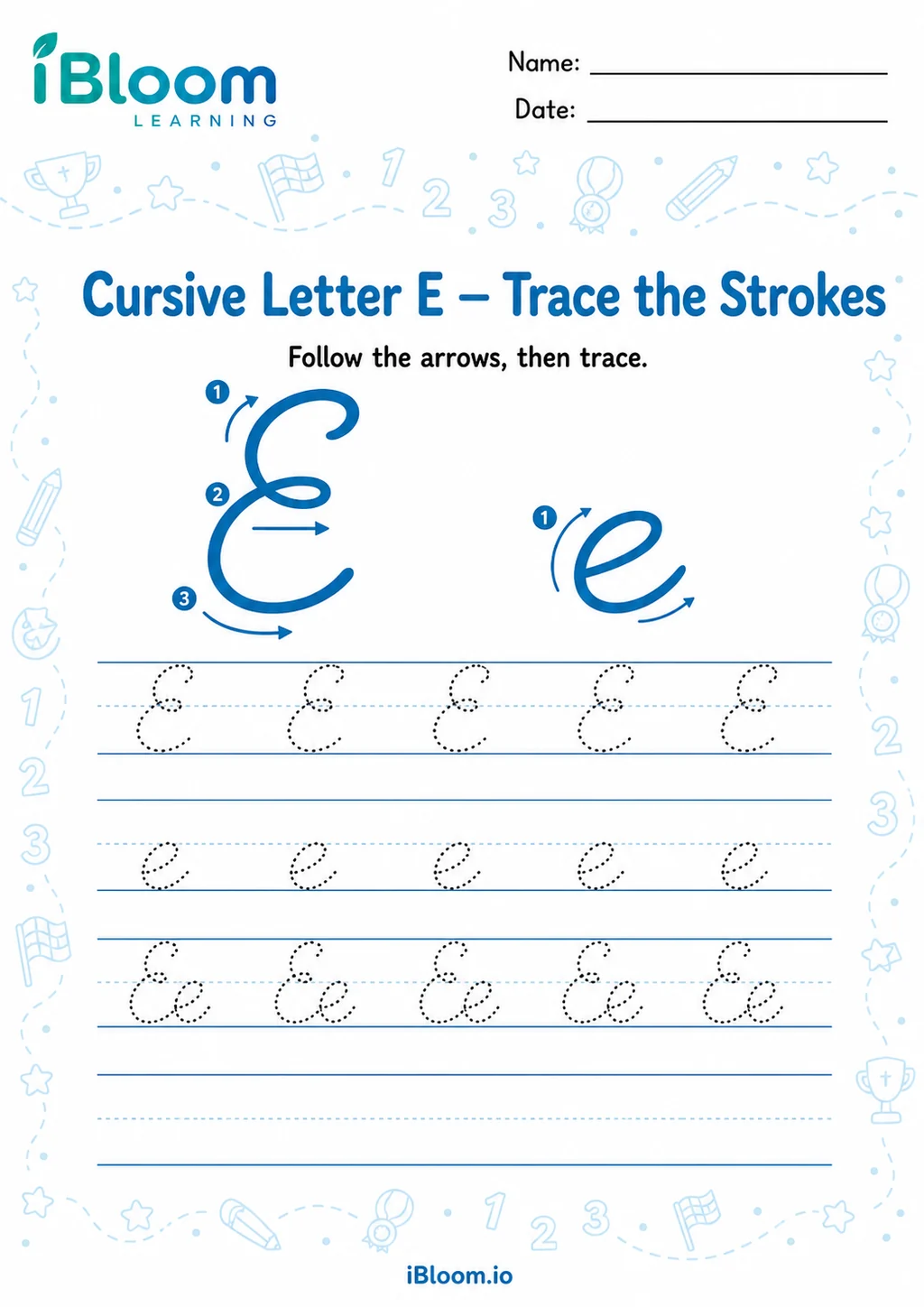
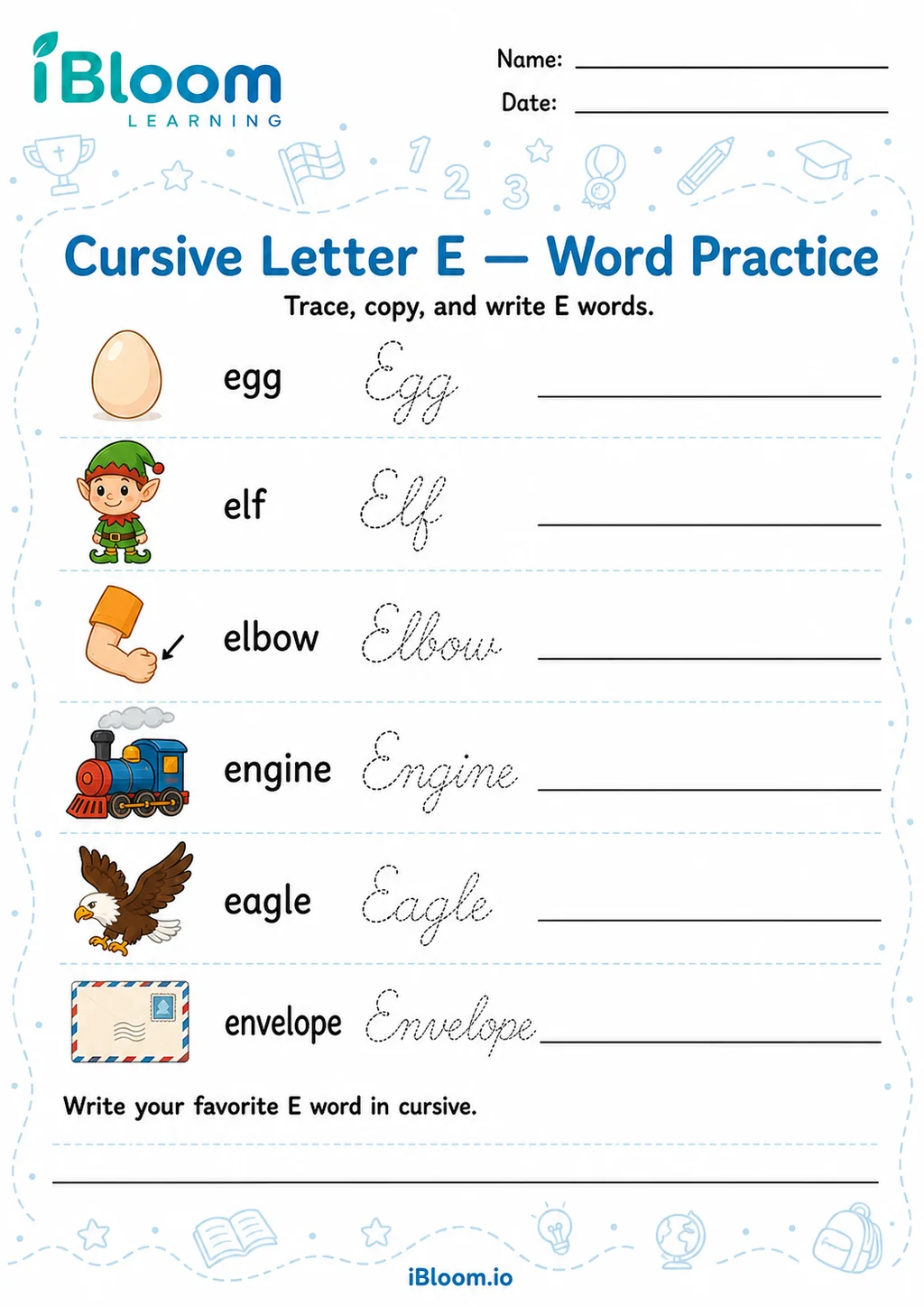
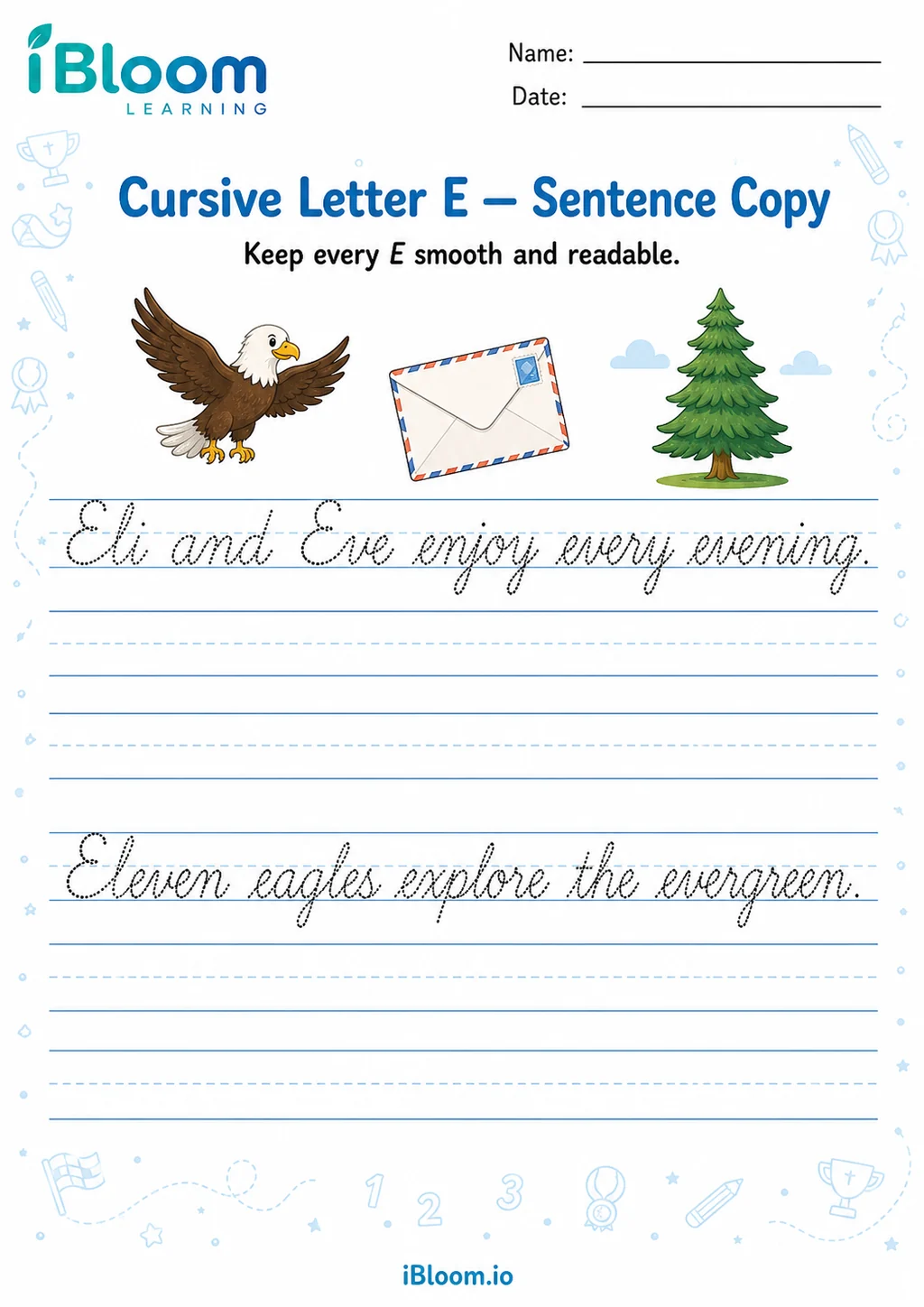
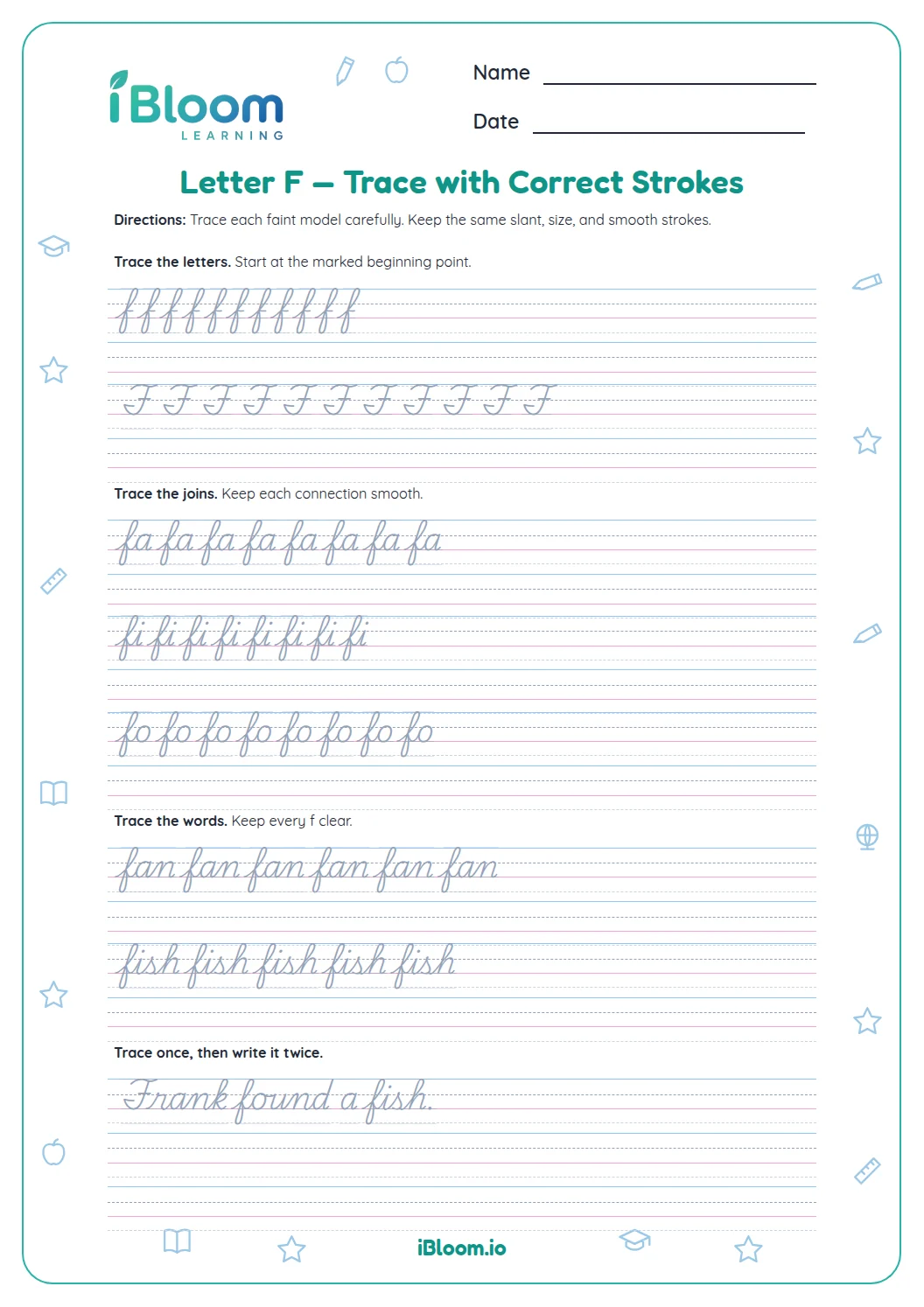
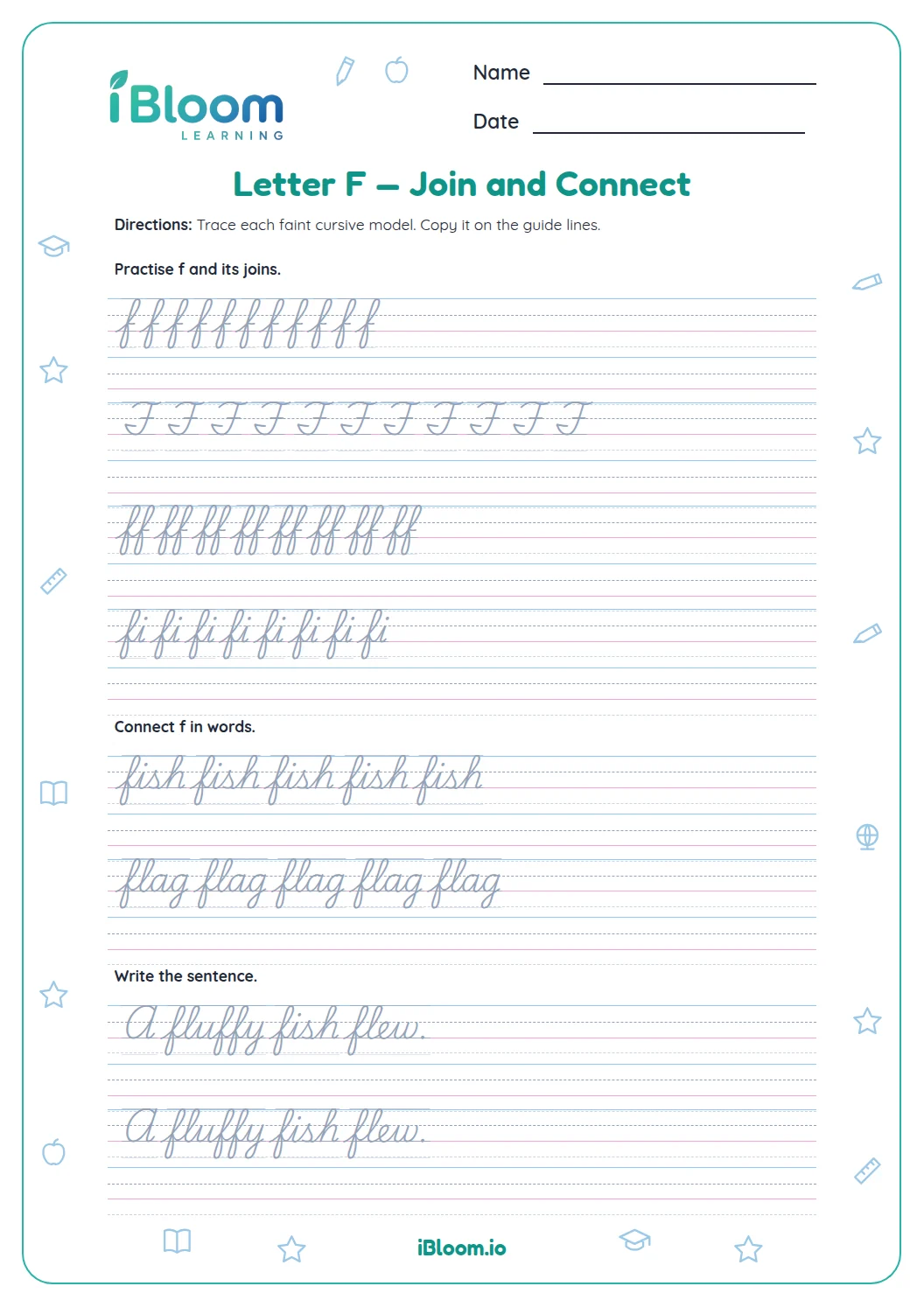
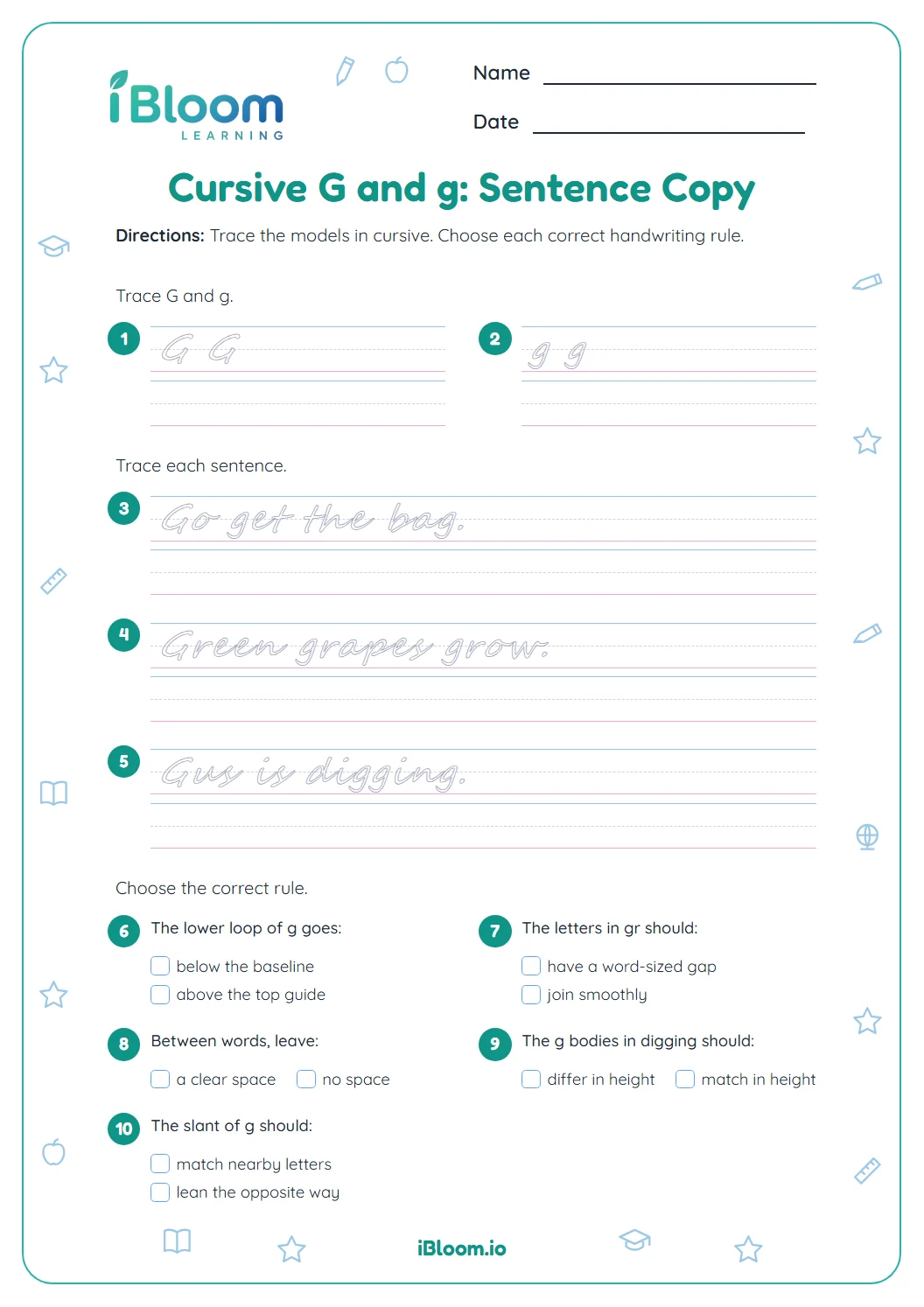
This handwriting page gives learners repeated practice forming lowercase d and uppercase D in US school cursive. Children begin with single letters, connect letters in short groups, then trace and copy familiar D words and two complete sentences. Every item uses cursive handwriting lines so the focus stays on correct strokes and readable connections. A separate key shows the expected text.
What makes a cursive D clear?
A readable cursive letter starts and finishes with controlled strokes. Follow the gray model, keep the letter size steady, and let the joins flow into the next letter.
How does D connect to other letters?
Short groups such as da, de, and di let learners practice transitions without copying a long string.
What will learners copy?
Practice progresses from letter forms to words and complete thoughts.
- Part A: lowercase and uppercase D
- Part B: two short join groups
- Part C: six familiar words beginning with D
- Part D: two complete sentences
A calm handwriting routine
- 1Sit comfortably and place the page at a slight angle.
- 2Trace the gray D model slowly, following its stroke direction.
- 3Keep the next copy near the model in height and slant.
- 4Pause between join groups and reset the pencil.
- 5Read each word or sentence after copying it.
Cursive practice tips
The mistake
Making lowercase d as tall as an uppercase letter.
The fix
Use the model to keep lowercase letters at a consistent height.
The mistake
Lifting the pencil in the middle of a smooth join.
The fix
Trace the connection slowly before copying it.
The mistake
Rushing and letting letters run together.
The fix
Leave clear word spaces and practice one row at a time.
What to practice next
Make more practice
Questions parents and teachers ask
Does this page include uppercase and lowercase D?
Yes. The first rows practice lowercase d and uppercase D, followed by short groups of connected letters. Later rows move into familiar words and complete sentences, so learners can apply the letter form in ordinary handwriting. Each item includes a trace model and a row for copying.
How should learners use the gray cursive model?
Trace slowly over the gray model, following the letter shape and keeping the size and slant steady. Then copy the same text on the next writing row. A careful trace helps learners notice the path before they write on their own.
Why practice short joins before full words?
Short groups let a learner pay attention to how one letter connects to the next without managing a long word. Once the joins feel more familiar, the word rows offer practice keeping the letters connected and leaving a clear space before the next word.
What comes after tracing the words?
The final part gives two short complete sentences to trace and copy. Encourage the learner to keep the letters connected within each word, leave spaces between words, and reread the sentence to check that it is legible. The answer key shows the text to copy.
How many cursive rows are on the page?
There are 14 trace-and-copy rows across three practice pages, followed by an answer-key page. Learners begin with lowercase and uppercase D, practice short joins, trace six familiar D words, and finish by copying two complete sentences that use capital letters and punctuation.