





About this worksheet
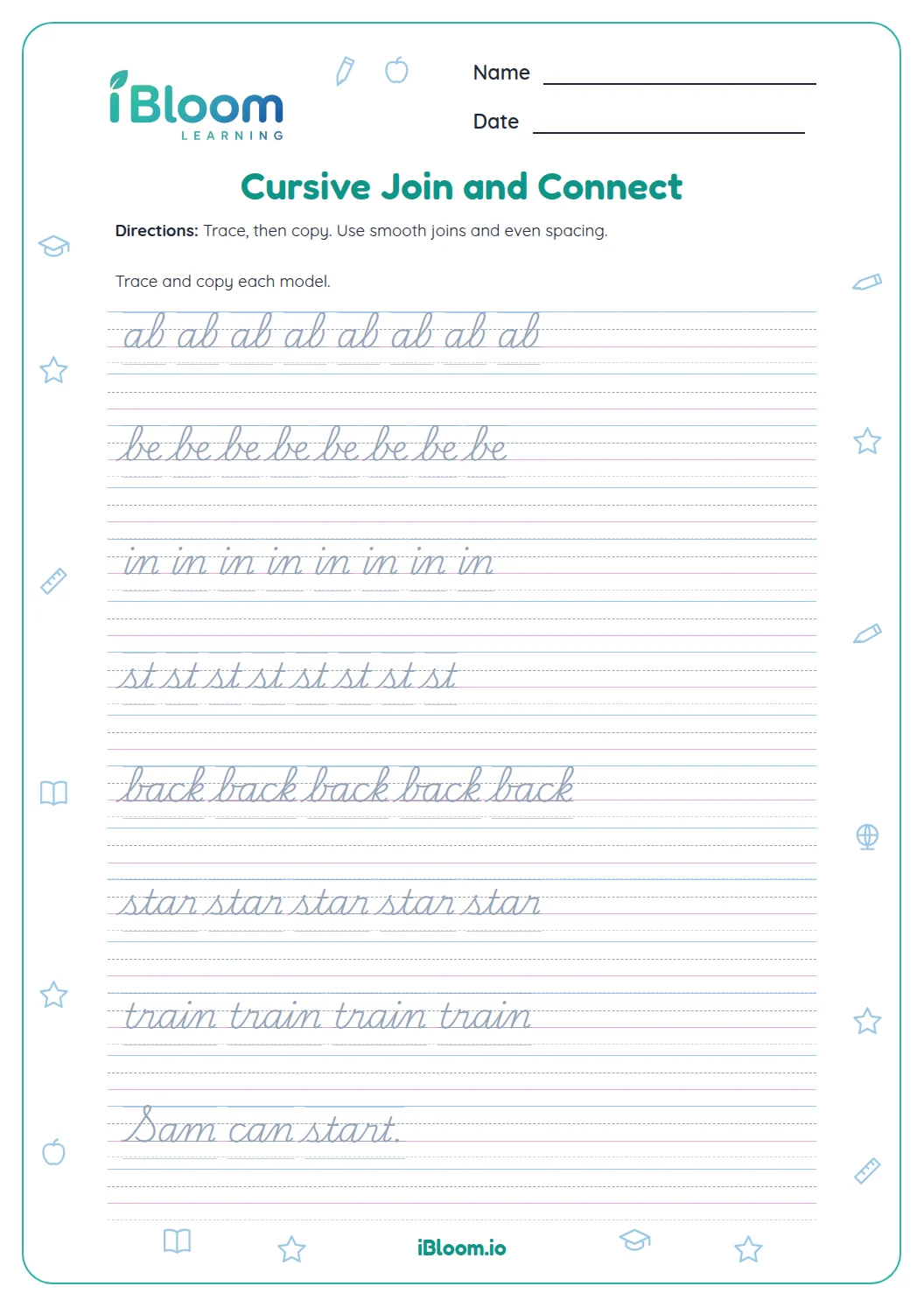
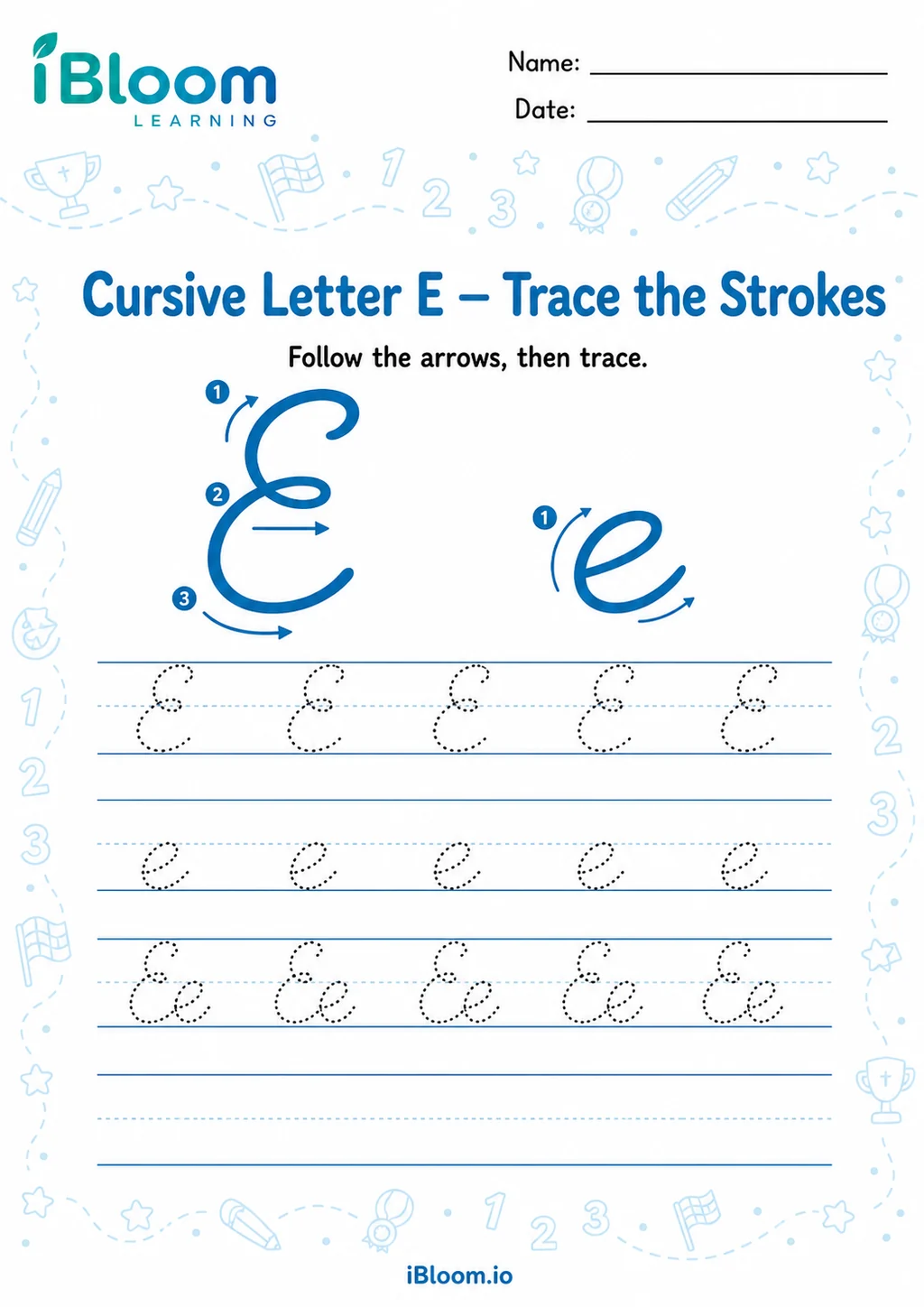
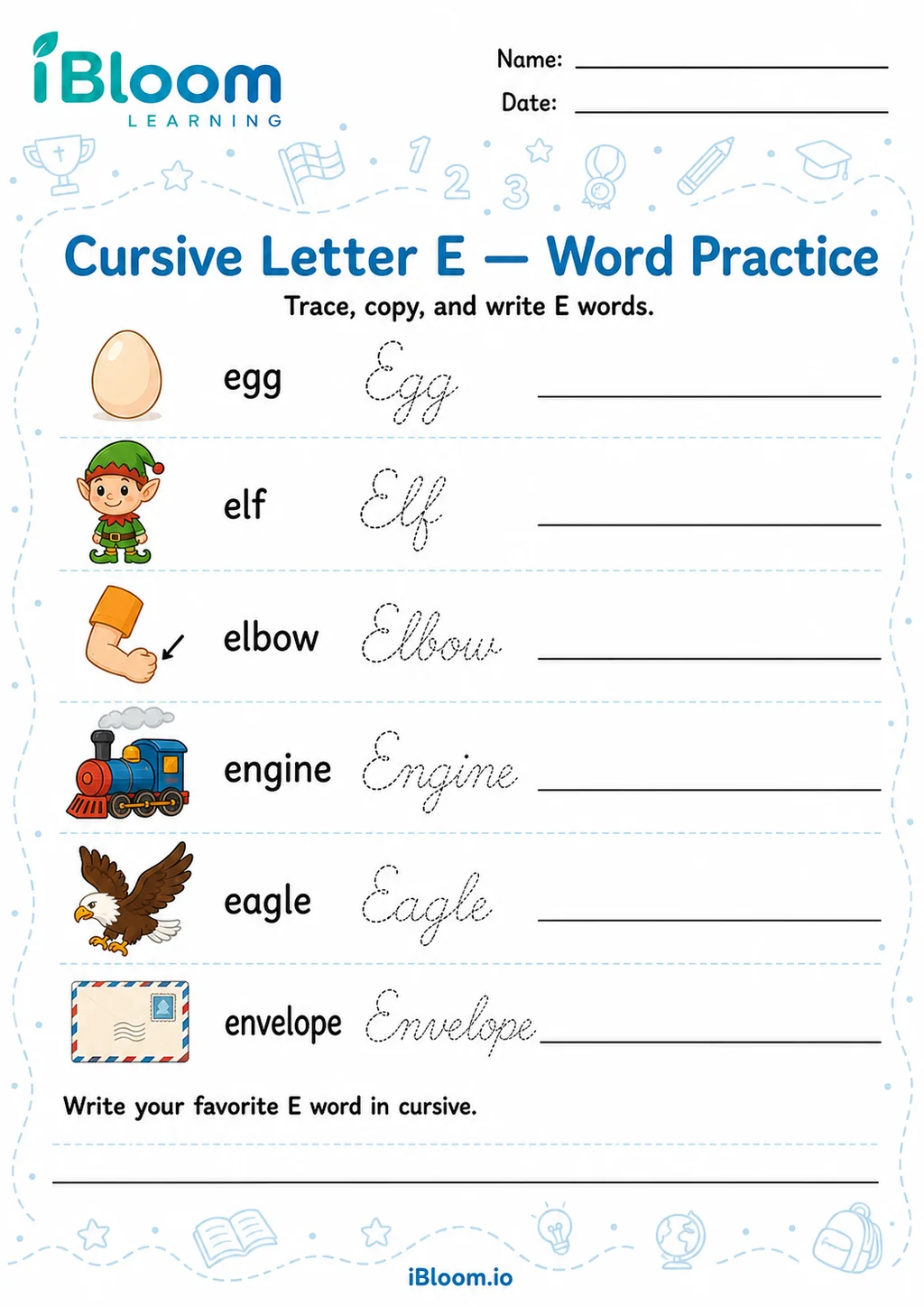
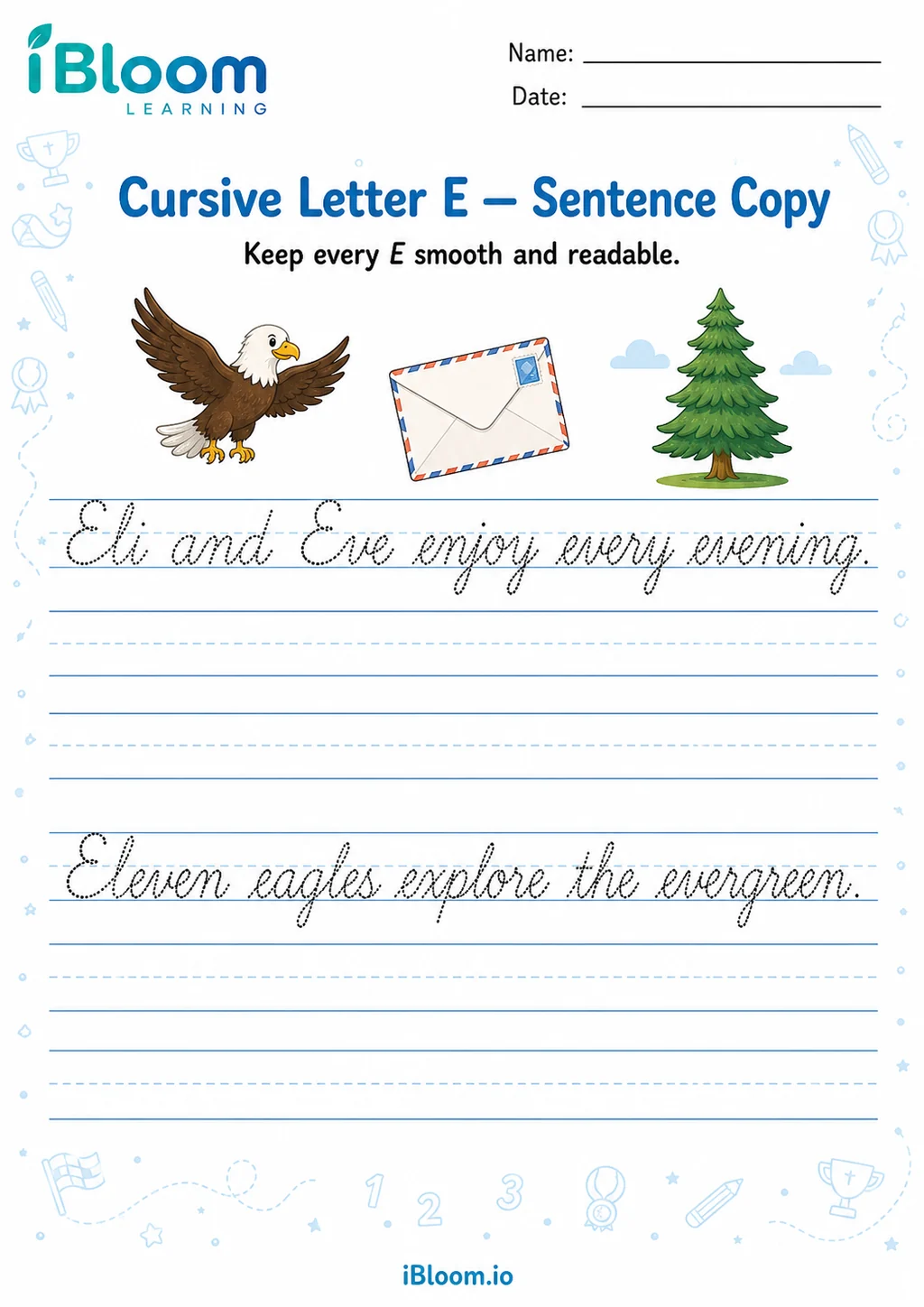
This cursive handwriting page focuses on lowercase d joins. Students trace five short d-to-vowel combinations, then write six complete words and five full sentences that use d. The printed prompts provide a model for the gray tracing row and a blank row for copying. The key repeats the exact text for each practice item.
Which joins does the page practice?
The opening items join lowercase d directly to a, e, i, o, and u. Each pair begins with d, so students can follow its exit stroke into the next letter without a gap.
- 1da → trace the join, then copy da
Why move from joins to whole words?
Complete words let students repeat a connection while also managing letter size and spacing. The word list uses familiar, pronounceable words such as dad, did and dune.
How should students copy a sentence?
Trace the model first, then copy it on the empty handwriting row. Keep letters resting on the baseline, leave visible spaces between words, and use a capital letter and end mark as shown.
How to use this worksheet
- 1Sit with the paper tilted slightly toward the writing hand.
- 2Trace one joined pair slowly, following the model.
- 3Copy the same pair while keeping letters on the baseline.
- 4Move to whole words and check letter spacing.
- 5Trace and copy each complete sentence with its capitals and punctuation.
Common mistakes and quick fixes
The mistake
Lifting the pencil between letters in a join.
The fix
Follow the model’s connecting stroke through the pair.
The mistake
Letting lowercase d become too large beside short letters.
The fix
Keep its height consistent with the model and align it to the baseline.
The mistake
Running words together in sentence copying.
The fix
Leave a clear space after each word while keeping letters within a word connected.
What to practice next
Make more practice
Questions parents and teachers ask
How many items are on the page?
There are 16 cursive items in three parts: five lowercase d joins, six complete words, and five sentences. Each item has a tracing model and a copy row. The answer key repeats the exact letters or text, including capitals and punctuation in the sentences.
Which d joins are included?
The first part practices da, de, di, do, and du. Each pair begins with lowercase d and connects directly to a vowel. Students can trace the model slowly, then copy the same pair while keeping the connecting stroke continuous.
Why are whole words included after the joins?
Complete words repeat the joins while adding practice with letter size and spacing. The six words are dad, did, dude, dine, dune, and doll. Students trace each whole word, then copy it with connected letters inside the word.
Should students lift the pencil between letters?
Within a connected pair or word, follow the model’s connecting stroke. A student may lift between separate words, because the space keeps the sentence readable. The practice models connected letters within each word and visible spaces between words.
How can I check the copied sentences?
Compare each copy with its printed model for letter shape, baseline placement, word spacing, capitals, and punctuation. The answer key repeats the expected text. Focus first on readable forms and connected letters, then on making the spacing even.