





About this worksheet
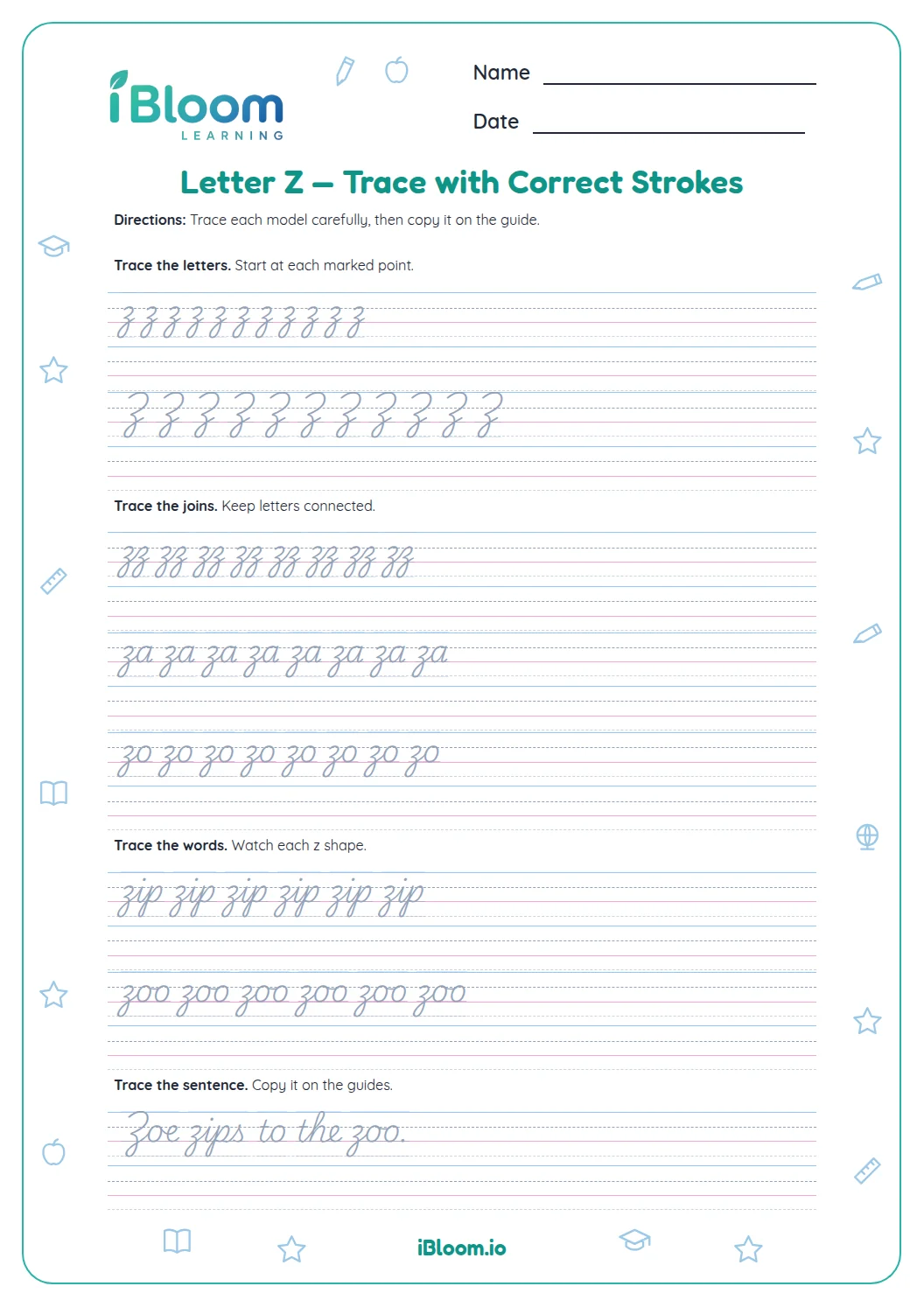
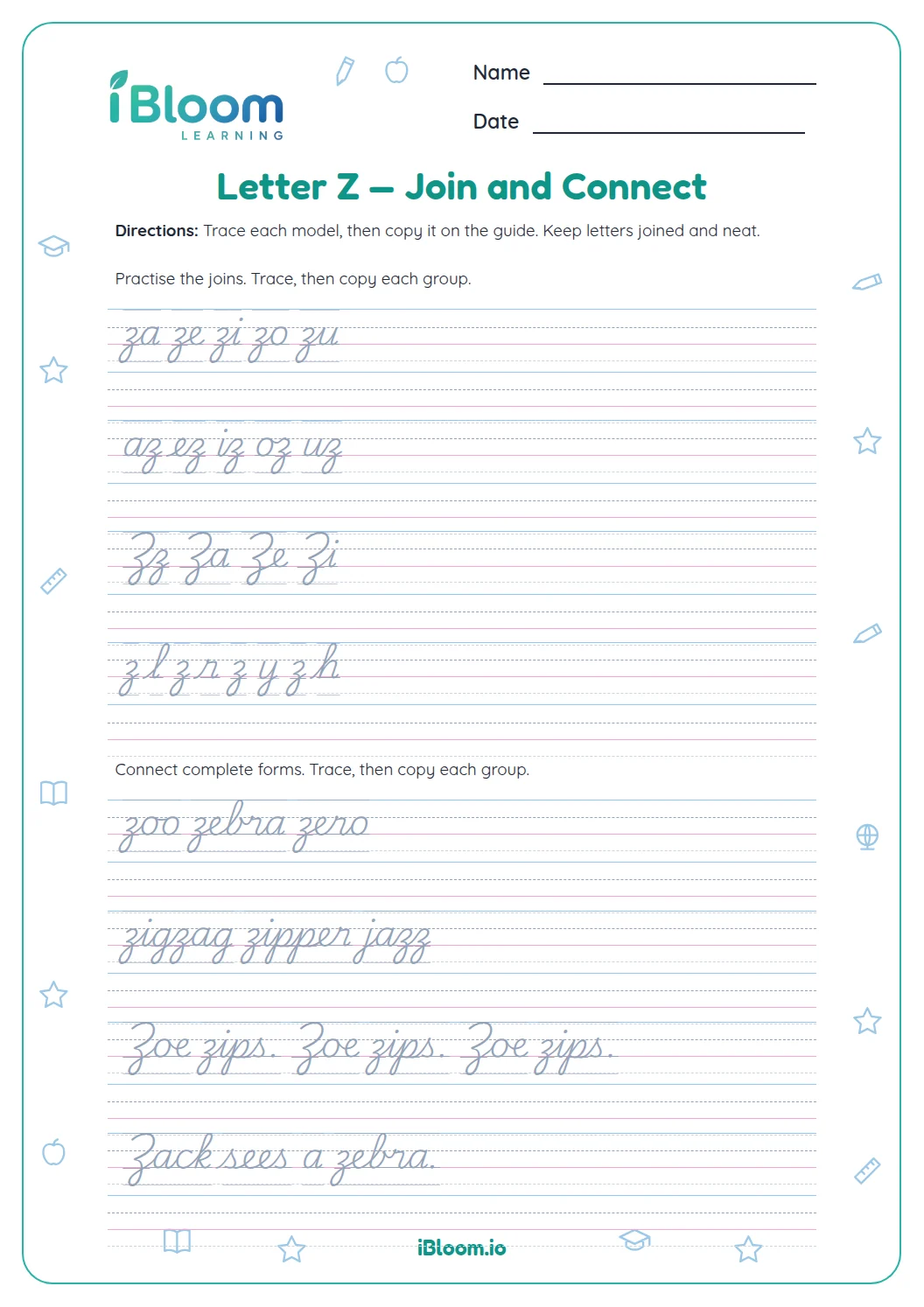
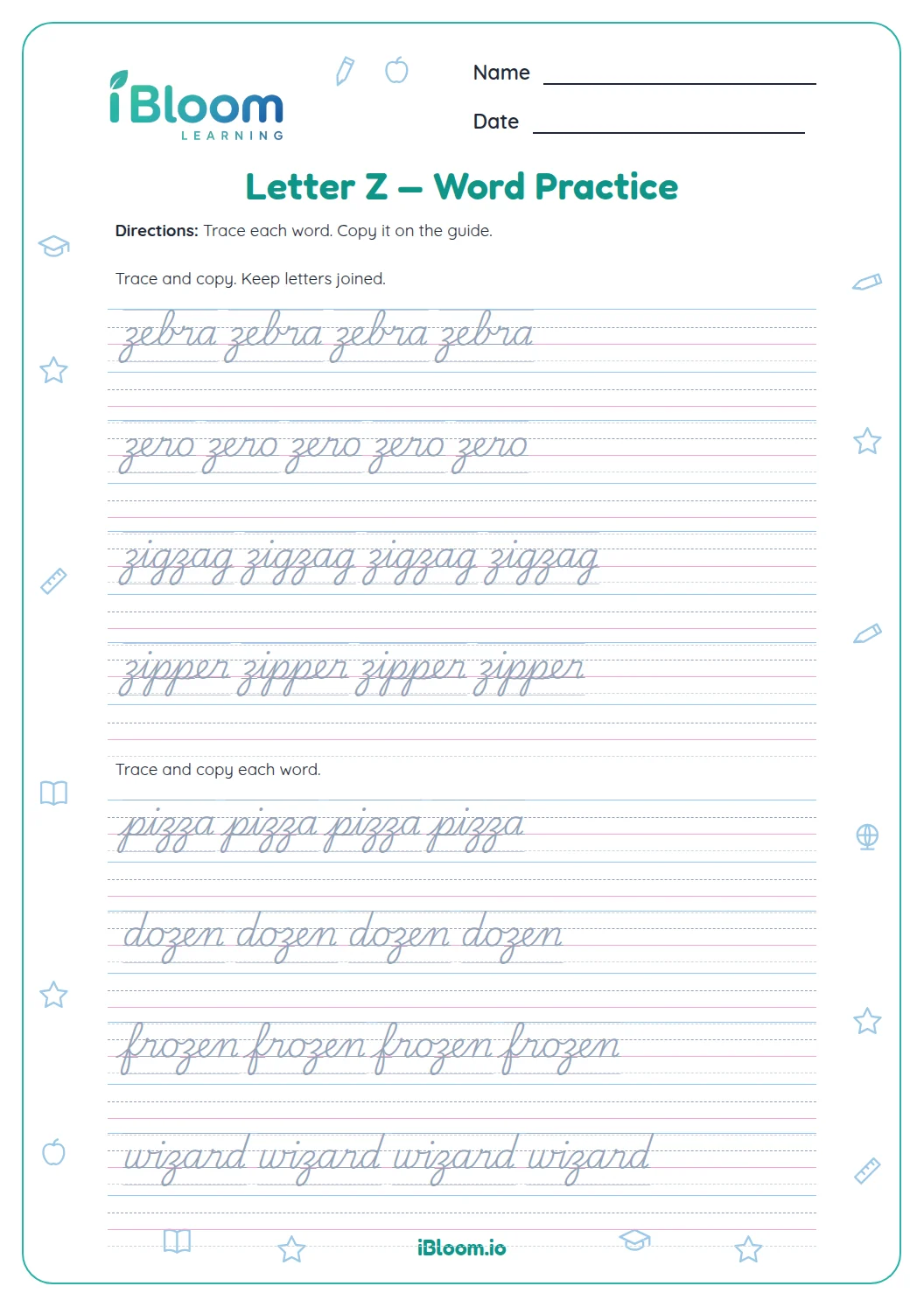
This free printable gives students in Grades 2–5 focused fluency practice with cursive Z. Children trace lowercase and capital Z, then copy short words and sentences that use the letter in natural joins. The sheet moves from letter forms to connected writing, with a separate answer key showing the text to copy. Use it after basic stroke practice when the letter is familiar and the goal is smoother, more readable writing.
How does the sheet practice lowercase and capital Z?
The first prompt pairs lowercase z and capital Z for tracing and copying. That gives learners a chance to compare the two forms before writing connected words.
Which Z joins do students practice?
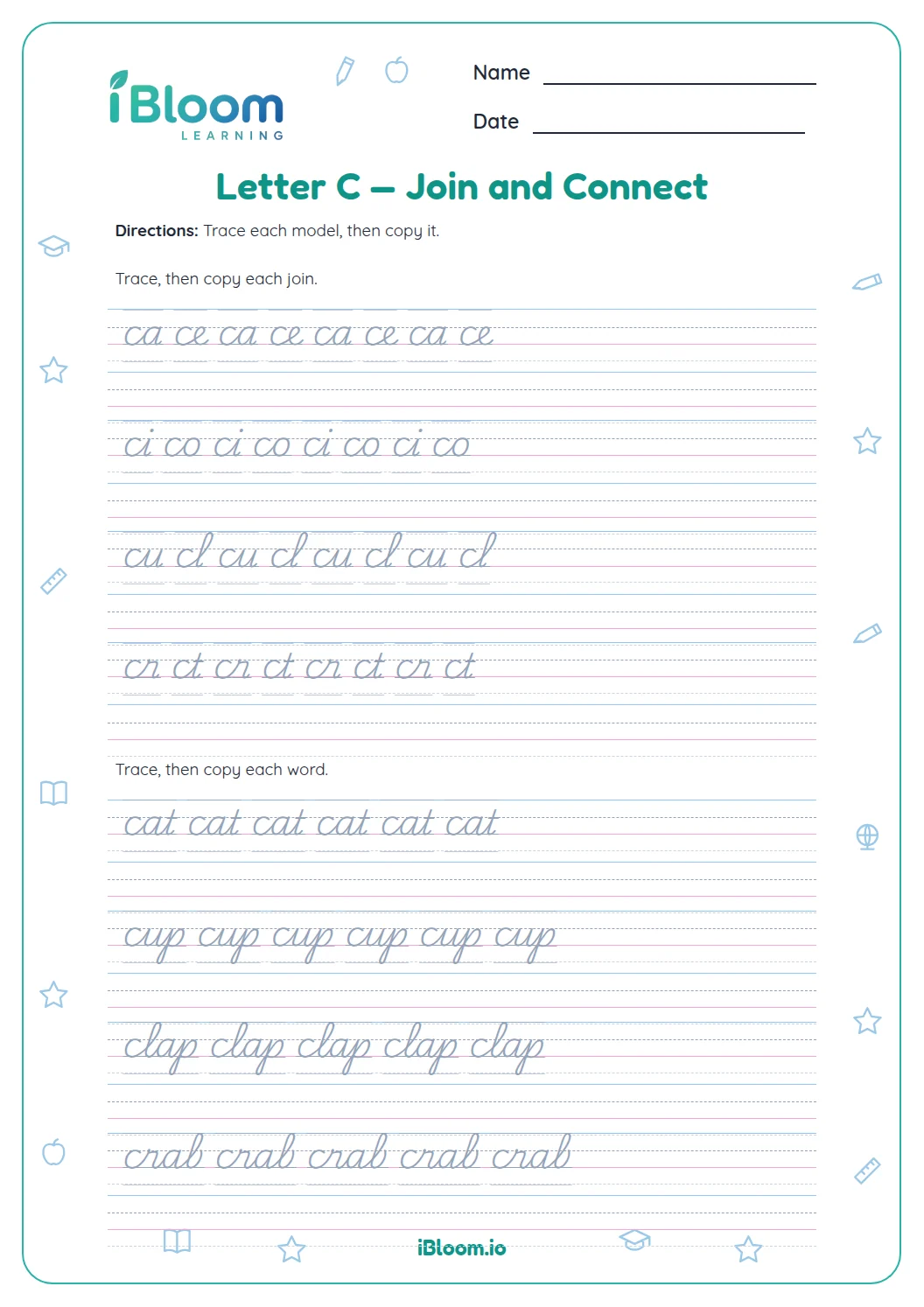
The word prompts include joins such as “zoo,” “zero,” “zigzag,” and “zoom.” Copy each word as a connected unit, with a small space before the next word.
How does cursive practice move into sentences?
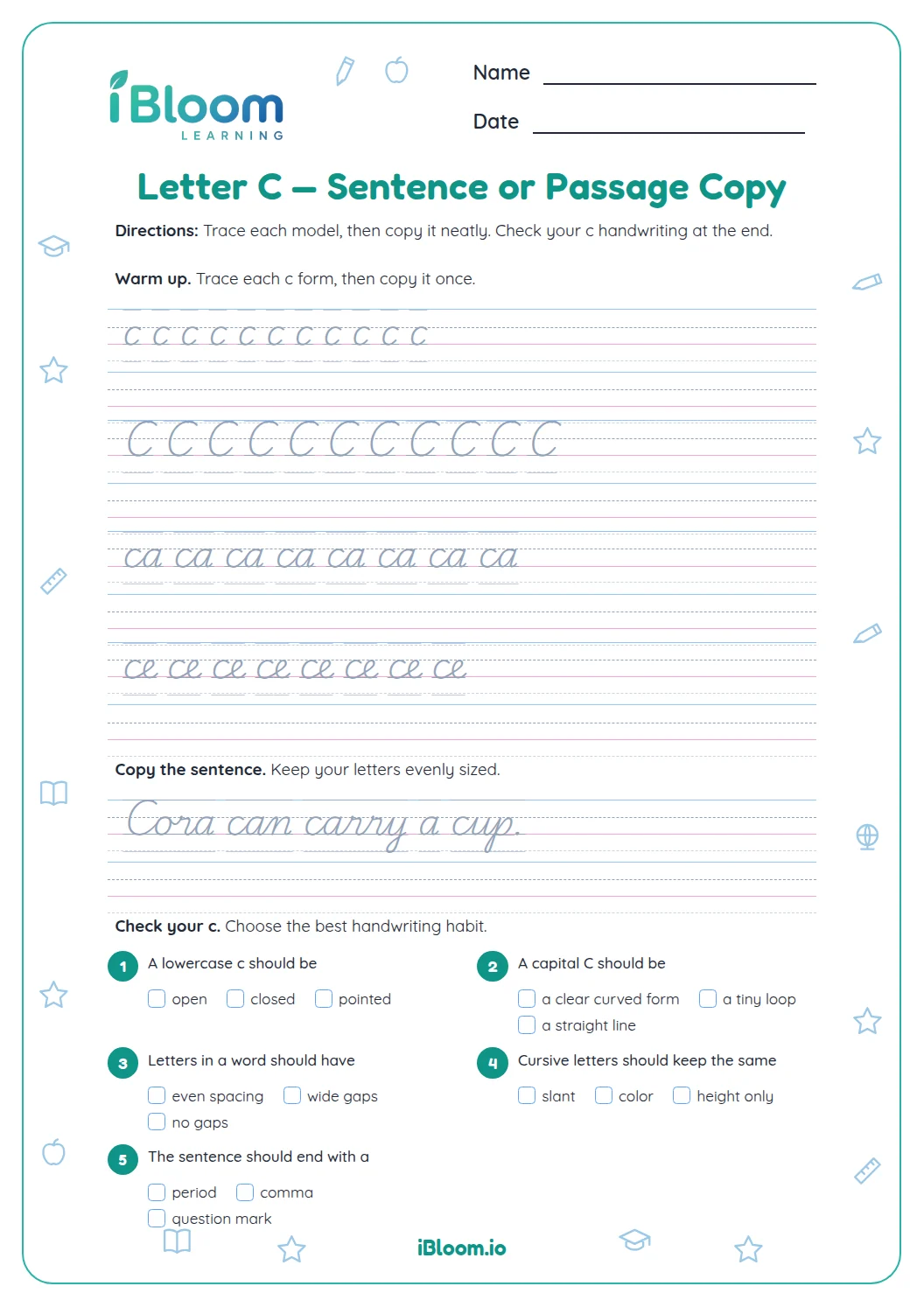
The final prompts use short sentences with capital Z and lowercase z. Learners can check letter size, spacing between words, and whether the writing stays on the baseline.
How to use this worksheet
- 1Start with lowercase z and capital Z, checking the size against the handwriting lines.
- 2Trace each gray model slowly before copying it.
- 3Keep letters connected within each word and leave a clear space between words.
- 4Read the copied sentence aloud and check that every word is legible.
Common mistakes and quick fixes
The mistake
Making lowercase z too large, like a capital.
The fix
Keep lowercase z near the height of the other lowercase letters in the word.
The mistake
Lifting the pencil between letters inside a word.
The fix
Follow the model’s connecting stroke and lift only between words when needed.
The mistake
Letting the copy drift above or below the baseline.
The fix
Use the handwriting lines to check where each letter begins and rests.
What to practice next
Questions parents and teachers ask
Which letters does the worksheet include?
It begins with lowercase z and capital Z, then moves to words and sentences containing those forms. The six prompts include two letter forms, six short words, and two sentences. The answer key repeats the text to copy.
Should a learner trace every model first?
Yes. Each cursive prompt provides a gray model to trace and a lined row for copying. Trace slowly enough to follow the letter shape, then copy the same text while keeping letters connected within each word. Pause between prompts to relax the hand and compare the copy with the model.
How should I check the copied words?
Compare the copy with the model for recognizable z forms, connected letters, spaces between words, and placement on the baseline. Handwriting can vary; the main check is that the intended letters remain clear and readable. Ask the learner to identify one join that feels smooth and one letter to practice again.
Can this replace basic cursive instruction?
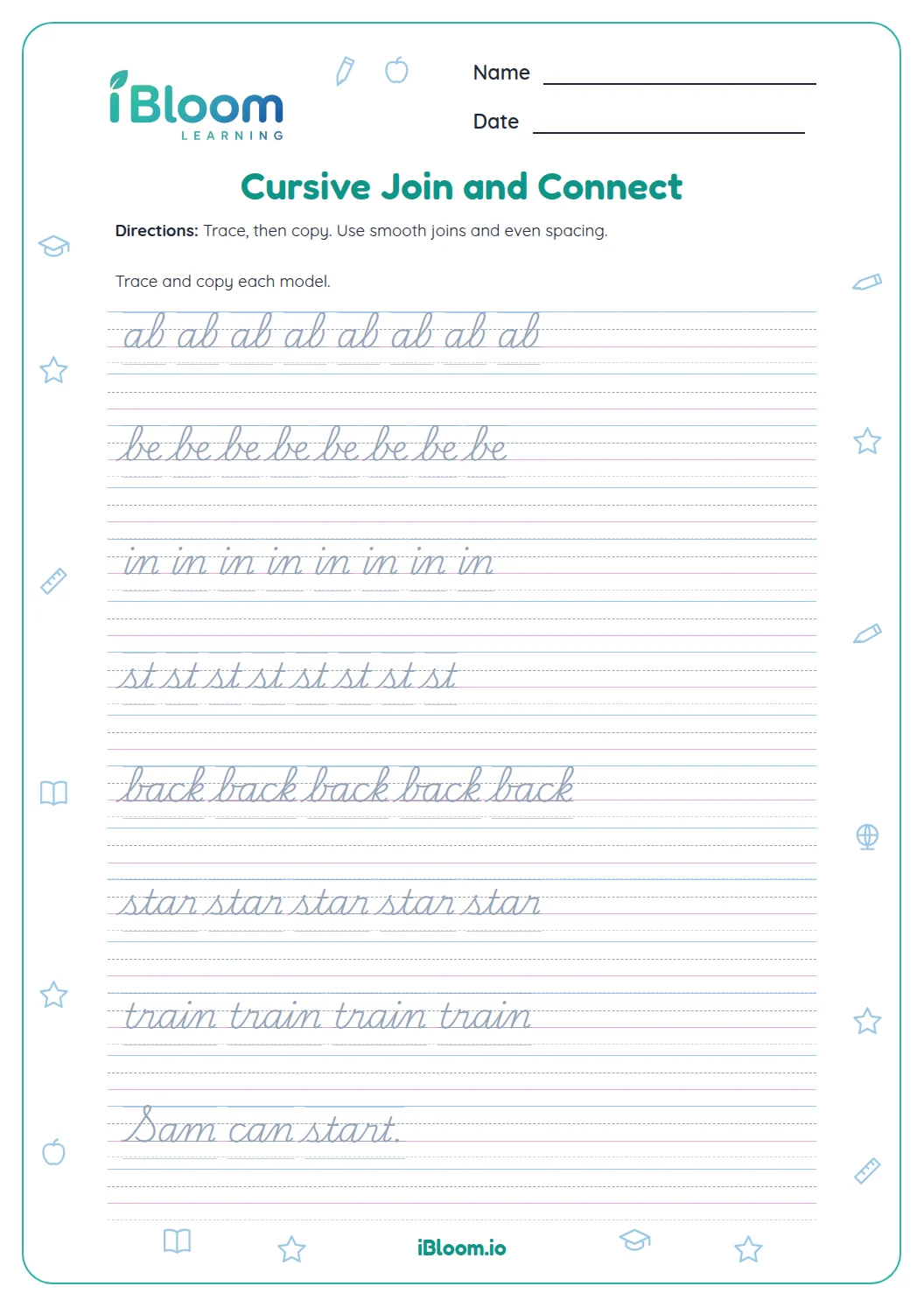
This page gives focused practice with Z forms and joins after a learner has met cursive letter formation. If the basic strokes are still unfamiliar, use the linked Cursive Letter Guide first, then return to the words and sentences here.
What comes after this page?
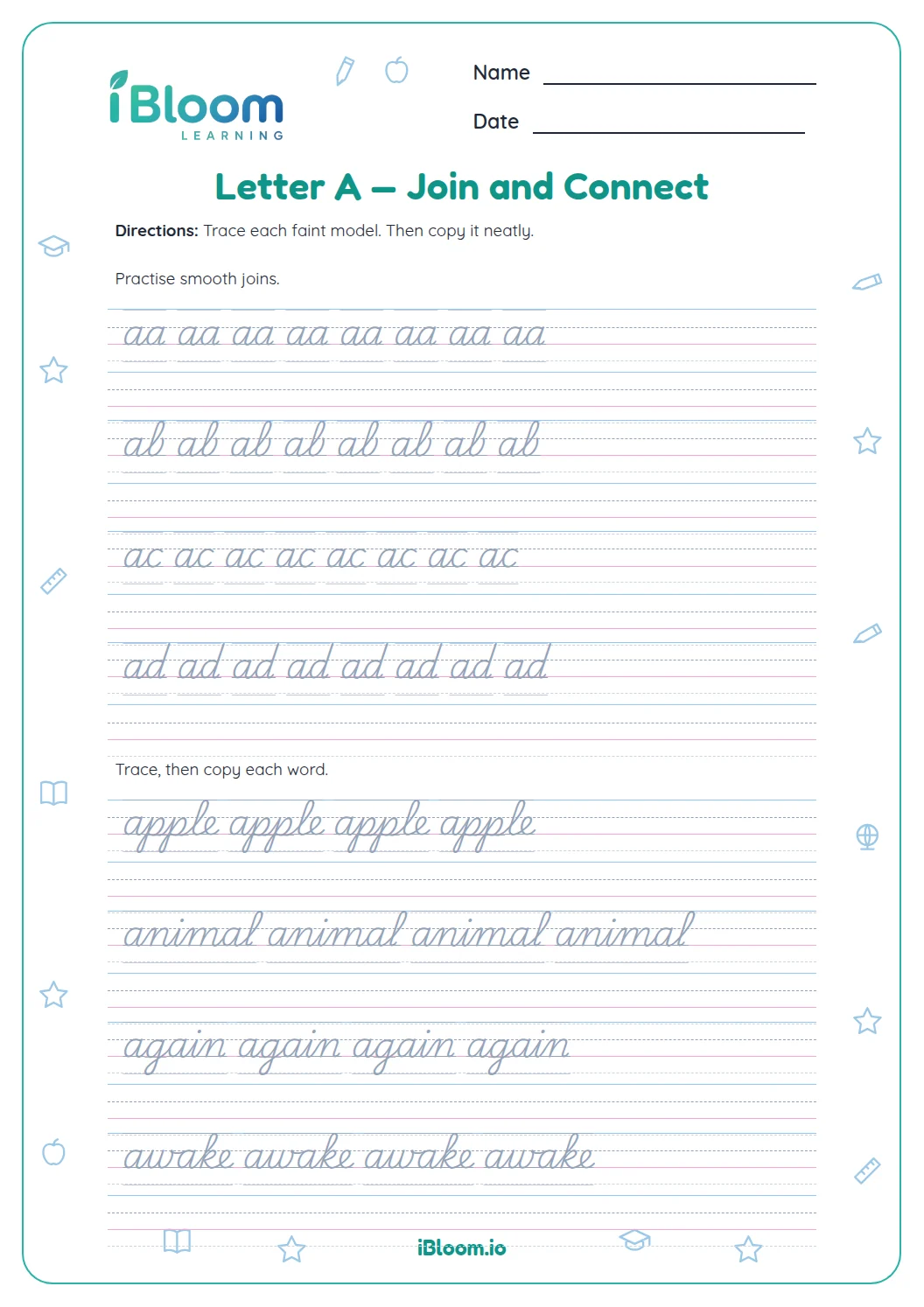
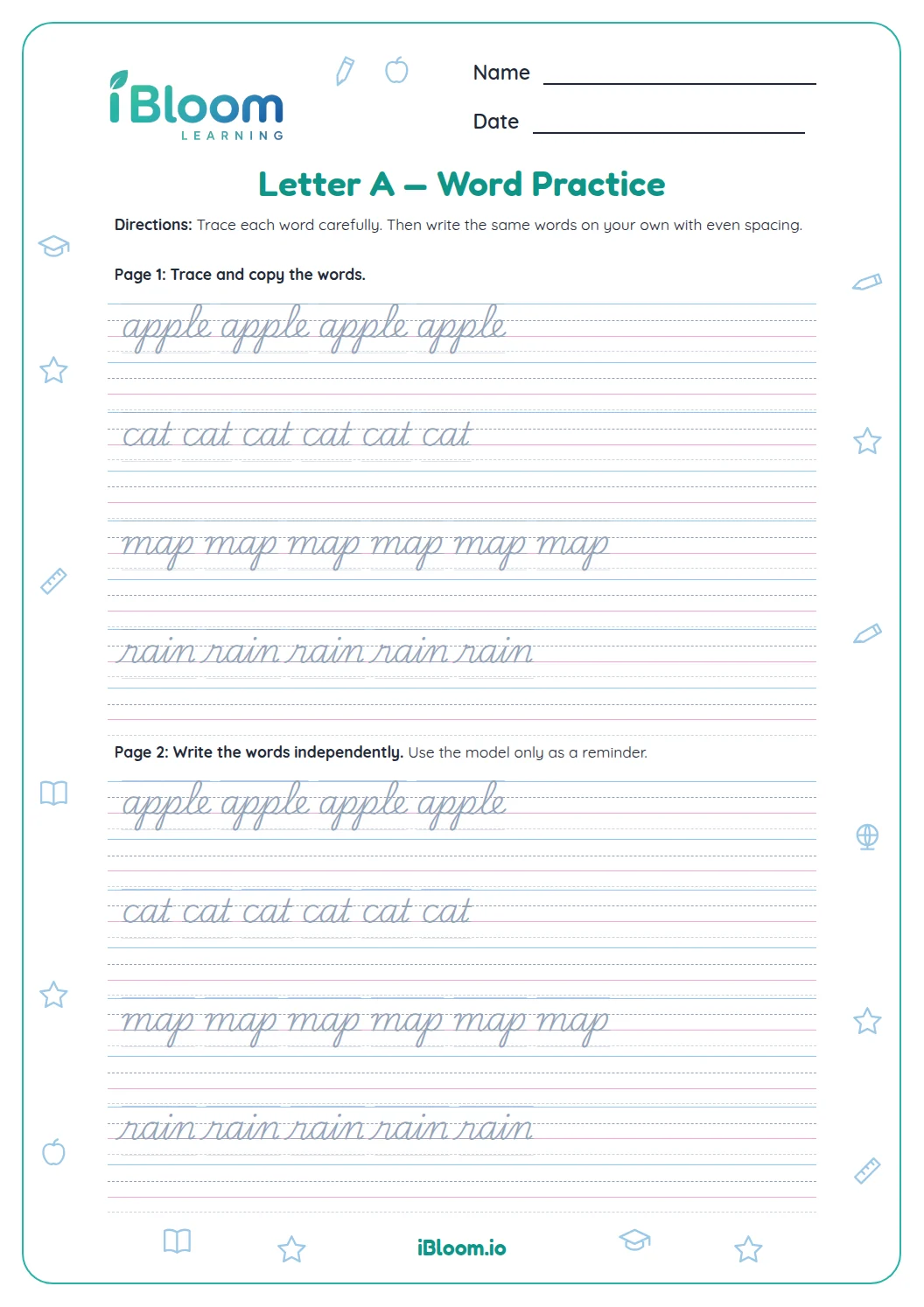
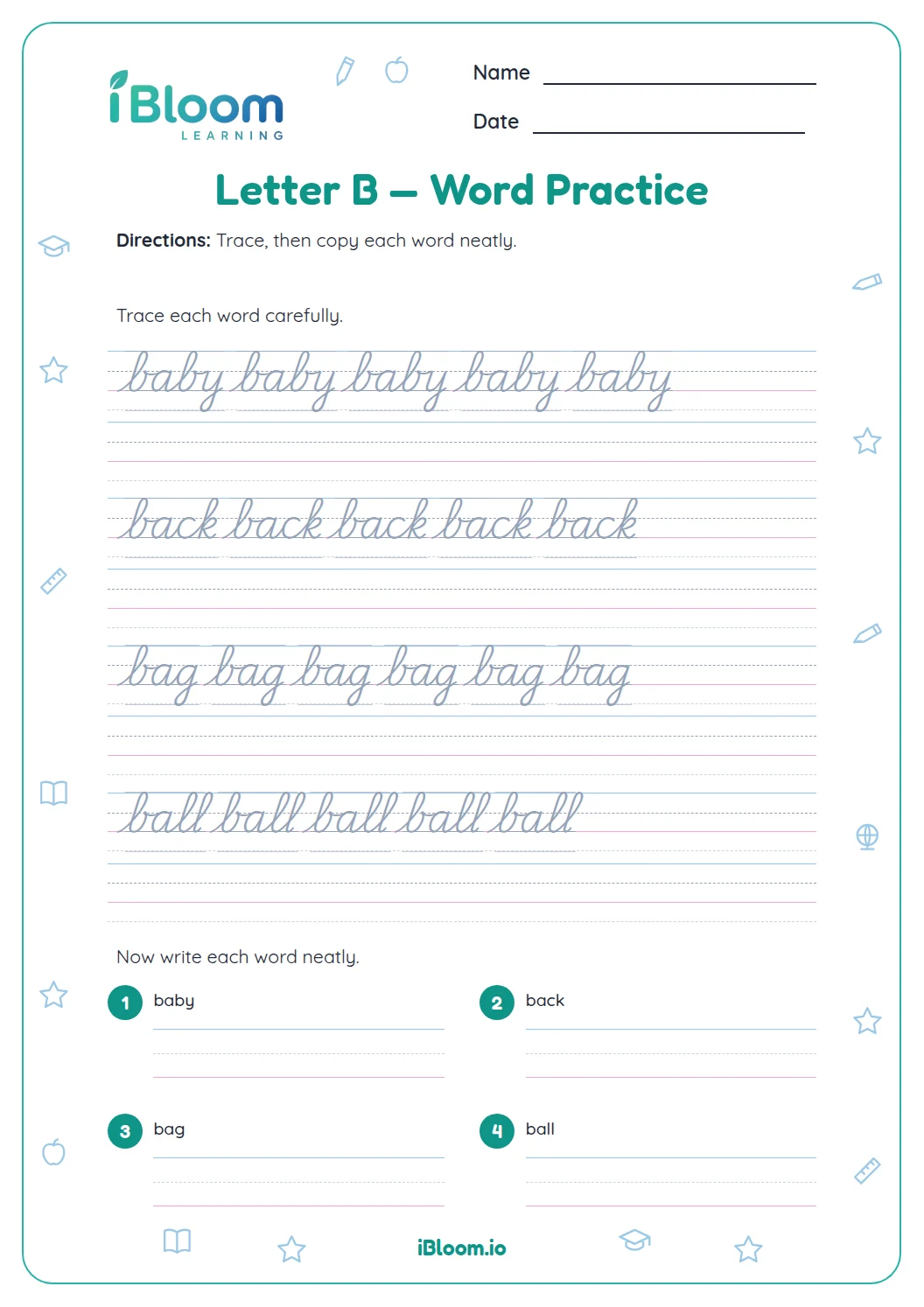
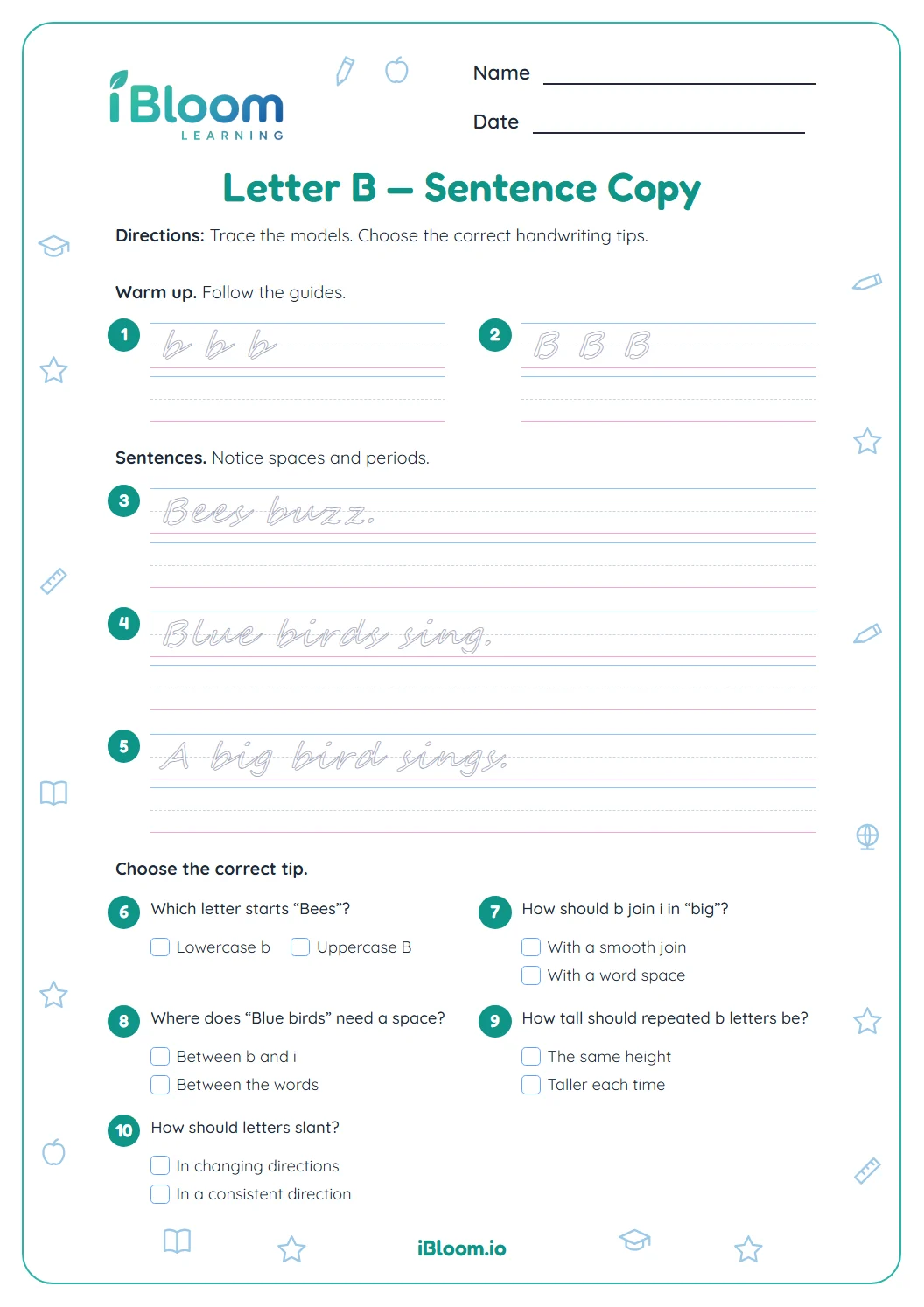
Continue through other cursive letters, then practice joining familiar letters in longer words. The linked Letter A and Letter B pages offer a next trace-and-copy routine with different letter shapes. Once those forms feel familiar, copy a short sentence using several practiced letters.