

About this worksheet
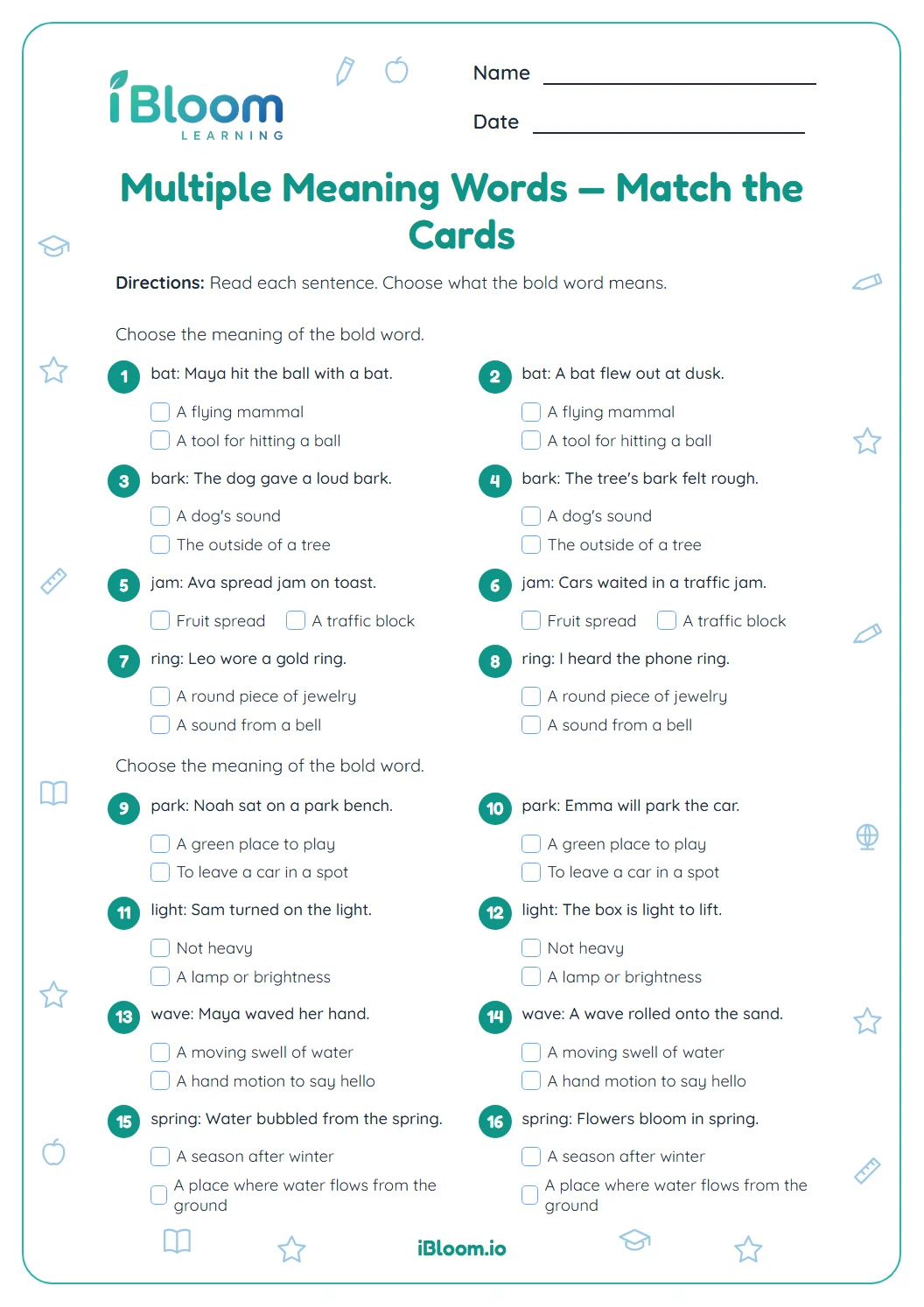
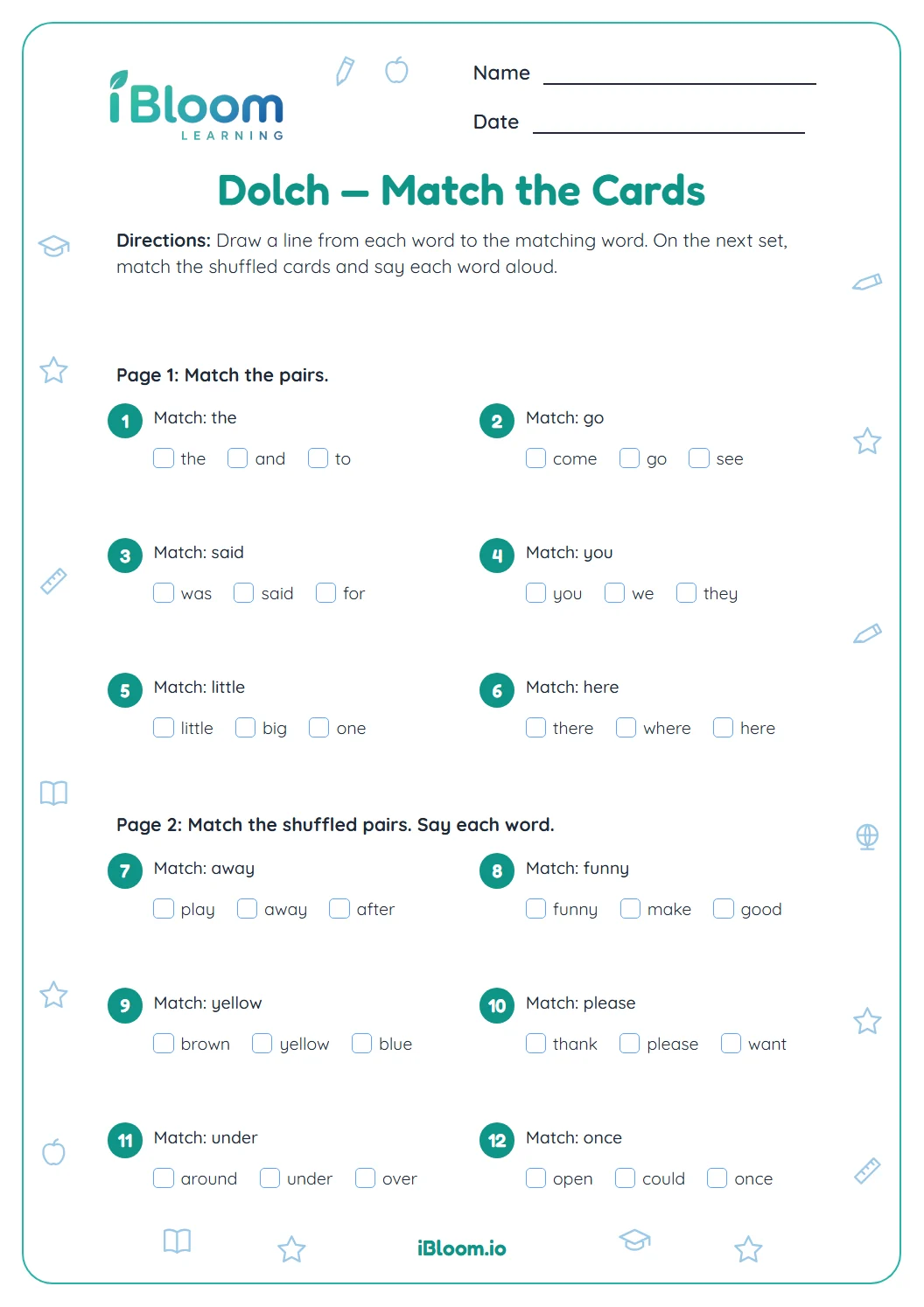
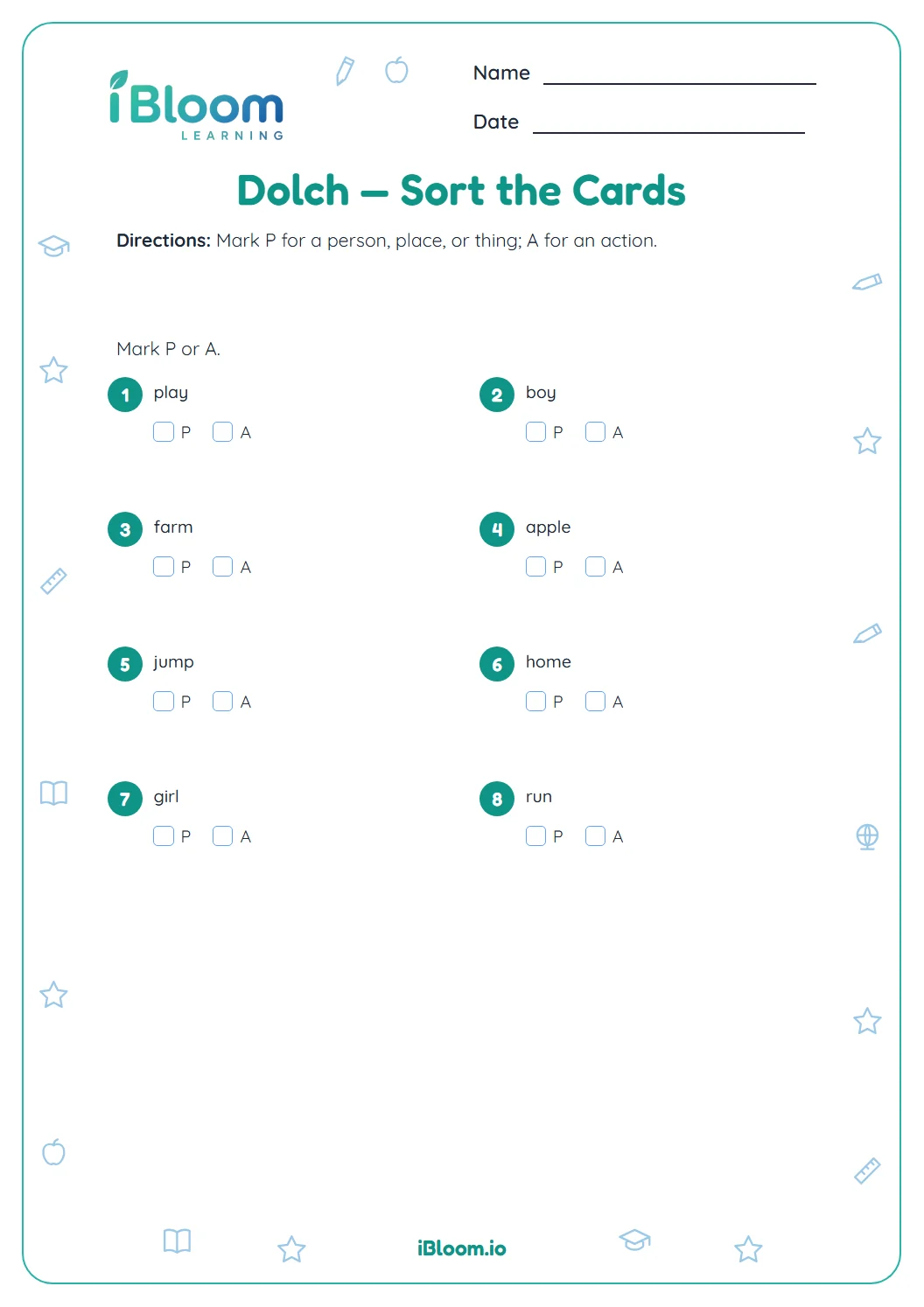
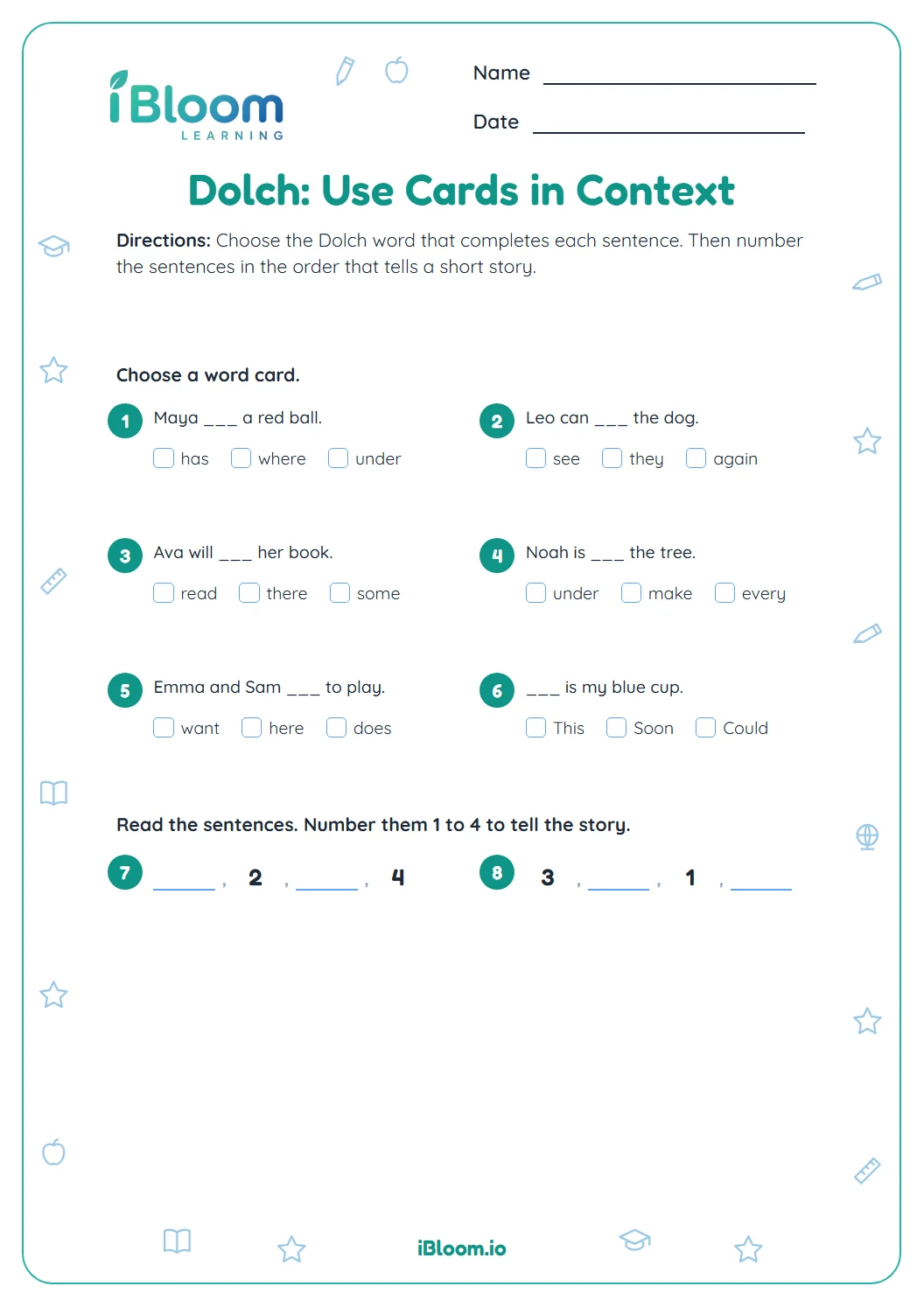
This Grades 2–3 printable presents 20 short sentence cards. Learners use nearby words to choose the meaning of a multiple-meaning word, compare contrasting uses such as animal bat and sports bat, and write two clues for “jam.” The sheet fills three worksheet pages, followed by three answer-key pages.
How does a sentence show which meaning fits?
In “The duck can swim,” the action “swim” points to an animal. In “Please wave to Grandma,” the person’s name points to a greeting made with a hand.
How can two cards show different meanings?
The bat cards contrast an animal flying at dusk with a bat used to hit a ball. Compare the sentence details rather than choosing from memory.
What should the final jam response show?
It should use “jam” in two different senses, such as fruit spread and a traffic delay. The context in each clue should make the intended meaning clear.
How to work through the page
- 1Read each part’s direction before starting its questions.
- 2Underline or point to the word, number, or detail that supports an answer.
- 3Work through the questions in order and pause to explain a tricky choice.
- 4Use the separate answer key to check responses and revisit any missed clue.
Common mistakes and quick fixes
The mistake
Choosing the most familiar meaning automatically.
The fix
Read all the sentence clues before deciding.
The mistake
Using a meaning that could fit but ignores a clue.
The fix
Check that the choice fits every important word in the sentence.
The mistake
Writing two clues with the same sense.
The fix
Use the target word in two different situations and make the contexts distinct.
What to practice next
Questions parents and teachers ask
How do context clues help with multiple-meaning words?
Read the full sentence and use its other words to decide which meaning fits. The worksheet includes paired meanings for several words and a short written application about “jam.” The worksheet’s examples and answer key let learners check the reasoning as they work.
How does a sentence show which meaning fits?
In “The duck can swim,” the action “swim” points to an animal. In “Please wave to Grandma,” the person’s name points to a greeting made with a hand. Rereading the complete example helps keep the answer tied to the evidence on the page.
How can two cards show different meanings?
The bat cards contrast an animal flying at dusk with a bat used to hit a ball. Compare the sentence details rather than choosing from memory. Learners can point to the exact clue or step that supports their response. Every card includes a sentence clue so the meaning can be worked out from context.
What should the final jam response show?
It should use “jam” in two different senses, such as fruit spread and a traffic delay. The context in each clue should make the intended meaning clear. The answer key provides a concise model for checking this kind of response.
How many pages and questions are included?
There are 20 questions across three worksheet pages, followed by a three-page answer key. Read the directions at the start of each part, complete the items in order, and compare each response with the matching answer. Written responses include a model answer for checking.