



About this worksheet
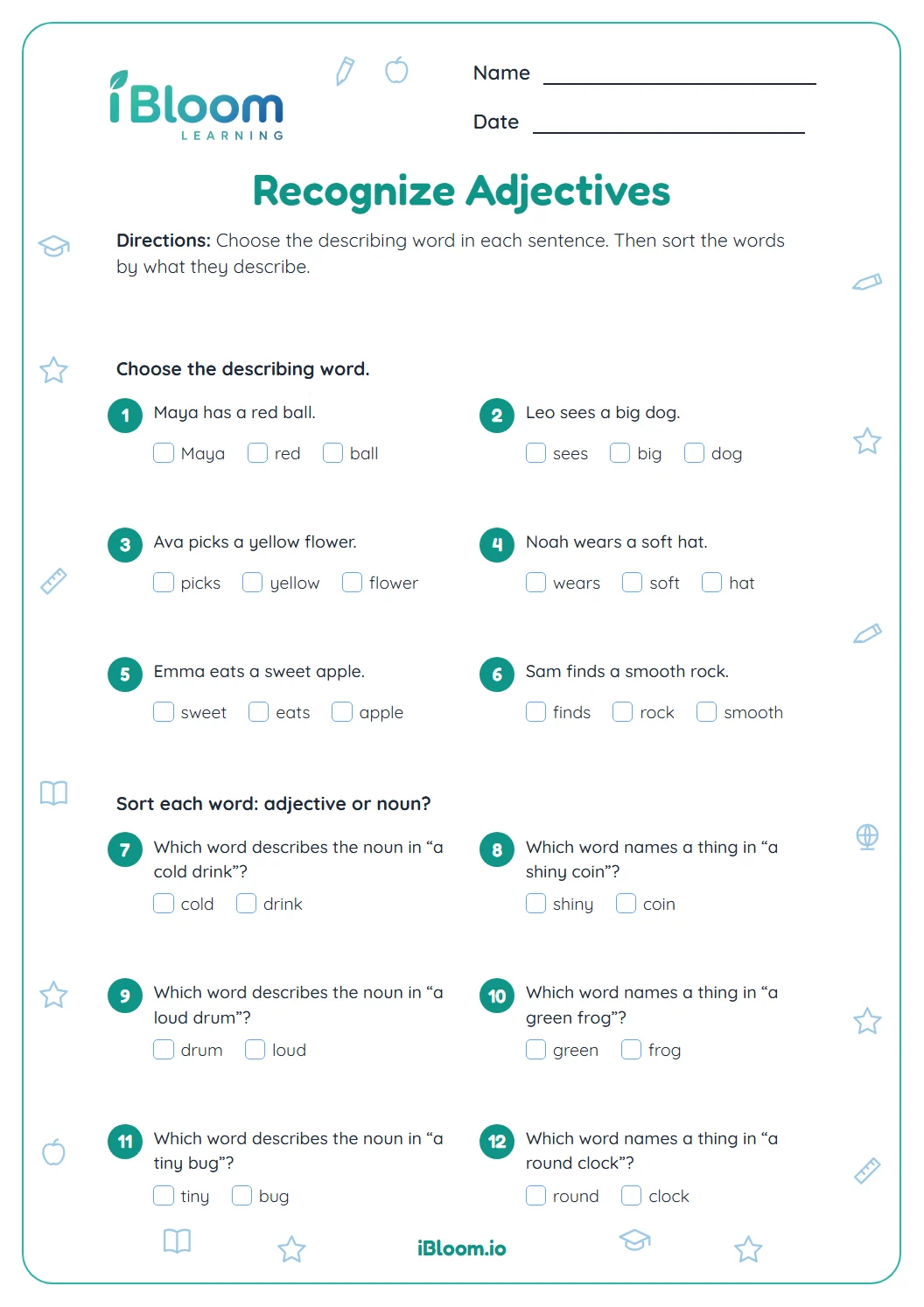
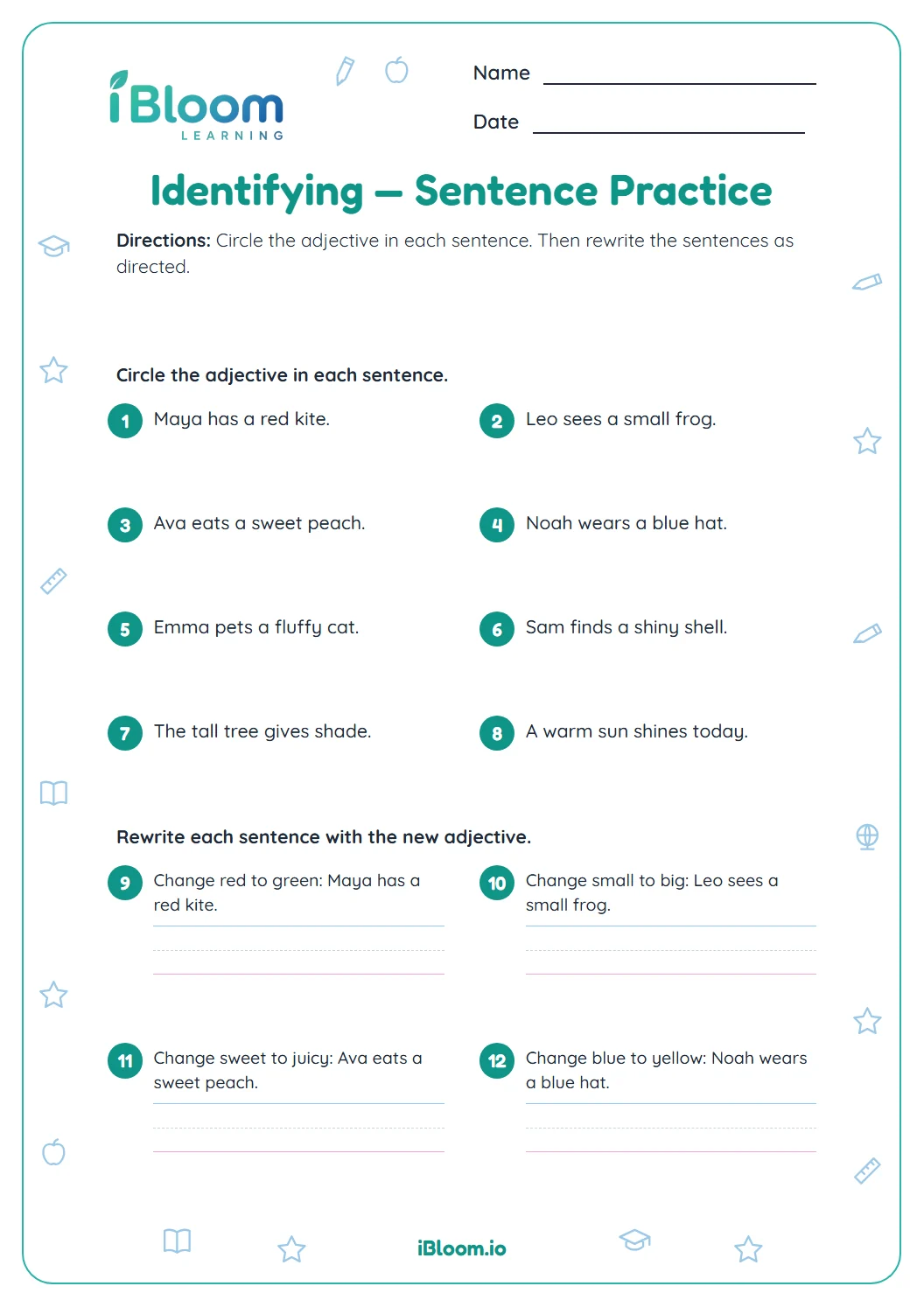
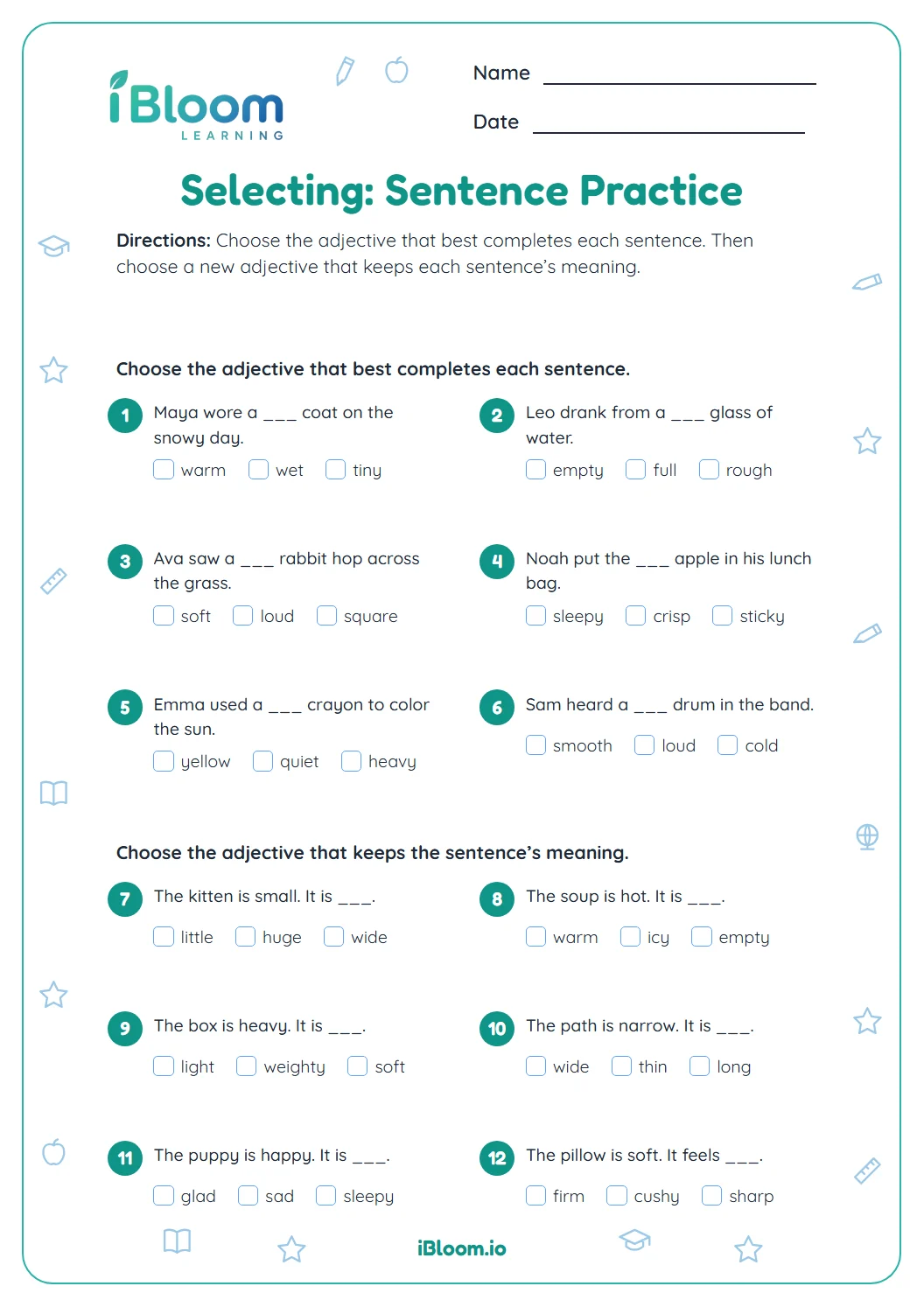
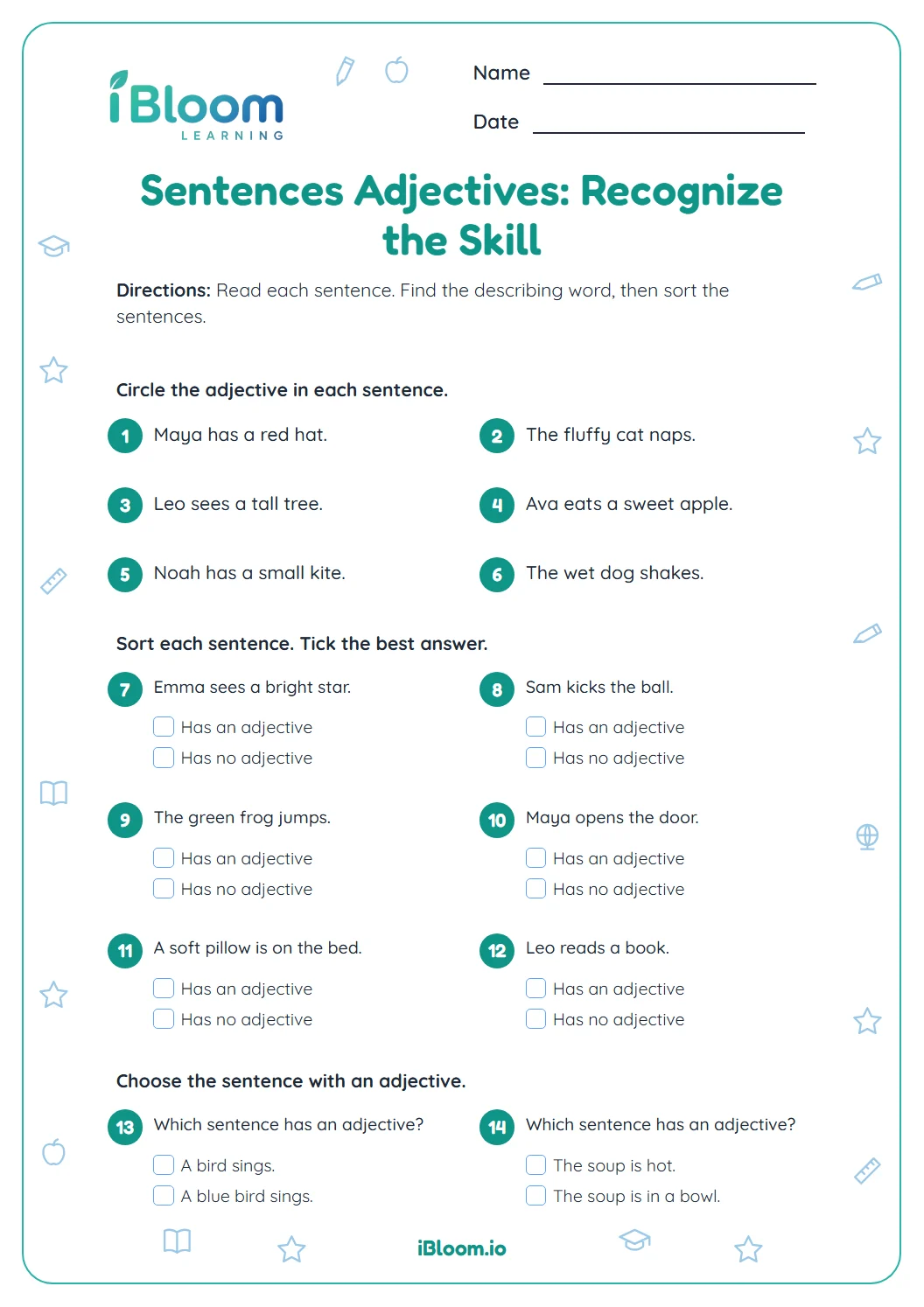
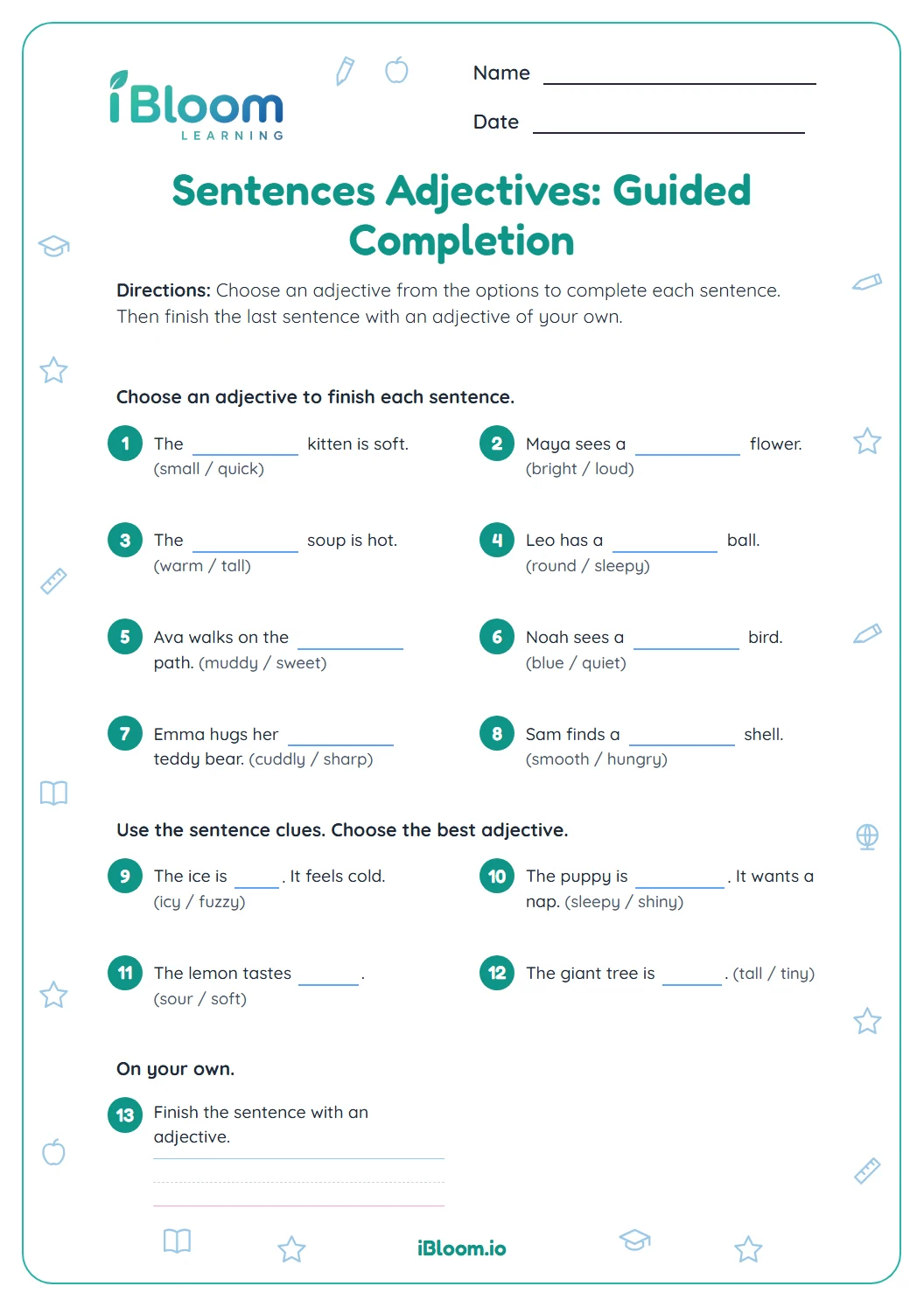
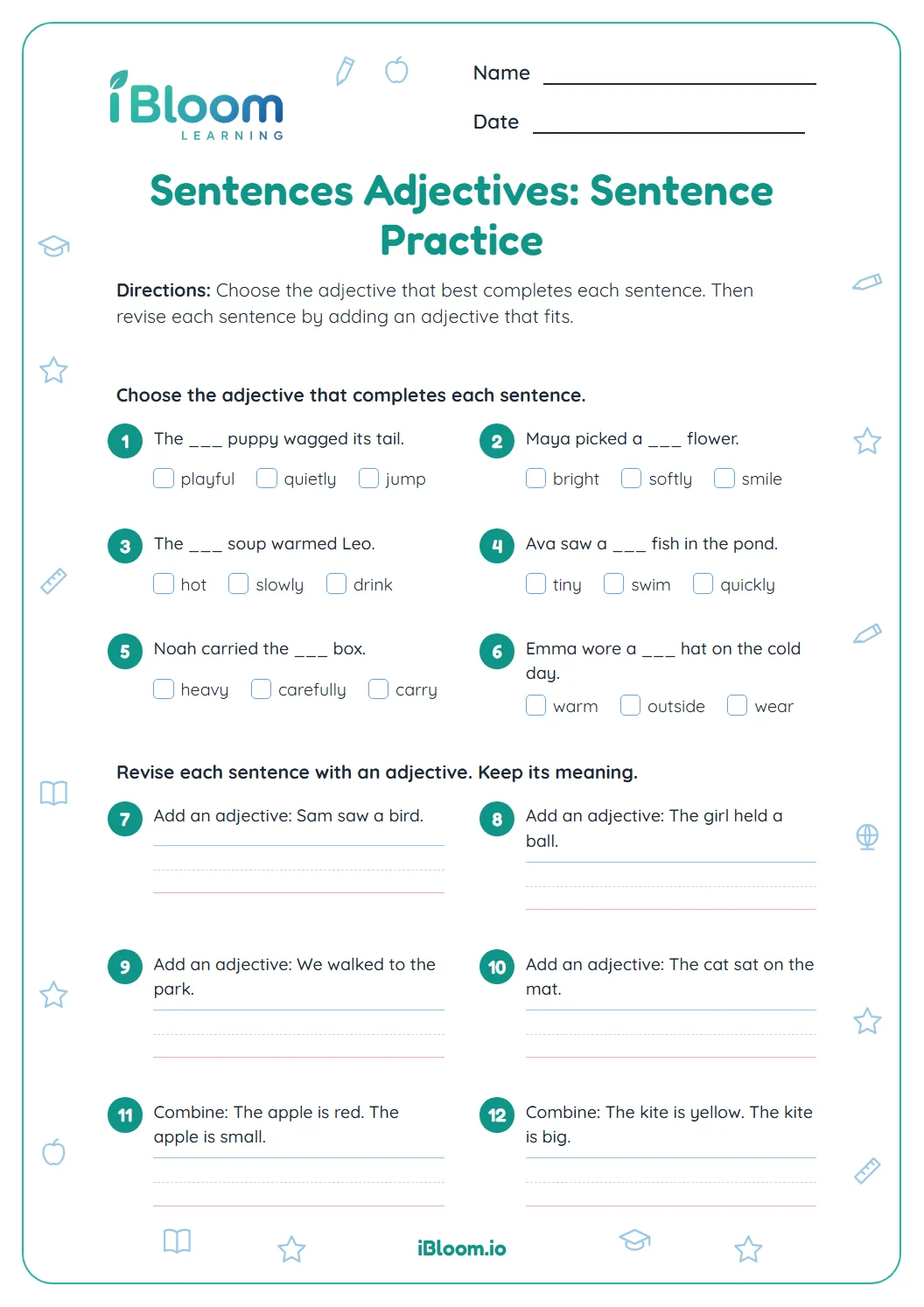
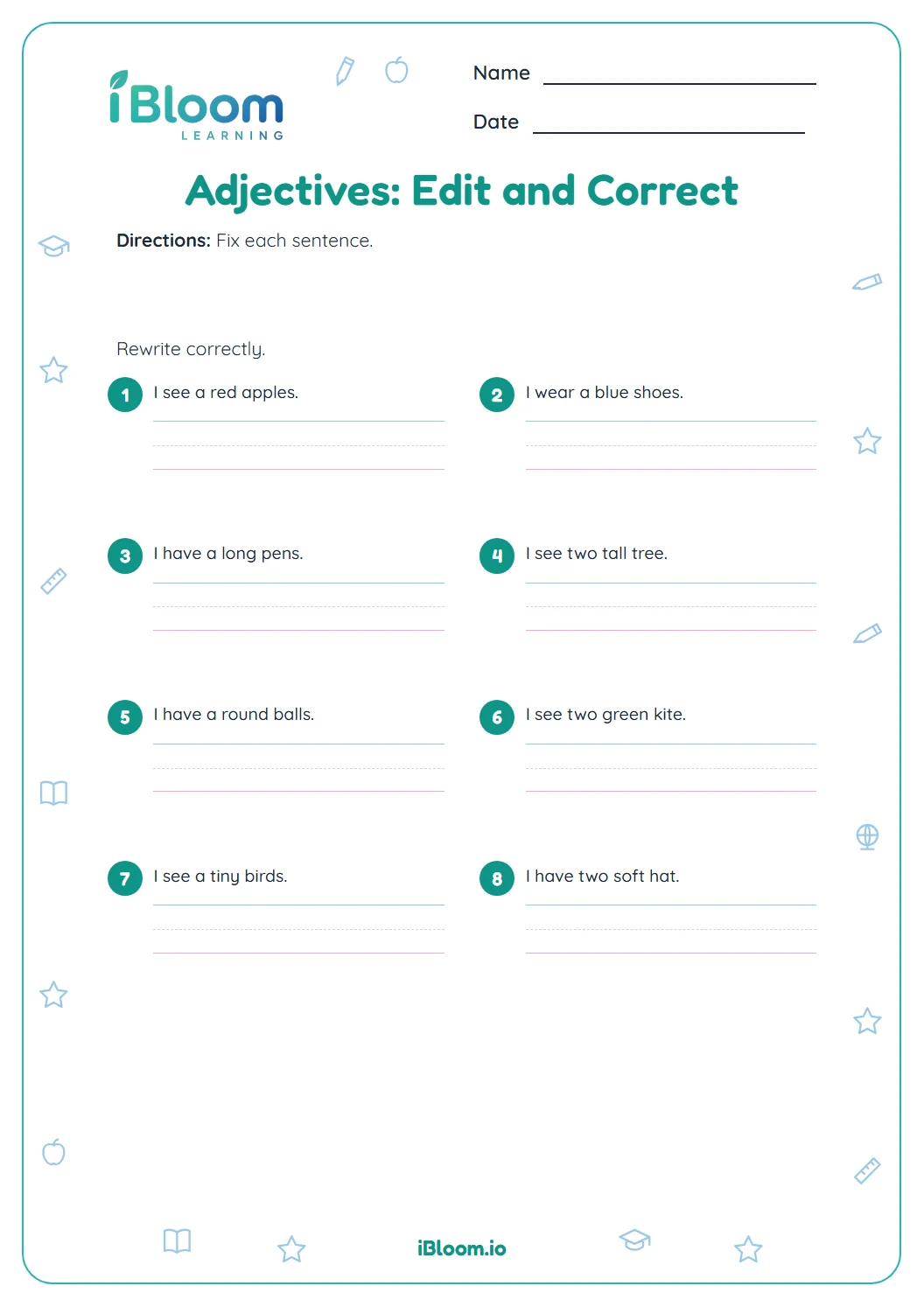
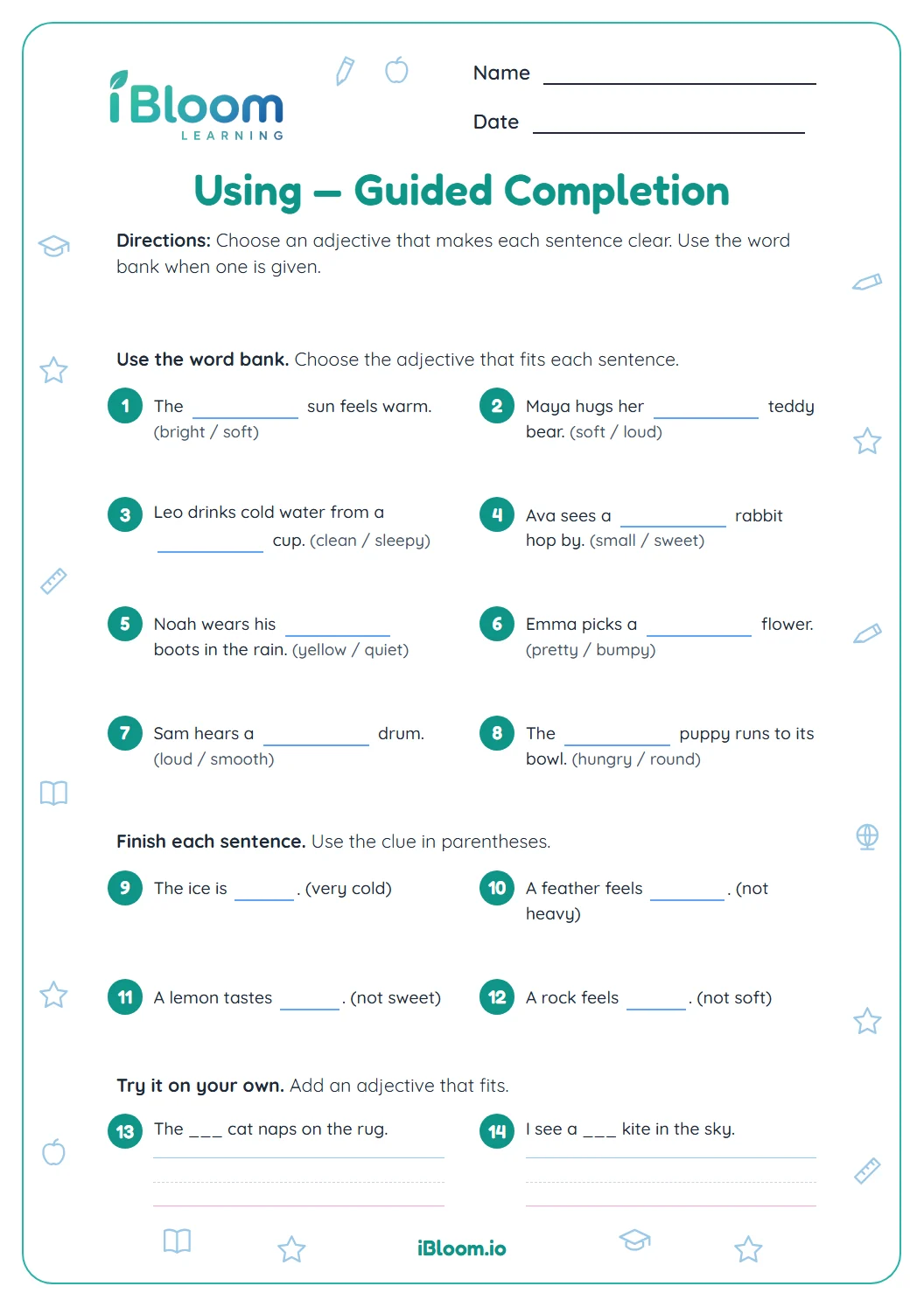
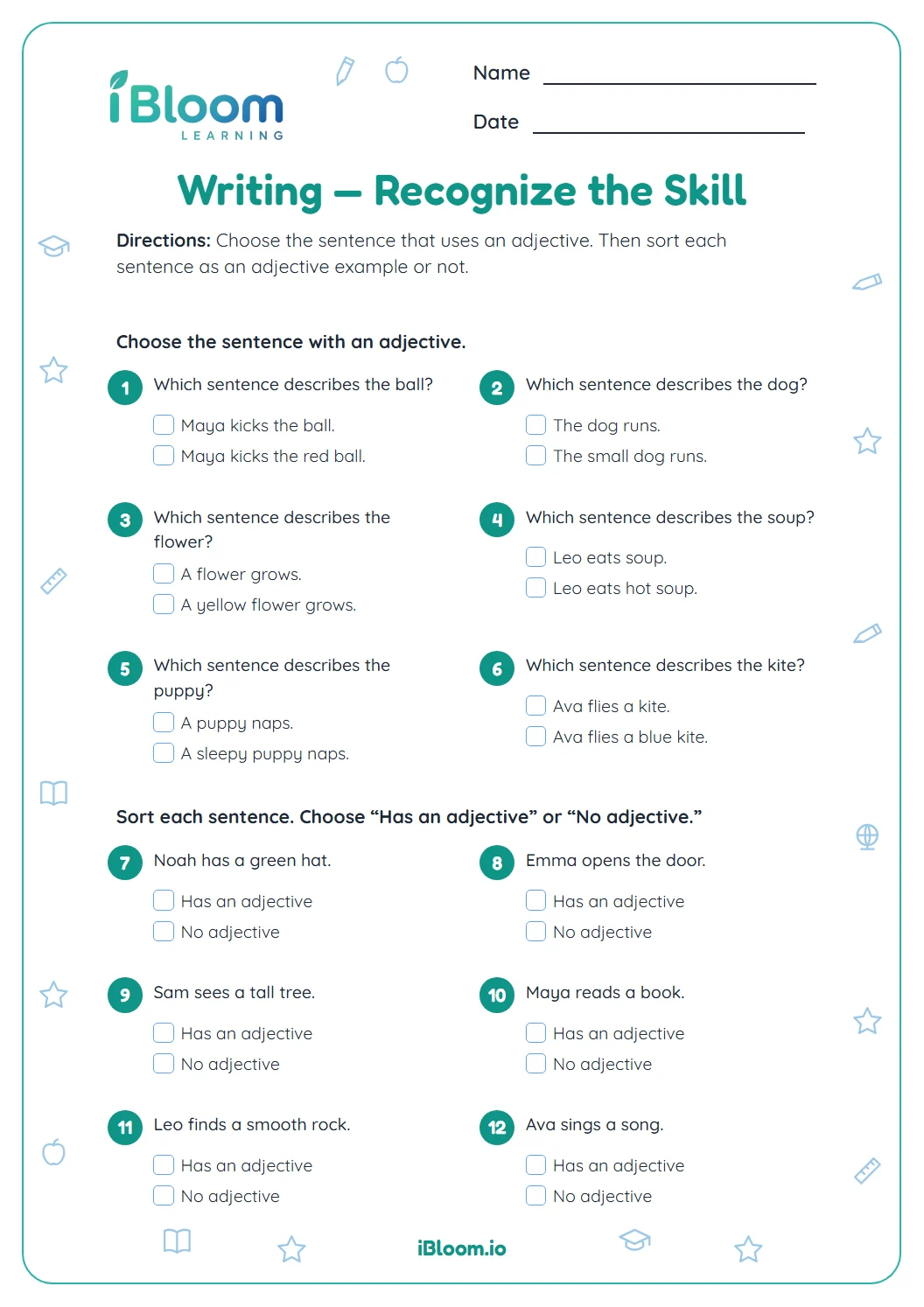
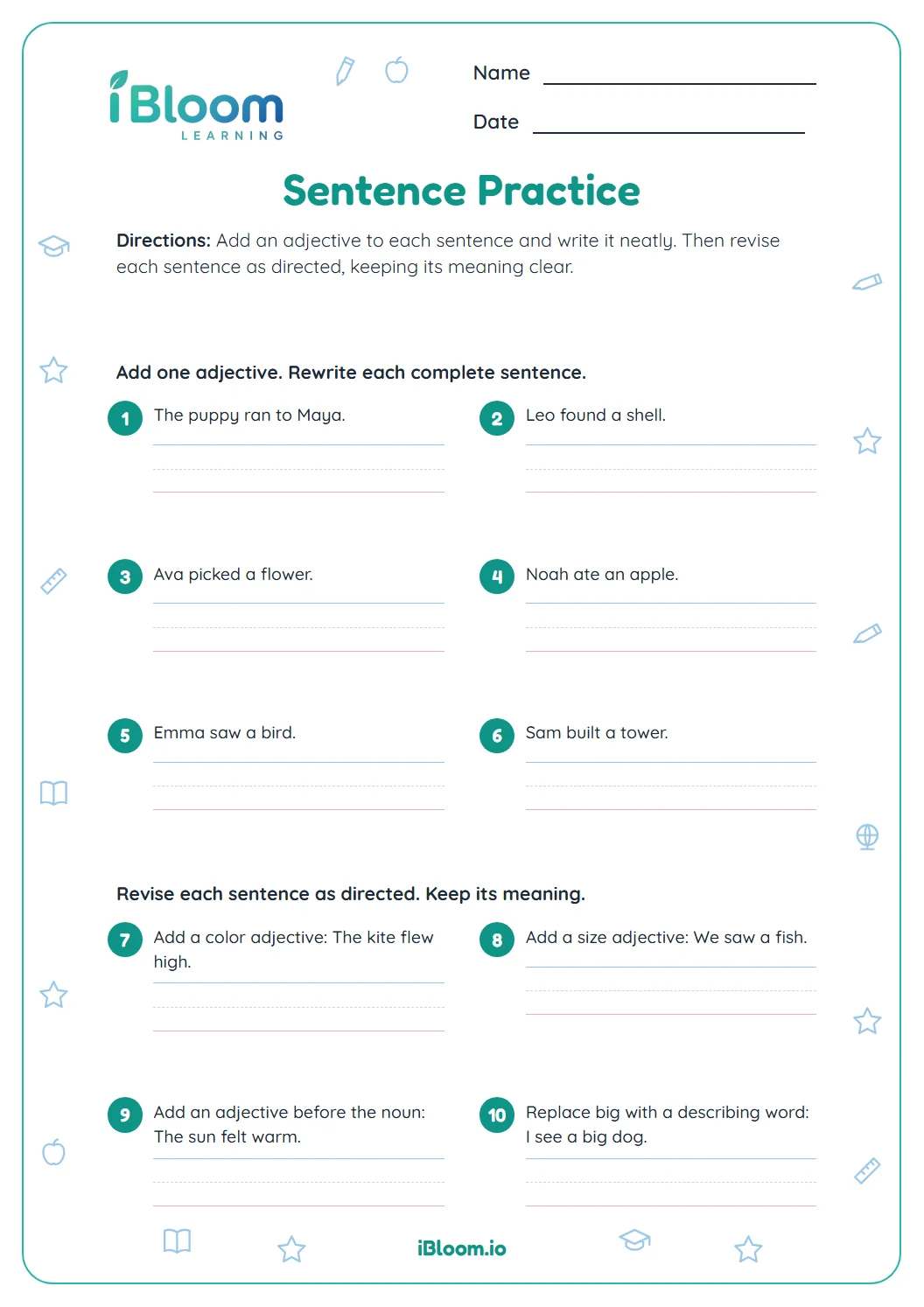
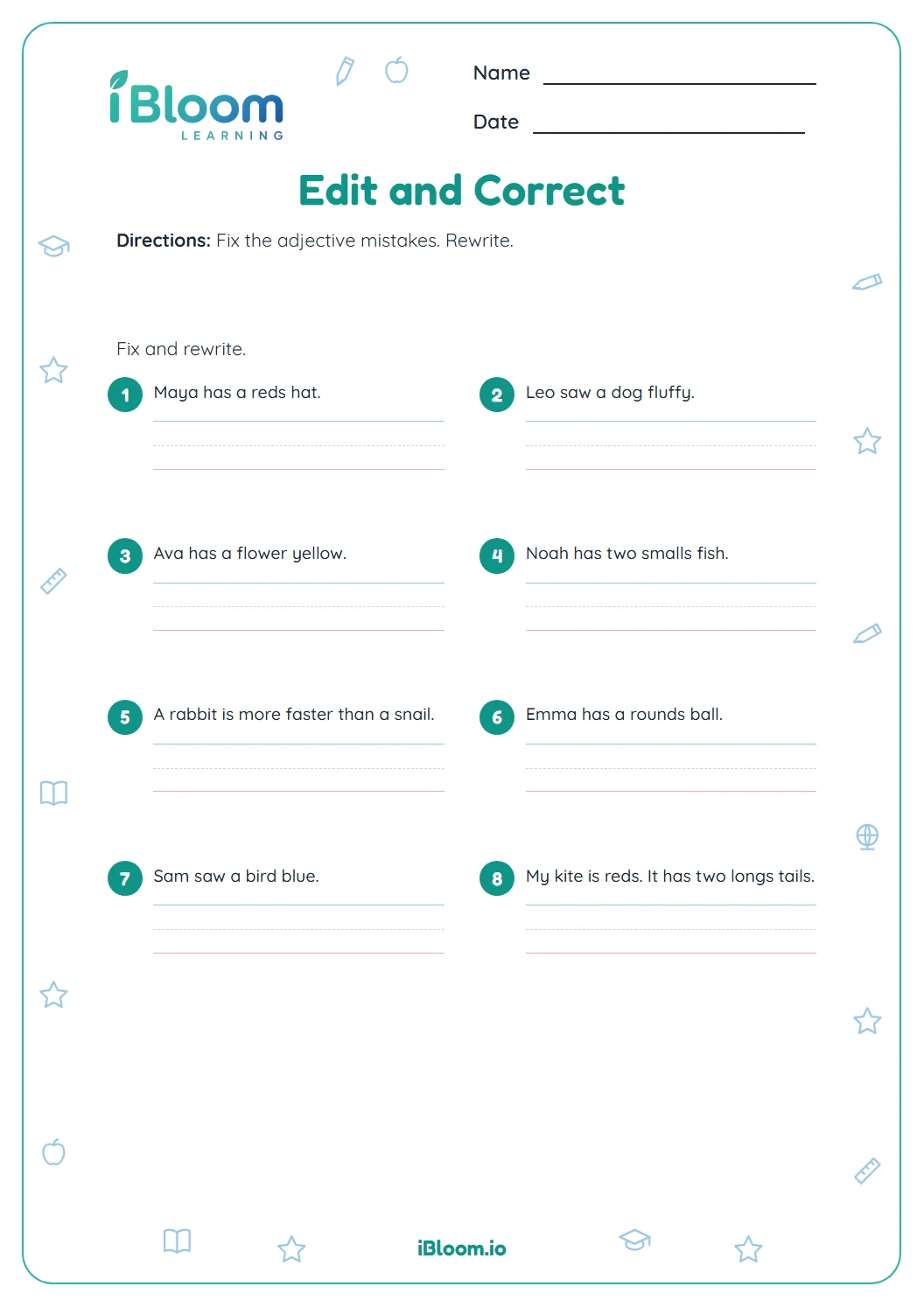
This free Grade 1 worksheet introduces adjectives as words that describe nouns. Children choose a describing word to complete each sentence, circle adjectives in complete sentences, and distinguish adjectives from action words. Familiar nouns such as a ball, cat, kite, and apple keep attention on the word that tells what something is like. The answer key identifies each target adjective.
Aligned to L.1.1.f
How to use this worksheet
- 1Read the sentence and find the naming word, or noun.
- 2Ask which word tells what that person, place, animal, or thing is like.
- 3Choose a describing word rather than an action word.
- 4In a full sentence, circle each adjective that describes a noun.
Common mistakes and quick fixes
The mistake
Do not choose an action word such as “jump” when the sentence needs a describing word.
The fix
The mistake
A sentence may have two adjectives, as in “tall tree” and “green leaves.”
The fix
The mistake
Check that the adjective makes sense with the noun it describes.
The fix
Choose adjectives that describe nouns in short sentences.
On this sheet:
Show the official wordingHide the official wording
Use frequently occurring adjectives.
What to practice next
Make more practice
Further reading
Questions parents and teachers ask
What is an adjective?
An adjective describes a noun. In “The tall tree has green leaves,” tall describes the tree and green describes the leaves. The worksheet asks children to identify describing words and tell them apart from actions such as “fly” or “swim.”
Can a sentence have more than one adjective?
Yes. Question 8 includes two: “tall” describes the tree and “green” describes its leaves. Ask your child to point from each describing word to the noun it tells about. This makes the word relationship clear. Ask which noun each word describes.
How is an adjective different from an action word?
An adjective tells what a noun is like, such as “smooth” or “bright.” An action word tells what someone or something does, such as “walk” or “shine.” In the multiple-choice questions, children select the adjective that fits the noun.
Should children circle every describing word?
For the circle questions, yes: circle each adjective in the sentence. Some sentences have one adjective and one includes two. The answer key lists the correct word or words so children can check each one. Check the whole sentence for every describing word.
How can I help if my child is unsure?
Read the sentence aloud and ask, “Which word tells more about the noun?” Then compare the choices: does the word describe the object, or tell what someone does? For example, a ball can be big, while “run” is an action.