


About this worksheet
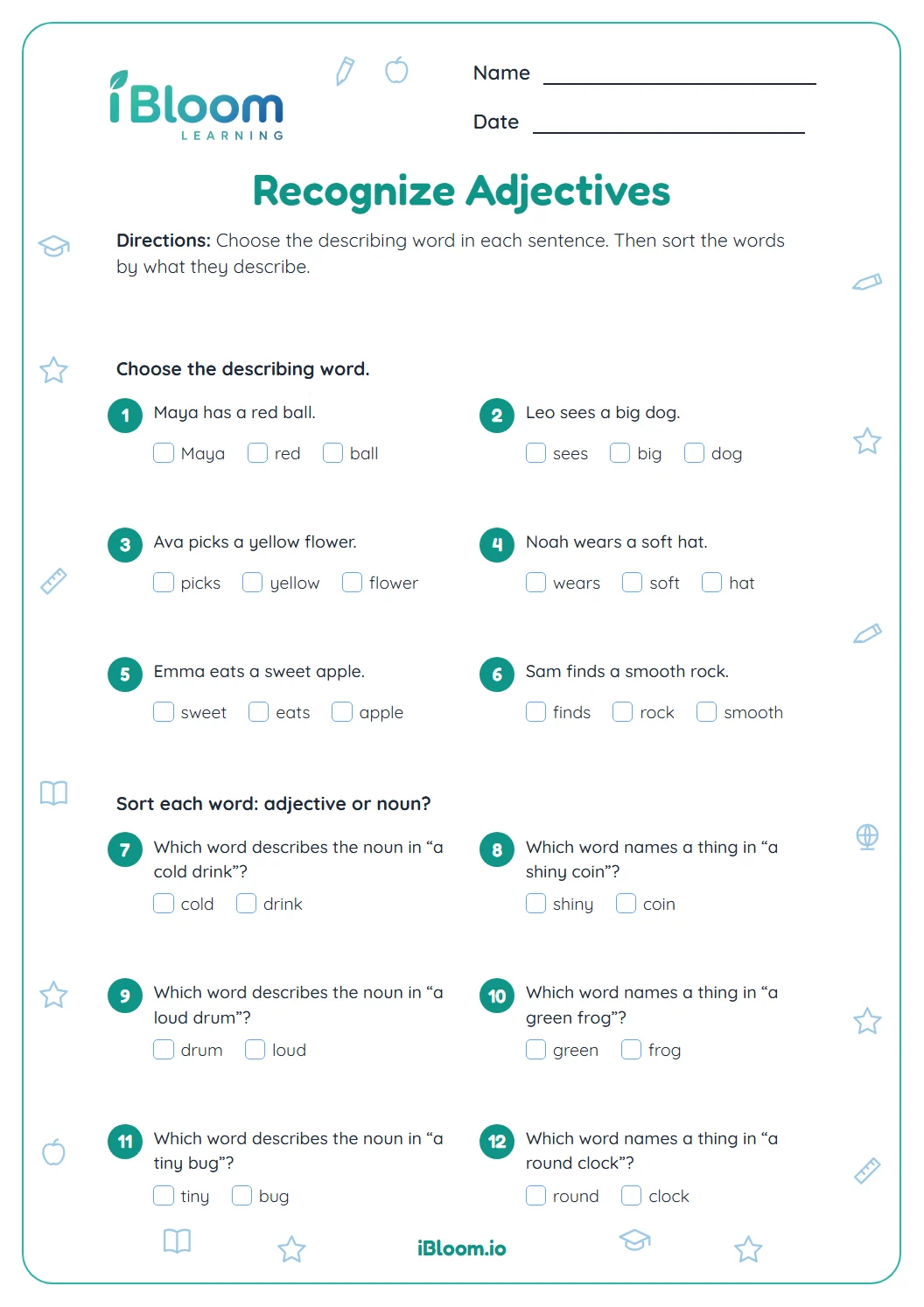
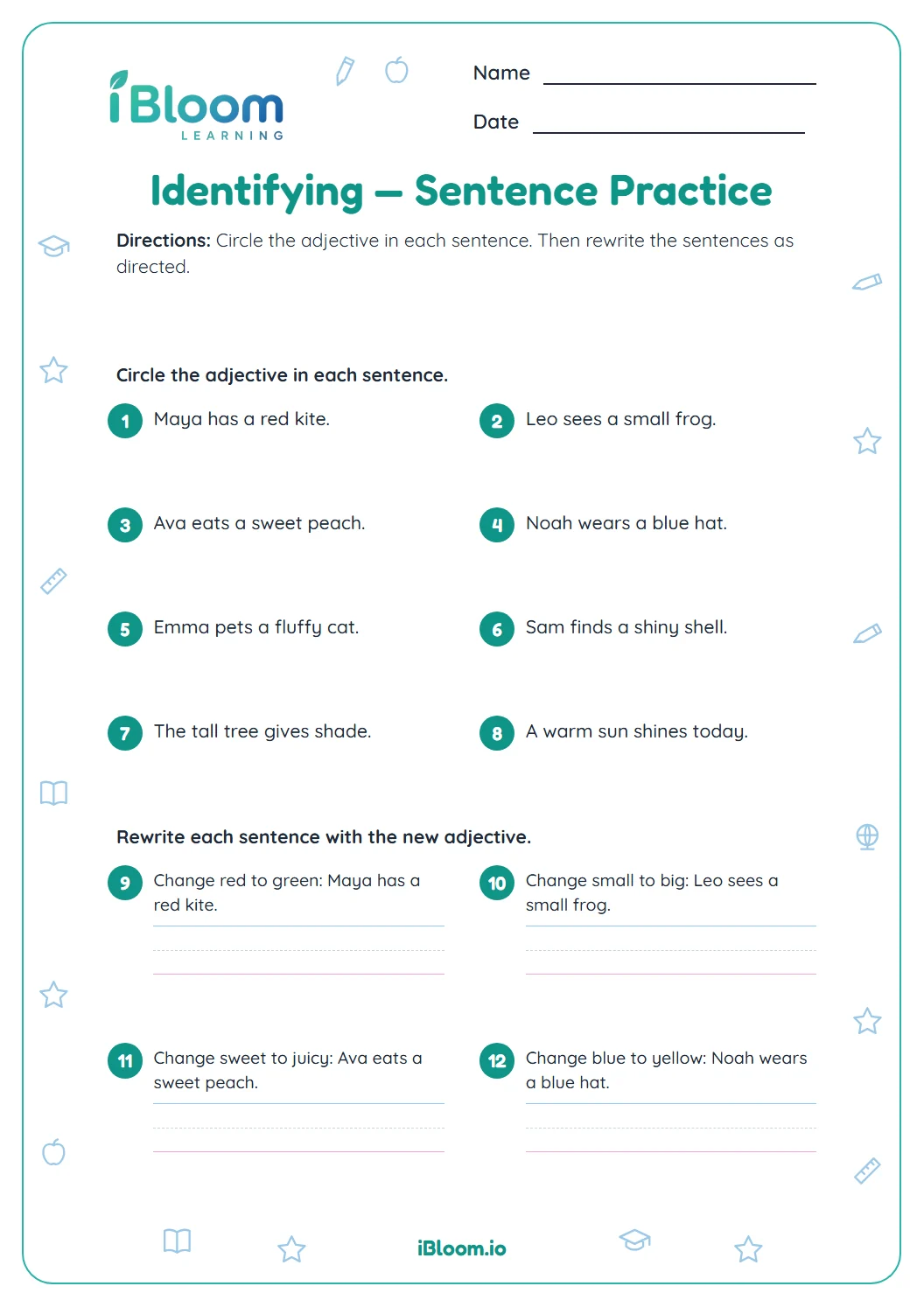
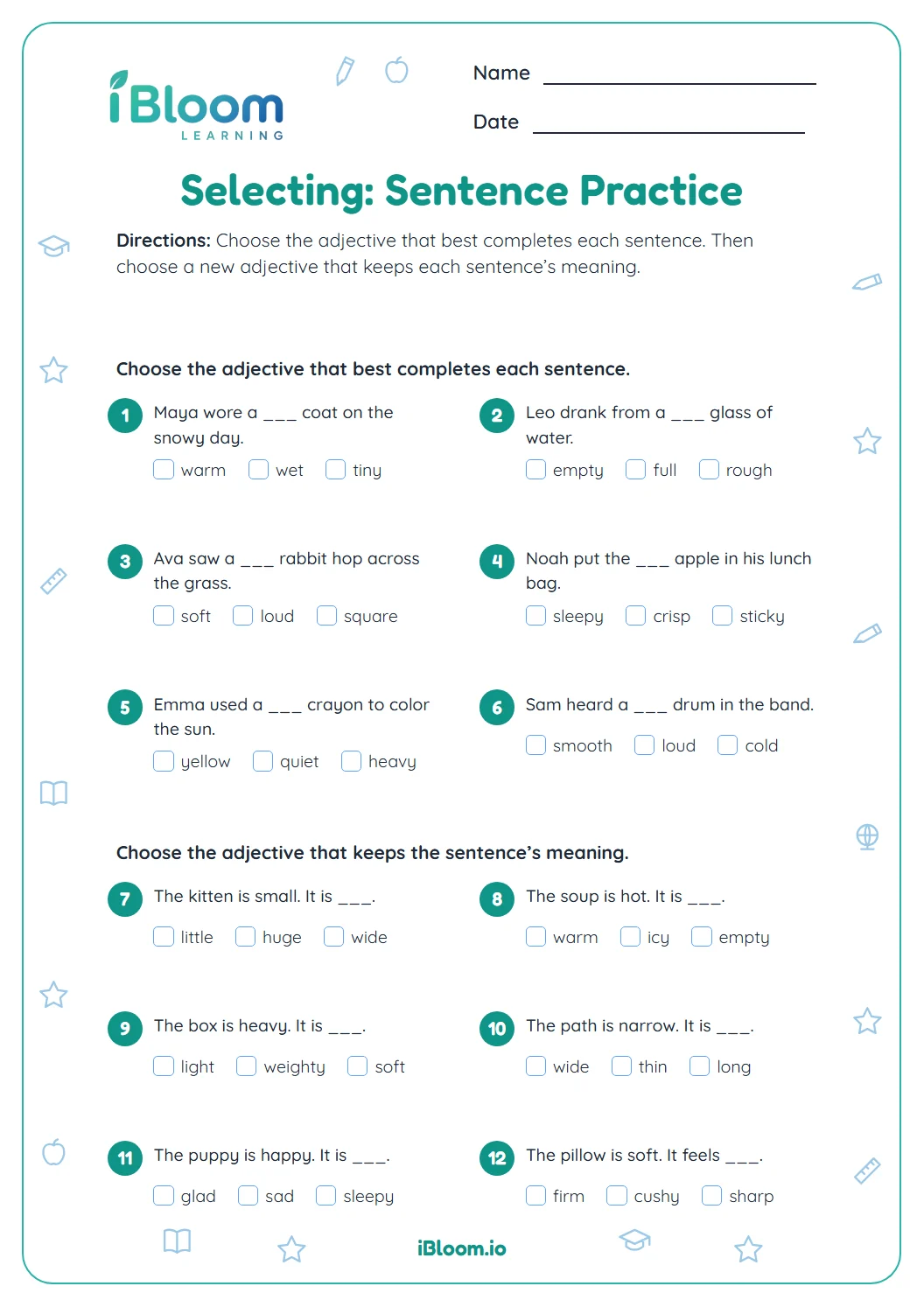
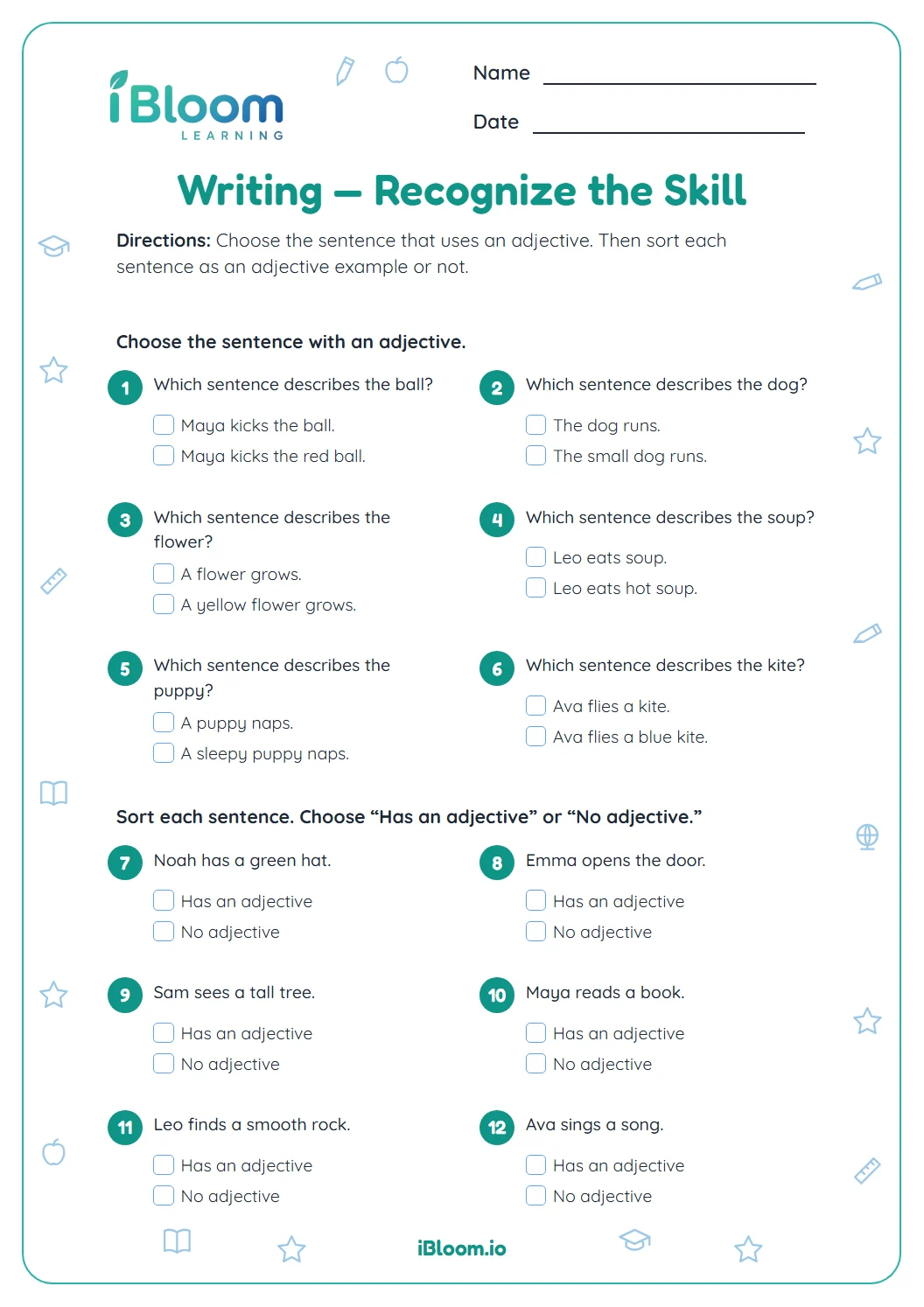
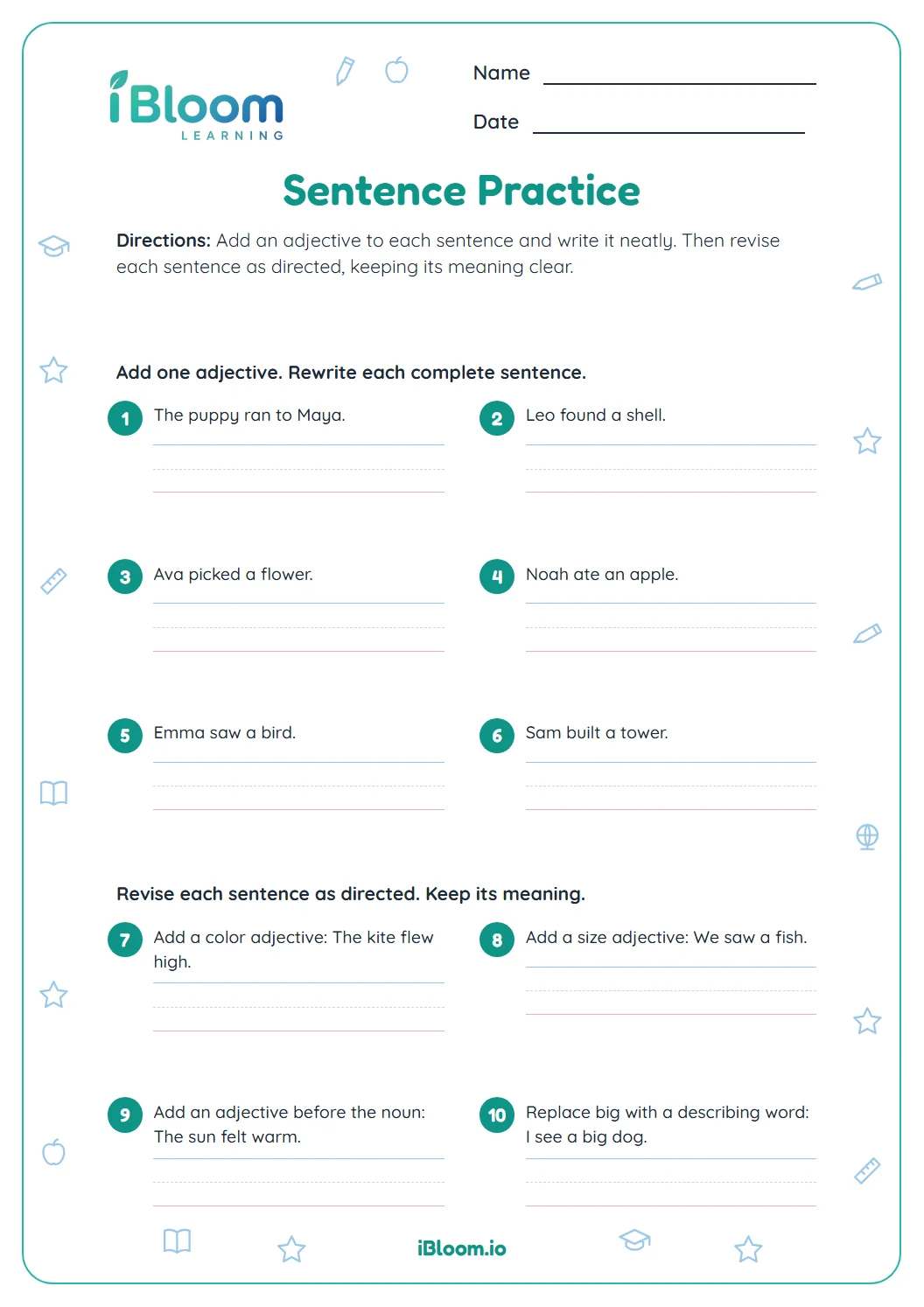
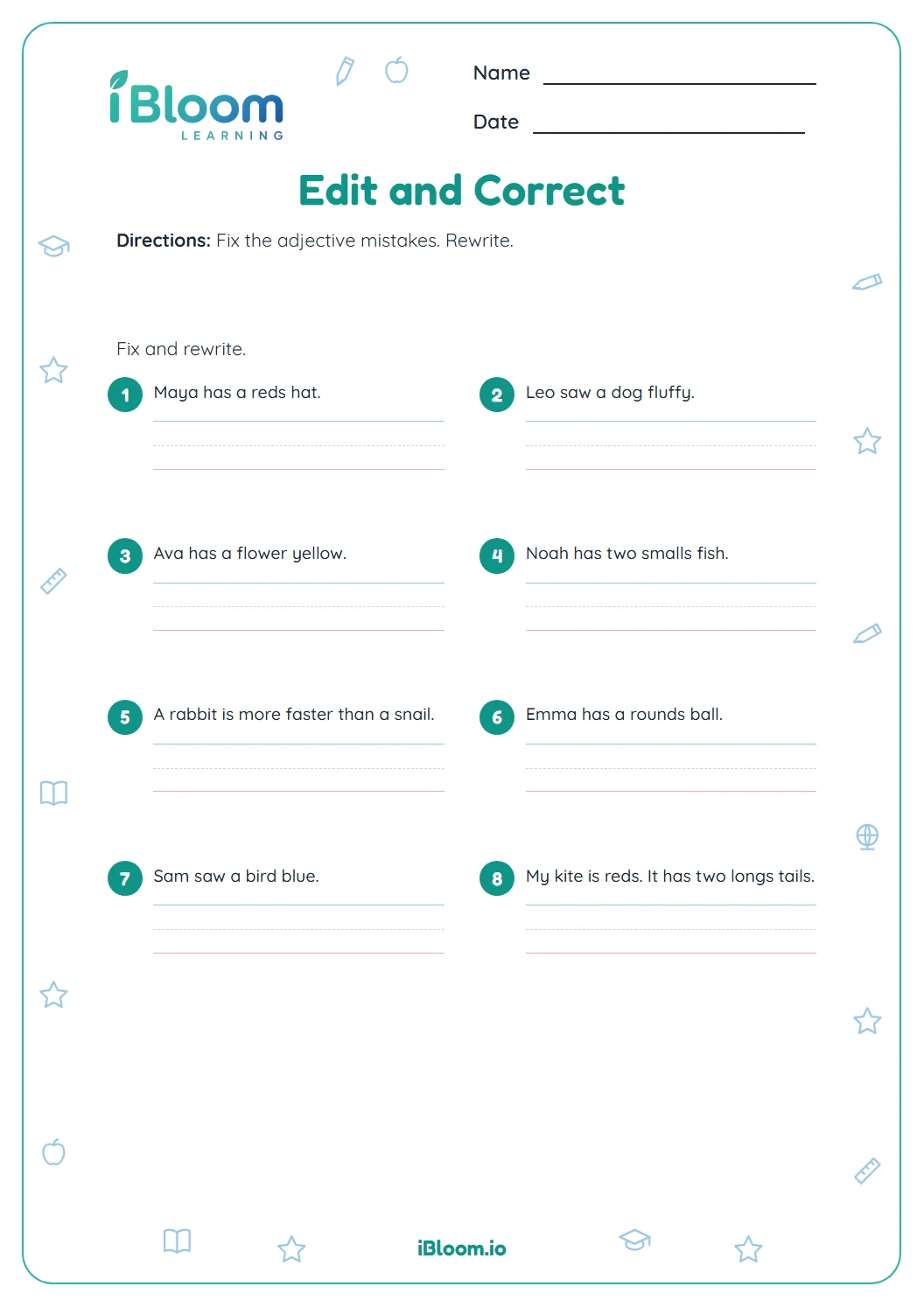
This free Grade 1 worksheet gives young writers practice using familiar adjectives in complete sentences. Students choose a describing word that fits a sentence, rewrite sentences with an adjective beside its noun, and create their own sentences from a word prompt. It supports CCSS L.1.1.f, which asks students to use frequently occurring adjectives. The answer key includes the selected words and sample sentences.
Aligned to L.1.1.f
How can you choose an adjective that fits?
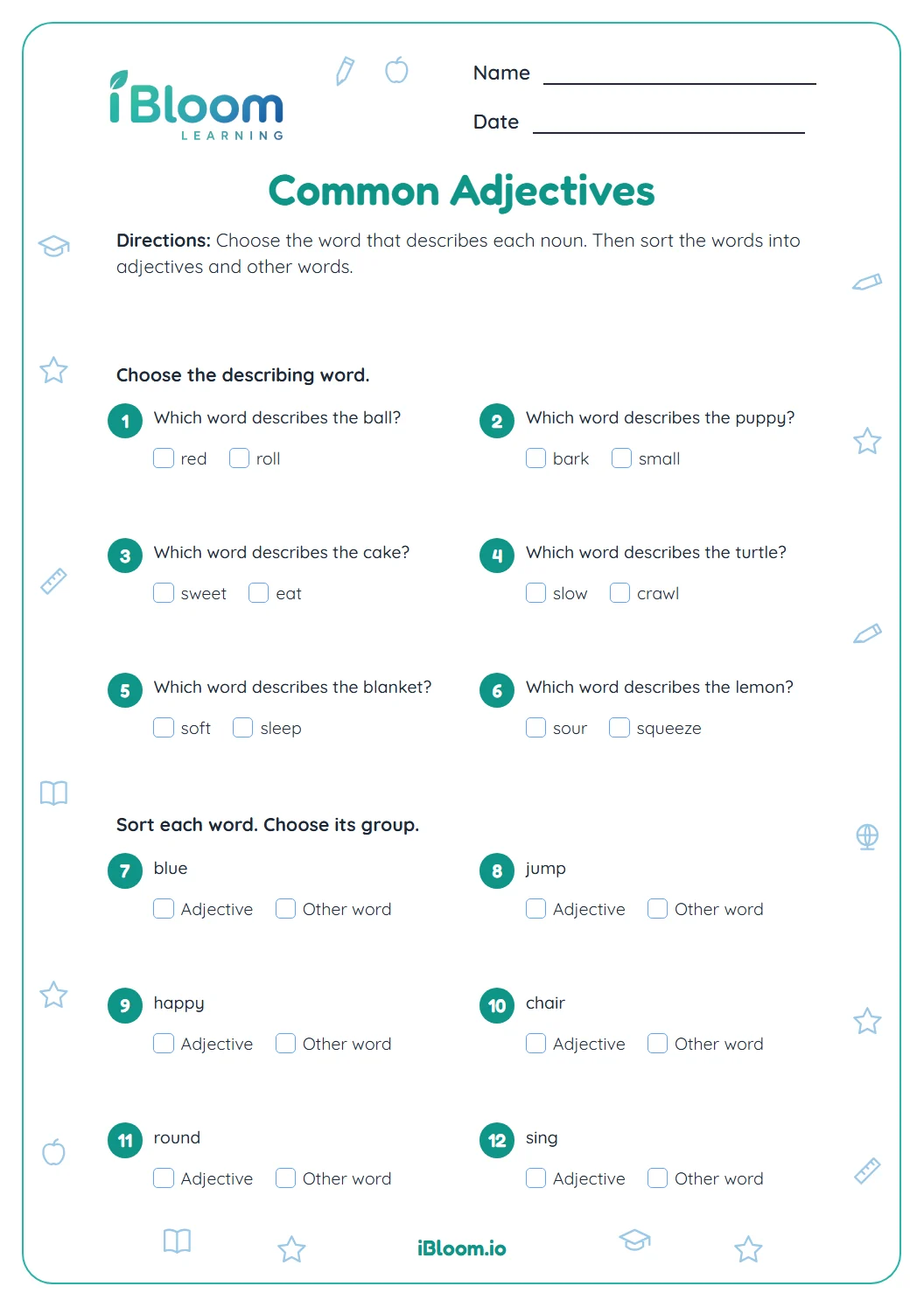
An adjective gives a detail about a noun. Read the short sentence and find the word that describes a person, place, animal or thing. In Part A, students circle that word in each sentence before they use adjectives themselves.
In question 1, tiny describes the bee in “The tiny bee lands.” The other sentences use familiar words such as tall, round, soft and brown.
- 1The tiny bee lands.
- 2Tiny describes the bee, so tiny is the adjective.
Where should an adjective go in a sentence?
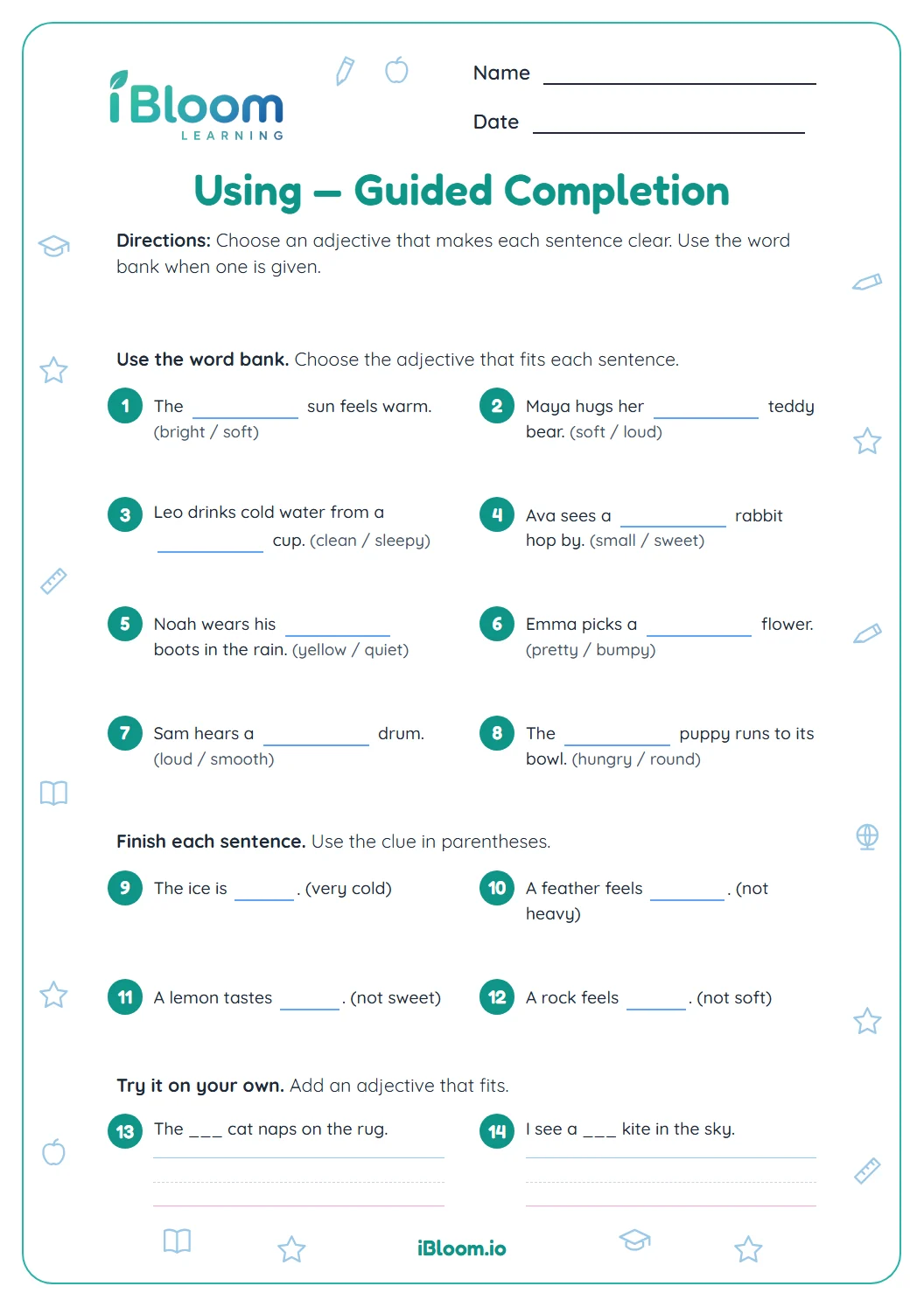
In Part B, add a describing word that makes the sentence clear. Part C has two sentence rewrites and two short completions, so students can use adjectives in context without four extended writing tasks.
- 1The ___ dog runs.
- 2Sample: The small dog runs.
How can a child write a sentence with an adjective?
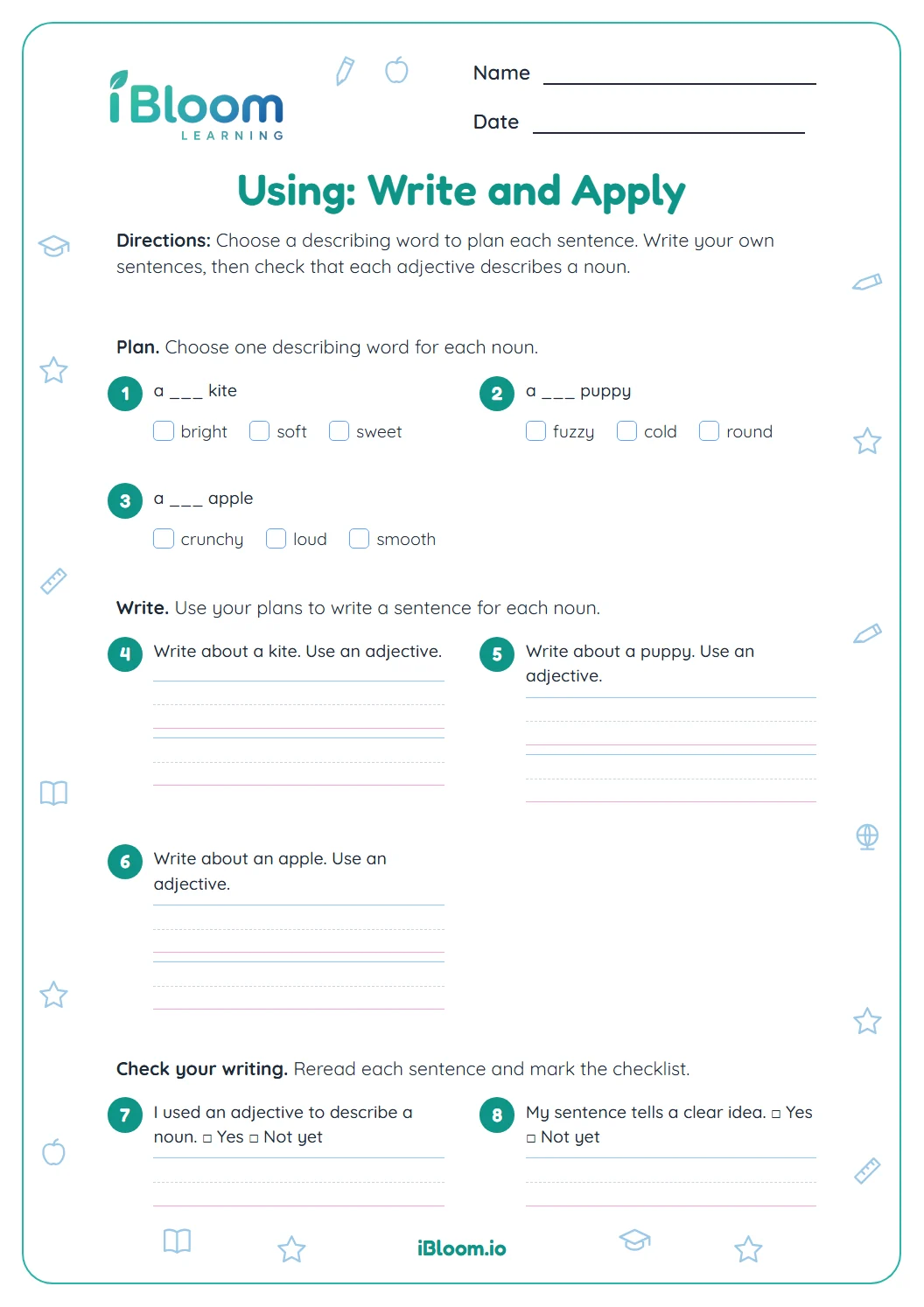
For the final two rewrites, keep the original idea and place an adjective beside the noun it describes.
How to use this worksheet
- 1Read the sentence and find the noun it tells about.
- 2Try each choice aloud and pick the word that describes the noun.
- 3For a rewrite, put the given adjective next to its noun.
- 4For an original sentence, use the word and tell a complete thought.
- 5Read the sentence again to check that the adjective makes sense.
Common mistakes and quick fixes
The mistake
Choosing an action word instead of a describing word
The fix
Ask whether the word tells what something is like. “Playful” describes a puppy; “runs” tells an action.
The mistake
Putting the adjective beside the wrong noun
The fix
Find the person, place or thing the word describes, then place the adjective near that noun.
The mistake
Writing a group of words instead of a sentence
The fix
Start with a capital letter and tell a complete thought; finish with an end mark.
Common Core alignment
This page gives students direct practice using familiar adjectives in sentences.
Use familiar adjectives to add details when speaking or writing.
On this sheet: Students select adjectives, add them to sentences and use them in original sentences.
Show the official wordingHide the official wording
Use frequently occurring adjectives.
What to practice next
Make more practice
Further reading
Questions parents and teachers ask
What is an adjective?
An adjective is a word that describes a noun. It can tell what a person, place, animal or thing is like, such as a small dog or a yellow flower. This page gives students chances to choose, add and write adjectives in sentences.
How is this worksheet different from finding adjectives?
Students do more than point out a describing word. They choose a word that fits a sentence, rewrite a sentence with a given adjective, and write a complete sentence of their own. The sequence moves from a supported choice to independent use.
What should I accept for the written questions?
The answer key gives a sample, but children can write other correct sentences. Check that the requested adjective is included, that it describes a noun, and that the sentence is complete. For rewrite prompts, the sentence should keep the original idea.
Does the worksheet include an answer key?
Yes. A separate key lists the correct choice for each multiple-choice item and sample answers for the written sentences. Since children may create different sensible sentences, the sample is a guide rather than the only possible wording if it uses the requested adjective and a complete thought.
How can I help without writing the sentence for my child?
Ask the child to name the noun first, then think of a word that tells what it is like. For an original sentence, ask what the adjective describes and whether the words make a complete thought when read aloud.