


About this worksheet
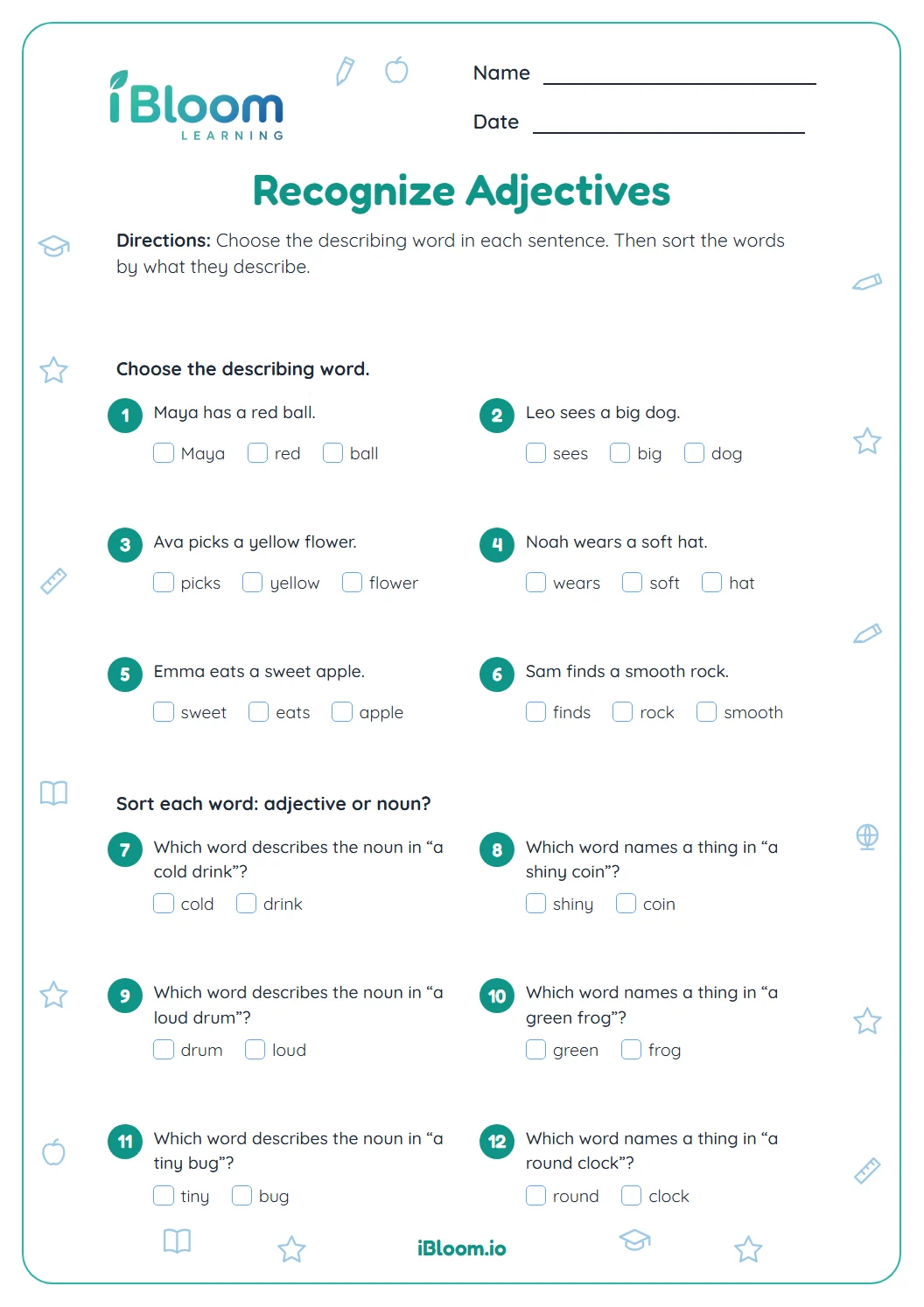
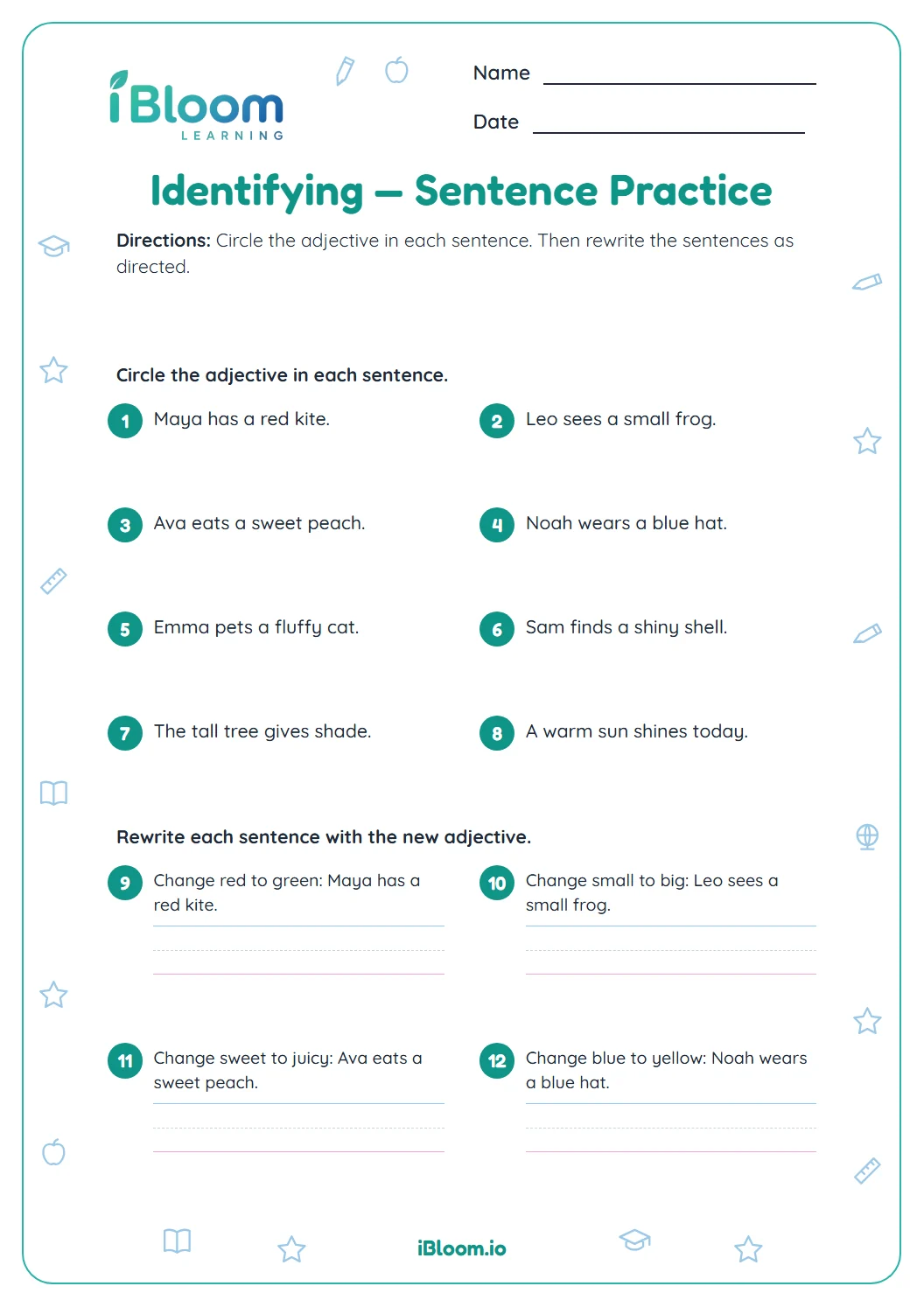
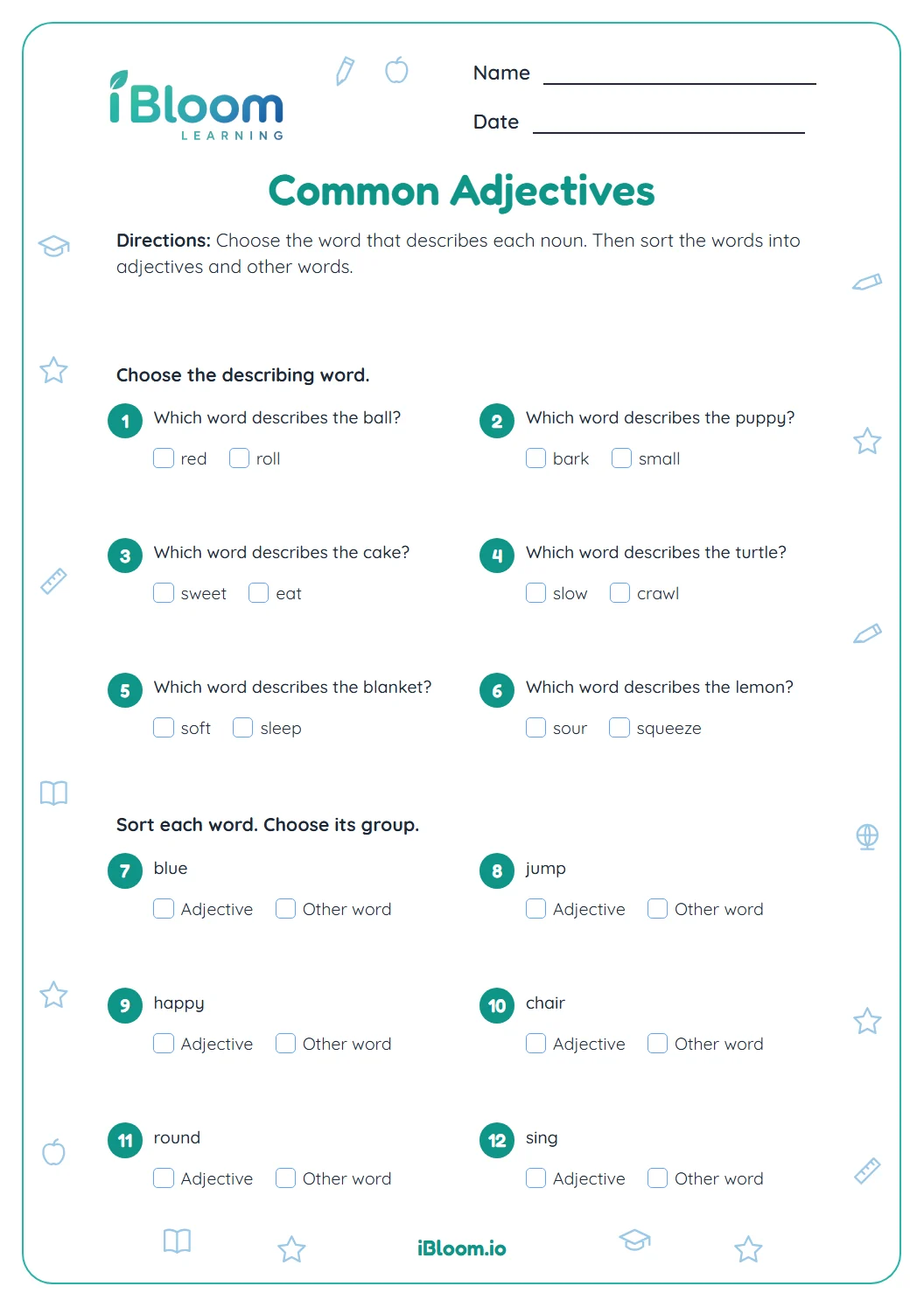
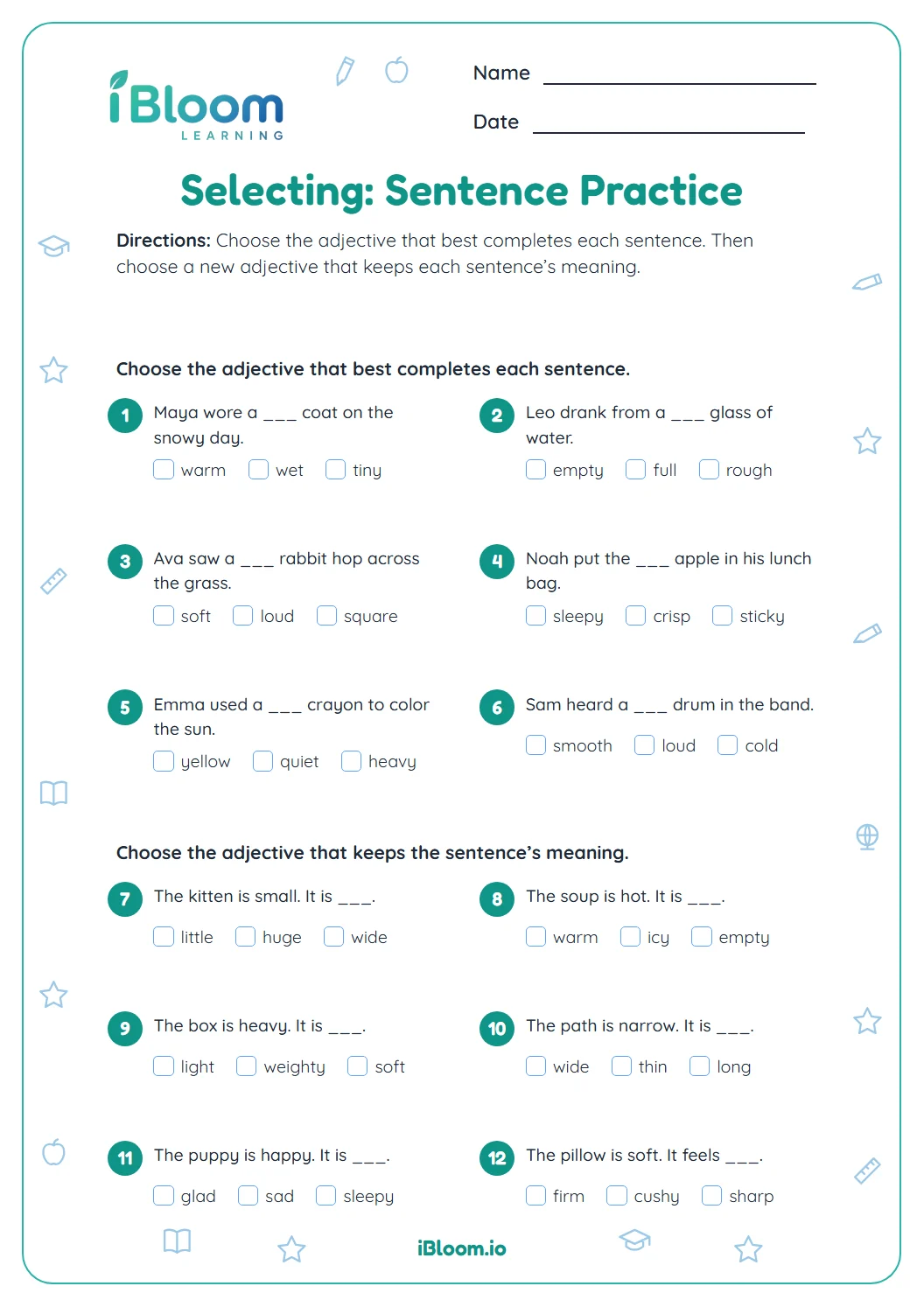
This Grade 1 worksheet helps students identify adjectives and see how describing words work with nouns. Children find adjectives, select adjective forms, explain what a describing word tells, and edit three sentences by removing an extra adjective. It practices CCSS L.1.1.f with familiar words and includes a separate answer key.
Aligned to L.1.1.f
How can a child find an adjective?
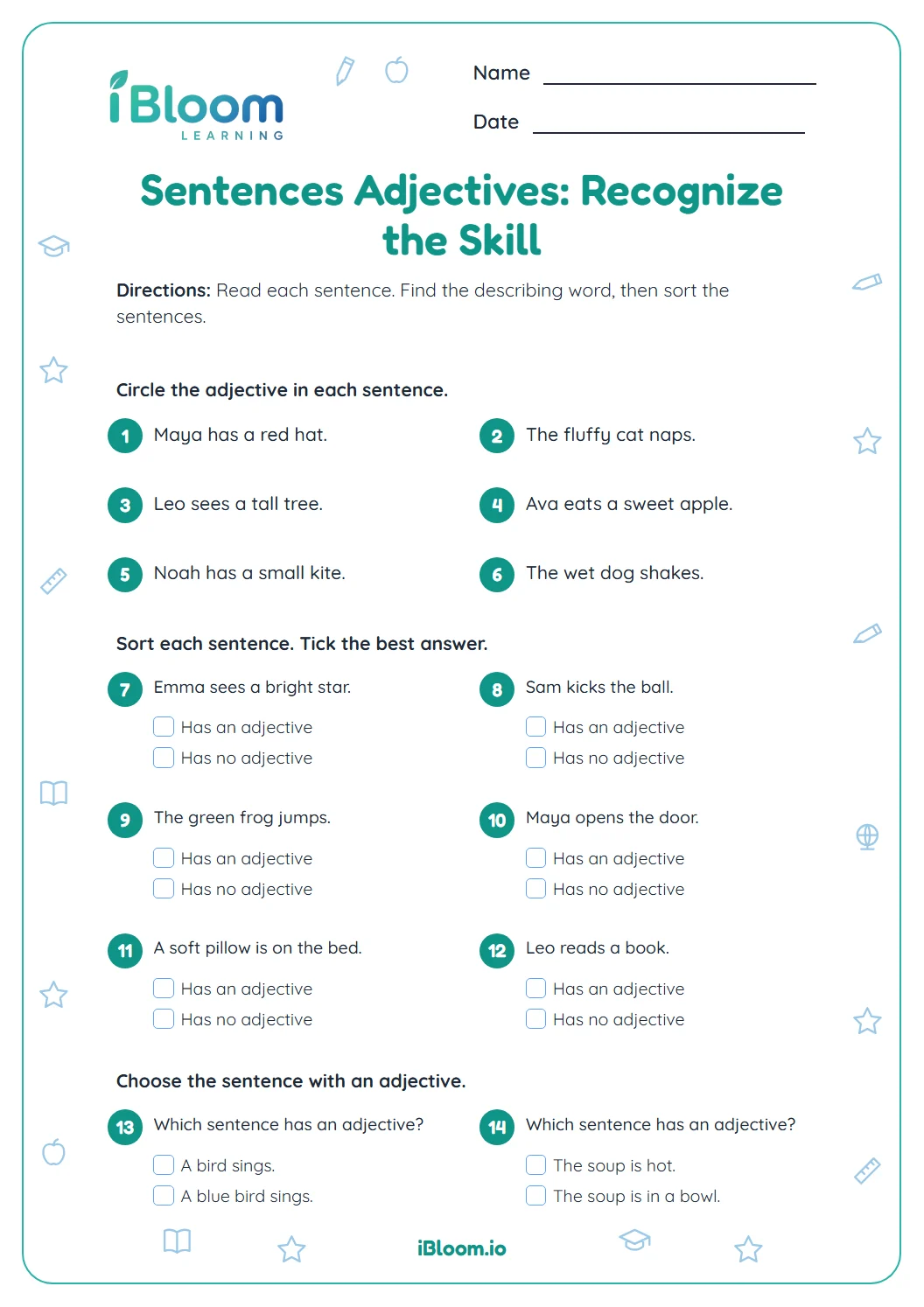
Ask which word tells more about a person, place, animal, or thing. In “Maya has a blue bag,” blue describes the bag.
Question 1 gives a short sentence and asks for its describing word. The answer is blue because it tells what kind of bag Maya has.
- 1Maya has a blue bag.
- 2Bag is the noun.
- 3Blue describes the bag.
How do adjectives differ from adverbs?
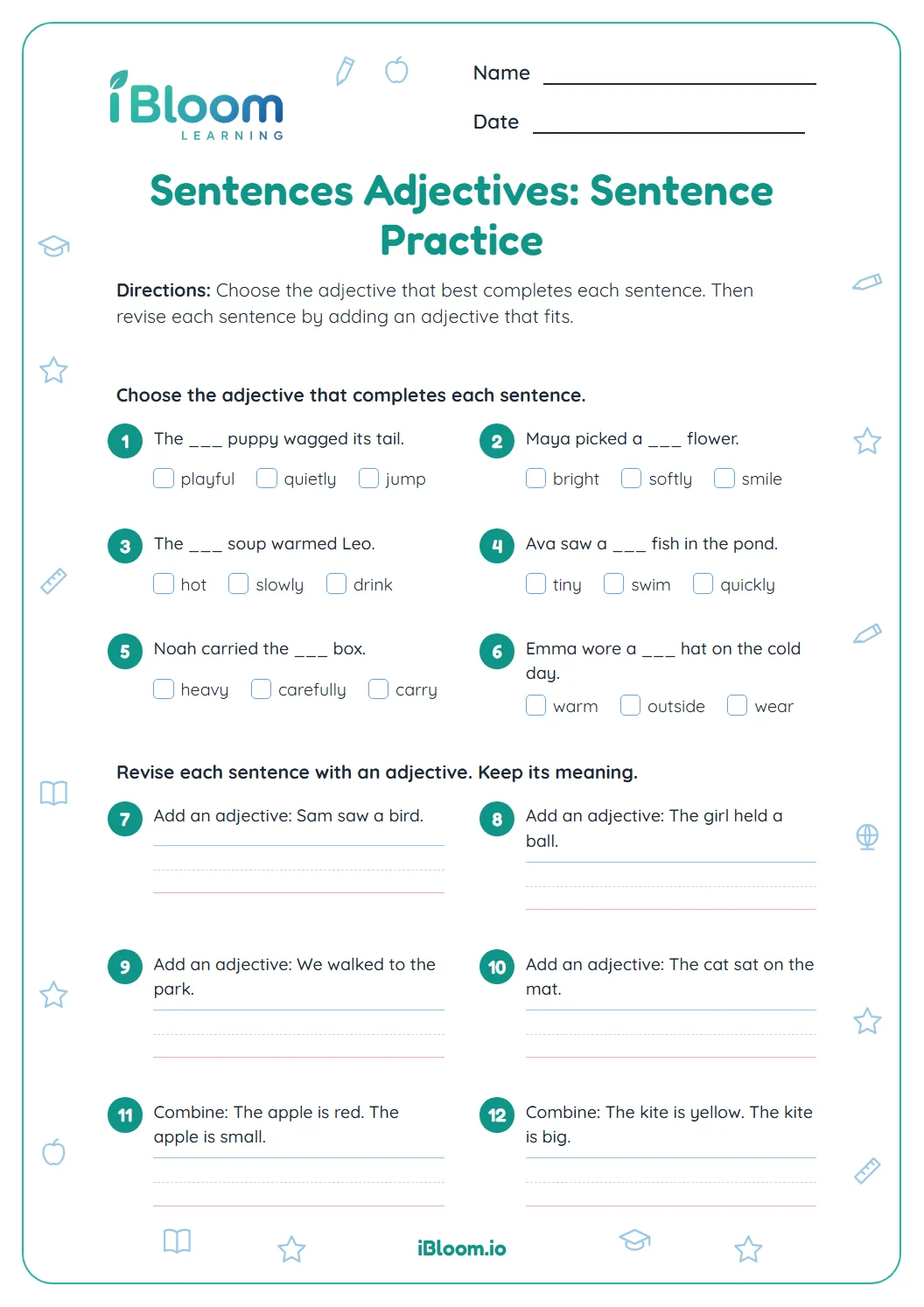
An adjective describes a noun. An adverb often tells how an action happens. “A soft kitten” uses soft to describe kitten; softly would describe an action.
What does editing an adjective mean here?
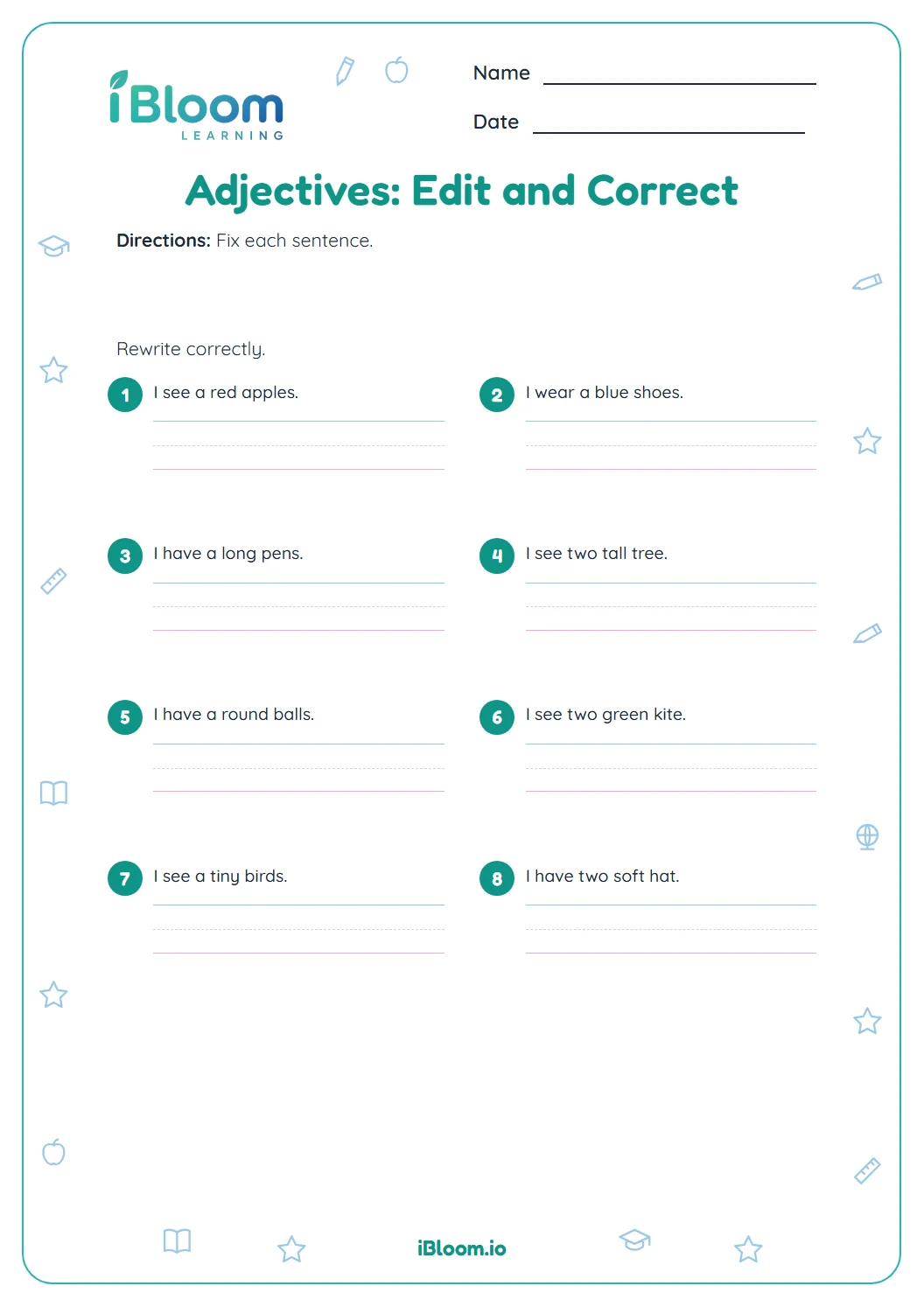
The last three items ask children to remove a describing word and keep a complete sentence. “The bird had two blue wings” becomes “The bird had wings.”
How to use this worksheet
- 1Read the sentence and name its person, animal, place, or thing.
- 2Ask which word describes that noun.
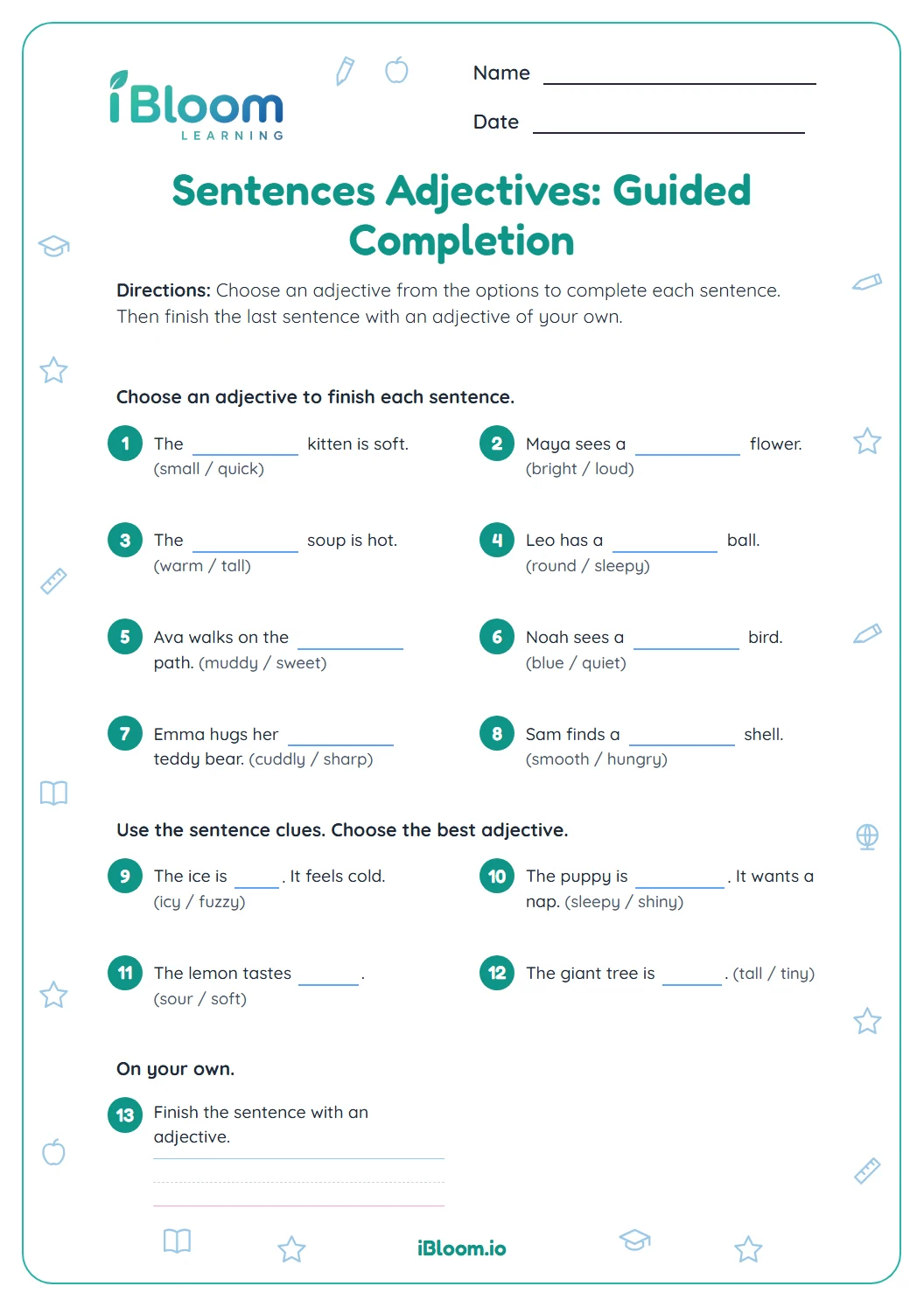
- 3Choose an adjective that makes sense with the noun.
- 4In the editing part, remove the requested adjective and reread the sentence.
- 5Check spelling and compare your answer with the key.
Common mistakes and quick fixes
The mistake
Choosing an action word such as softly to describe a kitten.
The fix
Ask which word describes the noun, not how an action happens.
The mistake
Removing the noun while editing.
The fix
Keep the person, animal, place, or thing named in the sentence.
The mistake
Thinking every word before a noun is an adjective.
The fix
Check that the word tells what the noun is like or how many.
Common Core alignment
Students identify and use familiar adjectives to describe nouns.
Use frequently occurring adjectives to describe nouns.
On this sheet: Use frequently occurring adjectives to describe nouns.
Show the official wordingHide the official wording
Use frequently occurring adjectives.
What to practice next
Make more practice
Further reading
Questions parents and teachers ask
What is an adjective?
An adjective describes a noun. In “a tiny frog,” tiny tells what the frog is like. The first questions ask children to find familiar adjectives, then other items ask them to choose a describing word or explain what it tells about the noun.
How many questions are included?
There are 14 questions: four ask students to identify an adjective, four ask them to choose between word forms, three ask what an adjective describes, and three ask them to edit a sentence by removing a named adjective. The answer key includes the expected word or a sample rewrite.
What does the editing section ask children to do?
Each of the last three prompts names one adjective to remove and asks for the sentence to be rewritten. For example, removing blue from “The bird had two blue wings” leaves “The bird had wings.” Students keep the noun and the rest of the sentence.
How can a child tell an adjective from an adverb?
Ask whether the word describes a noun or tells how an action happens. Soft describes kitten in “a soft kitten,” while softly would describe an action. Questions 5–8 contrast familiar adjective and adverb forms in short sentences, giving children a clear way to compare their jobs.
Can this worksheet be used with adult support?
The directions and example sentences are brief, and an adult can read them aloud when needed. A child can point to the describing word, choose a form, and write the requested edits. The separate key helps an adult check the word choices and sentence rewrites afterward.