

About this worksheet
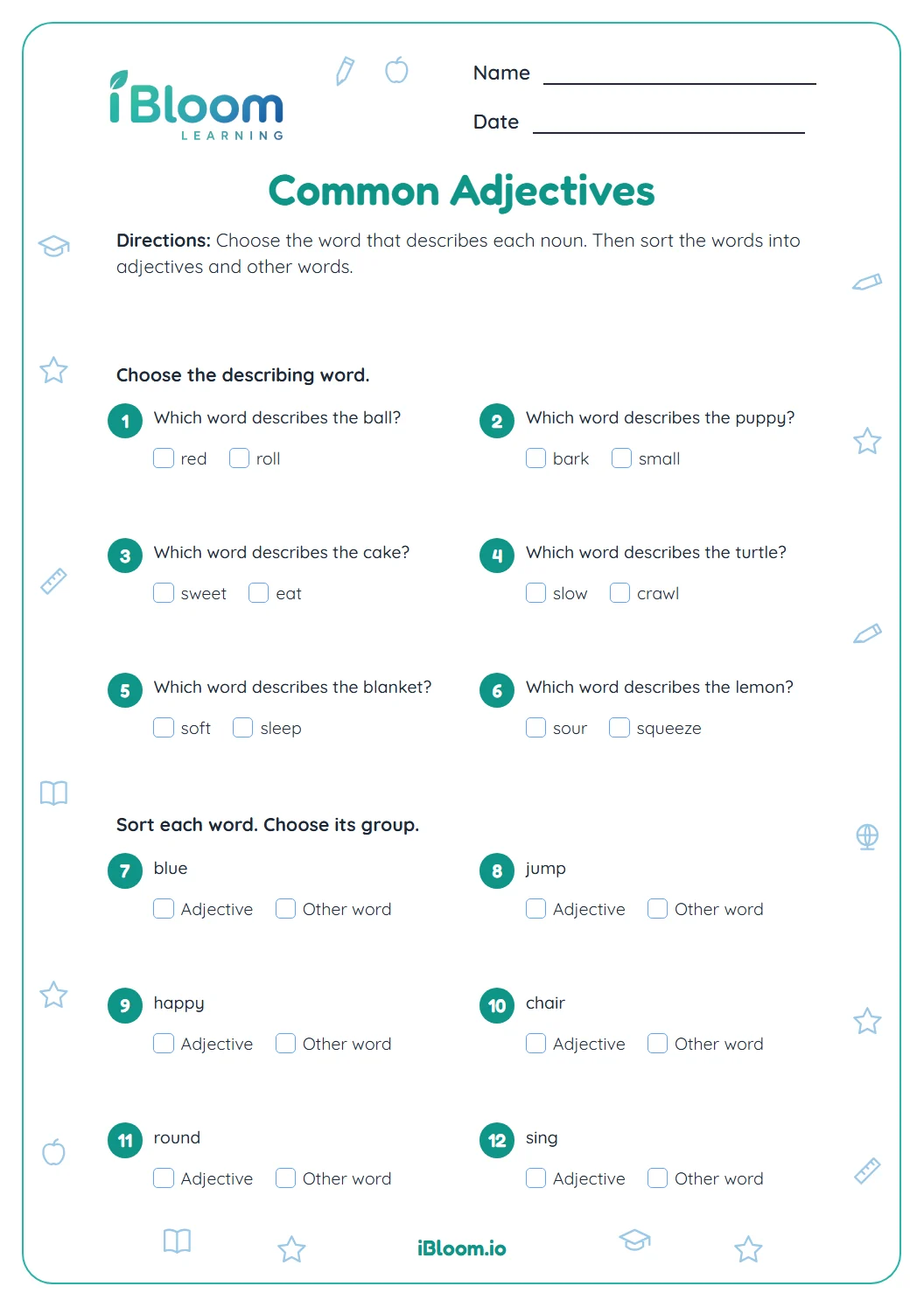
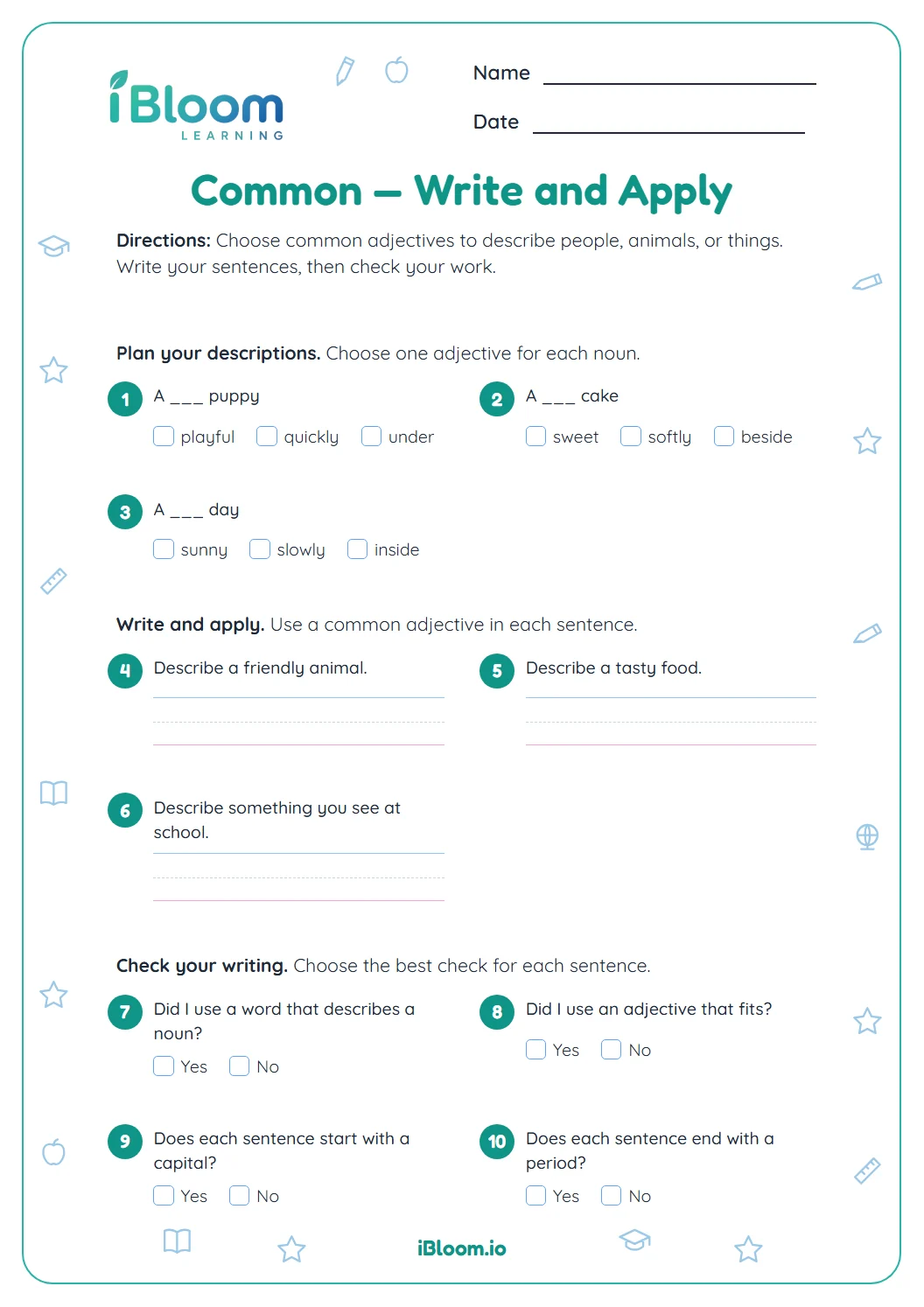
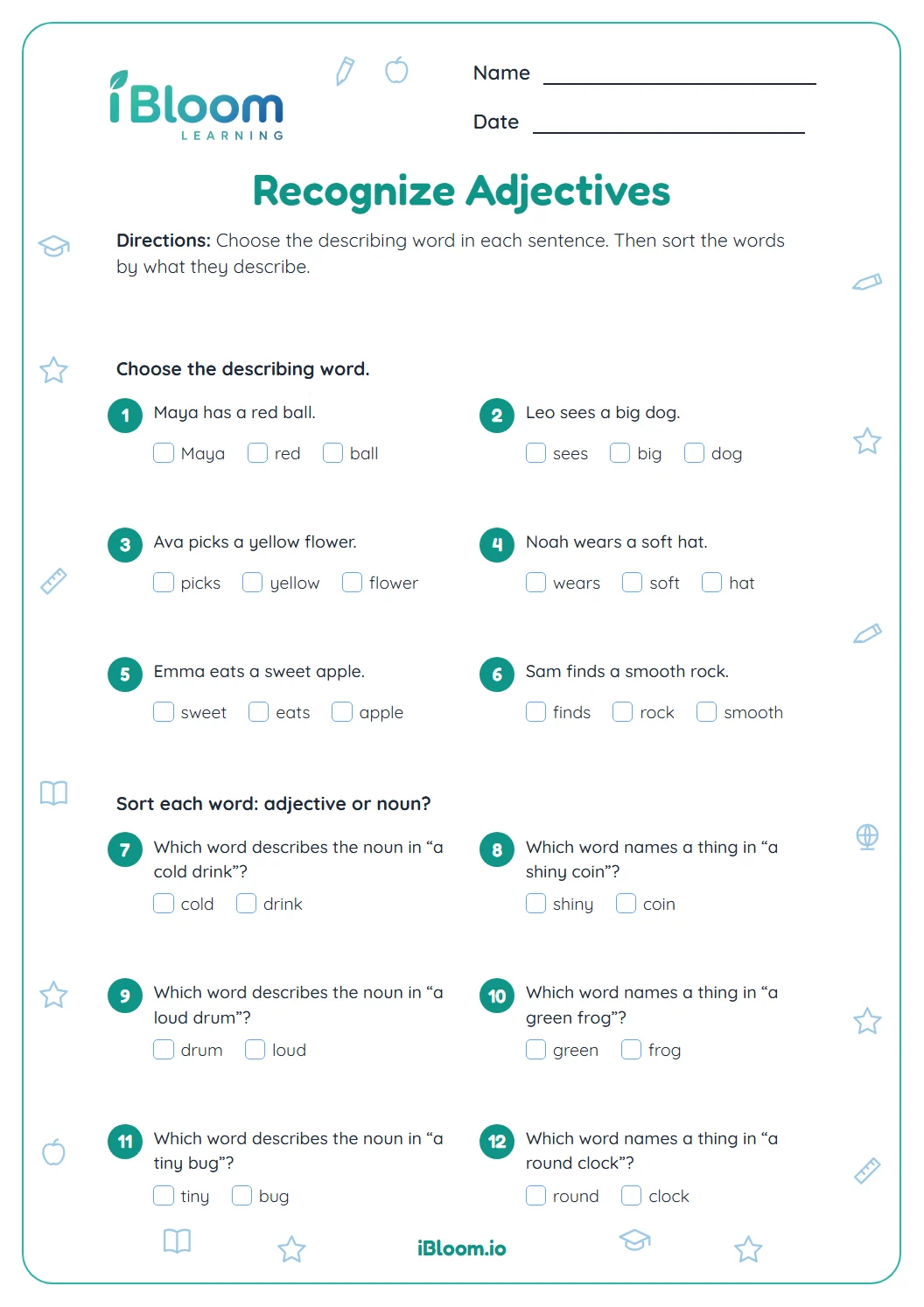
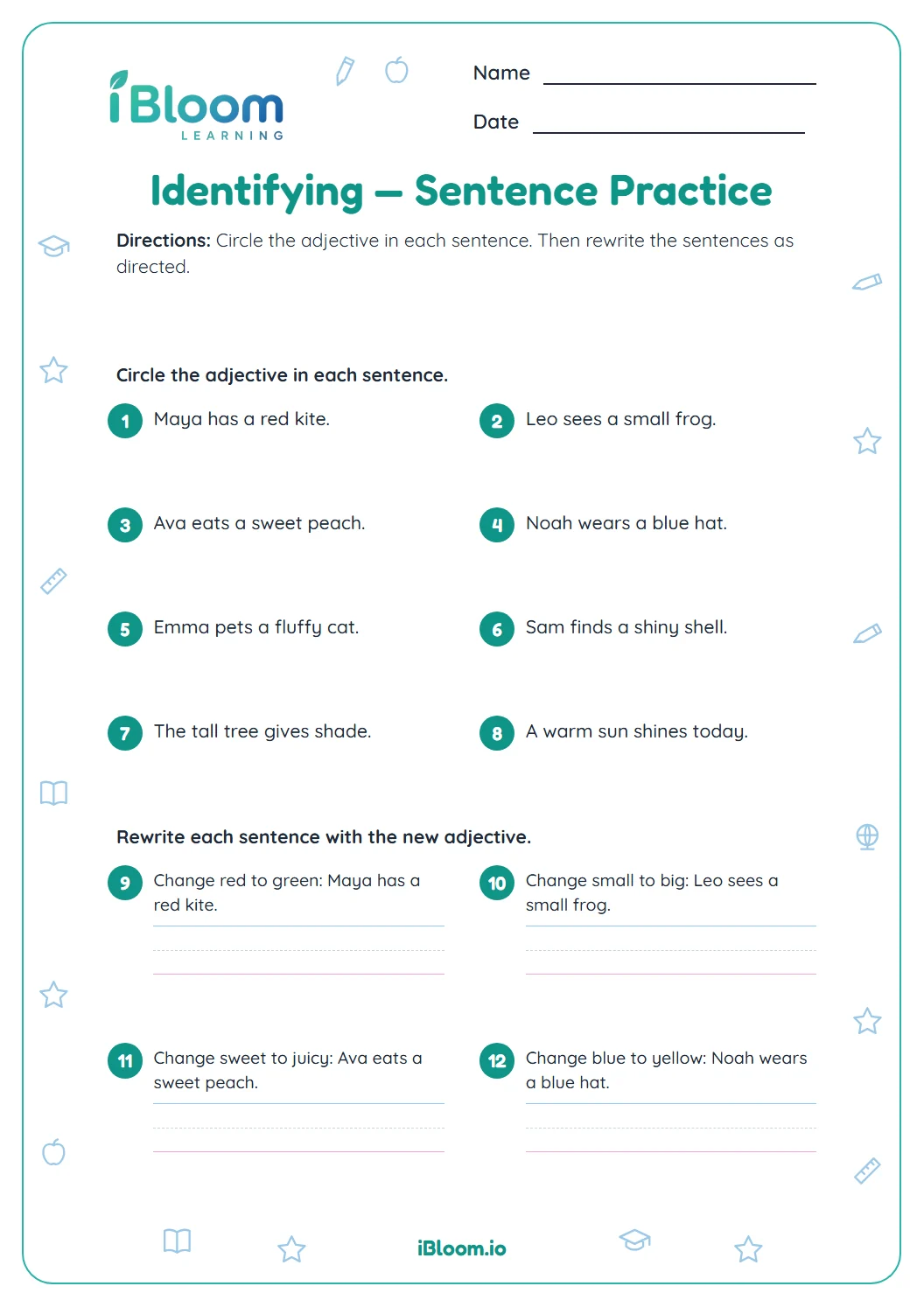
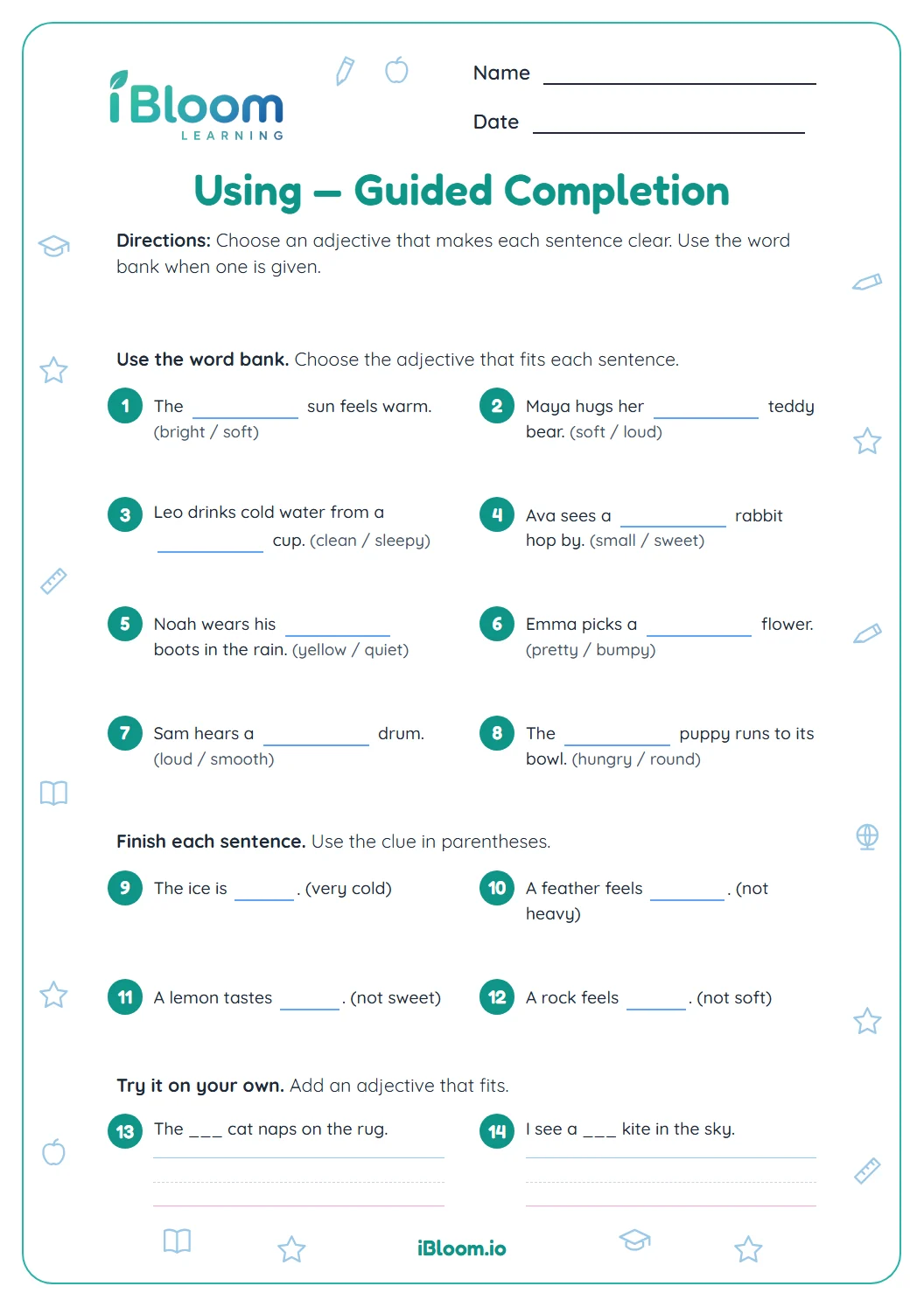
This two-part sheet moves from spotting common adjectives to correcting adjective forms in short sentences. Part A asks children to identify the word that describes a noun. In Part B, each sentence has an adjective error, and children choose the corrected form, such as changing colds to cold.
Aligned to L.1.1.f
What is on this worksheet?
Part A has eight short sentences. Children choose the word that describes a person, animal or thing. Part B has eight sentences with an adjective error; children choose the corrected word.
- Part A: spot the describing word.
- Part B: correct an adjective form in a sentence.
How can a child find an adjective?
Part A is a word hunt. Part B asks the child to think about meaning before choosing: snow can feel cold, and a turtle is slow. Encourage the child to reread the whole sentence with each choice.
How is Part B different from Part A?
Part A is a word hunt. Part B asks children to notice an adjective error and choose the form that fixes it: snow feels cold, not colds. Encourage the child to reread the corrected sentence.
How to use this worksheet
- 1Read each sentence aloud if needed, then identify the naming word.
- 2In Part A, ask which word adds a detail about that naming word.
- 3In Part B, find the adjective that needs correcting, choose its correct form, and reread the sentence.
- 4Use the answer key to check the describing word, then invite your child to name another adjective for one noun.
Common mistakes and quick fixes
The mistake
Choosing the action word, such as “naps,” in Part A.
The fix
Ask what the animal does, then ask which word describes it. “Naps” is the action; “fluffy” describes the cat.
The mistake
Choosing a word that sounds nice but does not fit the sentence, such as “loud” for snow.
The fix
Use the clue from the noun and read the full sentence with the choice. Snow feels cold, so “cold” is the sensible adjective.
Common Core alignment
This page practices a Common Core standard for the stated grade.
Use common adjectives to describe nouns in sentences.
On this sheet: Use common adjectives to describe nouns in sentences.
Show the official wordingHide the official wording
Use frequently occurring adjectives.
What to practice next
Make more practice
Further reading
Questions parents and teachers ask
What is an adjective?
An adjective is a word that describes a person, place, animal or thing. In “The fluffy cat naps,” fluffy tells what the cat is like. Children can find the noun first, then look for a word that adds a detail about it.
Which part asks children to edit a sentence?
Part A asks children to locate a describing word in a complete sentence. Part B shows an adjective error, such as “The snow feels colds,” and asks them to choose the corrected form. Together, the parts move from recognizing adjectives to editing their use.
Can more than one adjective describe the same noun?
Yes. A cat could be fluffy, sleepy or playful. For each Part B item, however, the choices are designed so that one word best matches the sentence clue. Children may think of other good adjectives after they finish.
How can I help without giving the answer?
Ask the child to find the noun and say what detail it needs. In Part A, that detail is already correct. In Part B, look for an adjective form that sounds or looks wrong, then choose the form that completes the sentence correctly.
What is the difference between an adjective and an action word?
An adjective describes a noun, while an action word tells what someone or something does. In “The wet dog shakes,” wet describes the dog and shakes tells what it does. Part A includes both kinds so children can tell their jobs apart.