


About this worksheet
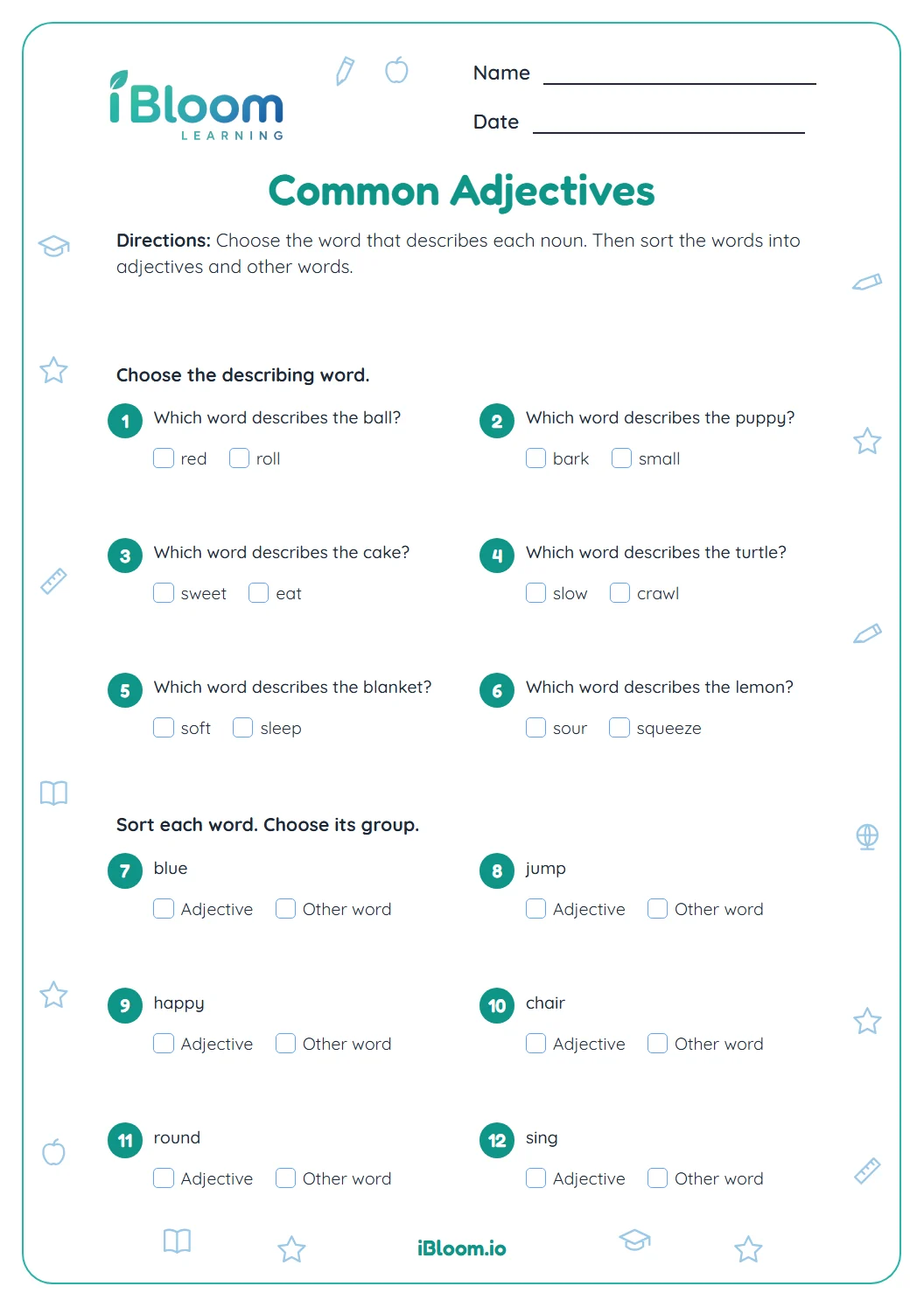
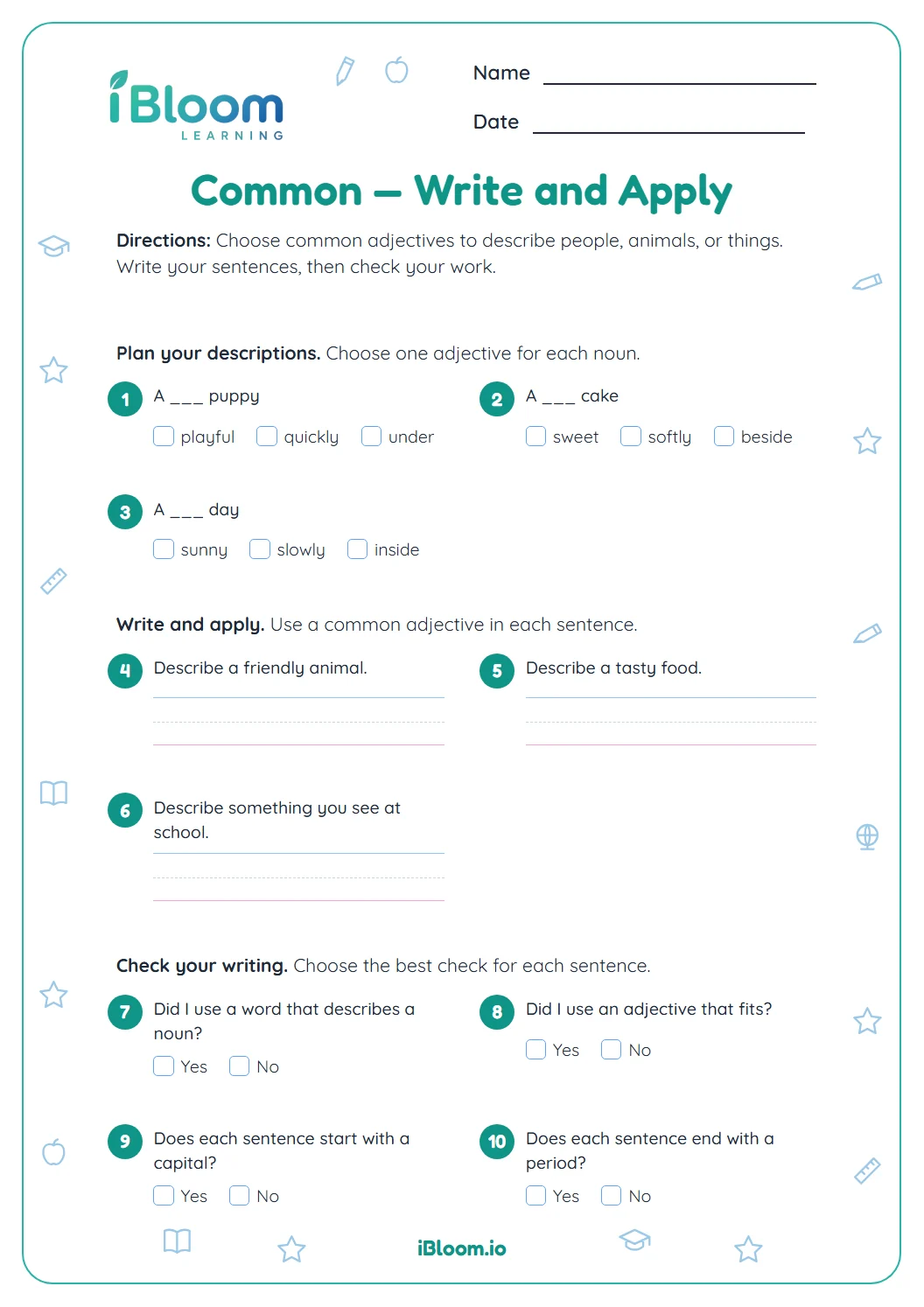
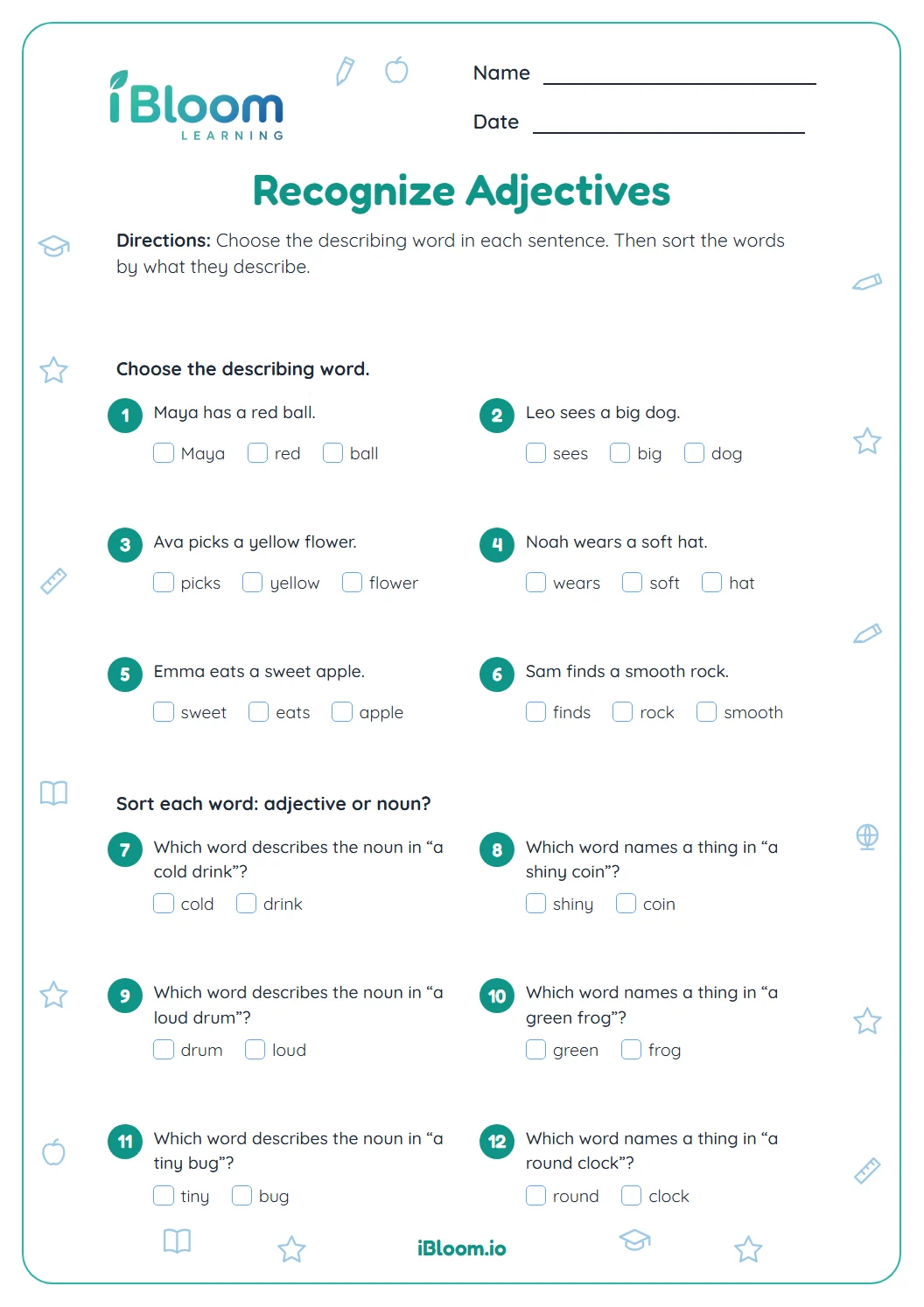
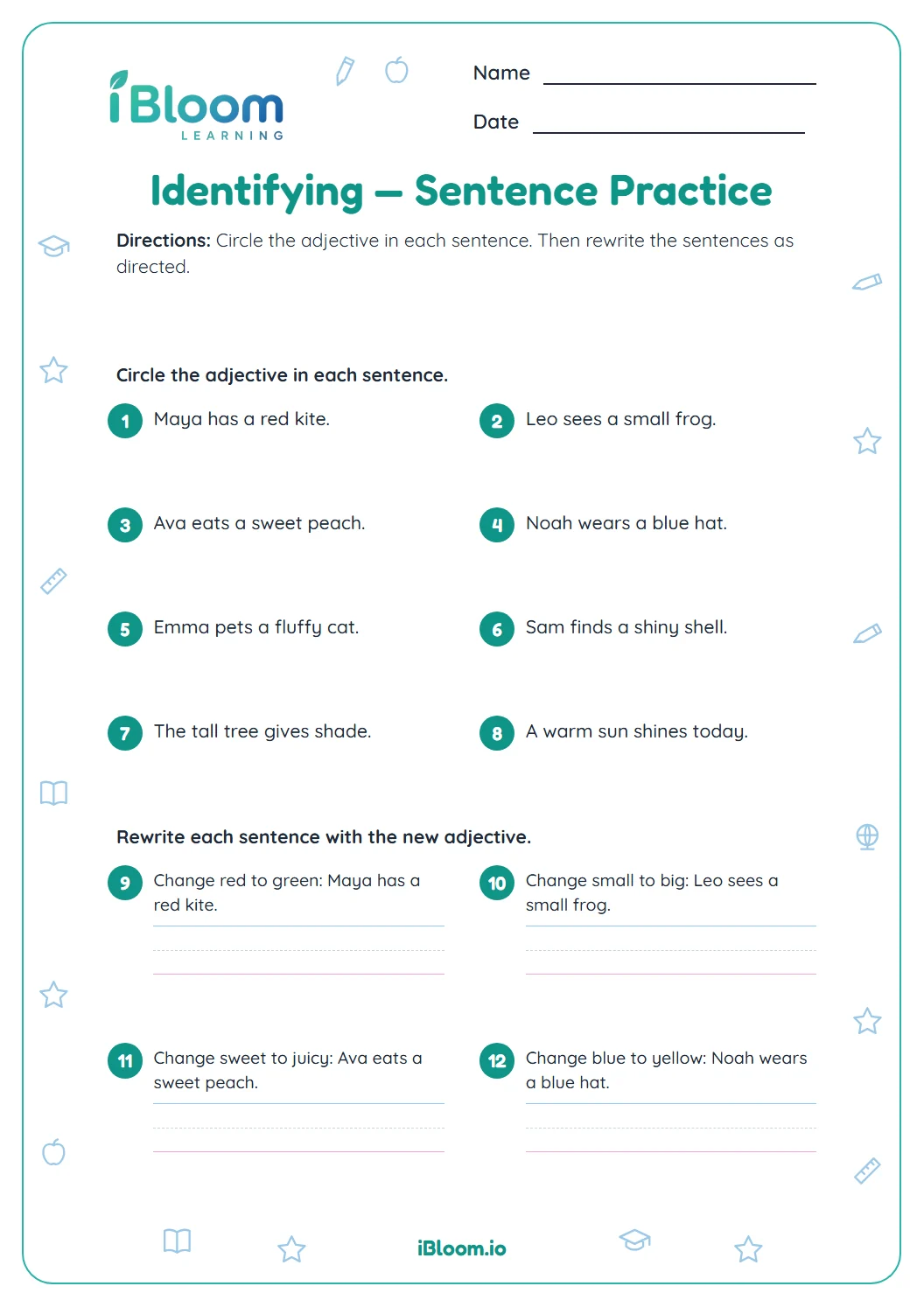
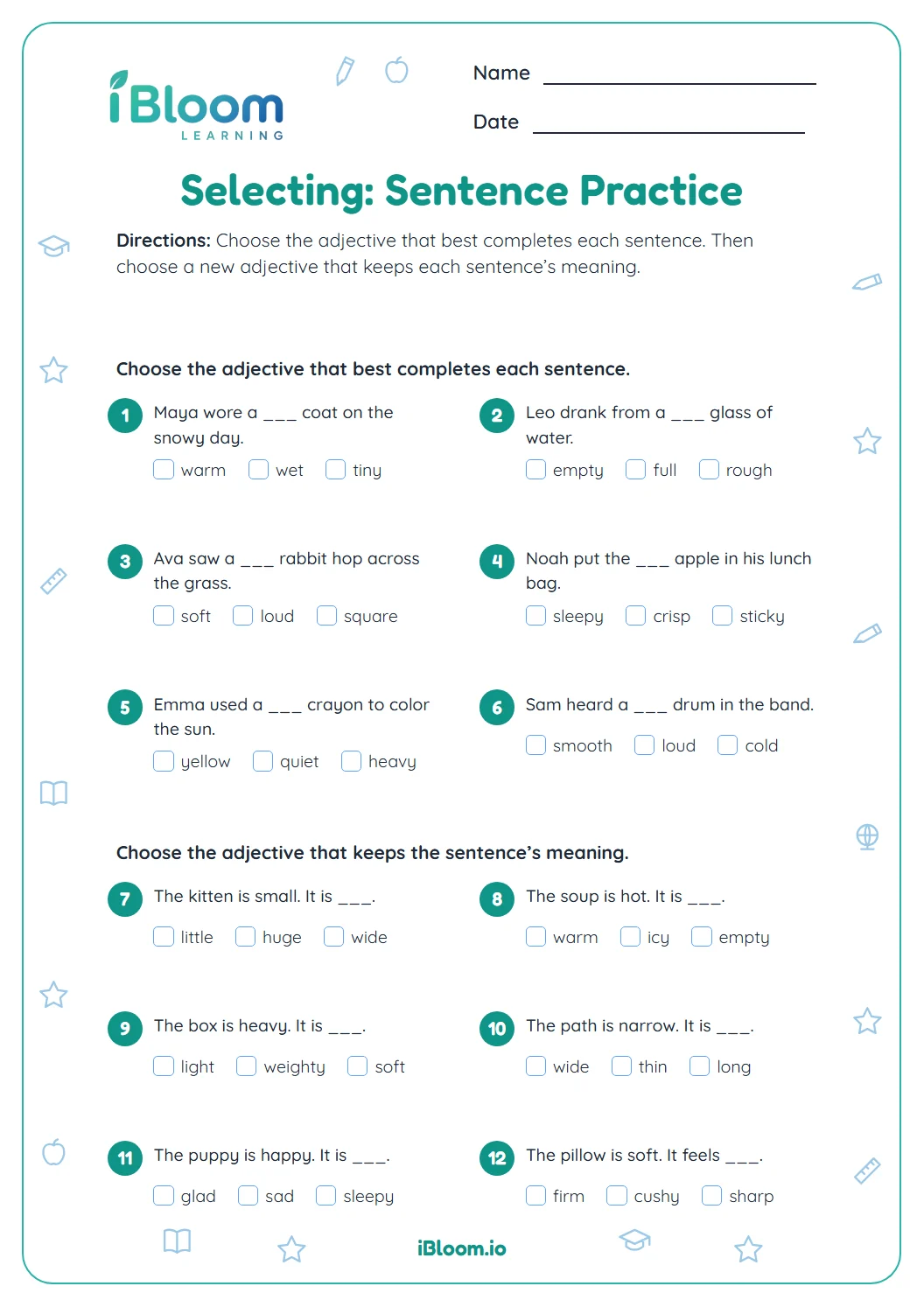
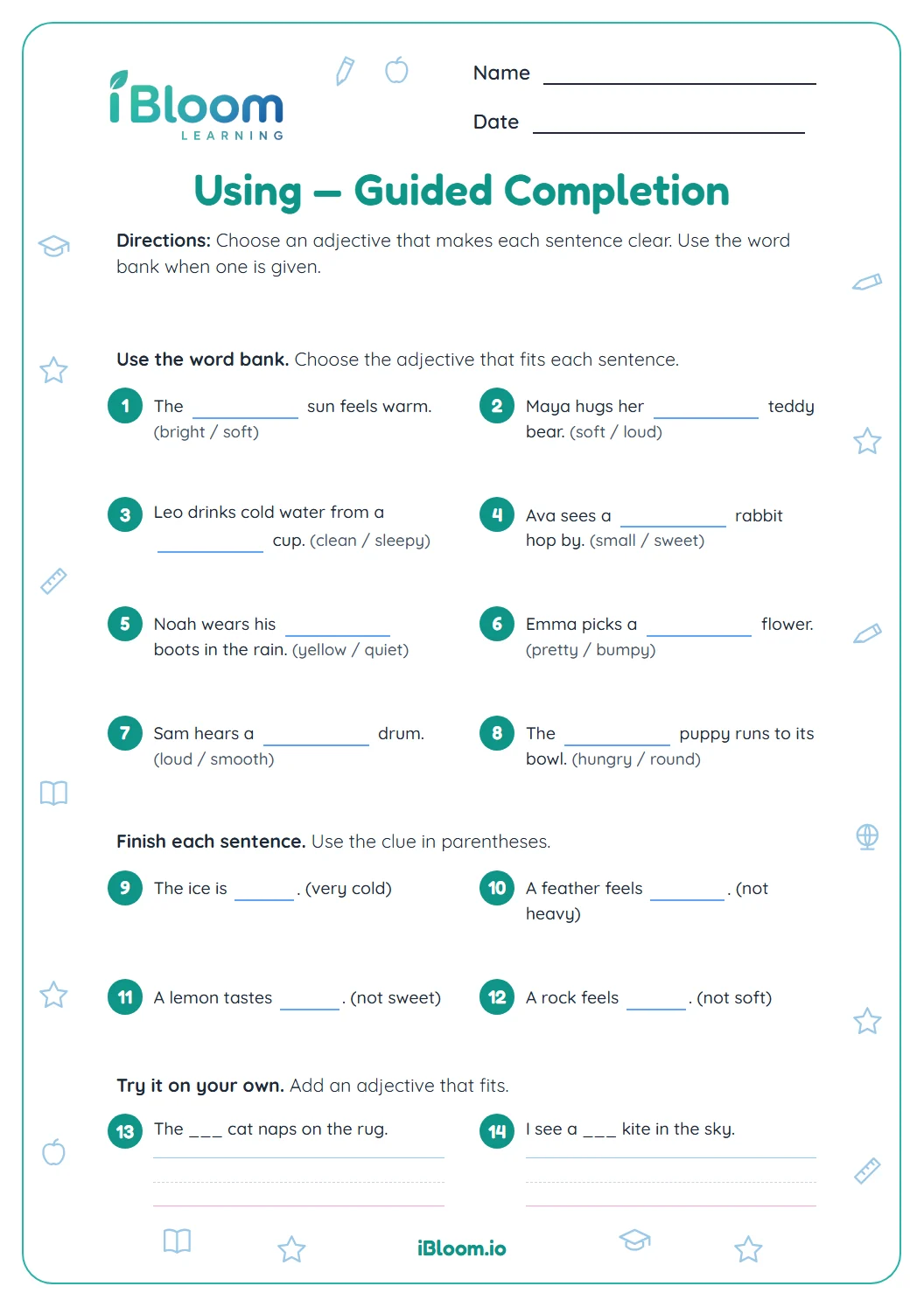
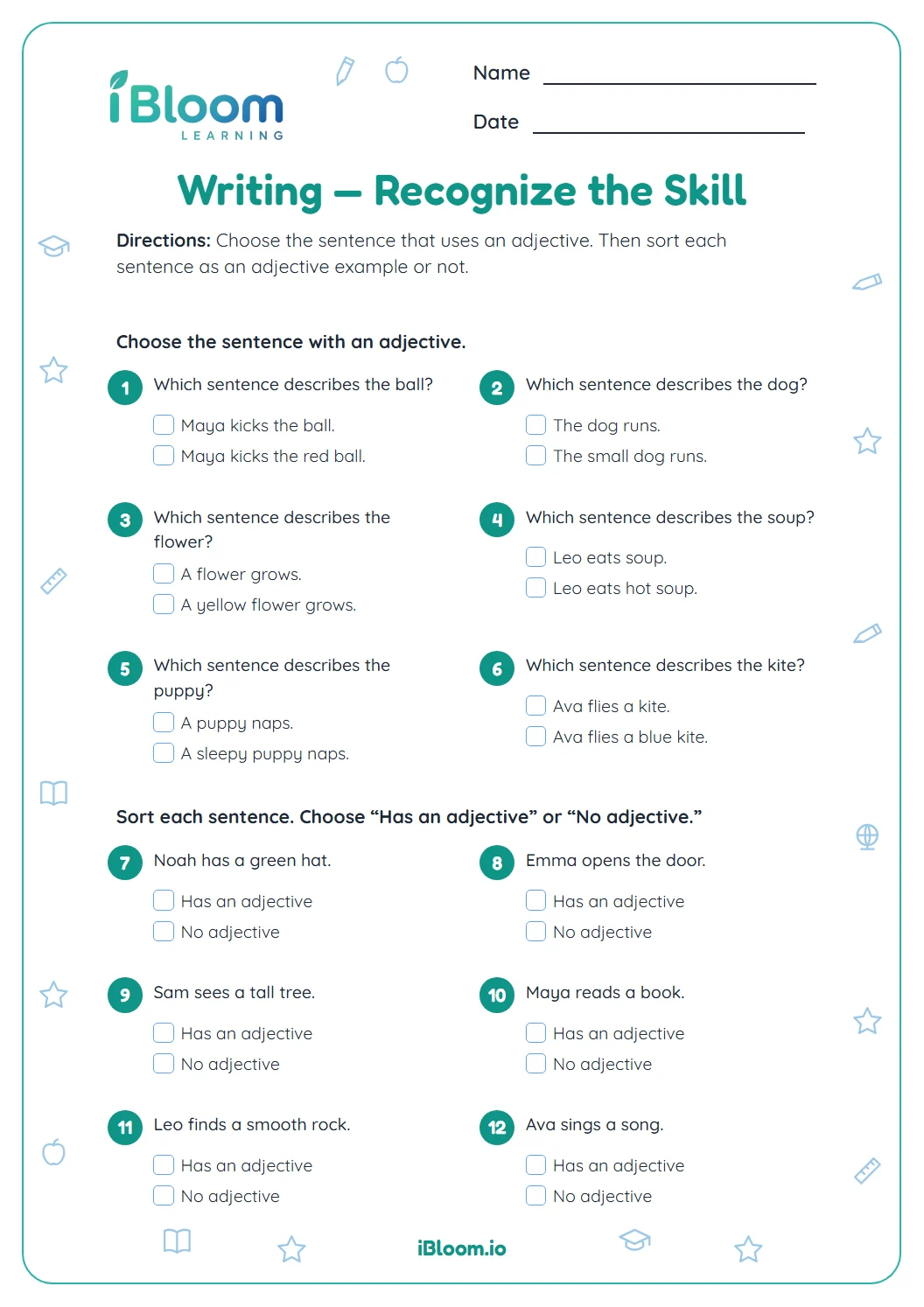
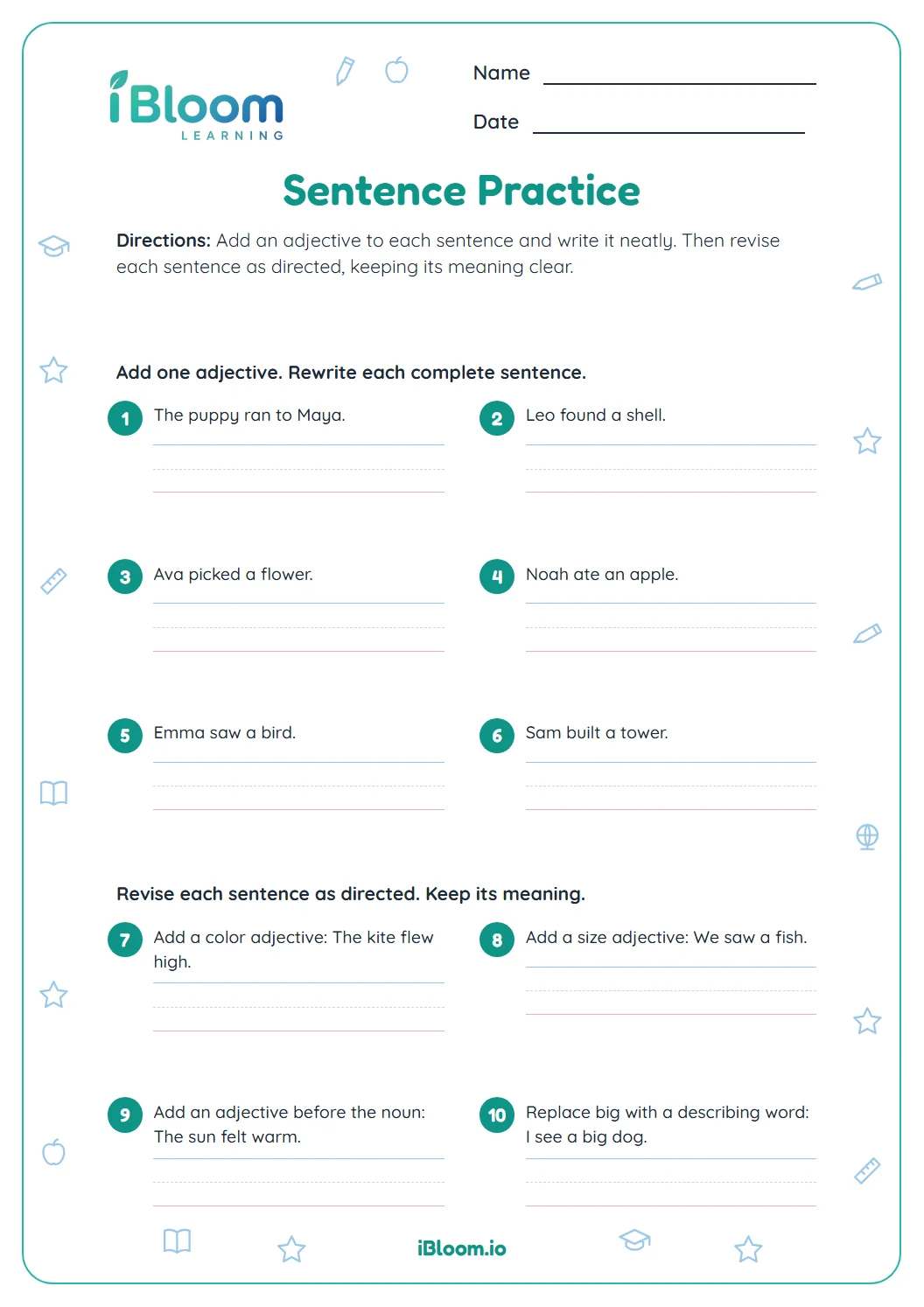
This free printable Grade 1 worksheet reviews common adjectives through 16 questions. Children circle a describing word in four short sentences, choose an adjective that fits four meaning clues, then add their own adjectives to two sentences. The challenge is to choose a useful detail and keep the original sentence idea. The sheet practices Common Core L.1.1f, using frequently occurring adjectives. A separate answer key marks the fixed answers and gives sample sentences for the two writing tasks.
Aligned to L.1.1f
How can a child find the adjective?
First find the person, animal or thing the sentence is about. Then ask what word gives a detail about it. In Part A, each sentence has one adjective, placed before the noun it describes.
The words soft, red, tall and happy describe different qualities. Naming the quality can help: feel, color, height or feeling.
- 1The soft cat naps.
- 2What animal? The cat.
- 3What tells about the cat? Soft.
- 4Circle soft.
How do the clues help children choose?
Part B connects adjectives to familiar experiences: cold ice, a sour lemon, a soft pillow and a light feather. Read the complete sentence before trying the choices.
Ask the child to say the completed sentence aloud. The adjective must fit the clue, not simply be a word the child recognizes. The answer positions vary, so children need to read every row.
What makes a good answer to the writing challenge?
Part C asks children to rewrite two sentences with an adjective before dog or flower. “The small dog runs” and “I see a yellow flower” are sample answers, but many other sensible adjectives work.
Check for an added describing word, the original idea, a capital letter and an ending period. Let the child explain the chosen detail before comparing with the key.
How to use this worksheet
- 1Read “The soft cat naps” and ask which word tells about the cat.
- 2Let the child circle one describing word in each Part A sentence.
- 3Read each Part B clue and all three choices aloud if needed.
- 4Have the child say each expanded Part C sentence before writing it.
- 5Check fixed answers with the key and accept sensible alternatives in Part C.
Mistakes to check and how to fix them
The mistake
Circling cat instead of soft.
The fix
Ask what word tells how the cat feels. Cat names the animal; soft gives the detail.
The mistake
Choosing loud for a feather because it is a describing word.
The fix
Return to “to lift.” That clue asks about weight, so light fits.
The mistake
Writing only yellow for the final task.
The fix
Have the child say and write the whole sentence: “I see a yellow flower.”
Common Core alignment
Find and use common adjectives for color, size, feel and other qualities.
On this sheet: Children identify adjectives, select them from meaning clues and add them to sentences.
Show the official wordingHide the official wording
Use frequently occurring adjectives.
What to practice next
Make more practice
Further reading
Questions parents and teachers ask
Which describing words appear in Part A?
The four adjectives are soft, red, tall and happy. They describe the cat, kite, tree and child. Each sentence contains one target adjective, so children circle only one word per row. Ask what the word tells about its noun to check that the choice was deliberate.
Can I read the questions aloud?
Yes, an adult can read the sentences and choices aloud. Keep the focus on choosing a describing word, and let the child do the circling or writing. For Part B, read all three options before the child chooses, then say the completed sentence together to check its meaning.
Must the last two answers match the key?
No, the two writing answers can use different sensible adjectives. The key gives a small dog and a yellow flower as examples. A sleepy dog or a red flower can also work. Check that the child rewrites the full sentence and puts the describing word before the intended noun.
What makes this a mixed review and challenge?
The sheet moves from finding adjectives to choosing them and then using them independently. Part A supplies the adjective in a sentence. Part B asks which word fits a clue. Part C removes the choices, so children must think of a useful detail and write an expanded sentence.
How can we use a missed answer for practice?
Use the missed item to connect an adjective with its noun and clue. For the feather question, ask what lifting tells us to think about: weight. Then try light, heavy and loud in the sentence. Have the child explain the best choice and name another light object.