


About this worksheet
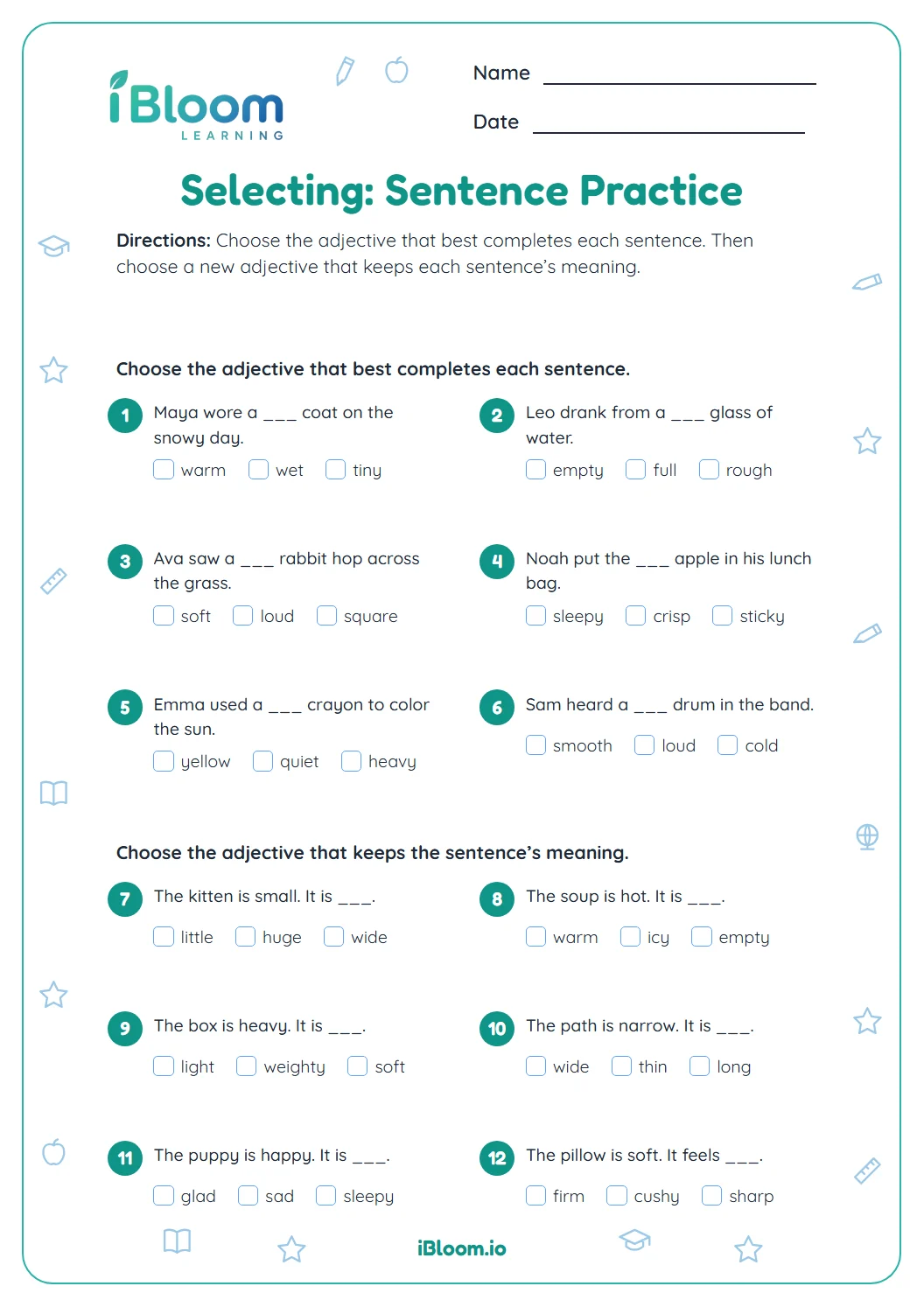
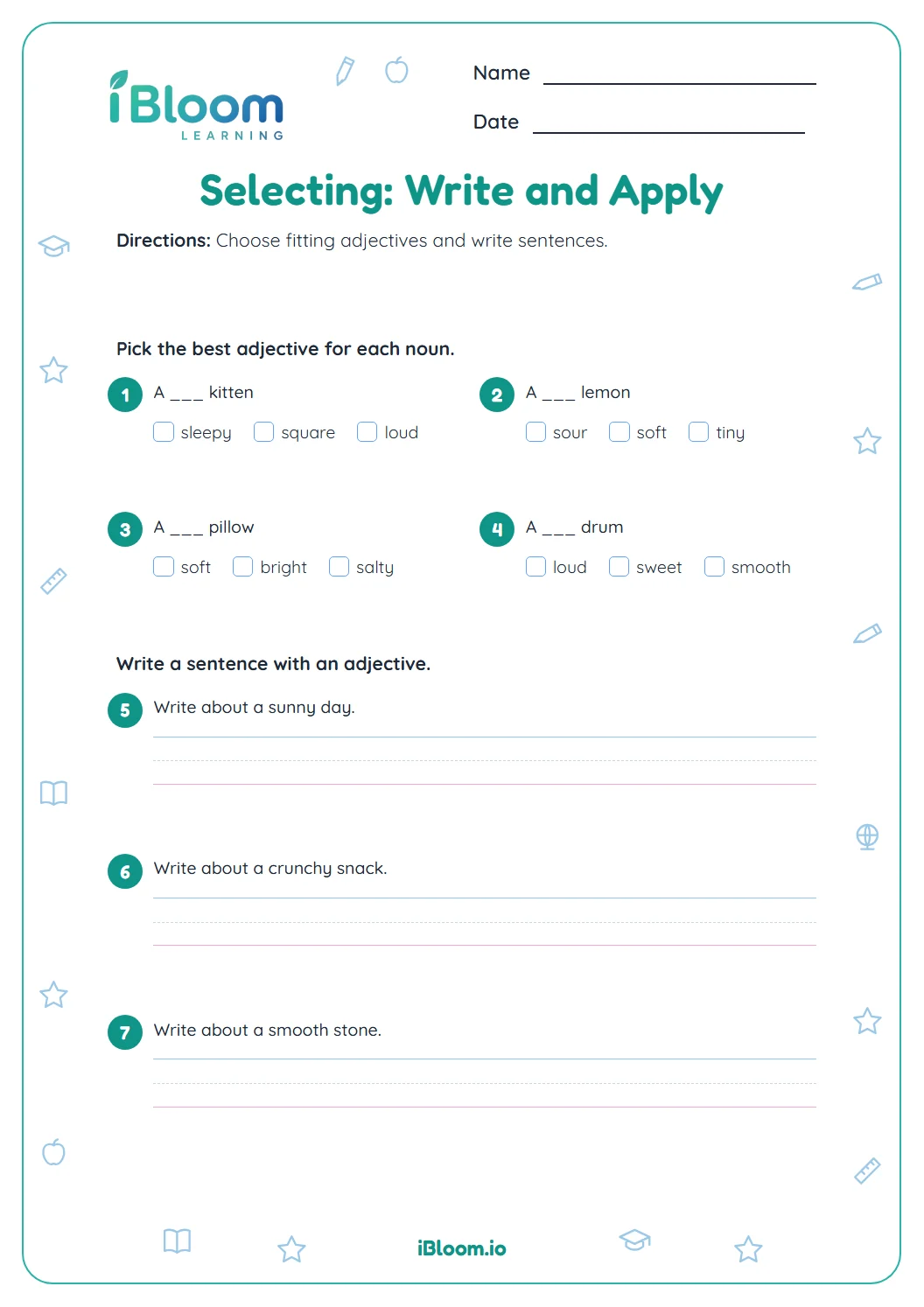
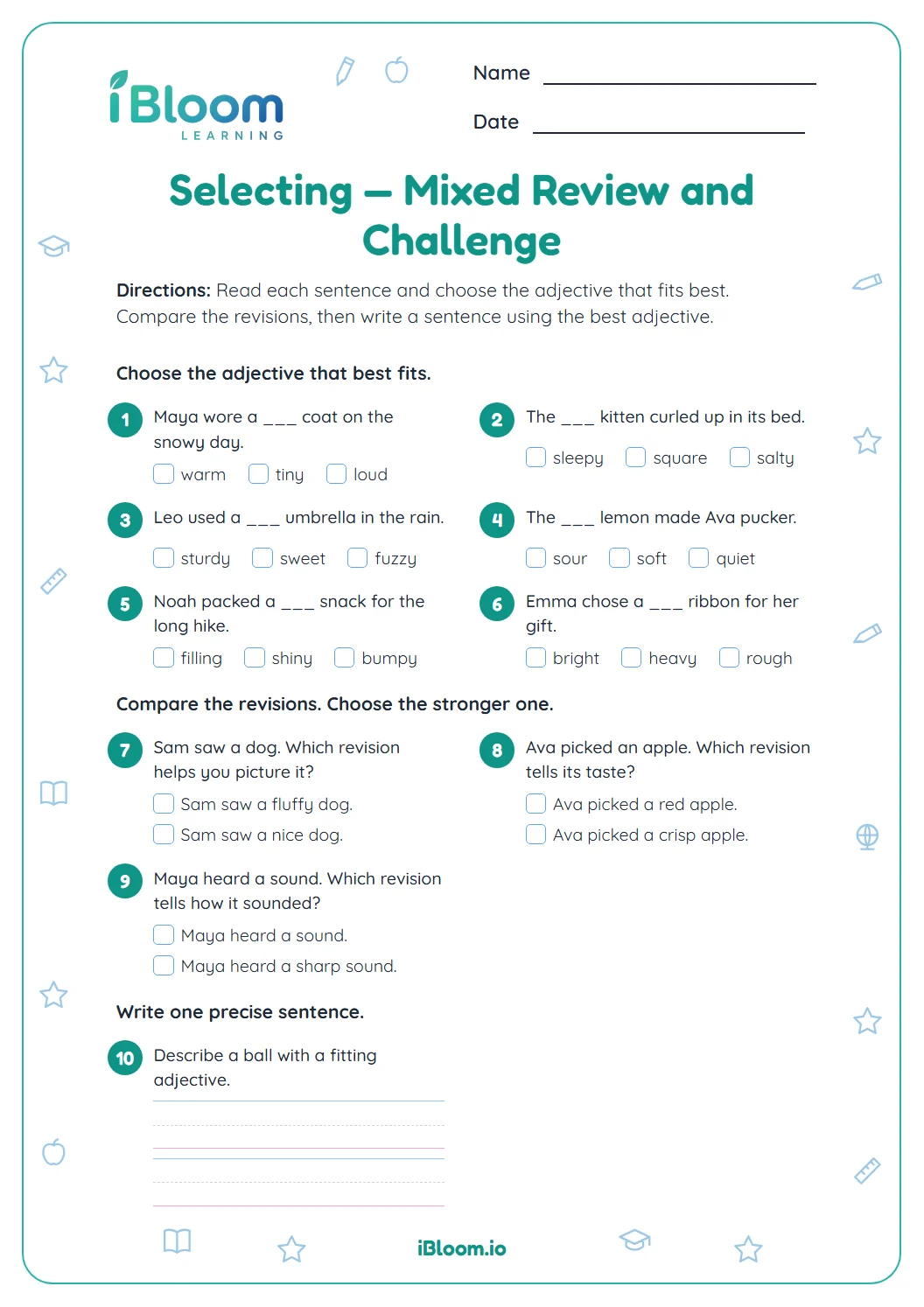
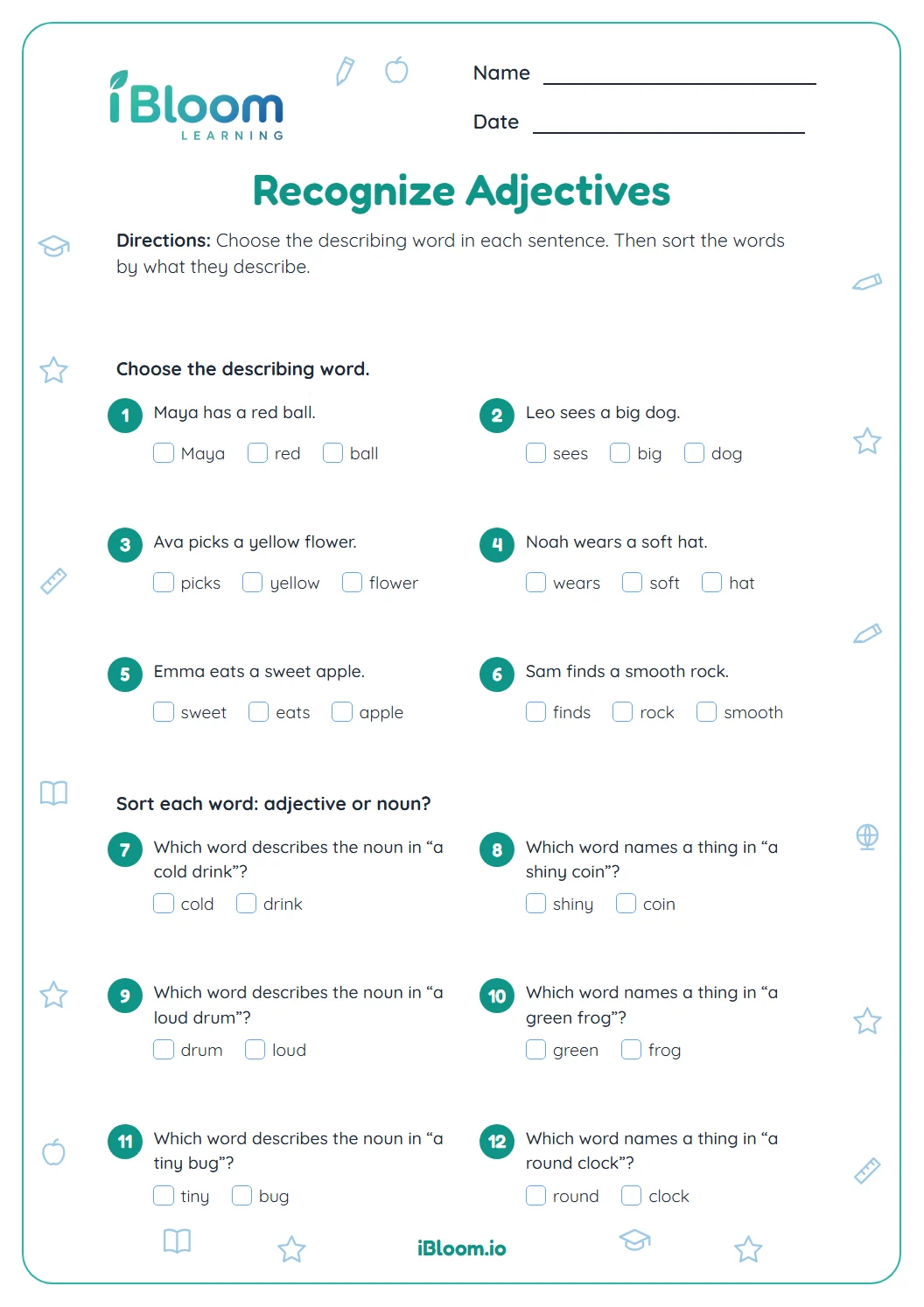
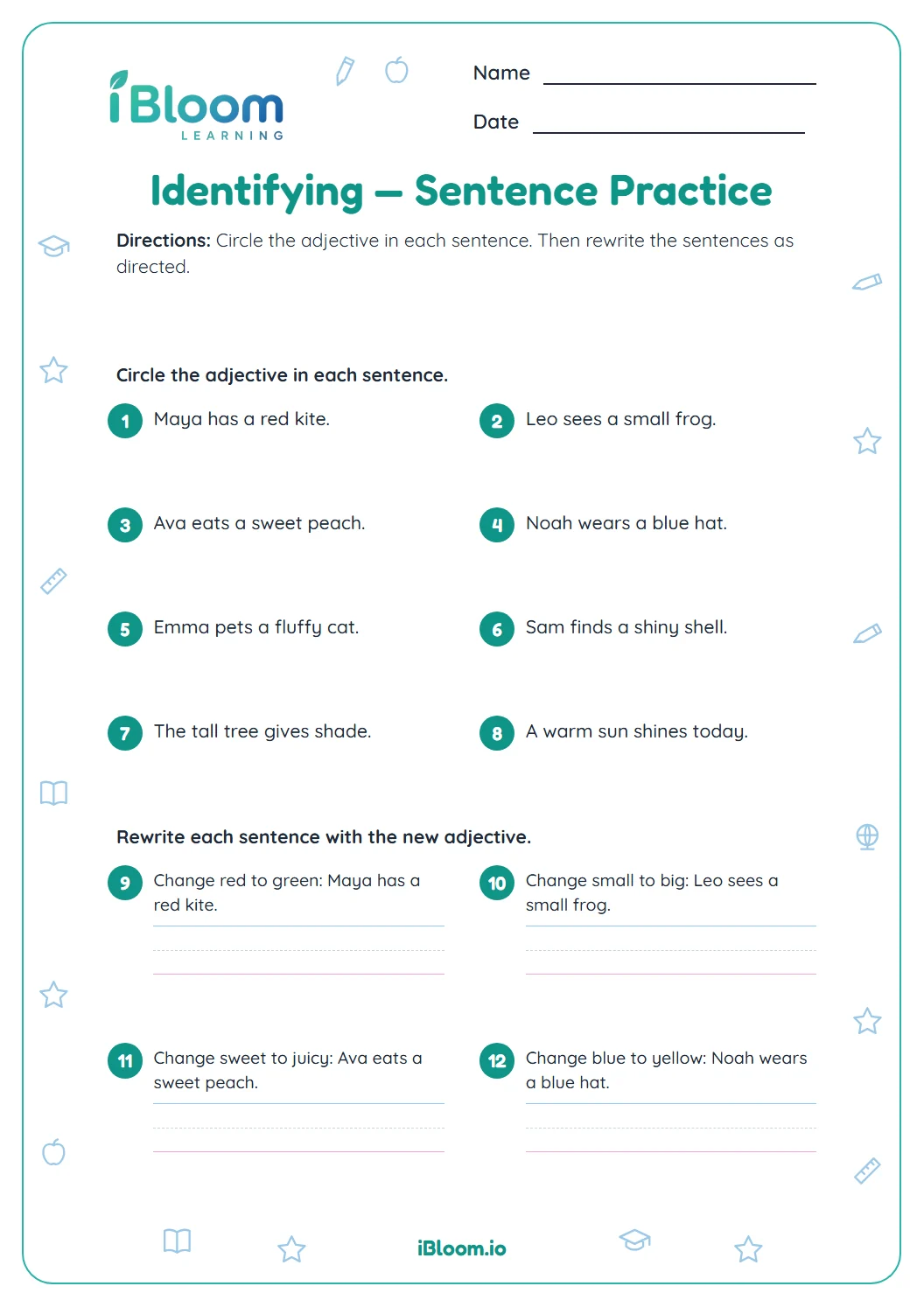
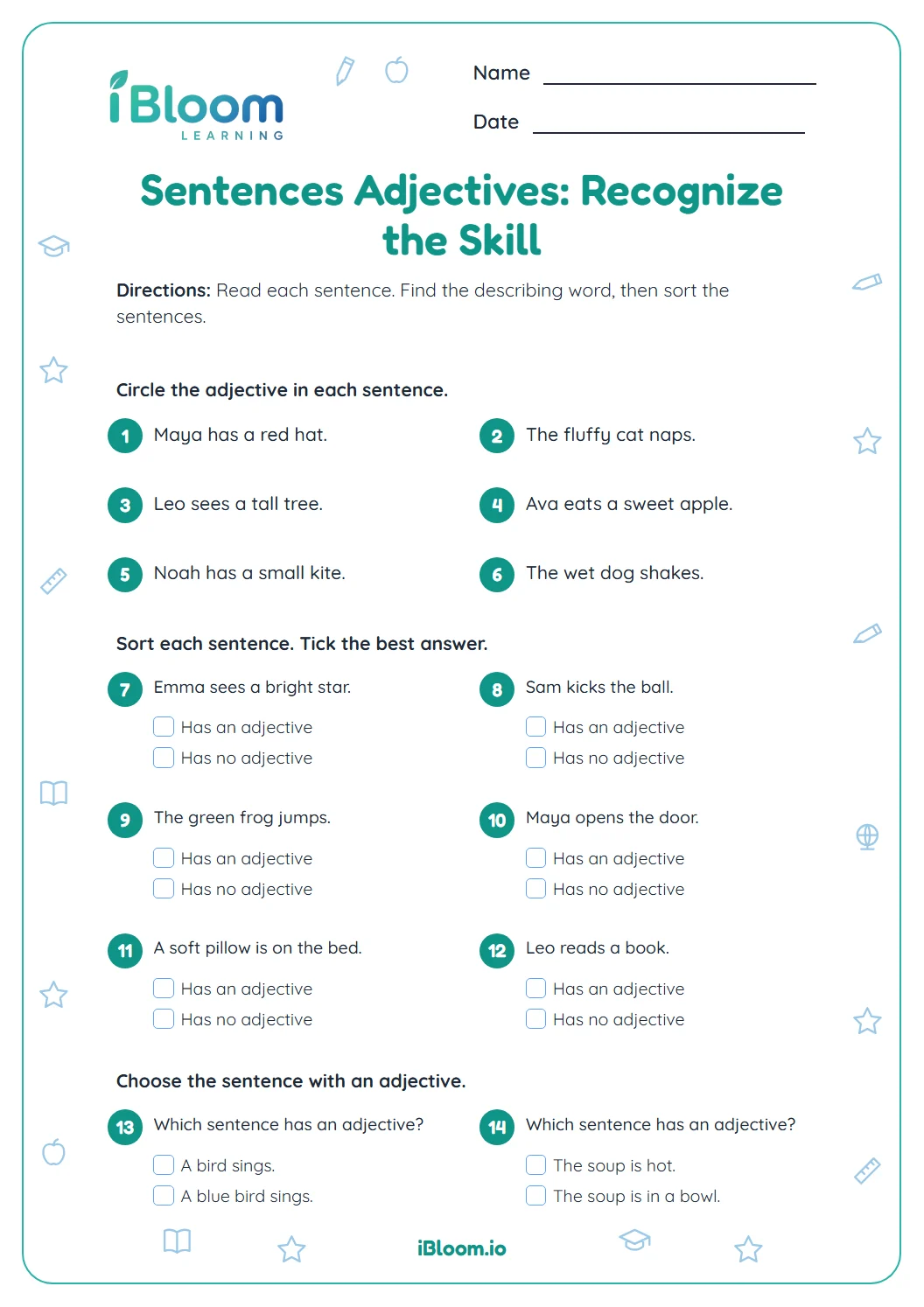
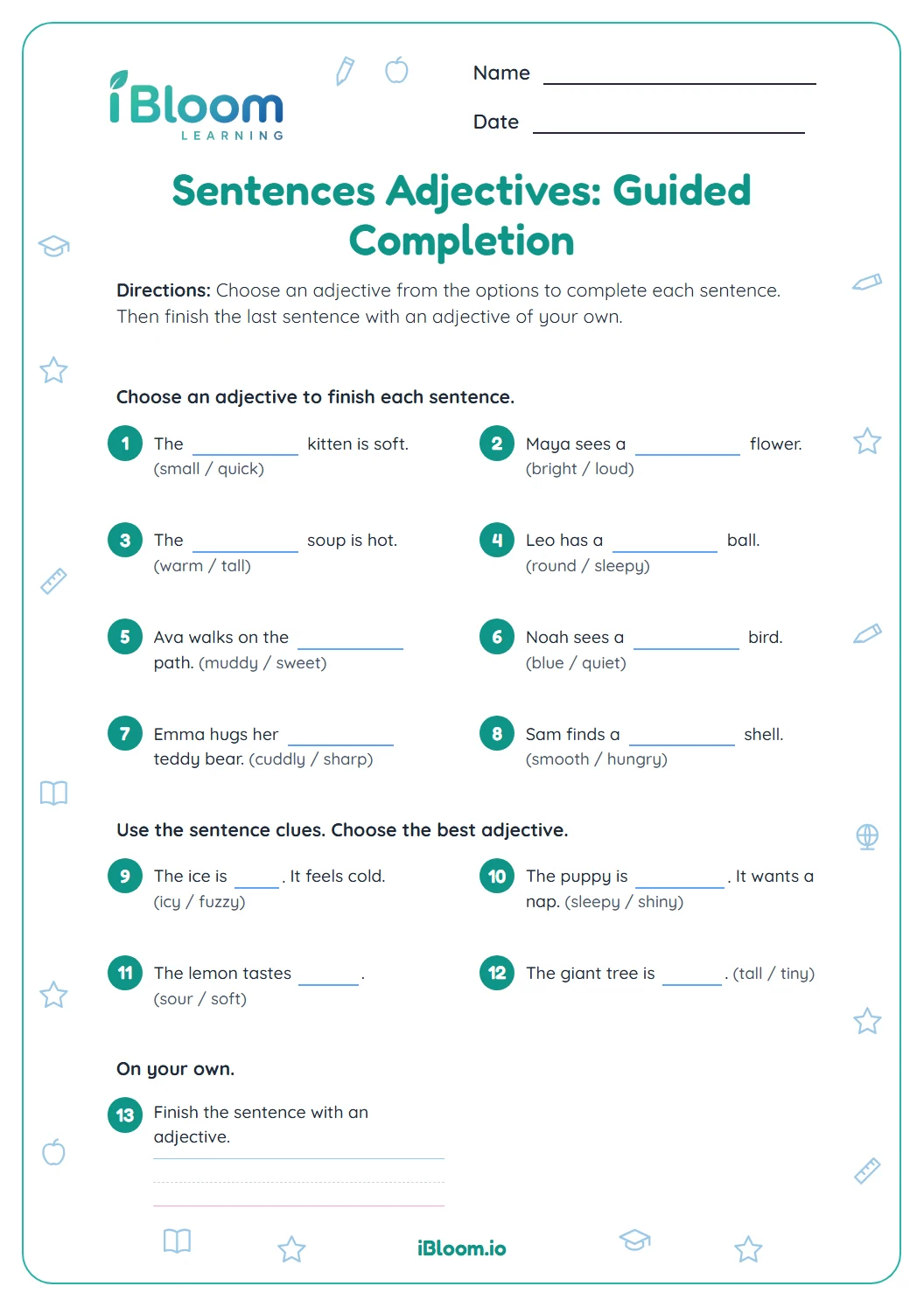
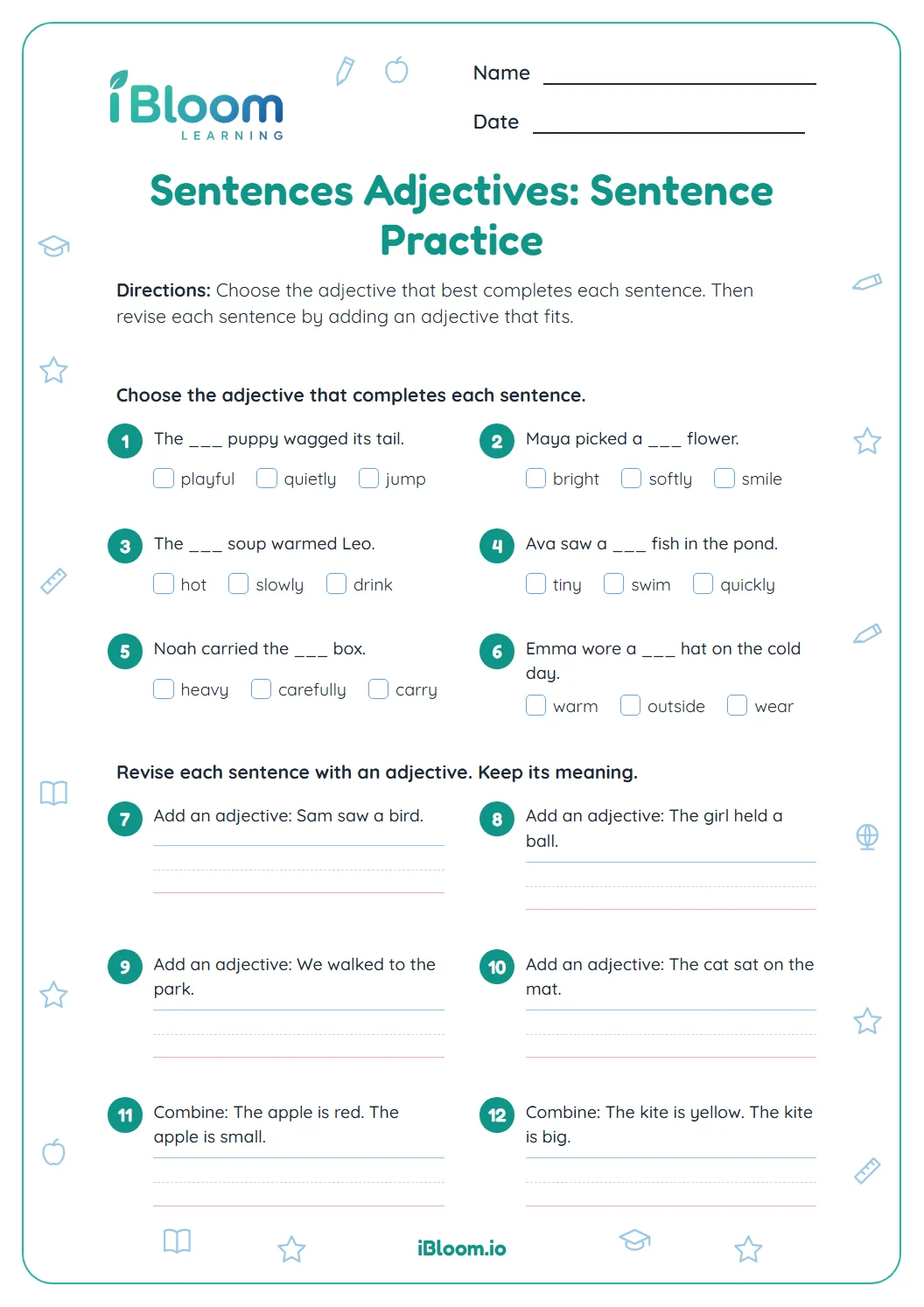
This Grade 1 adjectives worksheet begins by asking children to spot a describing word in a short sentence. Next, they choose an adjective that fits, rewrite sentences with the requested correction, and compare sentences to find adjectives. The final two items invite an original describing word. The answer key includes sample responses for those open blanks. It practices CCSS L.1.1.f: using frequently occurring adjectives.
Aligned to L.1.1.f
What will children do on this adjective sheet?
The 16 items move from recognition to use. Children find adjectives in familiar sentences, choose a word that fits a noun, edit simple sentences, compare two sentences, and add their own adjectives.
The last two answers can vary. The key gives examples, and another adjective is acceptable when it makes a sensible sentence.
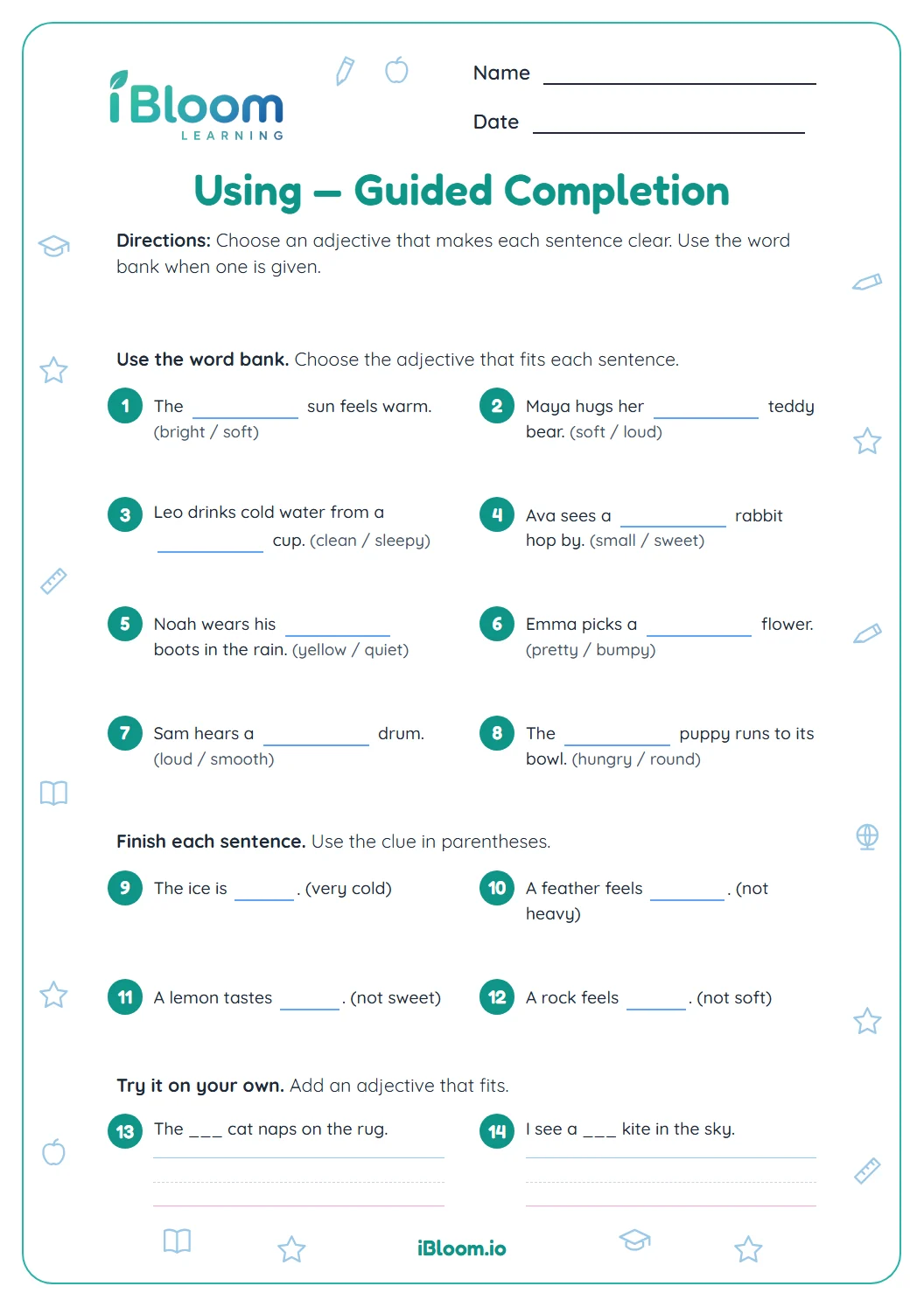
- Part A: find and select adjectives
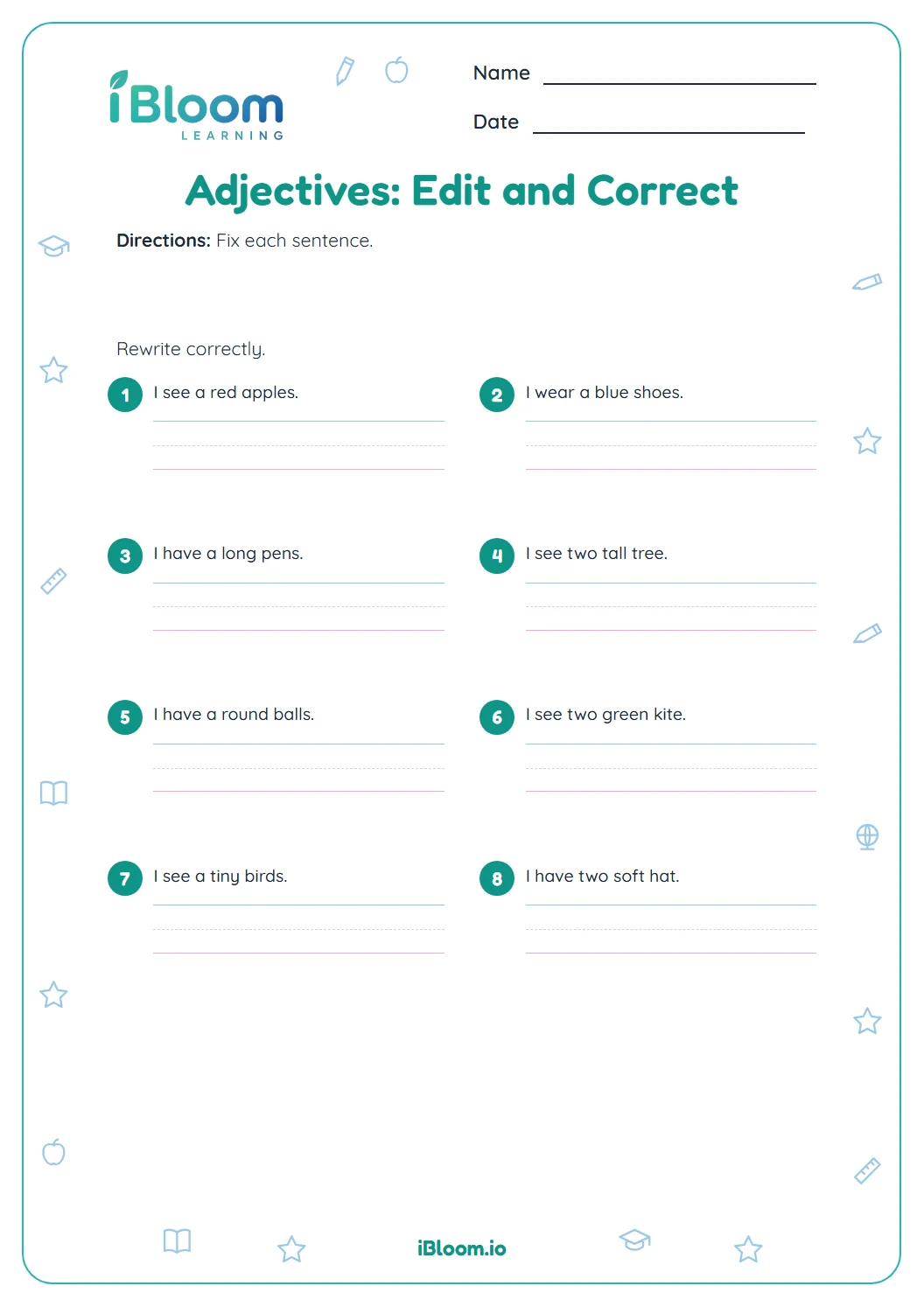
- Part B: correct sentences
- Parts C and D: compare sentences and add a describing word
How can a child find the adjective?
First find the person, place, animal, or thing. Then ask what word tells more about it. In “The soft cat naps,” cat is the noun and soft describes the cat.
- 1The soft cat naps.
- 2Ask: What is the cat like?
- 3Soft describes cat, so choose soft.
How do children edit an adjective sentence?
Read the whole sentence after making the requested change. In “The fluffy dog run,” the singular subject dog needs the verb runs. In “The tall tree are green,” changing tree to trees makes are agree with the plural subject.
Can more than one adjective complete a blank?
Yes. The fish may be little, blue, or quick, and a leaf may be yellow, green, or dry. The key shows one sample for each open response; another describing word works when the complete sentence makes sense.
How to use this worksheet
- 1Read the whole sentence before choosing a word.
- 2Find the noun the adjective describes.
- 3For editing, make only the change the prompt asks for.
- 4Reread the sentence to check that the words fit together.
- 5Compare your last two choices with the sample answers in the key.
Common mistakes and quick fixes
The mistake
Choosing an action word instead of a describing word.
The fix
Ask which word tells what the noun is like.
The mistake
Changing the adjective when the sentence needs a verb correction.
The fix
Keep the describing word and fix the part named in the prompt.
The mistake
Thinking the sample adjective is the only possible answer.
The fix
Accept another word that describes the noun and completes a sensible sentence.
Curriculum alignment
This page practices a grade-level skill named in the Common Core State Standards.
Use frequently occurring adjectives.
On this sheet: Students recognize and use familiar adjectives in simple sentences.
Show the official wordingHide the official wording
Use frequently occurring adjectives.
What to practice next
Make more practice
Further reading
Questions parents and teachers ask
What does an adjective do?
An adjective describes a noun, such as a person, animal, place, or thing. In “a smooth shell,” smooth tells what the shell is like. Part A asks children to identify adjectives, while later items let them choose and use describing words.
How can a child tell an adjective from an action word?
Find the noun first, then ask which word describes it. In “A red kite flies,” kite is the noun, red describes the kite, and flies tells what the kite does. This worksheet practices the describing word in short, familiar sentences.
Why does the worksheet ask children to edit sentences?
Editing helps children use adjectives inside complete sentences. They keep the describing word and make a requested correction, such as changing run to runs or making tree plural so it agrees with are. The key shows the corrected sentence. Read the corrected version aloud to check it.
Can a different adjective be right for the last two items?
Yes. The last two prompts ask children to add a describing word, so several answers can make sense. The key gives one sample for each. A different word is suitable if it describes the fish or leaf and completes the sentence clearly.
How many questions and pages are included?
The printable includes 16 questions on three worksheet pages and a three-page answer key. It moves from finding adjectives to choosing, editing, comparing, and using them. Children can check their work with the key after completing each part. The key also accepts other fitting describing words.