


About this worksheet
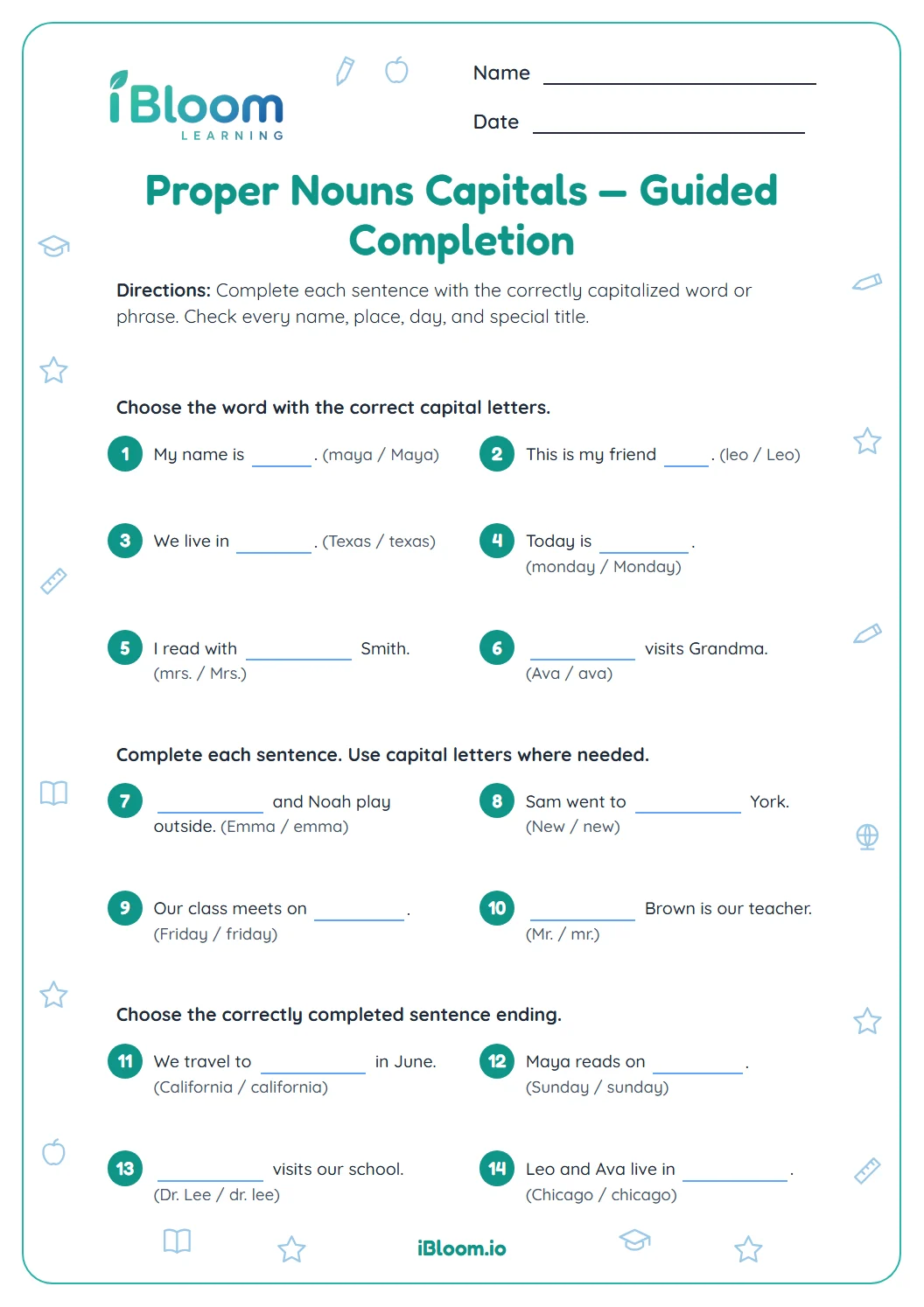
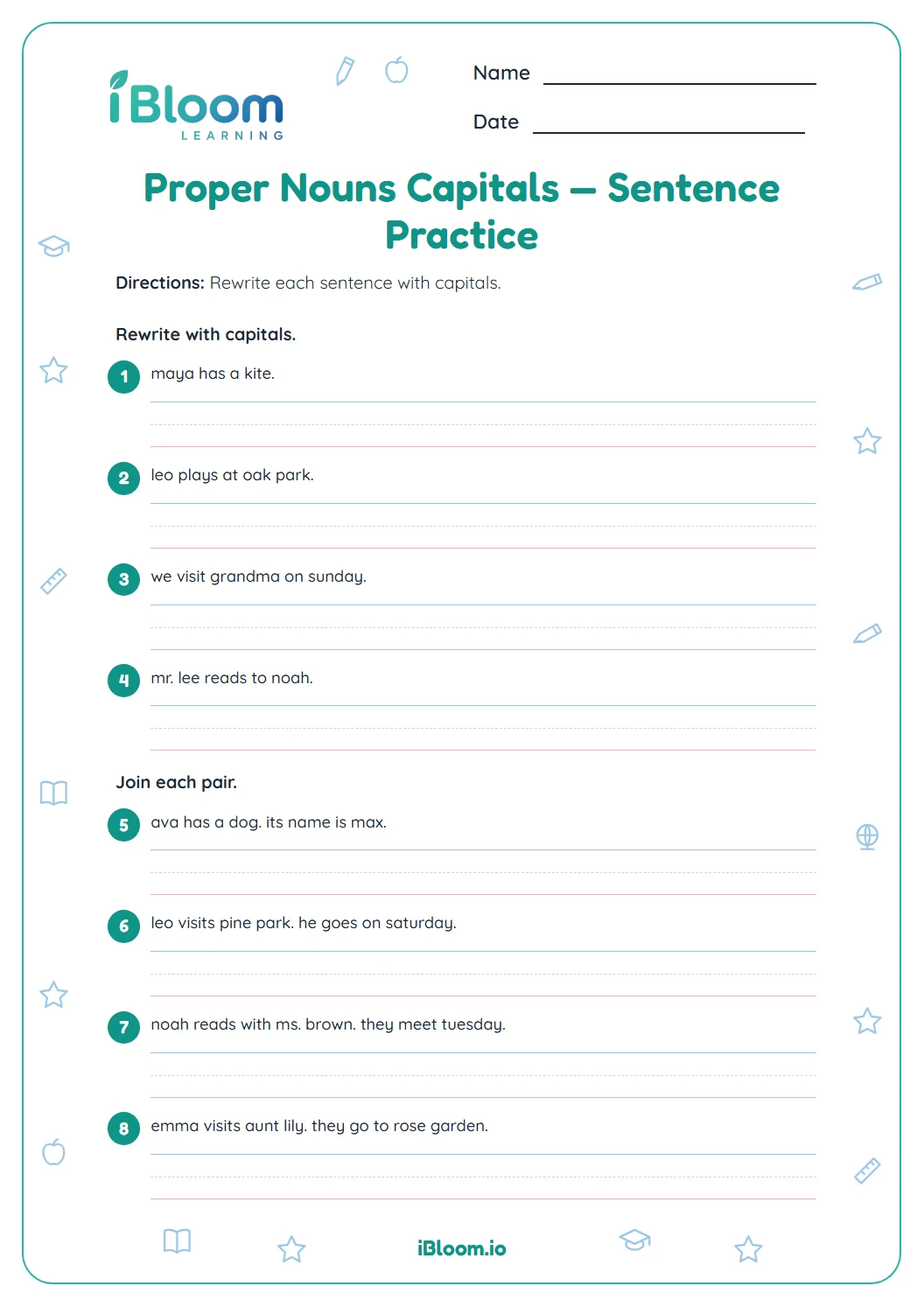
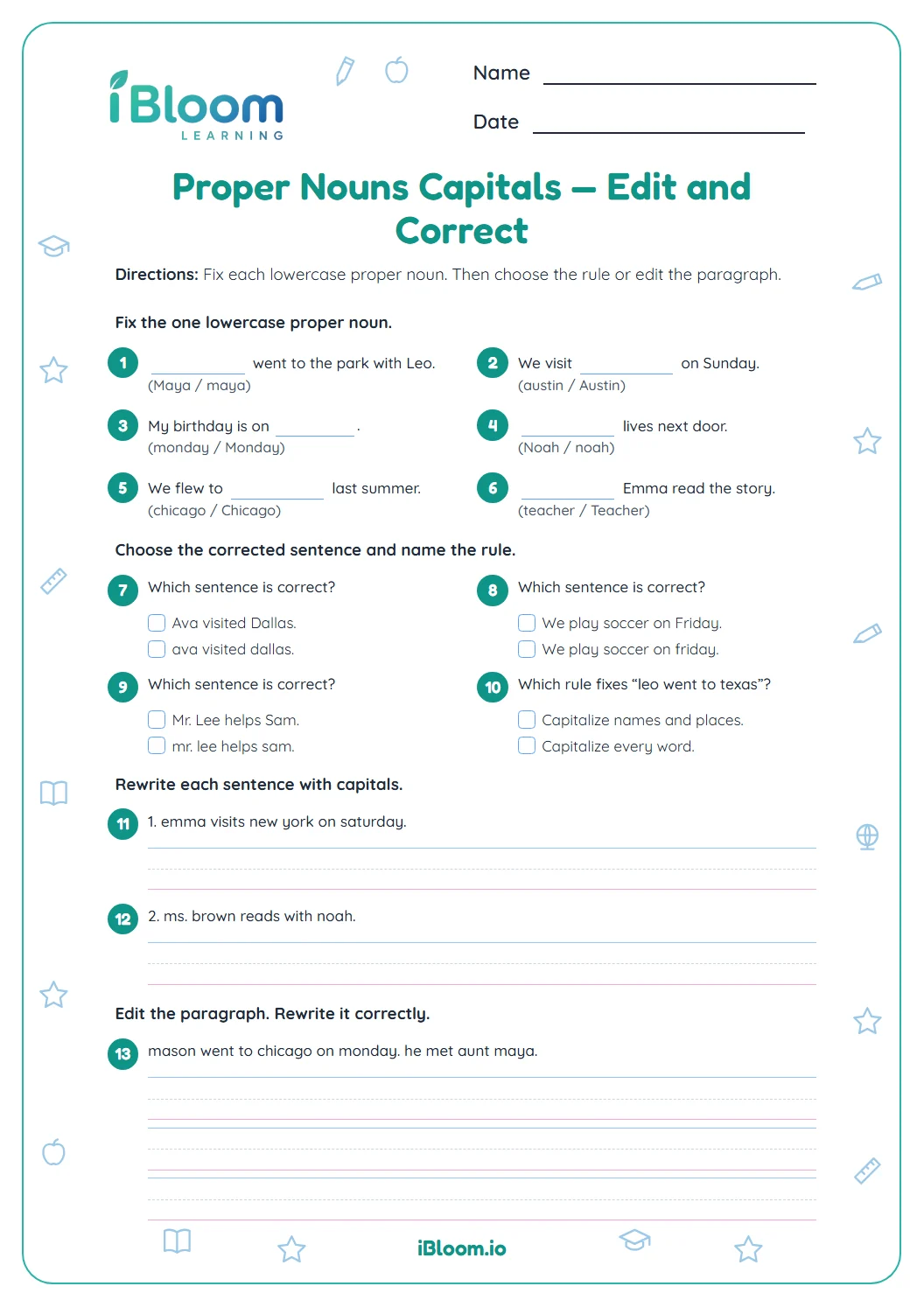
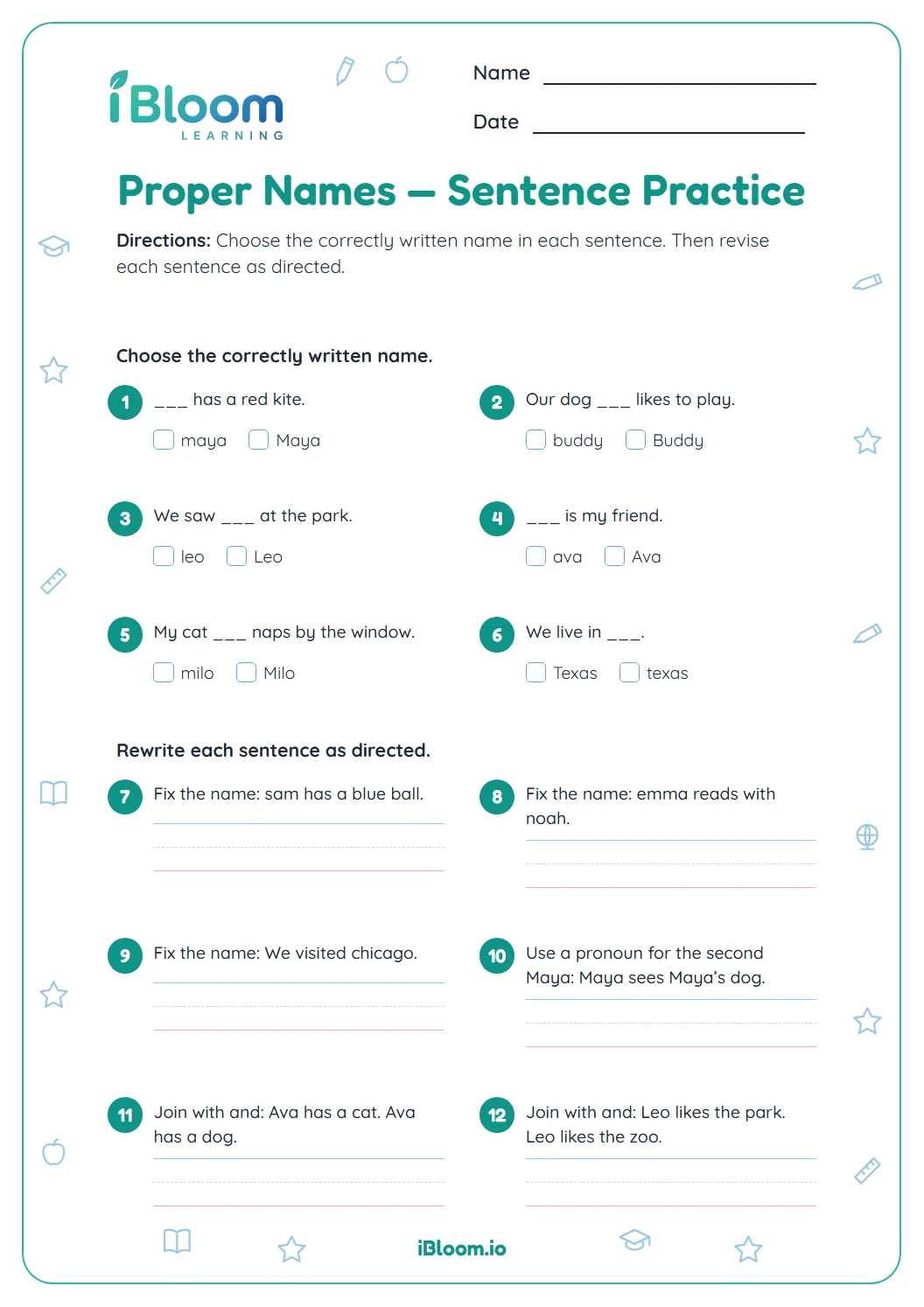
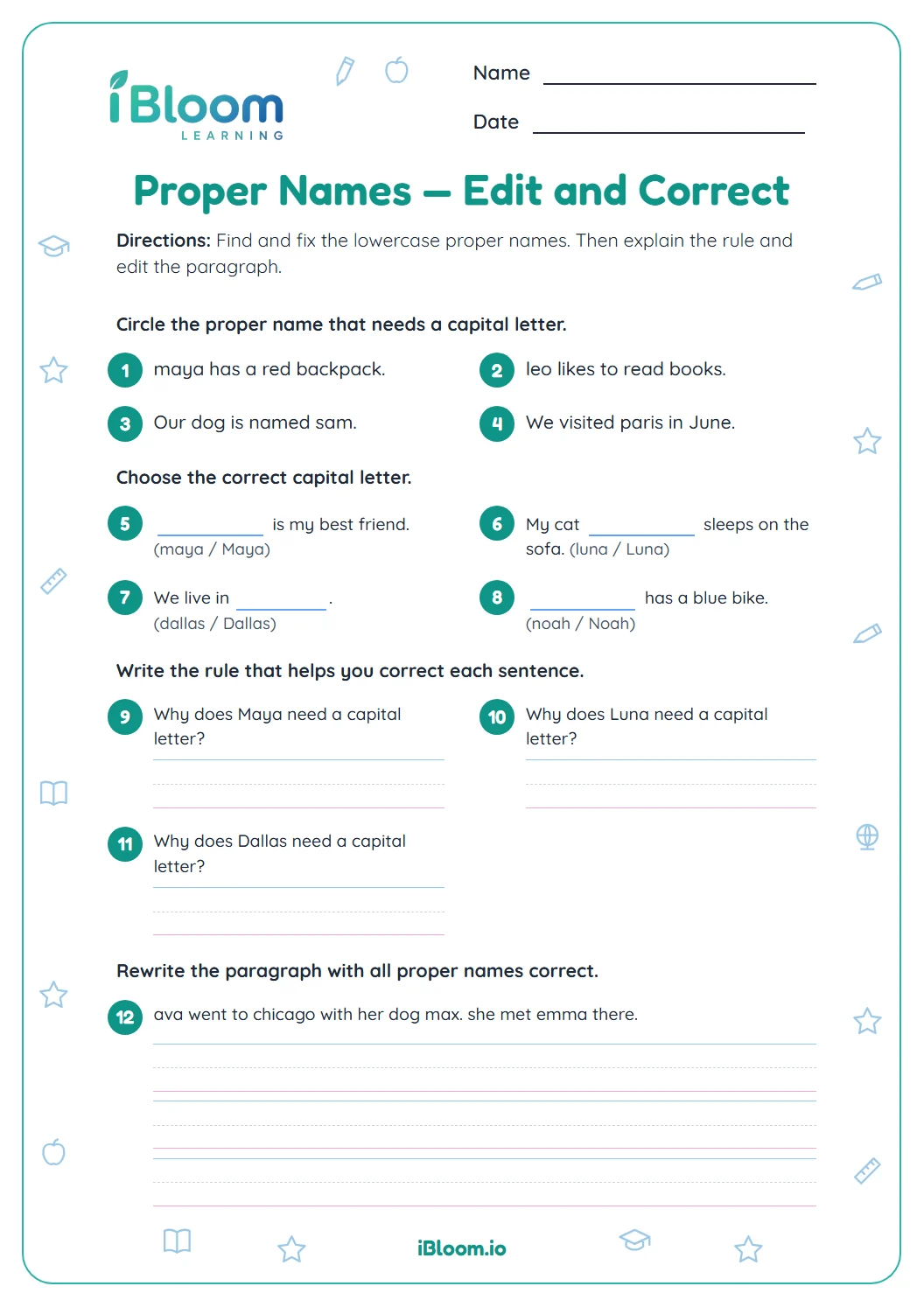
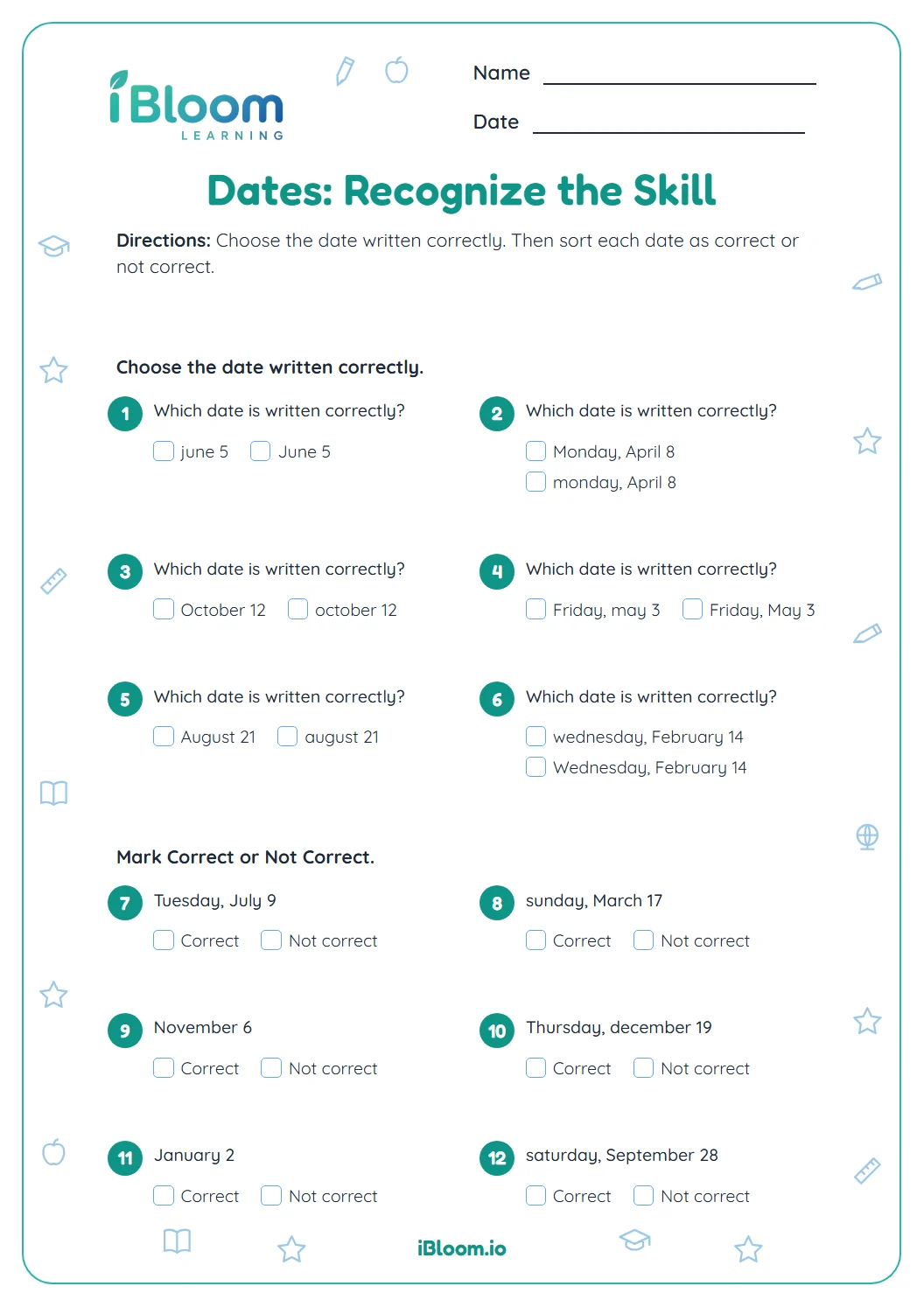
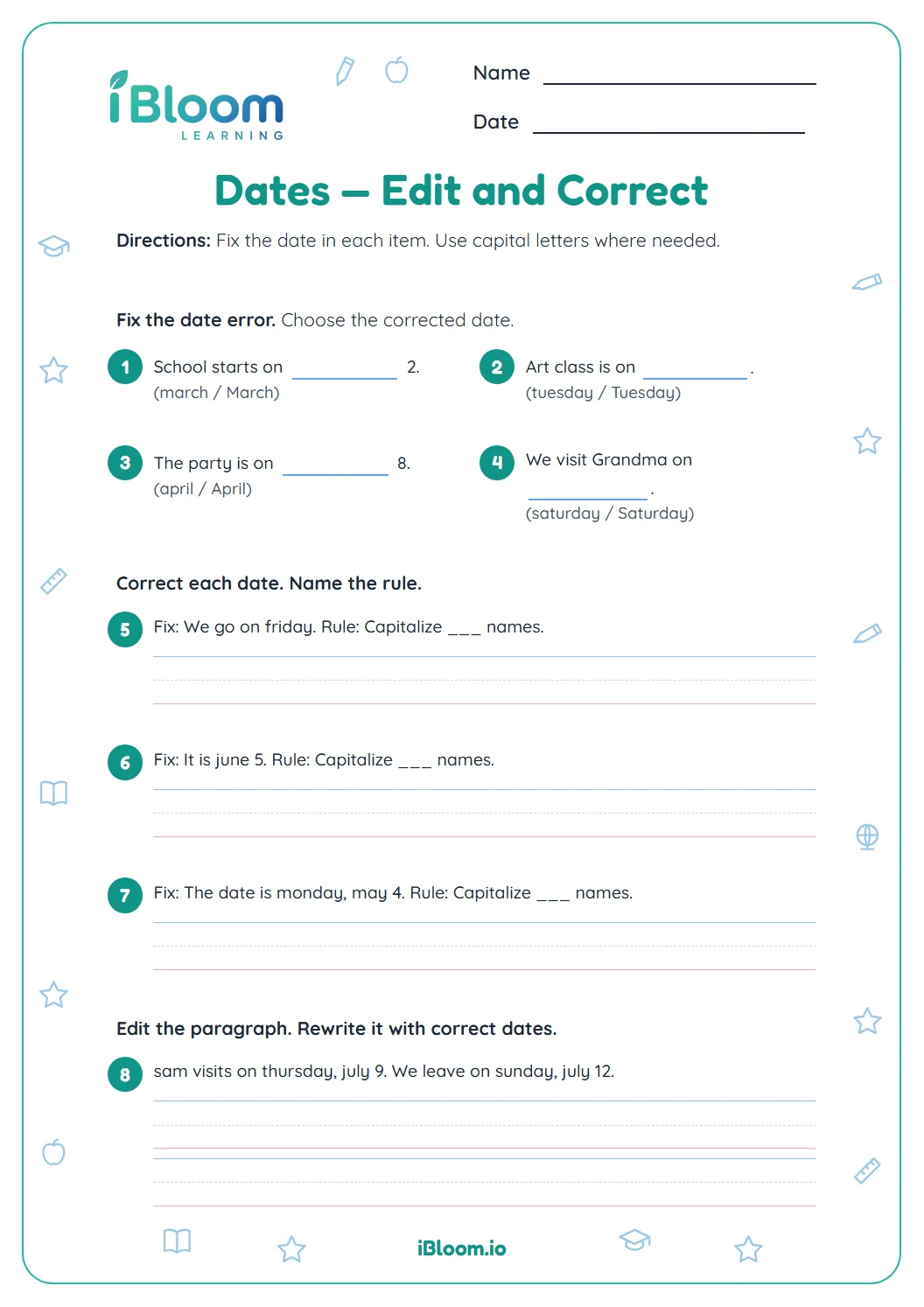
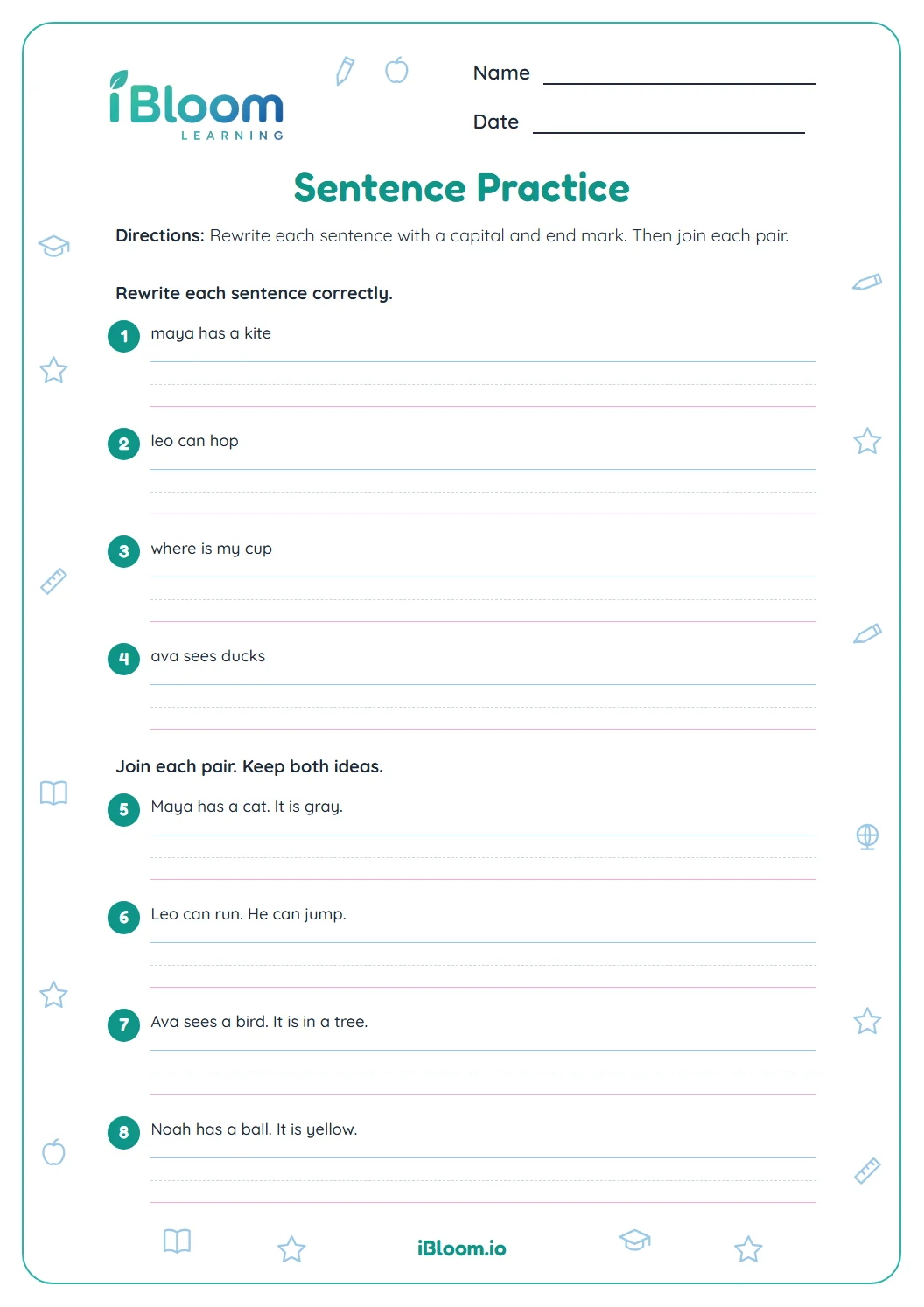
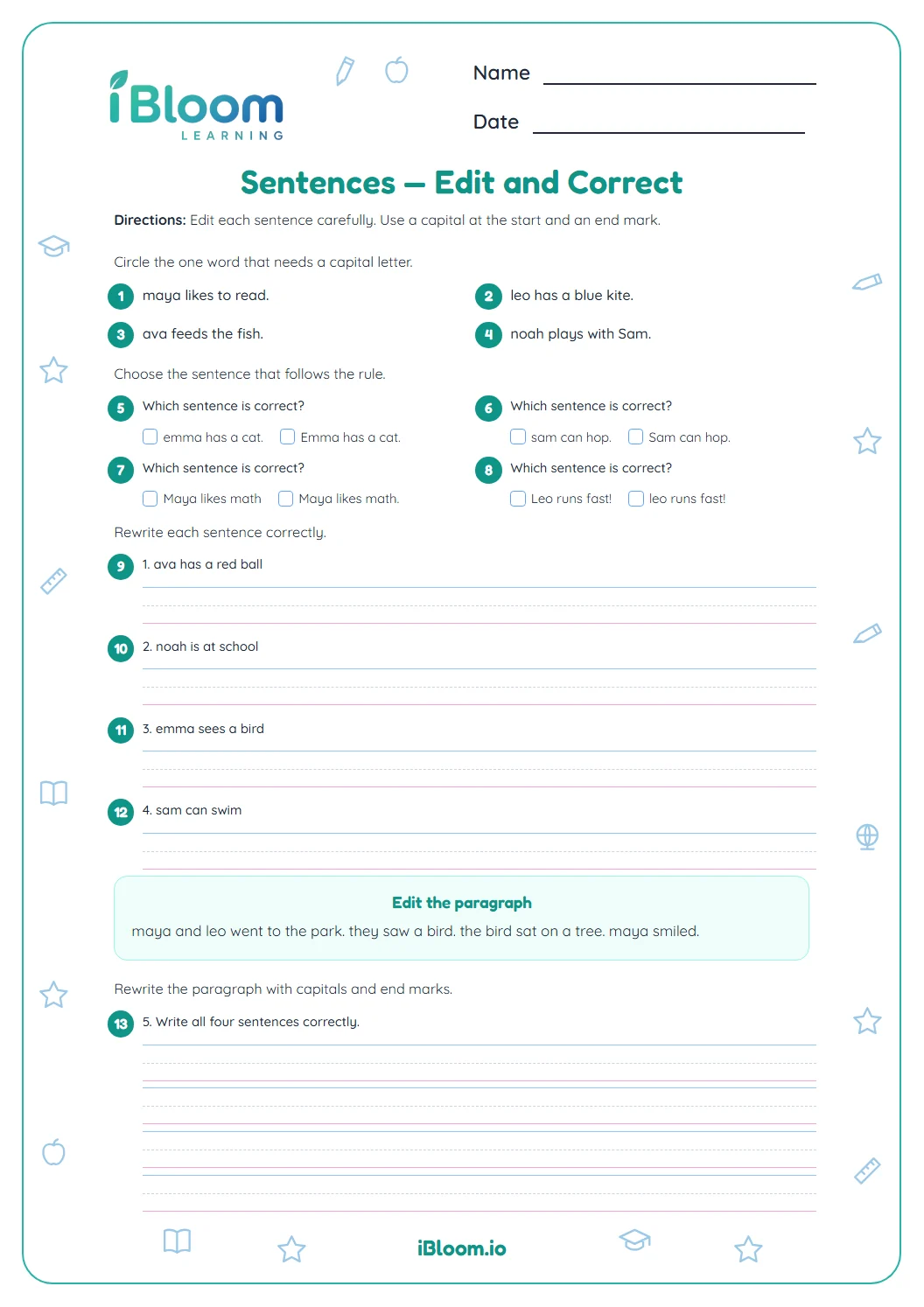
This Grade 1 capitalization worksheet gives practice with names of people and date words. In Part A, children rewrite eight short sentences, fixing capitals in names, days, and months. In Part B, they capitalize seven individual names or date words. The work practices CCSS L.1.2a, and a separate answer key is included.
Aligned to L.1.2a
Which words need capitals?
Names of specific people begin with capital letters. Date words such as days and months also begin with capitals. The worksheet gives children sentences and single words to edit so they can practice spotting these forms.
How does Part A work?
Rewrite the complete sentence with the needed capitals. For example, “i see mia on monday” becomes “I see Mia on Monday.” The sentence still begins with a capital letter, and the name and day each begin with one too.
What changes in Part B?
Part B gives one lowercase name or date word at a time. The learner rewrites it with the first letter capitalized, such as changing monday to Monday. These short items let children focus on the capital letter itself.
- 1i see mia on monday.
- 2Capitalize the first word, the person’s name, and the day.
- 3I see Mia on Monday.
How to use this worksheet
- 1Read the full sentence once.
- 2Look for names of people and words naming days or months.
- 3Rewrite the entire sentence, keeping the other words in order.
- 4In Part B, change the first letter of the name or date word to a capital.
- 5Check each response with the answer key.
Common mistakes and quick fixes
The mistake
Leaving a person’s name lowercase.
The fix
Ask whether the word names one specific person; if it does, capitalize it.
The mistake
Forgetting a day or month.
The fix
Scan for date words such as Monday, Friday, June, or May.
The mistake
Changing only one capital in a sentence.
The fix
Reread the whole sentence and check its first word, names, and date words.
Common Core alignment
This worksheet gives practice with the skill named in the standard.
Capitalize dates and names of people.
On this sheet: The sentences and single-word items practice capitalizing people’s names and date words.
Show the official wordingHide the official wording
Capitalize dates and names of people.
What to practice next
Make more practice
Further reading
Questions parents and teachers ask
How many questions are on the worksheet?
There are 15 questions in two parts. Part A has eight sentence edits, and Part B has seven individual names or date words to capitalize. The answer key is provided on a separate page. Reread the sentence after adding each capital.
Does the worksheet practice names of places?
The questions focus on names of people and date words, such as days and months. Part A asks learners to correct these capitals in sentences, and Part B gives individual name and date words to rewrite. Reread the sentence after adding each capital.
Can an adult read the sentences aloud?
Yes. An adult may read a sentence aloud while the child looks for a person’s name or a day or month. The child can then rewrite the sentence and check that the capital letters appear in the right words. Reread the sentence after adding each capital.
What should my child do if only one capital is wrong?
Rewrite the full sentence as directed, correcting the lowercase letters that need capitals. Then reread the whole sentence and check its first word, people’s names, and date words before comparing it with the key. Reread the sentence after adding each capital.
How long does this worksheet take?
Plan for about 15 minutes. The sentence edits take longer than the single-word practice because children rewrite a complete sentence. An adult can help read directions while letting the learner decide which letters need capitals. Reread the sentence after adding each capital.