
About this worksheet
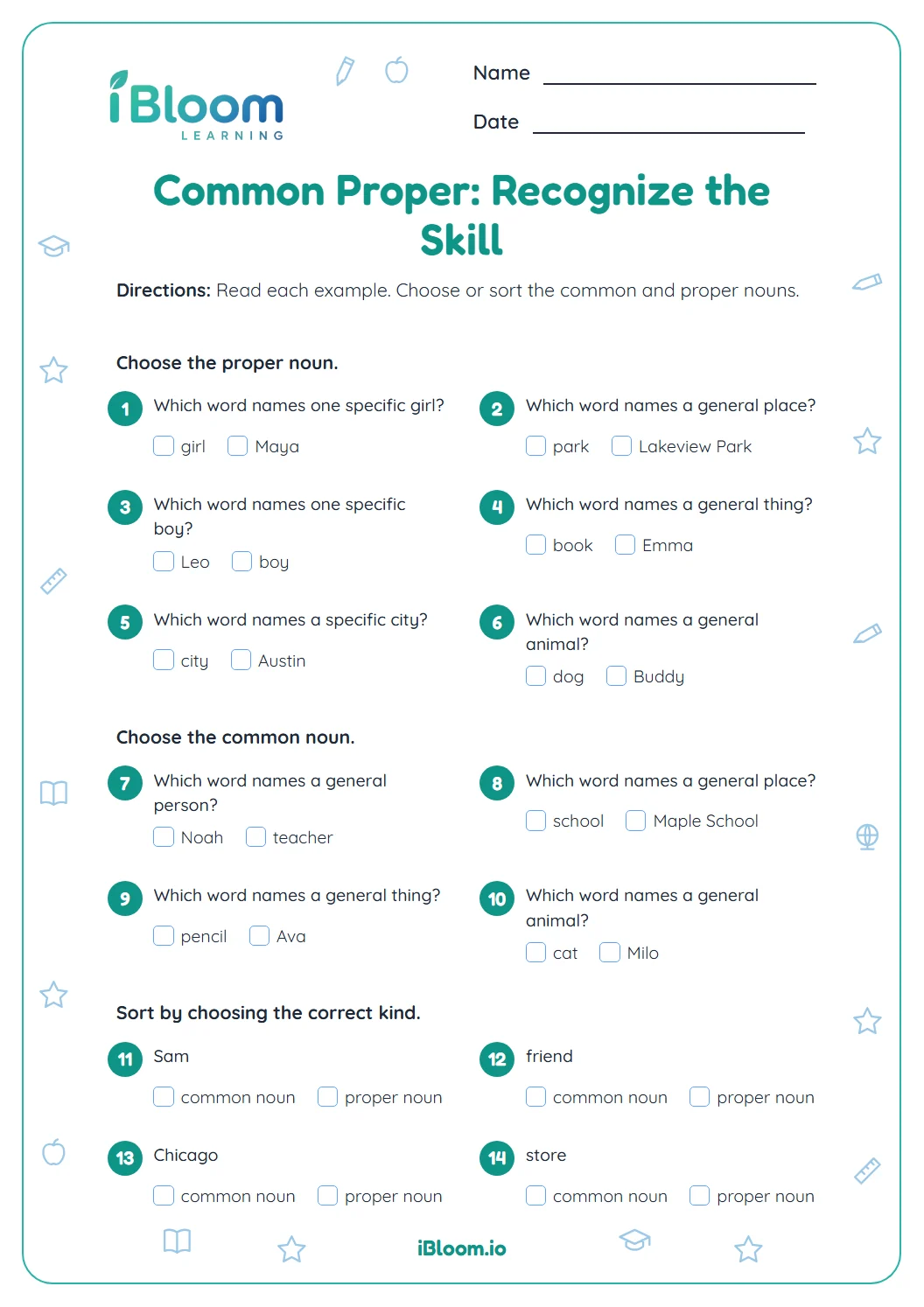
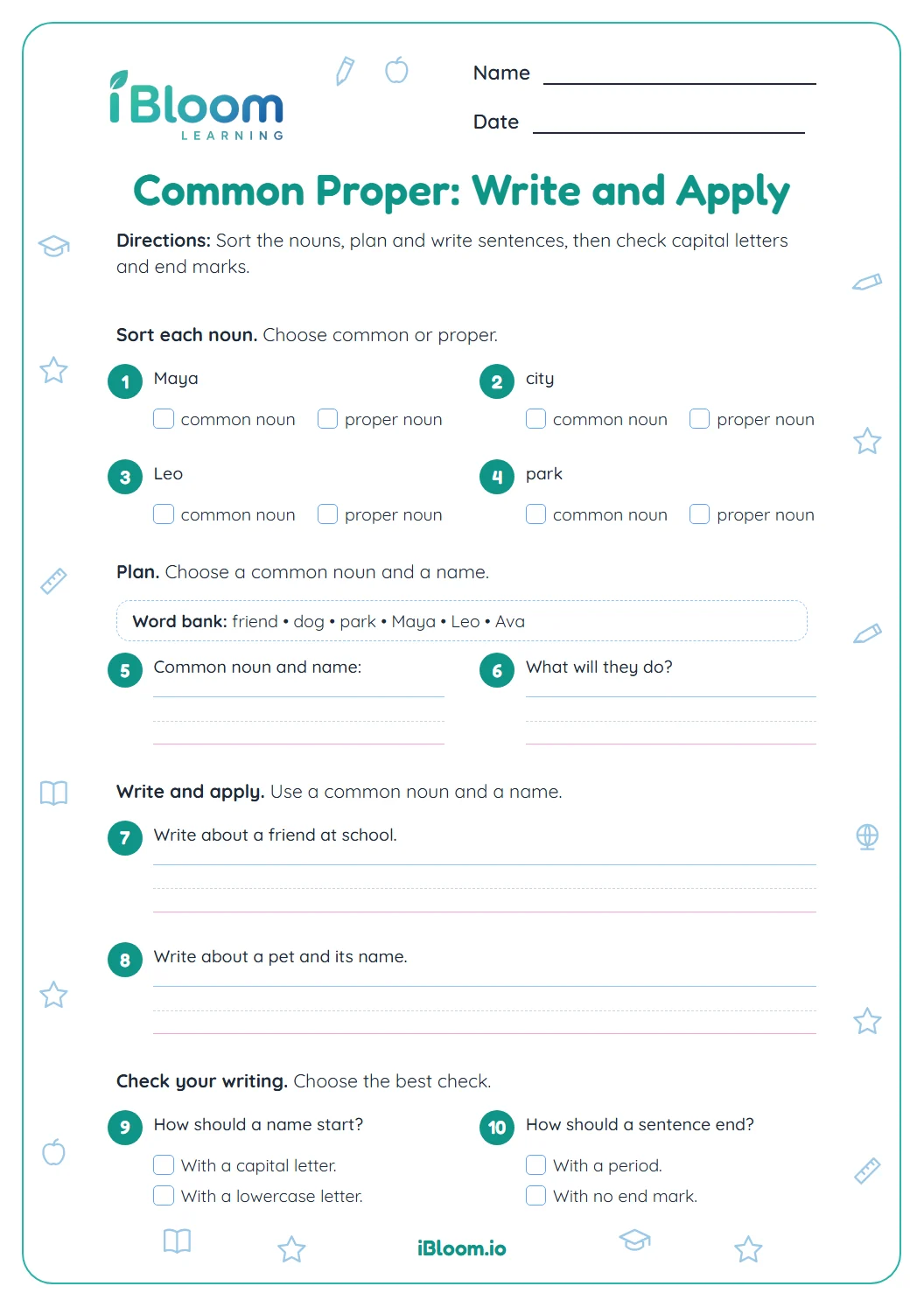
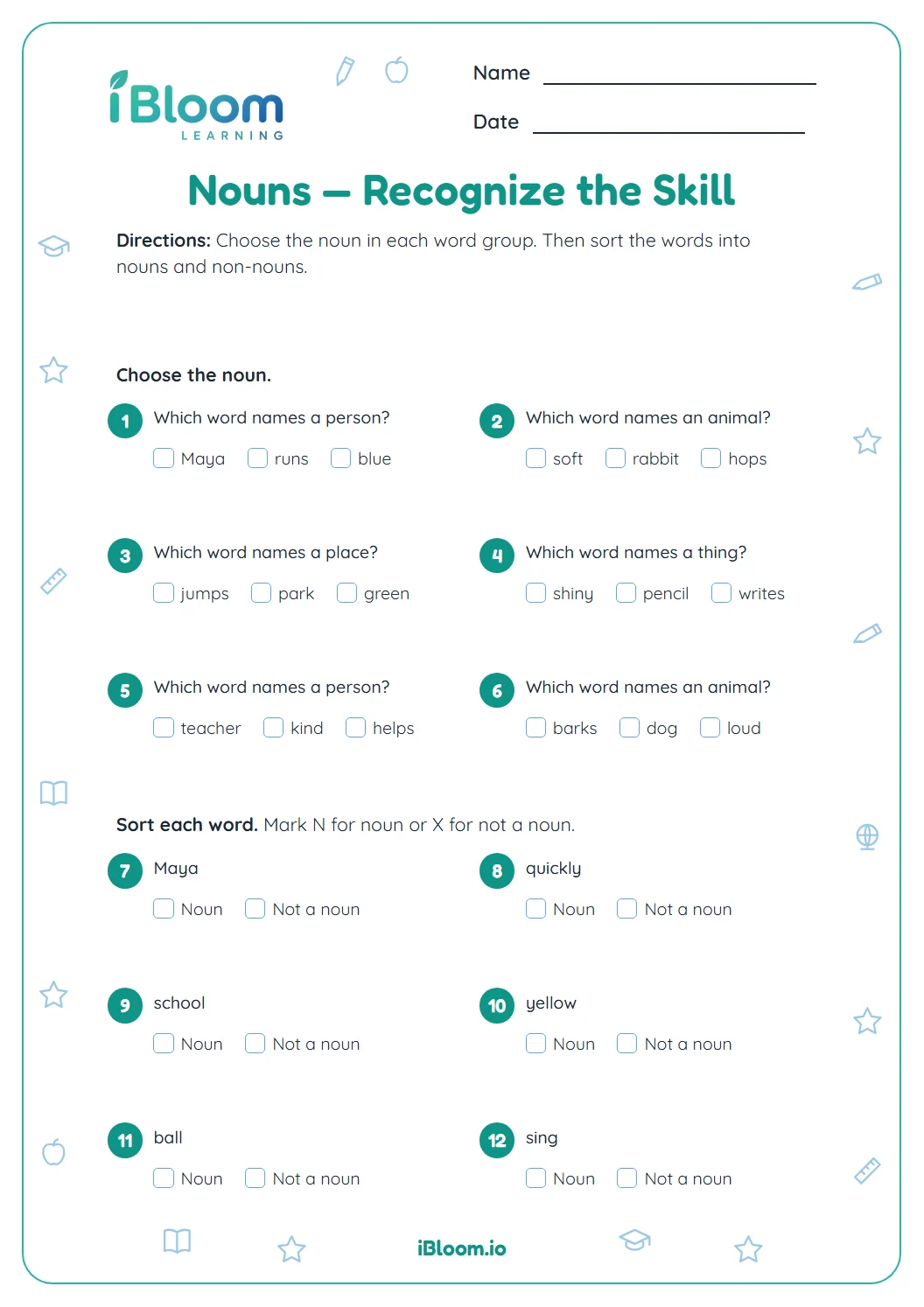
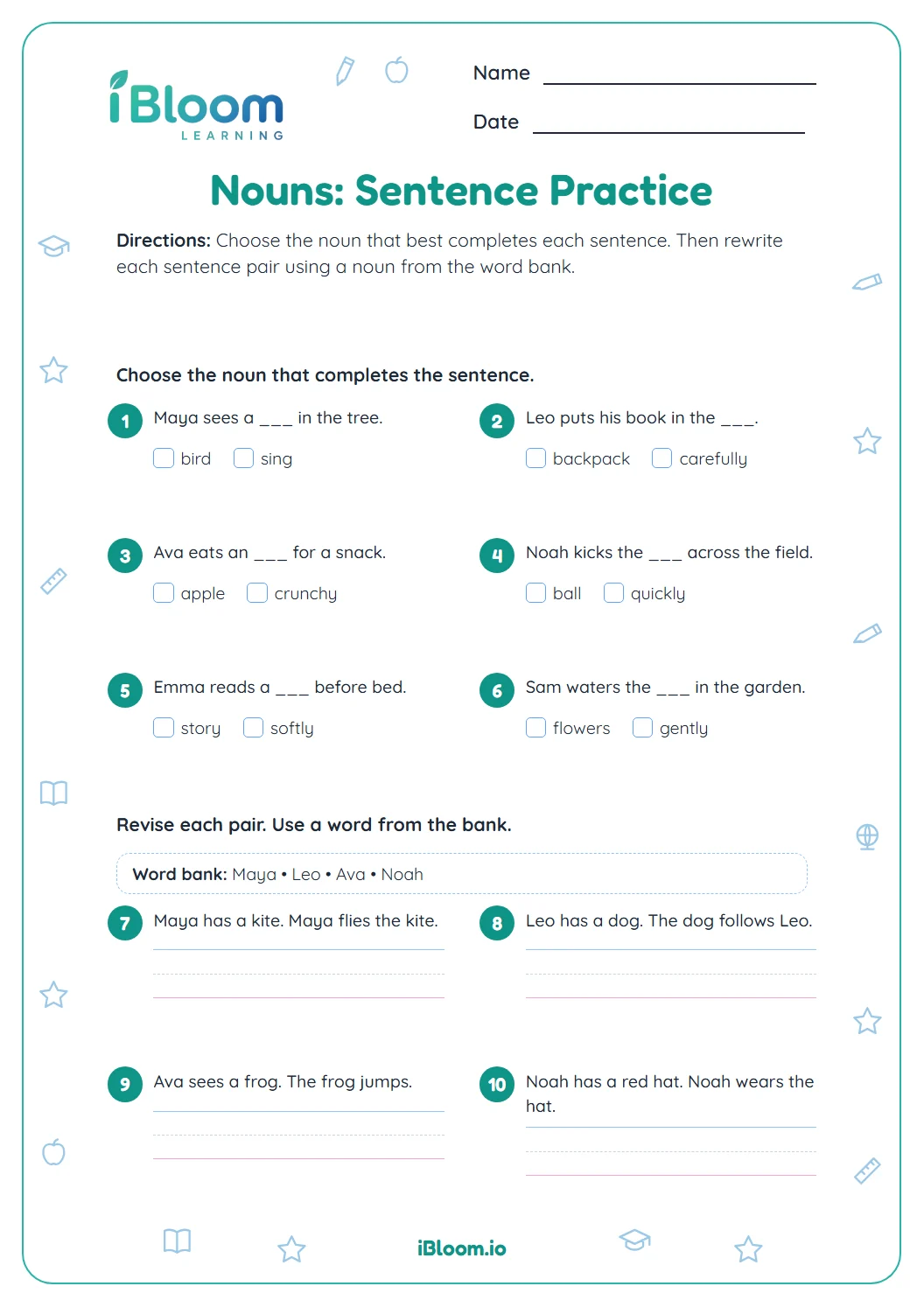
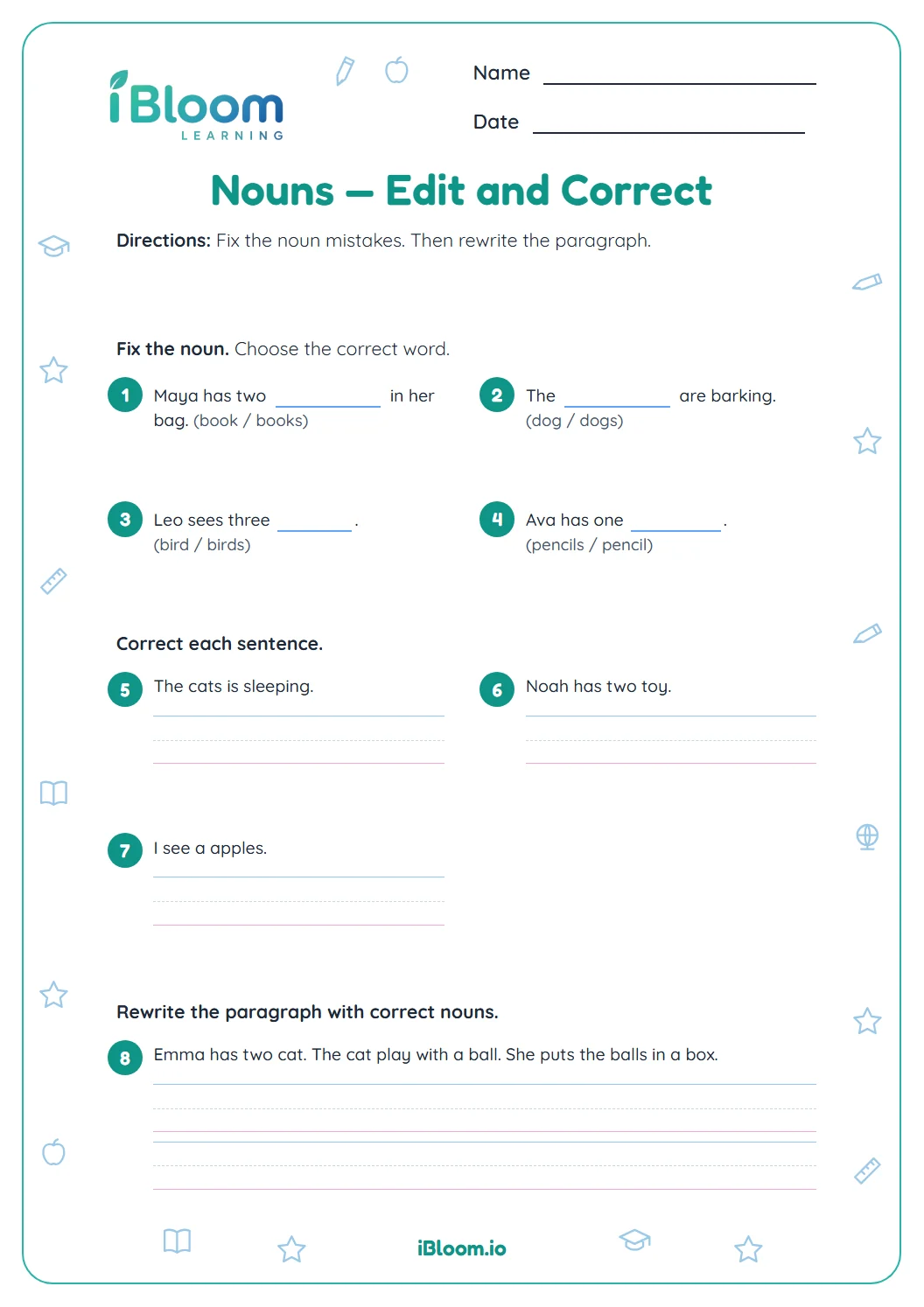
This Grade 1 mixed review helps children tell common nouns from proper nouns and notice how special names begin with capital letters. It has six word-classification questions, five sentence questions, and five capitalization choices. The sheet practices the noun use named in Common Core English Language Arts standard L.1.1.b and includes a separate key.
Aligned to L.1.1.b
How can a learner tell the two noun types apart?
A common noun names a general person, place, animal, or thing: teacher, park, rabbit. A proper noun gives a special name: Mia, Texas, or Monday. Proper nouns begin with a capital letter.
- 1teacher → common noun
- 2Mia → proper noun
What changes in Part B?
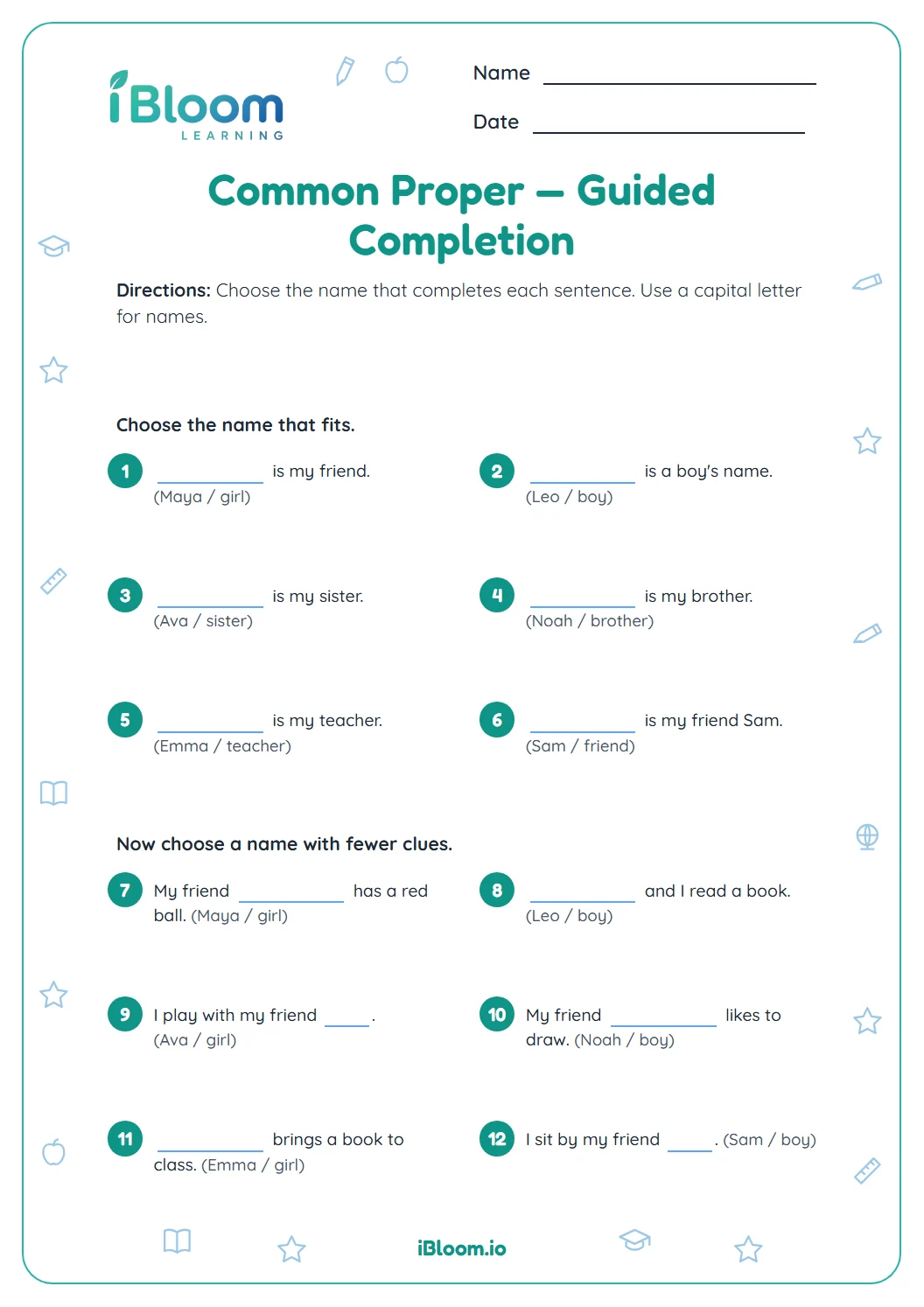
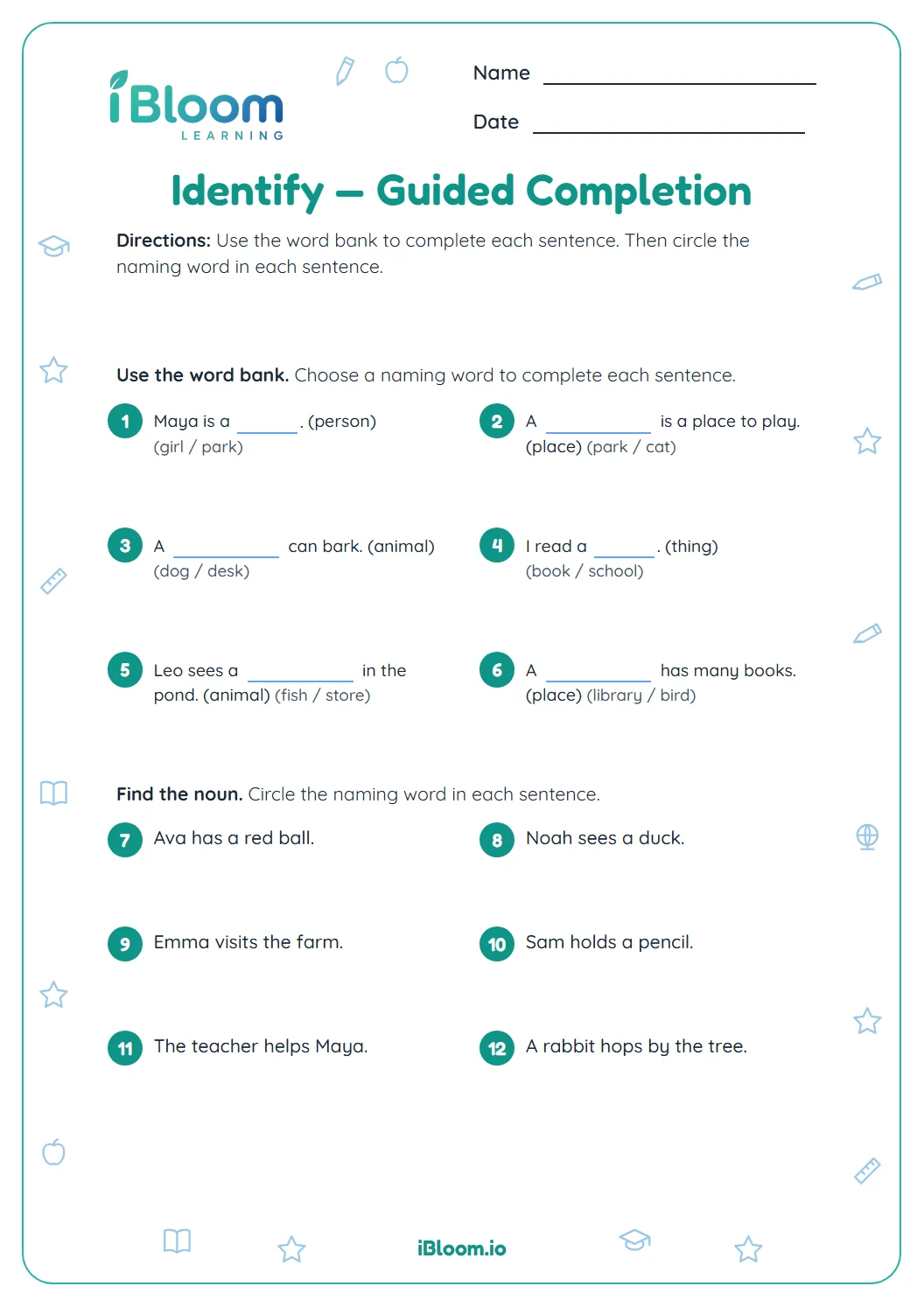
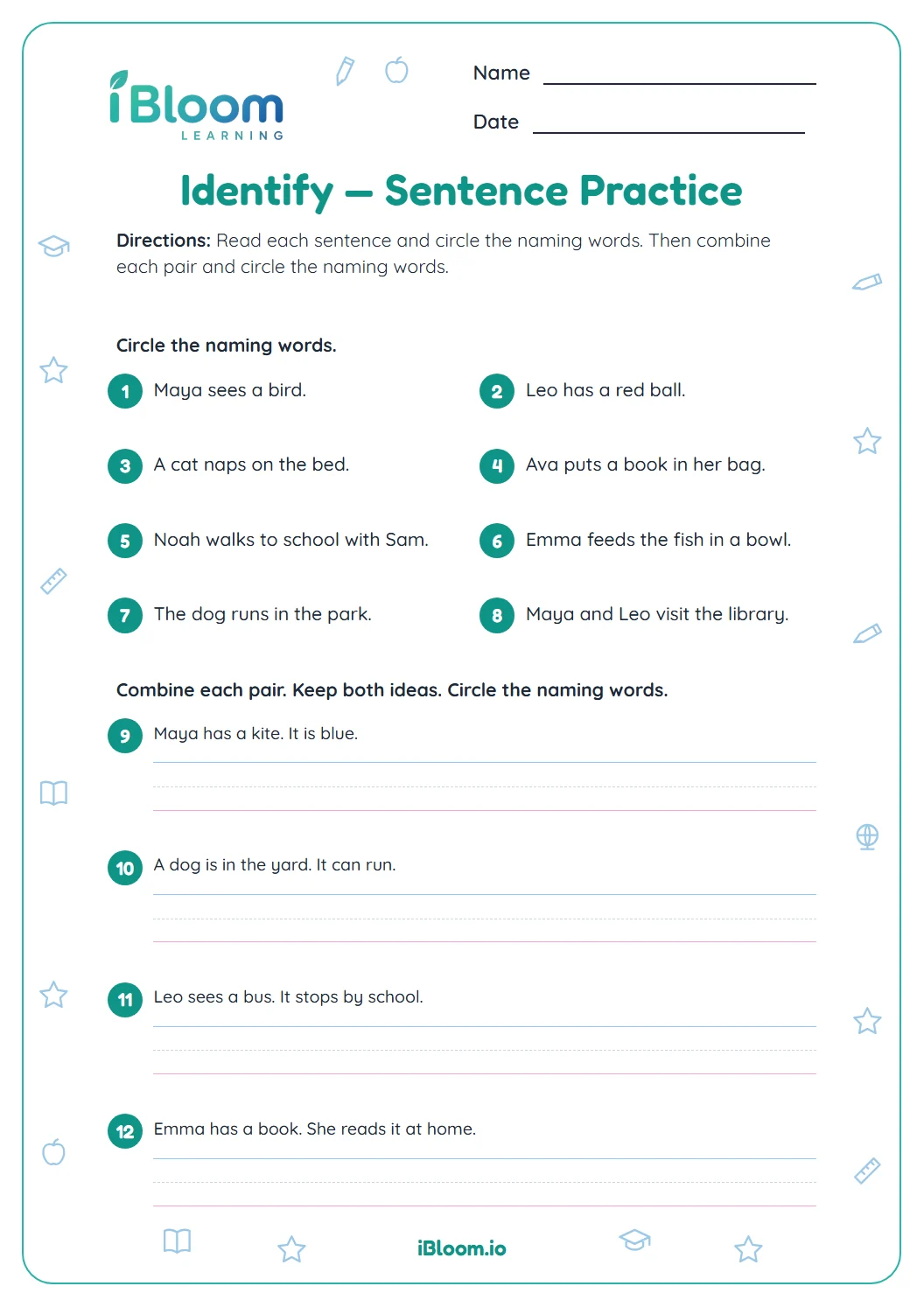
Part B places nouns inside short sentences. Learners choose the special name, then think about why it is a proper noun. The sentence context makes clear whether a word names a general thing or a particular person, place, or day.
Why do capitals matter?
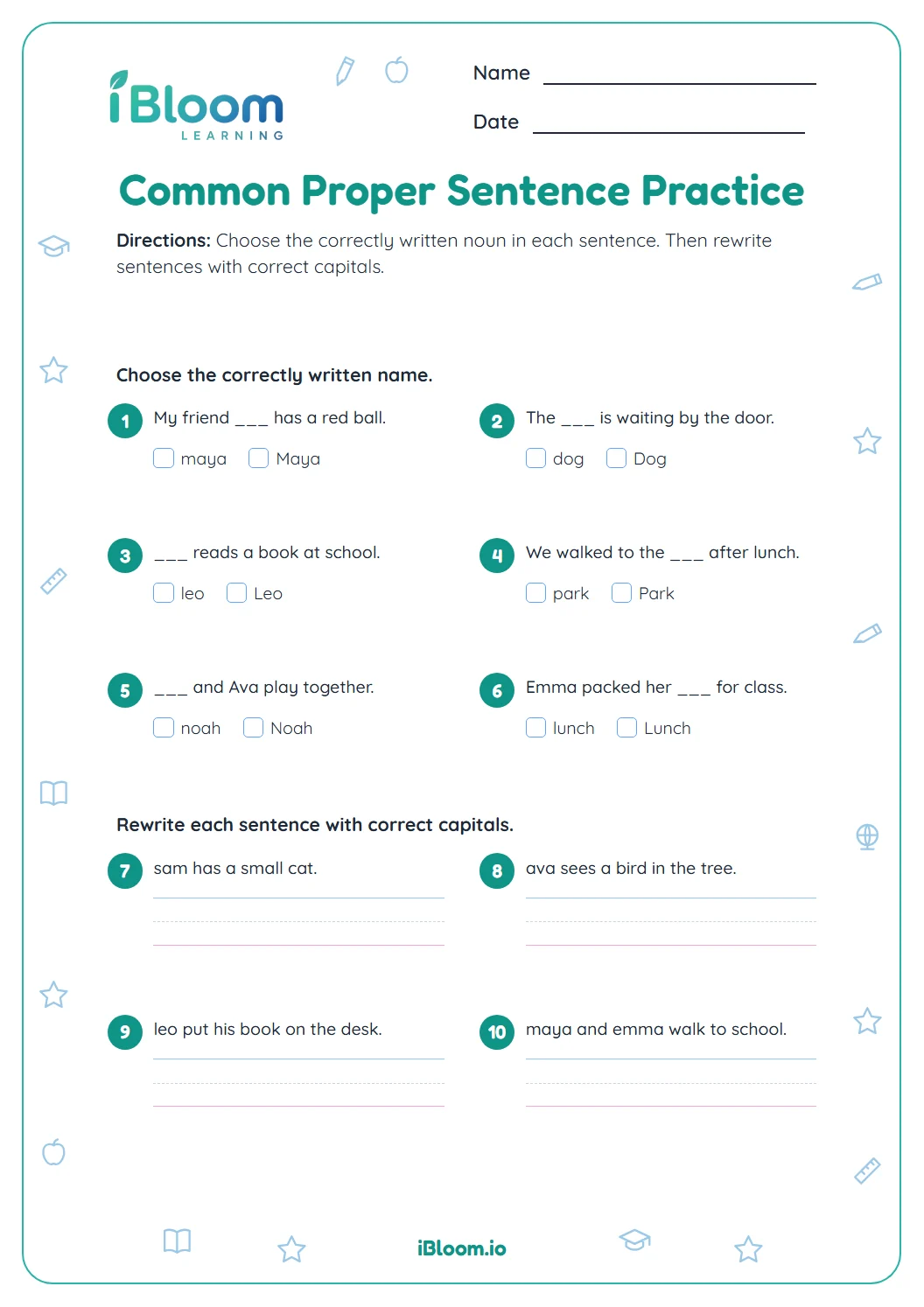
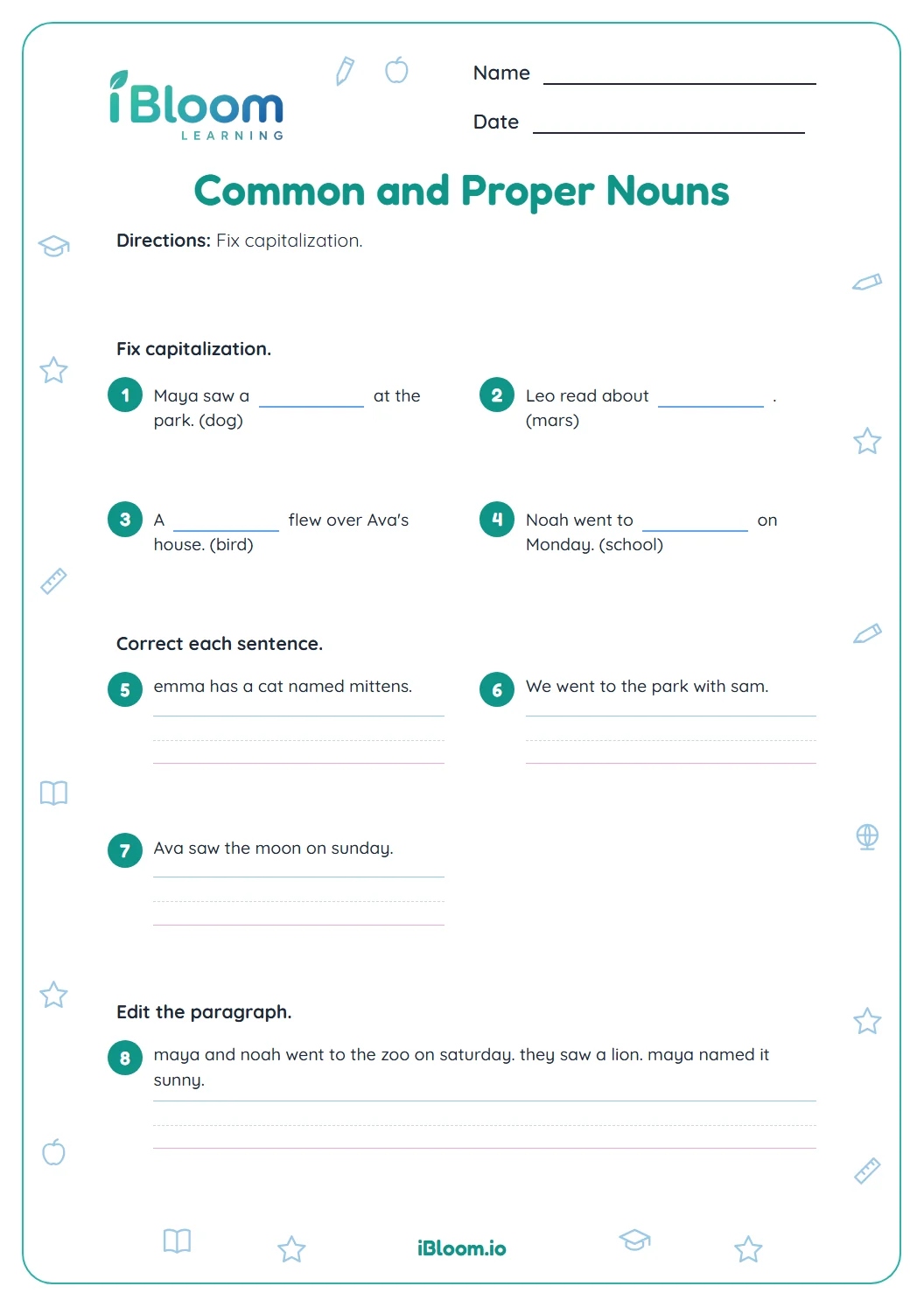
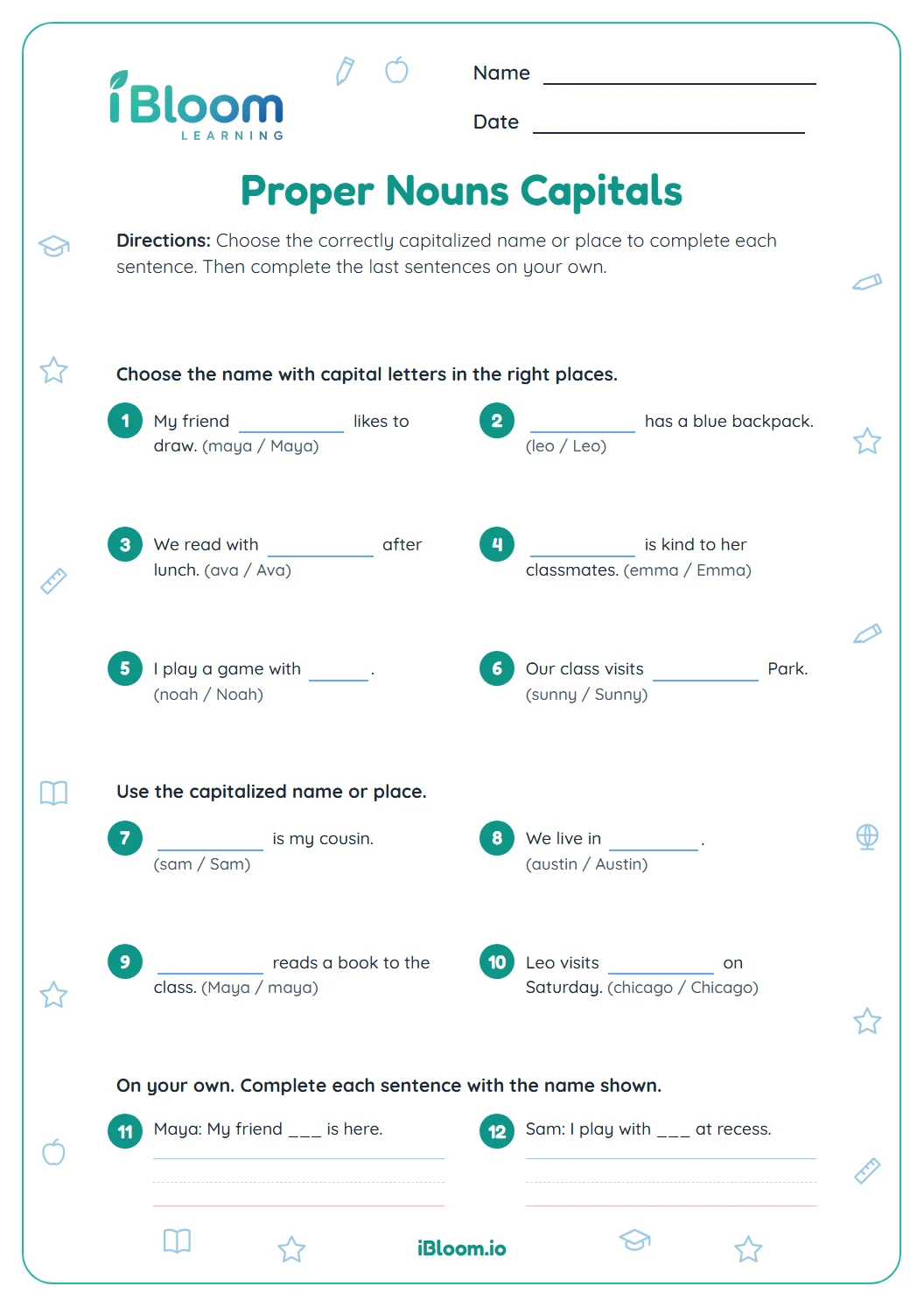
Part C asks children to recognize a sentence in which names are capitalized. A sentence begins with a capital, and proper names such as Ava, Ohio, and Tuesday also begin with capitals.
How can I use this worksheet?
- 1Read the noun and ask whether it is general or a special name.
- 2In a sentence, look for the person, place, or thing being named.
- 3Remember that proper nouns start with a capital letter.
- 4Read each Part C option aloud and check the first word and any special names.
- 5Use the key to discuss any word that was hard to classify.
What should learners check?
The mistake
Calling every noun a proper noun because it names something.
The fix
Ask whether it is a special name or a general kind of person, place, or thing.
The mistake
Forgetting to capitalize a proper name.
The fix
Look for names of people, places, and days, then begin each with a capital.
The mistake
Capitalizing every common noun.
The fix
Capitalize the sentence’s first word and proper names, not general words like park or cat.
Common Core alignment
The worksheet practices identifying common and proper nouns and their capitalization.
Recognize common nouns and proper nouns in words and sentences.
On this sheet: Recognize common nouns and proper nouns in words and sentences.
Show the official wordingHide the official wording
Use common, proper, and possessive nouns.
What to practice next
Make more practice
Further reading
Questions parents and teachers ask
What is a common noun?
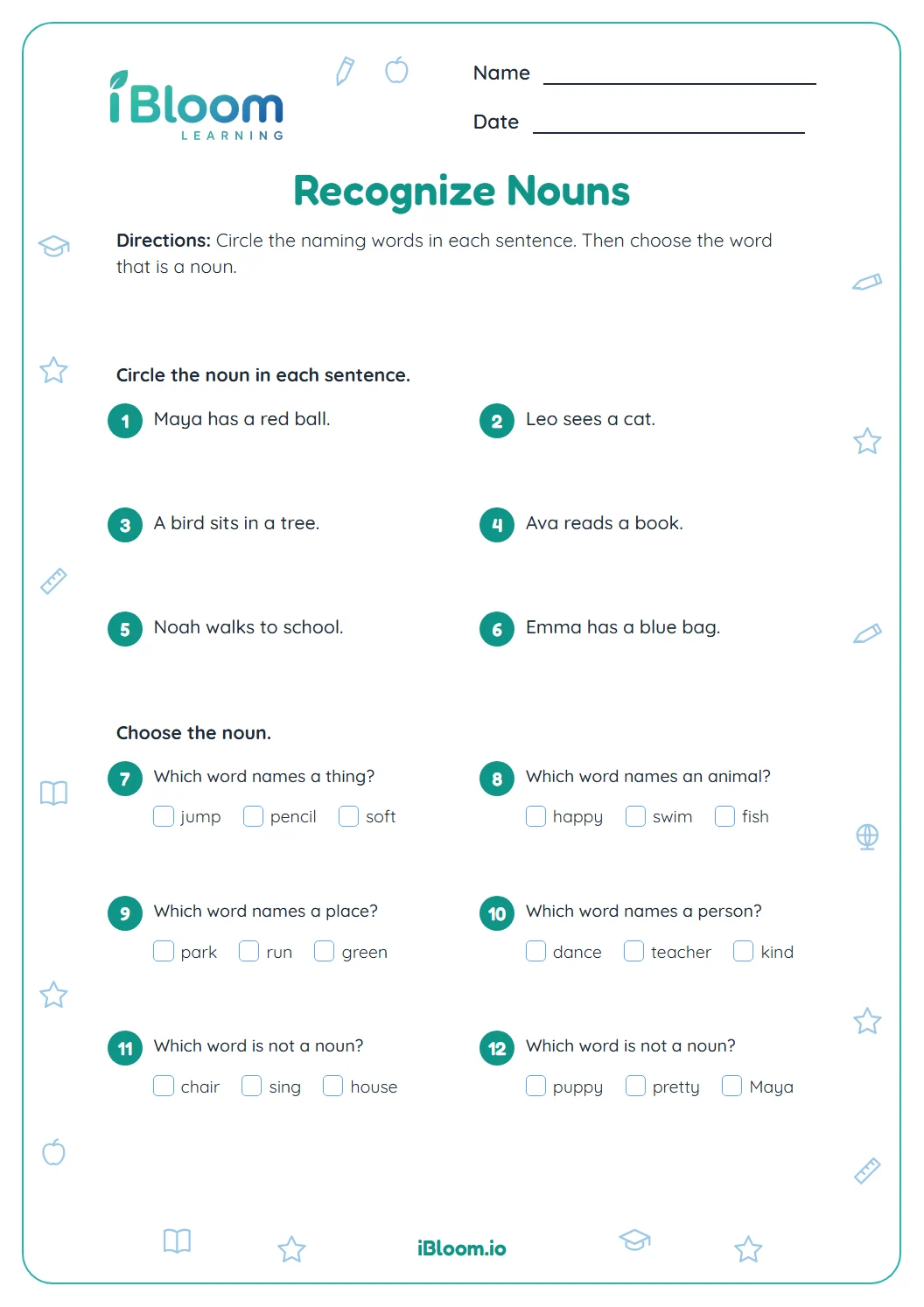
A common noun names a general person, place, animal, or thing, such as teacher, park, or rabbit. A proper noun names a particular person, place, or day, such as Mia, Texas, or Monday. The first part of this worksheet asks children to classify examples.
How many questions are on the page?
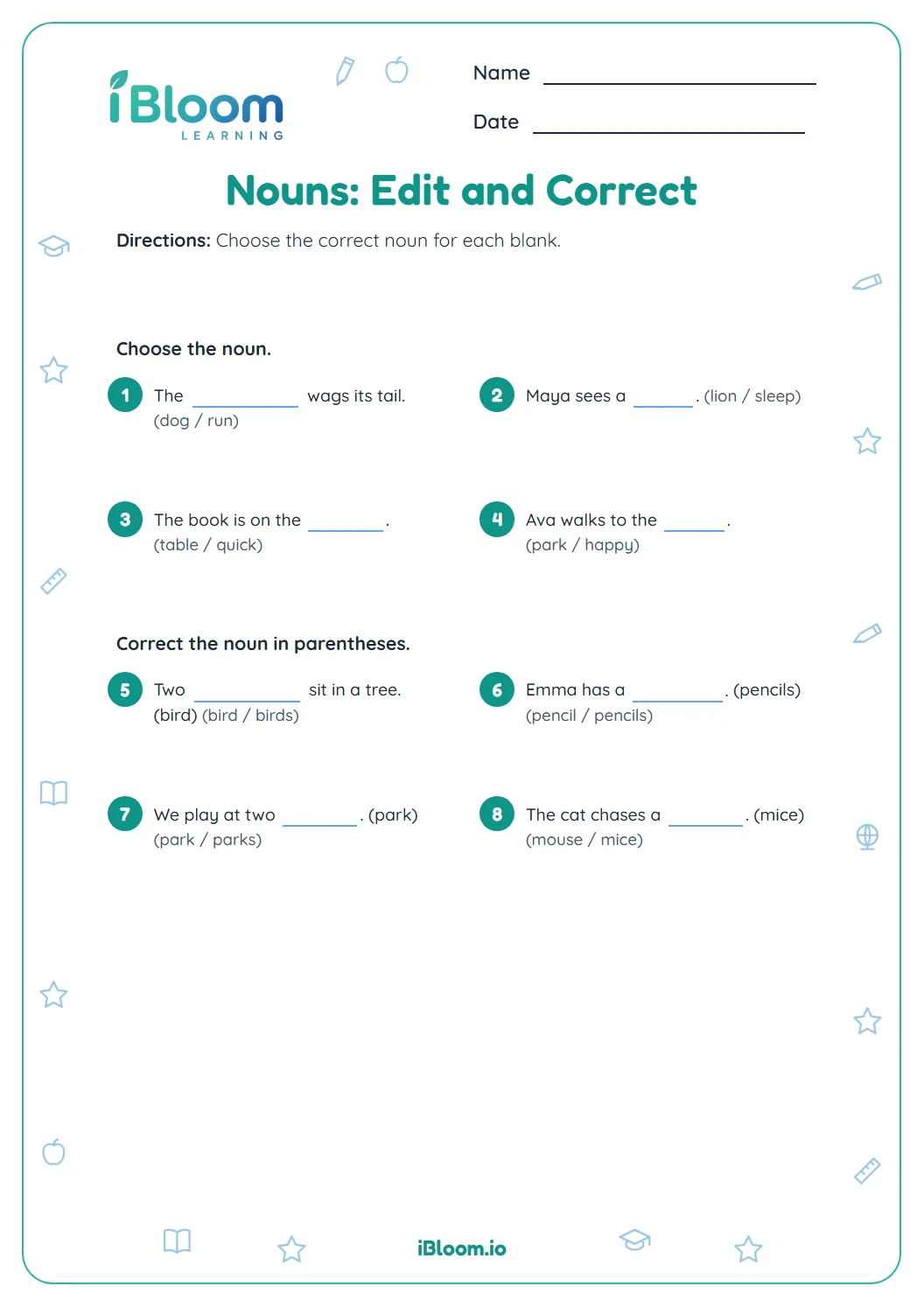
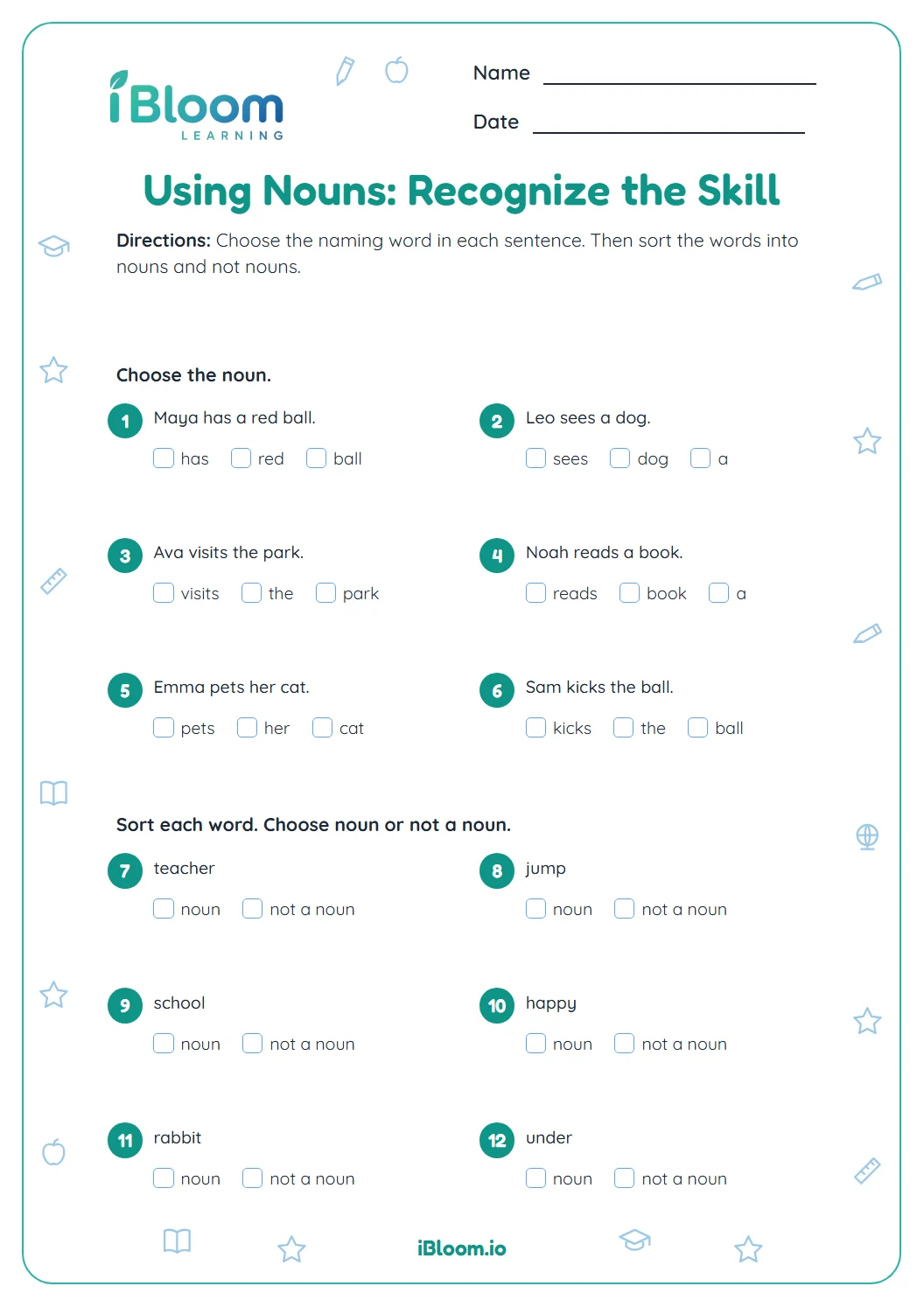
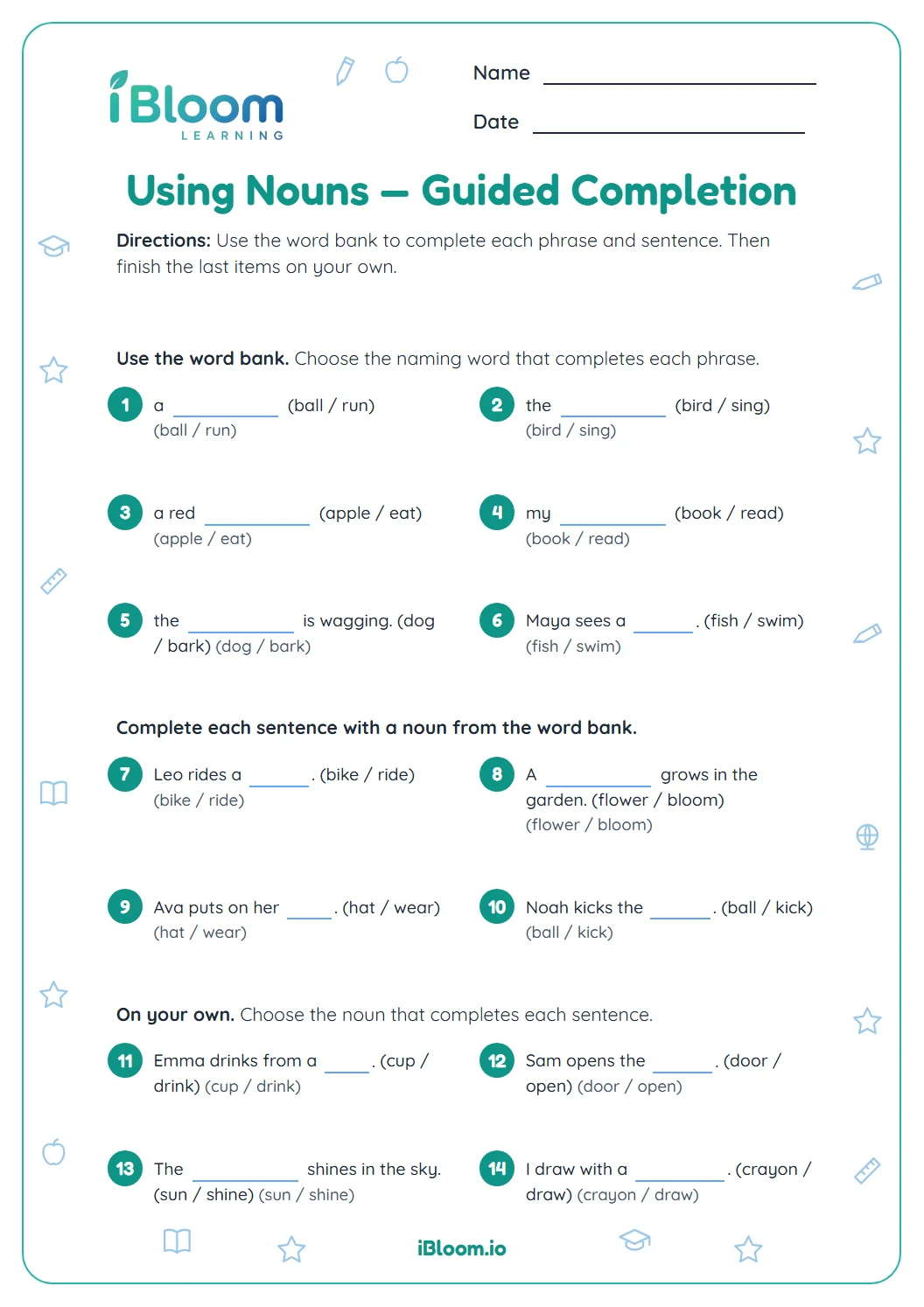
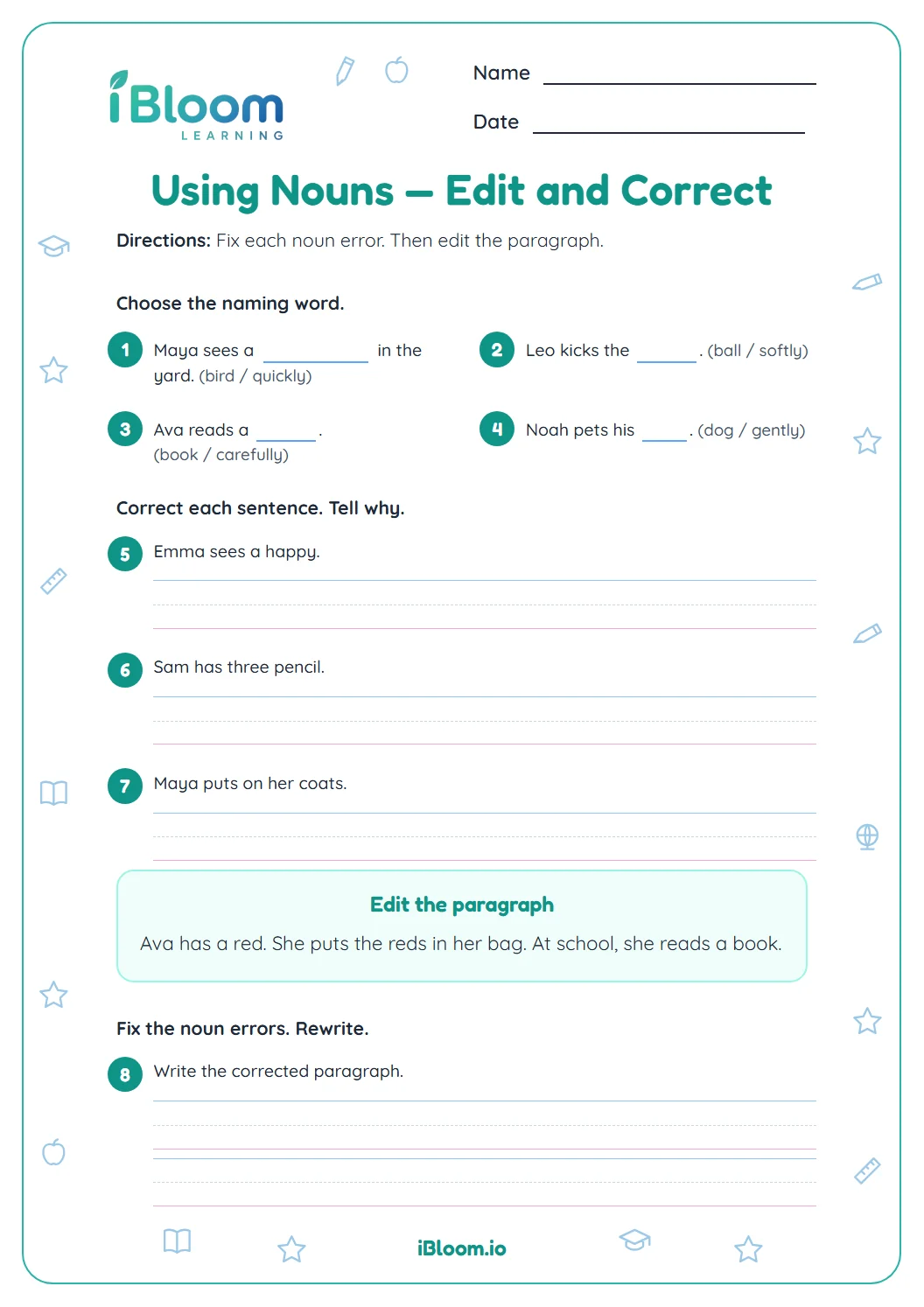
The worksheet has 16 questions in three parts. Children classify six nouns, choose five proper nouns in sentences, and select the correctly capitalized version of five sentences. The answer key is provided separately. The page moves from single words to short sentence context and then to capitalization, giving children three ways to practice the same noun idea.
Why does a proper noun need a capital letter?
A capital letter helps readers recognize a special name. People’s names, place names, and days of the week are proper nouns, so names such as Ava, Ohio, and Tuesday begin with capitals wherever they appear in a sentence. This keeps the noun choice clear.
Can a word be a noun in one sentence and something else in another?
Yes. A word’s job can depend on how it is used. The questions here use clear, familiar examples so first graders can focus on the difference between a general noun and a special name. For example, child names are proper nouns, while a word like cat names an animal generally. The short familiar sentences help learners spot that difference.
What should children check when fixing sentence capitals?
They should capitalize the first word of each sentence and every proper noun. Part C focuses on the first letter of a name. Children can read each option aloud and look for a capital at the start of the sentence and in special names.
How can I support a learner who is unsure?
Ask whether the word names one special person, place, or day, or whether it names a general kind. Then point to the first letter. A special name begins with a capital, while a general noun usually does not. Try the examples aloud together.