


About this worksheet
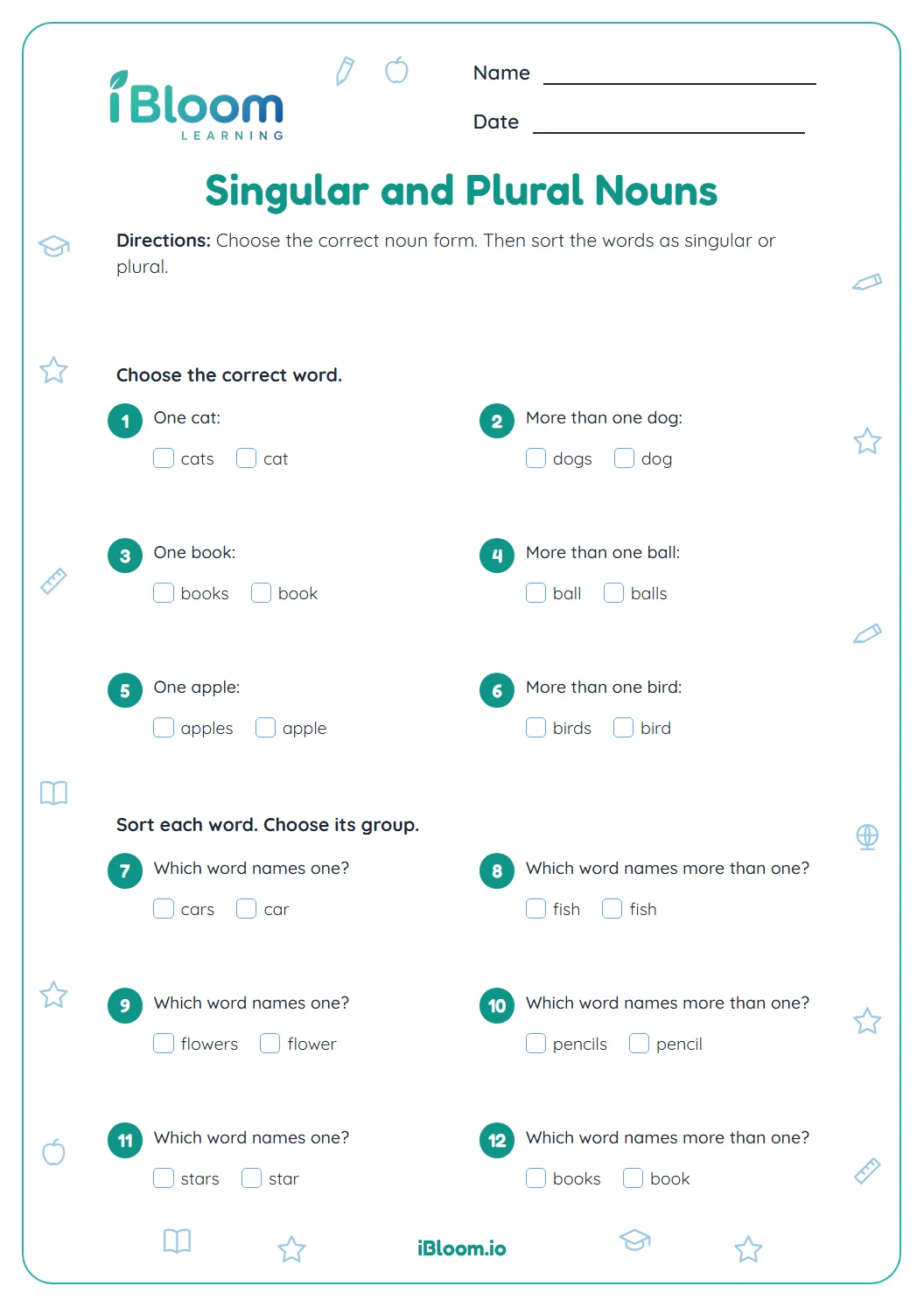
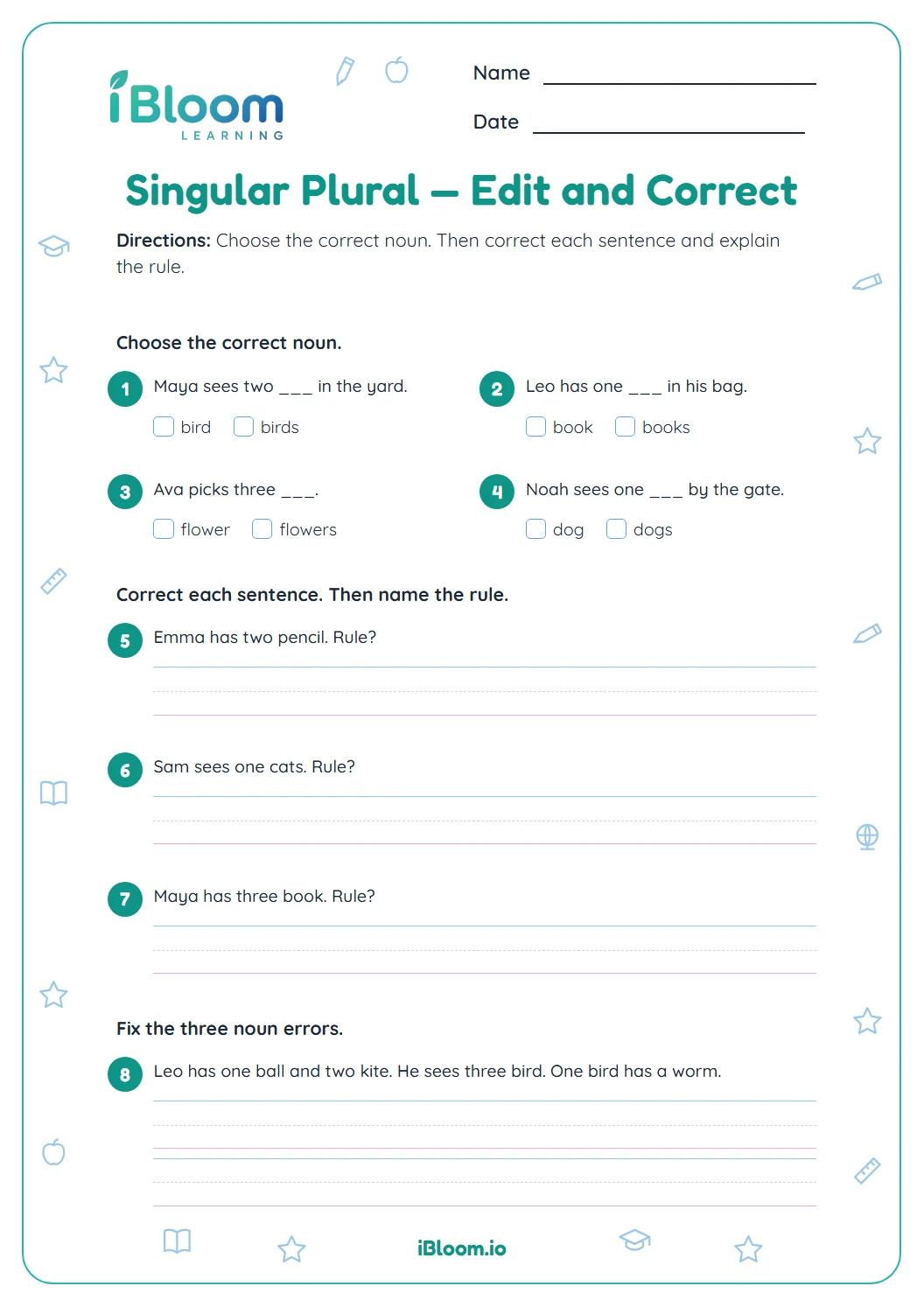
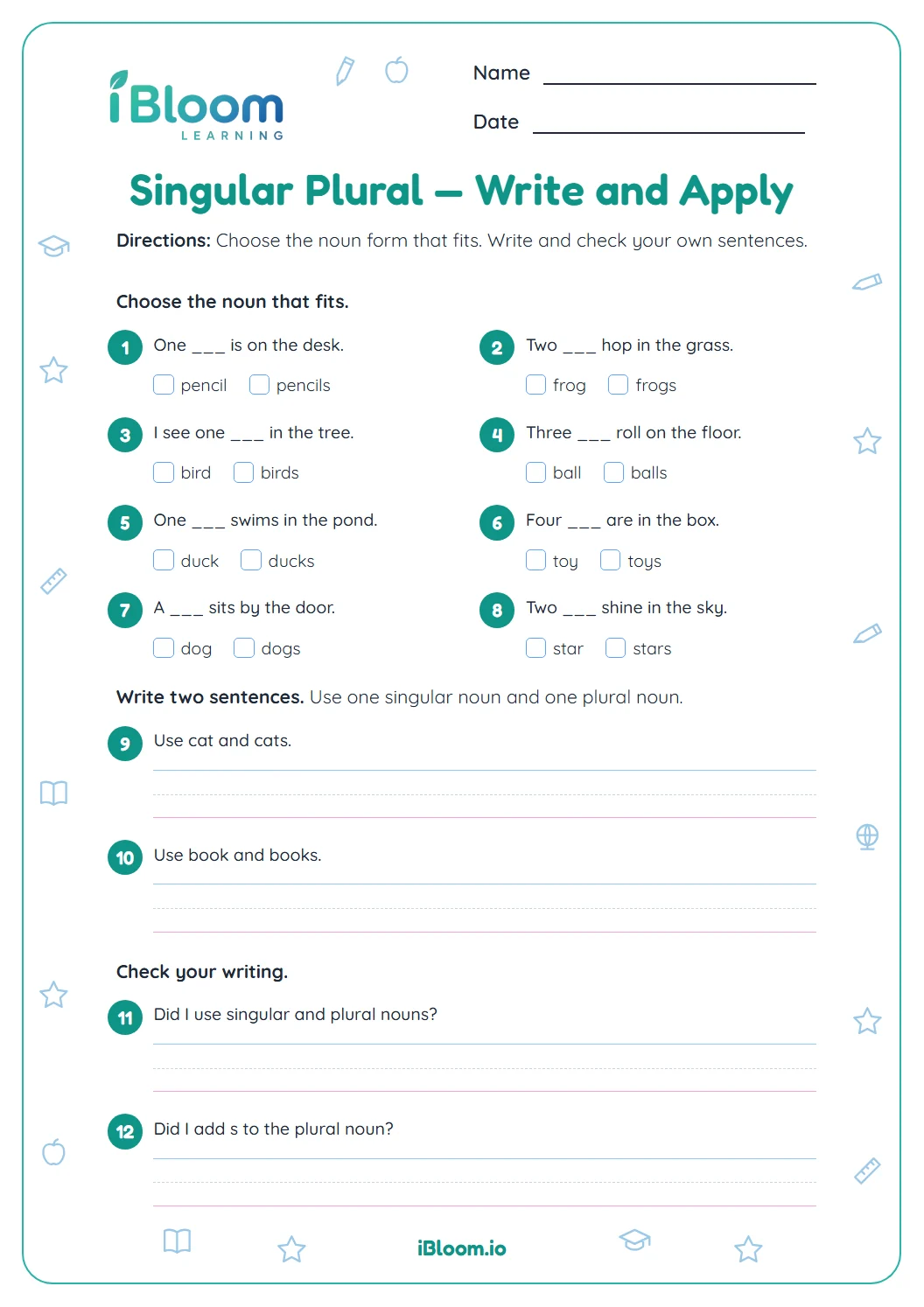
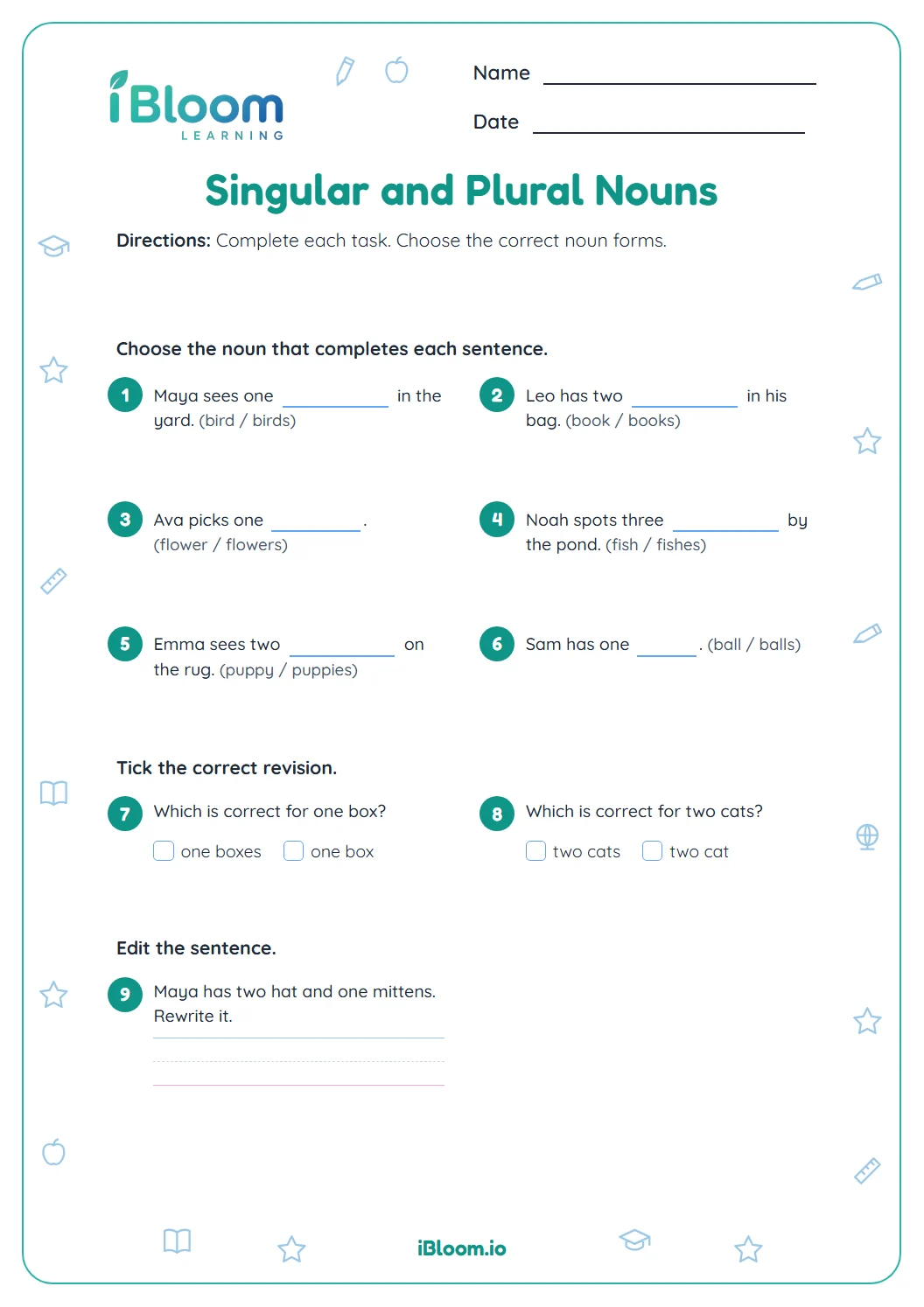
This free Grade 1 worksheet practices singular and plural nouns inside complete sentences. Four choices ask children to match a noun to a verb such as runs or run. Five blanks use a base noun and a number clue, and five rewriting tasks change both the noun and its verb. The words include cat, dog, box, fox, and bus. Children practice adding -s or -es while using matching verbs, as described in Common Core L.1.1c. The separate answer key gives all noun choices and the five rewritten sentences.
Aligned to L.1.1c
How does the sentence tell us one or more than one?
A singular noun names one: cat, dog, or box. A plural noun names more than one: cats, dogs, or boxes. Number words such as one, two, and three help children decide which form fits.
The verb provides another clue. The cat runs names one animal, while The cats run names more than one. Have children read the completed sentence aloud to hear the pair together.
Why does the verb change when cat becomes cats?
In these present-tense sentences, a singular subject such as cat uses runs, while a plural subject such as cats uses run. Changing the noun means checking the verb too.
- 1Start: The cat runs.
- 2More than one cat: cats
- 3Match the verb: cats run
- 4Write: The cats run.
When should children write -s or -es?
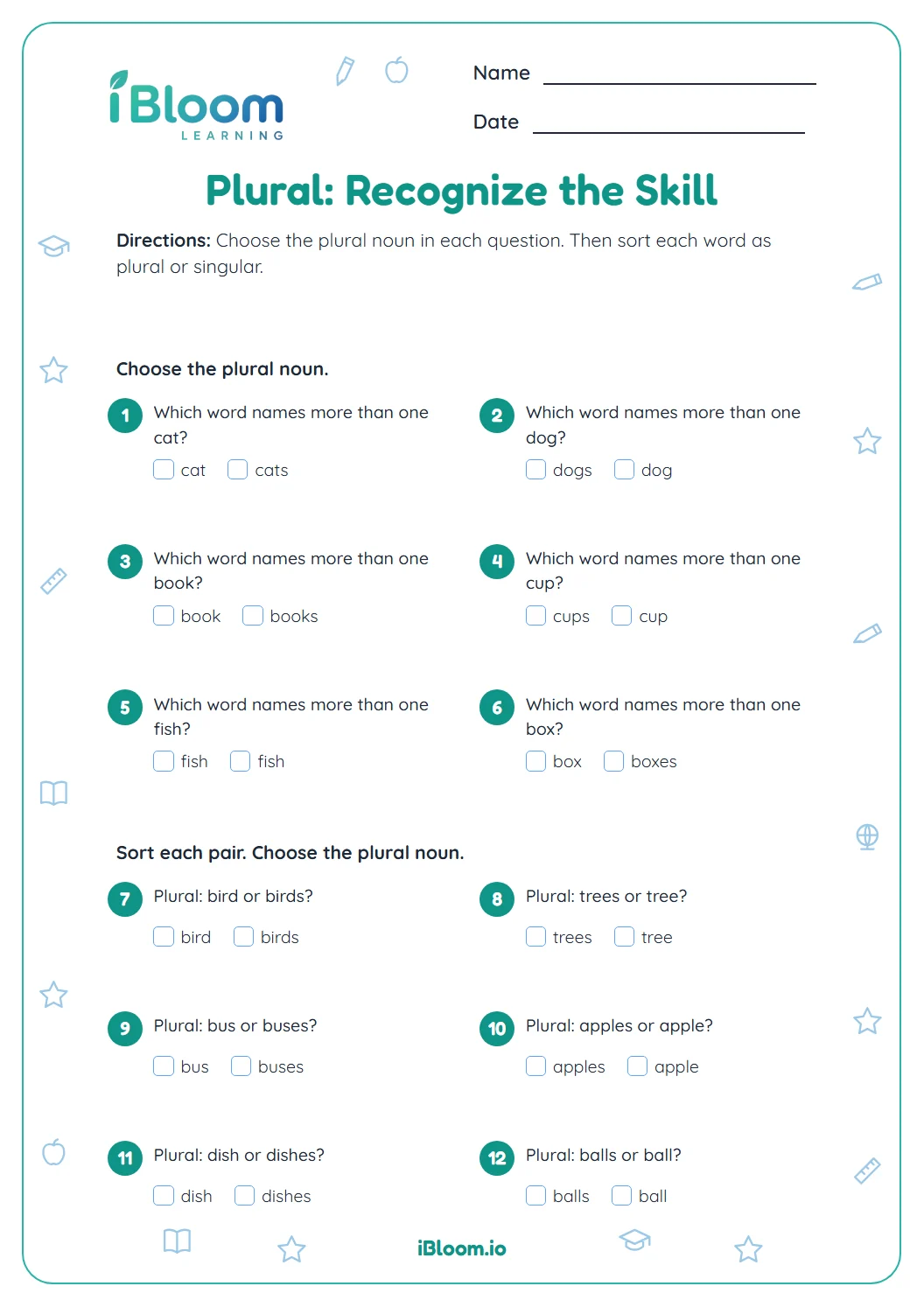
The sheet uses -s for words such as dog, bird, and duck. Box, fox, and bus take -es: boxes, foxes, and buses. Say each plural aloud while pointing to its ending.
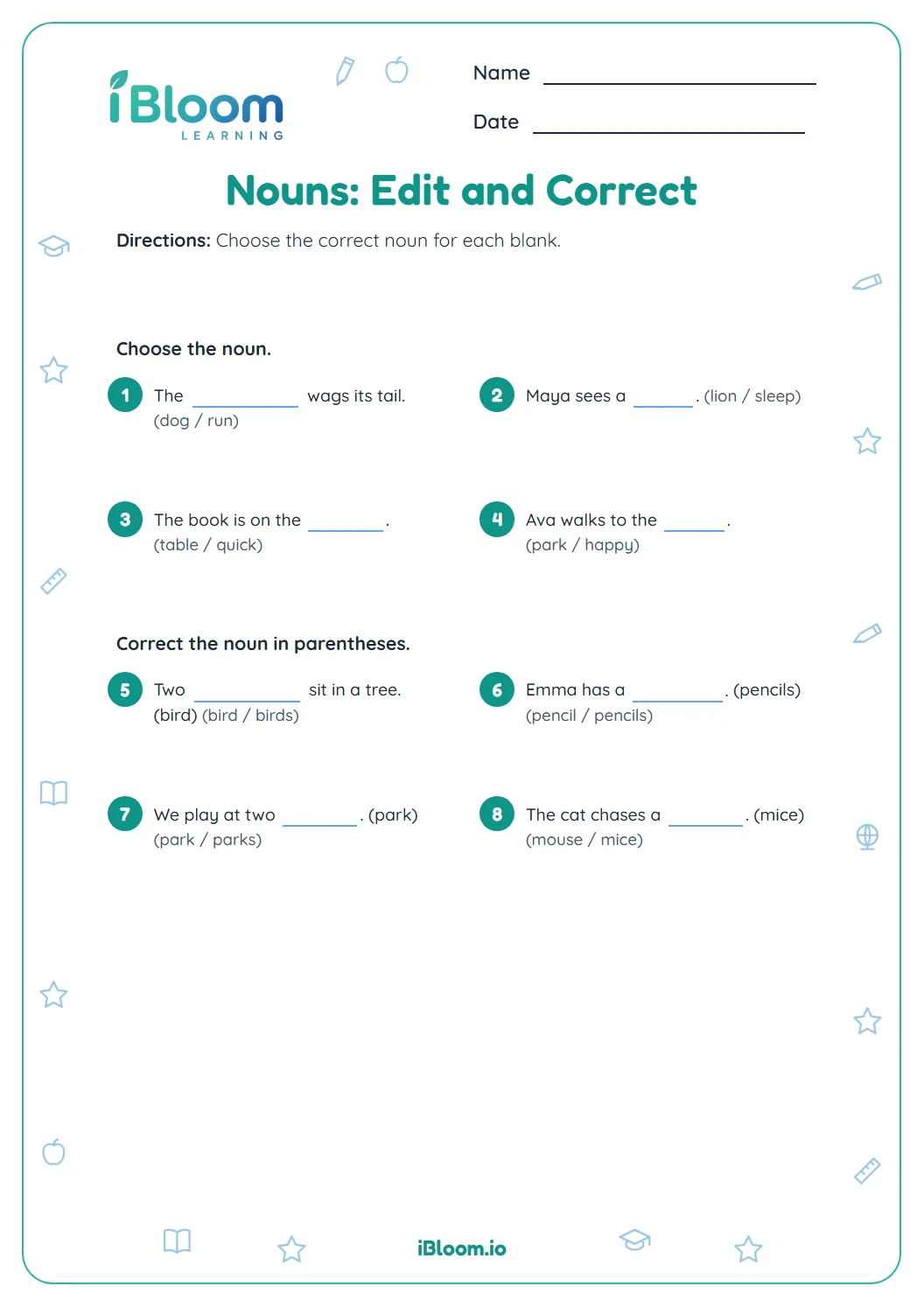
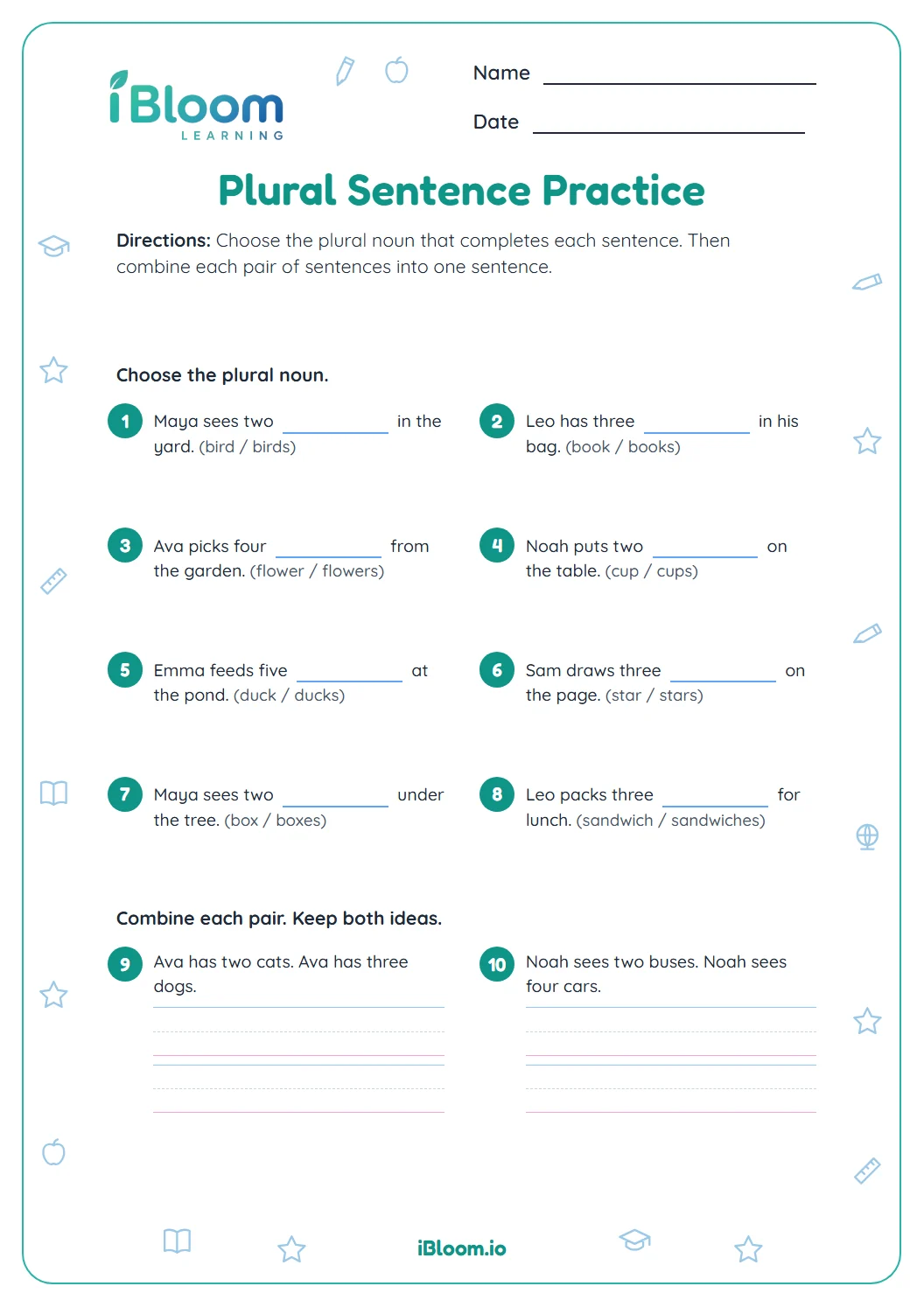
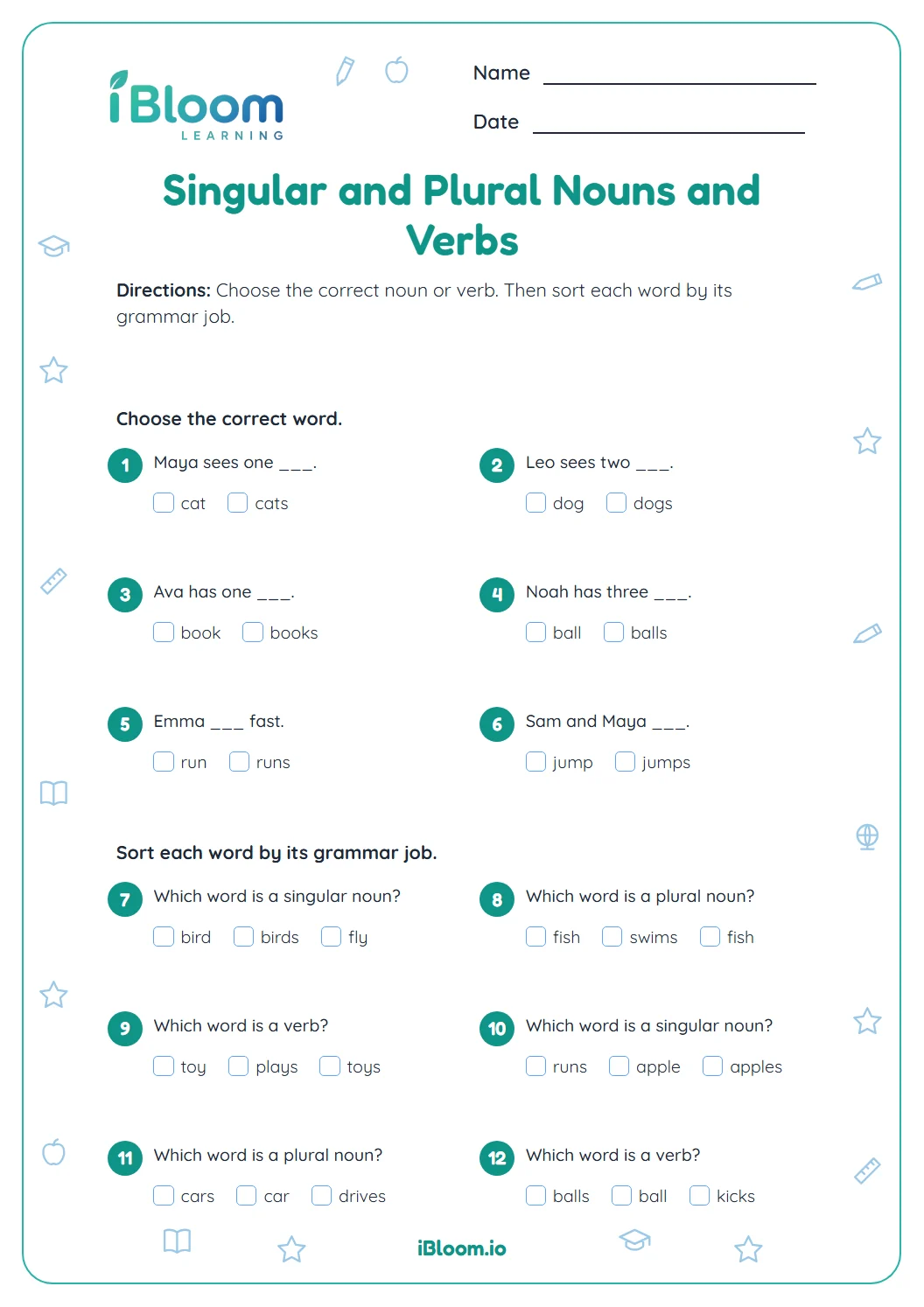
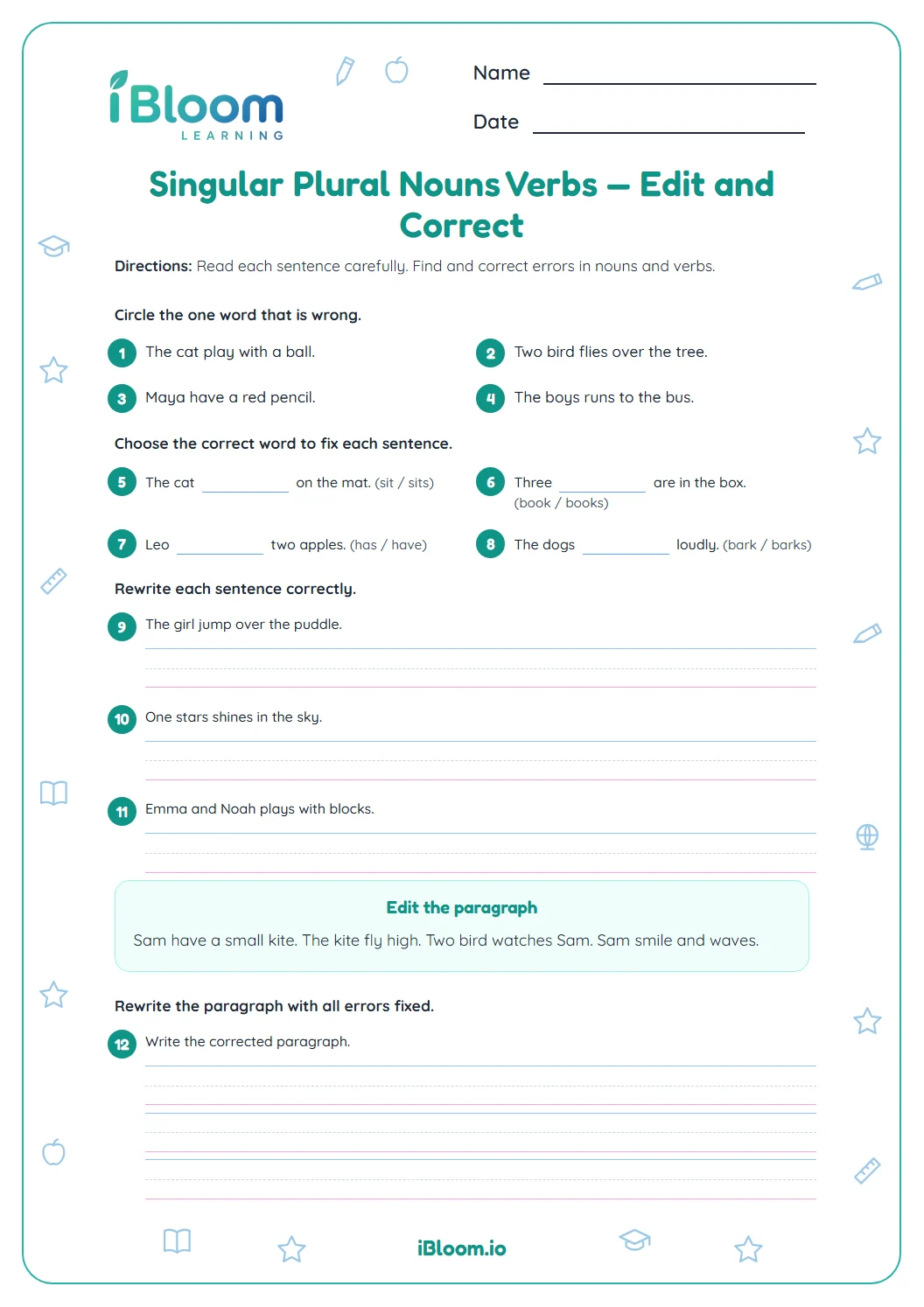
Part A has four noun choices. Part B has four sentences to complete from a noun in parentheses. Part C has four sentences to rewrite, with directions that specify one or more than one.
How to use this worksheet
- 1Read The cat runs and The cats run aloud and talk about how many cats each means.
- 2Choose the noun that matches the verb in each Part A sentence.
- 3Underline one, two, or three in Part B before writing the noun form.
- 4For Part C, change the noun first and then choose its matching verb.
- 5Check each rewritten sentence for its capital letter, noun, verb, and period.
Mistakes to check and how to help
The mistake
Writing two box instead of two boxes.
The fix
Say boxes aloud and add -es to box.
The mistake
Writing The cats runs after changing cat to cats.
The fix
Read the noun and verb as a pair: one cat runs; many cats run.
The mistake
Adding -s to every noun, including a noun after one.
The fix
Use the number clue first: one duck keeps the singular form duck.
Common Core alignment
Choose singular or plural nouns and use matching verbs in sentences.
On this sheet: Children complete sentences and rewrite noun-verb pairs such as cat runs and cats run.
Show the official wordingHide the official wording
Use singular and plural nouns with matching verbs in basic sentences (e.g., He hops; We hop).
What to practice next
Make more practice
Further reading
Questions parents and teachers ask
What do singular and plural mean here?
Singular means one person, animal, place, or thing, and plural means more than one. This worksheet uses familiar nouns such as cat and cats, box and boxes. Children use those forms in complete sentences, checking both how many things are named and which verb belongs with the noun.
Why is The cats runs incorrect?
The plural noun cats needs the verb run in this sentence. The cat runs describes one cat, while The cats run describes more than one. Question 10 asks children to make this change in writing, so remind them to check both the noun ending and the verb.
Which words need -es on this worksheet?
Box, fox, and bus take -es to become boxes, foxes, and buses. Children meet those forms in choices, a sentence blank, and a rewrite. Say each pair aloud, then have the child point to the added letters before writing or choosing the plural form.
Should children write the whole sentence in Part C?
Yes, Part C asks for a complete rewritten sentence. Children change the noun to match the direction and adjust the verb as needed. For The dogs dig, changing to one dog gives The dog digs. Keep the capital letter and period when copying the sentence.
Can I help my child read the prompts?
Yes, you can read the directions and sentences aloud while the child chooses or writes the answers. Keep the noun choices available and emphasize number clues such as one and two. For the rewriting section, ask the child to say the new sentence before putting it on paper.