






About this worksheet
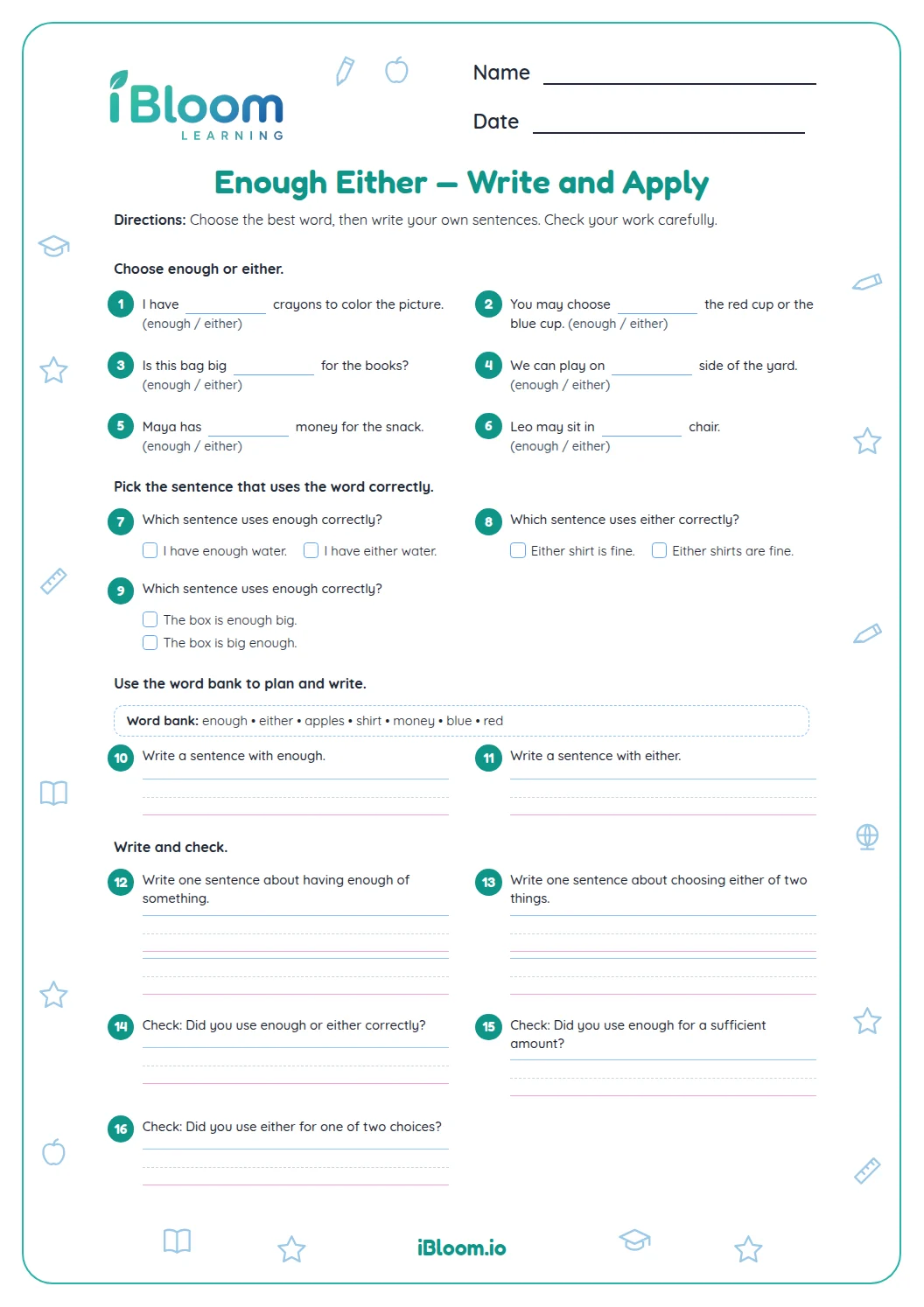
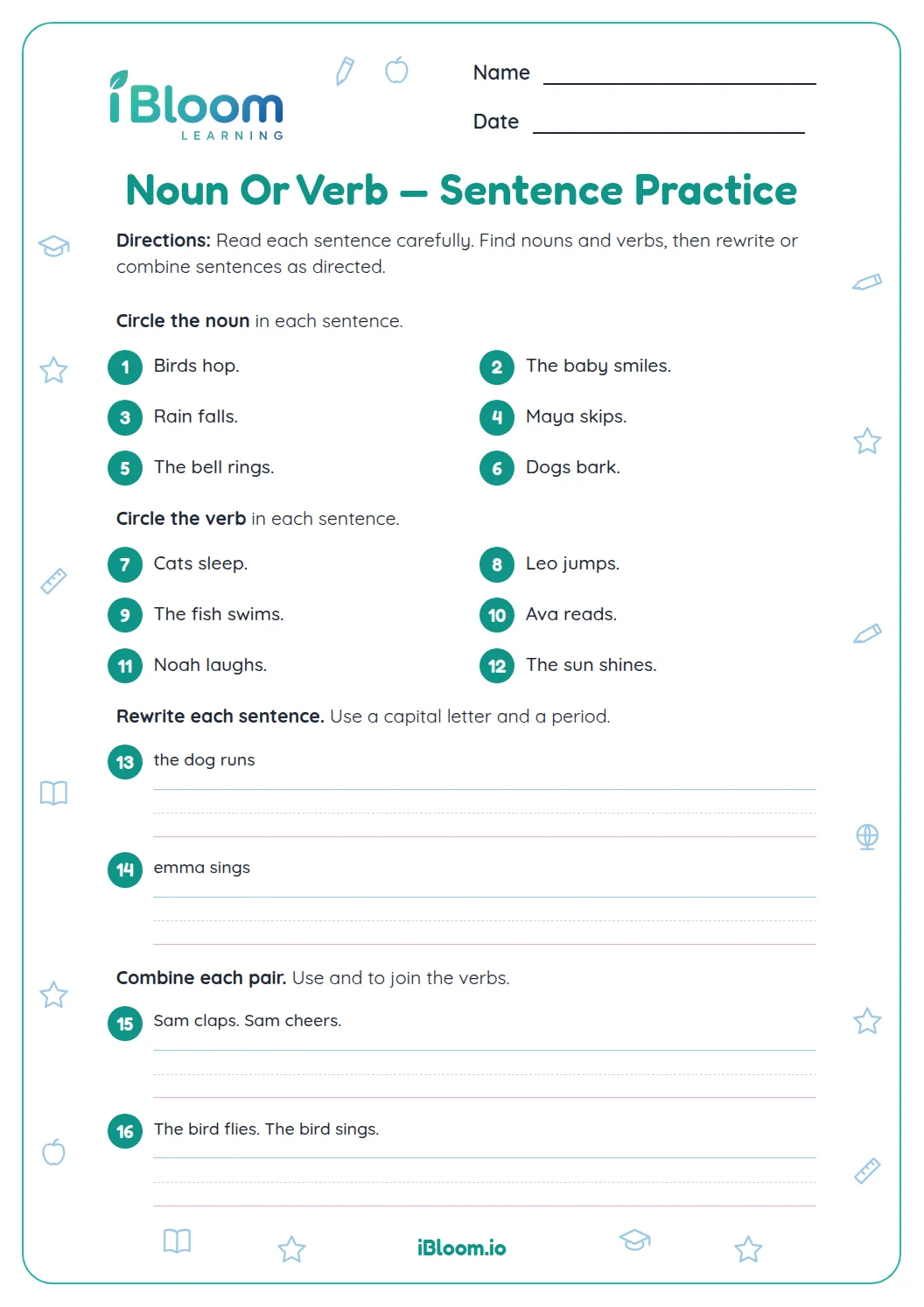
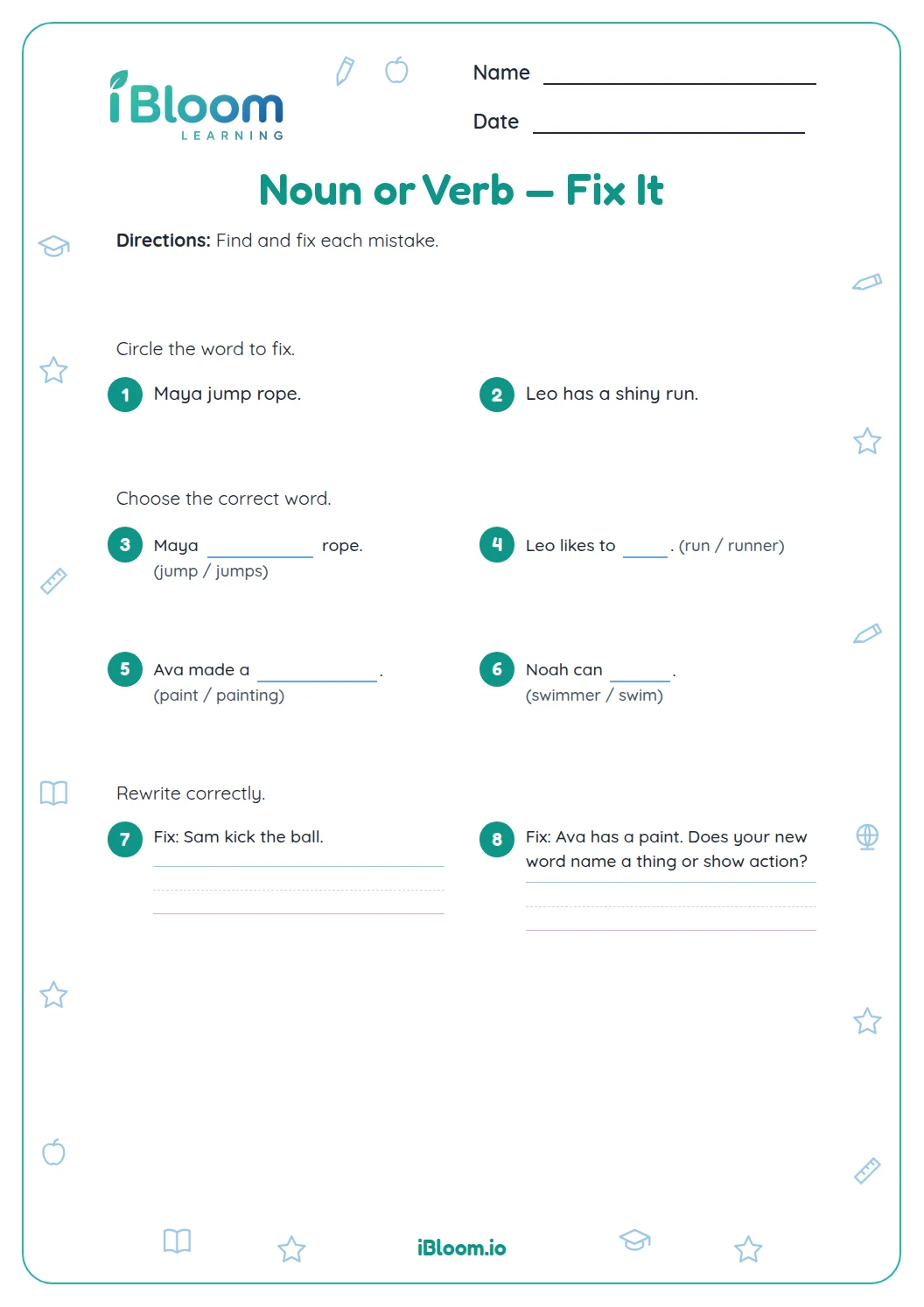
This Grade 1 language worksheet practices the difference between enough and either. Children complete sentences such as “We have ___ paint” and “Would you like ___ milk or juice?”, correct sentences with the wrong word, and write their own examples. The page provides a separate answer key with the target word or sample sentence for each item.
Aligned to L.1.1
When does enough fit a sentence?
Enough tells that there is as much as needed. In question 1, “We have ___ paint,” enough completes the thought because the sentence says the supply is sufficient. The same word fits “There are enough chairs for us.”
- 1We have ___ paint.
- 2We have enough paint.
What does either tell the reader?
Either introduces one of two named choices. In question 2, “You may choose either milk or juice” gives two options. The word enough describes an amount that is sufficient, as in “enough crayons for everyone.”
How can you edit the wrong word?
Read the whole sentence to find its clue. “For every child” points to a sufficient supply, so use enough pencils. Naming tag and hide-and-seek signals two choices, so use either: “Choose either tag or hide-and-seek.”
How to choose the right word
- 1Read the full sentence, including the words after the blank.
- 2Ask whether it means “as much as needed.” If so, try enough.
- 3Look for two named options or an “or” choice. If so, try either.
- 4Read the sentence again with the word inserted.
- 5For editing questions, replace only the incorrect target word.
- 6Use the answer key to compare sample sentences, not to limit valid wording.
Word-choice slips and fixes
The mistake
Using either to describe a sufficient supply for everyone.
The fix
Use enough when the sentence means there is as much as needed.
The mistake
Using enough when a sentence offers two choices.
The fix
Use either when selecting one of two options, often signaled by or.
The mistake
Choosing by the nearest noun without reading the full sentence.
The fix
Read through both options or the phrase “for everyone” before choosing.
Curriculum alignment
This worksheet practices the following standard.
Use common and proper nouns, verbs, and other parts of speech in sentences.
On this sheet: Edit sentences for correct use of the words enough and either.
Show the official wordingHide the official wording
Demonstrate command of the conventions of standard English grammar and usage when writing or speaking.
What to practice next
Make more practice
Further reading
Questions parents and teachers ask
What is the difference between enough and either?
Use enough when the sentence means there is as much as needed, as in “We have enough paint.” Use either when the sentence offers two choices, as in “Choose either a red crayon or a blue crayon.” Those examples appear in the worksheet’s completion practice.
Why is “We have enough crayons for everyone” correct?
The sentence says the crayons are sufficient for the whole group, so enough is the right word. Either would suggest a choice between two crayons or types, which the sentence does not provide. Question 7 asks students to correct this word-choice error.
How does either work with two choices?
Either introduces one of two possibilities. In “Would you like either milk or juice?”, the reader can choose milk or juice. The two options help identify either; enough would describe quantity and would not make the same choice meaning.
Are the written sentence answers exactly the same for everyone?
No. The last questions ask children to create their own sentences, so the wording can vary. A response is correct when it uses enough to show sufficiency or uses either to present a choice between two options. The key offers sample sentences.
Does this printable include the answers?
Yes. A separate two-page answer key lists enough or either for the completion and correction questions, followed by sample sentences for the open prompts. A child can use different wording in those final items if the target word is used correctly.