



About this worksheet
This free Grade 1 writing worksheet gives children practice writing about future actions. Part A offers ten sentence starters with time clues such as “Tomorrow” and “Someday.” Part B has four open prompts for a plan, a kind action or a future job. Each item has room for a short response, and the answer key gives sample completions while allowing children’s own sensible ideas. The page supports Common Core W.1.3 through time words, event details and sequenced writing.
Aligned to W.1.3
How can a time clue help finish a sentence?
Words such as “tomorrow,” “next week” and “someday” point to an action that has not happened yet. Part A gives a starter and asks the child to add a fitting idea. A simple phrase can complete the thought; a full sentence is welcome too.
- 1Tomorrow I will ___ . → read a book
- 2“Tomorrow” points to a future action, and “read a book” completes the idea.
What can a child write for an open prompt?
Part B asks for one or two sentences about a place to visit, something to make, a skill to practice, or a kind action. These prompts invite a personal plan. The key shows one possible response rather than requiring the same details from every child.
How can a future idea become clearer?
Add a detail that tells where, what, or with whom. “I will skate” becomes more specific as “I will practice skating at the park.” A second event can make the order clear: “First I will put on my skates. Then I will practice.”
How to use this worksheet
- 1Read the prompt aloud and point out its future time word.
- 2Have your child say an idea before writing it.
- 3Finish Part A by adding a fitting action or thing.
- 4For Part B, write one or two sentences with a useful detail.
- 5Reread each response and check that it tells about a future plan.
Common mistakes and quick fixes
The mistake
Using a past or present action after a future clue.
The fix
Check that the sentence uses “will” plus an action, such as “will visit.”
The mistake
Writing an idea with no detail.
The fix
Add what, where or with whom to make the plan clearer.
The mistake
Treating a sample key answer as the only correct answer.
The fix
Compare the child’s response with the prompt; accept another sensible future idea.
Common Core alignment
This page practices sequencing events and adding details as children write about future plans.
Tell about sequenced events with details, time words and a closing.
On this sheet: Children use words such as “tomorrow,” “next” and “someday” to write about future events and add details.
Show the official wordingHide the official wording
Write narratives in which they recount two or more appropriately sequenced events, include some details regarding what happened, use temporal words to signal event order, and provide some sense of closure.
What to practice next
Make more practice
Further reading
Questions parents and teachers ask
How many questions are on the worksheet?
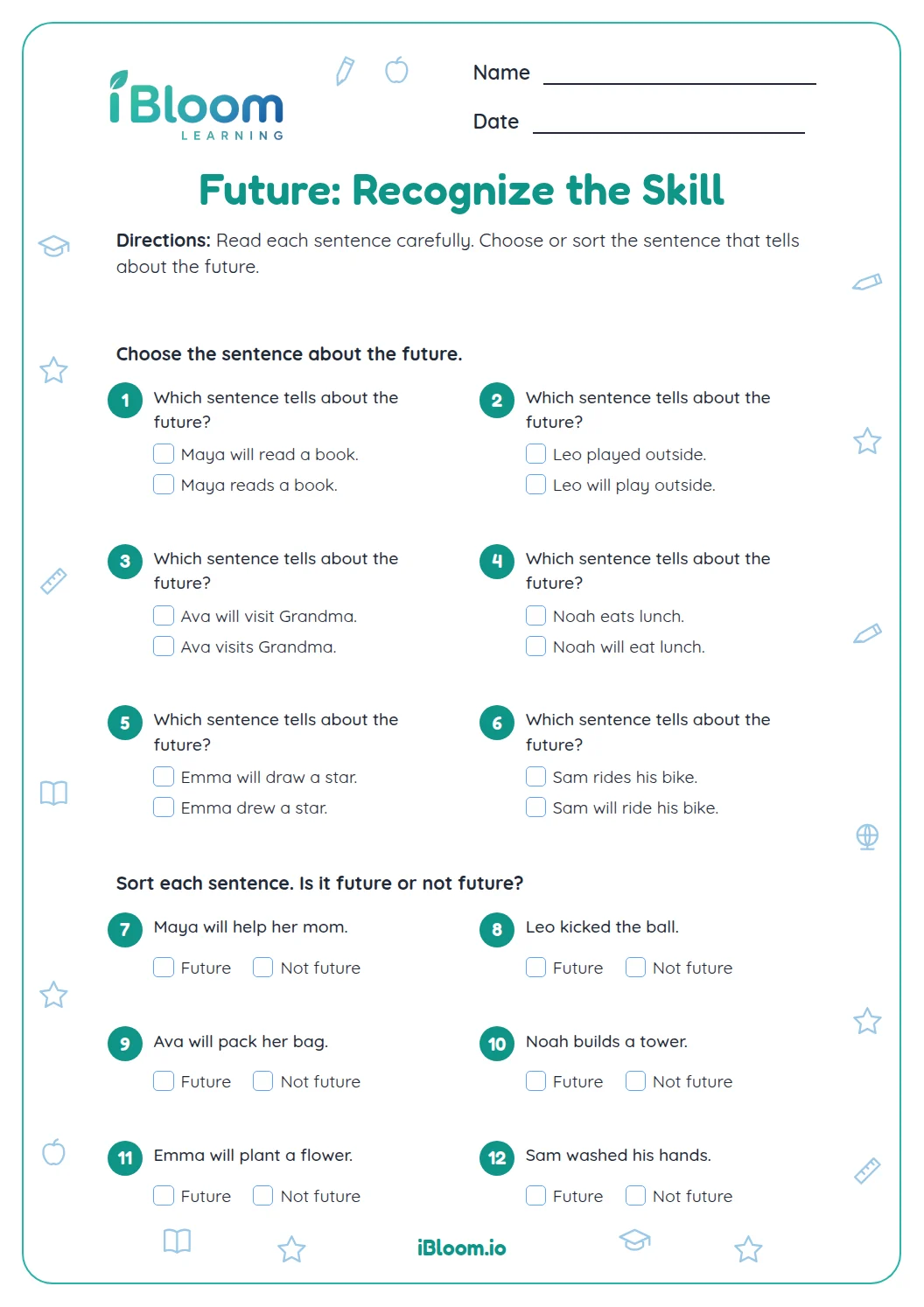
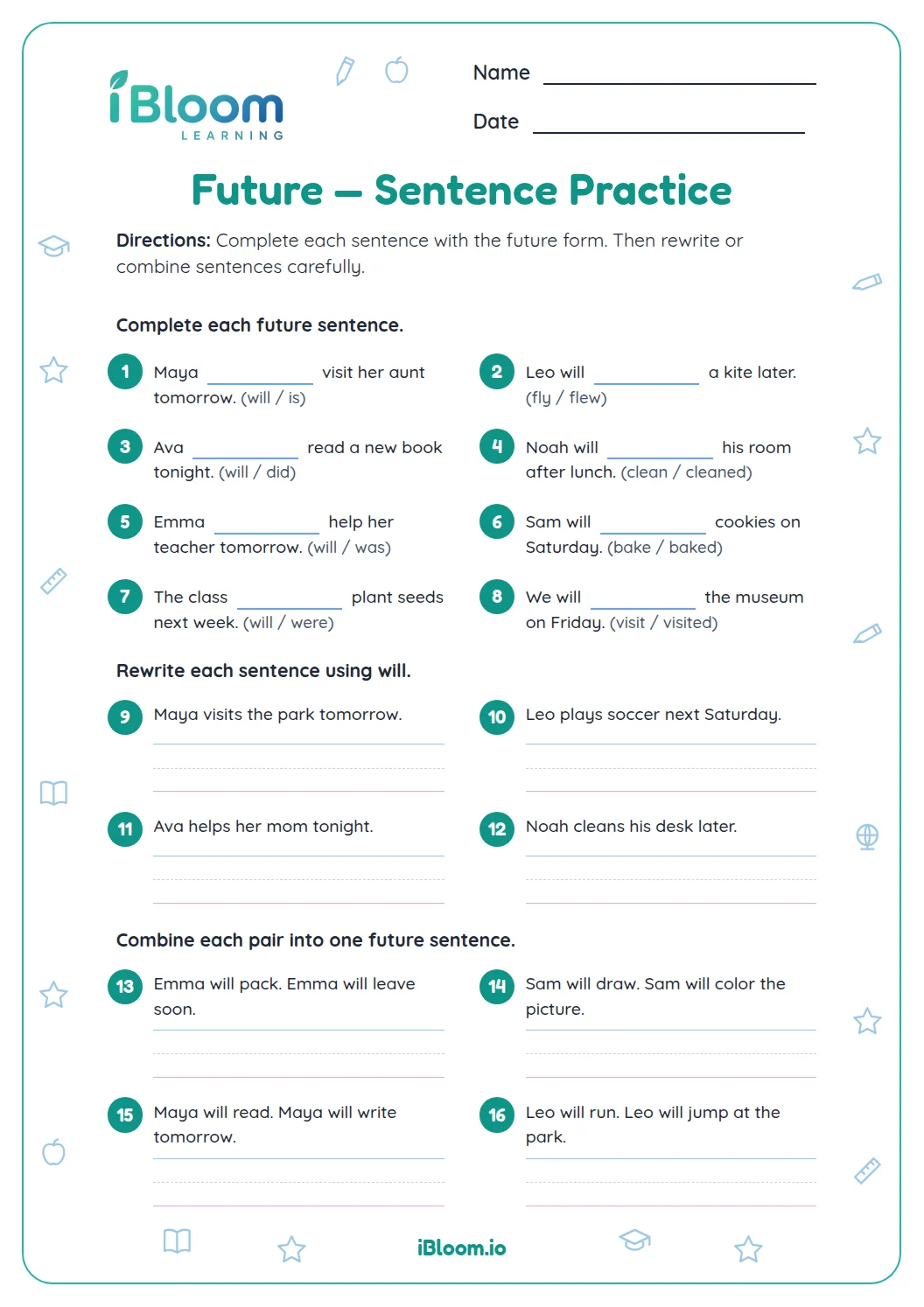
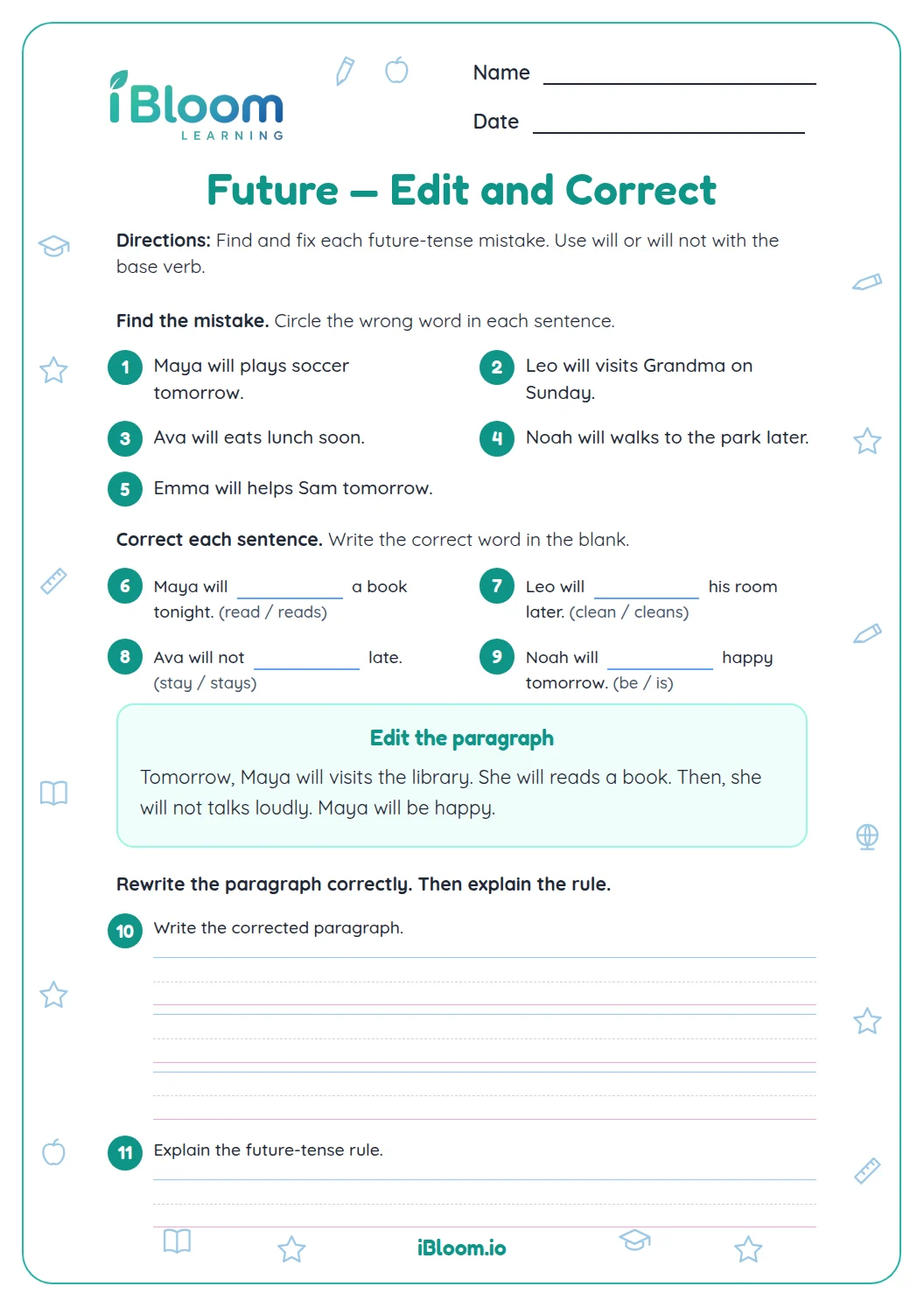
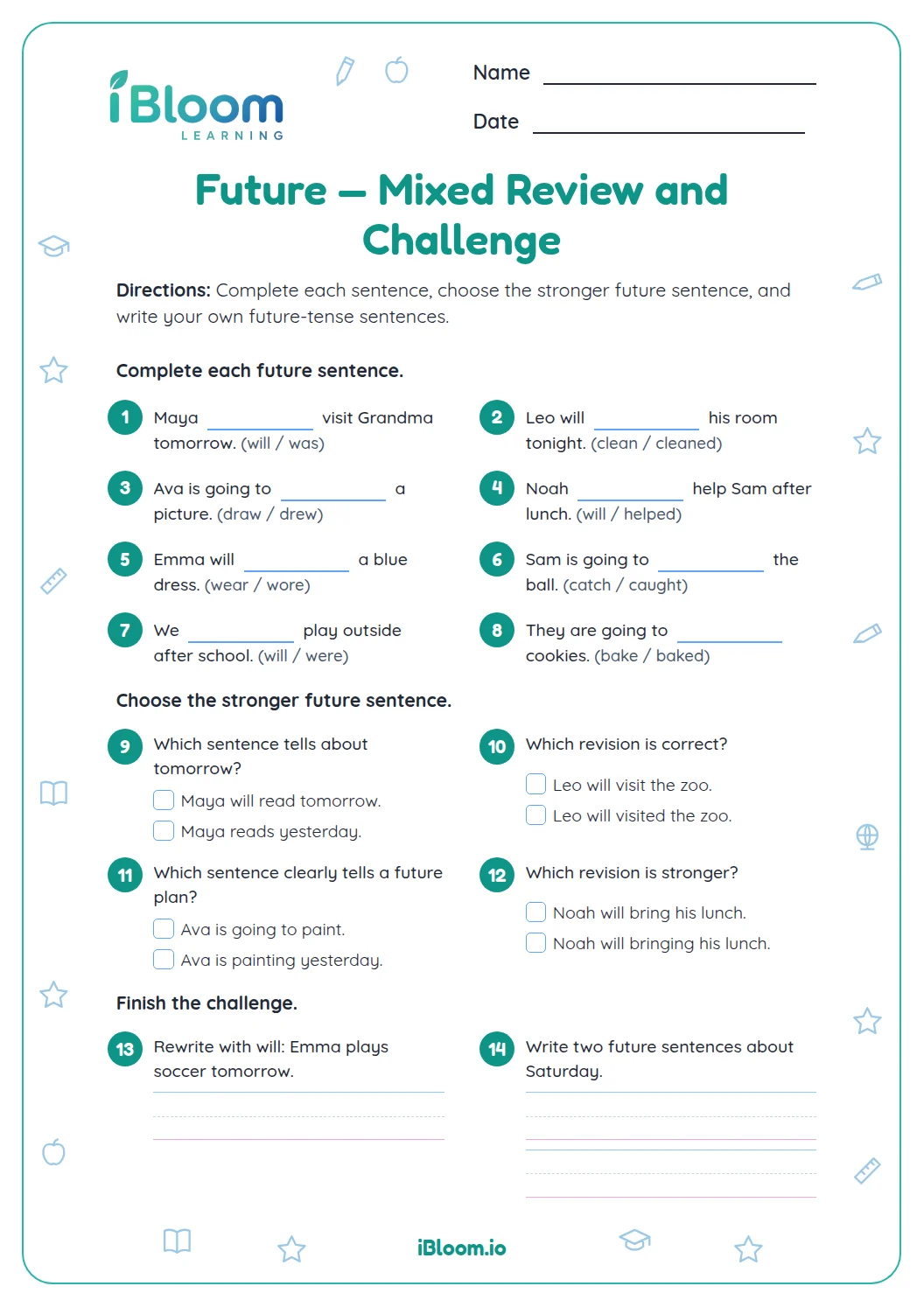
There are 14 questions across two worksheet pages. The first ten ask children to finish future-focused sentences, and the next four invite their own ideas. A separate answer key page includes a sample for every question, with open prompts allowing other sensible answers.
What does the answer key show for writing prompts?
The key gives one short sample response for each prompt. Children can use different details as long as the response answers the question and describes a future plan. For example, a child may choose a different place to visit or a different skill to practice.
Should my child write a complete sentence each time?
The open prompts ask for one or two sentences. For sentence starters, a phrase can complete the thought, but writing the full sentence can help children practice rereading for meaning. An adult can scribe a child’s spoken idea when handwriting slows down the writing practice.
How does this page practice future tense?
Several starters include time words such as “Tomorrow,” “Next week” and “Someday,” and many use “will.” Children connect those clues with an action they plan or imagine doing. Adding where, what or with whom gives the future idea a helpful detail.
Can children choose their own ideas?
Yes. The four Part B prompts are open-ended, and Part A sentence finishes can also vary. Encourage an idea that makes sense for the prompt, then help the child add a detail. The samples in the answer key are examples, not a required story or set of facts.
What can we do after this worksheet?
Invite your child to choose one response and add another event with “first,” “next” or “then.” The New Ending and Own House worksheets offer other Grade 1 free-form writing ideas, while the Perfect Meal page gives practice describing a familiar topic.