







About this worksheet
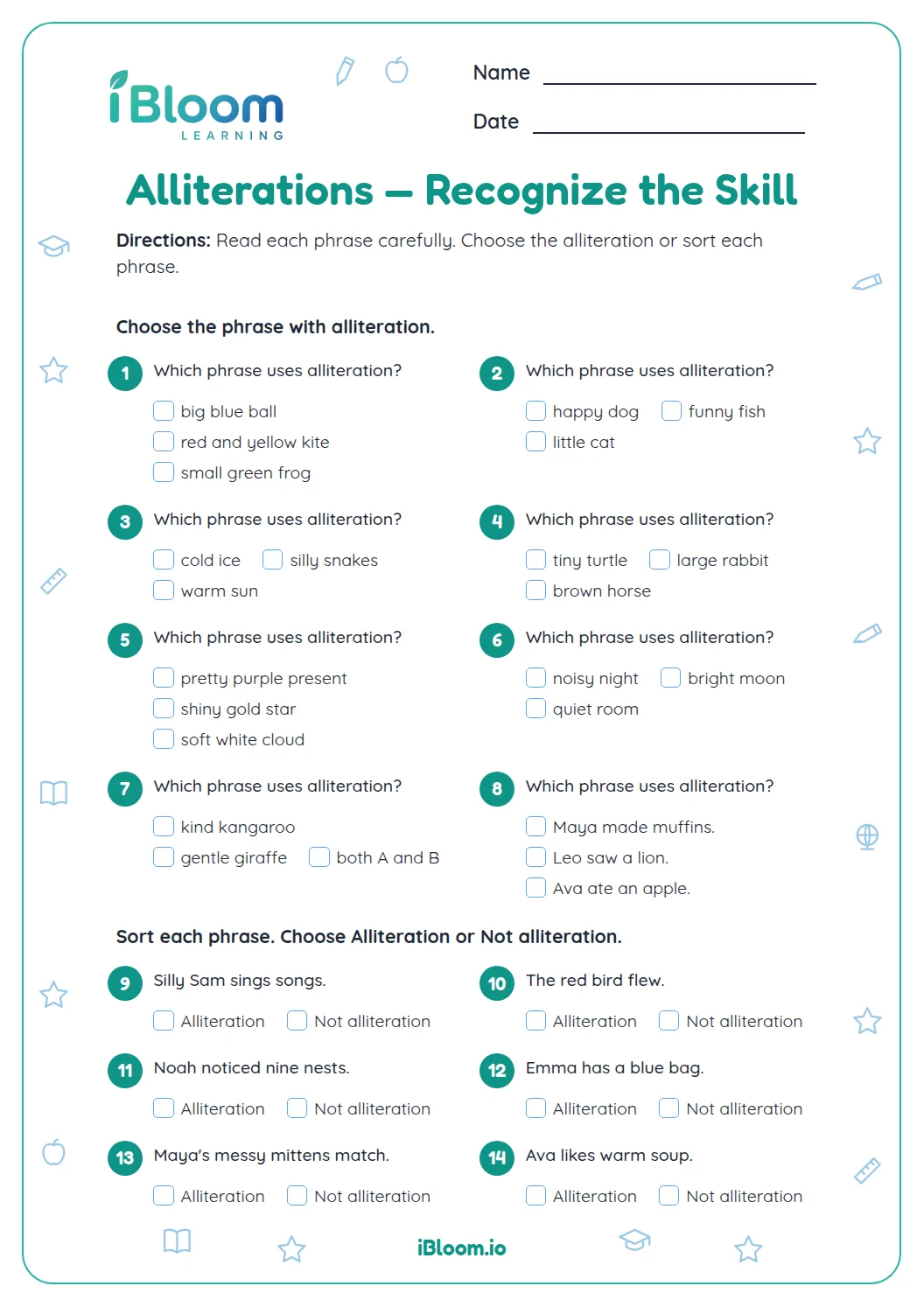
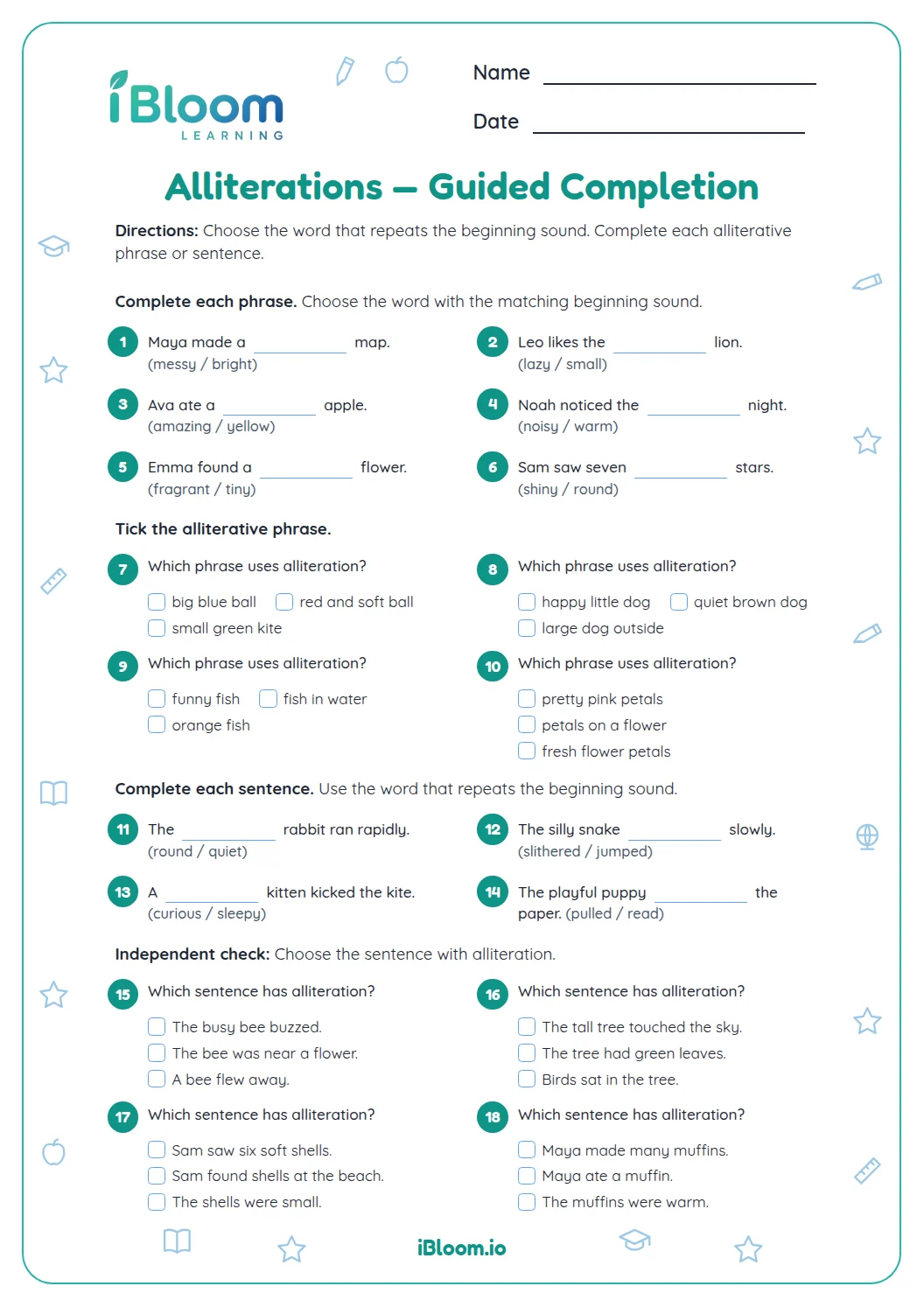
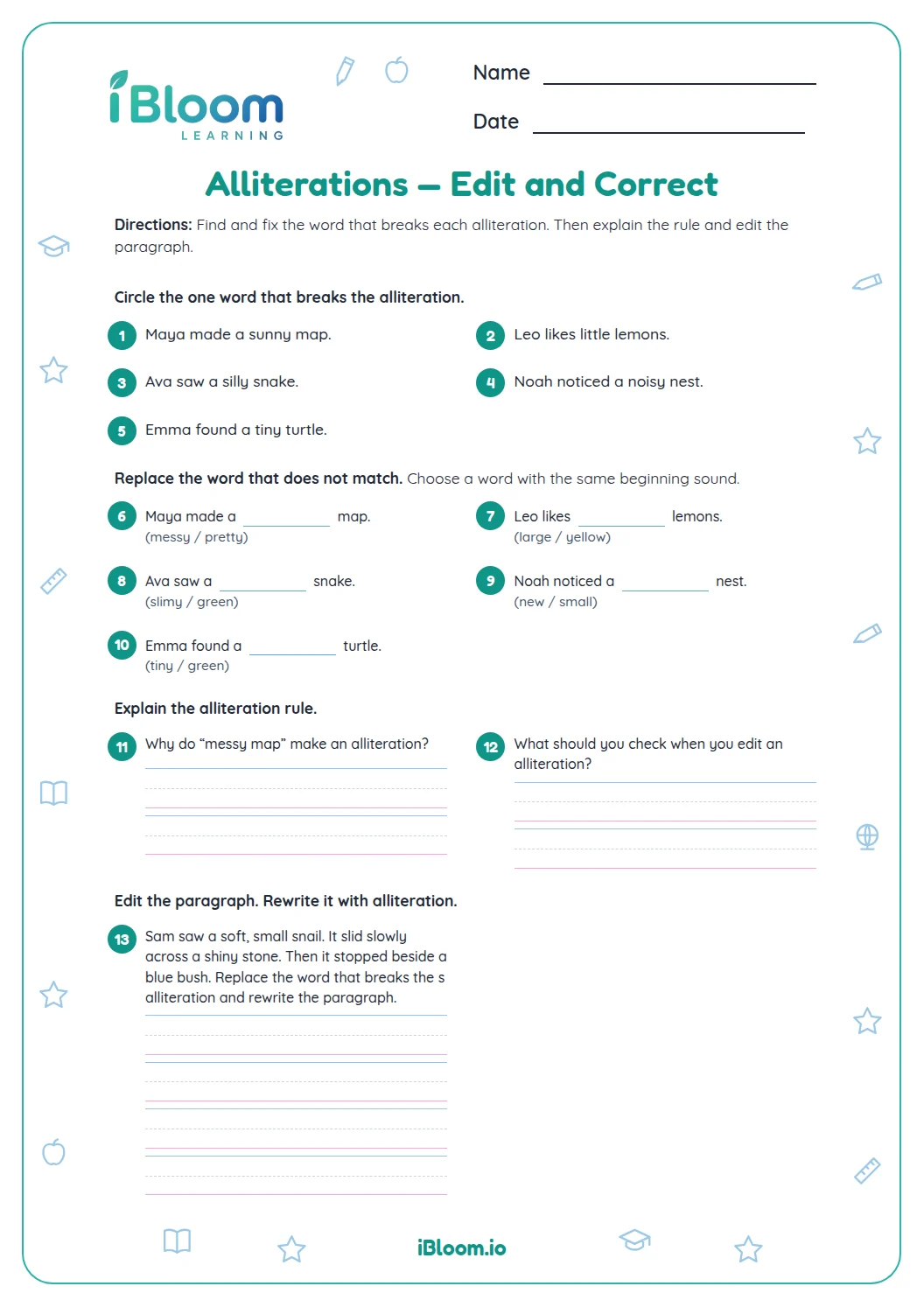
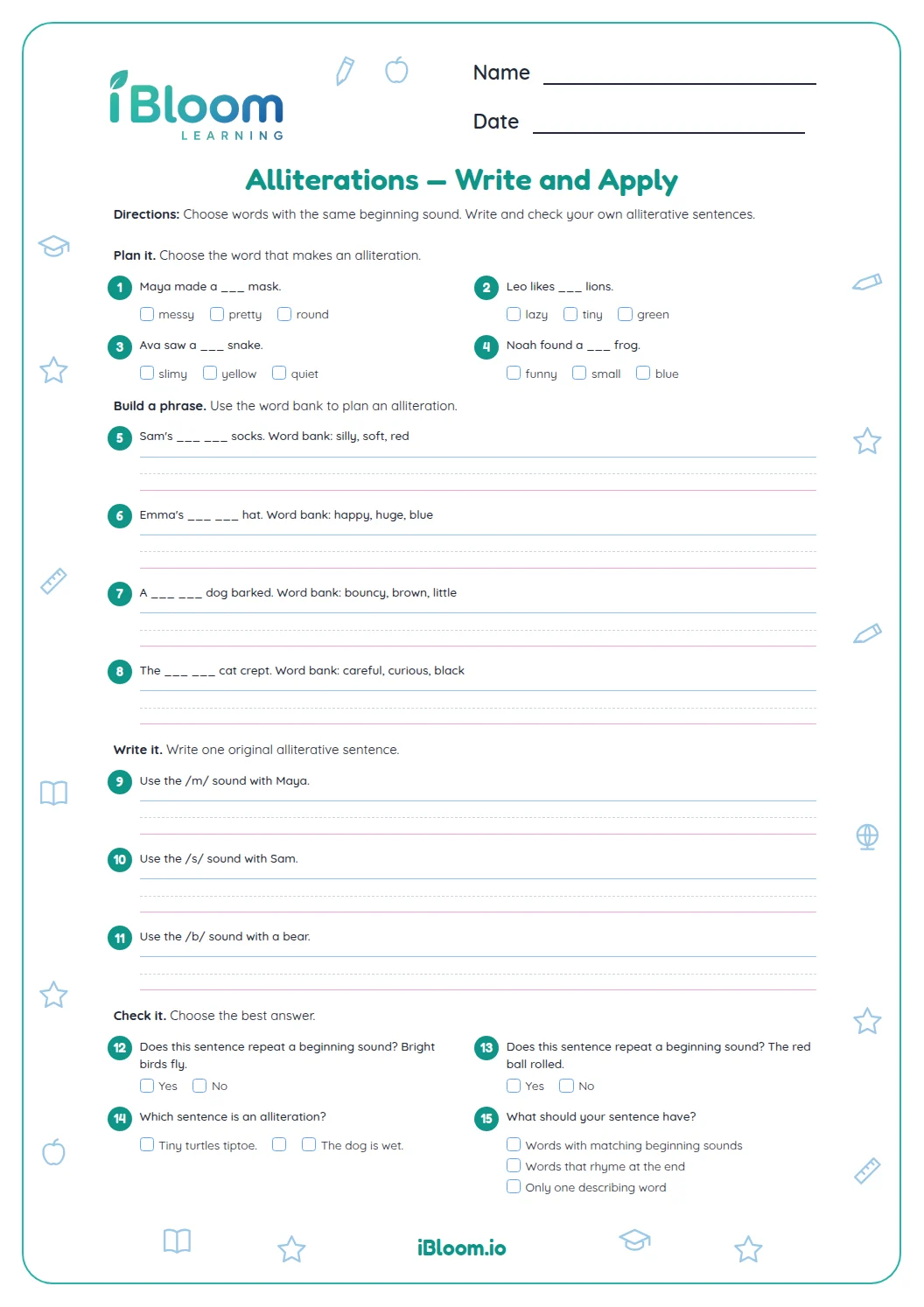
This Grade 2 printable combines describing words with alliteration. Children identify phrases whose words begin with the same sound, notice that alliteration follows sounds rather than just letters, and choose adjectives that repeat a noun’s initial sound. The final items invite them to make their own phrases and sentence. The 15 questions progress from recognition to independent writing, with sample responses in the answer key.
What makes two words alliterate?
Listen for the first sound in each word. Busy bees alliterate because both words begin with /b/. The letters can differ while the sound matches, so the sound is the useful clue.
How can an adjective make a phrase alliterative?
Choose a describing word with the same beginning sound as the noun. For “bouncy ball,” blue works because blue and ball begin with /b/.
How can you check an answer?
For question 1, say busy bees aloud. Both words start with /b/, so the phrase uses alliteration.
- 1busy bees
- 2Beginning sound: /b/
- 3Answer: busy bees
How to use this worksheet
- 1Say both words aloud.
- 2Listen for the first sound, not just the first letter.
- 3Look for the adjective and the noun in a phrase.
- 4Read the whole sentence before choosing a word.
- 5For your own phrase, repeat the sound clearly.
- 6Check the key; written answers may vary.
Common mistakes and quick fixes
The mistake
Matching first letters but not sounds.
The fix
Say both words; alliteration depends on the sound.
The mistake
Choosing an adjective that describes the noun but does not repeat its sound.
The fix
Check the adjective and noun beginnings together.
The mistake
Writing two words with different beginning sounds.
The fix
Repeat the sound aloud before writing the phrase.
What to practice next
Make more practice
Questions parents and teachers ask
What does alliteration mean?
Alliteration repeats a beginning sound in nearby words. Busy bees is an example because both words begin with /b/. The questions ask children to identify matching sounds and create a few examples of their own. The sheet includes both sound recognition and opportunities to make original alliterative examples.
How does this worksheet use adjectives?
Several items ask learners to choose an adjective that begins with the same sound as a noun, such as blue ball. The adjective describes the noun while also helping create alliteration. Learners can use the repeated sound as a clue while they select a describing word.
Does alliteration depend on letters or sounds?
It depends on sounds. Children should say the words and listen to how they begin. Two words can start with the same letter but different sounds, while different spellings can sometimes represent the same sound. This sound check helps distinguish alliteration from words that merely share a letter.
How many questions are on the sheet?
There are 15 questions: eight multiple-choice items, four short answers, and three written responses. The first tasks ask learners to recognize alliteration; the later items ask them to create it. Each later question builds on the same beginning-sound idea.
Can written answers differ from the key?
Yes. The final written items allow more than one sensible phrase or sentence. The answer key gives examples, and another answer works if its nearby words repeat a beginning sound clearly. The sample answers illustrate the repeated sound, while other valid examples are welcome.