







About this worksheet
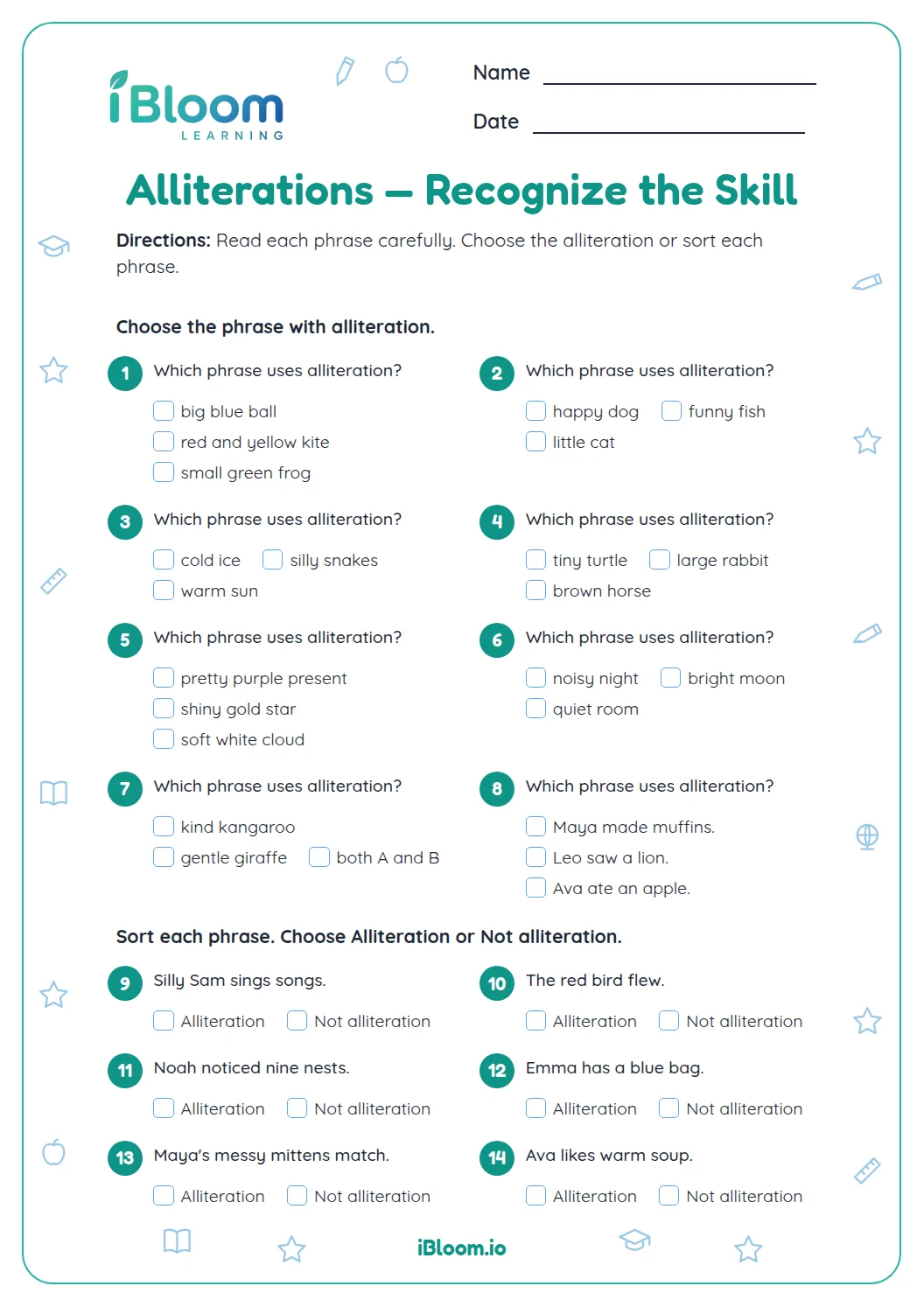
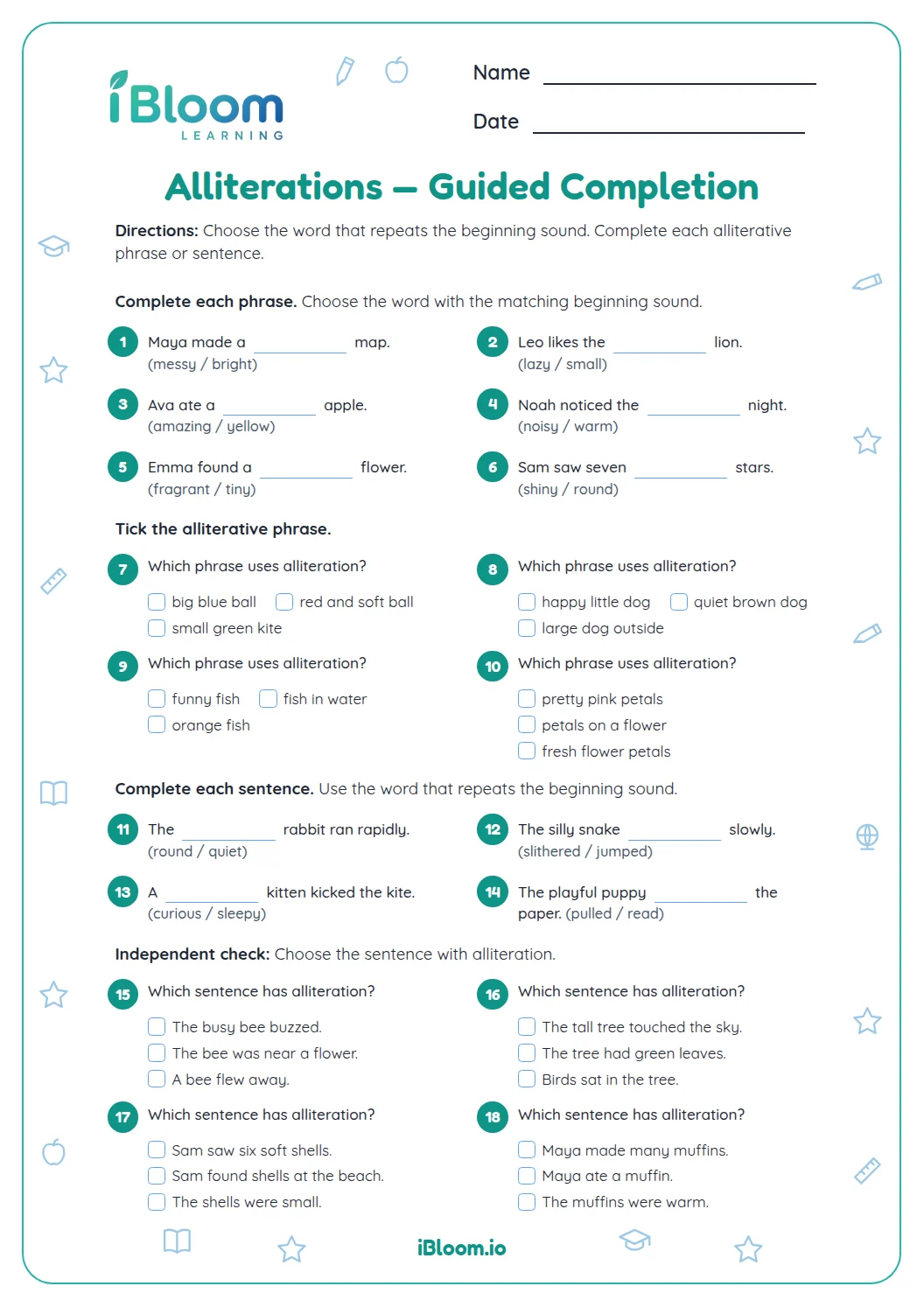
This Grade 2 language worksheet practices alliteration: repeating the same beginning sound in nearby words. Students identify matching sounds in pairs, complete short phrases, and choose sentences that use alliteration. The two-part sheet has 14 questions and a separate answer key.
What does this worksheet practice?
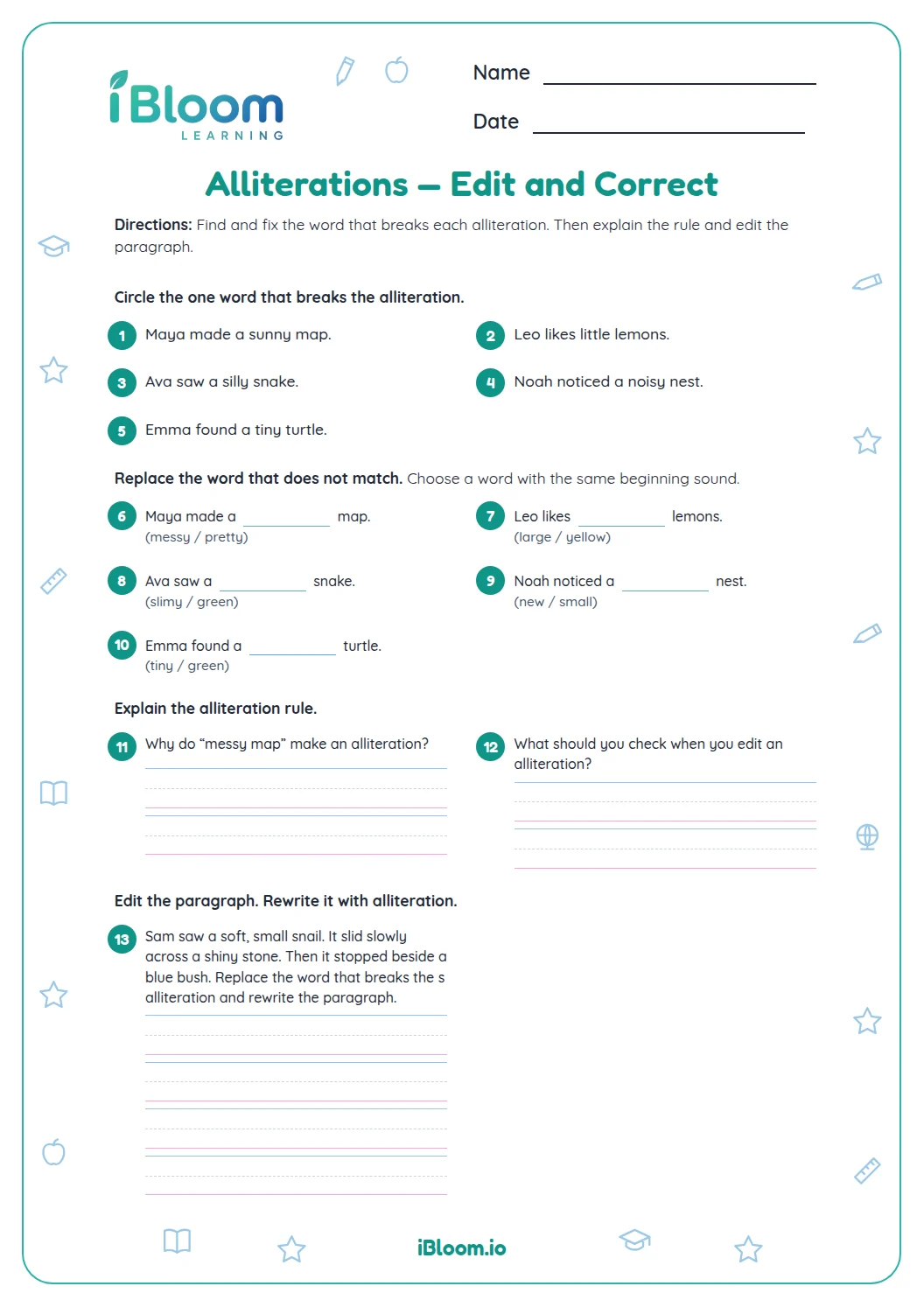
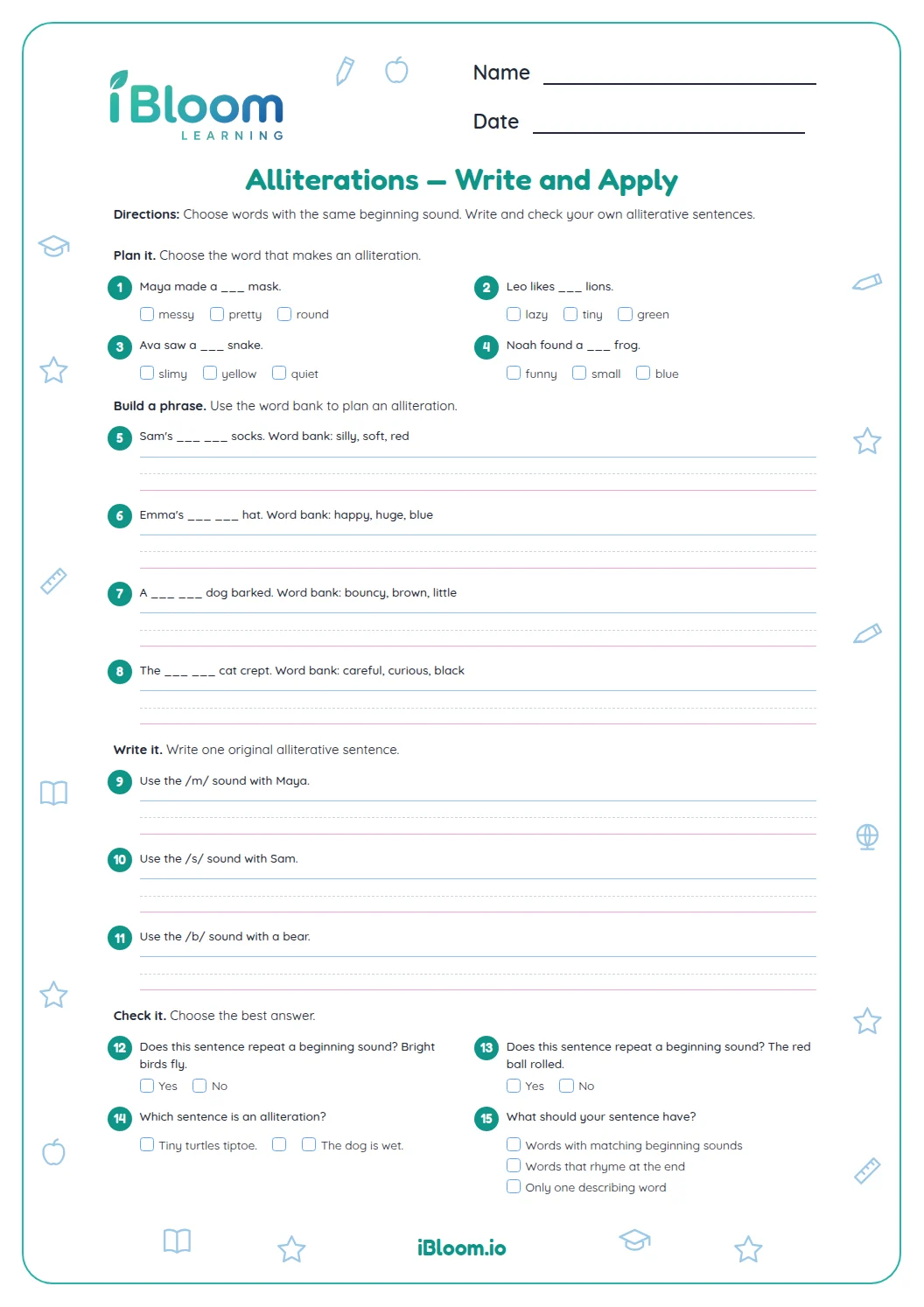
Alliteration repeats a beginning sound, as in “Silly seals slide.” Part A asks students to notice repeated sounds in pairs and sentences. Part B asks them to choose examples and sentence revisions that apply the same sound pattern.
The repeated sound matters; the first letters can differ when they make the same sound.
- Part A: spot repeated beginning sounds
- Part B: choose examples and sentence revisions using alliteration
- 14 questions with an answer key
How should students approach each question?
Say the words aloud and listen to their first sounds. “Merry monkeys munch mangoes” repeats the /m/ sound. In Part C, use words with a shared beginning sound to write a complete sentence.
How can families use the page?
Complete one part at a time and pause to review any answer that needs another look.
How to use this worksheet
- 1Read the sentence or word pair.
- 2Say the important words aloud.
- 3Listen for a repeated beginning sound.
- 4Choose the alliterative example or sentence revision.
- 5Check that the revised sentence keeps the idea.
Common mistakes and quick fixes
The mistake
Looking only at the first letters.
The fix
Say the words aloud and compare their first sounds.
The mistake
Using words that start alike in writing but do not make the same sound.
The fix
Say the words aloud and listen to their first sounds.
The mistake
Choosing a sentence with only one matching word pair when another choice repeats the sound more clearly.
The fix
Check how many nearby words share the beginning sound.
What to practice next
Make more practice
Questions parents and teachers ask
What skill does this page practice?
This page practices alliteration, the repetition of a beginning sound in nearby words. Examples include “Silly seals slide,” “Busy bees buzz,” and “Daring dogs dive.” Students identify examples and choose sentence revisions that use the same sound pattern.
How many questions are included?
There are 14 questions in two parts. Students first spot repeated beginning sounds, then choose words, sentences, and sentence revisions that use alliteration. The separate key provides the correct choice for every question. Teachers can ask learners to explain which sound repeats in each selected example after they finish.
Is an answer key included?
Yes. A separate answer key lists a response for every question on the worksheet. Students can finish a part before checking it, or an adult can use the key to review the completed page together and discuss any tricky items.
How long should students spend on it?
About 20 minutes is a reasonable estimate for these 14 questions, including the sentence-writing practice. Saying each phrase aloud can help students hear repeated sounds; an adult can read the options with a learner as needed. Review the written responses together afterward.
Can a student complete it independently?
The directions are written so students can follow each part one step at a time. A family member or teacher may introduce the skill first, then let the student work. The answer key helps an adult review responses afterward.