


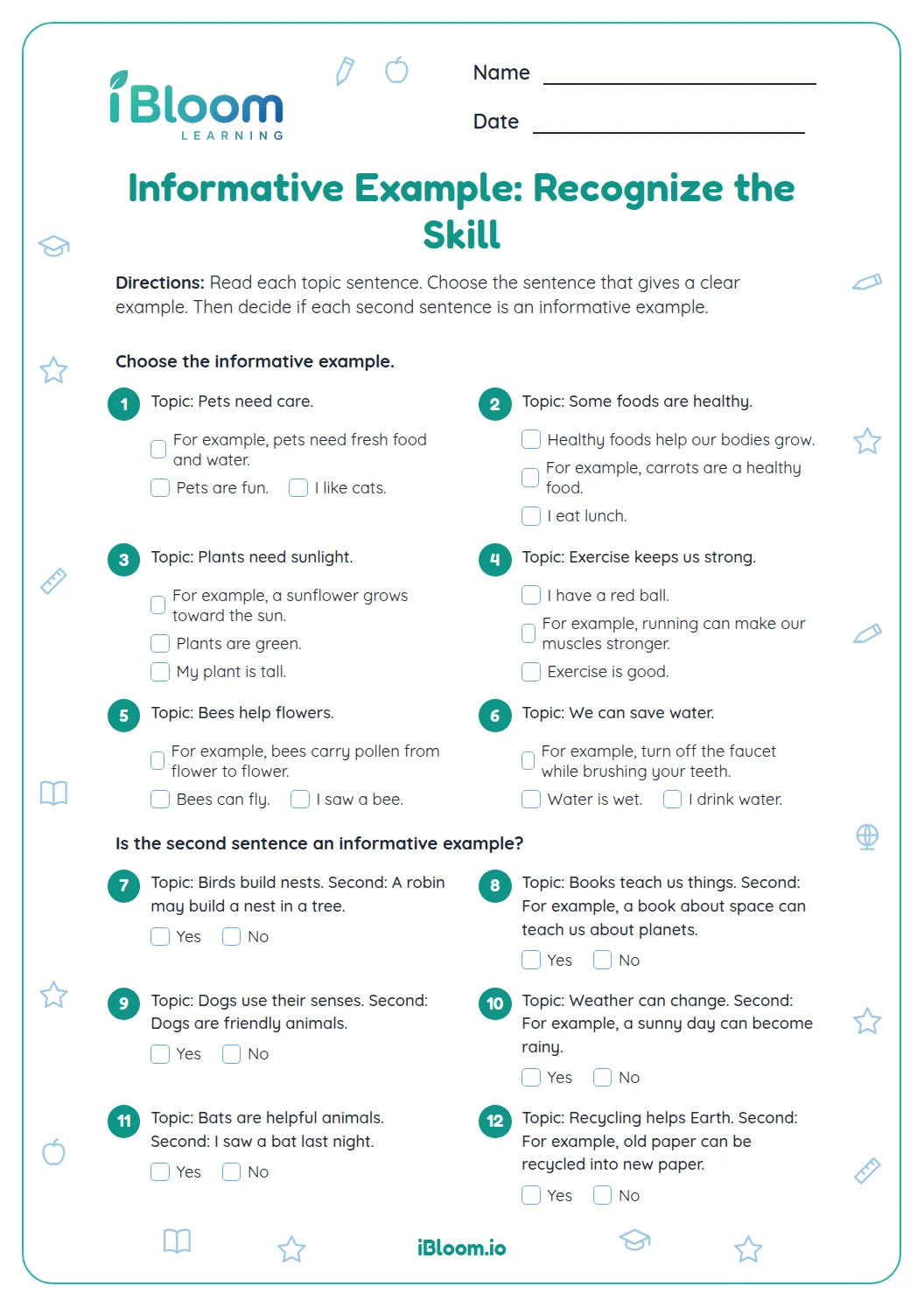


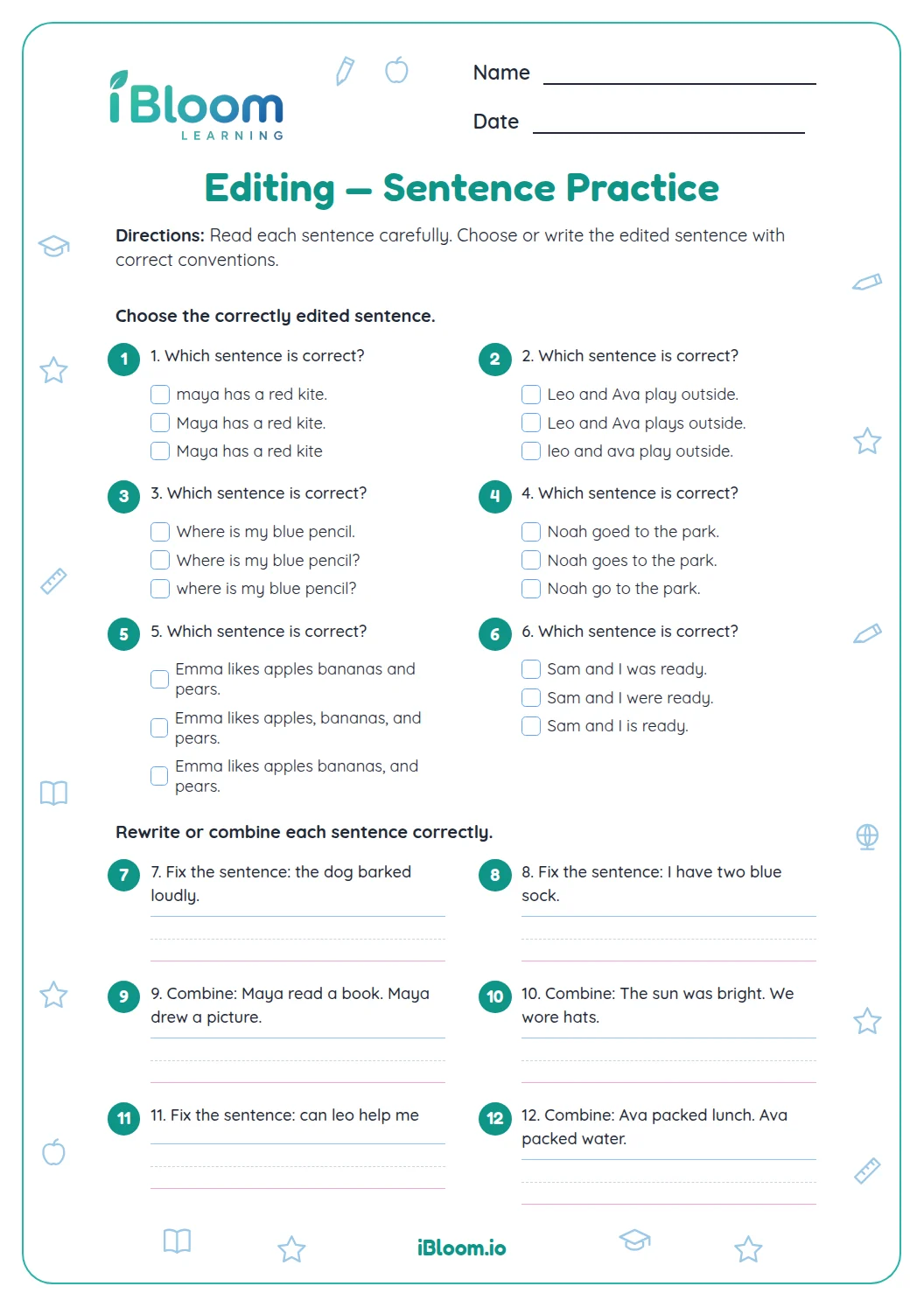
About this worksheet
Students complete two short examples about pets and trees, then recognize a topic sentence, relevant details, and a closing for a school-garden paragraph. The final two questions provide independent paragraph practice about bicycles and books. Only those final questions ask for extended writing; the rest use quick choices.
Aligned to W.2.2
What belongs in an informative paragraph?
An informative paragraph teaches about one topic. Begin with a sentence that names it, add facts or examples that help the reader understand it, and end with a sentence that wraps up the information.
This worksheet completes two examples about pets and trees, then guides a paragraph about school gardens and offers bicycle and book prompts for independent practice.
- 1Topic: School gardens are useful places.
- 2Example 1: Children learn how plants grow.
- 3Example 2: They give students fresh vegetables.
- 4Closing: These examples show why school gardens are useful.
How can a writer choose useful examples?
A good example explains the topic sentence. If the topic is parks as places to play, swings and open fields are useful details. A sentence such as “The park is outside” is related but does not explain how people play there.
How does the worksheet guide the writing?
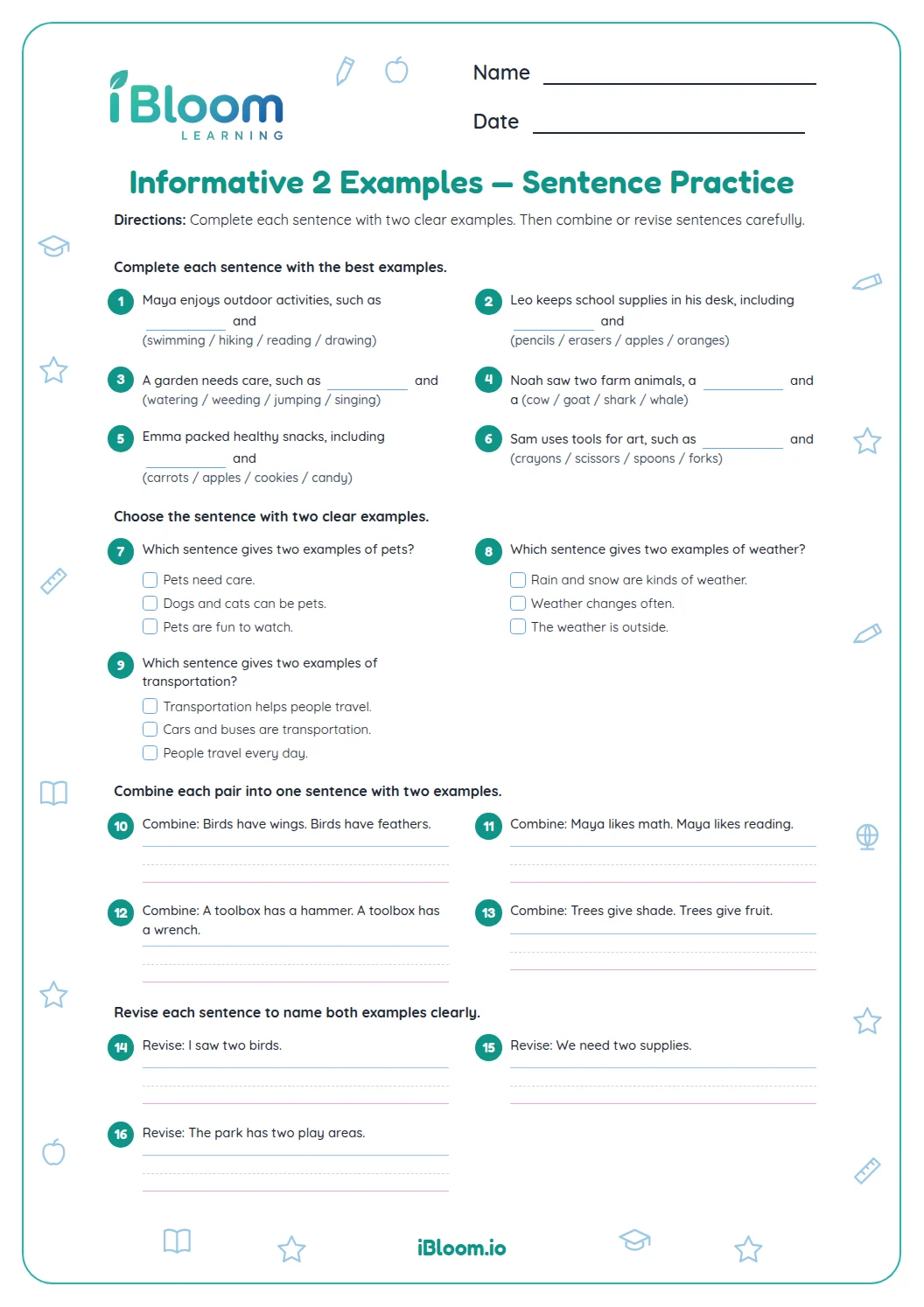
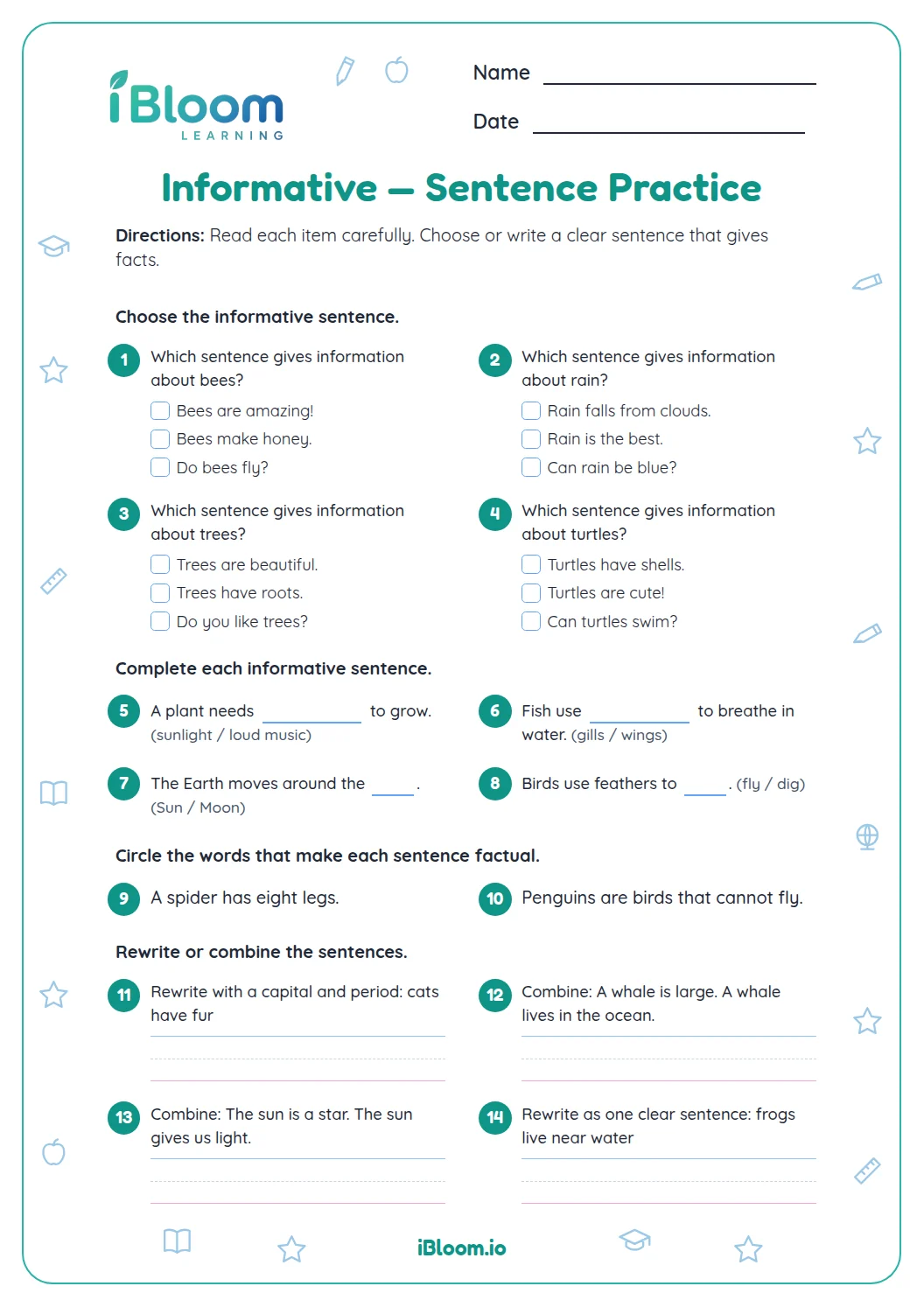
The first ten items complete pet and tree examples with a word that fits each detail. Questions 11–14 build a school-garden paragraph sentence by sentence. The final two prompts ask students to plan and write about bicycles and books.
How to use this worksheet
- 1Read the topic sentence and say what the paragraph will teach.
- 2Choose details that are facts or examples about that topic.
- 3Keep both examples connected to the same main idea.
- 4Finish with a sentence that makes the paragraph feel complete.
- 5Read the whole paragraph aloud and check that it makes sense.
Common mistakes and quick fixes
The mistake
Adding a detail that does not explain the topic.
The fix
Ask whether the sentence helps the reader learn about the topic sentence.
The mistake
Using an opinion where a fact is needed.
The fix
Check whether the detail can be verified or is only a personal feeling.
The mistake
Stopping after the examples with no ending.
The fix
Add a final sentence that gathers the information and signals the paragraph is complete.
Common Core alignment
This worksheet gives focused practice with the following Common Core skills.
Introduce an informative topic, add facts and examples, and conclude.
On this sheet: Introduce an informative topic, add facts and examples, and conclude.
Show the official wordingHide the official wording
Write informative/explanatory texts in which they introduce a topic, use facts and definitions to develop points, and provide a concluding statement or section.
What to practice next
Make more practice
Further reading
Questions parents and teachers ask
What makes a paragraph informative?
It teaches the reader about a topic with facts or examples. A clear topic sentence names the subject, details explain it, and a concluding sentence brings the information to a close. The worksheet asks students to identify those jobs before completing their own guided examples.
How many examples should the paragraph include?
The focus is two examples or details that develop one topic. For instance, a paragraph about parks can explain that children use swings and families play on fields. The two details should connect to the same main idea rather than introduce unrelated subjects.
Can a student use an opinion as a detail?
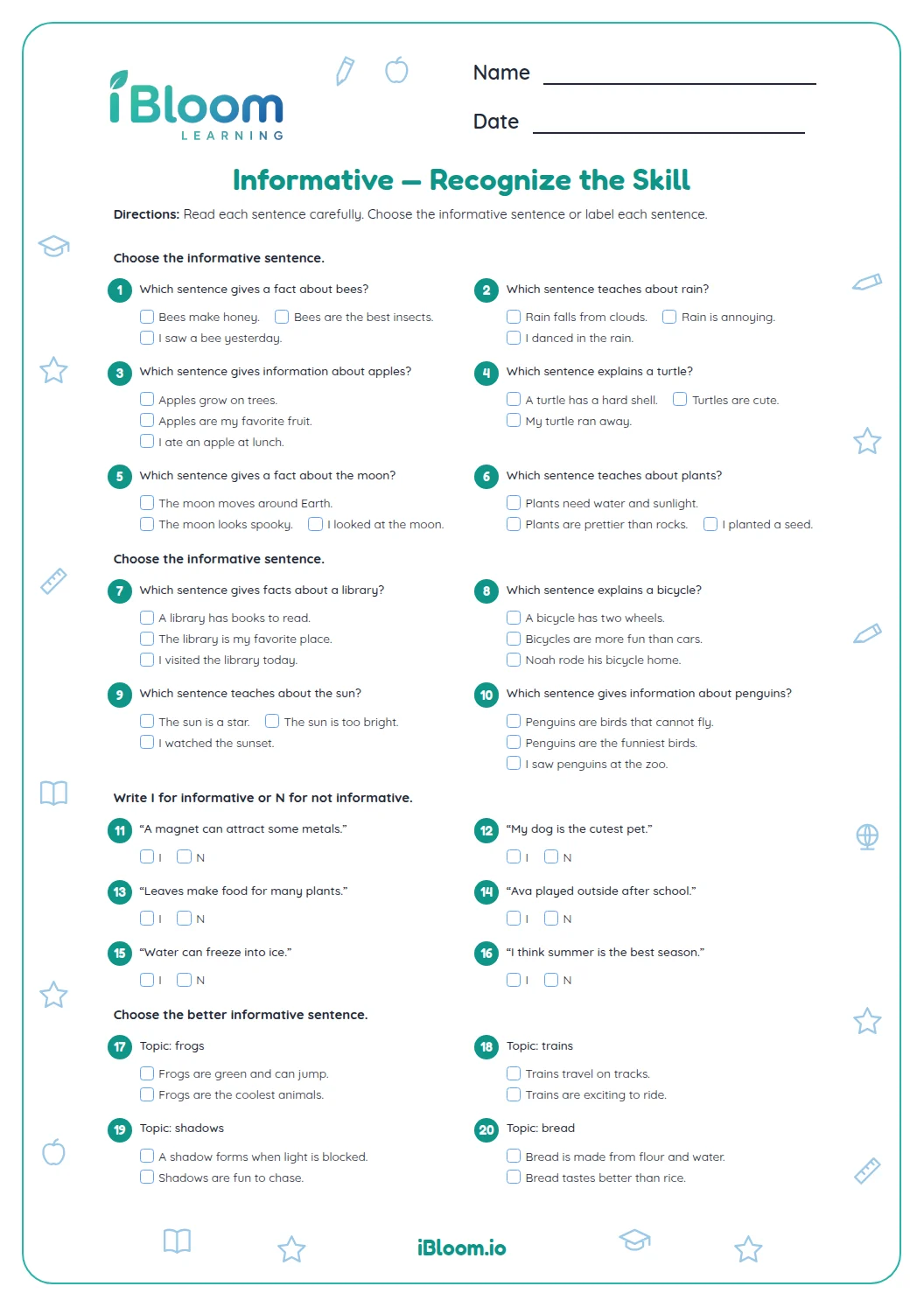
An informative paragraph should use facts that explain the topic. “Bees have six legs” is checkable, while “Bees are the best” tells a personal opinion. The pet and tree examples let children practice selecting details before writing their own paragraphs.
What is the purpose of a concluding sentence?
A concluding sentence gives the paragraph a finished feeling and reminds the reader of its topic. It can briefly gather the examples together without repeating every word. One worksheet prompt asks students to write a conclusion for information about parks.
What does guided completion mean here?
Students complete two examples about pets and trees, finish a school-garden paragraph one sentence at a time, and then plan paragraphs about bicycles and books. The answer key gives sample responses for each writing prompt, so different clear wording can be reviewed.
Is an answer key included for open writing?
Yes. The answer key gives model answers for open writing. Children may use different clear wording if each response stays on topic and includes useful examples. The last two prompts ask for two examples and a closing sentence. This helps when checking the examples and answers on the page.