





About this worksheet
Grade 2 writers practice topic sentences, related details, and endings with 14 guided paragraph questions. The separate answer key includes sample responses. Students complete an informative passage about butterflies and add their own sentences about familiar topics. The practice aligns with CCSS W.2.2.
Aligned to W.2.2
What does complete an informative paragraph mean?
Guided choices and short writing prompts help Grade 2 writers add a topic, useful facts, and an ending. Includes 14 questions and a separate answer key.
Work through the parts in order. Each section adds a new way to use the same skill.
- 1A topic sentence tells the reader the ___.
- 2Answer: topic. It tells what the paragraph will explain.
How is the practice organized?
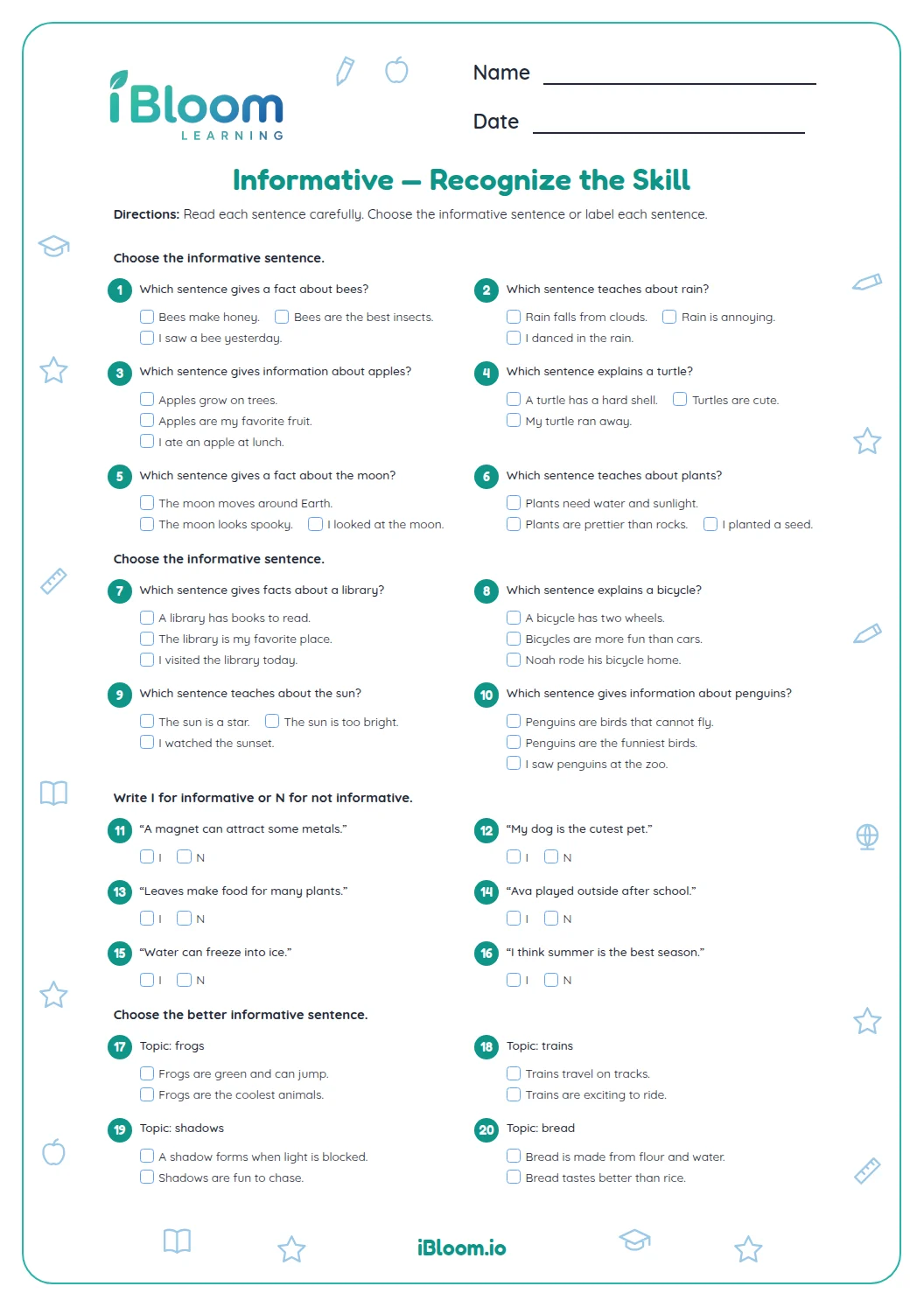
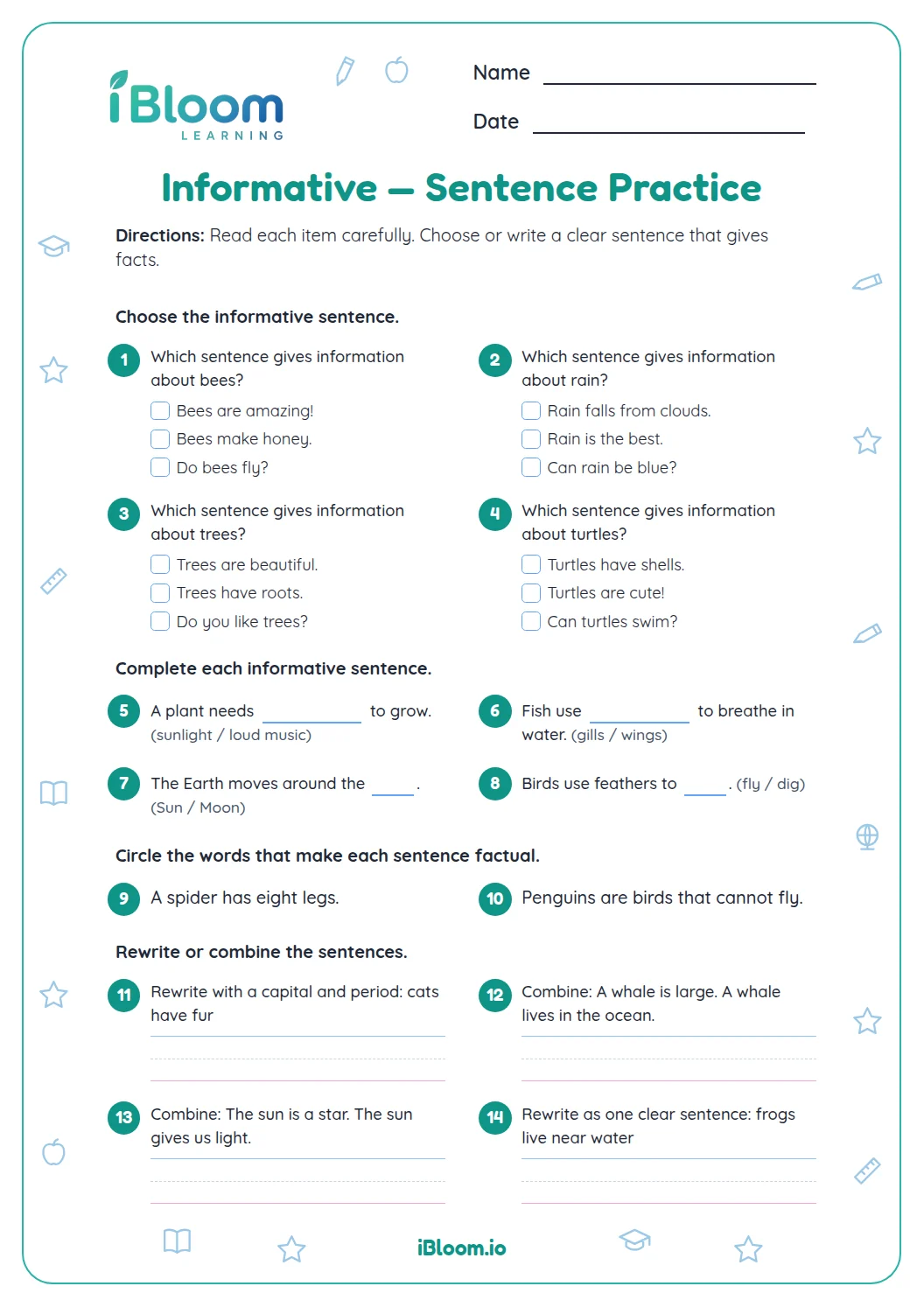
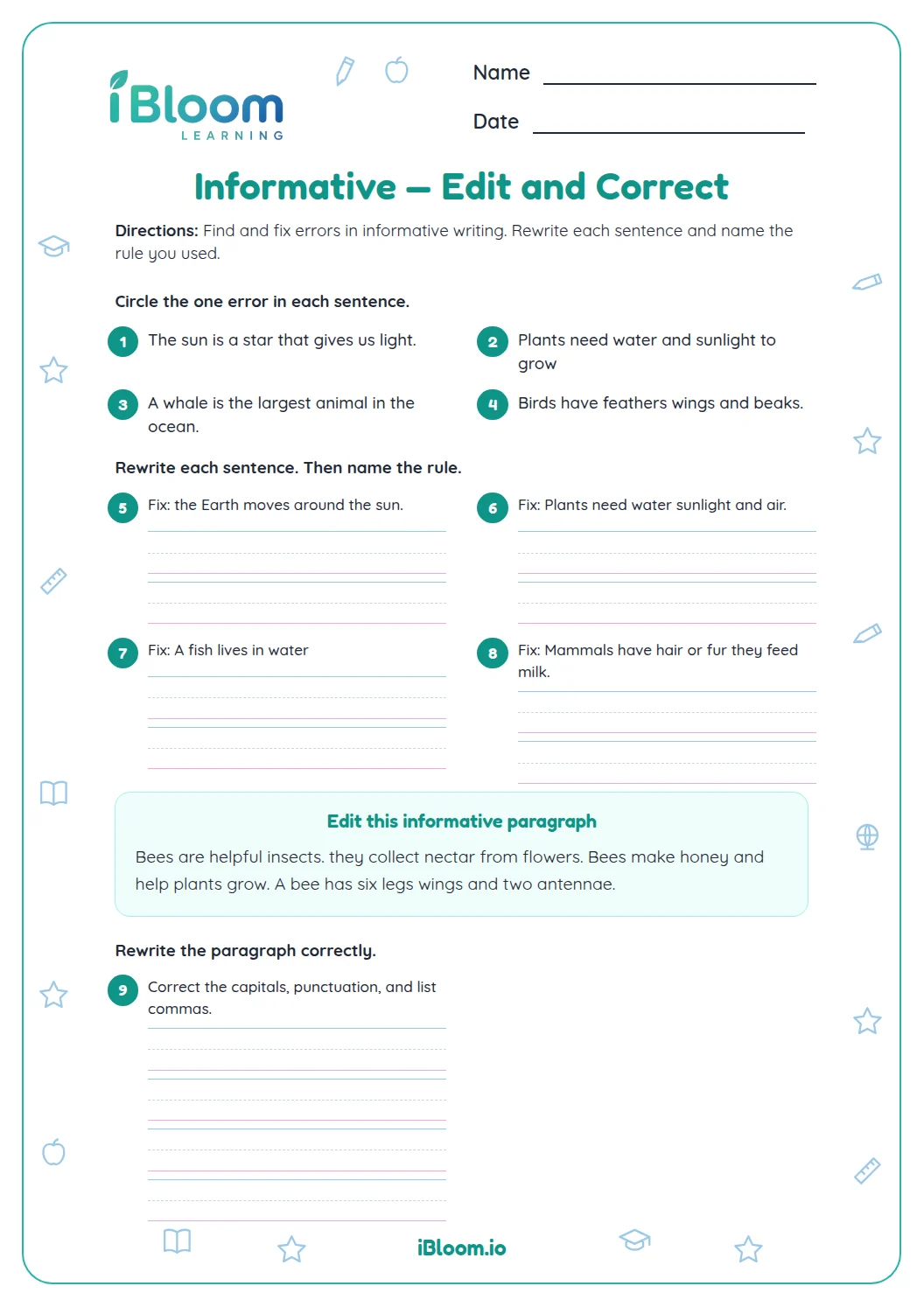
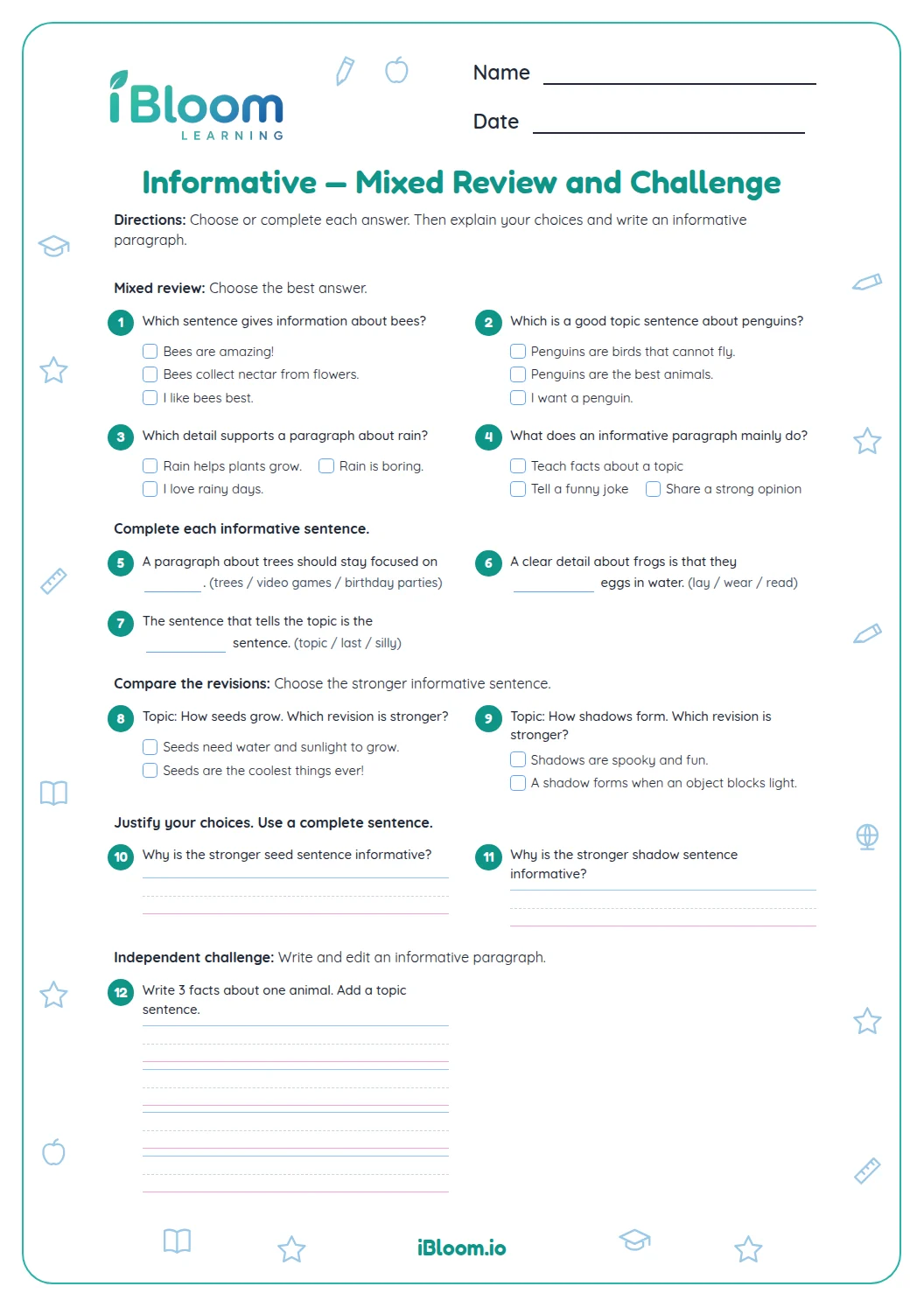
There are 14 questions across three parts, followed by a separate answer key. The prompts move from recognizing the idea to using it in context.
- Part A: guided recognition and first examples
- Part B: apply the skill to new examples
- Part C: explain, solve, or write independently
How can an adult support the learner?
Read each direction aloud if needed, then ask the learner to explain one choice or step. Use the key to check the final response and revisit any item that needs another look.
How to use this worksheet
- 1Read the direction for the first part together.
- 2Model one item by thinking aloud.
- 3Let the learner complete the next items independently.
- 4Ask the learner to explain one answer.
- 5Check work with the separate answer key.
Common mistakes and quick fixes
The mistake
Rushing past an important clue in the prompt.
The fix
Underline the key word or detail before answering.
The mistake
Choosing an answer that does not fit the full question.
The fix
Reread the prompt and check that the response addresses it.
The mistake
Leaving a response unchecked.
The fix
Use the answer key and correct the work in a different color.
Common Core alignment
This worksheet practices the standard below.
Write informative texts that name a topic, add facts, and provide closure.
On this sheet: Guided choices and short writing prompts help Grade 2 writers add a topic, useful facts, and an ending. Includes 14 questions and a separate answer key.
Show the official wordingHide the official wording
Write informative/explanatory texts in which they introduce a topic, use facts and definitions to develop points, and provide a concluding statement or section.
What to practice next
Make more practice
Further reading
Questions parents and teachers ask
What skill does this page practice?
The worksheet helps Grade 2 writers build an informative paragraph from a topic sentence, related facts, and an ending. Learners choose strong examples, complete a paragraph about a butterfly life cycle, and write a few sentences of their own. The final writing item invites a connected paragraph rather than a list of unrelated facts.
How many questions are included?
There are 14 questions in three parts. Students identify paragraph parts, complete facts about a butterfly life cycle, and write their own short informative paragraph. The separate answer key provides sample responses for open-ended writing. The final writing item invites a connected paragraph rather than a list of unrelated facts.
Can an adult read the directions aloud?
Yes. Ask the learner to read the topic sentence and each detail aloud. Then discuss whether every detail teaches something about the topic. For the final writing task, the learner can use the word bank to plan and connect ideas.
How should mistakes be reviewed?
A detail may be true but still not fit the topic. For example, a paragraph about butterfly growth should include a fact about its life cycle. Reread the topic and keep details that explain it. The final writing item invites a connected paragraph rather than a list of unrelated facts.
Is the answer key included?
Yes. The key gives sample answers for open-ended items, including a possible three-sentence paragraph. Other clear, accurate sentences about the topic can also work, so use the samples as models rather than the only acceptable wording. The final writing item invites a connected paragraph rather than a list of unrelated facts.