







About this worksheet
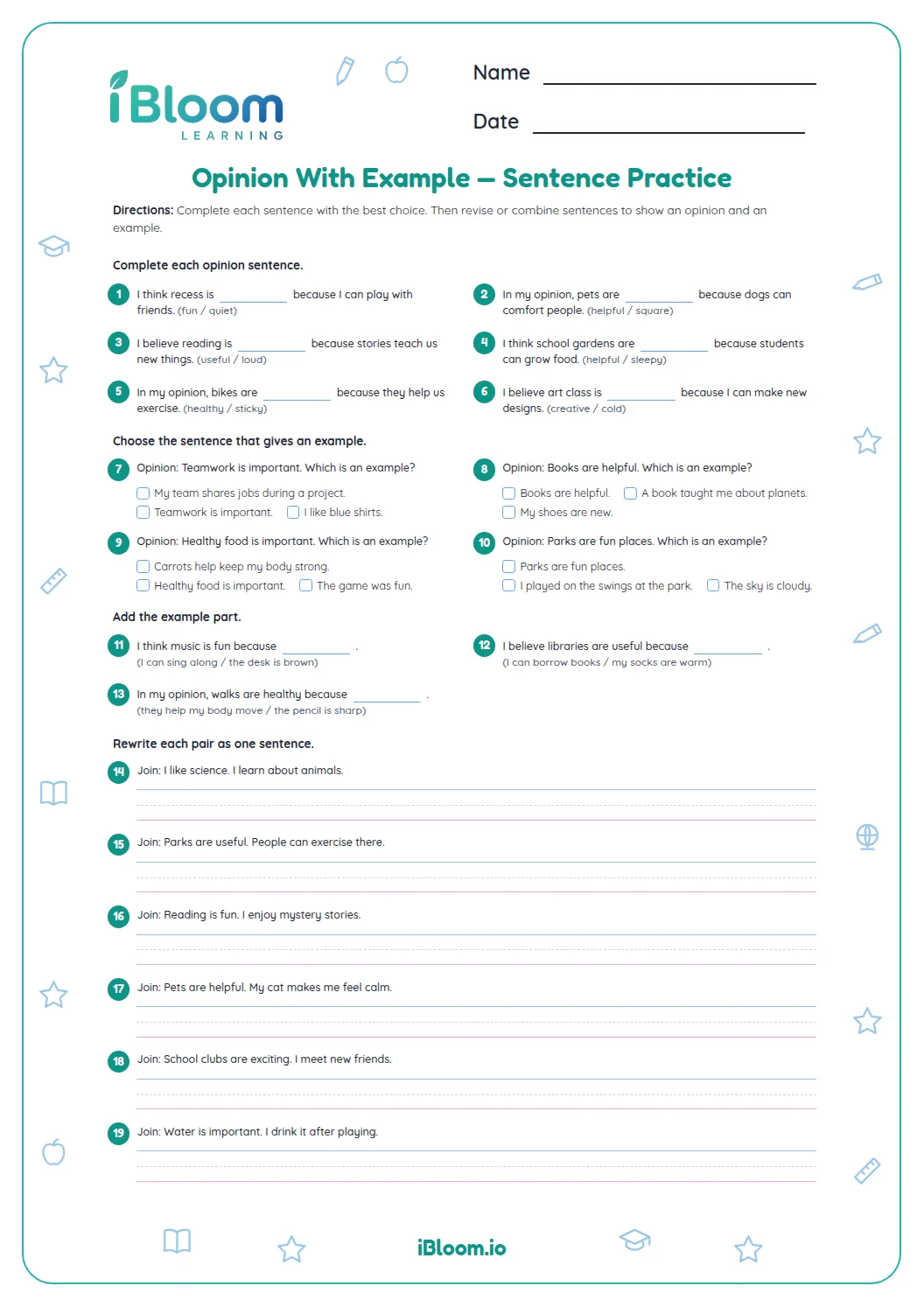
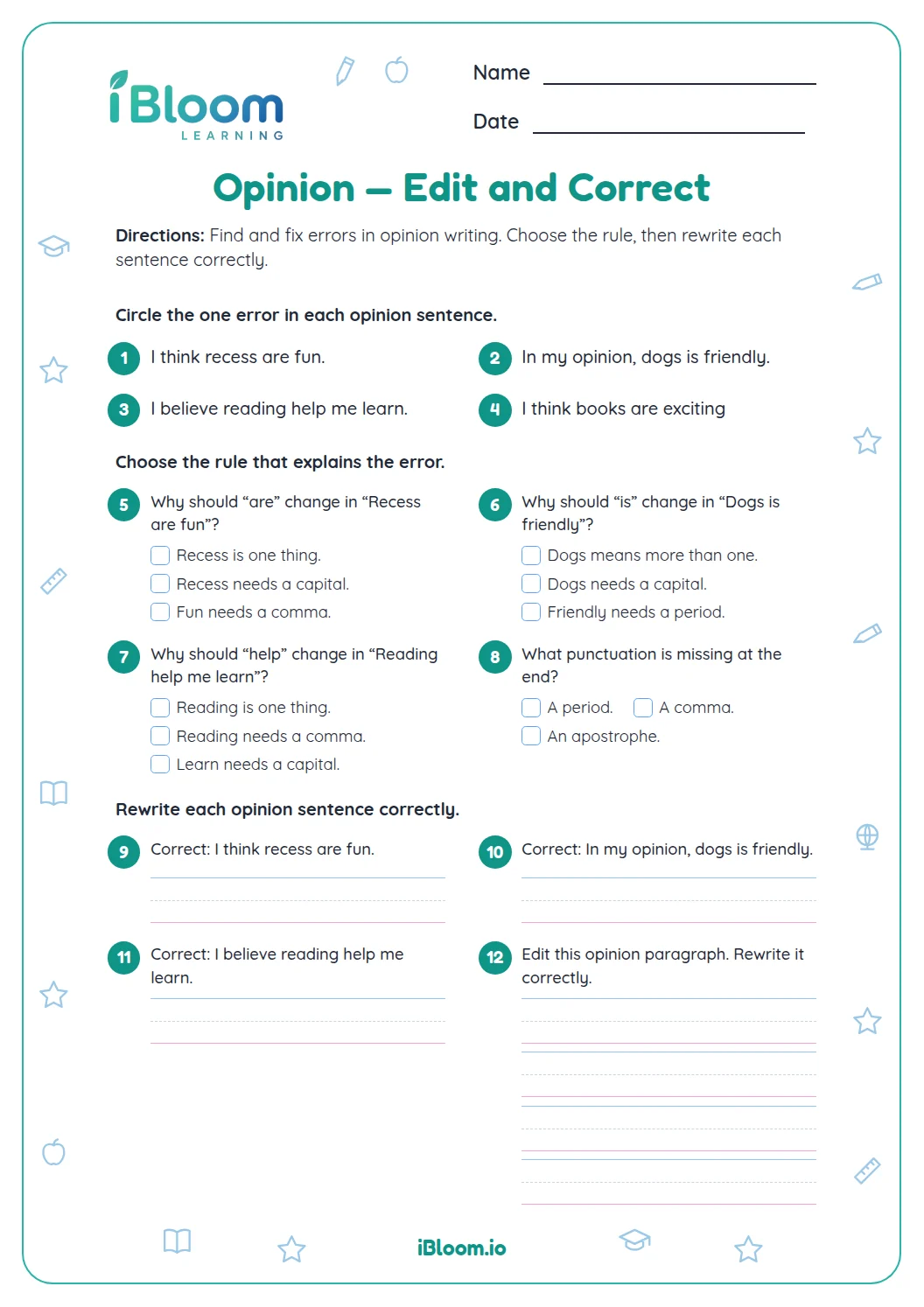
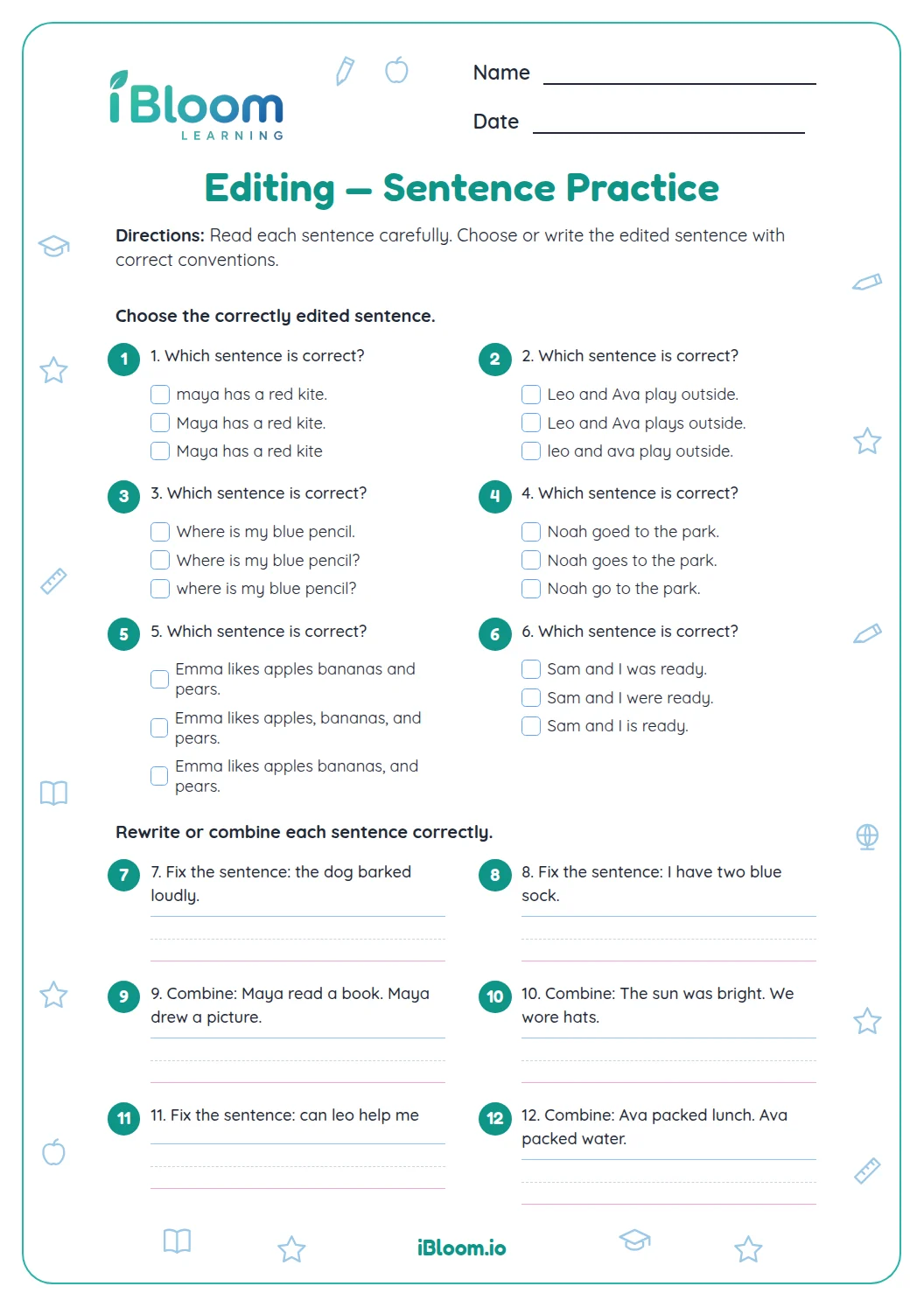
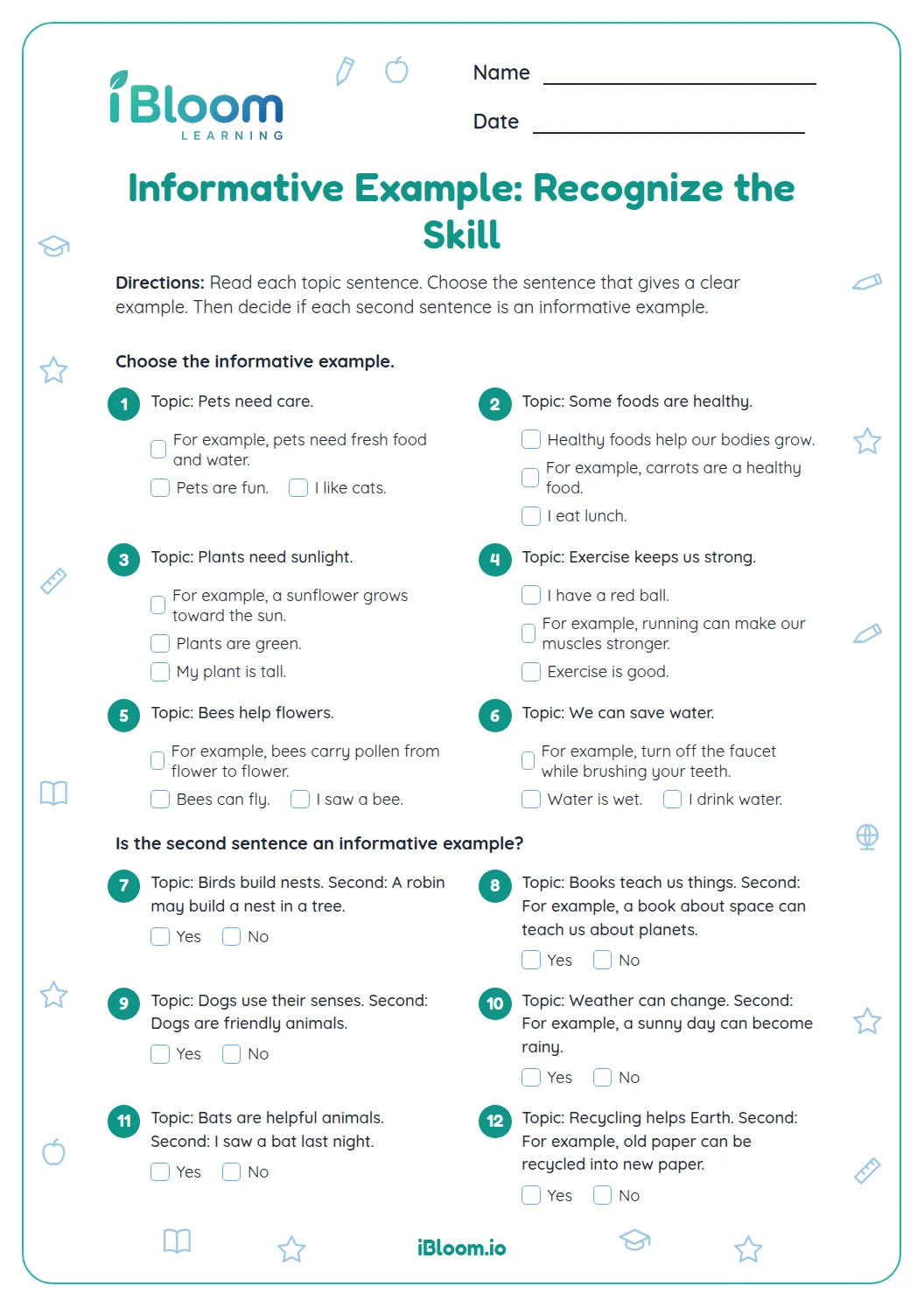
This free Grade 2 opinion writing worksheet guides students from recognizing a point of view to completing an opinion paragraph. Students sort opinions from facts, choose linking words such as “because” and “and,” and write reasons, examples, and concluding sentences. The final prompts build a short opinion paragraph about a class pet. The worksheet practices CCSS W.2.1, with a separate answer key and sample responses.
Aligned to W.2.1
How can I tell an opinion from a fact?
A fact can be checked, while an opinion tells what someone thinks or prefers. “Our class has recess after lunch” can be checked on the schedule. “Recess is the best part of the day” is a point of view.
Question 1 asks students to choose the opinion sentence before they build one of their own.
- 1“Recess is the best part of the school day.” → Opinion
- 2It tells what the writer thinks is best.
How do linking words connect a reason?
A linking word shows how a reason fits an opinion. “Because” introduces a reason, and “and” can connect related ideas. A phrase such as “For example” introduces a specific detail.
How do I finish an opinion paragraph?
State the opinion, add a reason, and give a detail that helps explain it. Finish with a concluding sentence that reminds the reader of the opinion. In the final section, students practice each sentence job for the same topic: a class pet.
How to use this worksheet
- 1Read each sentence and decide whether it can be checked or expresses a view.
- 2For a reason blank, choose the word that makes the sentence explain why.
- 3Use “for example” before a specific detail.
- 4In the writing section, answer with one complete sentence.
- 5Check that the conclusion matches the opinion and topic.
Common mistakes and quick fixes
The mistake
Choosing a fact as an opinion because it mentions a preference word.
The fix
Ask whether someone could check the statement or whether it tells what a person thinks.
The mistake
Adding an example that does not support the reason.
The fix
Make sure the detail shows what the reason looks like in real life.
The mistake
Writing a conclusion about a new topic.
The fix
Repeat or restate the same opinion in a closing sentence.
Curriculum alignment
The guided sentences practice the parts of a Grade 2 opinion paragraph named in the standard.
State an opinion, support it with reasons, connect ideas, and conclude.
On this sheet: Students identify opinions and reasons, complete linking sentences, and write supporting and concluding sentences.
Show the official wordingHide the official wording
Write opinion pieces in which they introduce the topic or book they are writing about, state an opinion, supply reasons that support the opinion, use linking words (e.g., because, and, also) to connect opinion and reasons, and provide a concluding statement or section.
What to practice next
Make more practice
Further reading
Questions parents and teachers ask
What are the parts of an opinion paragraph?
An opinion paragraph names a topic and gives the writer’s point of view. It supports that opinion with one or more reasons, uses linking words to connect ideas, and ends with a concluding statement. The worksheet first asks students to recognize those parts and then guides them to write their own sentences.
How does “because” help connect an opinion and a reason?
“Because” introduces why the writer holds an opinion. In question 5, the opinion is that the class should have a reading corner, and the reason is that it gives students a quiet place. The word makes the connection clear to the reader.
What is the difference between a reason and an example?
A reason explains why an opinion makes sense. An example gives a particular detail that helps the reader understand the reason. For a class garden, “students learn about plants” can be a reason, while measuring a bean plant is a specific example.
How many questions are on the worksheet?
There are 15 questions: four opinion and fact choices, four paragraph-completion choices, and seven sentence blanks. The answer key lists the choices and missing phrases. Each blank completes a reason, example, linking sentence, or conclusion so students can see how the parts connect.
Can a student choose a different opinion from the sample?
Yes. For open writing prompts, students may choose a different point of view as long as they answer the prompt and give a relevant reason. The sample key shows one possible response, not the only sentence a student can write.
What should a student check before finishing?
Check that the paragraph states an opinion, gives a reason that supports it, connects ideas with a word such as “because” or “and,” and ends with a sentence about the same opinion. Each part should stay on the same topic.