
About this worksheet
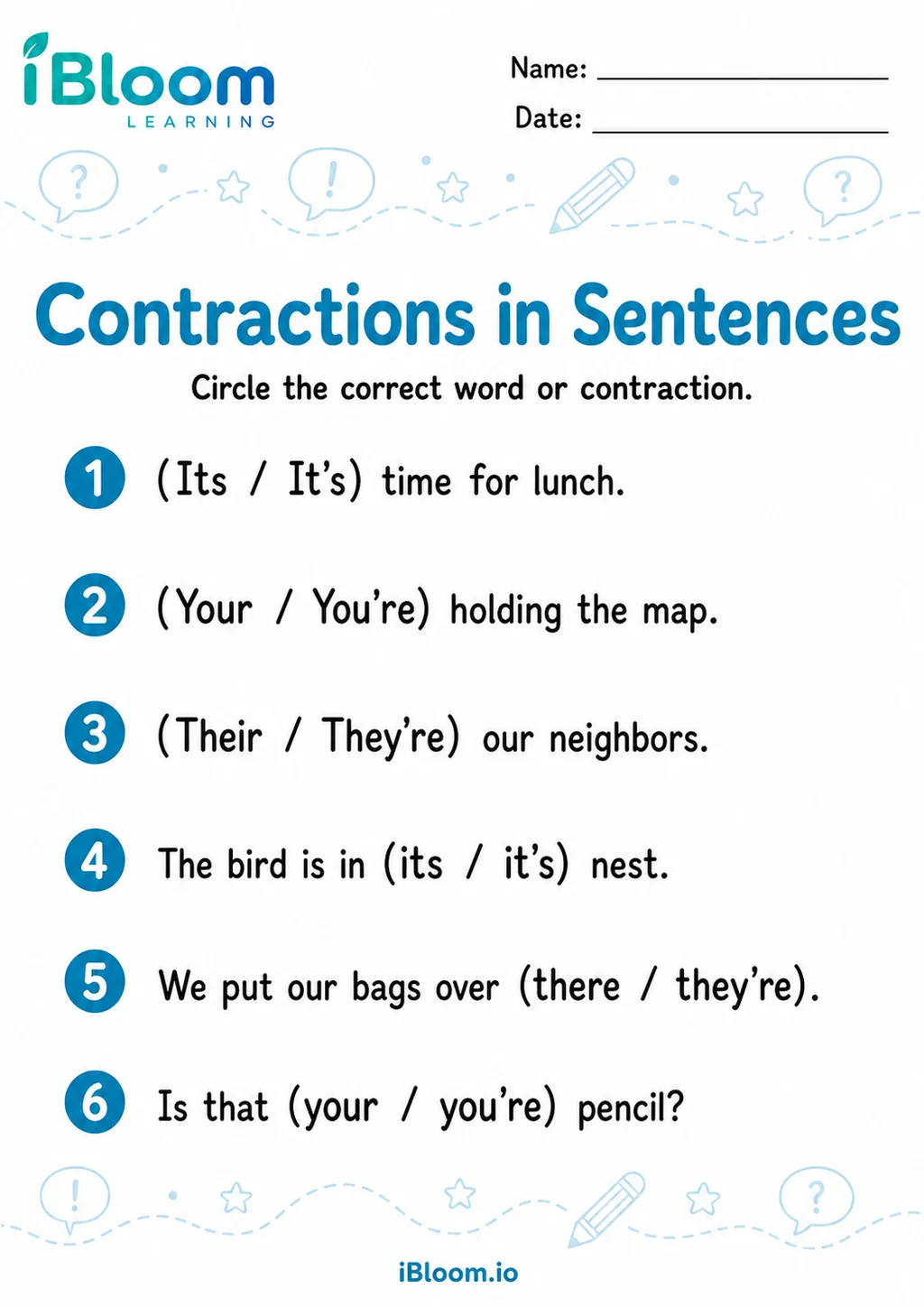
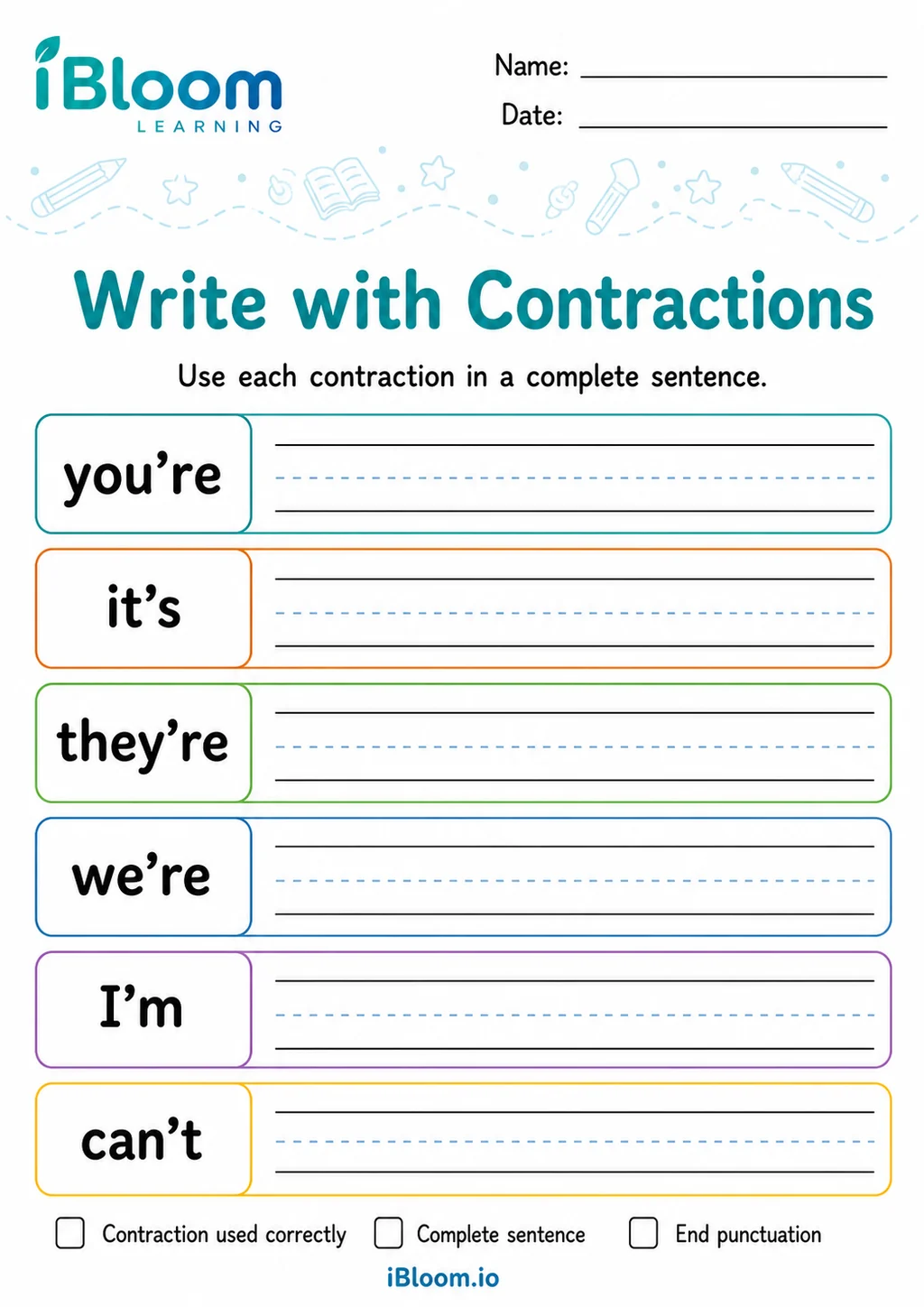
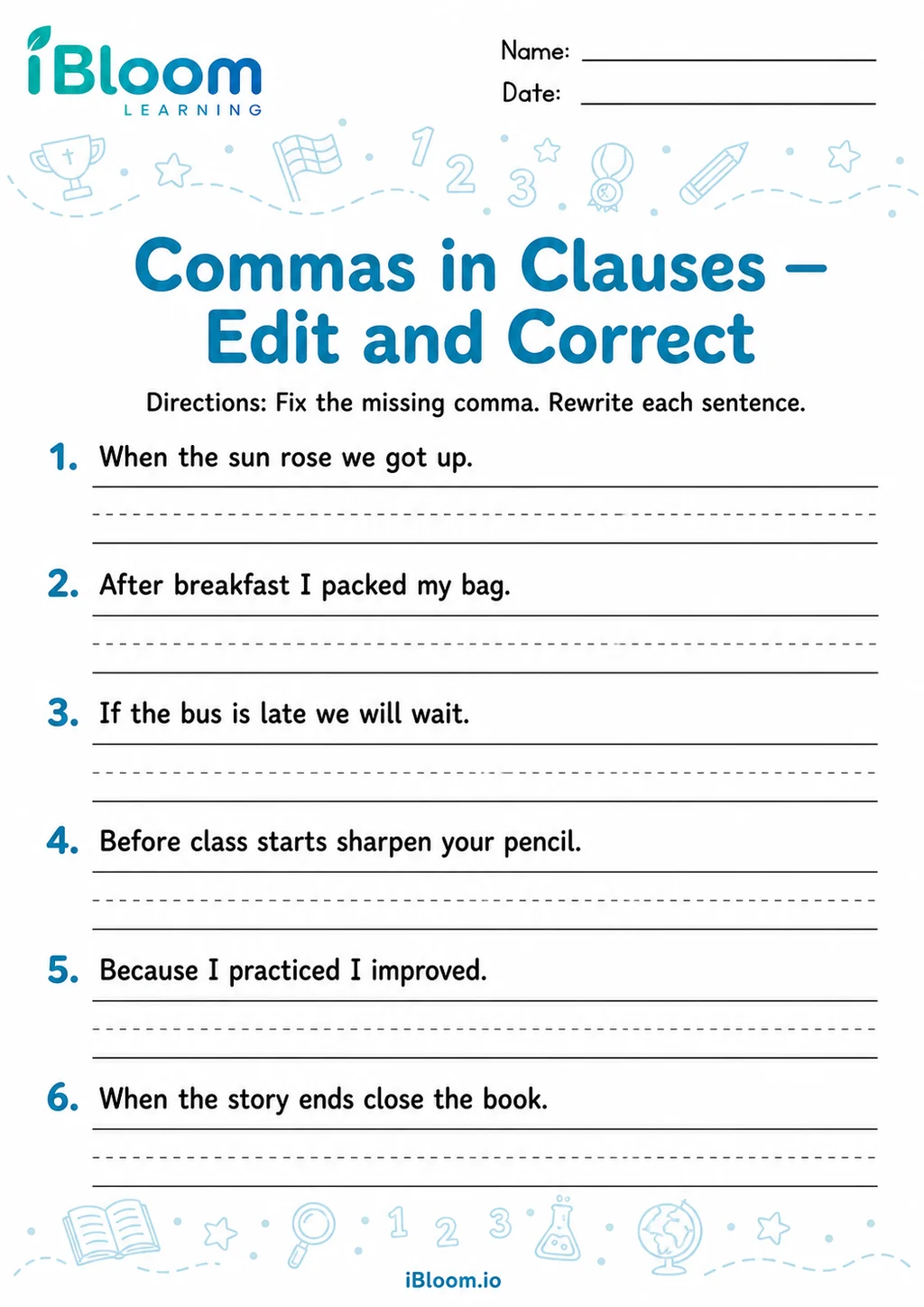
This free Grade 2 grammar worksheet helps children tell contractions apart from words that sound alike or look similar. Part A uses sentence clues to choose your or you’re, its or it’s, and their, they’re or there. Part B asks students to edit complete sentences, including the apostrophes. The practice aligns with L.2.2.c, which covers apostrophes in contractions and frequently occurring possessives. A separate key gives the corrected choices and sentences.
Aligned to L.2.2.c
How do the word choices work?
Part A has eight short sentences. Students use meaning clues to distinguish the contractions you’re, they’re and it’s from the words your, their, its and there. For example, “___ bringing the books tomorrow” needs “You’re” because the sentence means “You are bringing the books.”
- Read the whole sentence before choosing.
- Check whether an apostrophe contraction can be expanded.
What should students correct in each sentence?
Part B has eight sentences with one confusing word. Students rewrite each sentence with the correct spelling and apostrophe. In “The dog shook it’s wet fur,” the fur belongs to the dog, so the correct word is “its.”
- Use sentence meaning to choose the word.
- Keep the rest of the sentence the same.
How can families check the answers?
Ask the student to explain the clue, not just name the word. Expand a contraction aloud: they’re becomes “they are,” and it’s becomes “it is.” Then reread the complete sentence to make sure the meaning still fits.
How to use this worksheet
- 1Read the complete sentence.
- 2Ask what the sentence means.
- 3Try expanding a contraction to “you are,” “they are” or “it is.”
- 4Use a possessive word when something belongs to someone or something.
- 5Rewrite the full sentence and check the apostrophe.
Common mistakes and quick fixes
The mistake
Writing “your” for “you’re.”
The fix
Read “you are” in its place; if it fits, write “you’re.”
The mistake
Adding an apostrophe to “its” when showing ownership.
The fix
Use “its” for ownership, as in “its tail.”
The mistake
Choosing “their” when the sentence means “they are.”
The fix
Expand the word to “they are”; use “they’re” when it fits.
Curriculum alignment
This standard describes the skill practiced on this worksheet.
Use apostrophes to form contractions and frequently occurring possessives.
On this sheet: Students edit sentences that confuse contractions with possessive or location words.
Show the official wordingHide the official wording
Use an apostrophe to form contractions and frequently occurring possessives.
What to practice next
Make more practice
Further reading
Questions parents and teachers ask
How many questions are on this contractions worksheet?
There are 16 questions in two parts. Students choose the correct word in eight sentences, then rewrite eight sentences with one confusing word corrected. The key gives each choice and complete edited sentence, including the apostrophe where it belongs.
Which confusing words does the worksheet practice?
The sentences use your and you’re, its and it’s, and their, they’re and there. Read the surrounding words to decide whether the sentence needs ownership, a place, or a contraction such as “you are” or “they are.” For example, “their jackets” names something the twins own.
What does it’s mean?
It’s can mean “it is” or “it has.” In question 13, “It’s time to pack our lunches” means “It is time to pack our lunches.” Use its without an apostrophe when showing ownership, as in “The turtle pulled its head into its shell.”
How can a student check they’re?
Expand they’re to “they are” and reread the sentence. If both words make sense, they’re is the right choice. Their shows ownership, as in “their jackets,” while there can point to a place, as in “put the basket over there.”
Is there an answer key?
Yes. A separate printable key lists the correct word for all eight choices and a full corrected sentence for each editing item. Students can compare the whole sentence, then explain the context clue that helped them choose the word.