





About this worksheet
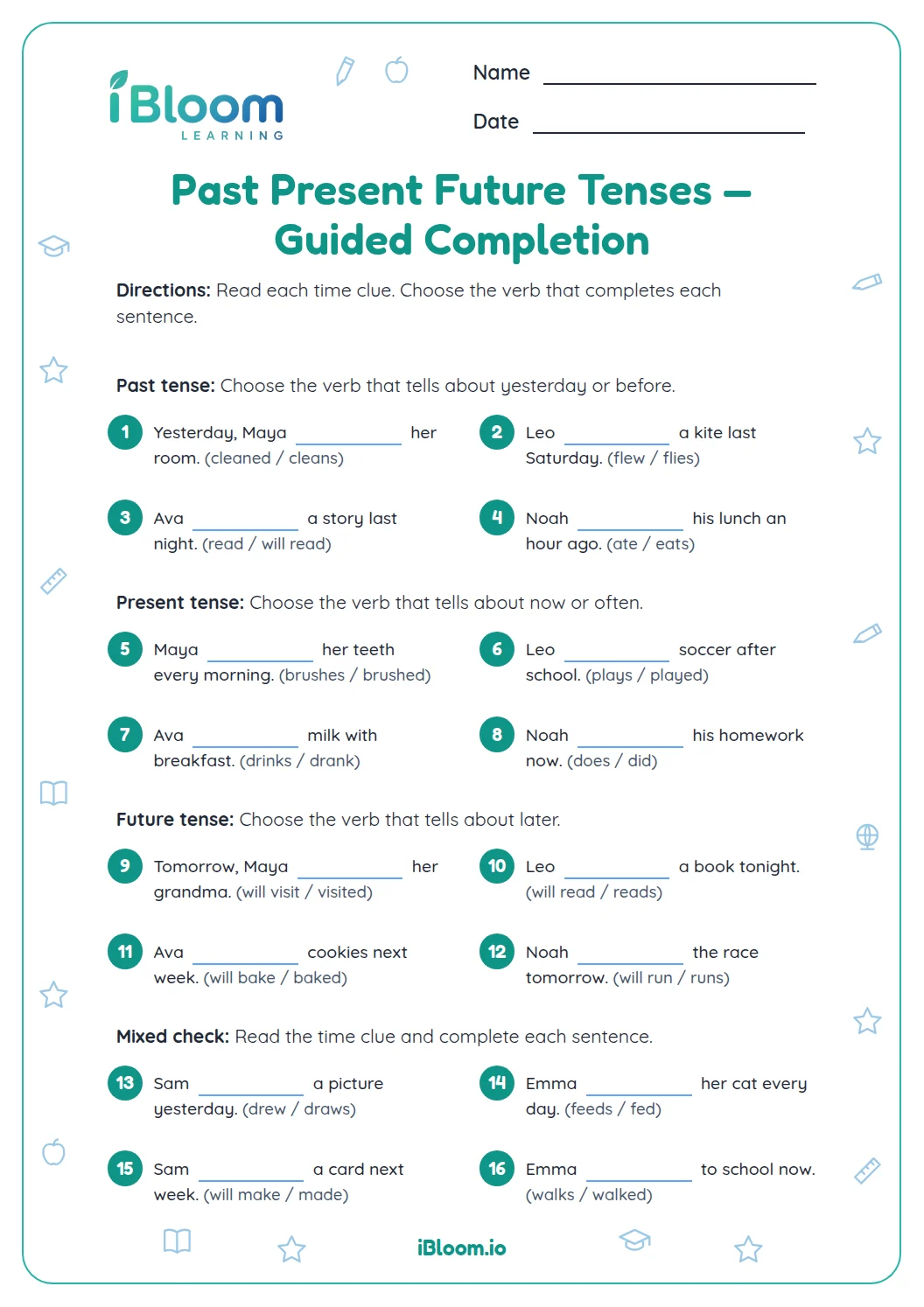
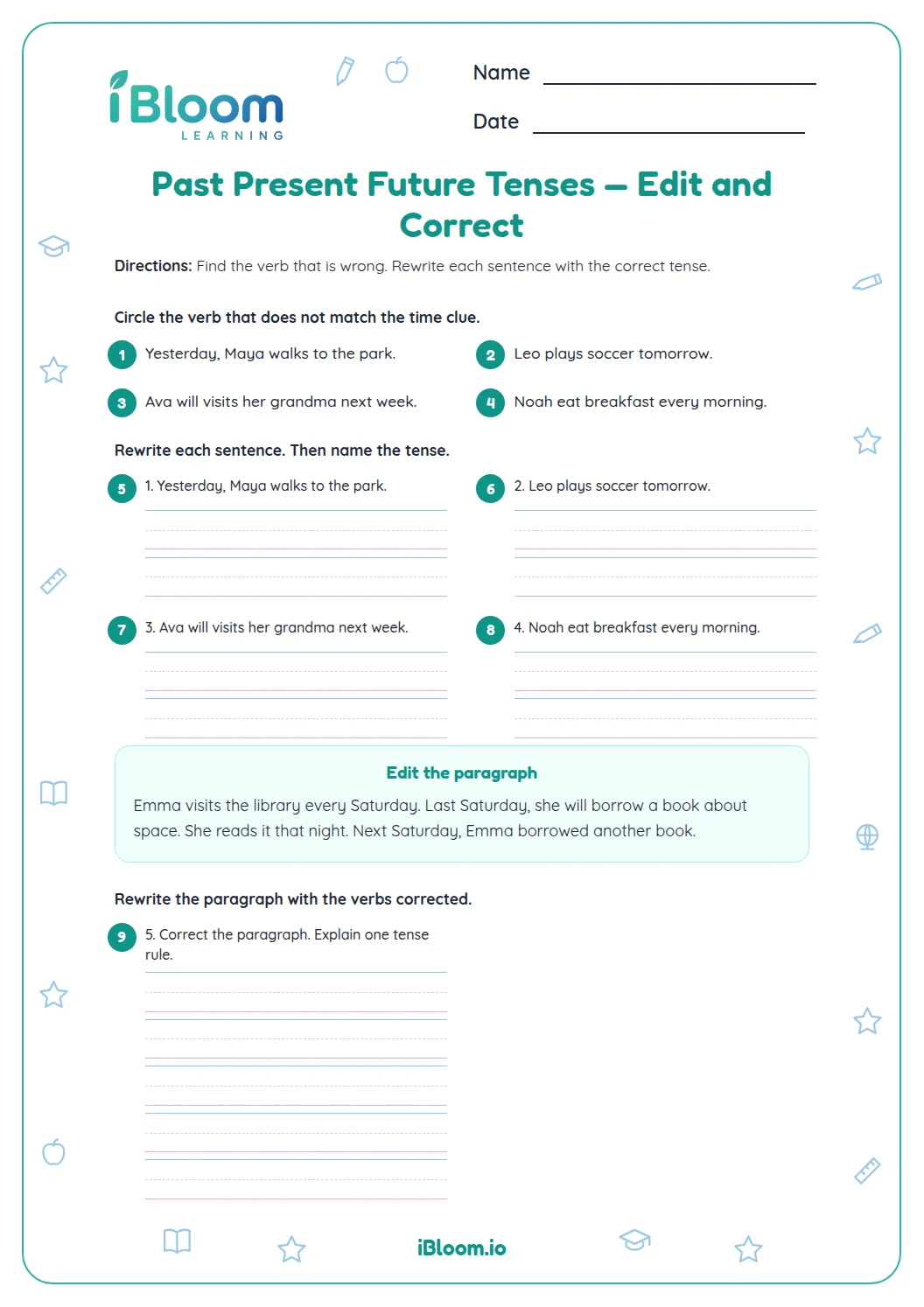
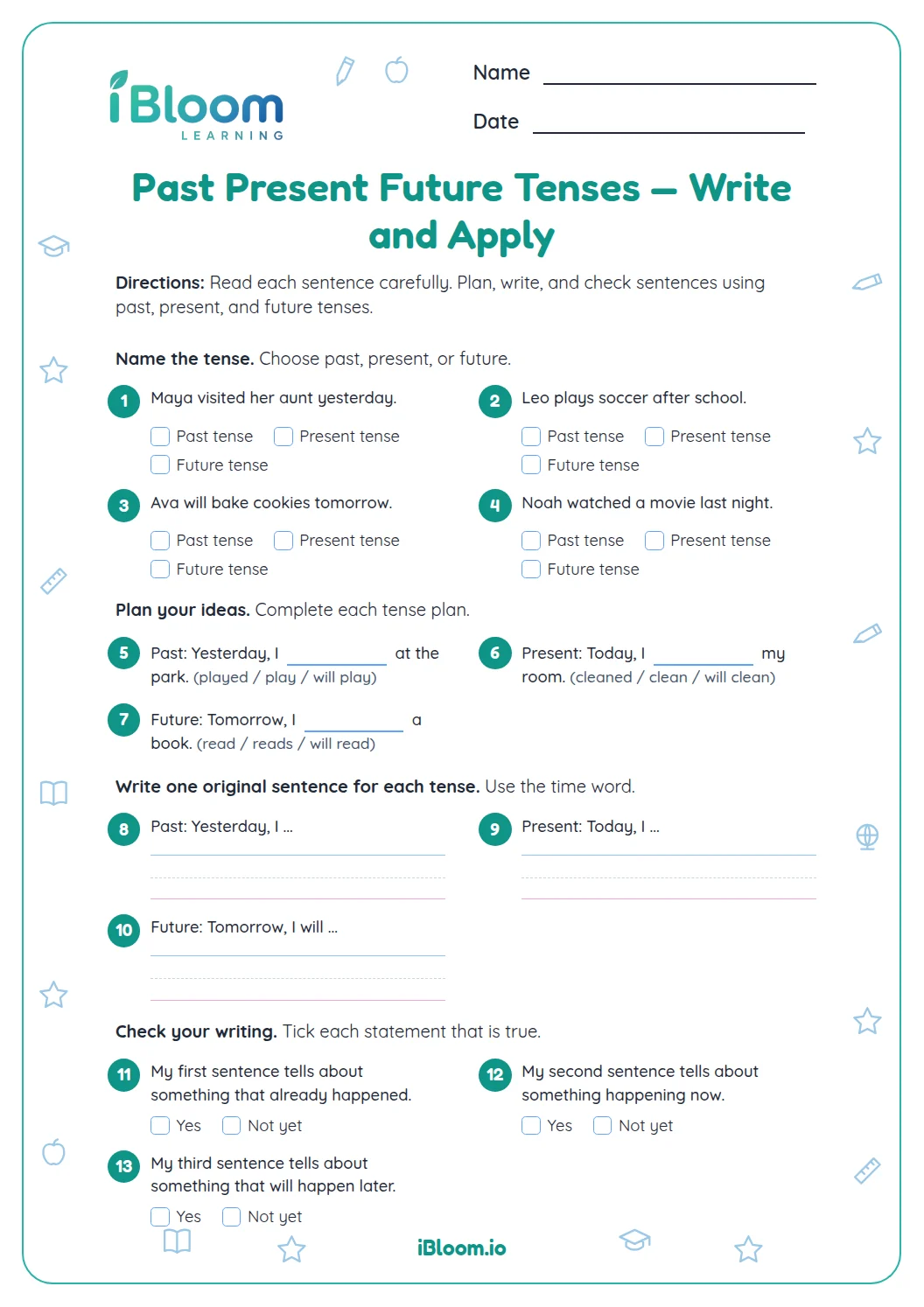
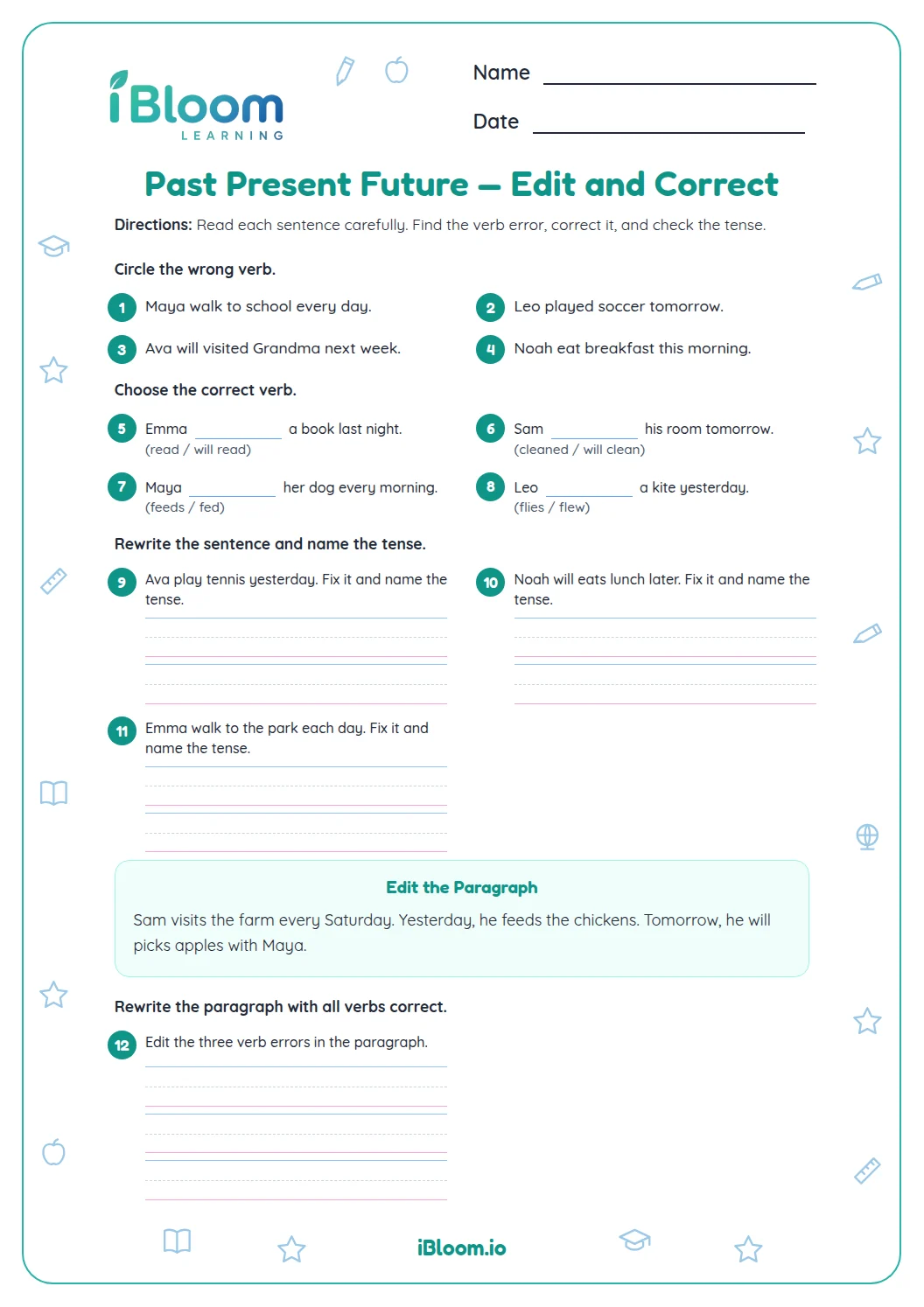
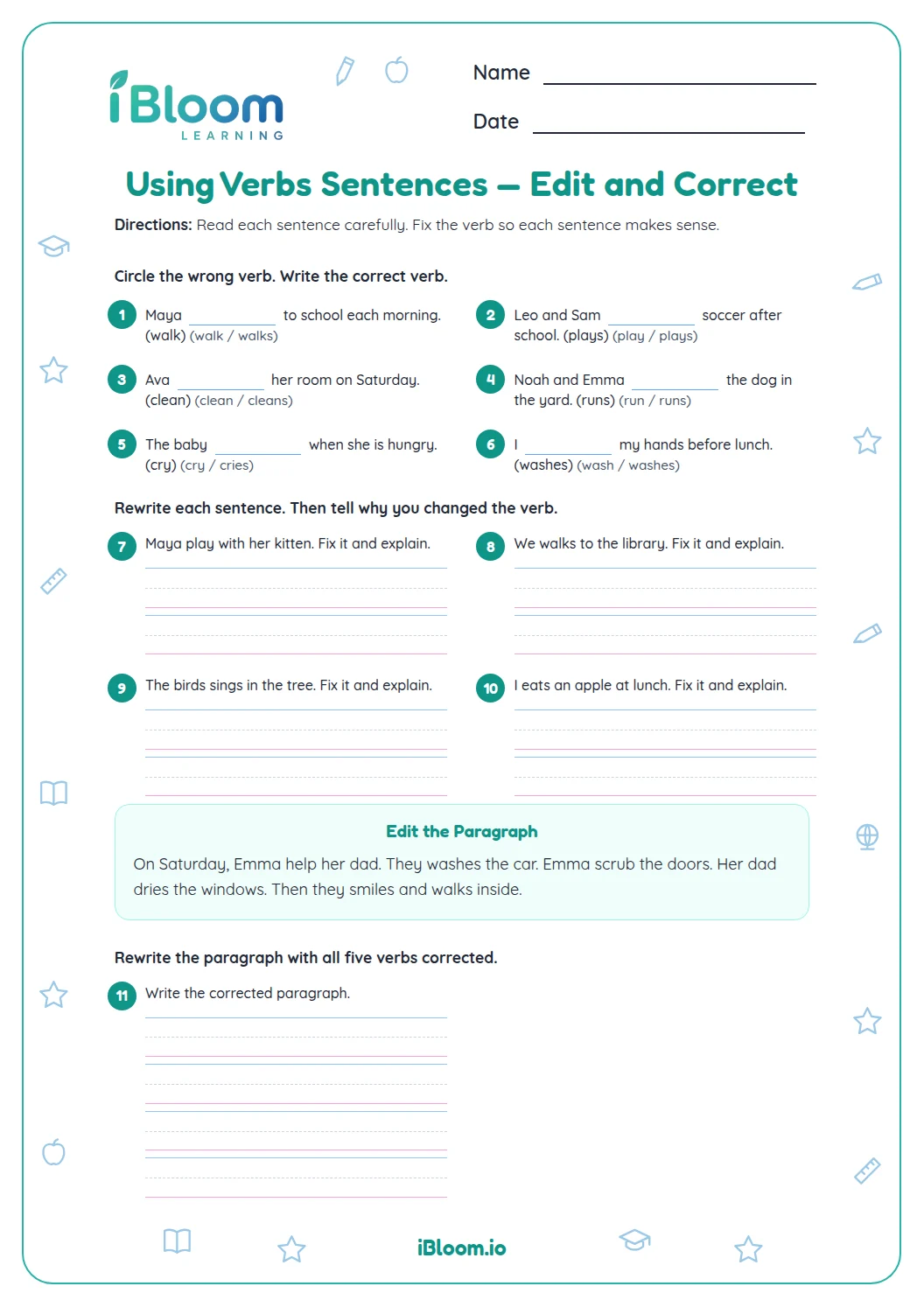
This Grade 2 worksheet uses time clues such as yesterday, today, and tomorrow to practice verb tense in sentences. Students choose forms, identify past, present, and future, rewrite verbs, and correct tense mismatches; several items use irregular past forms such as rode, slept, and saw. A separate key includes sample answers for original sentences.
Aligned to L.2.1d
How does a time clue help you choose a verb?
Find words such as yesterday, today, or tomorrow first. They tell when the action happens, so the verb form can match that time.
- 1Yesterday, Ben ___ his bike to school. → rode
How do you change a sentence to another tense?
Keep the subject and meaning, then change the verb form. Some past-tense verbs add -ed; common irregular verbs change in another way, as see changes to saw.
- 1Change to past tense: Sam sees a rainbow. → Sam saw a rainbow.
How can you check a tense correction?
Read the time clue and verb together. If they disagree, change the verb while keeping the sentence’s subject and main idea.
- 1Fix the tense: Tomorrow, I cleaned my desk. → Tomorrow, I will clean my desk.
How to use this worksheet
- 1Find the time word first.
- 2Ask whether the action already happened, happens now, or is expected later.
- 3Choose a verb form that matches.
- 4Read the whole sentence aloud.
- 5Check that the time clue and verb agree.
Common mistakes and quick fixes
The mistake
Mistake.
The fix
Keeping a present verb after “yesterday.” Fix: change it to past.
The mistake
Mistake.
The fix
Using “will” with a past time clue. Fix: match the verb to when the action happens.
The mistake
Mistake.
The fix
Changing the subject while editing. Fix: change only what the tense requires.
Common Core alignment
This page connects the worksheet practice to a Common Core skill.
Form and use common irregular past-tense verbs such as rode, slept, and saw.
On this sheet:
Show the official wordingHide the official wording
Form and use the past tense of frequently occurring irregular verbs.
What to practice next
Further reading
Questions parents and teachers ask
How do time clues help with verb tense?
Words such as yesterday, today, and tomorrow tell when an action happens. Students use those clues to select or correct a matching past, present, or future verb. The opening items pair each verb with an explicit time clue.
Which irregular past-tense verbs appear on the page?
The items include rode, slept, and saw. These common forms do not use a simple -ed ending, so students practice matching them to the sentence’s past-time clue. Examples include regular forms and irregular forms such as rode and saw.
Can students use different answers for the final prompts?
Yes. The last two questions ask for an original sentence about yesterday or tomorrow. The key gives a sample, and another complete sentence is suitable if its verb matches the time. Students keep the original subject when they rewrite a sentence.
What should stay the same when changing a sentence’s tense?
Keep the subject and the main meaning, then change the verb form to match the requested time. Read the new sentence aloud to check that it still makes sense. The key gives sample responses for the original-sentence prompts.
How does the worksheet move from easier to harder practice?
Students begin by filling verbs after clear time clues, then identify tense, rewrite sentences, correct mismatches, and create their own sentences. The answer key shows intended forms and samples. Reading each revised sentence aloud helps catch a tense mismatch.