






About this worksheet
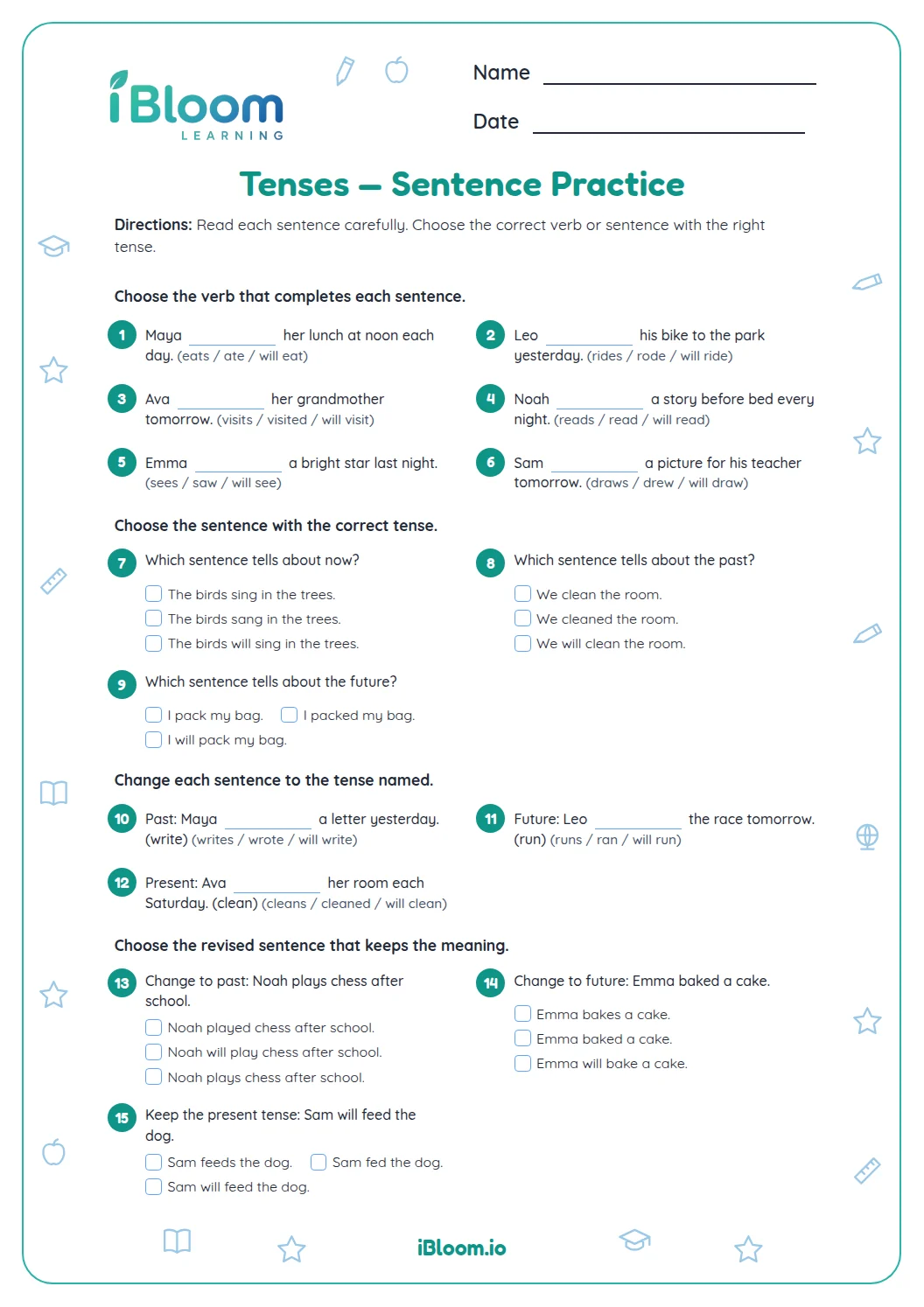
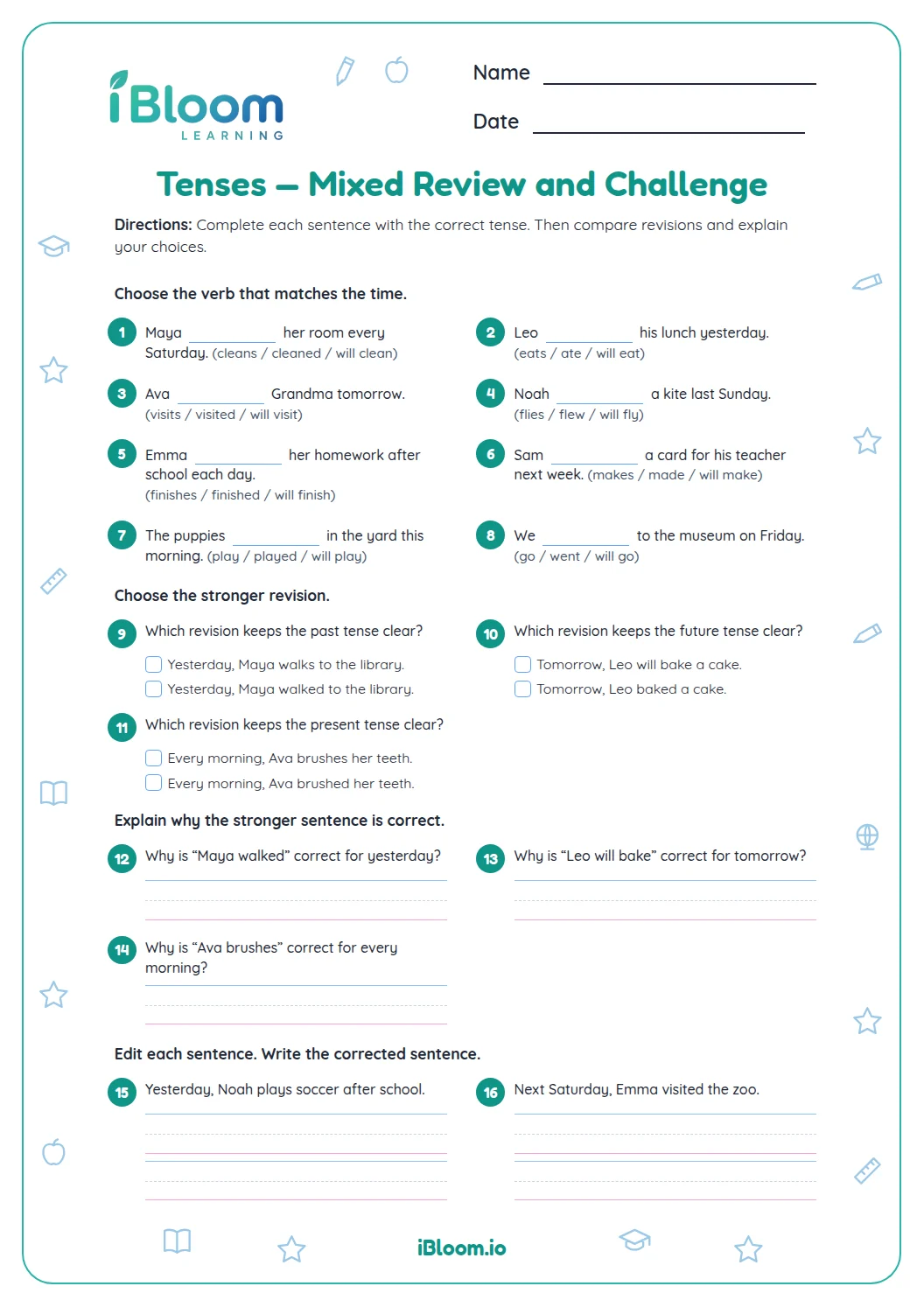
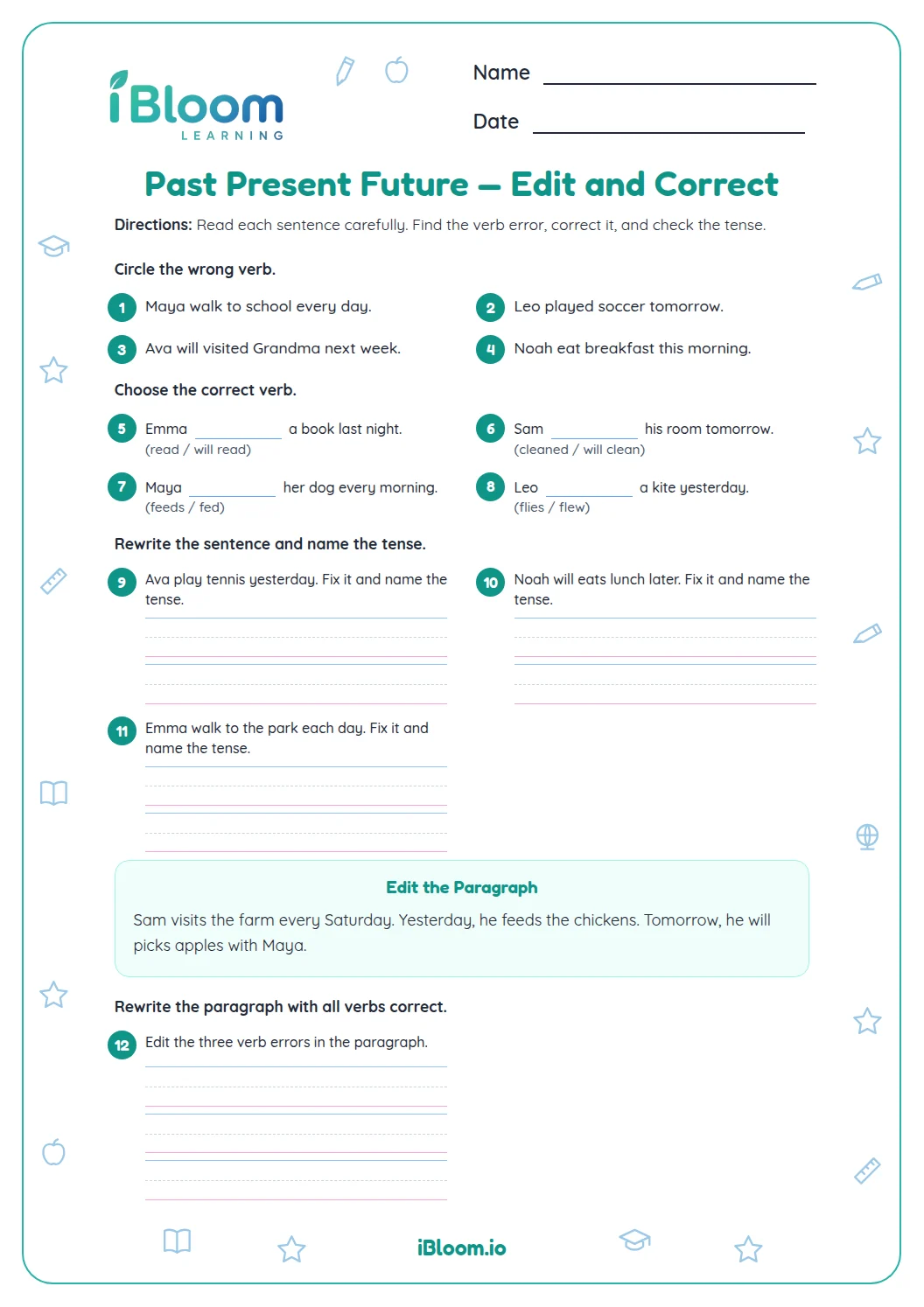
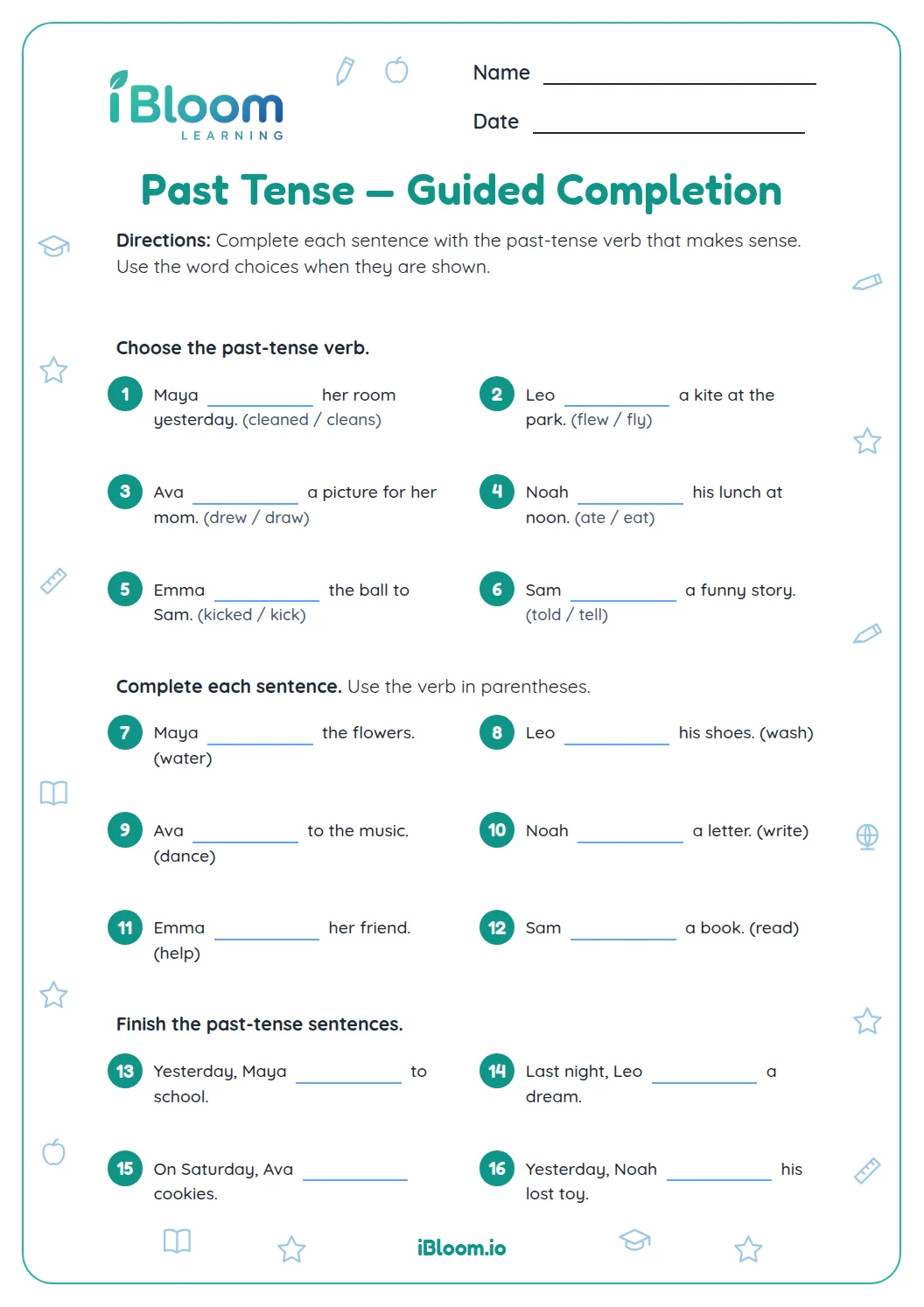
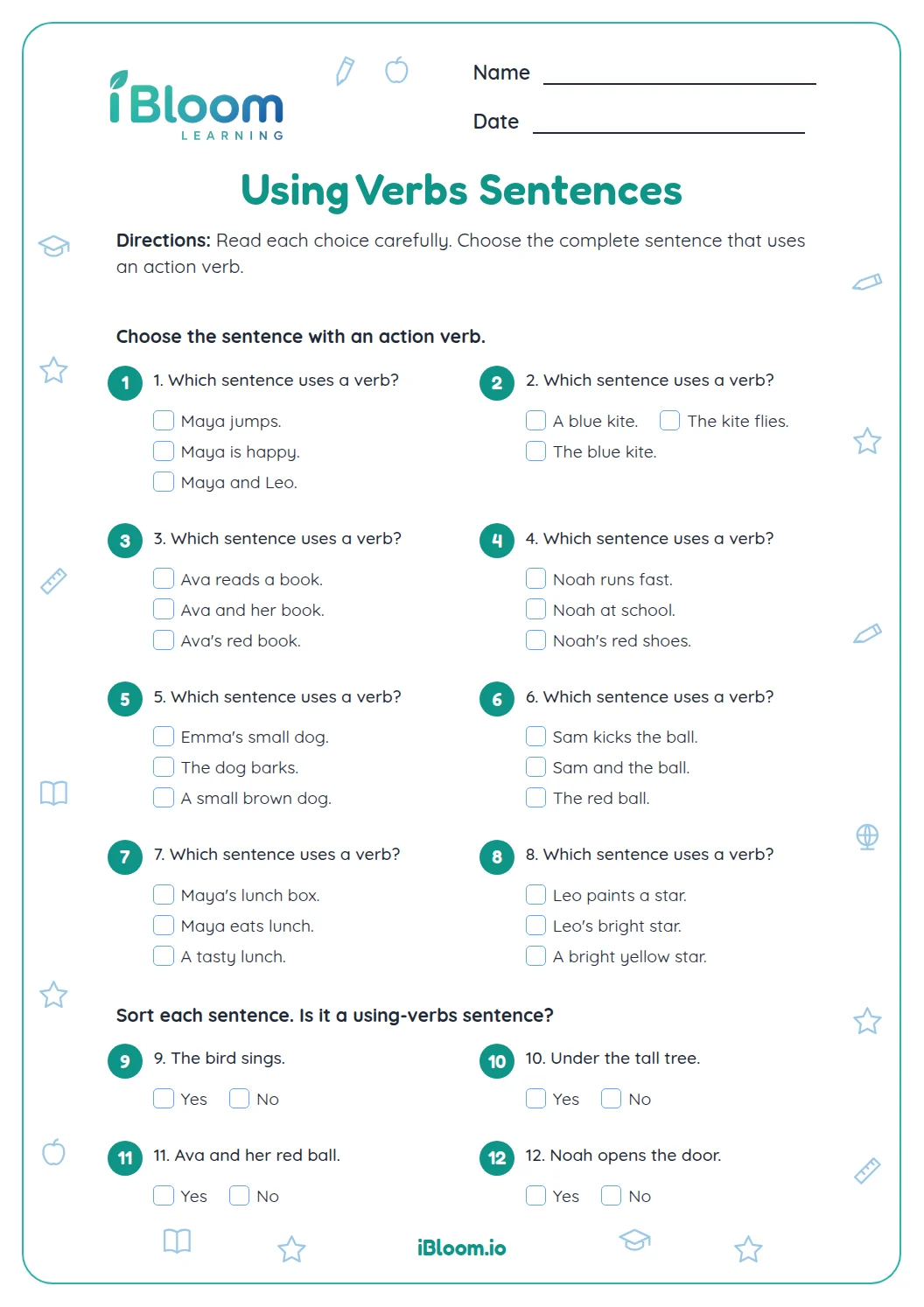
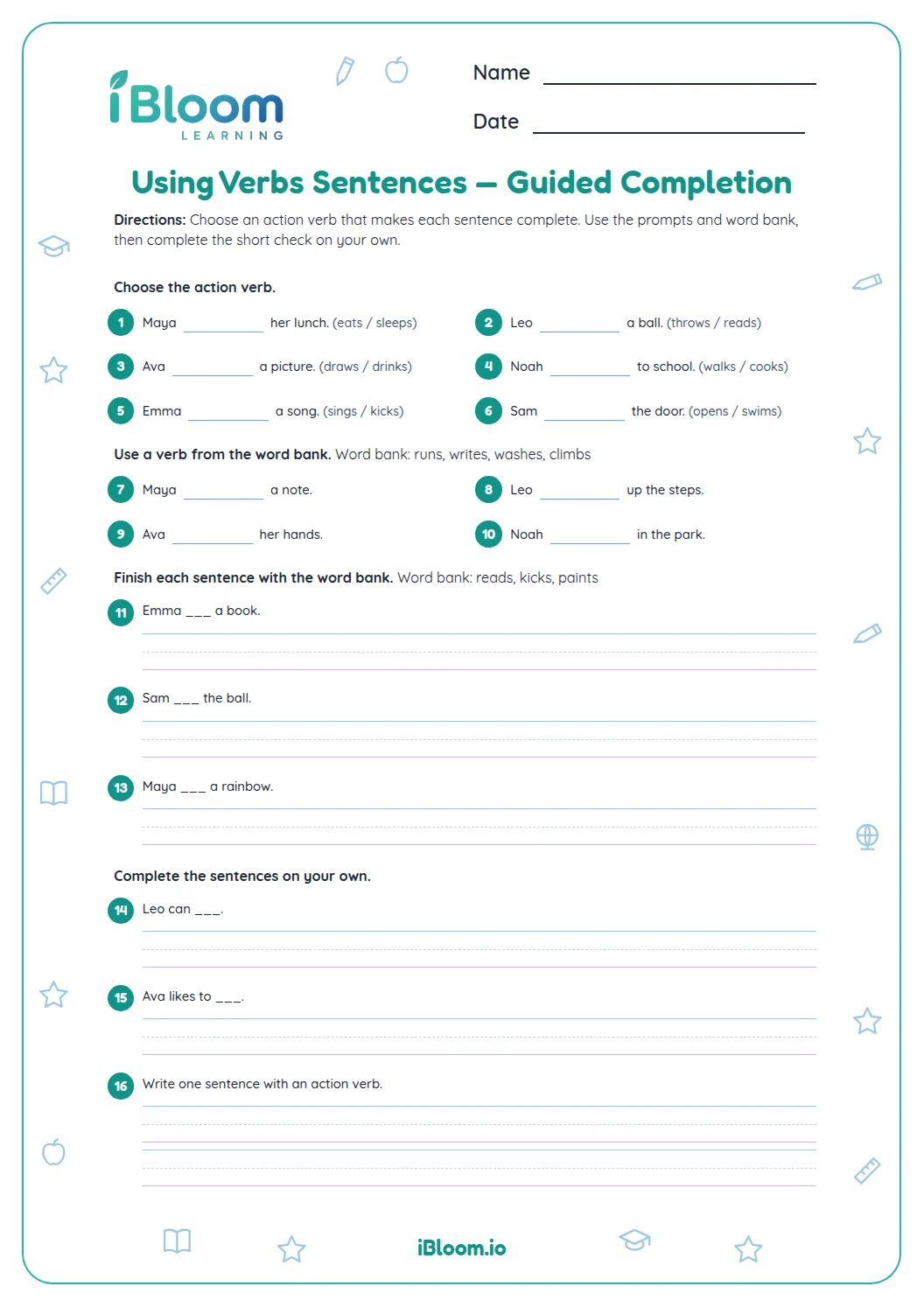
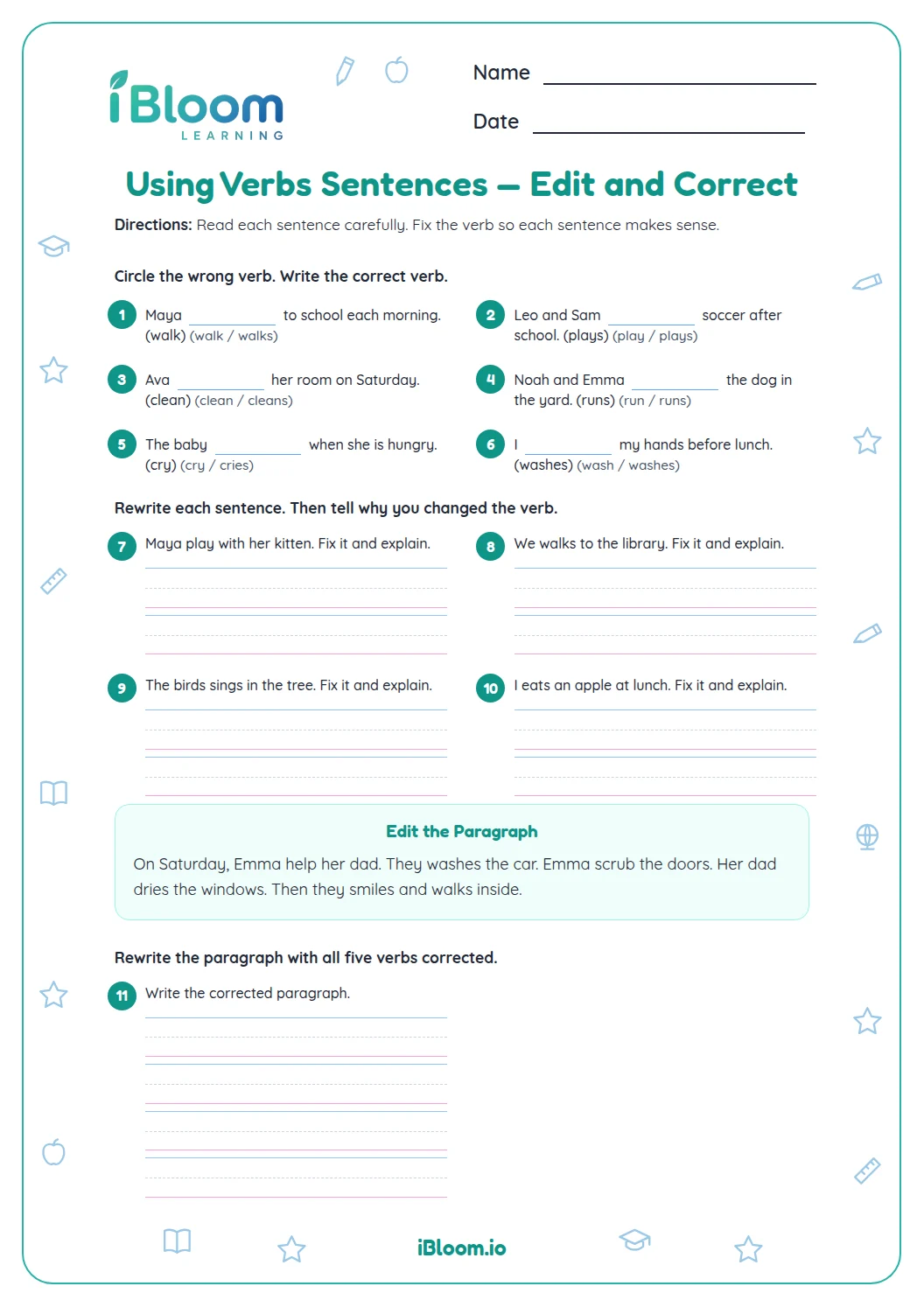
This Grade 2 printable helps children use verb forms to make time clear. Fourteen questions move from circling verbs in sentences to choosing a verb from time clues and writing or revising complete sentences. The practice aligns with CCSS L.1.1e, and the answer key includes sample responses for open-ended writing.
Aligned to L.1.1e
What do the three parts ask learners to do?
Part A asks children to find a verb in each sentence. Part B uses time clues such as yesterday, today, and tomorrow to choose a fitting verb. Part C asks children to write or revise two complete sentences so the verb makes the time clear.
The two written responses have several acceptable answers; the key gives examples rather than requiring identical wording.
How do time clues help choose a verb?
Words such as yesterday and last week point to the past. Today and right now point to the present. Tomorrow points to the future, often using will before the verb.
- 1Tomorrow, I ___ my lunch.
- 2Tomorrow signals future time.
- 3Choose will pack: Tomorrow, I will pack my lunch.
How can a sentence show a different time?
Keep the main idea and change the verb form. “I walk to school” becomes “I walked to school yesterday” when the sentence describes a completed action.
How to use this worksheet
- 1Read the whole sentence and find its time clue.
- 2Locate the action word before choosing an answer.
- 3Check whether the action happened, happens, or will happen.
- 4For writing items, include a clear subject and a complete thought.
- 5Read the sentence aloud with its time clue to check the verb.
Common mistakes and quick fixes
The mistake
Using a present-tense verb after yesterday.
The fix
Say the sentence with yesterday first and select a past form, such as walked.
The mistake
Writing “Tomorrow I visit” when the sentence needs a future clue.
The fix
Use will before the base verb: “Tomorrow I will visit.”
The mistake
Changing a verb but leaving out the subject in a written response.
The fix
Check that the sentence tells who acts and what the action is.
Common Core alignment
This worksheet practices verb forms that communicate past, present, and future time.
Use verbs to show whether an action happened, happens, or will happen.
On this sheet: The questions distinguish past, present, and future verb forms.
Show the official wordingHide the official wording
Use verbs to convey a sense of past, present, and future (e.g., Yesterday I walked home; Today I walk home; Tomorrow I will walk home).
What to practice next
Make more practice
Further reading
Questions parents and teachers ask
What does verb tenses mean?
Verb tenses use verb forms to show when an action happened, happens, or will happen. The worksheet gives children 14 chances to practice, moving from a clear starting point to mixed examples. The separate answer key makes it easy to check each response and talk through a missed step.
What grade is this verb tenses worksheet for?
This printable is written for Grade 2. The directions use short, direct language, and the problems build within the named skill. An adult can read directions aloud or work through the first example before the learner continues independently.
What is on the worksheet?
The worksheet has 14 questions in two parts. Part A begins with spotting a verb in a sentence; later questions ask children to apply the same idea in fresh examples. The answer key is a separate page, so you can print it only when you are ready to check the work.
How should I check a missed answer?
Ask the learner to explain the step that led to the answer, then compare it with the answer key. For this skill, use a time clue to choose or write a verb form that matches the action. A quick spoken explanation can reveal whether the issue was reading the prompt, choosing a strategy, or carrying out a step.
Does this printable include an answer key?
Yes. The answer key is included after the worksheet pages and lists a correct response for every item. For any open response, it gives a model answer or the feature to look for, so an adult can check the idea without expecting identical wording.