







About this worksheet
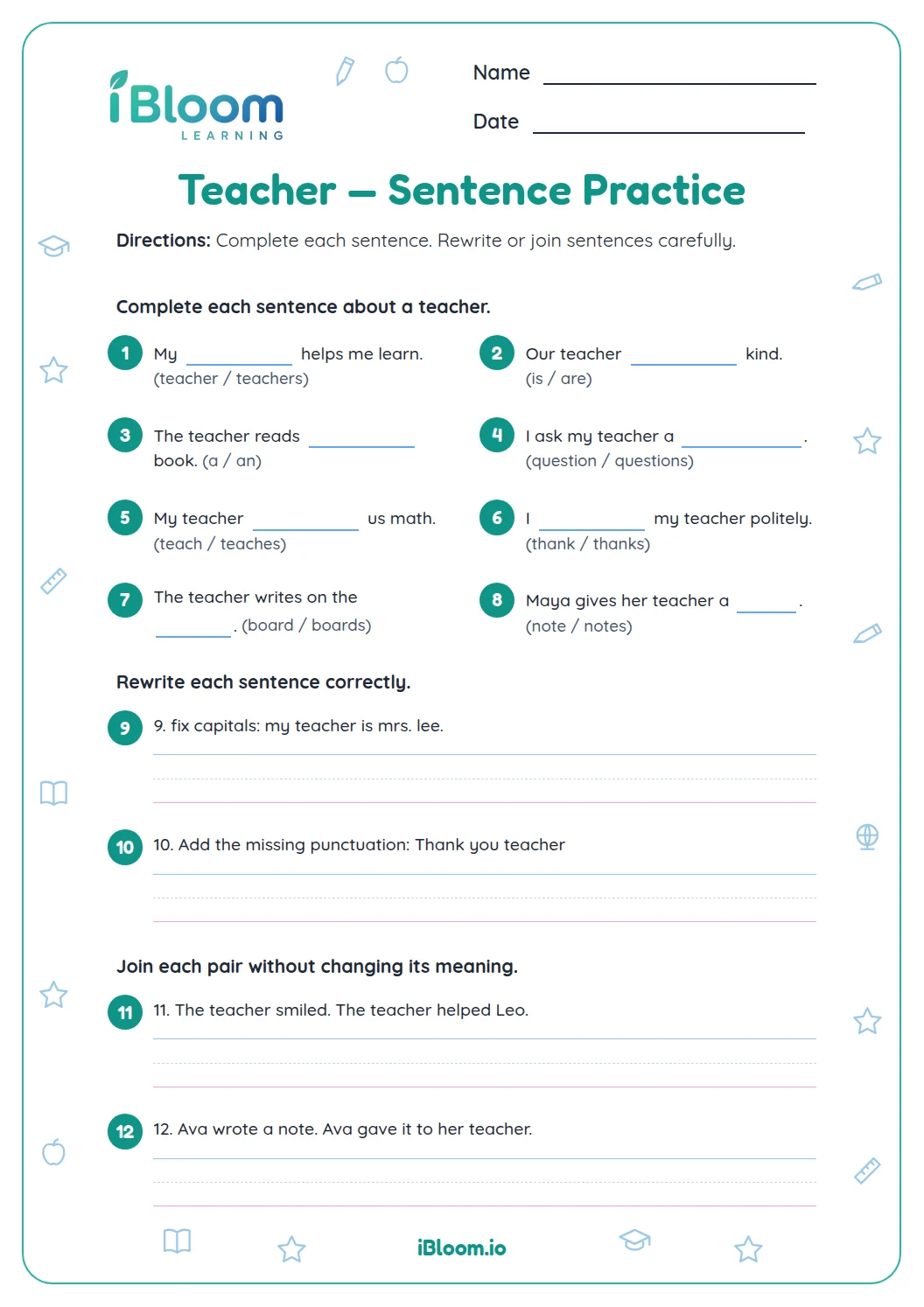
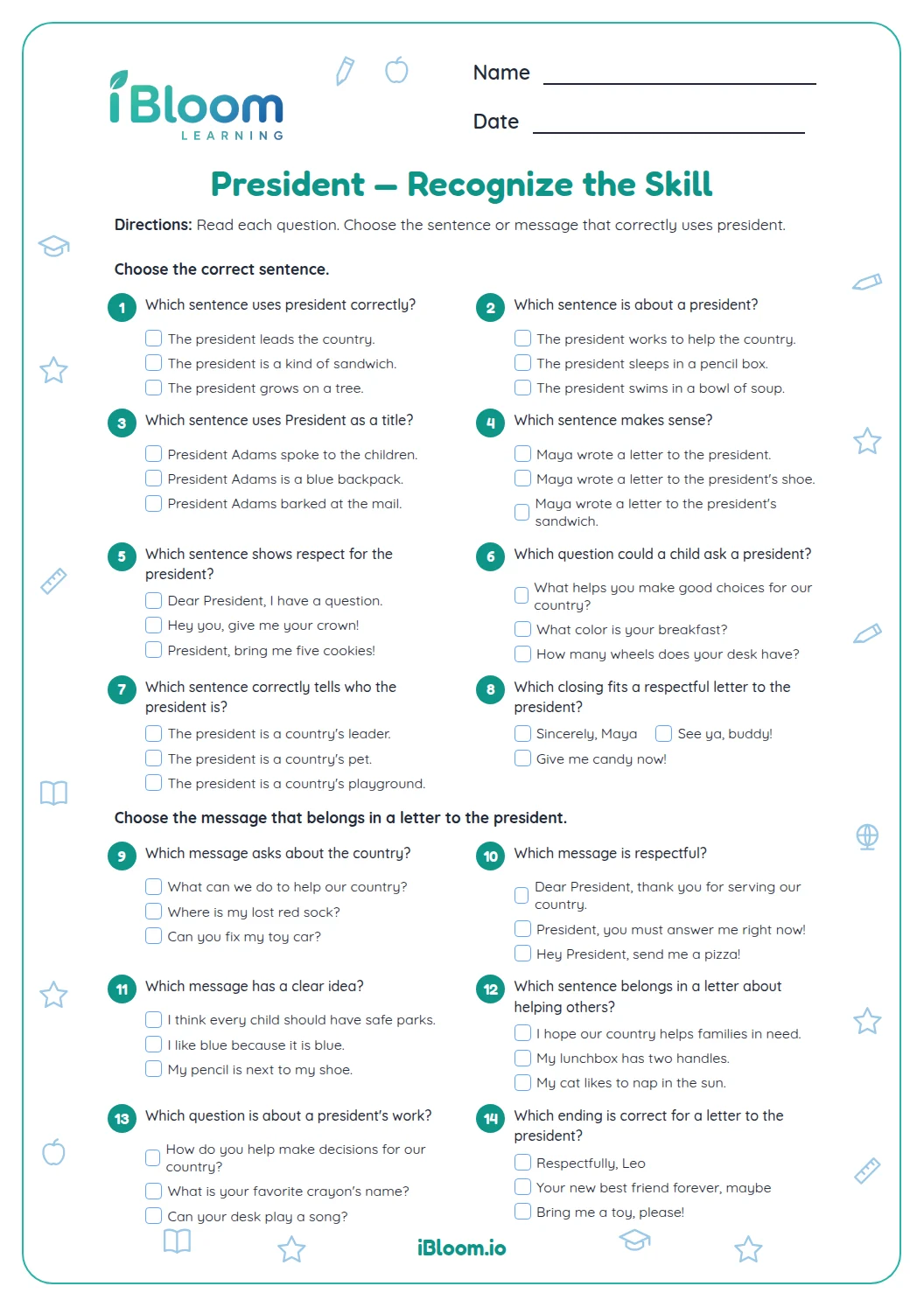
This Grade 2 worksheet gives students 16 chances to edit sentences and short notes. They choose corrections for capitals, punctuation, names, greetings, lists, and a possessive apostrophe. It practices L.2.2 by asking students to edit standard English capitalization and punctuation. A printable answer key lets families check each choice.
Aligned to L.2.2
What does the grade 2 message editing page practice?
Sixteen editing choices practice capitals, commas, apostrophes, and end marks in sentences and short messages.
The separate answer key gives a quick way to check each response.
- 1Question 1: Which sentence is written correctly?
- 2Answer: The kite is red.
- 16 questions
- 2 clearly labeled parts
- A printable answer key
How can a learner work through the page?
Read the direction for each part before starting. Complete one item at a time, then use the key to check and correct the work.
What helps the skill stick?
Ask the learner to explain one answer and make a new example using the same skill.
How to use this worksheet
- 1Read the part direction and notice what each answer should look like.
- 2Work through the questions in order, checking each word or calculation carefully.
- 3Reread completed responses to catch missing details.
- 4Use the answer key to check and correct the page.
Common mistakes and quick fixes
The mistake
Answering before reading the whole prompt.
The fix
Read the full sentence or problem, then decide what it asks.
The mistake
Using a response that is close but does not fit the sentence or data.
The fix
Check the meaning and details in the prompt.
The mistake
Leaving an answer unchecked.
The fix
Compare each response with the key and fix any mismatch.
Curriculum alignment
This page gives practice editing standard English capitalization and punctuation.
Edit sentences for standard capitalization and punctuation.
On this sheet: Students correct capitalization, commas, apostrophes, and end punctuation.
Show the official wordingHide the official wording
Demonstrate command of the conventions of standard English capitalization, punctuation, and spelling when writing.
What to practice next
Make more practice
Further reading
Questions parents and teachers ask
What does this worksheet help a student practice?
Students edit sentences and short notes for capitals, commas, apostrophes, and end marks. Students work through the printed activities in order and can check each response with the included answer key. The questions use the specific words, sentences, numbers, or weather records printed on this page.
How many questions are on the worksheet?
This worksheet has 16 questions in 2 parts. Each part begins with its own direction, and the question types match that direction. The answer key is included after the student pages for easy checking at home or in class.
How can I use the answer key?
Have the student try each item before looking at the key. Check one section at a time, and ask the learner to point to the clue or step that supports an answer. For open responses, the key gives a sample, so another answer can work when it fits the prompt.
Can a student complete this page independently?
A student who can read the directions may work through the questions independently. An adult can read the directions aloud or talk through one example first. Afterward, compare the completed work with the key and revisit any item that needs another try.
What should we do after checking the worksheet?
Choose one missed or interesting question and make a fresh example together. Ask the learner to explain how the same skill applies to the new example. This keeps the review connected to the exact work on the sheet instead of repeating the same answers.