







About this worksheet
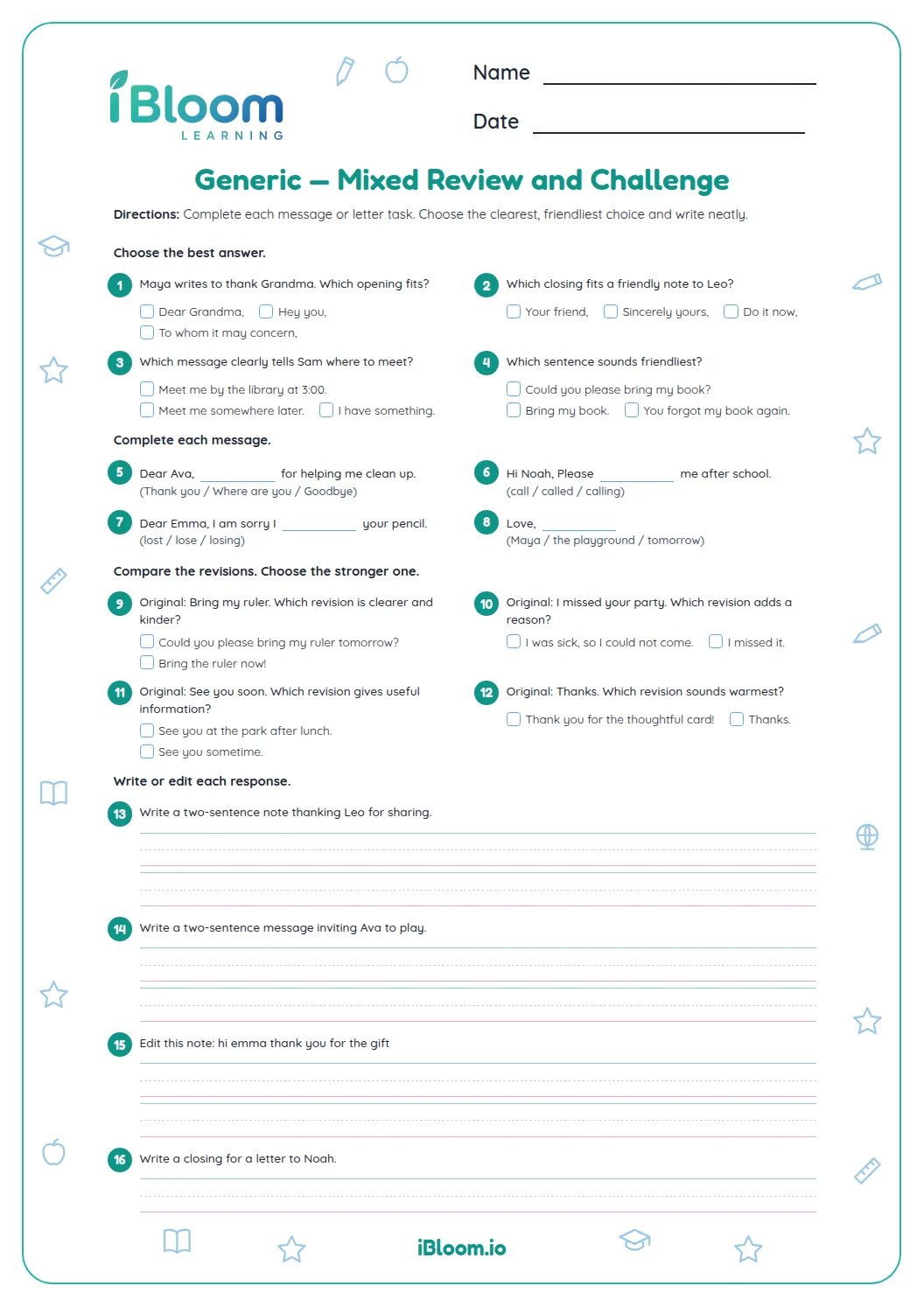
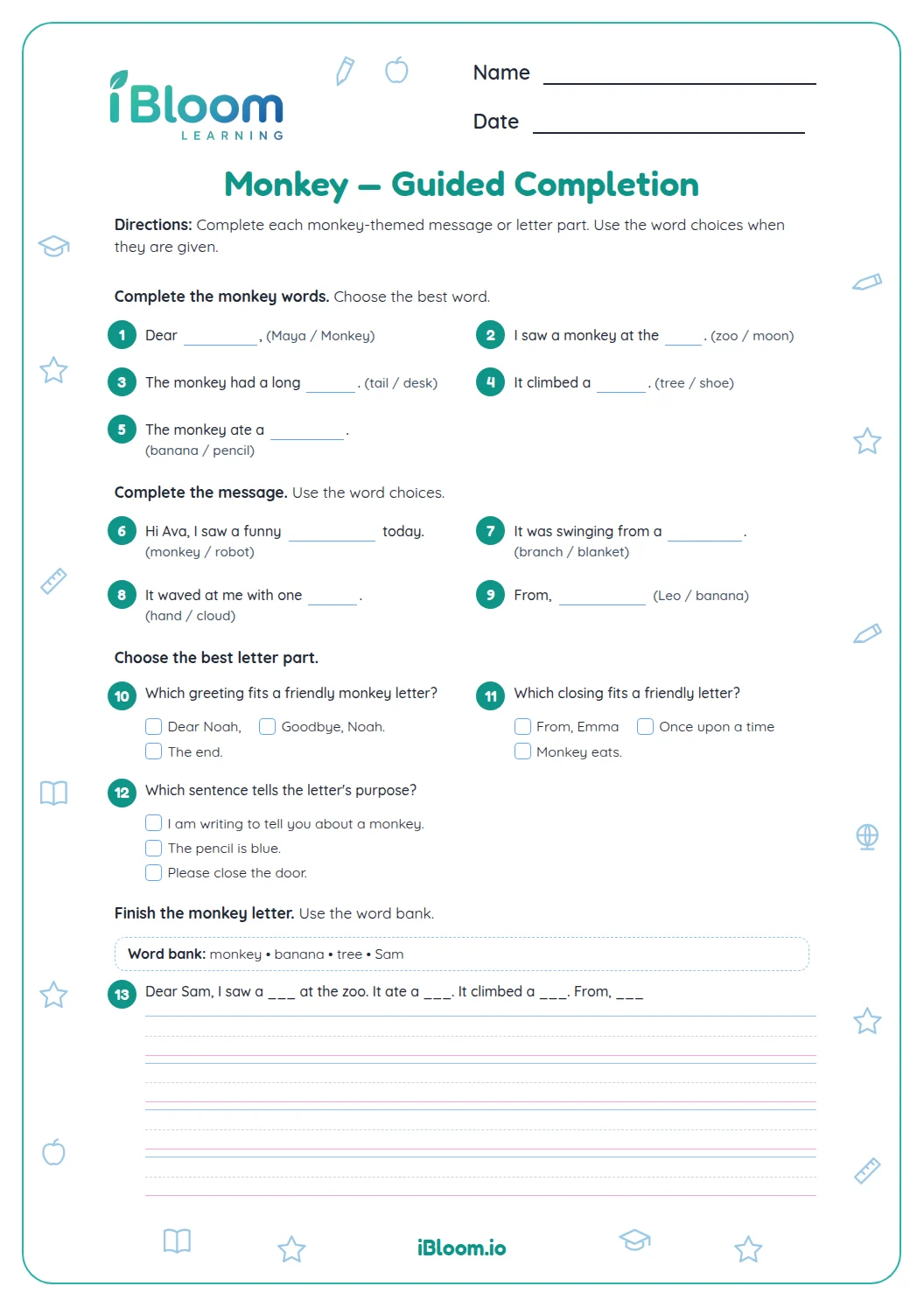
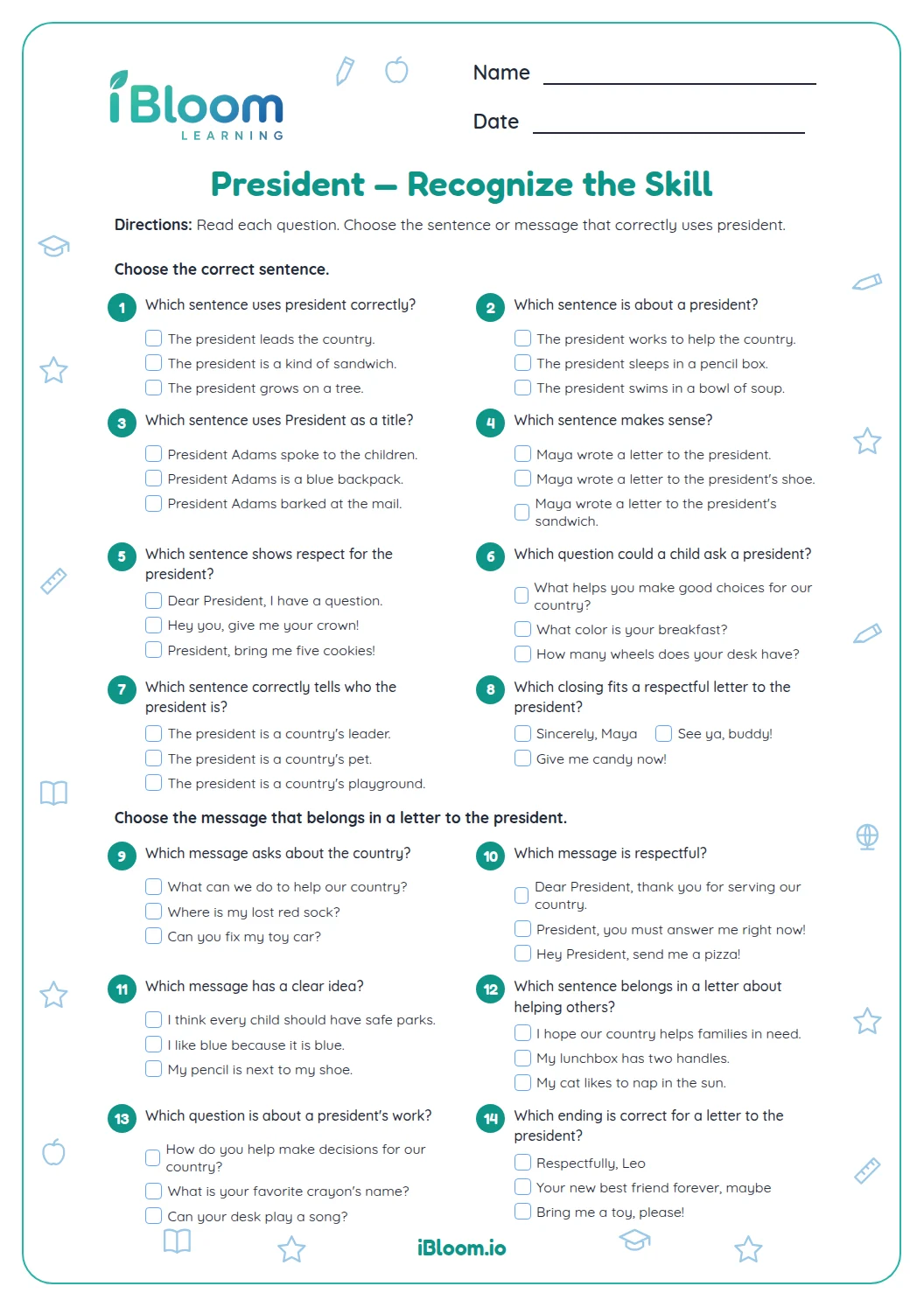
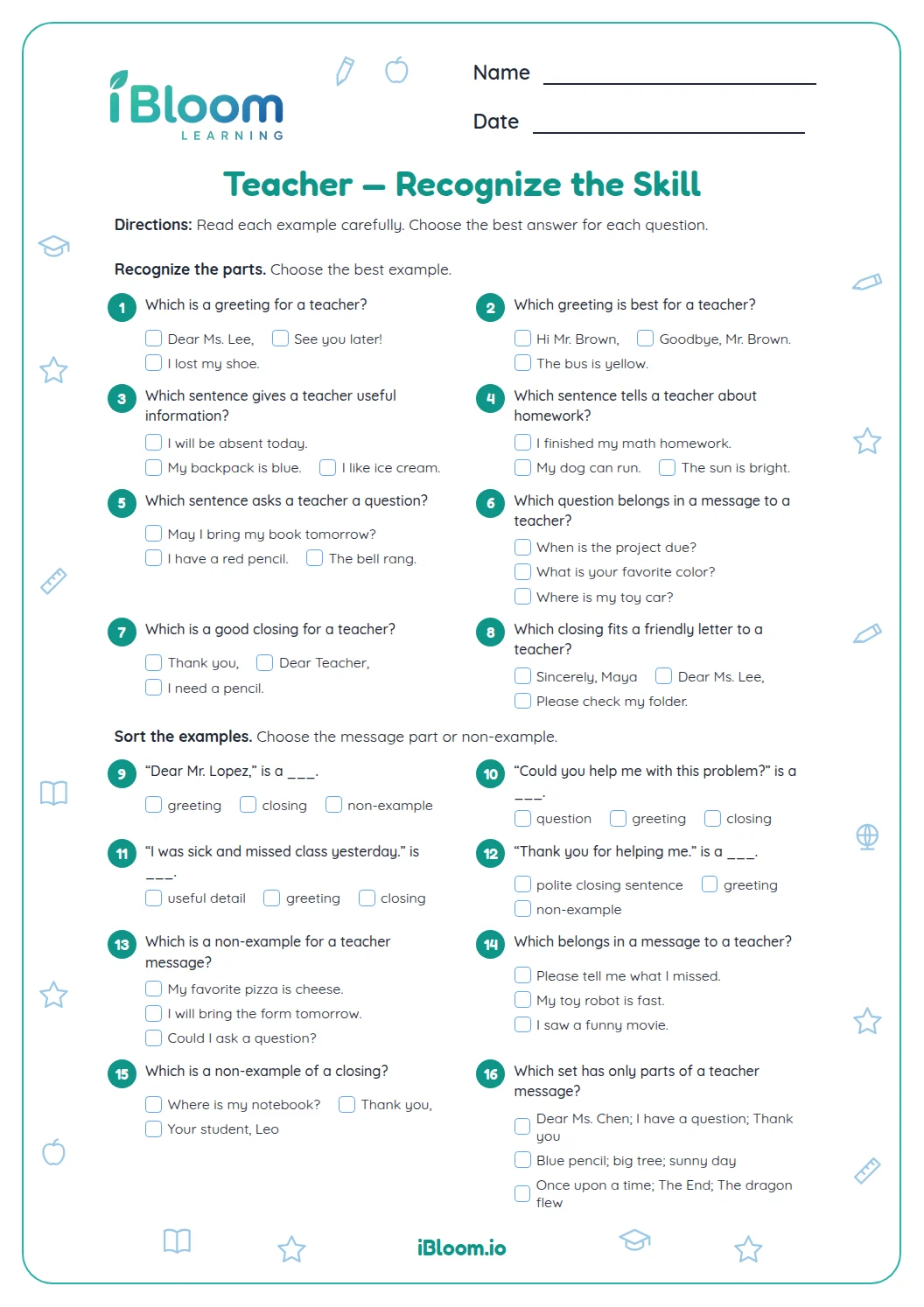
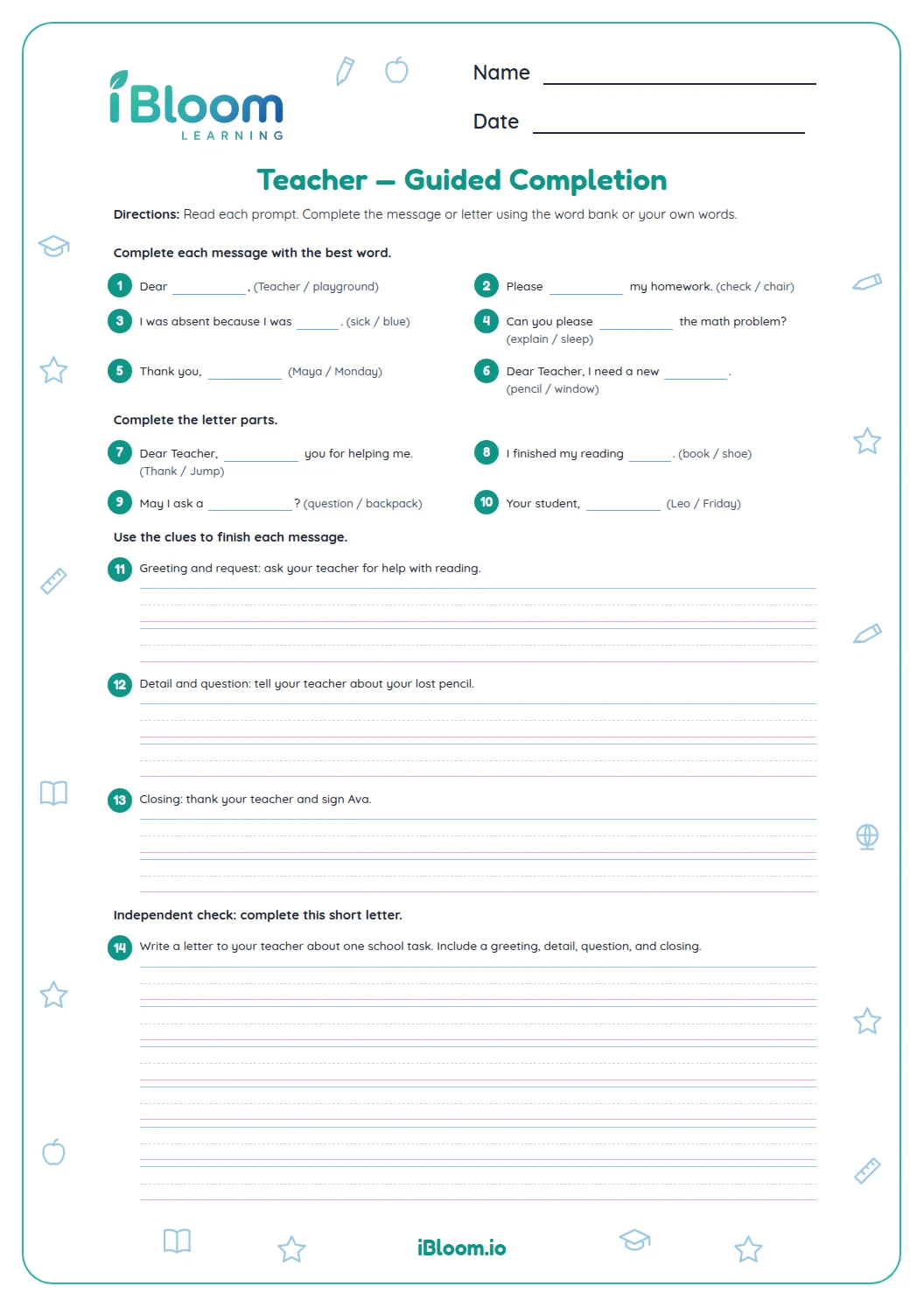
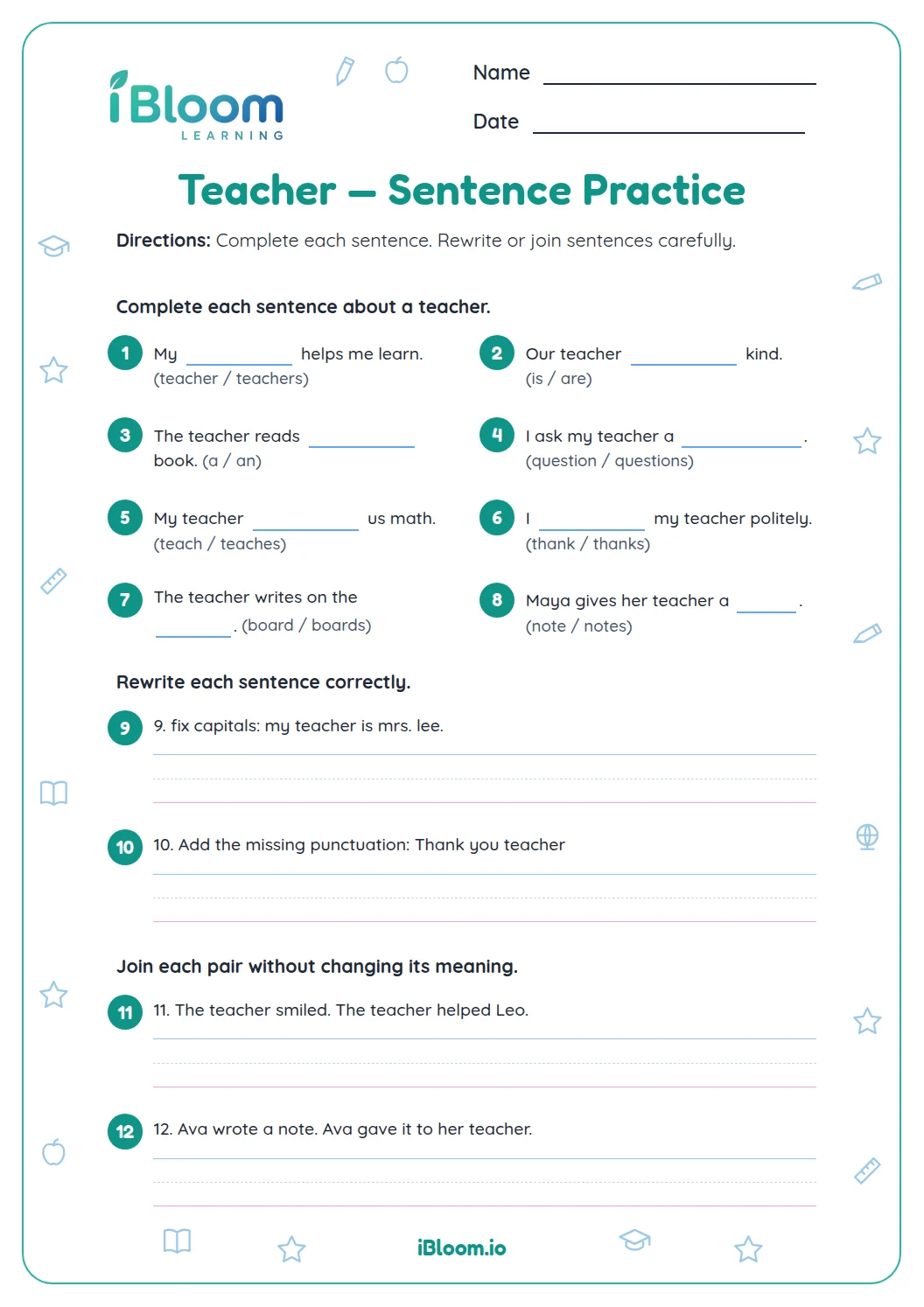
This free Grade 2 writing worksheet guides children through short messages and friendly letters for familiar readers. Across 15 questions, students finish messages, choose wording for an audience, make unclear notes more specific, and write brief letters with greetings or closings. They also practice capitals, end marks, and combining related ideas. The answer key gives sample wording for open responses.
Aligned to W.2.5
How can a short message feel complete?
A complete message gives the reader enough information to understand its purpose. Question 1 asks for an invitation to play, so the sentence should name the activity or give a time. A greeting or closing can help show who is writing.
- 1Write one sentence inviting a friend to play.
- 2Name the activity and invite the friend.
- 3Sample: Would you like to play soccer with me after school?
How does the reader shape the wording?
A note to a teacher may use a respectful greeting and a polite request. A message to a friend can sound more casual. In both cases, name the person or item clearly so the reader does not have to guess what “it” means.
How can a quick revision make writing clearer?
Reread for capitals, punctuation, and missing information. Question 13 starts with “fix: maya helps noah.” A revision adds a capital at the beginning and names the people clearly: “Maya helps Noah.”
What belongs in a friendly letter?
A short letter can include a greeting, one or more sentences with its purpose, and a closing. The final part asks students to write a brief invitation and combine related ideas into a readable note.
How to write each message
- 1Decide who will read the note and why you are writing.
- 2Include the important detail, such as the activity, place, or item.
- 3Use a greeting or closing when the prompt asks for one.
- 4Write a complete sentence with a capital and end mark.
- 5Reread the message to check that the reader can understand it.
- 6Compare open responses with the sample key; other clear wording can also work.
Common message-writing slips
The mistake
Using “it” without naming what the reader should bring.
The fix
Replace the unclear word with the item, such as “the soccer ball.”
The mistake
Writing a message as a fragment.
The fix
Add who is doing what so the thought is complete.
The mistake
Forgetting capitals or end punctuation.
The fix
Reread the first word and the end of every sentence before finishing.
Common Core alignment
Students practice writing focused messages and revising them for clarity with guidance.
Write clear messages and revise sentence wording, capitals, and punctuation with support.
On this sheet: Students compose short messages and letters, then improve clarity and conventions.
Show the official wordingHide the official wording
With guidance and support from adults and peers, focus on a topic and strengthen writing as needed by revising and editing.
What to practice next
Make more practice
Further reading
Questions parents and teachers ask
What kinds of writing are included?
The 15 prompts include invitations, thank-you messages, a note to a teacher, and short letters to friends or family. Students practice greetings, closings, clear details, complete sentences, and simple editing. The sample key offers one possible response for open-ended questions.
Does the worksheet ask children to write full letters?
It includes short friendly letters and notes rather than long compositions. Some questions ask for a greeting and sentence, a polite closing, or a two-sentence invitation. Students can focus on making each part clear and appropriate for its reader. The separate answer key gives a place to check this example.
How should my child choose a greeting?
Think about who will read the note. A teacher may be addressed as “Dear Ms. Lee,” while a friend might receive a casual “Hi.” Question 7 asks students to choose a greeting for a teacher, and later prompts use greetings in short letters.
What does the answer key show?
The answer key includes the selected options and sample wording for open responses. A child’s exact sentence can differ and still be correct if it follows the prompt, names needed details, and uses clear sentence conventions. The separate answer key gives a place to check this example.
How does the worksheet practice revising?
Several prompts ask children to clarify or correct a message. For instance, “Bring it tomorrow” becomes clearer when the writer names the item. Other questions ask students to add a capital or end mark or combine related sentences. The separate answer key gives a place to check this example.
How much time should we allow?
Allow about 25 minutes for all four parts, especially if the child writes complete messages independently. You can split the worksheet across sittings, then use the separate key to discuss whether each response gives its reader enough information. The separate answer key gives a place to check this example.