







About this worksheet
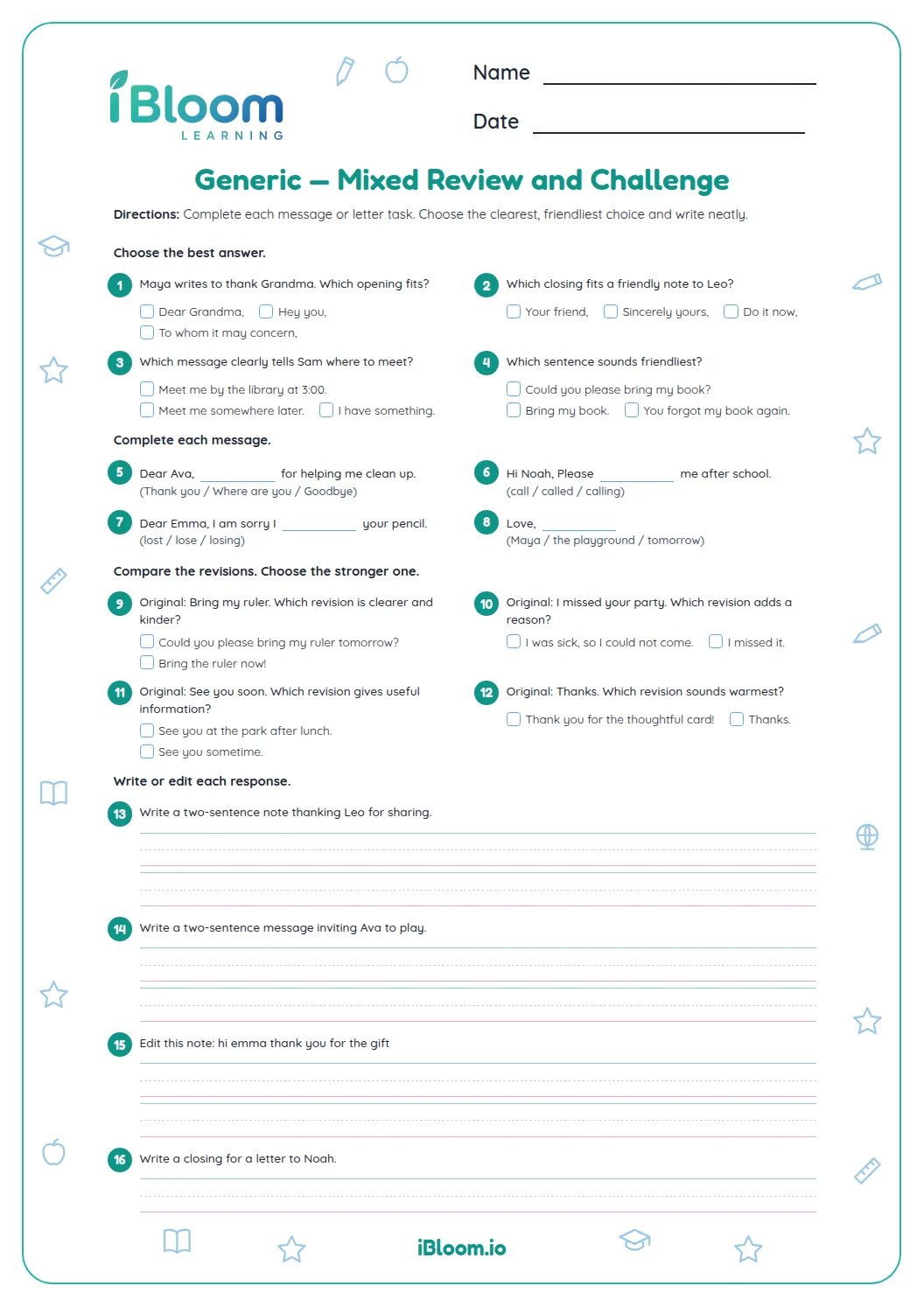
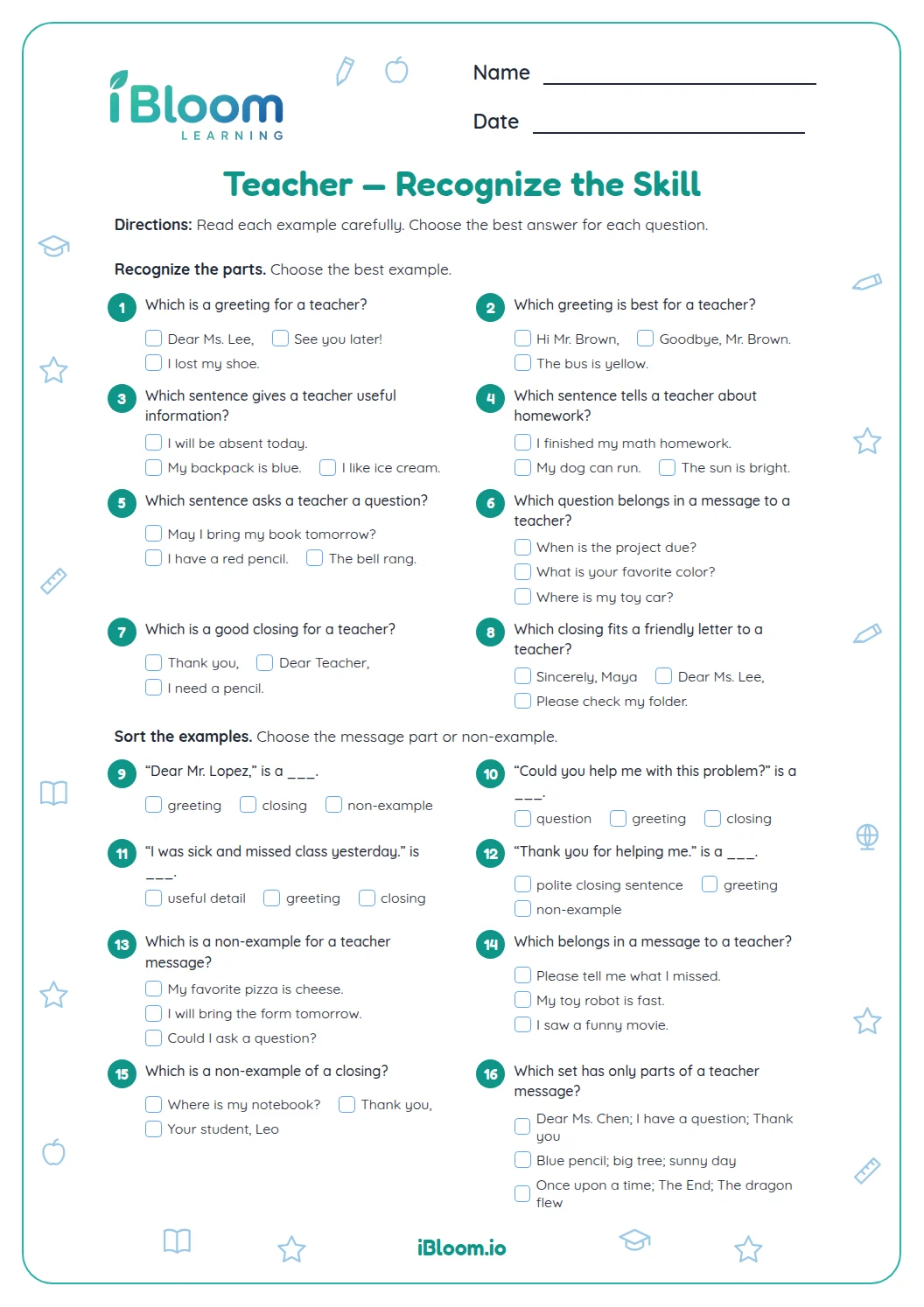
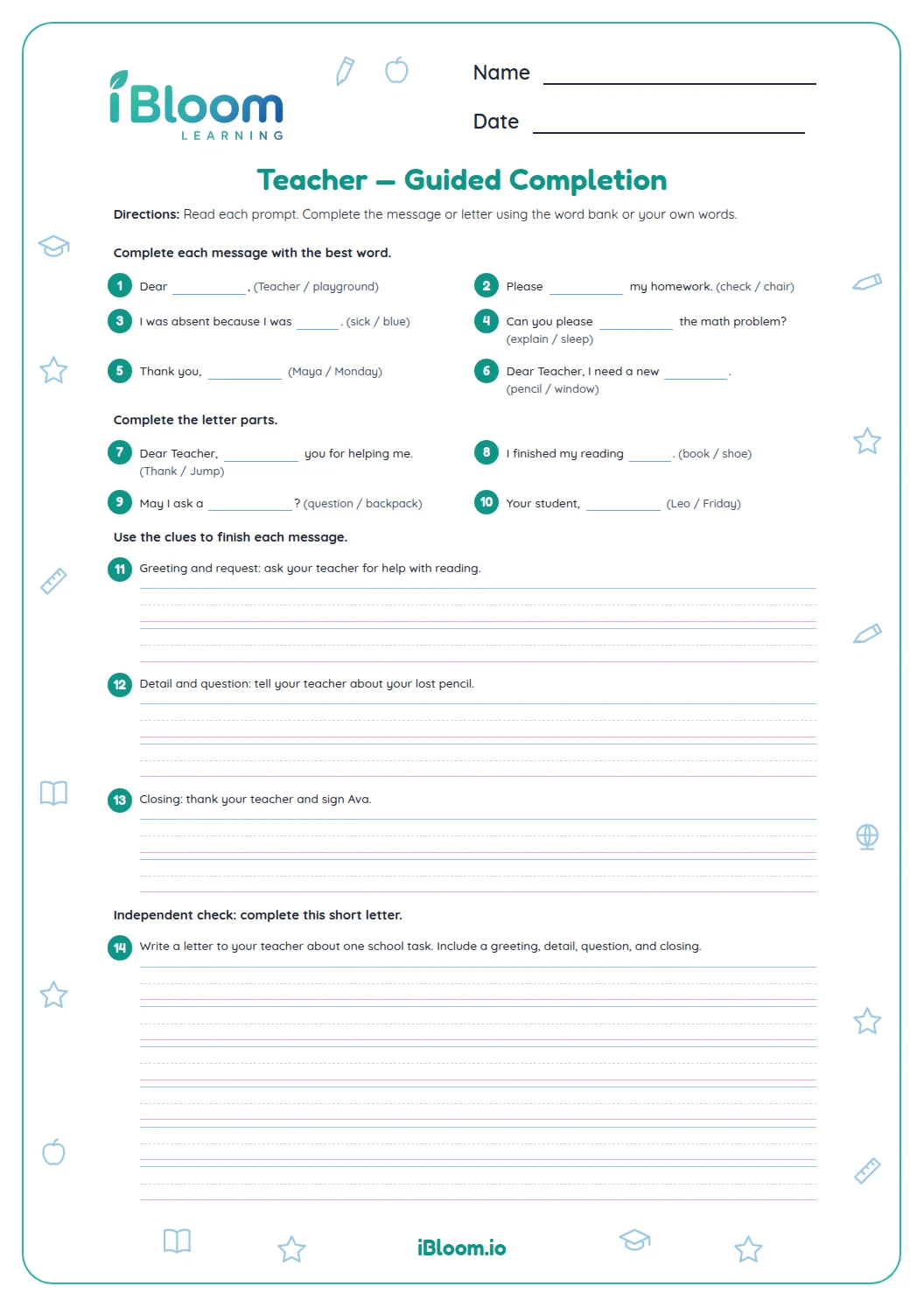
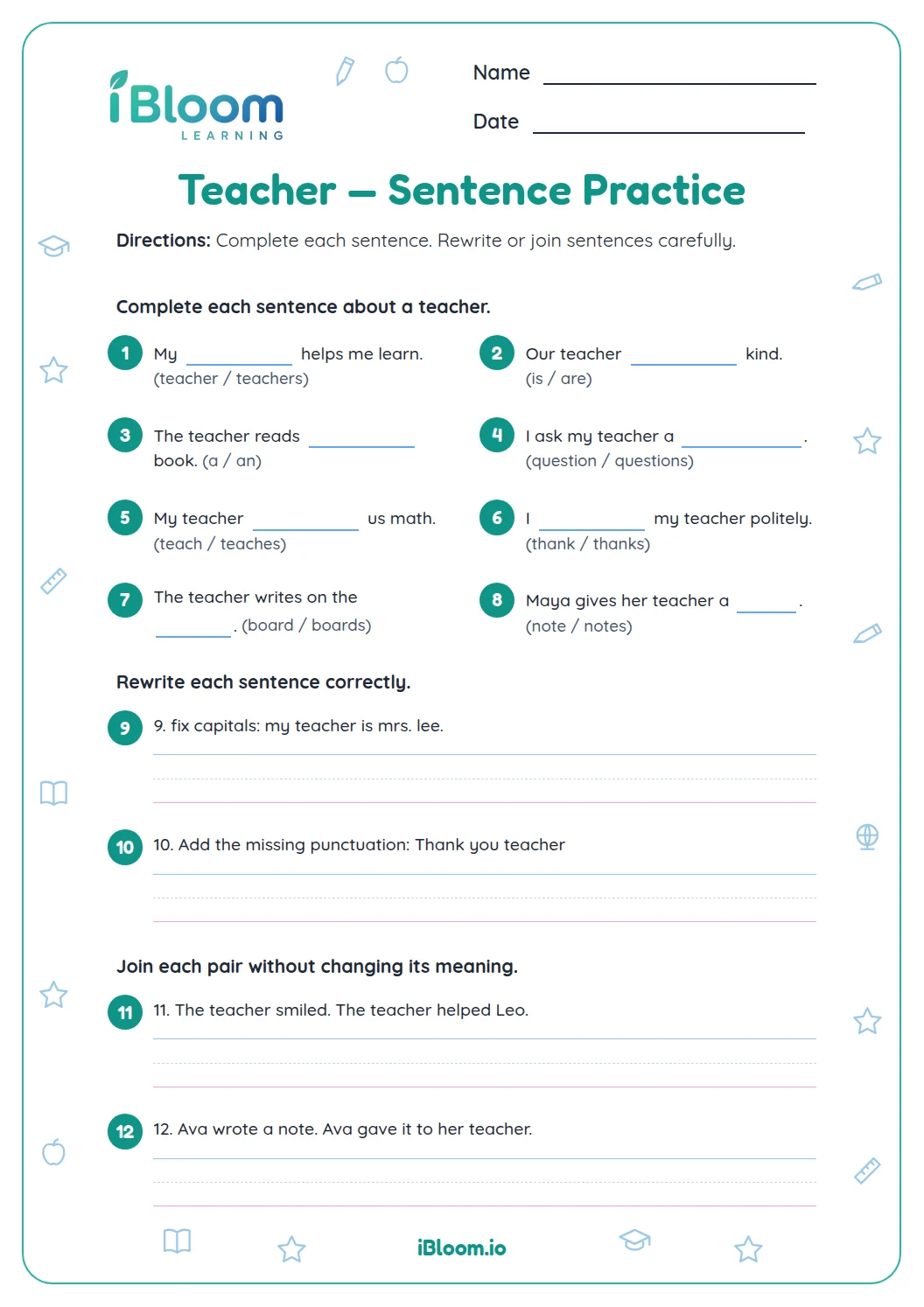
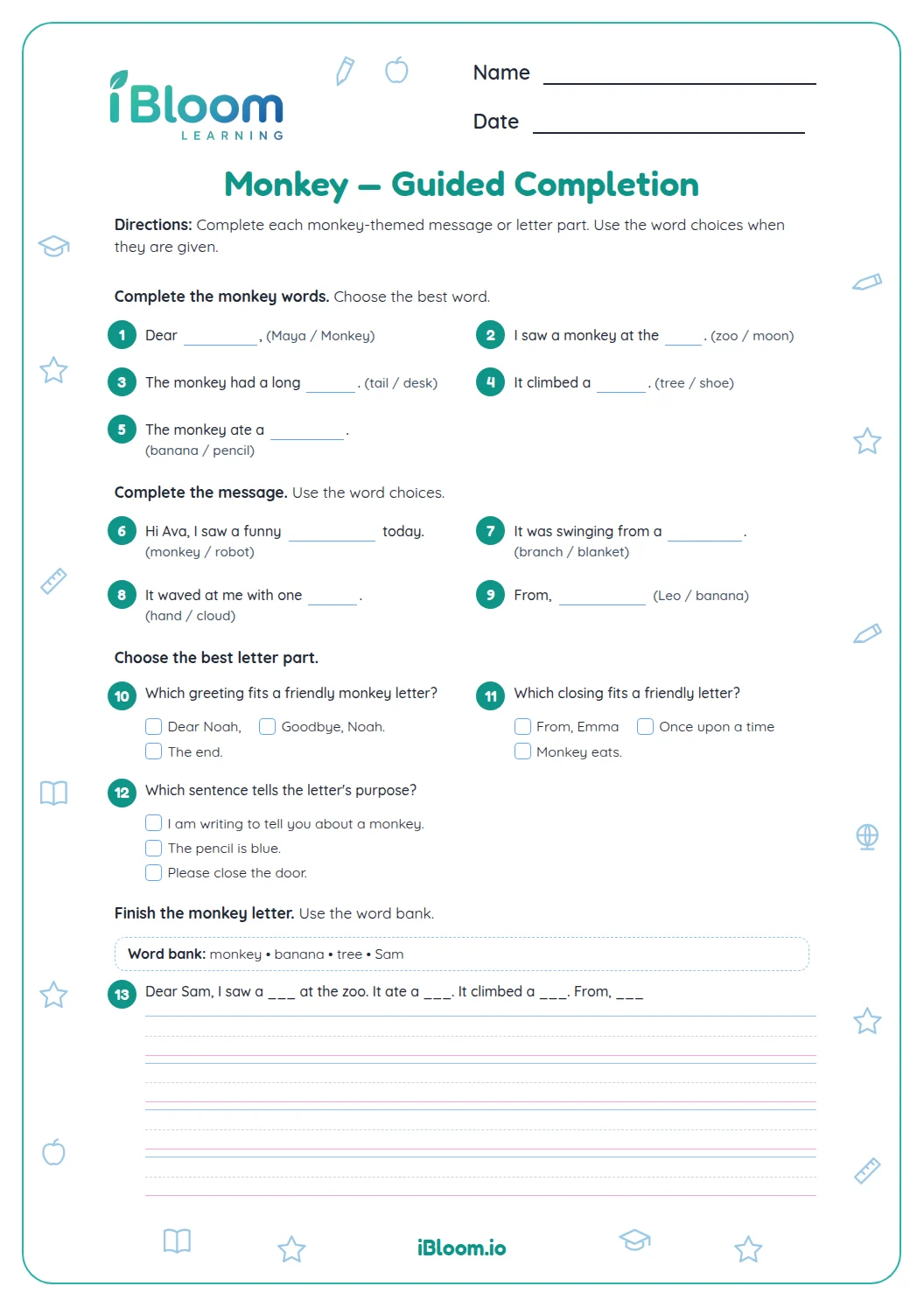
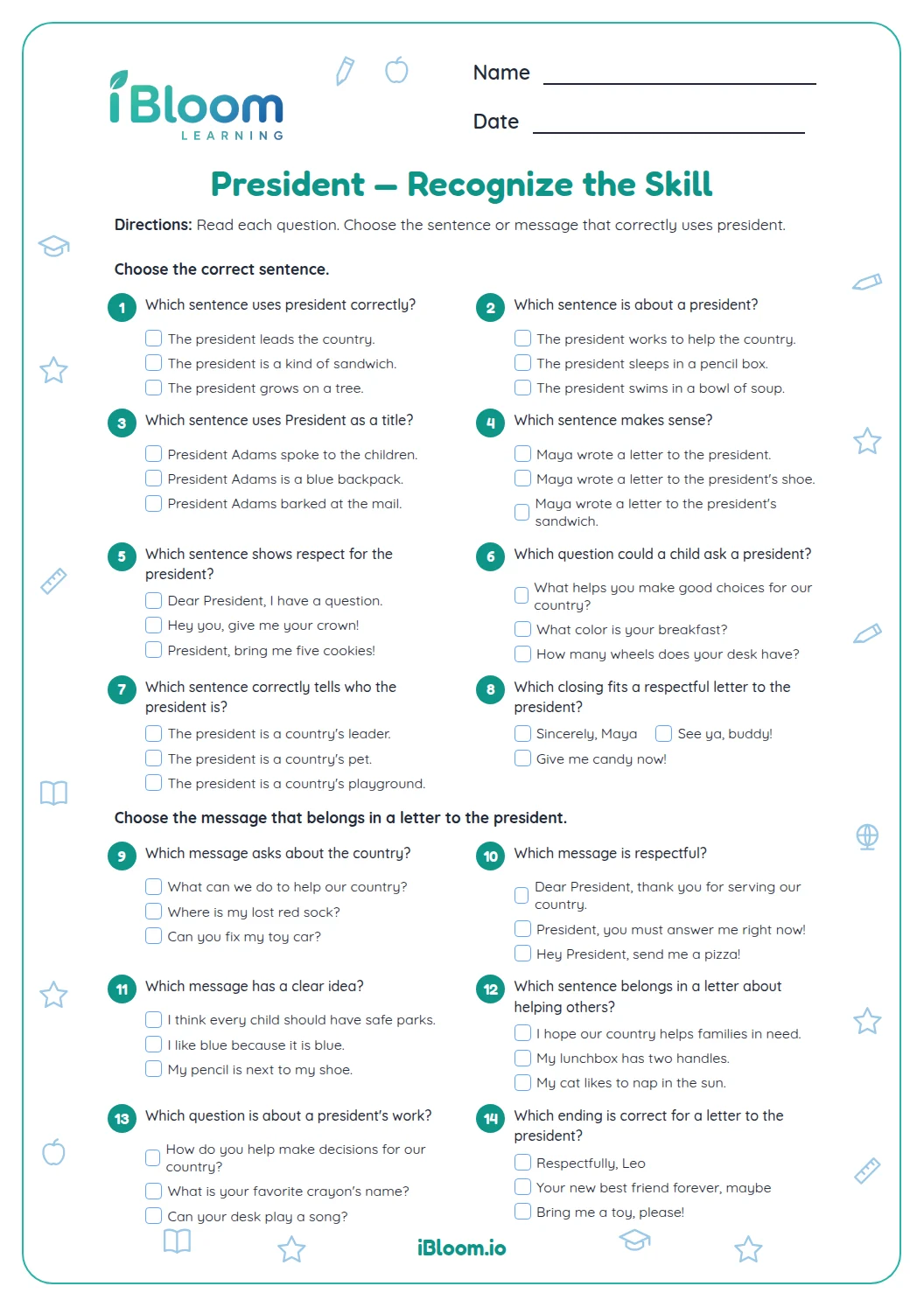
This Grade 2 printable helps children complete short messages and friendly letters. Prompts focus on choosing a greeting, adding a useful detail, finishing a thought, and writing a closing that fits the reader. The 14 tasks move from simple sentence completion to brief messages with a clear purpose. The practice aligns with CCSS W.2.5, strengthening writing through guidance and revision. A separate key offers sample responses because many answers can work.
Aligned to W.2.5
What parts make a friendly message clear?
A greeting names or welcomes the reader. The message shares the main idea and helpful details. A closing lets the reader know the note is finished. Together these parts make the message easy to follow.
How can a detail improve a note?
A detail answers a useful question for the reader. If you invite a friend to play, include when or where. If you thank someone, name what you appreciated.
- 1Prompt: Add a detail to an invitation to play.
- 2Sample: Please come to my house at 3 o’clock.
- 3The detail tells the reader where and when.
What will children write on this sheet?
Part A completes greetings, closings, and clear sentences. Part B asks children to add details to short notes, invitations, and thank-you messages. Sample answers show one possible response.
How to use this worksheet
- 1Read who the message is for and why it is being written.
- 2Choose a greeting that suits the reader.
- 3Add a detail that helps the reader understand or respond.
- 4Read the message aloud to check that it sounds complete.
- 5Use the sample key as one model; other clear answers may also fit.
Common mistakes and quick fixes
The mistake
Writing a detail that does not help the reader.
The fix
Ask what the reader needs to know next, such as a time or place.
The mistake
Forgetting to name the person in a greeting.
The fix
Check that the greeting clearly addresses its reader.
The mistake
Ending a note without a closing.
The fix
Add a friendly sign-off and the writer’s name when the prompt asks for a full letter.
Common Core alignment
This sheet gives children direct practice with the stated grade-level skill.
Strengthen short messages by adding clear, useful details.
On this sheet: Children complete and revise short messages so details and closings fit the prompt.
Show the official wordingHide the official wording
With guidance and support from adults and peers, focus on a topic and strengthen writing as needed by revising and editing.
What to practice next
Make more practice
Further reading
Questions parents and teachers ask
What kinds of messages are included?
Children work with short friendly notes, invitations, and thank-you messages. Each prompt names a purpose or reader so they can choose details that fit. The sample key provides one possible completion for open-ended items. Reread each prompt and check the answer key when the work is complete.
Are children expected to write full letters?
Some items ask for a short note with more than one part, while others focus on a greeting, closing, or one clear detail. This gradual practice helps children build a complete message from smaller writing choices. Reread each prompt and check the answer key when the work is complete.
What should a strong invitation include?
It should tell the reader what the invitation is for and include a useful detail, such as when or where to meet. Read the sentence again from the reader’s point of view: can the reader tell what to do? Reread each prompt and check the answer key when the work is complete.
Why does the answer key give sample answers?
Many writing prompts have more than one good response. The key gives an example that fits the purpose, but children may use different words if their message is clear and includes the requested information. Reread each prompt and check the answer key when the work is complete.
Can an adult help with spelling?
Yes. An adult can help a child sound out a word or reread the sentence together. Keep the child in charge of the message and its details so the writing still reflects the child’s own idea. Reread each prompt and check the answer key when the work is complete.