

About this worksheet
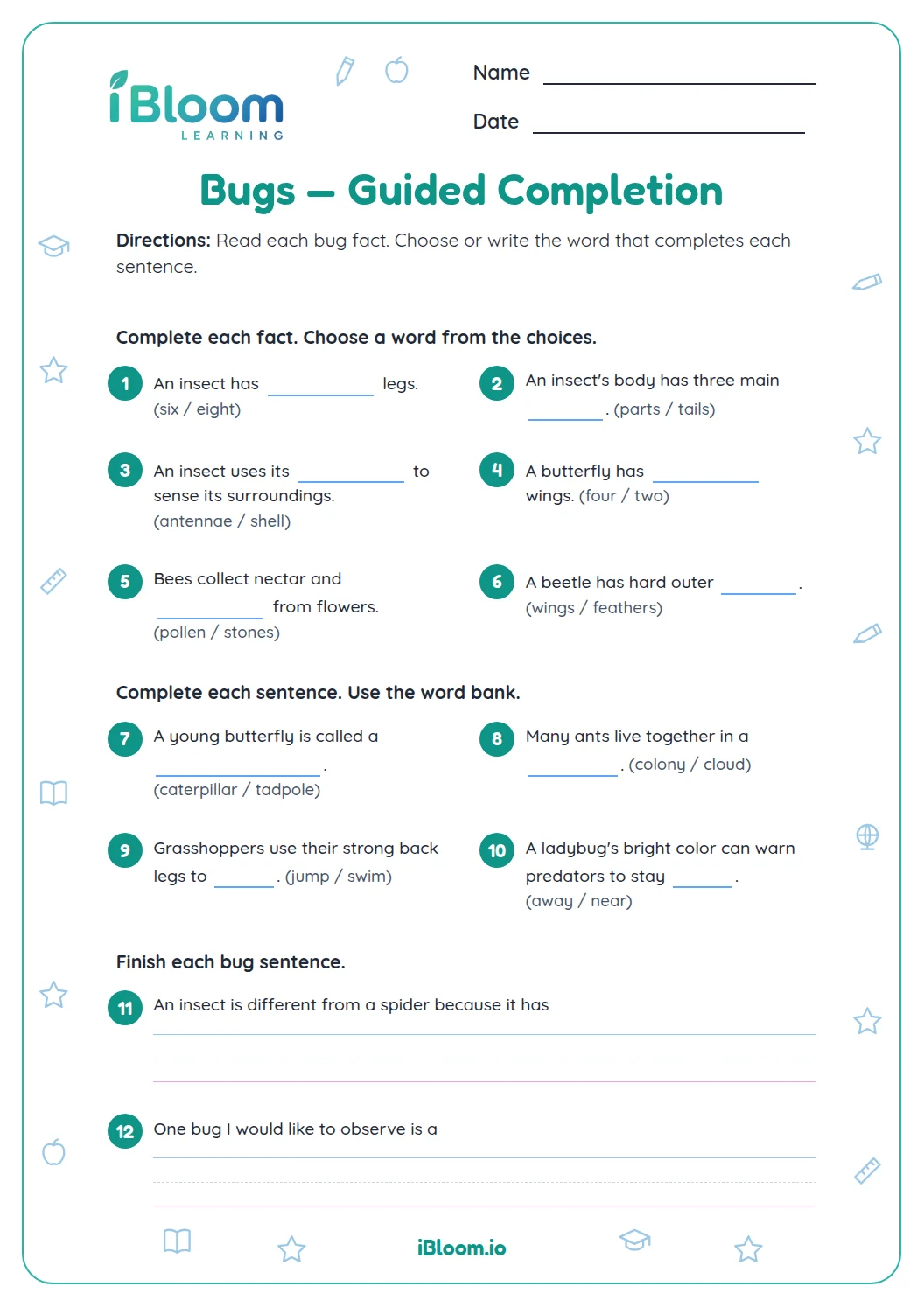
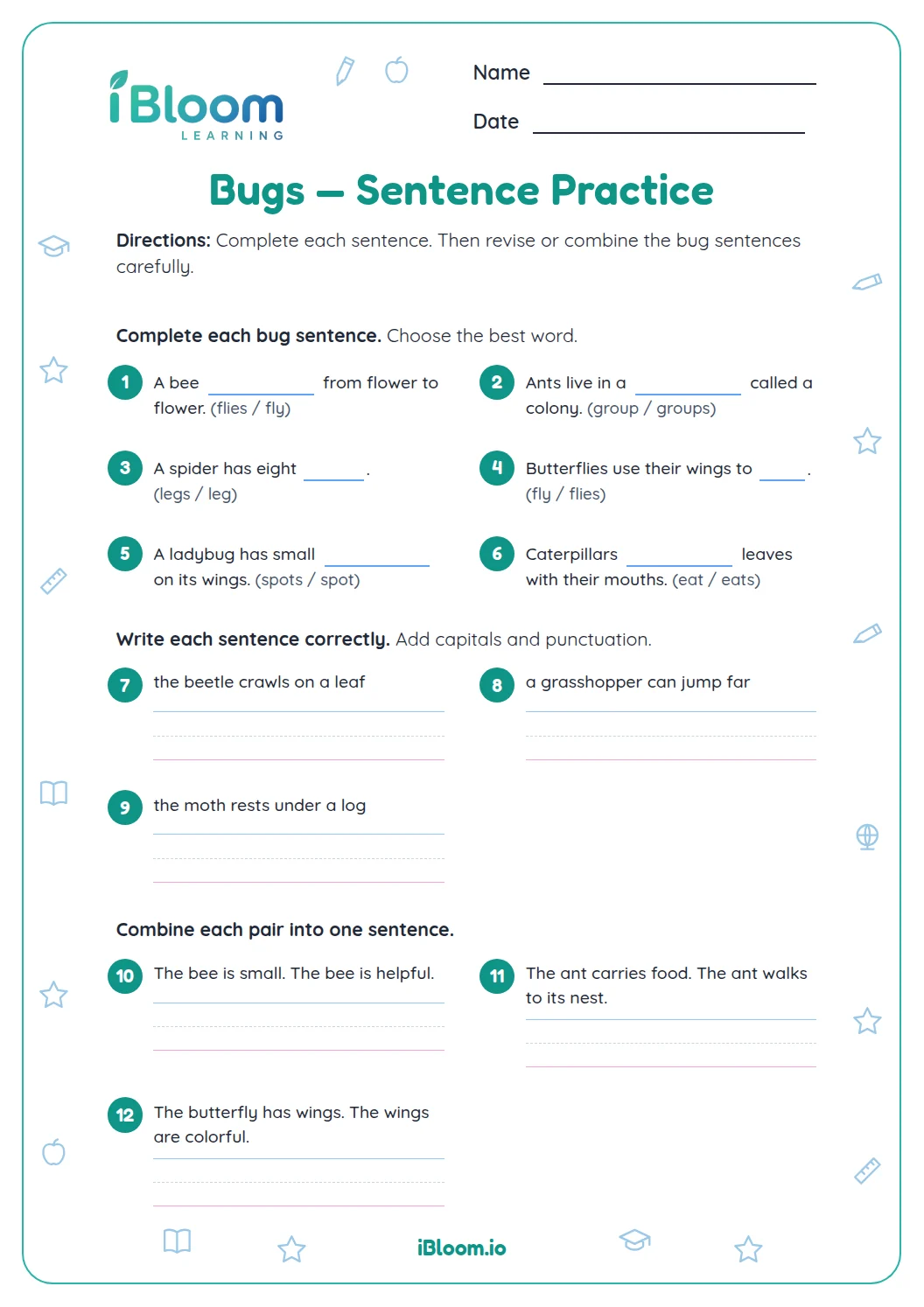
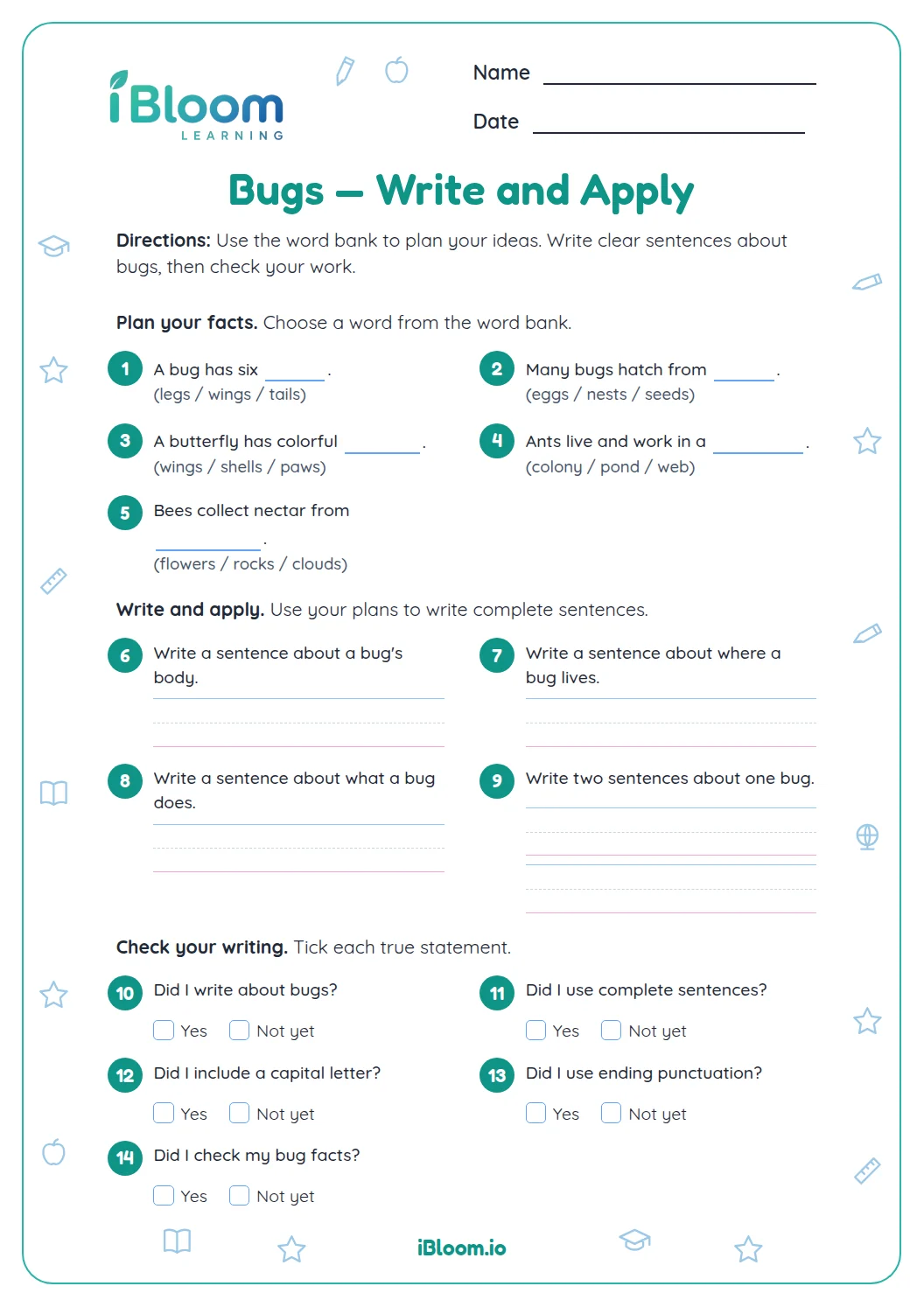
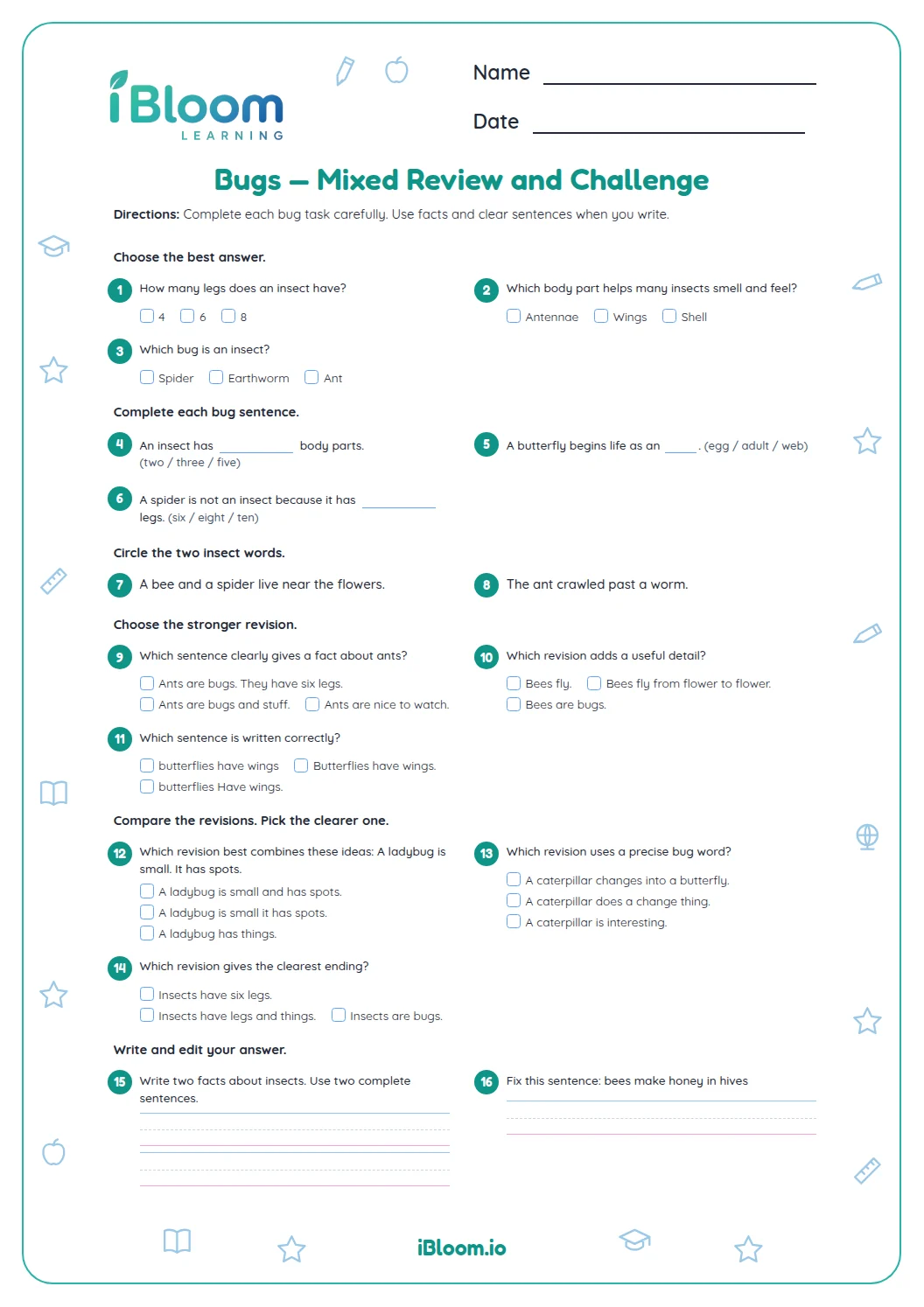
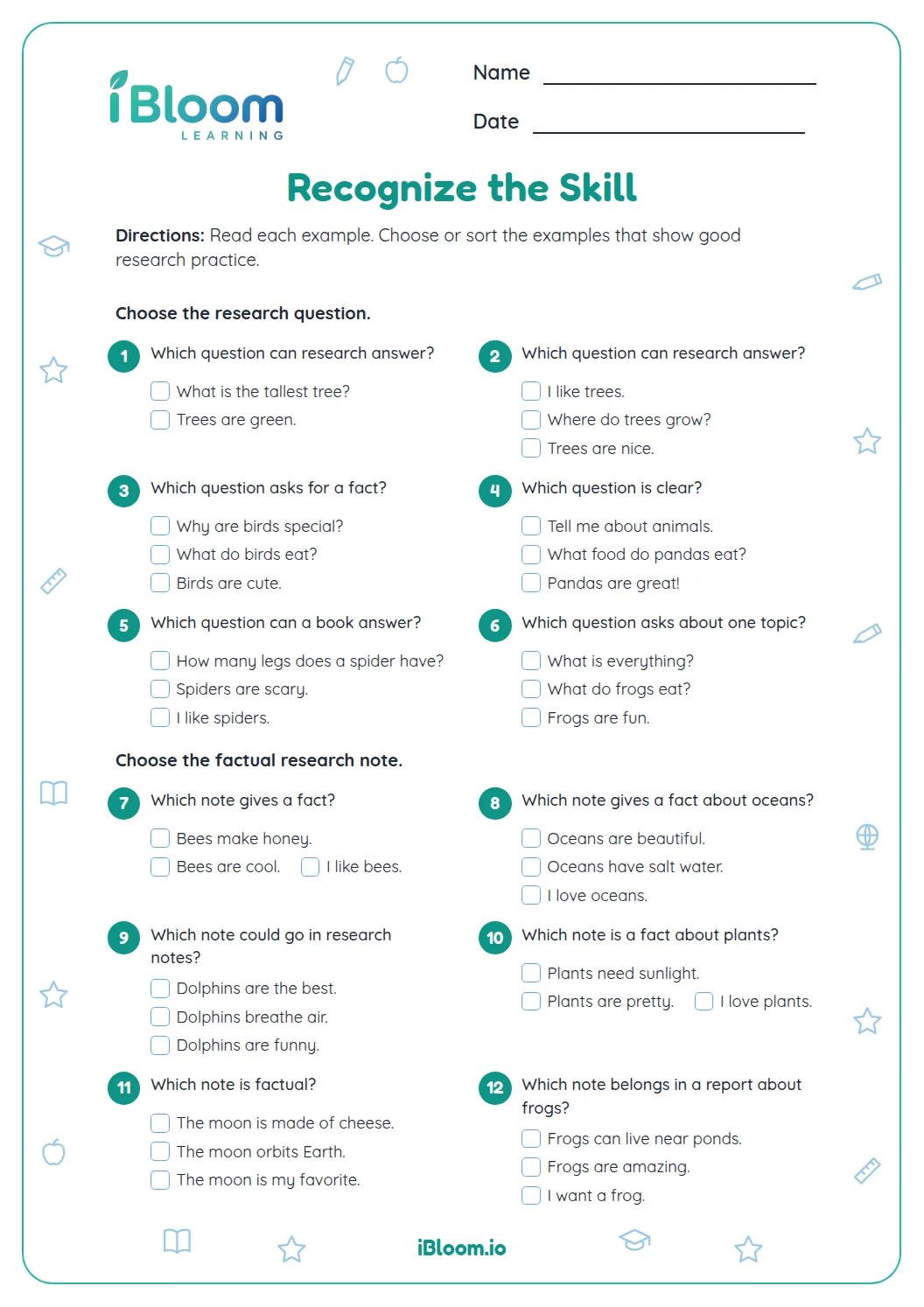
This free printable is for Grade 2 students practicing choosing bug research questions, sources, facts, and details. It has 14 questions with a separate answer key. The examples build from the core idea to independent practice.
What makes a useful research question?
A research question asks for information that can be found and used in a report. “How do ants carry food?” points to a topic a student can investigate; “Do you like ants?” asks for a personal preference instead.
Read question 1 and notice that it asks how ants do something. That gives the writer a clear fact to look for.
- 1Which question could guide a report about ants?
- 2“How do ants carry food?” asks for information.
- 3“Do you like ants?” asks for an opinion.
- 4Choose the question that can guide research.
How can a source help answer a question?
Choose a source that matches the topic and gives information, such as a nonfiction book or a science reference. A story, joke page, or toy catalog may mention a bug but is not the best source for checking a science fact.
After choosing a source, look for a detail that answers the question. A checkable fact can be confirmed in a reliable source; an opinion tells what someone thinks or likes.
What does the worksheet include?
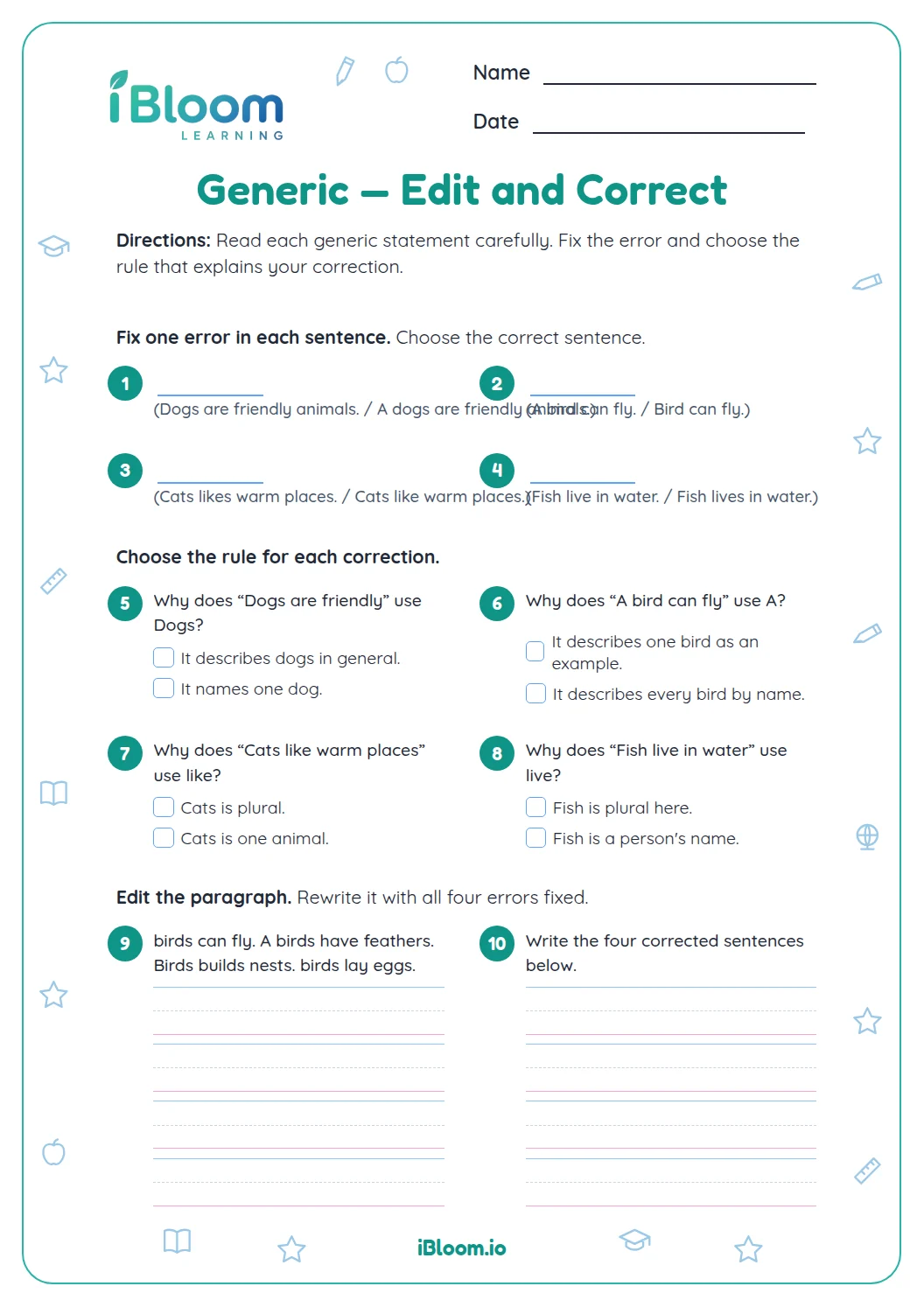
The worksheet has two parts and 14 multiple-choice questions. Part A focuses on useful research questions, sources, facts, and opinions. Part B applies those choices to report details. The answer key gives the best choice for each item.
- Questions 1–6: choose research questions, facts, and matching sources.
- Questions 7–14: distinguish opinions and choose focused details.
- Answer key: one best response per question.
How to use this worksheet
- 1Read what the report or question is about.
- 2Choose a question that asks for information, not a personal preference.
- 3Match the source to the bug topic.
- 4Check whether a sentence can be confirmed as a fact or shares an opinion.
- 5Use the key to review each choice.
Common mix-ups and quick fixes
The mistake
Choosing a personal preference as a research question.
The fix
Ask whether a book or other source could provide an answer.
The mistake
Using any source that mentions the topic.
The fix
Pick a source made to provide information about that topic.
The mistake
Treating an opinion as a fact.
The fix
Look for information that can be checked in a source.
What to practice next
Make more practice
Questions parents and teachers ask
What is a research question?
A research question asks for information a writer can look up and use. “How do ants carry food?” can guide a search for facts. “Do you like ants?” asks what someone thinks, so it does not guide an information report.
What source is useful for a bug report?
A nonfiction bug book or science reference is likely to provide information about bugs. A made-up story or toy catalog has a different purpose. Students should choose a source that matches the question they are trying to answer. The examples name familiar insects so children can connect the research choice to a specific report topic.
How is a fact different from an opinion?
A fact is a statement that can be checked in a source or through observation. An opinion tells what someone thinks or prefers. The worksheet asks students to recognize both so they can select details suitable for a report. An adult can invite the student to explain what source could confirm the statement.
How many questions are on the worksheet?
The worksheet has 14 multiple-choice questions across two pages and a separate two-page answer key. The choices cover research questions, sources, facts, opinions, and useful details for bug reports. The key helps families review the reasoning behind each choice after the child finishes.
Can students use this before writing a report?
Yes. The questions help students practice the decisions that come before drafting: choosing something to find out, selecting a matching source, and noticing which details are facts. An adult can follow up by helping the child find a real source.
Is an answer key included?
Yes. The separate answer key identifies the best answer for each question. Students can explain why the selected question, source, or detail would help with a bug report before checking the key. Read the prompt aloud and ask which option would help a writer answer the stated question.