

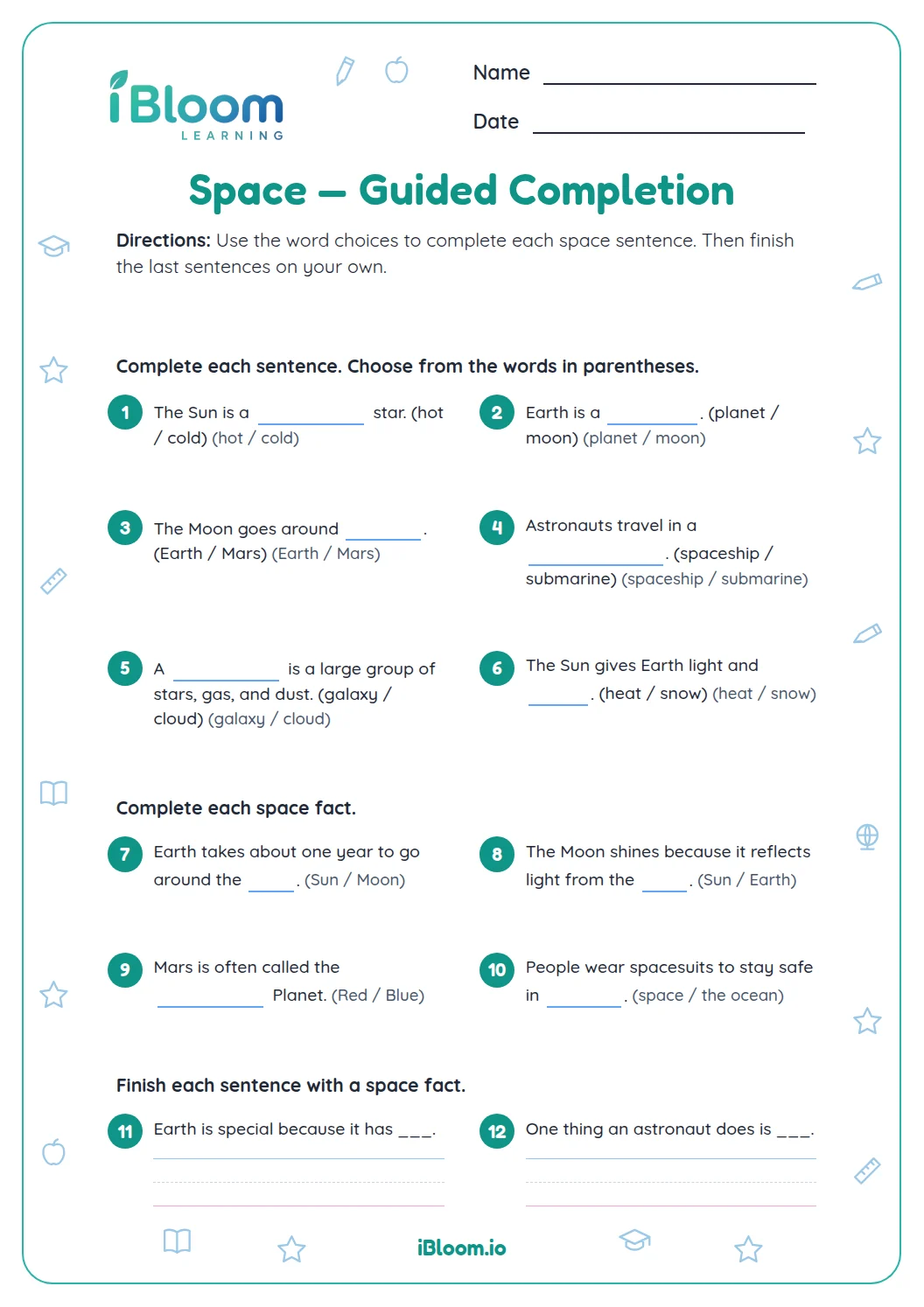
About this worksheet
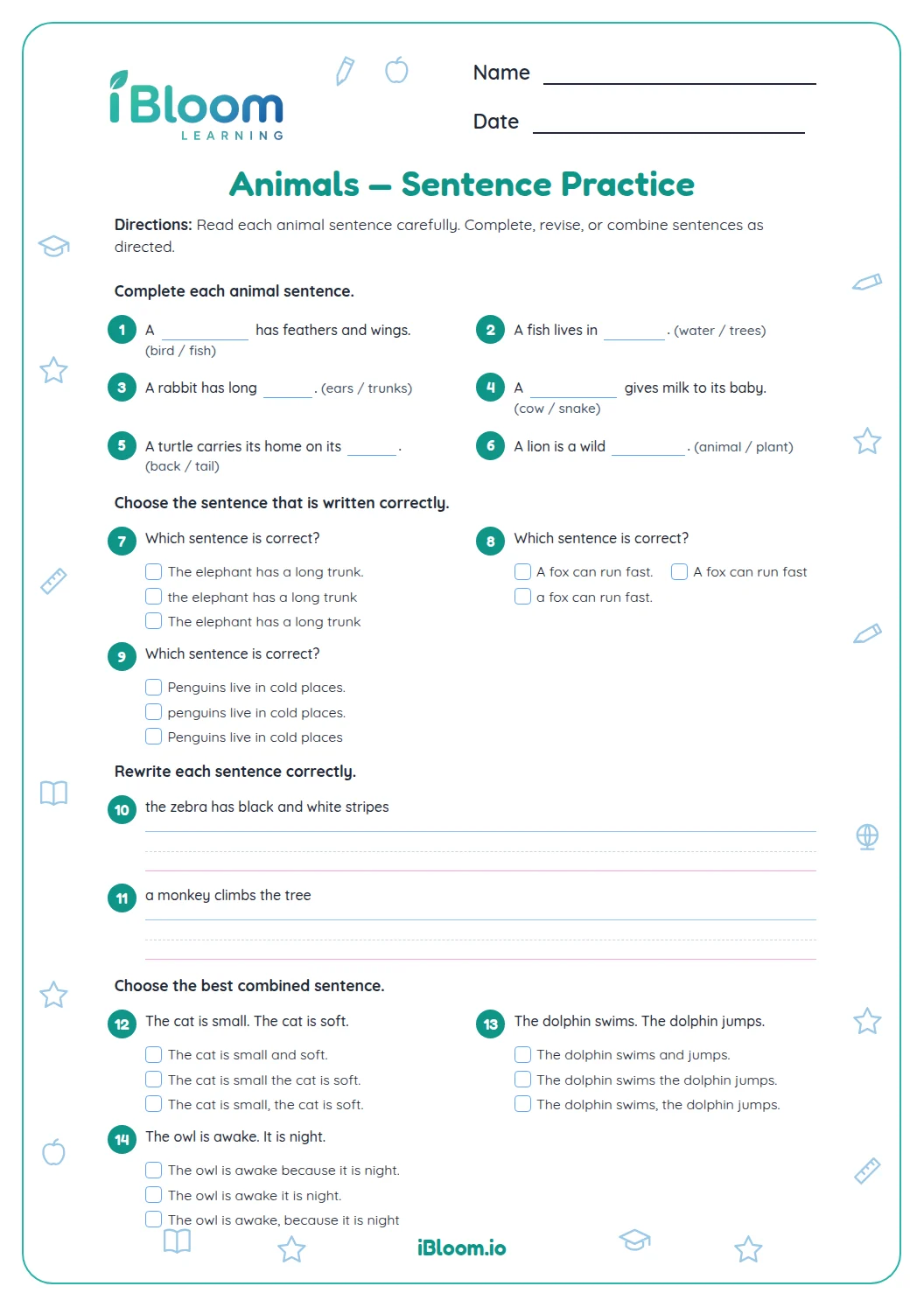
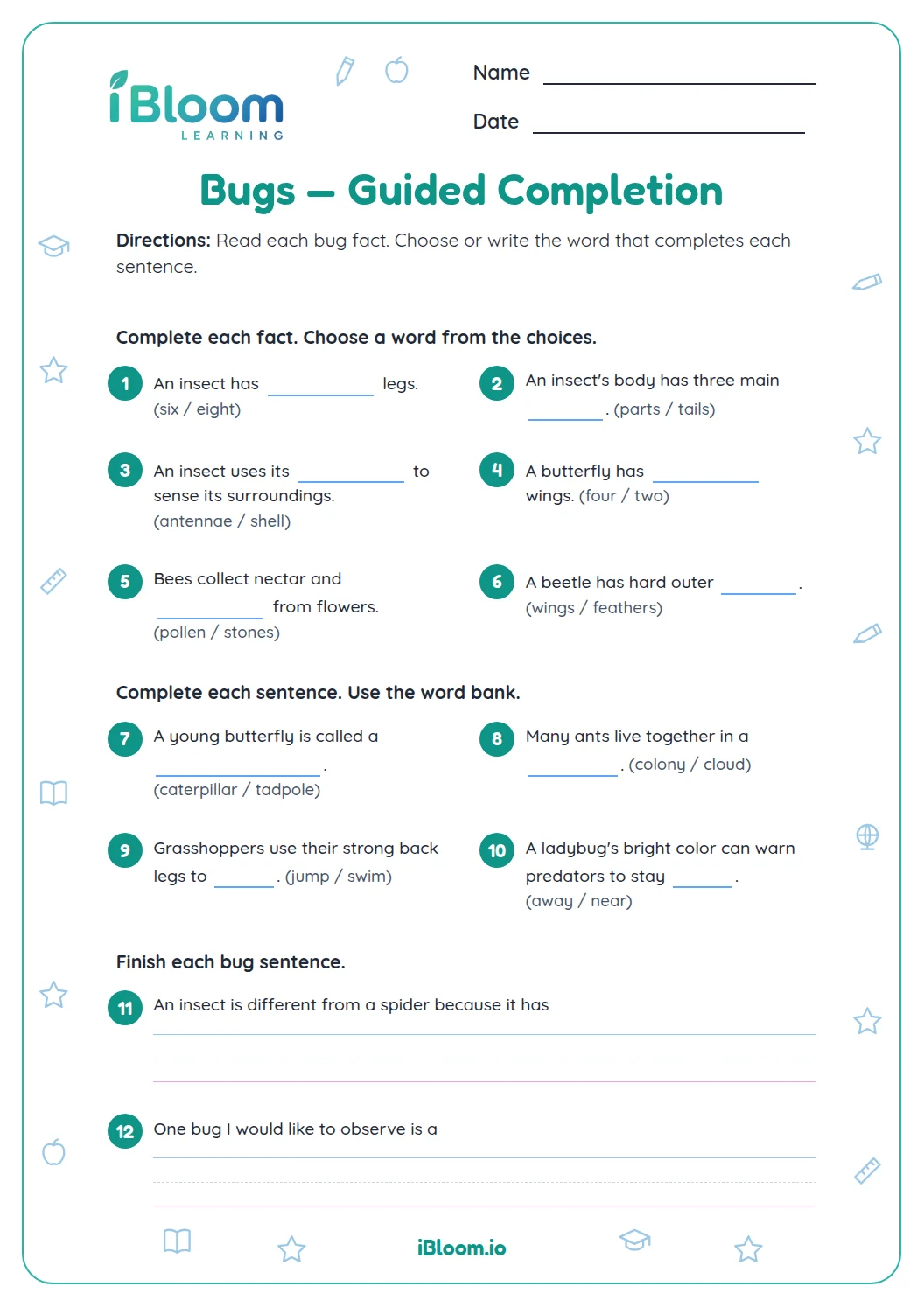
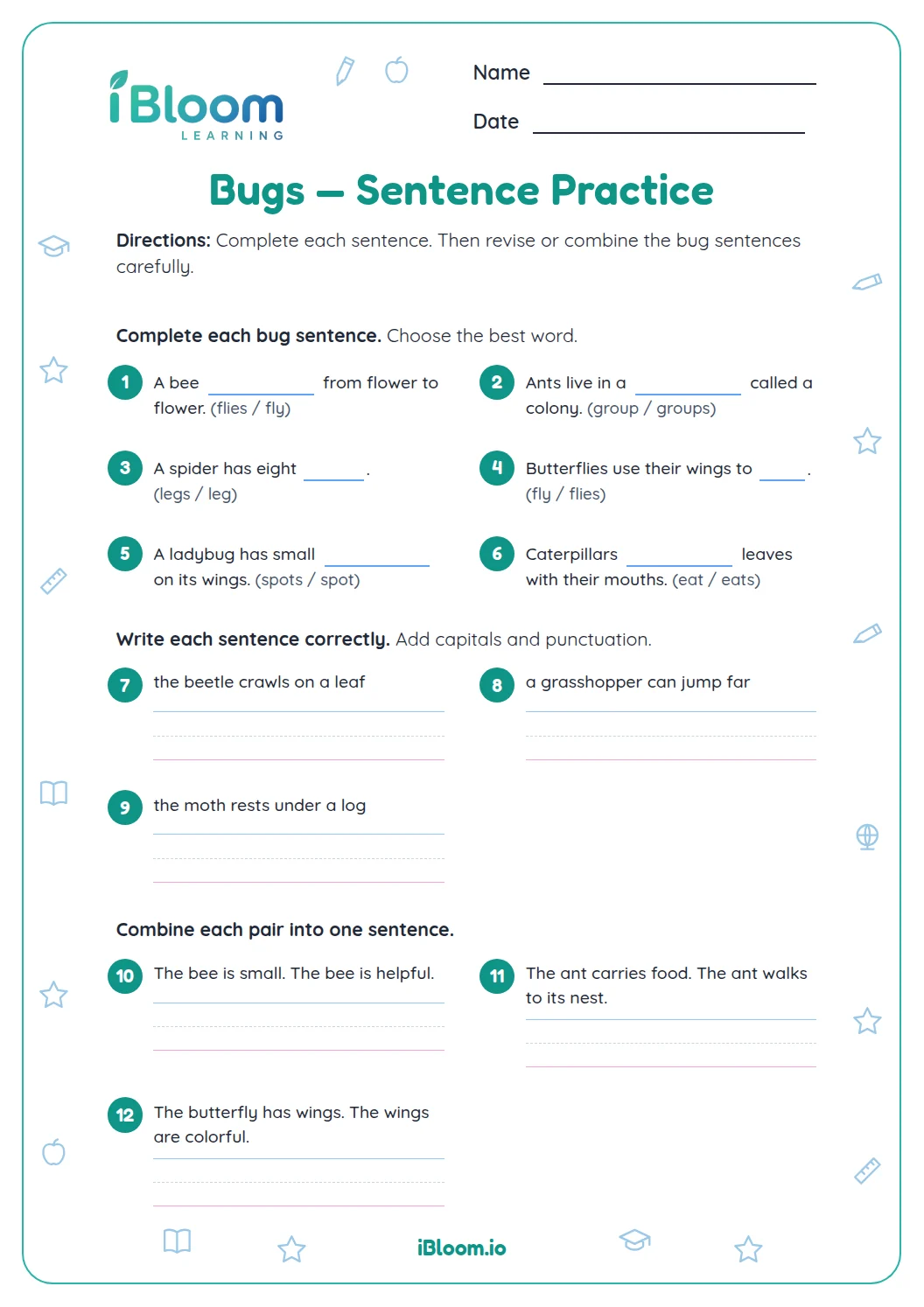
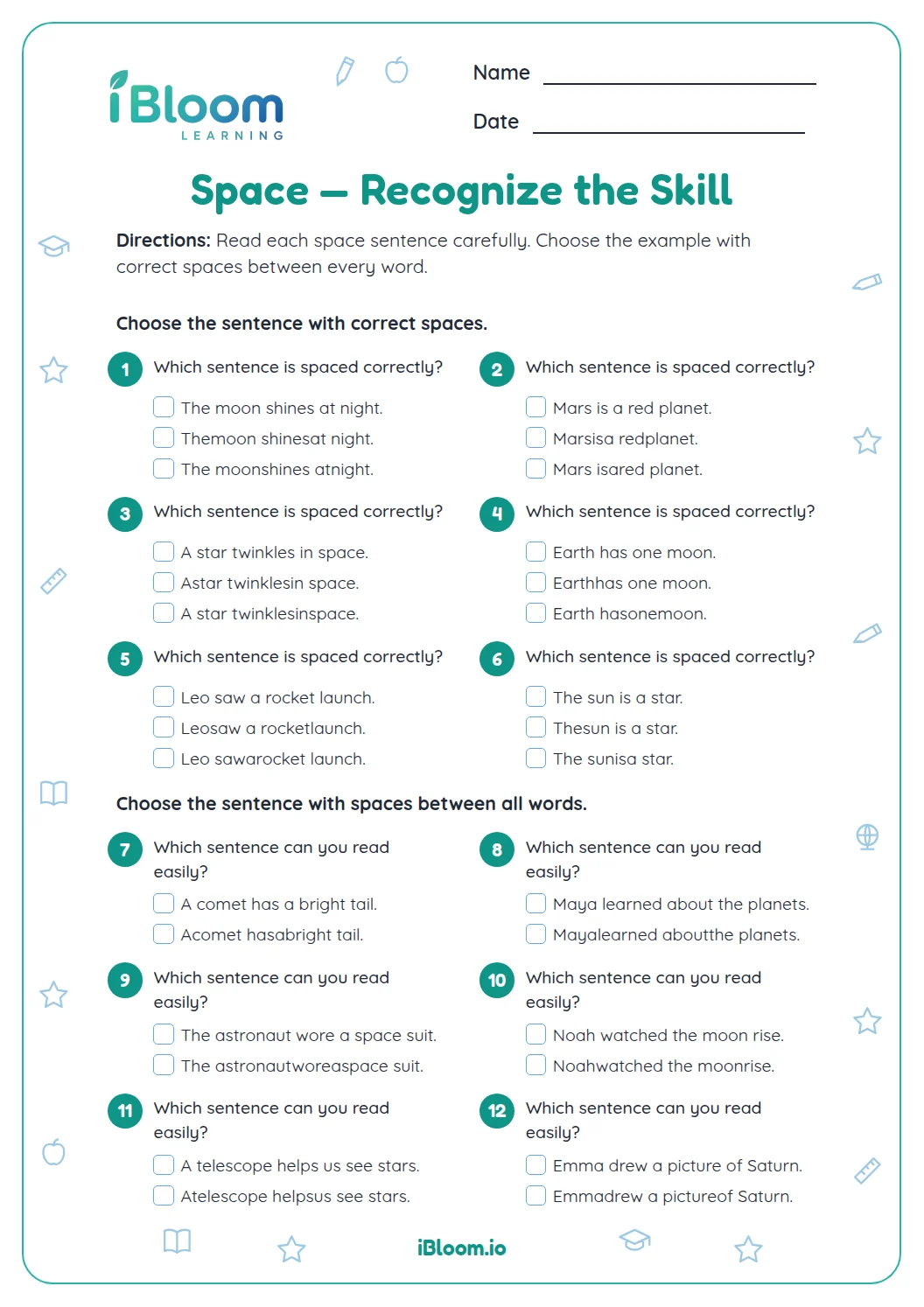
This free Grade 2 printable helps children recognize complete sentences and finish simple general facts. Fourteen questions move from choosing a whole sentence and selecting a matching verb to writing a true fact about an animal. It practices CCSS L.2.1.f sentence production, with a separate answer key.
Aligned to L.2.1.f
How can a child spot a complete sentence?
A complete sentence shares a whole thought. “A robin builds a nest” tells who and what happens. “A robin in a nest” names something but does not tell what the robin does. Question 1 asks children to compare those two forms.
- 1Leaves ___ in autumn.
- 2Leaves is plural
- 3Use the matching verb: fall
- 4Complete thought: Leaves fall in autumn.
What makes a sentence a general fact?
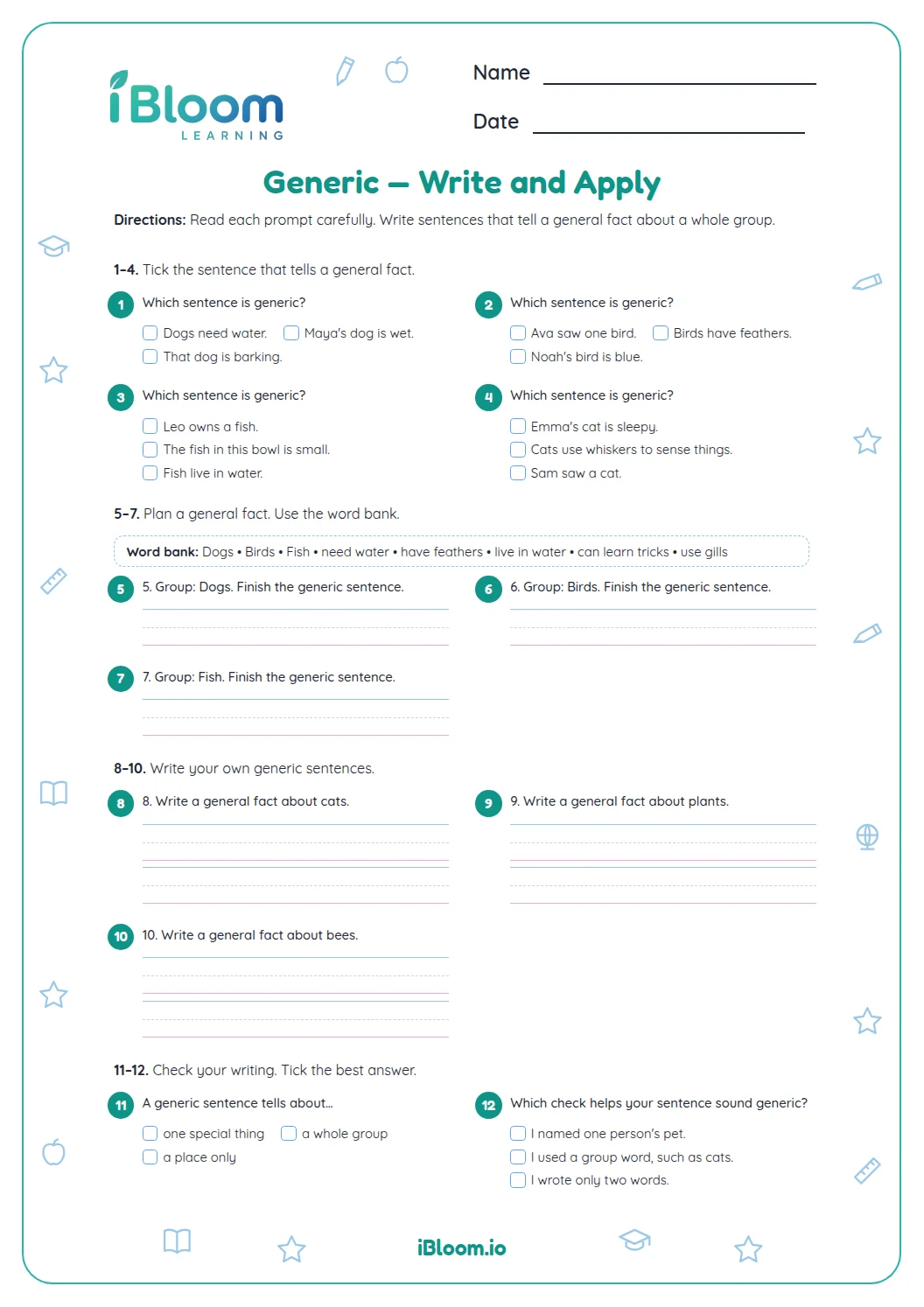
A general fact tells something about a kind or group, such as “Dogs need water.” A sentence about one event or one particular pet, such as “Our dog ran home,” is not a general fact. The middle questions ask children to notice that difference.
How does the guided completion work?
Part A asks children to choose complete sentences and matching verbs. Part B focuses on statements about groups. Part C includes three short blanks and a final sentence children write themselves.
How to use this worksheet
- 1Read the whole sentence, including the words before and after the blank.
- 2Check that the subject and verb make sense together.
- 3Ask whether the sentence tells a whole thought or only names something.
- 4For general facts, notice whether the sentence is about a kind or group.
- 5Check the selected answers and missing words with the key.
Common mistakes and quick fixes
The mistake
Choosing a phrase that names something but does not tell what happens.
The fix
Look for a subject and an action or complete idea.
The mistake
Using a singular verb with a plural subject, as in “Leaves falls.”
The fix
Match the verb to the subject: “Leaves fall.”
The mistake
Treating a one-time event as a general fact.
The fix
Ask whether the sentence is true about a group or only one particular example.
Common Core alignment
This worksheet practices producing complete simple sentences.
Produce complete simple sentences to state clear ideas.
On this sheet: Learners identify complete sentences, complete sentence frames and write a general fact.
Show the official wordingHide the official wording
Produce, expand, and rearrange complete simple and compound sentences.
What to practice next
Make more practice
Further reading
Questions parents and teachers ask
What is a complete sentence?
A complete sentence shares a whole thought. It usually names a person, animal, place or thing and tells something about it. “A robin builds a nest” is complete, while “A robin in a nest” leaves the reader waiting for more.
What is a general fact?
A general fact tells something that is usually true about a kind or group. “Dogs need water” is about dogs as a group, while “Our dog ran home” describes one particular event. Ask whether the sentence could describe many members of that group.
How do children choose the right verb?
Read the subject and verb together and check whether they match. A plural subject such as leaves takes “fall,” while a singular subject such as a bird takes “builds.” The worksheet includes a few examples for choosing the matching form.
How many questions are on the worksheet?
There are 14 questions: ten multiple-choice sentence and verb items, three fill-in completions and one written sentence. The answer key lists each selected sentence, missing word and a sample animal fact. This mix checks recognition and asks children to create a sentence of their own.
Is an answer key included?
Yes. The answer key is printed separately and shows each correct choice, missing word and a sample response. For a review, ask your child to explain how the sentence makes a whole thought or states a fact about a group.