
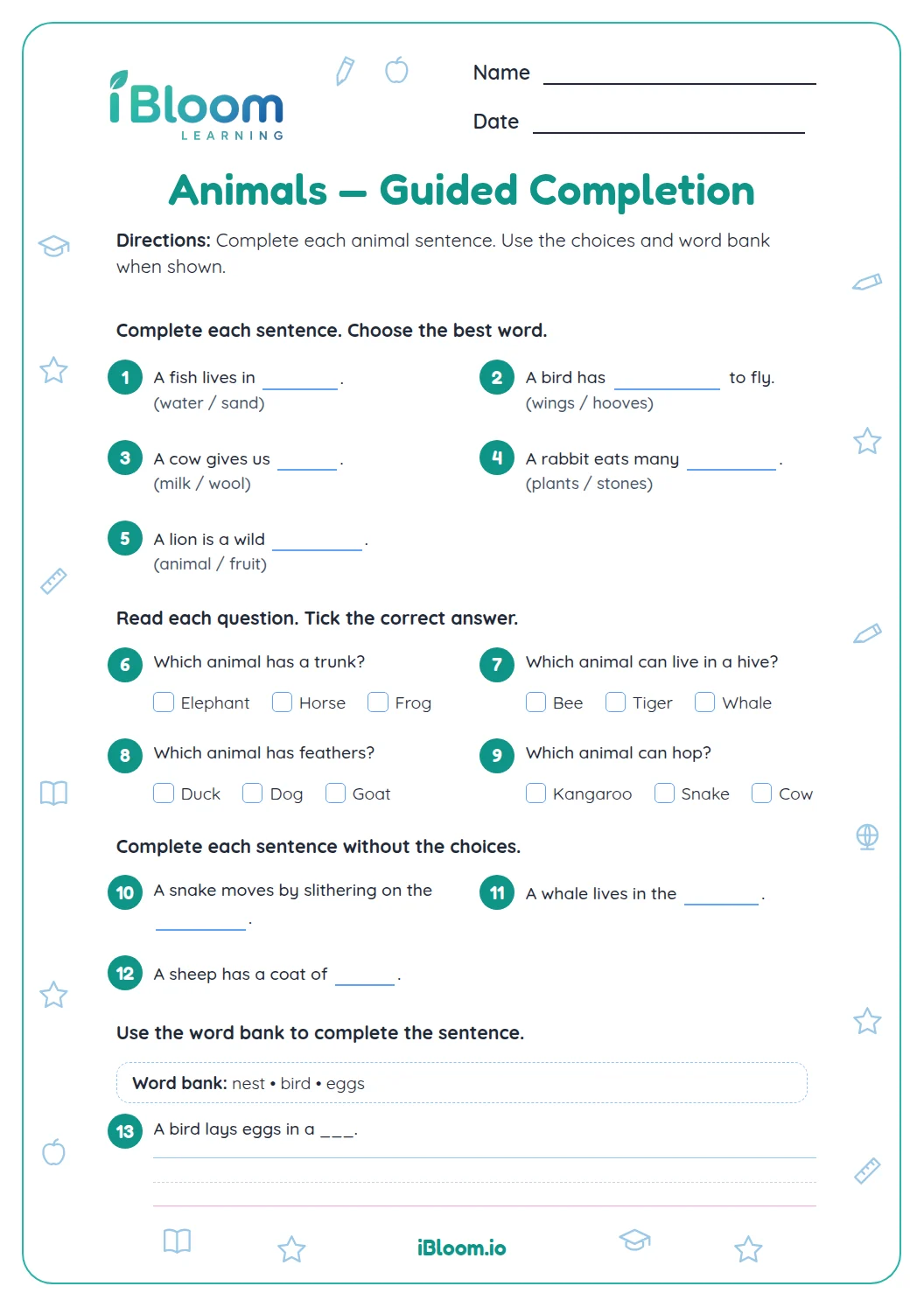
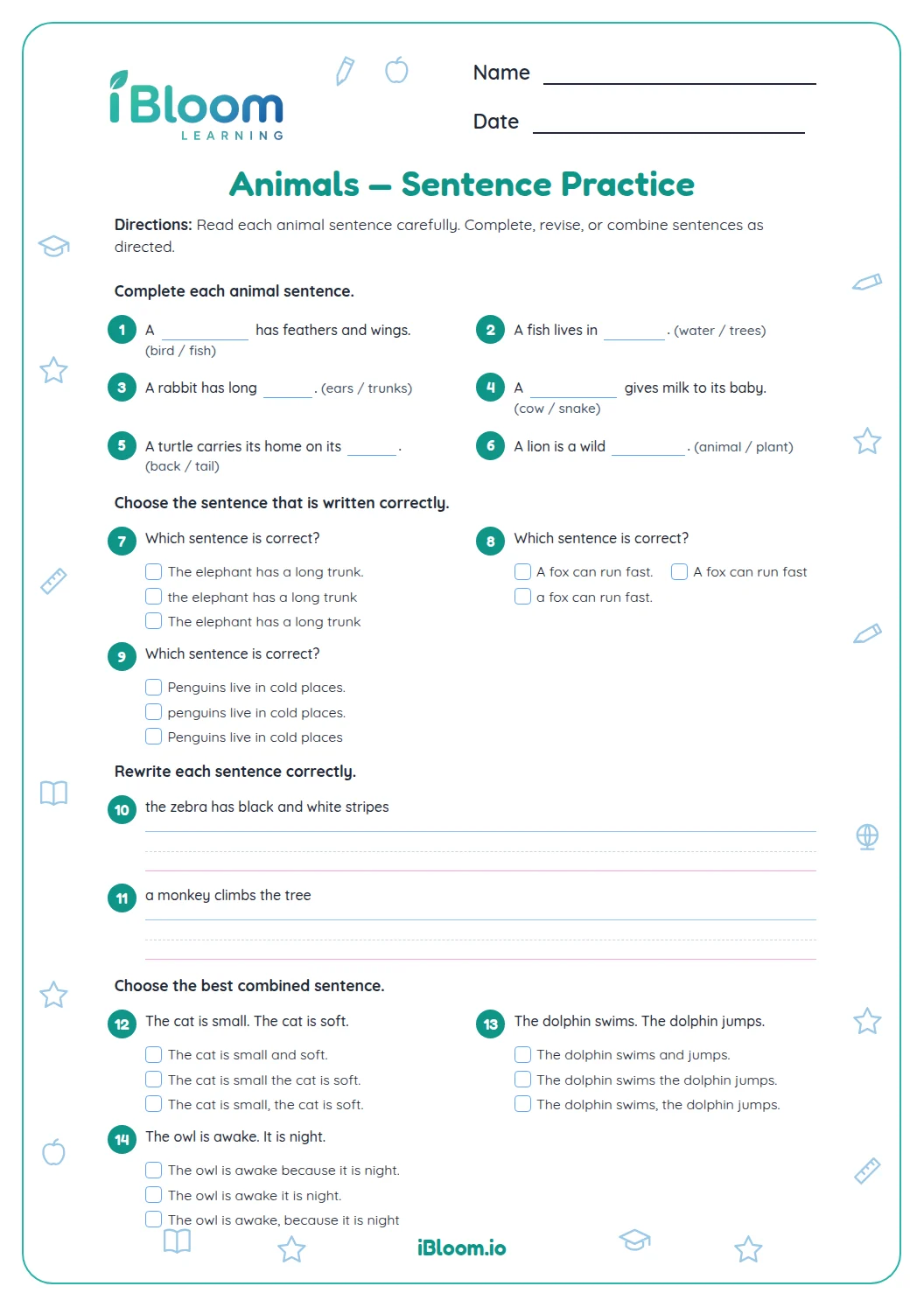
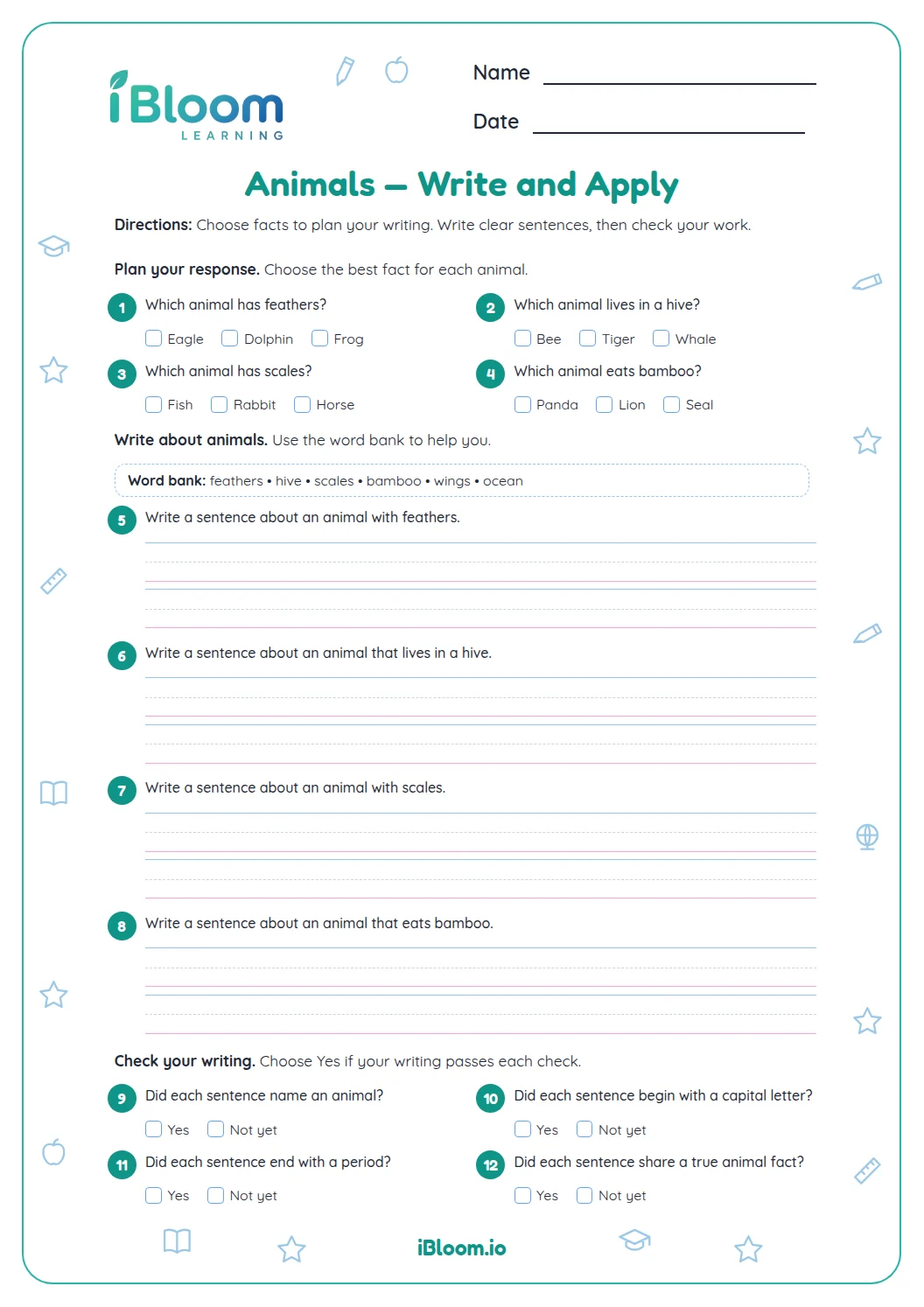


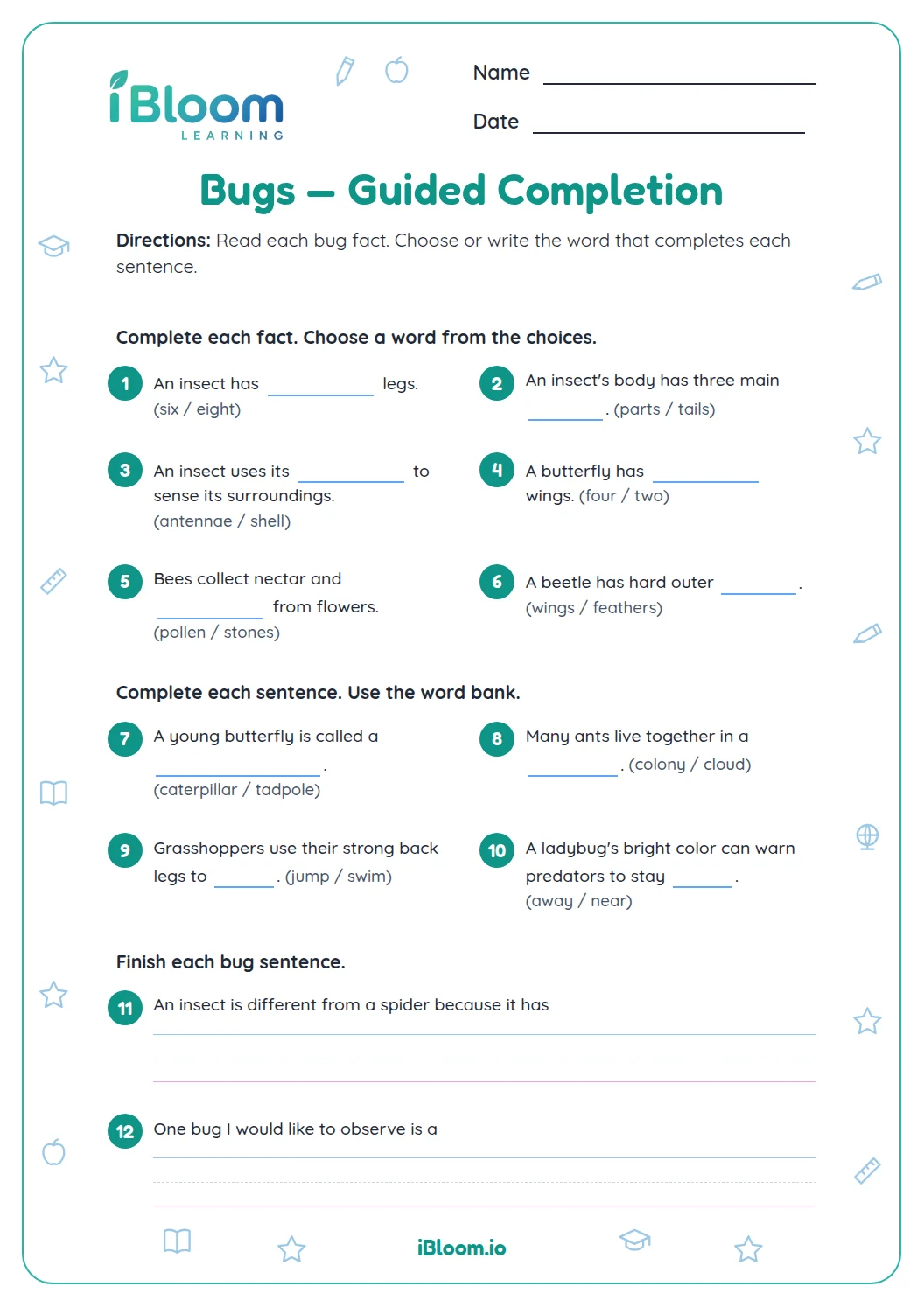
About this worksheet
This Grade 2 worksheet introduces the choices that help a young researcher prepare an animal report. Children distinguish facts from opinions, pick questions that can be answered, select a useful nonfiction source, and identify notes that fit a topic. For example, “What do penguins eat?” is focused and can be checked in an animal book. The 16 multiple-choice questions use animals such as owls, bees, turtles, and koalas. A separate answer key supports review. The activity aligns with Common Core W.2.7, shared research and writing projects.
Aligned to W.2.8
What makes an animal question useful?
A focused question asks for information about one animal or a clear part of its life. “What do penguins eat?” can be answered with facts. “Are penguins the best birds?” asks for a personal judgment.
Questions 1 and 5 compare focused questions with opinion questions or topics that are too broad.
Which sources and notes help?
A nonfiction book or animal encyclopedia can provide facts for a report. A toy or pretend story may be fun, but it does not provide the factual information these questions ask children to record.
For example, a note that says “Bees make honey” records information that could support a report. “Bees are funny” states a personal opinion instead.
How can children tell a fact from an opinion?
A fact is checkable in a reliable source; an opinion tells what someone thinks or prefers. “A frog has four legs” can be checked. “Bats are the coolest animals” is a preference. Children also choose notes that answer a research question and fit the report topic.
How to use this worksheet
- 1Read the animal topic and identify what information the question asks for.
- 2Choose a question that can be answered with facts.
- 3Pick a nonfiction source connected to that animal.
- 4Use a short note that answers the question and stays on topic.
- 5Check whether a statement is verifiable or gives someone’s opinion.
What should children check?
The mistake
Choosing a broad question that could cover many unrelated animals.
The fix
Narrow it to one animal and one topic, such as where foxes live.
The mistake
Treating a favorite or judgment as a fact.
The fix
Ask whether a reliable animal source could check the statement.
The mistake
Selecting a source that does not contain animal information.
The fix
Choose a nonfiction book or reference focused on the animal topic.
Common Core alignment
Children practice selecting useful questions and information for a shared report project.
Gather information from a source to answer a focused question.
On this sheet: Children select questions, sources, and notes that provide information to answer a topic question.
Show the official wordingHide the official wording
Recall information from experiences or gather information from provided sources to answer a question.
What to practice next
Make more practice
Further reading
Questions parents and teachers ask
What is a research question?
It is a question that guides what information a learner looks for. “What do penguins eat?” is focused on a checkable detail, while “Are penguins the best birds?” asks for an opinion. Ask what information the chosen question would find.
How can a child tell a fact from an opinion?
A fact can be checked with a dependable source. An opinion tells what someone likes or thinks. The worksheet contrasts statements such as “A frog has four legs” with personal judgments about animals. Check whether a source could verify the statement.
What sources work for a short animal report?
A nonfiction animal book or an encyclopedia entry can provide relevant facts. A pretend story or toy does not provide the factual information this worksheet asks children to find. Have the child explain why the note fits the topic. Ask the child to connect the answer to the animal topic.
What should a research note look like?
A useful note is short, connected to the topic, and answers the question being researched. For a question about bee behavior, a fact about bees visiting flowers is more useful than a personal favorite. Ask which detail makes the question focused.
How many items are included?
There are 16 multiple-choice questions in two parts. They cover focused questions, source selection, fact and opinion, and choosing notes for a report. Connect the note back to the report title. Ask the child to connect the answer to the animal topic.
Does the page include an answer key?
Yes. The answer key shows one best choice for each question. You can ask the child to explain which animal topic or research step made that answer useful. Use the key to discuss why the other choices do not fit.